
A Russian tortoise spends its waking hours digging, burrowing, and scraping at the floor of its enclosure. A substrate that clumps when dry, turns dusty, or fails to support a proper burrow structure isn’t just inconvenient — it actively stresses the animal by blocking its most fundamental instinct.
I’m Mo Mahin — the founder and writer behind Furric. I compare the physical properties of reptile substrates against published tortoise care standards, analyzing owner feedback on compaction, dust levels, and moisture retention to separate usable mixes from problematic ones.
Russian tortoises need a substrate that holds a stable burrow, maintains moderate humidity without becoming soggy, and produces zero respiratory-irritating dust. This guide breaks down the best options so you can confidently choose the right substrate for russian tortoise enclosures.
How To Choose The Best Substrate For Russian Tortoise
Russian tortoises are arid-climate burrowers, but their enclosures need a substrate that balances low humidity with safe digging. The wrong choice can cause respiratory issues, shell rot, or gut impaction. Focus on these two factors before buying.
Texture And Burrow Integrity
This species digs deep to thermoregulate. A substrate that is too loose — like pure sand or fine dust — collapses on them and fails to hold tunnels. Coconut fiber chips and organic topsoil provide enough weight and particle interlock to maintain a stable burrow while staying soft enough for the tortoise to move through without abrasion.
Dust And Respiratory Safety
Reptile lungs are sensitive to airborne particulates. Many commercial substrates labeled for reptiles contain high levels of fine dust that can trigger chronic respiratory irritation in tortoises. Look for products that specify “low dust” or “pre-sifted,” or choose compressed brick formats that allow you to rinse and hydrate the material before use, washing out most of the fine particles.
Quick Comparison
On smaller screens, swipe sideways to see the full table.
| Model | Category | Best For | Key Spec | Amazon |
|---|---|---|---|---|
| Zoo Med Eco Earth 3-Pack | Coconut Fiber Brick | Premium burrow stability | 7–8 liters per brick expanded | Amazon |
| Halatool 6-Pack | Coconut Fiber Brick | Long-term value for large enclosures | 6 bricks, 8.75 lbs total weight | Amazon |
| BabiChip Coconut Chip 12 Quart | Loose Coconut Chip | Zero-dust, ready-to-use setup | Small chip size, 12 quart bag | Amazon |
| Mycelium Coco Coir 10 lb Brick | Expanding Coco Coir | OMRI certified organic mix | Expands to 6.5 gallons volume | Amazon |
| Scotts Premium Topsoil .75 Cu Ft | Organic Topsoil | Budget-friendly soil mixing base | 0.75 cu ft, 26 lbs weight | Amazon |
In‑Depth Reviews
1. Zoo Med Eco Earth Compressed Coconut Fiber 3-Pack
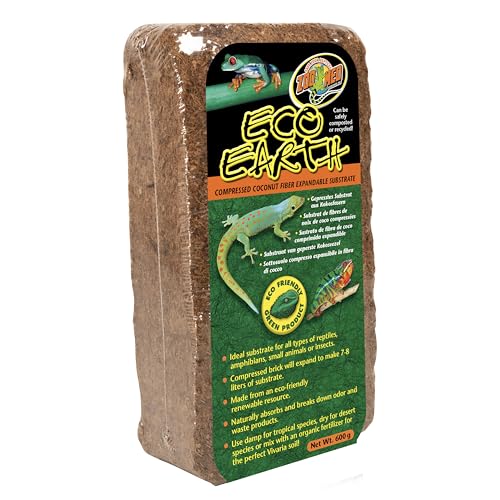
Each brick in this three-pack expands to roughly 7–8 liters of substrate, which is enough to provide a 3–4 inch digging layer in a standard 40-gallon tank. The expanded fiber has a fluffy, fibrous texture that holds a burrow tunnel remarkably well without collapsing, and the particle size is large enough that it does not produce the fine dust that irritates tortoise respiratory tracts.
Multiple owner reports confirm that this material retains moisture evenly without pooling at the bottom, making it easier to manage the 40–50% humidity range Russian tortoises need. The earthy smell is mild and natural — reviewers specifically note the absence of chemical odors or musty notes even after weeks of use.
The biggest practical drawback is the expansion process itself: you need a large bucket and several hours of soak time to fully hydrate each brick. Additionally, some users note that once the material dries out completely, it can become slightly dusty again during spot cleaning, so regular misting or light rehydration is recommended.
Why we love it
- Excellent burrow stability with a soft, non-abrasive texture
- Very low dust when properly hydrated before use
- Three bricks provide excellent coverage for large enclosures
Good to know
- Requires significant pre-soak time and a large container
- Can turn dusty again if allowed to dry out completely
2. Halatool 6 Pack Coconut Fiber Tortoise Substrate
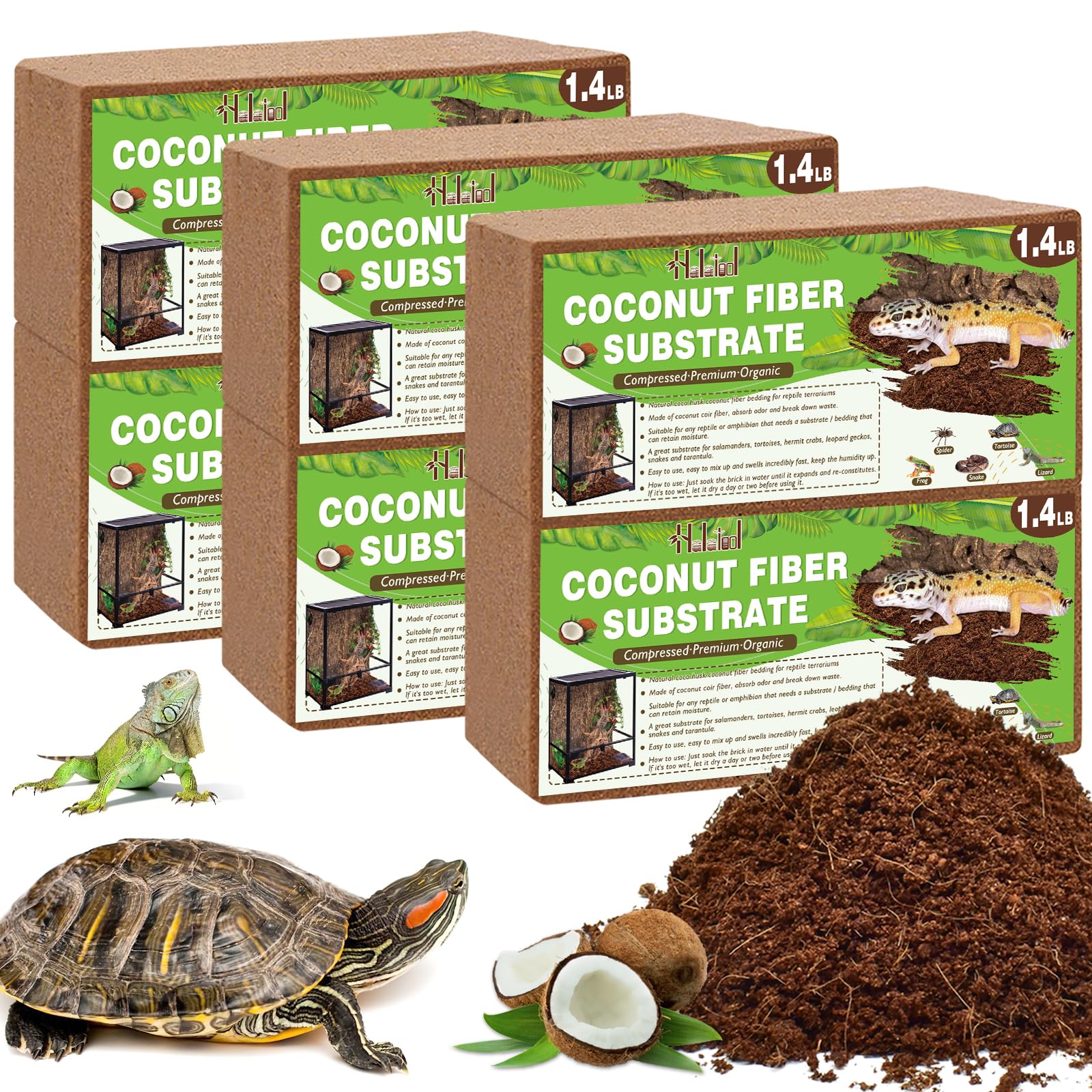
This six-brick set is the clear choice for keepers with multiple enclosures or a single large tortoise table. Each 1.4 lb brick expands significantly when hydrated — the manufacturer rates water absorption at 8–10 times its dry weight — which means one or two bricks can fill a standard 40-gallon breeder tank with a deep, diggable substrate layer.
The material is pure coconut husk fiber with no added chemicals or dyes. Customer reviews consistently highlight the clean, natural smell and the fact that the expanded fiber breaks apart into soft, separate strands rather than forming clumpy mud balls. This loose structure makes it easy for Russian tortoises to push through and create stable resting hollows.
One thing to prep for: the bricks are extremely compressed. Several reviewers advise breaking them into smaller chunks before soaking to reduce the expansion time and hand strain. Also, the package weight of 8.75 lbs means delivery shipping may take slightly longer, so plan ahead if you need an immediate substrate change.
Why we love it
- Massive expansion ratio provides excellent enclosure coverage
- Pure coconut husk with no chemical additives
- Soft, fibrous texture ideal for burrowing reptiles
Good to know
- Bricks are densely compressed and require pre-soaking effort
- Six bricks may be excessive for a single small enclosure
3. BabiChip Coconut Chip Substrate 12 Quart

BabiChip is unique in this lineup because it ships as a loose, ready-to-use chip rather than a compressed brick. The small chip size — roughly ¼ to ½ inch — creates an open, airy substrate structure that resists compaction and allows Russian tortoises to dig with minimal effort. There is no soaking, no expansion time, and no messy dust cloud when opening the bag.
The manufacturer specifically states that the material is sorted and refined in the United States to remove dust and debris. This is a meaningful advantage for tortoise keepers who have struggled with respiratory issues from cheaper, poorly sifted substrates. The chips encapsulate waste effectively, reducing ammonia buildup and keeping the enclosure smelling fresh between full changes.
The trade-off is depth-to-volume ratio. Because the chips are already loose and expanded, the 12-quart bag covers less square footage than a compressed brick of the same weight. Keepers with very large tables may find they need two bags to achieve the recommended 4–6 inch burrowing depth, which increases the per-change cost.
Why we love it
- Zero prep required — use directly from the bag
- Near-zero dust levels thanks to refined processing
- Chip texture resists mudding and compaction
Good to know
- Lower volume density means you may need more bags per enclosure
- Small chips can be kicked out during vigorous digging sessions
4. Mycelium Coco Coir Brick 10 lbs

Mycelium positions this brick as an organic gardening amendment, but its physical properties align well with tortoise substrate needs. The OMRI certification guarantees no synthetic chemicals or pesticides were used in production, which is the same standard responsible reptile keepers apply to their enclosures. A single 10 lb brick expands with 6.5 gallons of water, yielding a very high volume-to-price ratio.
The texture after expansion is notably fluffier and more aerated than typical coco coir. Customers who also use this for mushroom cultivation mention the lack of long, stringy fibers that can tangle around small limbs. For a Russian tortoise, this means the substrate stays light enough to push through easily while still offering enough structure to hold a shallow burrow.
One limitation is that the brick produces a relatively fine particle once fully expanded. While this is great for moisture retention, it can become dusty if you let the enclosure dry out too much. Users with particularly dry ambient home conditions may need to mist the surface lightly every other day to keep dust at bay and maintain the substrate’s cohesion.
Why we love it
- OMRI certified organic with zero chemical contaminants
- Excellent volume per brick — economical for deep substrate layers
- Aerated, fluffy texture that is easy for tortoises to move through
Good to know
- Fine particles can produce dust when dry to the touch
- Expansion requires a large container and access to water
5. Scotts Premium Topsoil .75 Cu Ft

This product is not designed as a stand-alone reptile substrate, but it is a valuable mixing component for keepers who prefer a soil-based blend. The primary ingredients are sphagnum peat moss and organic matter, which together create a dense, heavy substrate that holds burrow tunnels extremely well. Mixed at roughly 1:1 with coconut coir, it provides the structural integrity that pure coir can lack in very deep enclosures.
The 26-pound bag covers a large area even in a 2-inch layer, making it the most budget-friendly option in this list by volume. That said, this topsoil contains larger woody particles and occasional small stones — you must sift it by hand before introducing it to a tortoise enclosure to remove anything sharp that could scratch a plastron or be ingested.
Do not use Scotts Premium Topsoil alone. It is too dense and moisture-retentive on its own, which can lead to shell rot in arid-adapted Russian tortoises. Mixed with coconut fiber at the right ratio, however, it creates a substrate that behaves much closer to the hard-packed earth these tortoises encounter in the wild.
Why we love it
- High density provides exceptional burrow stability when mixed
- Extremely economical — huge coverage area per bag
- Organic base material with no synthetic fertilizers
Good to know
- Must be sifted to remove stones and large debris
- Not suitable as a stand-alone substrate for this species
FAQ
Can I use pure sand as a substrate for a Russian tortoise?
How deep should the substrate be in a Russian tortoise enclosure?
Does coconut fiber or topsoil last longer between full changes?
Final Thoughts: The Verdict
For most keepers, the substrate for russian tortoise winner is the Zoo Med Eco Earth 3-Pack because it provides the best balance of burrow stability, low dust, and long-lasting performance without requiring frequent full changes. If you want a ready-to-use, zero-dust option that skips the soaking step, grab the BabiChip Coconut Chip 12 Quart. And for large enclosure setups where maximizing volume per dollar matters most, nothing beats the Halatool 6-Pack.