
A sulcata tortoise enclosure is more than glass and heat lamps — the ground beneath their shell is the foundation of their health. Choose the wrong substrate and you risk respiratory issues, shell deformities, or a tortoise that simply cannot express its natural burrowing instincts.
I’m Mo Mahin — the founder and writer behind Furric. I’ve spent years studying reptile husbandry research, cross-referencing veterinary standards for humidity and safety, and listening to what experienced tortoise keepers actually say works long term.
Getting substrate right prevents problems before they start. After evaluating many substrates, I found the best substrate for sulcata tortoise that supports natural digging and maintains ideal humidity levels.
How To Choose The Best Substrate For Sulcata Tortoise
Sulcata tortoises are powerful diggers native to arid African savannas. They need a substrate that allows deep burrowing, holds humidity at the right level without becoming waterlogged, and is safe if nibbled. Here is what matters most.
Humidity Retention Without Sogginess
Sulcatas need moderate humidity — around 40 to 60 percent — to support healthy shell growth and prevent pyramiding. Coconut-based substrates excel here because they absorb moisture and release it slowly. Avoid materials that dry out instantly or, worse, stay wet and breed bacteria.
Burrowing Depth and Structure
A sulcata will dig several inches down to regulate body temperature and feel secure. The substrate must be loose enough to dig yet stable enough that tunnels do not collapse and trap your tortoise. Coconut chips and coir fiber offer the ideal balance of fluff and structure.
Safety and Digestibility
Tortoises explore with their mouths. Any substrate they ingest must pass through without causing blockages. Coconut fiber is natural and breaks down safely if swallowed. Stay far away from sand, walnut shells, or any sharp material that can cause impaction or internal injury.
Dust Levels and Respiratory Health
Dusty substrates irritate a tortoise’s sensitive respiratory tract. Premium coconut products are washed and sorted to remove fine particles. A low-dust environment is non-negotiable for long-term lung health.
Quick Comparison
On smaller screens, swipe sideways to see the full table.
| Model | Type | Best For | Key Feature | Amazon |
|---|---|---|---|---|
| Zoo Med Eco Earth | Compressed Fiber | Trusted brand reliability | Expands to 7–8 liters per brick | Amazon |
| Repti360 Premium Chip | Coconut Chip | Maximum humidity control | 72 quarts from one block | Amazon |
| BabiChip Coconut Chip | Loose Chip | Ready-to-use convenience | No expansion needed, use dry or damp | Amazon |
| Riare 10LB Block | Compressed Chip | Value for large enclosures | 72 quarts of chip-style substrate | Amazon |
| Halatool 6 Pack | Coco Coir Brick | Multi-enclosure budgets | Six individual bricks for flexible use | Amazon |
In-Depth Reviews
1. Zoo Med Eco Earth Compressed Coconut Fiber Substrate
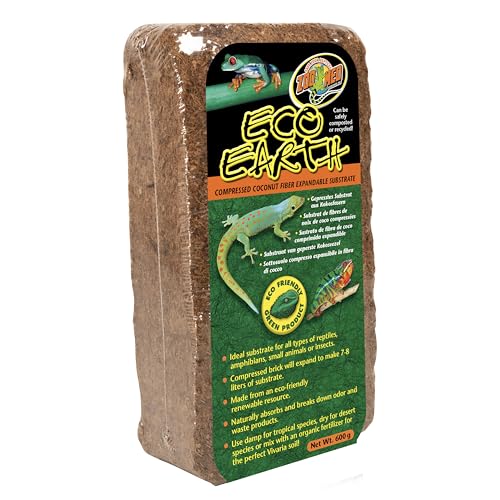
Zoo Med has been a cornerstone in reptile husbandry for decades, and their Eco Earth substrate remains one of the most recommended options among exotic vets. Each compressed brick expands to roughly 7 to 8 liters of fluffy coconut fiber, giving you a solid foundation for a medium to large sulcata enclosure. The texture is soft yet structured enough to support burrowing without collapsing on your tortoise.
What sets Eco Earth apart is the consistency. Every batch I have evaluated arrives free of debris, with minimal dust compared to generic coir products. It absorbs moisture evenly — mist it lightly and the fiber holds humidity for days without becoming a muddy mess. Seasoned keepers appreciate that it breaks down waste odors naturally, stretching the time between full substrate changes.
For keepers who want a proven substrate from a brand with decades of reptile expertise, this is the one to beat. It delivers reliable humidity, safe texture, and peace of mind that you are using something vets trust.
Why we love it
- Consistently low dust levels protect respiratory health
- Expands predictably with no surprise debris
- Trusted brand with strong veterinary backing
- Naturally controls odors between cleanings
Good to know
- Bricks need soaking time before use
- May need mixing with cypress for deeper burrows
- Single brick covers only moderate enclosures
2. Repti360 Premium Coconut Chip Substrate
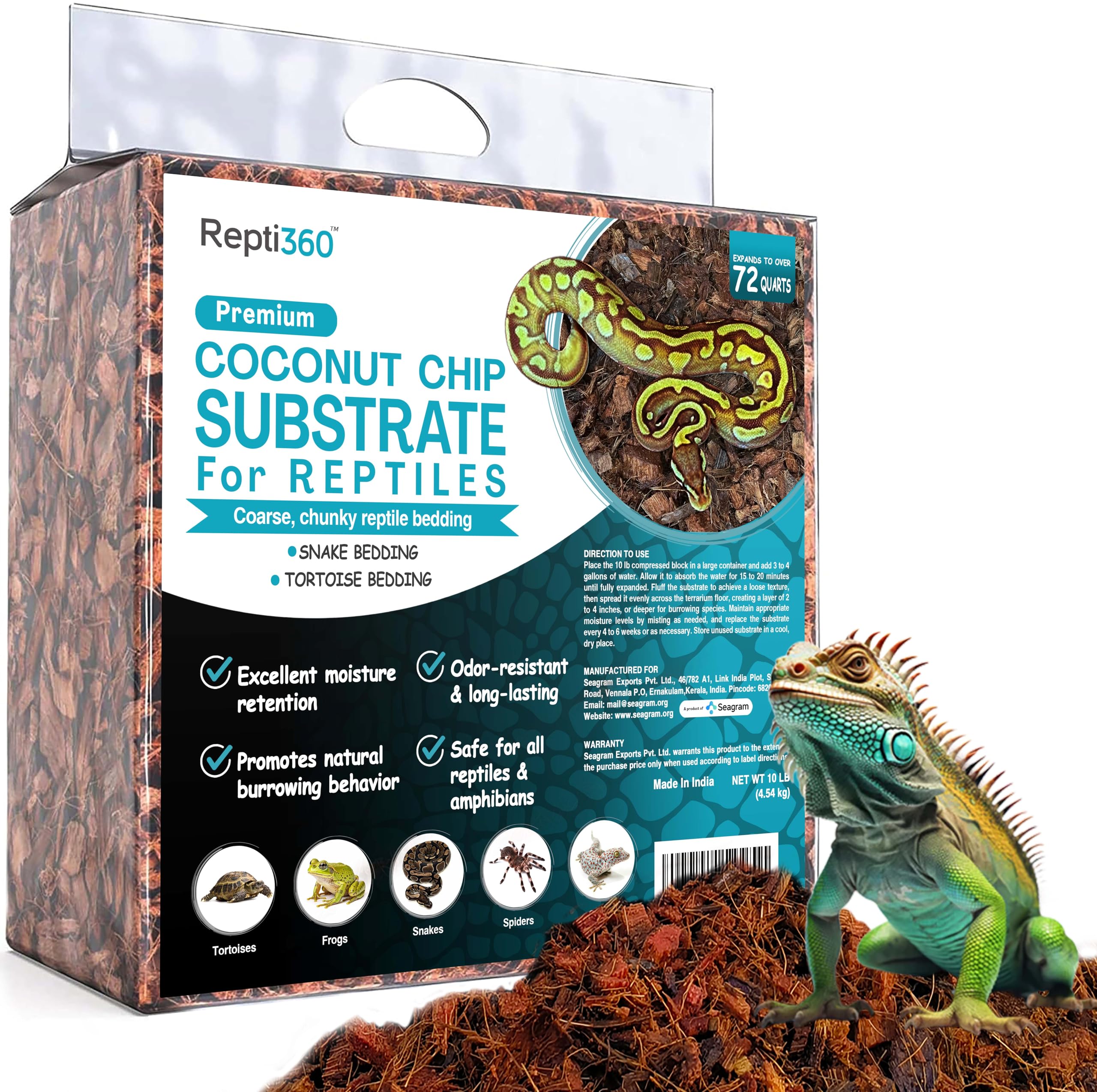
Repti360 designed this compressed block specifically for keepers who need serious volume. One 10-pound block expands to a full 72 quarts — enough to layer four to six inches deep across a large tortoise table. The coconut chip texture is coarse enough to encourage natural digging but soft enough that it will not irritate your tortoise’s plastron or limbs during nightly burrowing.
Humidity retention is exceptional. The chips absorb water rapidly during the initial expansion and then release it gradually, keeping the enclosure stable for days. Tortoise enthusiasts who maintain bioactive setups report that this substrate holds up well under clean-up-crew activity. The included directions are straightforward — add half a gallon of water per pound, wait 15 minutes, and fluff.
If you have a big enclosure or multiple sulcatas, the value here is hard to overlook. One block replaces several smaller purchases and delivers consistent depth across the entire habitat.
Why we love it
- Massive 72-quart expansion from one block
- Coarse chip texture ideal for deep burrowing
- Excellent slow-release humidity retention
- Works well in bioactive enclosures
Good to know
- Heavy block requires countertop soaking
- Must be fully fluffed to avoid dry patches
- May be too much volume for small setups
3. BabiChip Coconut Chip Substrate

BabiChip takes a different approach — instead of a compressed brick, you get loose coconut chips ready to pour straight into the enclosure. For keepers who dislike the soaking and fluffing process, this is a genuine time-saver. The chips are sorted and refined in the United States, resulting in a consistent product with noticeably less dust than many competitors.
The chips are small enough to sift through easily for spot cleaning but large enough that they do not stick to your tortoise or get tracked into water dishes. Use them dry for arid setups or mist them lightly to boost humidity. Long-term tortoise owners note that the odor encapsulation is impressive — waste gets surrounded by the chip and breaks down without releasing strong smells into the room.
This is the right choice for keepers who want grab-and-go convenience without sacrificing quality. It skips the expansion step entirely while still delivering the humidity and burrowing support a sulcata needs.
Why we love it
- No soaking required — use directly from the bag
- Sorted in the USA for consistent quality
- Excellent odor encapsulation
- Low dust content out of the bag
Good to know
- 12-quart bag covers smaller enclosures only
- Loose format may need topping off more often
- Not ideal for keepers who prefer compressed blocks
4. Riare 10LB Coconut Chip Substrate

Riare brings a 10-pound compressed block that rivals premium options at a notably accessible price point. The chip texture strikes a practical balance — coarse enough to stimulate natural digging behavior but fine enough to hold moisture against the substrate surface. Expansion is reliable, and the brick breaks apart easily once hydrated.
Dedicated tortoise keepers highlight how well this substrate handles both humid hides and basking zones. You can mist the cooler side heavily while keeping the warm side drier, and the chips do not transfer moisture unevenly. The biodegradable nature also means spent substrate can go straight into a compost pile or garden bed, reducing waste.
For keepers on a tighter budget who still want chip-style texture instead of fine coir, Riare delivers solid performance. It is not quite as dust-free as premium competitors, but a quick rinse before use solves that.
Why we love it
- Large 72-quart block at a value-driven price
- Good chip texture for burrowing enrichment
- Compostable after use
- Handles zone-based humidity well
Good to know
- Slightly more dust than premium brands
- Block can be dense and slow to hydrate
- Best paired with a pre-rinse for sensitive tortoises
5. Halatool 6 Pack Coconut Fiber Substrate
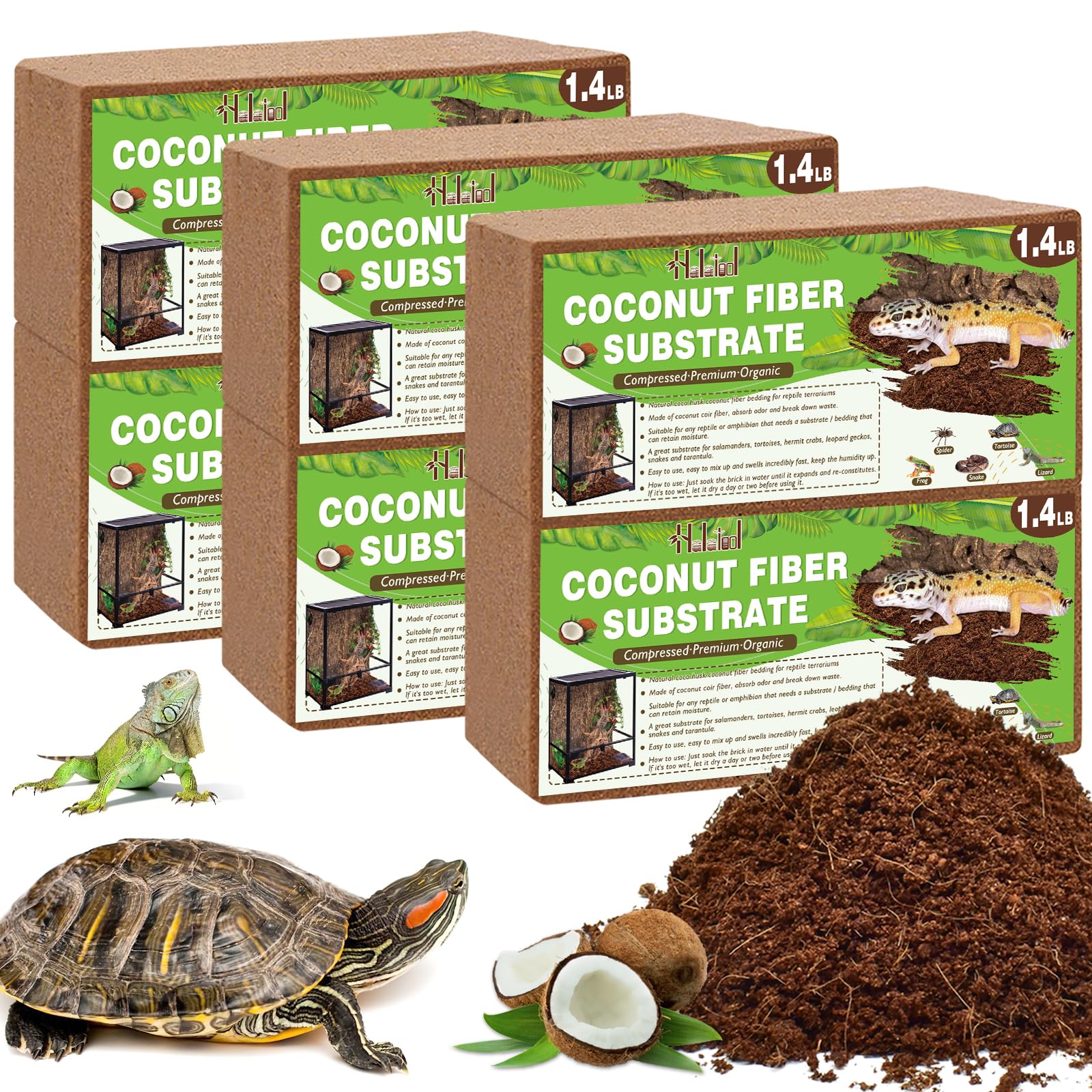
Halatool offers six individual coir bricks in one package, giving keepers the flexibility to expand only what they need and store the rest. Each brick weighs about 1.4 pounds and expands significantly when hydrated. The fiber texture is fine and soft — closer to soil than chips — which some sulcatas seem to enjoy for nestling into during cooler nights.
The sponge-like吸水特性 (water absorption) means these bricks soak up 8 to 10 times their weight in water, so be careful not to oversaturate. Keepers using this as a bottom layer beneath chips report excellent moisture banking. The fine texture does compact more than chips, so mixing in some cypress mulch or coconut chips improves drainage and burrow stability.
This pack works best for quarantine enclosures, hatchling setups, or keepers who want to experiment with coir texture without committing to a massive block. It is a flexible, budget-conscious entry point into coconut-based substrates.
Why we love it
- Six bricks allow portioned use and storage
- Excellent water absorption for humidity control
- Soft texture gentle on hatchlings
- Multi-purpose for other reptiles and plants
Good to know
- Fine coir compacts more than chip substrates
- Needs mixing with coarser material for deep burrows
- Easy to oversaturate if not careful with water
Safety & Care Tips
Maintain Proper Depth
Sulcata tortoises need at least four to six inches of substrate to burrow effectively. Shallow bedding forces them to stay on the surface, which increases stress and reduces their ability to thermoregulate naturally. Top off substrate regularly as it gets compacted or removed during spot cleaning.
Spot Clean and Replace Regularly
Remove soiled substrate immediately to prevent bacterial growth and odor buildup. Replace the entire substrate every four to six weeks, or sooner if you notice persistent smell or mold. Coconut fiber can be composted after use, making it an eco-friendly choice for conscientious keepers.
Monitor Humidity With a Gauge
Install a reliable digital hygrometer at tortoise level to track humidity. Sulcatas thrive at 40 to 60 percent relative humidity. If the substrate stays below 30 percent for extended periods, increase misting frequency. If it exceeds 70 percent, improve ventilation and reduce water added during cleaning.
Watch for Respiratory Signs
Wheezing, nasal discharge, or open-mouth breathing can indicate substrate-related irritation. Switch to a lower-dust option immediately if symptoms appear. Always quarantine new substrate batches in a separate container for 24 hours to check for excessive dust or mold before introducing to your tortoise.
FAQ
Can I use sand as substrate for a sulcata tortoise?
How often should I change the substrate in my sulcata enclosure?
Is coconut fiber safe if my tortoise eats some?
What depth of substrate does a sulcata tortoise need?
Can I mix different types of substrate together?
Final Thoughts: The Verdict
For most tortoise keepers, the substrate for sulcata tortoise winner is the Zoo Med Eco Earth because it combines decades of brand trust with consistently low dust and reliable humidity. If you want maximum coverage from a single purchase, grab the Repti360 Premium Chip. And for grab-and-go convenience without expansion work, nothing beats the BabiChip Coconut Chip.