
Choosing the right ground for your White’s tree frog isn’t just about looks—it’s the foundation of their health and happiness. A poor choice can lead to impaction, dehydration, or respiratory issues, while the perfect one creates a humid, burrow-friendly paradise that keeps your amphibian thriving for years.
I’m Mo Mahin — the founder and writer behind Furric. I’ve spent countless hours combing through market research, evaluating veterinary safety standards, and analyzing real owner feedback to separate the winners from the duds.
After digging deep into the science of humidity retention, particle size, and chemical safety, I’m ready to share the safest, most effective options. This guide is your ultimate resource for finding the best substrate for whites tree frogs that supports natural behaviors and long-term wellness.
How To Choose The Best Substrate For Whites Tree Frogs
Your frog’s environment should mimic the tropical, humid forests of Australia and New Guinea. The substrate you choose plays a massive role in maintaining that microclimate while keeping your pet safe from accidental ingestion or skin irritation. Here’s what to look for.
Moisture Retention and Drainage
White’s tree frogs need a consistently humid environment (50-70% relative humidity) but should never sit in soggy conditions. A great substrate holds water like a sponge yet allows excess to drain away, preventing bacterial blooms and foot rot. Coco coir and ABG mixes excel here, while plain soil often compacts and becomes waterlogged.
Particle Size and Impaction Risk
Frogs are opportunistic feeders and may accidentally swallow substrate while hunting. Large, jagged pieces or fine, dusty particles can cause gastrointestinal blockages. Look for materials like fine coco fiber or small, rounded chips that pass safely if ingested. Avoid gravel, sand, or bark chunks that are too big or too sharp.
Chemical-Free and Organic Composition
Amphibian skin is highly permeable, meaning any fertilizers, pesticides, or salts in the substrate will be absorbed directly into their bloodstream. Always choose products labeled as organic, low-salt, and free of additives. Triple-washed coco coir and professionally mixed ABG blends are your safest bets.
Bioactive Compatibility
If you’re building a self-cleaning vivarium with isopods and springtails, your substrate needs to support a healthy cleanup crew. ABG mixes and coco husk chips provide the structure and nutrients microfauna need to thrive. A sterile, inert substrate won’t sustain a bioactive system long-term.
Quick Comparison
On smaller screens, swipe sideways to see the full table.
| Model | Type | Best For | Key Feature | Amazon |
|---|---|---|---|---|
| Josh’s Frogs Coco Block Fine | Coco Fiber Block | Overall Performance | Expands 4-6x, freshwater-rinsed, low EC | Amazon |
| Finn’s Frog Farm ABG Mix | ABG Mix | Bioactive Vivariums | Pre-blended for tropical terrariums, supports microfauna | Amazon |
| REPTI ZOO Coconut Chip | Coco Husk Chips | Humidity Control | Compressed 72-quart block, natural odor absorption | Amazon |
| BabiChip Coconut Chip | Loose Coco Chips | Value & Versatility | Ready-to-use, dust-free, odor-absorbing | Amazon |
| Boomer Shroomer CVG Mix | Coco/Vermiculite/Gypsum | High-Moisture Setups | Pasteurized blend, excellent water retention | Amazon |
| MODELLOR Coco Coir Brick | Compressed Coir Brick | Budget-Friendly Bulk | Triple-washed, expands to 18-20 gallons | Amazon |
| Halatool Coco Husk Chips | Compressed Chip Brick | Multi-Purpose Use | Expands to 72 quarts, natural coconut scent | Amazon |
| Josh’s Frogs Loose Coco Husk | Loose Coco Chips | DIY Mixing | Ready-to-use, excellent drainage, low EC | Amazon |
| BNOSDM Reptile Soil | Fine Soil Substrate | Entry-Level Simplicity | Fluffy small-strand, natural digging texture | Amazon |
| Legigo Coco Coir Brick | Compressed Coir Brick | Garden & Reptile Dual Use | Low EC, pH balanced, expands significantly | Amazon |
| Vivlly Coco Coir Brick | Compressed Coir Brick | Largest Expansion | Triple-washed, expands to 75 quarts, low salt | Amazon |
In-Depth Reviews
1. Josh’s Frogs Coco Block Fine Coco Fiber

Josh’s Frogs has built a reputation on quality, and this 5 kg coco fiber block is the gold standard for White’s tree frog habitats. It expands to a massive 38 quarts of fluffy, absorbent substrate that holds humidity like a dream while staying light and airy for burrowing. The freshwater rinsing ensures an EC level below 1.0 ms/ds, meaning no harmful salt buildup to irritate your frog’s sensitive skin.
Experienced keepers love that this brick can be broken apart by hand—no soaking required if you just want a small amount. When fully hydrated, it creates a soft, cohesive bed that retains moisture for days between mistings. The 100% organic, biodegradable composition also makes it a responsible choice for eco-conscious owners. One bag is enough to deeply fill a standard 20-gallon tank with several inches of substrate, giving your frog plenty of space to dig and hide.
The only real consideration is that it’s a compressed block, so you need a large container and a few hours to fully rehydrate it. Some owners mention the packaging can leak fine dust during shipping, but the product inside is consistently top-notch. For a premium, reliable foundation that checks every box—safety, humidity, and value—this is the one I trust most.
Why we love it
- Expands dramatically, offering excellent coverage for the price
- Freshwater-rinsed with ultra-low salt content for amphibian safety
- Fine texture holds humidity without becoming waterlogged
Good to know
- Requires a large bin and soaking time to fully expand
- Shipping can sometimes result in minor fiber spillage from the box
2. Finn’s Frog Farm ABG Mix Tropical Terrarium Substrate
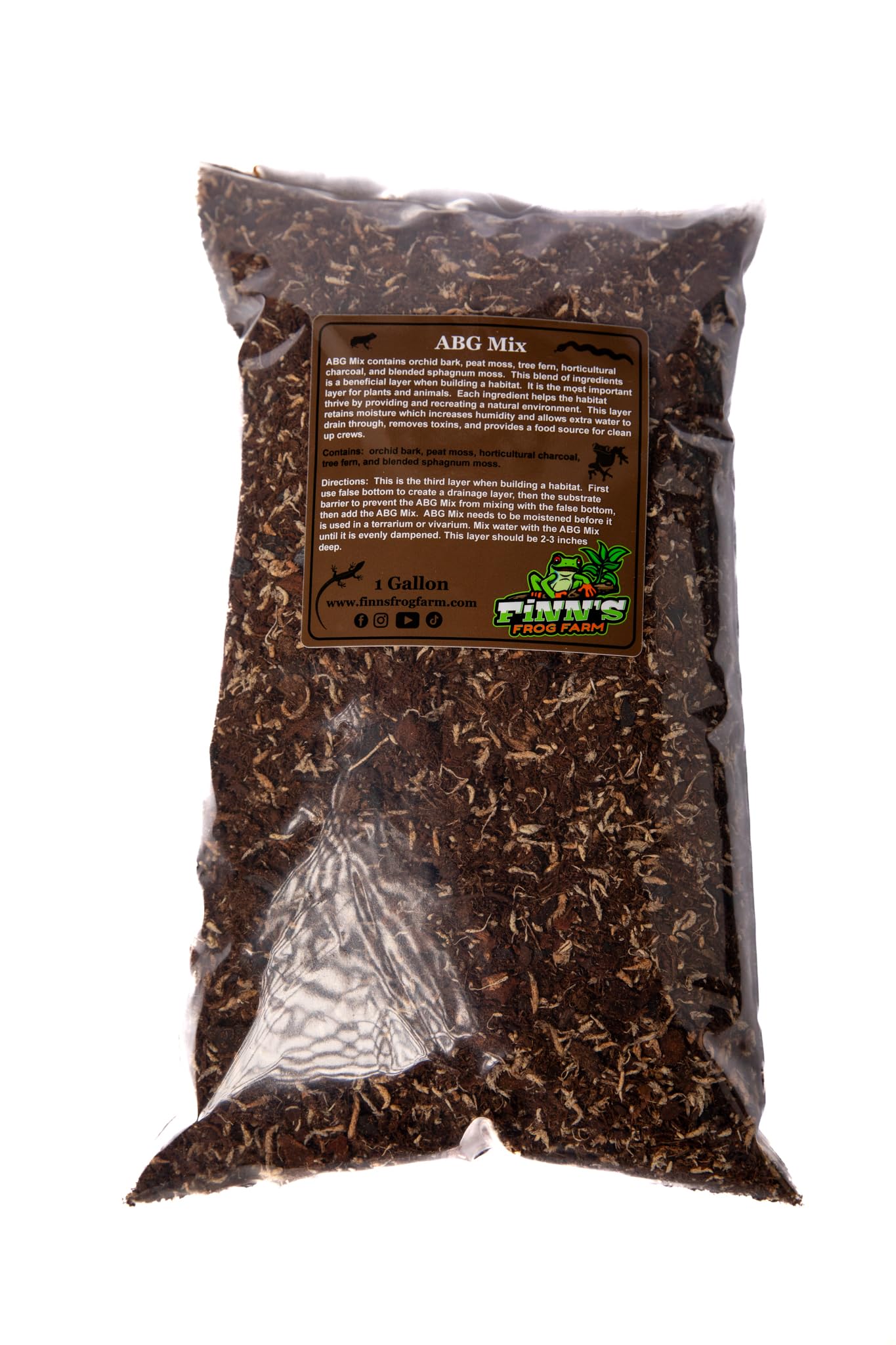
This ABG (Atlanta Botanical Garden) mix is the industry standard for bioactive vivariums, and Finn’s Frog Farm delivers a version that’s clean, fresh, and perfectly balanced. It combines tree fern fiber, sphagnum peat, orchid bark, charcoal, and other components to create a substrate that holds moisture while allowing excellent drainage. For White’s tree frogs, this means a stable humidity gradient—moist at the bottom, drier at the top—which mimics their natural canopy floor habitat.
Isopod and springtail keepers report that this mix sustains thriving cleanup crews from day one. The charcoal helps with odor control, while the varied particle sizes create air pockets for healthy root growth if you’re adding live plants. A customer mentioned their two American toads absolutely loved it, and the substrate held up well in a 15-gallon tank with minimal compaction. The bag is relatively small (1 gallon), so it’s best suited for smaller enclosures or as a top layer over a more economical base.
The only downside is the price per volume—it’s more expensive than plain coco coir. But if you’re building a bioactive paradise and want a mix that’s ready to go without any DIY blending, this is worth every penny. The handwritten thank-you note included with orders is a sweet touch that shows this is a company run by true hobbyists.
Why we love it
- Professional-grade ABG blend supports both plants and microfauna
- Excellent drainage prevents root rot and bacterial issues
- Fresh, clean composition with no debris or contaminants
Good to know
- Small bag size may require multiple purchases for larger tanks
- Higher cost per quart compared to straight coco coir options
3. REPTI ZOO 72 Quart Coconut Chip Substrate

REPTI ZOO brings 16 years of reptile industry experience to this 10-pound compressed block, and it shows. When hydrated, it yields 72 quarts of coarse coconut chips that are excellent for maintaining high humidity levels. The chips are larger than fine coco fiber, which some frog owners prefer because it creates a chunkier texture that holds its shape and doesn’t get trampled flat as quickly. It’s also fantastic at absorbing odors from waste, keeping the enclosure smelling fresh longer.
Snake and gecko owners rave about this product, and it works equally well for White’s tree frogs. The block is tightly compressed—you’ll need to break it into chunks before adding water, and letting it sit overnight yields the best results. A customer noted that while the chips alone don’t hold moisture as long as fiber, mixing it with coco coir creates a perfect balance. The 90-day warranty from REPTI ZOO adds peace of mind for first-time buyers.
One thing to watch: the initial expansion can be a bit dusty, so hydrate it outside the enclosure to avoid coating your frog’s skin. Also, the chips are on the larger side, so they’re not ideal for very young froglets who might struggle to move around. But for adult White’s tree frogs, this is a durable, cost-effective option that holds up well between deep cleanings.
Why we love it
- Massive 72-quart yield from a single compact block
- Natural odor absorption keeps the vivarium fresh
- Coarse chips resist compaction and last longer
Good to know
- Needs thorough soaking and breaking apart before use
- Chunky texture may not suit very small or juvenile frogs
4. BabiChip Coconut Chip Substrate

BabiChip is a loose, ready-to-use coconut chip substrate that skips the hassle of soaking a compressed block. It comes pre-sorted and refined in the United States to remove dust and debris, making it one of the cleanest options on the market. The small chip size is perfect for White’s tree frogs—it’s large enough to avoid accidental ingestion but small enough for comfortable burrowing. Out of the bag, it works for arid species, but adding a bit of water transforms it into a humidity-retaining tropical haven.
An owner of a ball python mentioned that BabiChip gave them zero worries about impaction, a concern shared by frog parents. The chips are excellent at encapsulating waste, which helps control odor and makes spot-cleaning a breeze. A satisfied customer noted that the bag provided excellent coverage for their enclosure, and the adjustable humidity—simply by spraying more or less—gave them precise control over their pet’s environment. The 4.8-star rating from over 640 reviews speaks volumes about its consistency.
The main trade-off is that loose chips are less space-efficient than compressed blocks for storage. Also, some users felt the bag could be a bit pricey for the volume compared to buying a block and expanding it yourself. But if convenience and cleanliness are your top priorities, BabiChip delivers a premium experience without the prep work.
Why we love it
- Pre-sorted and dust-free for immediate use
- Small chip size reduces impaction risk while allowing digging
- Superb odor encapsulation for cleaner maintenance
Good to know
- More expensive per volume than compressed block alternatives
- Bulkier packaging takes up more storage space
5. Boomer Shroomer Dry Bulk Substrate

While marketed for mushroom cultivation, this coco coir, vermiculite, and gypsum blend (CVG) is an incredible substrate for White’s tree frogs. The vermiculite adds exceptional water-holding capacity, keeping humidity levels stable for days, while the gypsum buffers pH to prevent harmful fluctuations. The coco coir provides the fibrous structure frogs love to burrow in. When pasteurized correctly, this mix creates a clean, contaminant-free environment that’s safe for even the most sensitive amphibians.
A keeper who used this for their bioactive setup was thrilled with how well it supported both their plants and cleanup crew. The mix expands to about 9 pounds of hydrated substrate, enough for a moderate-sized tank. Boomer Shroomer is a woman-owned company, and customers consistently praise their responsive customer service. The instructions are clear and easy to follow, making this a great option for those who want to customize their substrate blend without sourcing individual components.
The biggest consideration is that this mix requires you to add boiling water and pasteurize it yourself—it’s not ready-to-use out of the bag. If you’re looking for a grab-and-go solution, this might feel like extra work. But if you want a high-performance, sterile substrate with superior moisture retention, the effort pays off with a thriving frog habitat.
Why we love it
- Vermiculite and gypsum create exceptional moisture stability
- Pasteurization eliminates harmful bacteria and mold spores
- Woman-owned company with excellent customer support
Good to know
- Requires boiling water and 24-hour pasteurization before use
- Designed for mushrooms, so not a traditional reptile substrate
6. MODELLOR Premium Super Washed Coco Coir Brick
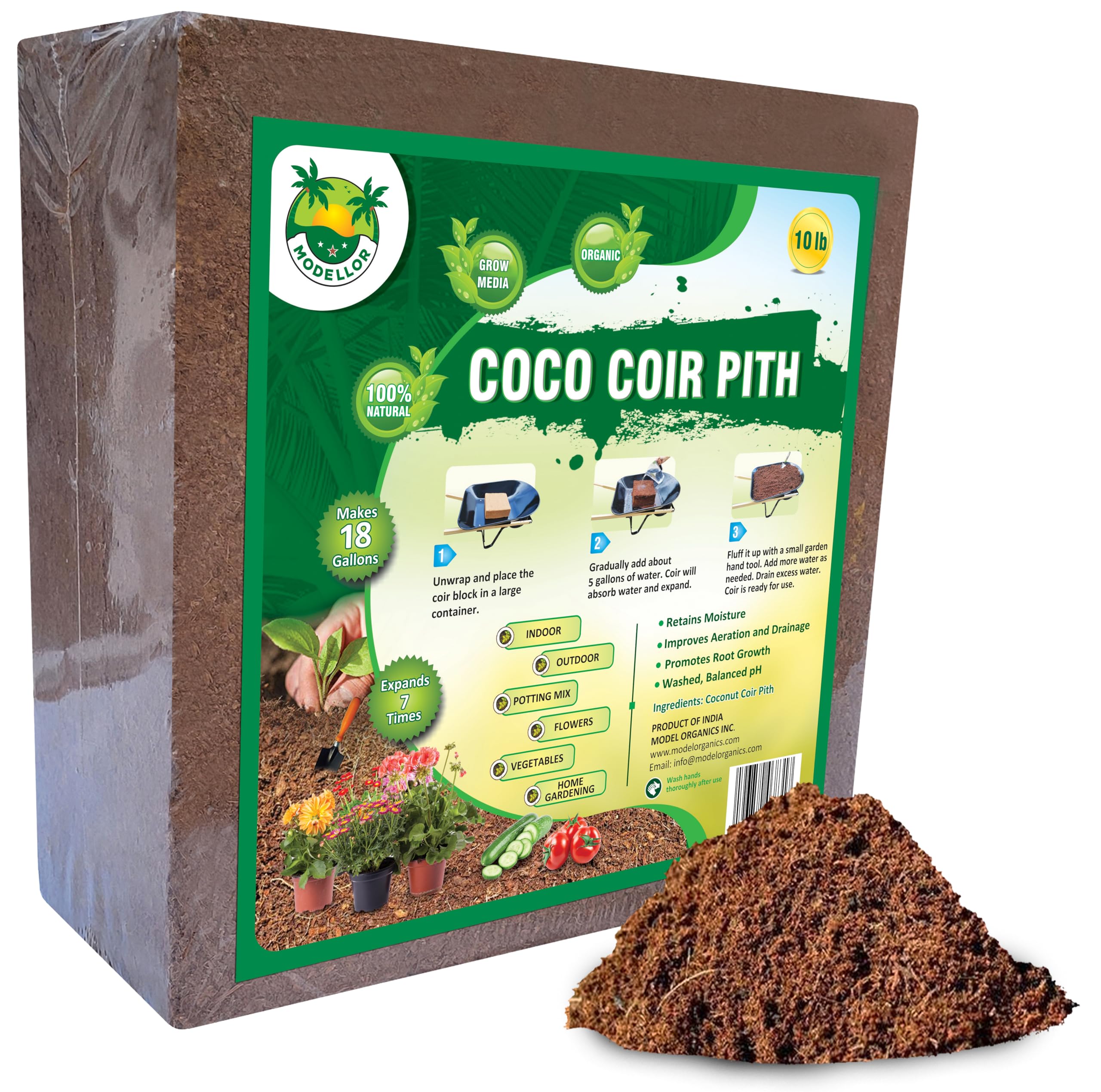
MODELLOR’s 10-pound brick is a standout for budget-conscious keepers who don’t want to compromise on quality. It expands to 18-20 gallons of fluffy, triple-washed coco coir with a pH-balanced composition that’s safe for amphibians right out of the bag. No rinsing is required, which saves time and water. The fine texture holds humidity beautifully and is soft enough for your White’s tree frog to dig into without irritation.
Gardeners and reptile owners alike have made this a bestseller, with nearly 900 ratings and a solid 4.6-star average. One customer highlighted that they’ve bought it three times for their container garden, noting how it keeps soil moist longer than traditional peat. For frog enclosures, it mixes well with other substrates like sphagnum moss or leaf litter to create a more complex environment. The neutral pH (5.5-6.5) is ideal for most live plants you might want to include.
The brick is quite dense and may require some elbow grease to break apart when dry. Using warm water accelerates the process significantly. Some users noted that the coir can be a bit powdery if over-hydrated, so add water slowly to achieve the perfect consistency. For the price per gallon, this is one of the most economical ways to provide a deep, comfortable substrate layer for your frog.
Why we love it
- Excellent value with 18-20 gallons of substrate per brick
- Triple-washed and pH-balanced for immediate amphibian use
- Versatile enough for both vivariums and plant propagation
Good to know
- Dense brick needs warm water and some effort to break up
- Can become dusty if over-hydrated or handled roughly
7. Halatool 10LBS Coco Husk Chips
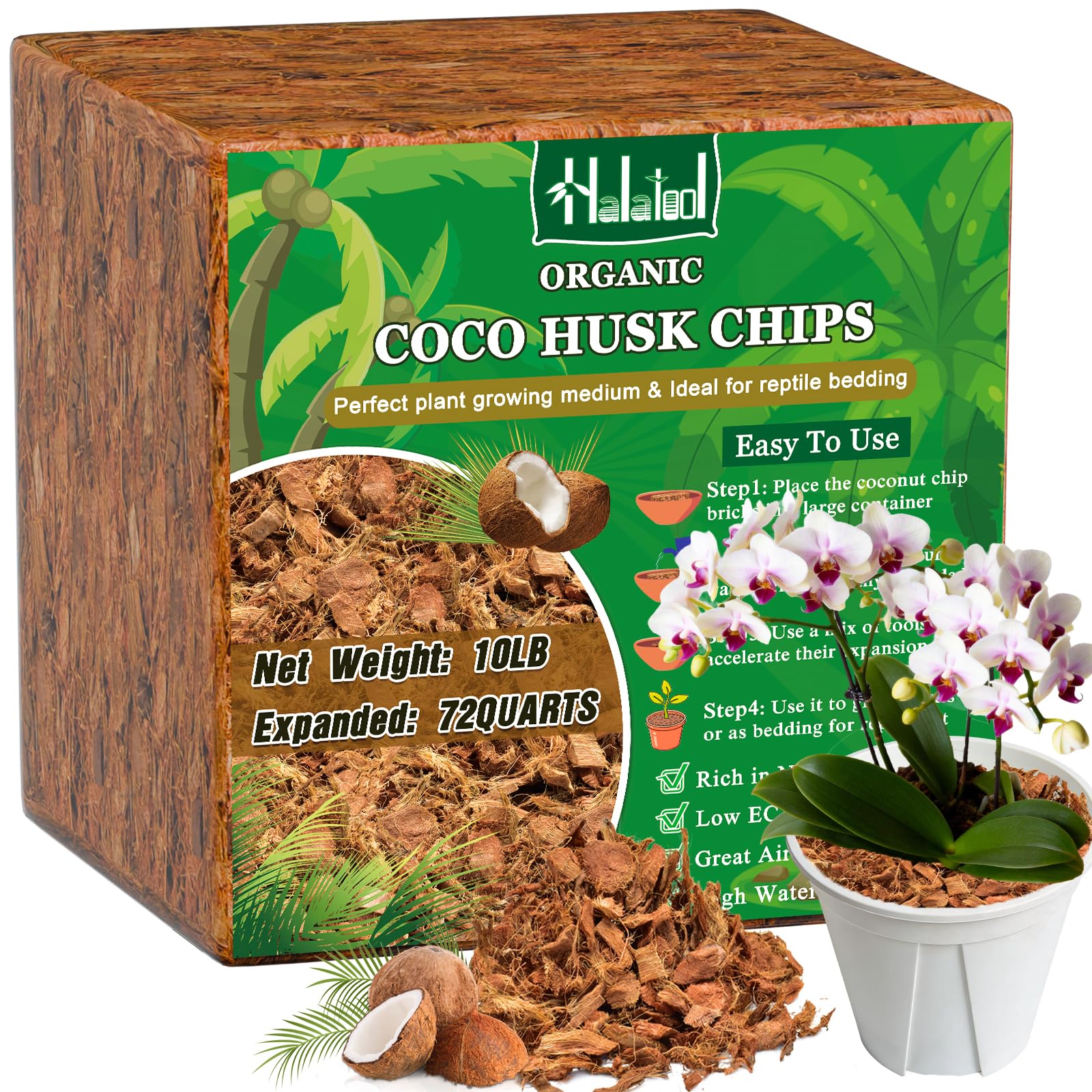
Halatool’s compressed brick expands to a generous 72 quarts of chunky coco husk chips that provide excellent aeration and drainage for a White’s tree frog enclosure. The chip size is ideal for creating a textured top layer that mimics the forest floor, and the natural coconut scent is a pleasant bonus. These chips are low in electrical conductivity and pH-balanced, so they won’t interfere with the delicate chemistry of a bioactive vivarium.
A customer using these for their houseplants mentioned the chips were the perfect size for a chunky, well-draining mix—exactly what you want for a frog tank that also hosts live plants. The chips hold moisture well without becoming soggy, and they resist breaking down much longer than fine coco fiber. This longevity means you won’t need to replace the substrate as often, saving money over time. The brick is easy to hydrate: about 1 gallon of water is enough to fully expand it.
The only minor issue is that the chips can be a bit large for very small froglets, so this is best suited for adult White’s tree frogs. Also, because they’re chunky, they don’t provide the same burrowing depth as finer substrates—your frog may prefer to sit on top rather than dig in. But if you prioritize drainage and a naturalistic look, this is a fantastic choice.
Why we love it
- Chunky chips provide excellent drainage and aeration
- Long-lasting material resists compaction and decomposition
- Pleasant natural coconut aroma, no chemical smells
Good to know
- Larger chip size may not suit juvenile or small frogs
- Does not support deep burrowing behavior as well as fine fiber
8. Josh’s Frogs Loose Coco Husk Chips (10 Liters)
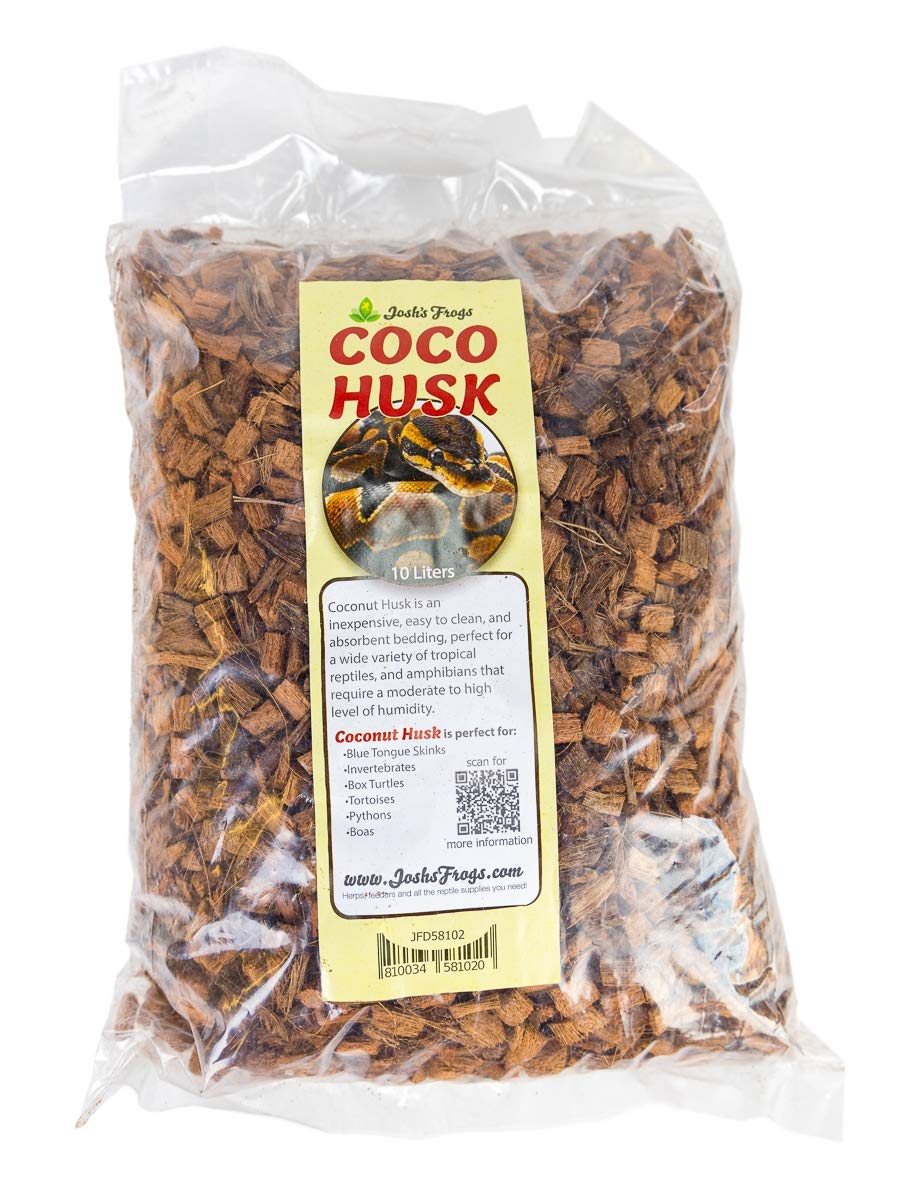
Josh’s Frogs delivers again with a loose, ready-to-use coco husk chip that’s perfect for keepers who want to customize their substrate mix. These chips are rinsed in freshwater (EC below 1.0 ms/ds) and contain minimal dust and fibers, making them safe for even the most sensitive amphibians. The coarse, mulch-like composition drains better than regular coco fiber, preventing water from pooling at the bottom of the tank while still holding enough moisture for humidity.
An owner of a ball python appreciated the consistent chip size, noting that it reduced imp
Why we love it
- Consistent chip size minimizes impaction risk
- Freshwater rinsed with ultra-low EC for amphibian safety
- Excellent drainage prevents waterlogging in tropical setups
Good to know
- Not suitable as a standalone substrate for deep burrowing
- May need to be cut down for use as a soil additive in planted tanks
9. BNOSDM Reptile Soil Substrate

BNOSDM offers a fluffy, small-strand soil substrate that’s incredibly lightweight and easy for frogs to dig through. It’s scientifically processed to decompose waste and enhance pet resistance, making it a good choice for keepers who want a naturalistic, soil-like environment. The fine texture holds humidity well and encourages natural digging behaviors, which White’s tree frogs enjoy during the day when they hide.
A Pac-Man frog owner praised this soil for its quality and quantity, noting that the bag contained plenty for many uses. It also works well for incubating eggs if you’re breeding. The substrate is dust-free and contains no rocks or wood, so there’s no risk of sharp edges injuring your frog. It’s also fully compostable, so you can dispose of it in your garden when it’s time for a change.
The main drawback is that two bags may not be enough for a large enclosure—some owners had to buy extra and mix with play sand to achieve sufficient depth. Replacement every 3–6 months can add up, so this is best for smaller tanks or as a top-up layer. For the price, it’s a solid entry-level option that delivers on its promises.
Why we love it
- Fine, fluffy texture perfect for burrowing
- No rocks or wood fragments to injure frogs
- Compostable and eco-friendly disposal
Good to know
- May require multiple bags for larger enclosures
- Needs replacement every 3–6 months with regular use
10. Legigo 10LBS Organic Coco Coir Brick
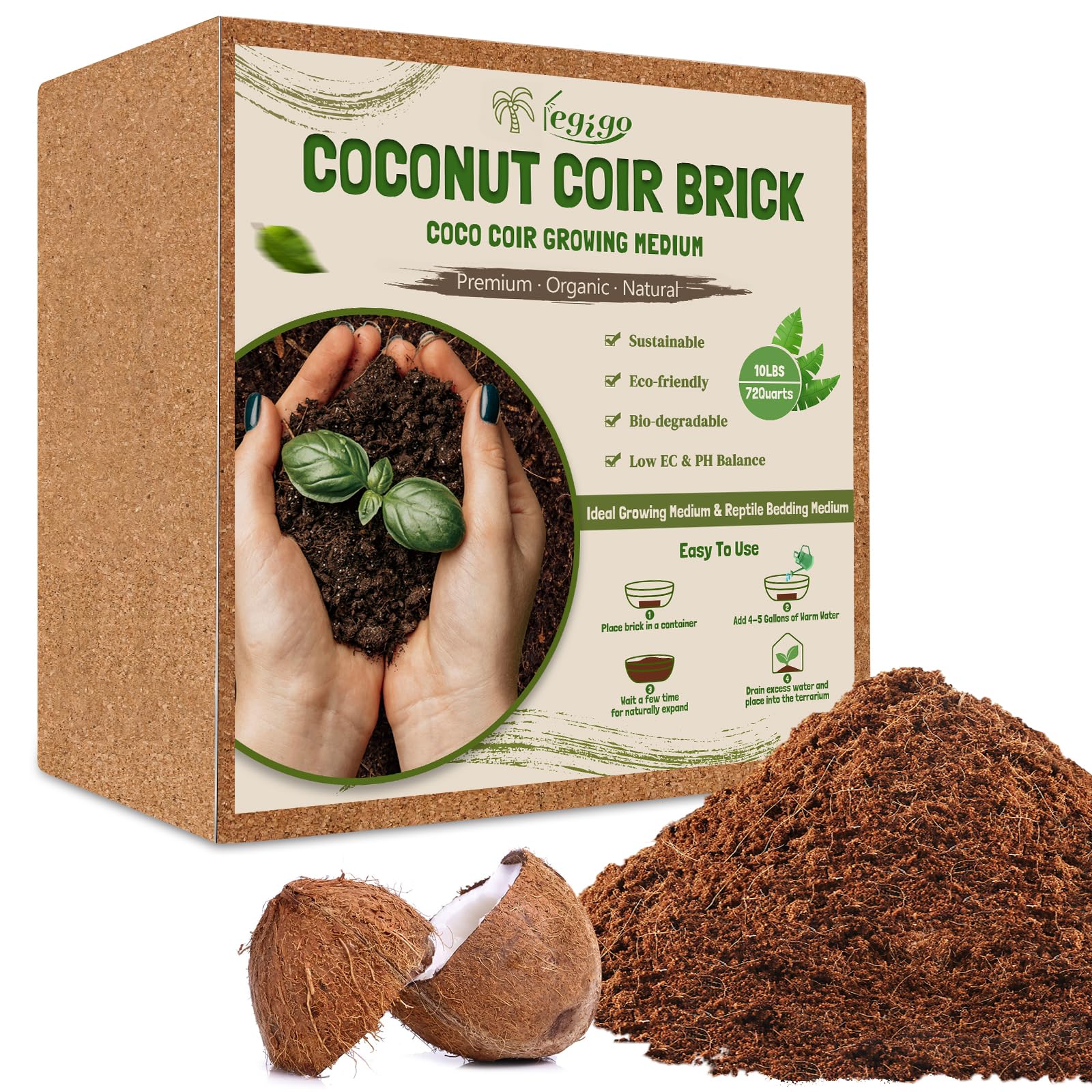
Legigo’s coco coir brick is a versatile, 100% organic option that works both as a reptile substrate and a garden soil amendment. The brick is compact and easy to store, expanding rapidly when hydrated into a light, airy medium. The low EC and pH-balanced formula mean it’s safe for amphibians right out of the bag—no extra rinsing needed. The spongy texture holds just enough moisture while allowing excess to drain, creating a comfortable environment for White’s tree frogs.
A gardener who used this in their largest planter noticed their plants didn’t droop after transplanting, a testament to the coir’s ability to reduce transplant shock. For frog enclosures, it mixes well with other substrates like sphagnum moss to boost humidity. Some users reported a slight chemical odor when first hydrating, but it dissipates quickly. The brick yields a substantial amount of substrate, making it a cost-effective choice for those on a budget.
The only downside is that it’s a bit powdery if you add too much water too quickly, so take it slow. Also, it’s not a pre-made mix, so you’ll need to combine it with leaf litter or bark if you want a more textured top layer. For a simple, clean, and affordable coco coir base, Legigo delivers solid performance.
Why we love it
- 100% organic and sustainably sourced
- Low EC and pH balanced for immediate amphibian use
- Excellent moisture retention without waterlogging
Good to know
- May have a temporary chemical odor during initial hydration
- Powdery if over-hydrated; add water slowly
11. Vivlly Coco Coir Brick 10 LB

Vivlly’s 10-pound brick boasts the largest expansion in this roundup, yielding a whopping 75 quarts (2.5 cubic feet) of fluffy coco coir. That’s enough to fill a 40-gallon breeder tank with several inches of substrate. The triple-washed, low-salt formula (EC <0.5) ensures it’s safe for the most sensitive amphibians. The coir has a neutral pH of 5.5-6.5 and provides 30% air porosity, promoting healthy root growth for any live plants you add.
Gardeners and reptile keepers alike praise this product for its cleanliness and ease of use. One customer noted that it absorbed water easily with no clumps, making it beginner-friendly. The brick is aged 18+ months and buffered to remove excess salts, so you don’t have to worry about chemical burns on your frog’s skin. It’s also resistant to fungal growth, a common concern in humid enclosures.
The only consideration is the sheer volume—you’ll need a very large container to hydrate the whole brick at once. Some users found the instructions suggested more water than necessary, so start with 3-4 gallons and add more as needed. If you have a large colony or multiple enclosures, this is the most economical way to stock up on high-quality substrate.
Why we love it
- Massive 75-quart yield from a single brick
- Ultra-low salt content for maximum amphibian safety
- Fungal-resistant and pH balanced for planted vivariums
Good to know
- Requires a very large container for hydration
- May need less water than the package suggests
Safety & Care Tips
Preventing Impaction
Always choose a substrate with a particle size that your frog cannot easily swallow. Fine coco fiber or small chips are safest. Avoid gravel, sand, or large bark chunks. If you notice your frog passing substrate in their stool, switch to a finer material immediately.
Maintaining Proper Humidity
Use a digital hygrometer to monitor humidity levels. Mist the substrate lightly each morning and evening, allowing the top layer to dry slightly between mistings. If the substrate becomes soggy, increase ventilation or mix in drier coco coir to prevent bacterial growth.
Spot Cleaning and Replacement
Remove soiled substrate and uneaten food daily to prevent mold and ammonia buildup. Every 3-6 months, replace the entire substrate layer. For bioactive setups, you can extend this period by maintaining a healthy population of isopods and springtails that break down waste naturally.
Avoiding Chemical Contaminants
Only use substrates labeled as organic, low-salt, and free of fertilizers or pesticides. Even small amounts of chemical residues can be absorbed through a frog’s skin, leading to illness. When in doubt, rinse the substrate with dechlorinated water before adding it to the enclosure.
FAQ
Can I use potting soil for my White’s tree frog?
How often should I change the substrate?
Is sand safe for White’s tree frogs?
Can I mix different substrates together?
What is the ideal substrate depth?
Final Thoughts: The Verdict
For most frog parents, the best substrate for whites tree frogs winner is the Josh’s Frogs Coco Block Fine Coco Fiber because it offers the perfect balance of humidity retention, safety, and value. If you want a bioactive-ready mix, grab the Finn’s Frog Farm ABG Mix. And for the best budget-friendly bulk option, nothing beats the MODELLOR Coco Coir Brick.