
A horse constantly rubbing its mane against the stall door, or a dog chewing its tail raw, isn’t just a behavioral nuisance — it’s the raw, physical misery of sweet itch. Managing this allergic dermatitis requires a targeted strategy that goes beyond basic grooming, focusing on active ingredients that soothe, heal, and deter the biting insects that trigger the flare-up. This guide cuts through the marketing to identify the treatments that actually stop the cycle of itching and secondary infection.
I’m Mo Mahin — the founder and writer behind Furric. I’ve spent hundreds of hours analyzing the chemical composition, application methods, and owner-reported efficacy of dozens of equine and canine dermatological treatments to isolate what truly works against sweet itch flares.
For a horse or dog owner looking for real respite, sorting through greasy pastes and empty promises can be exhausting. That’s why this breakdown is built specifically around finding the best sweet itch treatment — one that reliably blocks biting insects while actively healing the damaged skin beneath the coat.
How To Choose The Best Sweet Itch Treatment
Sweet itch, or insect bite hypersensitivity, is an allergic reaction to the saliva of biting midges (Culicoides). The right treatment doesn’t just mask the itch — it addresses the specific three-phase cycle: repelling the insect, calming the inflammatory response, and protecting the broken skin barrier from bacteria. Here are the critical factors to evaluate before you buy.
Antipruritic & Anti-Inflammatory Base
The primary ingredient driving relief must calm the mast cell response. Look for treatments containing soothing agents like hydrocortisone (for acute flares) or natural anti-inflammatories like aloe vera, tea tree oil, or colloidal oatmeal. A product that only smells like citronella but lacks an active calming agent will fail to stop the rubbing cycle.
Skin Barrier & Carrier Oil Chemistry
A treatment’s ability to stay on the skin — not melt off under a summer sun or during a light sweat — determines its dosing interval. A 14-ounce salve with a beeswax or shea butter base will outlast a thinner lotion formula. However, thick petroleum bases can trap heat and worsen dermatitis; opt for breathable oils like coconut or canola that nourish the hair follicle without clogging it.
Pest Deterrent Spectrum & Duration
The treatment must contain a proven insect repellent component. Essential oils like neem, eucalyptus, peppermint, and lemongrass provide chemical-free deterrence that lasts roughly 6–24 hours depending on the concentration. A product that only heals the wound but doesn’t repel the midge will leave the horse vulnerable to re-biting the same spot, negating the healing progress.
Quick Comparison
On smaller screens, swipe sideways to see the full table.
| Model | Category | Best For | Key Spec | Amazon |
|---|---|---|---|---|
| Farrier’s Wife Belly Salve | Natural Salve | Healing open sores while repelling flies | 7 oz, Shea & Cocoa Butter base | Amazon |
| Farnam Triple Action Wound Treatment | Medicated Ointment | Triple-action wound care for horses & dogs | 14 oz, SPORTING GOODS grade | Amazon |
| Bickmore Gall Salve | Grease-Free Cream | Friction areas that need a dry finish | 14 oz, non-melt formula | Amazon |
| DURVET Pierce’s Nu-Stock | Oil-Based | Senior dogs with chronic skin irritation | 12 oz oil, safe for aged dogs | Amazon |
| EQyss Micro-Tek Equine Shampoo | Medicated Shampoo | Full-body soaking for widespread itching | 32 oz, botanical formula | Amazon |
In‑Depth Reviews
1. Farrier’s Wife Belly Salve
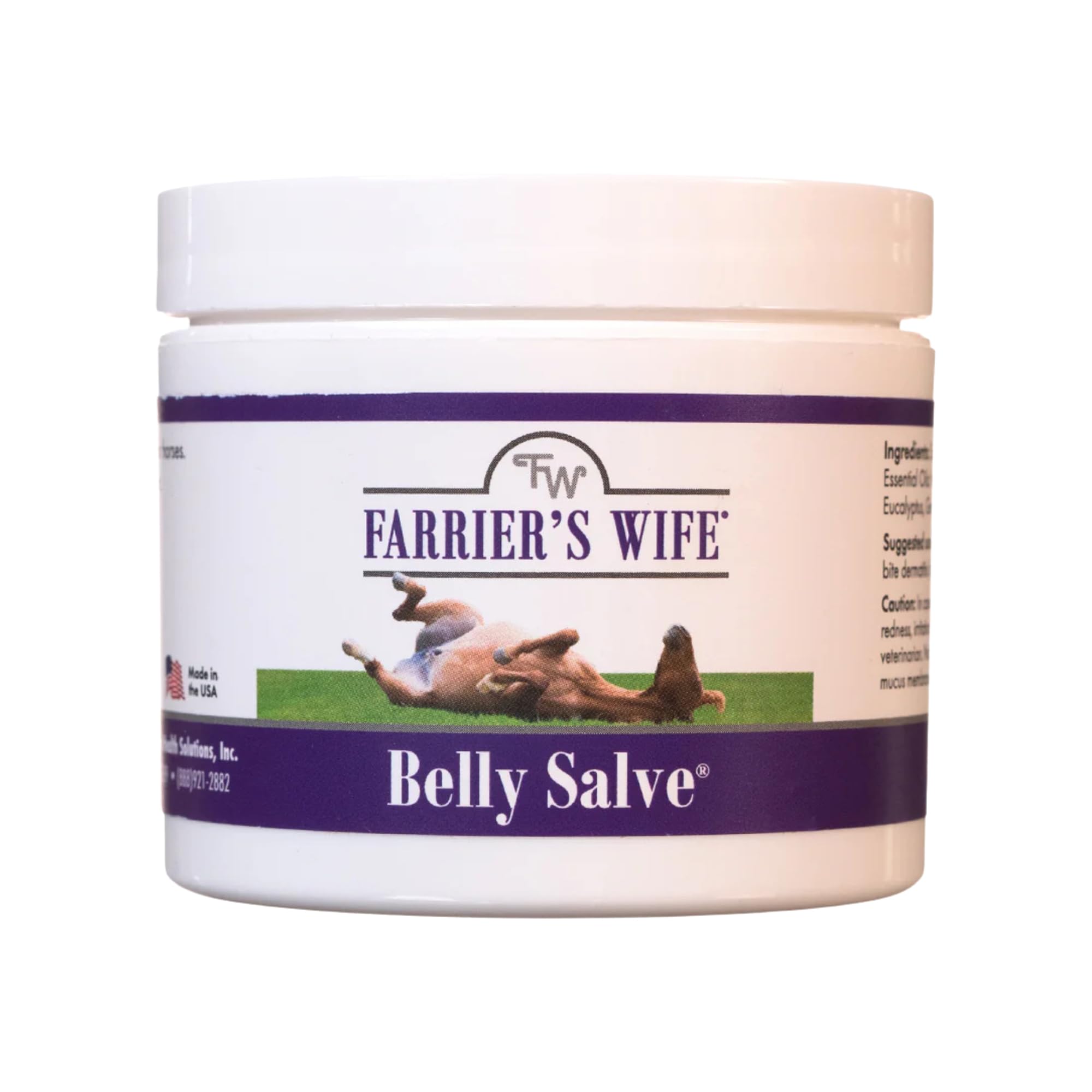
This salve earns the top spot because it addresses both the insect and the skin in one application. The blend of shea butter and cocoa butter provides a thick, breathable barrier that doesn’t melt off in heat, while the neem, peppermint, and eucalyptus essential oils deliver a strong deterrent effect that users report lasting up to 24 hours against gnats and flies. The 7-ounce tub is compact but dense — a little pinch goes a long way on cinch areas and belly wounds.
Customers explicitly praise its immediate cooling sensation; horses stop twitching the treated area within seconds, suggesting the carrier oils are well-matched to sensitive, broken skin. The formula is entirely chemical-free, relying on natural oils, which reduces the risk of further irritation from harsh preservatives. It’s marketed specifically for horses, but owners have used it successfully on dogs with hot spots and bug-bite allergies.
The main trade-off is the texture — it’s a firm balm that requires warming between your fingers before spreading, which can be a minor hassle on cold mornings. Additionally, the 7-ounce size may be small for treating large areas like a full quarter of the horse’s neck, making it better suited as a spot treatment for smaller lesions or ear tips.
Why we love it
- Immediate soothing effect reported by owners
- 24-hour repellent action against midges
- Natural formulation safe for broken skin
Good to know
- Requires finger-warming before application
- 7-ounce size may not cover large areas
2. Farnam Triple Action Wound Treatment
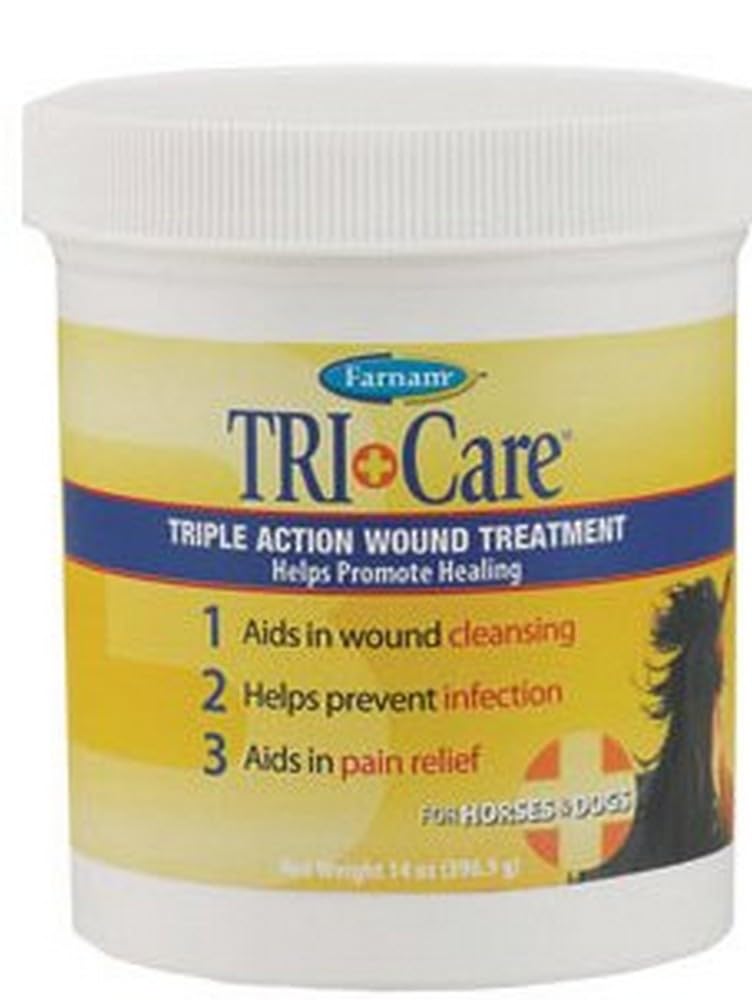
Farnam’s Triple Action formula is a traditional medicated ointment designed to clean, protect, and promote healing of minor wounds, galls, and abrasions in both horses and ponies. Unlike natural salves, this uses a veterinary-grade active ingredient system that creates a physical moisture barrier while discouraging bacterial growth in the wound bed. The 14-ounce tub offers generous volume for multiple applications over a season.
The key strength here is versatility — it works on sweet itch-derived sores, but also on regular saddle galls and girth galls that occur independently of insect allergies. Owners of working horses appreciate that the ointment does not sting upon application, even on raw tissue, which makes reapplication less stressful for the animal. It’s also registered for use on dogs, expanding its utility across species.
The product is best used as a wound management step after the initial itch has been addressed — it lacks the specific insect-repelling essential oils needed to prevent fresh midge bites. For a horse that is still in a high-insect environment, pairing this ointment with a separate fly spray is necessary. The container is also a standard tub, requiring careful hygiene to avoid contaminating the product with dirt or manure.
Why we love it
- Triple-action protection for wounds and abrasions
- Non-stinging formula ideal for raw skin
- Large 14 oz tub for multiple applications
Good to know
- Does not contain insect repellent
- Requires separate fly management
3. Bickmore Gall Salve

Bickmore Gall Salve is specifically engineered for horses that are worked hard in summer heat, solving a common problem: other ointments melt, drip, or rub off onto tack. This goes on dry and stays put, making it ideal for treating shoulders, necks, and backs — the high-friction areas where sweet itch lesions often intersect with saddle placement. The 14-ounce size is generous and the formula is made entirely in the USA.
Its primary use is for galled shoulders and necks, but the unique non-melt chemistry works well on facial sweet itch lesions that would otherwise be wiped off by the horse rubbing against trees or stall walls. The dry finish means it doesn’t attract dirt and debris, which is a significant advantage over greasy ointments that can create a sticky mess. It’s also described as non-blistering, suitable for sensitive skin.
The formula is heavier on wound protection and friction relief than on insect deterrence. It does not contain neem or eucalyptus, so it won’t actively repel midges. This product shines as a barrier cream for an area that is already healing from a sweet itch flare, but should be used in tandem with a targeted repellent for the surrounding skin to prevent new bites from starting the cycle over.
Why we love it
- Won’t melt or rub off in hot summer weather
- Goes on dry and leaves no greasy residue
- Excellent for high-friction saddle areas
Good to know
- Lacks active insect repellent ingredients
- Best used as a secondary barrier treatment
4. DURVET Pierce’s Nu-Stock

DURVET’s Pierce’s Nu-Stock is a unique oil-based product that has been a staple in barns for decades, but its claim to fame is its safety profile for very old dogs. Unlike thick salves, this oil format penetrates deep into the coat and skin, making it ideal for treating widespread dry, itchy patches without leaving a heavy coating that the animal might try to lick off. The 12-ounce bottle provides a liquid approach that covers more surface area with less product weight.
The primary target species for this product is dogs, but it’s widely used on horses for sweet itch management, particularly on dogs that share the same allergic sensitivities as their equine companions. Owners of senior animals report that it doesn’t cause the burning or stinging that some medicated sprays can create, and it seems to absorb well into older, thinner skin. The oil format also helps condition the coat, reducing the brittle dryness that often accompanies chronic scratching.
The lack of published customer reviews makes it harder to gauge real-world efficacy against severe sweet itch flares beyond the manufacturer’s claims. The oil format can also be messy to apply — it requires significant work with a sponge or cloth to ensure even distribution without dripping, and the bottle dispenses fluid quickly, leading to potential waste if you aren’t careful.
Why we love it
- Tested safe for geriatric dogs with sensitive skin
- Light oil format conditions the coat
- Made in the United States
Good to know
- Can be messy to apply without waste
- Lacks customer review data for verification
5. EQyss Micro-Tek Equine Itch Relief Shampoo

When sweet itch covers large areas of the body — the entire belly, the whole mane, or both flanks — a spot-applied salve becomes impractical. EQyss Micro-Tek Shampoo offers a full-body approach with a salon-quality botanical formula designed to soothe irritated skin without stripping essential oils. The 32-ounce bottle is sulfate-free and pH-balanced, making it safe for sensitive genital areas and open wounds that would burn from harsher detergents.
The application protocol is specific: a 2-3 minute soak for general cleaning, then a 5-7 minute leave-on period for the affected spots, followed by a thorough rinse. The non-steroidal formula means it doesn’t rely on steroids to stop the itch, relying instead on botanical ingredients to reduce the inflammatory response at the source. It also has a light floral scent that owners find far more pleasant than medicated barn odors, making grooming less of a chore.
The shampoo requires a wet horse and the patience for the leave-on time — not a quick fix when you’re in a rush. It also works best when paired with the EQyss Micro-Tek Spray as a leave-on protectant between washes. If a horse absolutely hates bathing, this becomes a struggle. Despite the thorough instructions, the product cannot fully replace the need for a daily spot-treatment repellent for the worst lesions.
Why we love it
- Covers large body areas in a single wash
- Sulfate-free and gentle on open wounds
- Leave-on soak time for active relief
Good to know
- Requires a 5-7 minute leave-on period
- Best used with a daily spray for full coverage
FAQ
Can I use a dog-specific sweet itch treatment on my horse?
How often should I reapply a sweet itch ointment for it to be effective?
What is the difference between a gall salve and a sweet itch salve?
Final Thoughts: The Verdict
For most owners, the best sweet itch treatment winner is the Farrier’s Wife Belly Salve because it delivers a reliable 24-hour insect barrier while actively healing the open sores with its shea butter and cocoa butter base. If you need a triple-action wound cleanser for an infected girth gall, grab the Farnam Triple Action Wound Treatment. And for a full-body approach that covers widespread itching without leaving a greasy mess, nothing beats the EQyss Micro-Tek Shampoo.