
A thistle feeder is a specialized tool, not a general-purpose bird feeder. Its narrow ports are engineered to dispense tiny, oil-rich Nyjer seed while excluding larger birds and minimizing waste. The wrong design, however, turns your investment into a squirrel buffet or a moldy mess after the first rain.
I’m Mo Mahin — the founder and writer behind Furric. I spend my days comparing construction tolerances, analyzing customer longevity reports, and studying how specific port designs and metal gauges affect seed flow and bird visitation rates across dozens of finch feeder models.
Whether you want to attract goldfinches, pine siskins, or house finches, choosing the right best thistle feeder comes down to build material, port count, and ease of cleaning — all of which I break down in this guide.
How To Choose The Best Thistle Feeder
Not all tubes are built alike. The difference between a feeder that lasts five winters and one that cracks after one season is in three specific design choices. Here is what to look for before you hang anything.
Material: Metal vs. Polycarbonate
Squirrels can shred plastic tube feeders in minutes. Metal options — specifically die-cast aluminum or powder-coated steel — resist gnawing and UV degradation far longer. Polycarbonate is lighter and transparent, allowing you to check seed levels at a glance, but it rarely survives a determined squirrel attack. For long-term value, prioritize metal over plastic unless you hang the feeder in a fully squirrel-proofed location.
Port Design and Perch Length
Thistle feeders rely on small feeding ports — typically 1/8-inch slits — that allow only Nyjer seed to flow while blocking larger seeds. Perch length matters more than most buyers realize: a 1.5-inch perch excludes blue jays and doves, reserving the feeder for goldfinches, chickadees, and pine siskins. Port count can range from 4 to 12; six to eight ports strike the best balance between accommodating multiple birds and controlling seed depletion rate.
Cleaning and Disassembly
Nyjer seed spoils quickly in wet conditions. A feeder that cannot be fully disassembled — where the base, tube, and lid separate completely — will trap old, moldy seed inside crevices, potentially harming birds. Look for models with twist-off bases or removable trays that can be scrubbed and dried. Drainage holes in the base tray are a non-negotiable feature for any feeder exposed to rain.
Quick Comparison
On smaller screens, swipe sideways to see the full table.
| Model | Category | Best For | Key Spec | Amazon |
|---|---|---|---|---|
| TrampgiK Metal Tube Feeder | Metal Tube | Squirrel resistance on a budget | 13-inch height, 1.5-inch perches | Amazon |
| MIXXIDEA Finch Feeder | Metal Tube | High port count for multiple finches | 8 feeding ports, 15.5-inch height | Amazon |
| Gtongoko Mesh Tube Feeder | Metal Mesh | Large capacity and cling-feeding birds | 2.5 lb capacity, 6-inch tray | Amazon |
| Stokes Select Thistle Tube | Polycarbonate Tube | Lightweight with conservation backing | 1.6 lb capacity, rust-proof polycarbonate | Amazon |
| Woodlink Audubon Screen Tube | Die-Cast Aluminum | Ultimate squirrel-proof durability | 13-inch screen tube, 1 lb capacity | Amazon |
In‑Depth Reviews
1. TrampgiK Metal Tube Bird Feeder
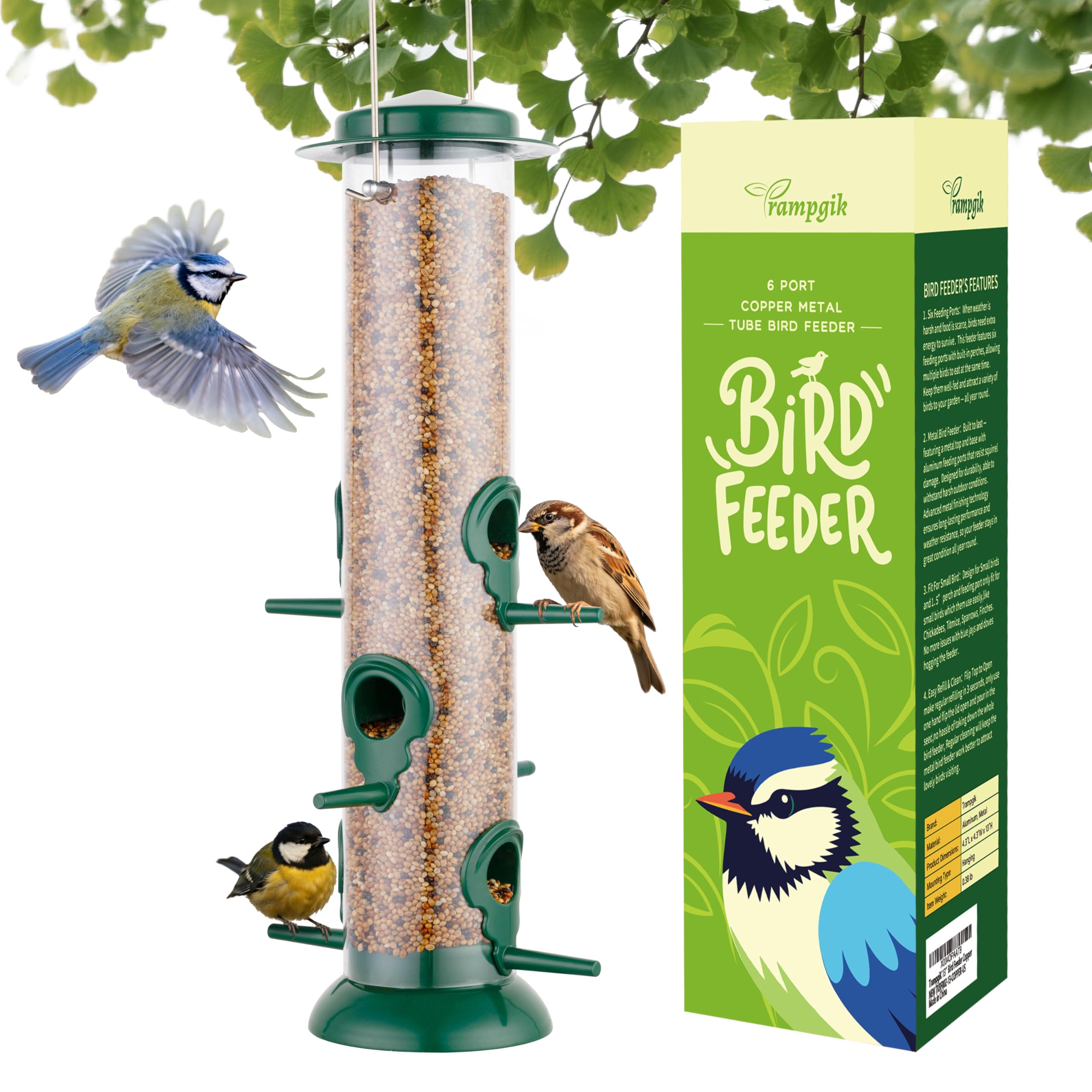
The TrampgiK feeder uses a full metal body with a brushed copper-green finish that resists rust and weather exposure. Its flip-top lid enables one-handed refilling without removing the feeder from its hanging position — a practical advantage during cold months when you want to minimize time outside. The 13-inch tube holds enough seed to reduce daily refills while remaining compact enough for smaller yards.
Six feeding ports are paired with 1.5-inch perches that effectively exclude larger birds and squirrels. Multiple verified buyers note that cardinals and finches arrive within days of hanging this unit, and the metal body has held up against at least one squirrel attempt. The weight of 1.54 pounds gives it a solid feel without overloading a standard hanging hook.
Some users mention that the ports are sized for small birds specifically — blue jays cannot perch comfortably. The brushed finish does not show dirt easily, but occasional cleaning is still required to prevent seed buildup around the ports. Overall, this is the strongest price-to-durability ratio in the category.
Why we love it
- Flip-top lid enables quick, tool-free refills
- Short perches block large birds effectively
Good to know
- Not fully disassemble for deep cleaning
- Paint may chip if knocked against hard surfaces
2. MIXXIDEA Finch Bird Feeder

The MIXXIDEA feeder stands out for its eight feeding ports, which accommodate multiple goldfinches simultaneously without crowding. The transparent tube body lets you monitor seed levels at a glance, while the copper-toned metal top and base add visual appeal that blends into garden settings. At 15.5 inches tall, it is one of the longer tube feeders in this lineup, offering decent seed volume despite its narrow diameter.
Construction uses alloy steel for the key structural parts, and the perches are wide enough for comfortable finch landing but still short enough to exclude larger species. Buyers consistently report seeing six or seven finches on the feeder at once, which speaks to the port spacing being optimized for social feeding birds. The hanging handle is built into the lid, making relocation effortless.
The main reservation is that some units arrived with minor finish imperfections, and the transparent tube can fog over time if cleaned with abrasive materials. A small percentage of owners felt the metal felt thinner than expected, though customer service responses have reportedly been proactive. This feeder is best for birders who prioritize high traffic over brute-force durability.
Why we love it
- Eight ports support high bird volume
- Transparent tube for easy seed monitoring
Good to know
- Metal walls feel lighter than premium competitors
- Transparent tube may scratch with rough cleaning
3. Gtongoko Finch Bird Feeder
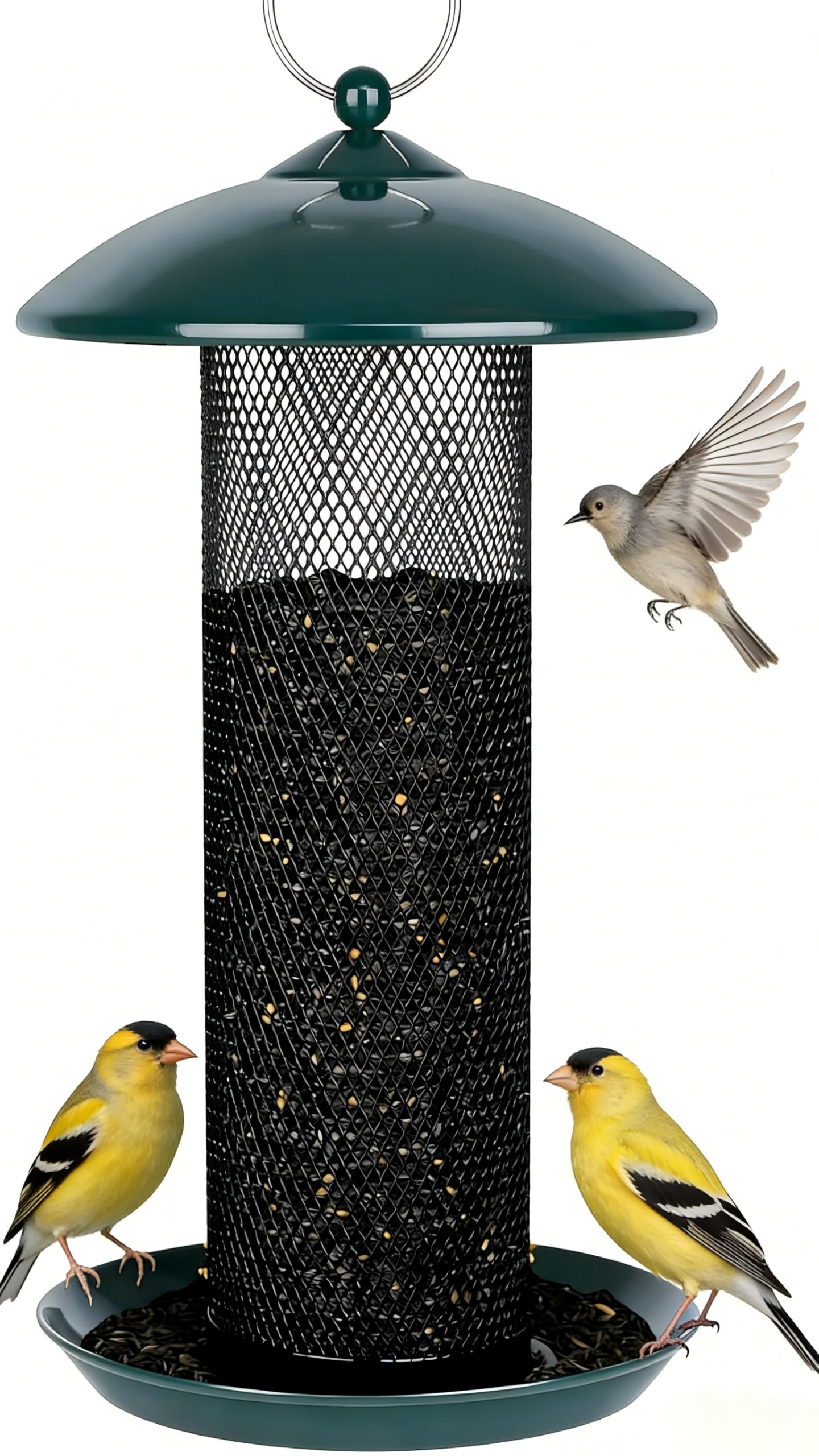
The Gtongoko feeder uses a metal mesh tube design instead of port holes, allowing finches and other clinging birds to feed from any angle. The 2.5-pound seed capacity — the largest in this roundup — means fewer refills for heavy-feeding yards. A 6-inch circular tray at the base catches loose seeds and provides a stable landing platform, with 12 drainage holes to keep contents dry after rain.
Assembly takes seconds: the top and bottom twist off for refilling and cleaning, and the all-metal construction contains no plastic or wood that squirrels could gnaw through. Verified users consistently praise the sturdiness, noting that the mesh holds up well against weather and that finches adapt to the cling-feeding style almost immediately. The green powder-coated finish blends into foliage.
The primary complaint involves the twist-lock mechanism: some units can separate if bumped hard enough, causing seed to spill. A few owners reported rust forming on the tray after several months of continuous outdoor exposure. Still, for those who want maximum capacity and a feeding approach that mimics natural perching, this mesh feeder delivers high value.
Why we love it
- 2.5-pound hopper minimizes refill frequency
- Mesh surface allows cling-feeding from any angle
Good to know
- Twist lock may loosen with heavy bird activity
- Tray can develop rust over extended wet exposure
4. Stokes Select Thistle Tube Feeder

Stokes Select brings decades of bird-feeding experience into this polycarbonate tube feeder. Its bright yellow color is specifically intended to attract goldfinches, which are naturally drawn to that wavelength. The roof-like design over each feeding port sheds rainwater effectively, reducing the risk of seed spoilage at the point of access. With a 1.6-pound capacity, it holds comparable volume to metal tubes while being significantly lighter to handle.
Six feeding ports with comfortable perches have worked reliably for years according to long-term owners, who report the feeder surviving multiple seasons and even a storm impact that cracked an older unit. The bottom design prevents seed from settling out of reach, so finches can access nearly every kernel. A portion of every sale is donated to bird habitat conservation, adding a philanthropic angle.
The polycarbonate material, while tough, is not impenetrable to squirrels. Owners recommend placing this feeder on a squirrel-proof pole or baffle. Additionally, the bottom cap requires partial disassembly for thorough cleaning — a minor inconvenience for an otherwise well-engineered feeder. It is the best option for birders who value lightness, visibility, and proven brand reliability.
Why we love it
- Roofed ports keep Nyjer seed dry during rain
- Bright yellow color naturally attracts goldfinches
Good to know
- Polycarbonate can crack from severe impact or freezing
- Not fully squirrel-proof without additional baffles
5. Woodlink Audubon Die Cast Aluminum Finch Screen Tube

The Woodlink Audubon feeder is built around a die-cast aluminum frame that feels substantially heavier and tougher than any plastic or thin-metal competitor. Its screen tube design — a mesh-like cylinder — allows finches to cling and feed from any point, much like the Gtongoko model, but the aluminum construction eliminates rust concerns entirely. The sliding lid opens for easy filling and closes snugly to keep seed dry.
Holding one pound of seed, this is not the largest capacity feeder, but the focus here is on longevity. Verified owners describe it as the sturdiest thistle feeder they have owned, with many reporting years of continuous outdoor use without warping or corrosion. The 13-inch length fits standard hanging hooks, and the beige finish is neutral enough for any backyard setting. No assembly is required — it arrives ready to hang.
Some seed waste is inevitable with any screen-type feeder; finches tend to knock seeds loose while feeding. A separate acrylic tray (sold separately) can catch the fallen seed. Additionally, the sliding lid fits snugly but can be stiff to open initially. For those willing to pay a little more for die-cast durability and a clean, minimal design, this feeder is effectively a lifetime purchase.
Why we love it
- Die-cast aluminum construction resists rust and gnawing
- Sliding lid makes filling simple and secure
Good to know
- Screen design leads to minor seed spillage
- Catch tray sold separately to reduce waste
FAQ
What size feeder ports work best for goldfinches?
Can I mix Nyjer seed with other seed types in a thistle feeder?
Why do some thistle feeders have mesh tubes instead of ports?
How can I tell if my thistle feeder has mold inside?
Final Thoughts: The Verdict
For most gardeners, the best thistle feeder winner is the TrampgiK Metal Tube Feeder because it combines metal anti-squirrel construction, convenient flip-top refilling, and perch sizing that effectively targets finches while keeping larger birds out. If you want a multi-port design that packs eight feeding stations for high-traffic yards, grab the MIXXIDEA Finch Feeder. And for those who want a permanent, rust-proof fixture that will outlast everything else, nothing beats the Woodlink Audubon Die-Cast Aluminum Screen Tube — it is a buy-it-for-life investment.