
Finding a reliable tick repellent for your horse often feels like a gamble — either the formula washes off after one sweaty ride, or it smells so strong your horse hates being touched. The stakes are higher than comfort: tick-borne diseases like Lyme and anaplasmosis can sideline an equine athlete for months. Choosing the right spray or concentrate means understanding longevity, active ingredients, and whether a product fits your barn’s specific pressure level.
I’m Mo Mahin — the founder and writer behind Furric. I compare each product’s active ingredient concentration, residual persistence, and real-world user feedback across dozens of equine pest control entries to separate honest effectiveness from marketing spin.
Whether you board your horse in the woods or manage a busy lesson barn, this guide breaks down the best options so you can protect your herd without wasting time or money. Selecting the right tick control for horses comes down to knowing how permethrin percentages translate to days of coverage.
How To Choose The Best Tick Control For Horses
The equine tick control market splits into two distinct camps: ready-to-use sprays you apply directly to the horse, and concentrated permethrin solutions you dilute for premise spraying or full-body application. Your choice depends on the number of horses you treat, the tick pressure on your property, and how much residual protection you need between rides.
Read The Permethrin Percentage First
Permethrin is the industry-standard synthetic pyrethroid for on-animal and premise tick control. Concentrates range from 10% to 13.3% — a 3.3% difference that translates to roughly 10 extra days of residual activity on porous surfaces like wood fencing and stall walls. If your property borders dense brush or tall grass, lean toward the higher percentage bottle. For light maintenance on handleable horses, a 10% concentrate diluted correctly is sufficient.
Water-Based vs. Oil-Based Formulations
Water-based sprays rely on suspension technology to keep active ingredients evenly mixed without shaking. They dry quicker and feel less greasy on the coat, which matters for horses with sensitive skin. Oil-based sprays often include coat conditioners like lanolin that protect the hair shaft and add shine, but they require thorough shaking before each use to avoid hot spots that can irritate skin. Match the carrier base to your horse’s coat type and your tolerance for pre-application prep.
Residual Duration And Reapplication Rhythm
A quality ready-to-use spray typically holds tick-killing power for 24 to 48 hours on the horse before sweat, rain, or UV exposure degrade its potency. Concentrates applied to premises — stalls, run-in sheds, fence lines — can remain effective for 4 to 6 weeks against ticks, though mosquito control drops faster. If you trailer your horse to shows or ride on unfamiliar trails, a portable ready-to-use spray is non-negotiable. If ticks invade your barn, a concentrate sprayed on surfaces breaks the life cycle at the source.
Quick Comparison
On smaller screens, swipe sideways to see the full table.
| Model | Category | Best For | Key Spec | Amazon |
|---|---|---|---|---|
| Martin’s Permethrin 13.3% | Concentrate | 4-6 week premise residual | 13.3% permethrin | Amazon |
| GORDON’S Permethrin 10 | Concentrate | Multi-species barn use | 10% permethrin | Amazon |
| Durvet Permethrin EC 10% | Concentrate | On-animal and premise | 10% permethrin | Amazon |
| Farnam Bronco Gold 2-in-1 | Ready-To-Use | Daily coat + tick protection | Piperonyl Butoxide | Amazon |
| PYRANHA Zero-Bite | Ready-To-Use | Plant-based multi-pet barn | Geraniol + peppermint oil | Amazon |
In‑Depth Reviews
1. Martin’s Permethrin 13.3% Concentrate
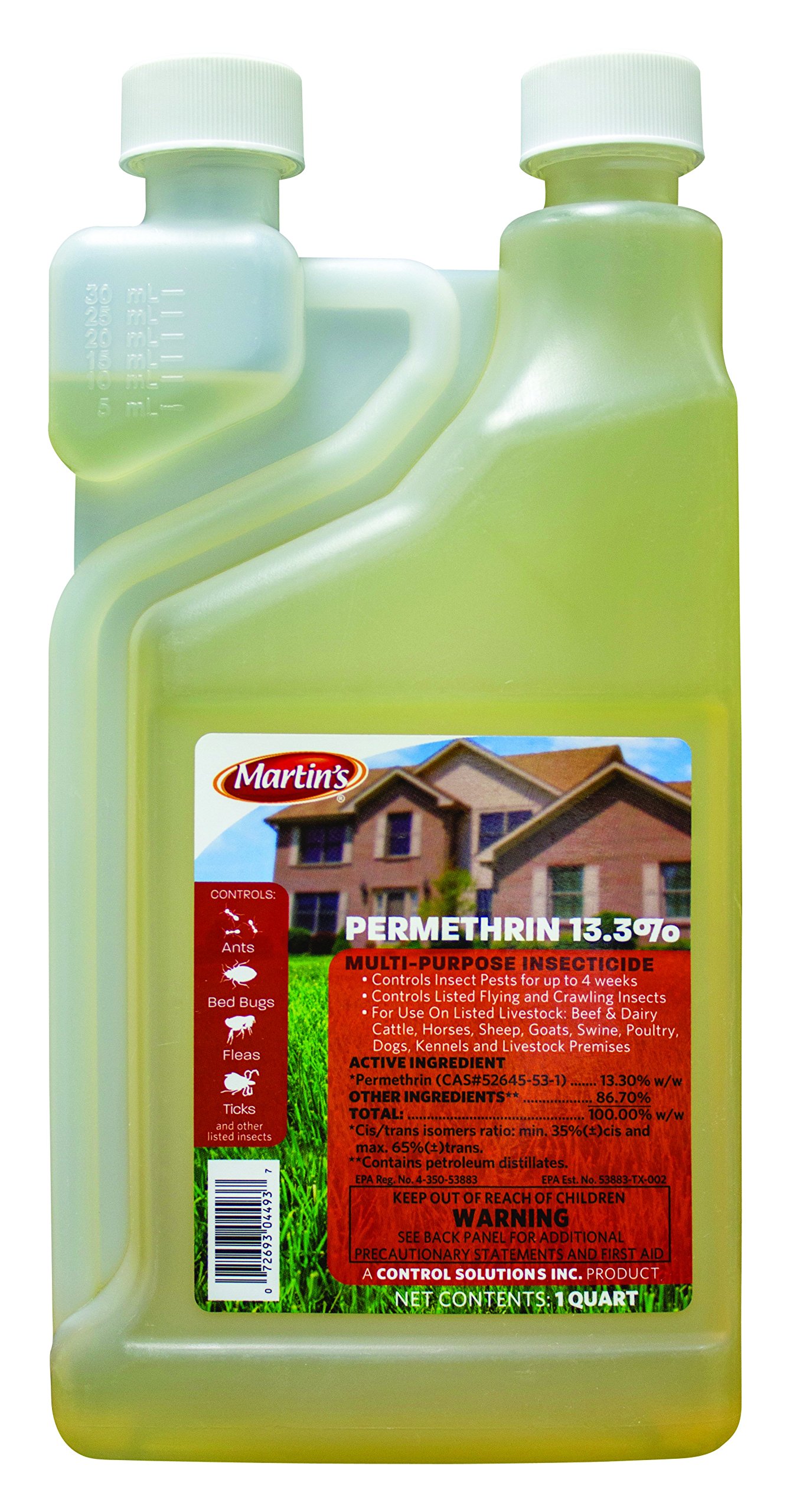
The highest permethrin concentration in this lineup, Martin’s 13.3% delivers genuine 4- to 6-week tick suppression when applied to barn surfaces, fence lines, and run-in sheds. Users who pair it with a backpack sprayer report dramatic population drops around chicken coops and dog kennels, with mosquito knockdown lasting about one week before tapering.
This concentrate requires careful mixing — the solvent smell is potent, so apply during dusk or dawn when non-target insects are less active and avoid indoor use without ventilation. Reviewed as a fourth-time purchase by many, the consistency of residual protection justifies the slightly higher price per bottle compared to 10% alternatives.
For horse owners fighting heavy wood-tick pressure on rural acreage, Martin’s is the strategic weapon. It’s not for daily on-animal application — stick to ready-to-use sprays for direct horse contact and reserve this concentrate for breaking the tick life cycle on premises.
Why we love it
- Full season of tick control per bottle when used on premises
- Higher percentage means fewer refills compared to 10% concentrates
- Cost-effective replacement for professional exterminator service
Good to know
- Strong chemical odor requires outdoor mixing and application
- Not labeled for tick egg kill — reapply when hatch cycles begin
- Not effective against ants, crickets, or spiders
2. GORDON’S Permethrin 10 Livestock & Premise Spray

GORDON’S carries broad label approval across cattle, horses, goats, sheep, swine, and poultry — making it the safest bet for mixed-species barns where you need one concentrate to treat the whole facility. User reports confirm visible results within 24 hours on flies and mites around chickens, with tick control holding well on porous stall surfaces.
Mixed at the recommended ratio, the solution has a mild odor compared to some 13.3% products, and the bottle yields enough diluted spray to cover a medium-sized barn several times. Multiple owners also use it to treat hiking clothes and dog bedding, noting no ticks after long treks in brushy terrain. It mixes to a milky consistency and may leave a faint residue on stainless steel or painted surfaces, so rinse water buckets and feed tubs before refilling.
If your tick control needs span multiple animal species and you want a concentrate that does double duty on clothing for human protection, this quart-size bottle delivers rock-solid value without the harsh solvent punch of higher-percentage alternatives.
Why we love it
- Approved for the widest range of livestock species in this guide
- Mild odor when diluted — comfortable to use in enclosed barn aisles
- One quart treats clothing, bedding, and premises without separate products
Good to know
- Needs weekly reapplication on animals for consistent tick kill
- Does not kill tick eggs — time second application for hatch window
- Milky mixture can leave visible residue on smooth surfaces
3. Durvet Permethrin EC 10-Percent

Durvet’s Permethrin EC 10% occupies the sweet spot between cost and coverage. Approved for on-animal use on horses, dogs, and livestock as well as premise spraying, this 16-ounce concentrate stretches surprisingly far. Users report repelling mosquitoes and no-see-ums from treated clothing through five wash cycles, confirming the residual stability of the formulation.
The trade-off is potency — at 10%, you’ll need to reapply more frequently on high-traffic fence lines compared to Martin’s 13.3%. Some buyers note the smell is strong when mixing but fades quickly once dry. A common strategy is to dilute 1 ounce with 20 ounces of water in a spray bottle for targeted horse leg and belly application during peak tick season, then use the remainder for stall fogging.
This is the entry-level concentrate that proves you don’t need a premium label to get reliable tick control. As long as you stay diligent with the reapplication schedule, Durvet holds its own against pricier competitors.
Why we love it
- Dual on-animal and premise label eliminates product confusion
- 16 oz bottle provides many dilution options for spot treatment
- Reliable clothing treatment for riders who trail through tick habitat
Good to know
- Strong mixing odor — use a respirator and apply outdoors
- Known to kill beneficial insects if sprayed on blooming plants
- Requires careful measurement; no built-in measuring cap
4. Farnam Bronco Gold 2-in-1 Horse Fly Spray and Coat Conditioner
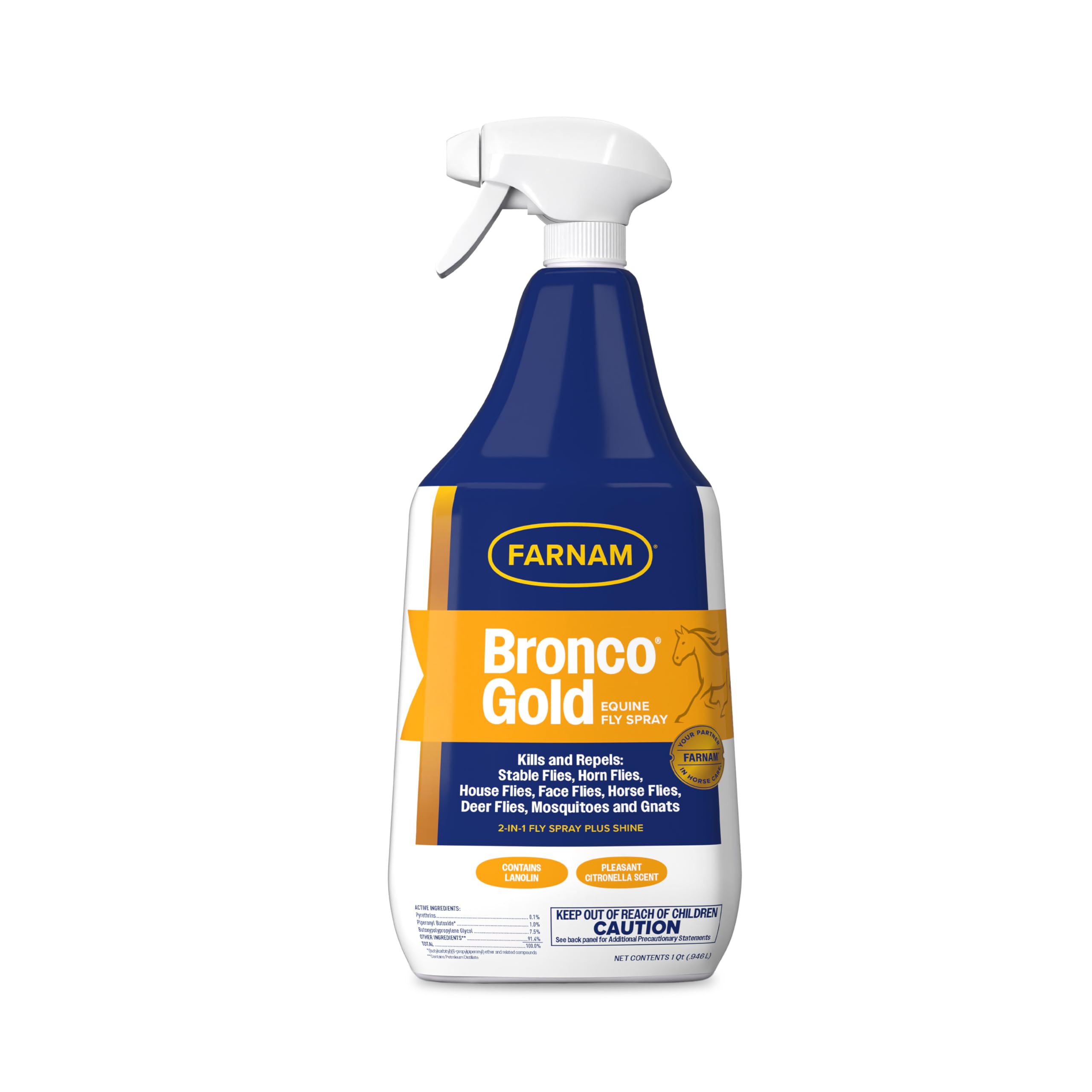
For owners who spray their horses daily during summer months, Bronco Gold combines tick and fly control with lanolin-based coat conditioning — meaning you save a step and avoid the chalky residue water-based sprays sometimes leave on dark coats. The citronella scent masks the chemical base, and users with horses allergic to mosquitoes confirm the mare tolerates this formulation without skin flare-ups.
This is a ready-to-use oil-based product — you must shake the bottle vigorously before each application or the active ingredients settle, which some users learned the hard way when they skipped shaking and saw skin irritation. Coverage lasts about two days in humid heat, and you’ll still need to wipe the face with a dedicated wipe or sponge to protect eyes and muzzle.
If your horse has a sensitive coat that dulls easily from harsh sprays, Bronco Gold keeps the hair sleek while delivering reliable knockdown. The 32-ounce size treats a single horse for roughly one week under heavy fly pressure.
Why we love it
- Lanolin-based formula conditions coat while repelling ticks and flies
- Citronella scent is pleasant for humans and tolerable for horses
- Kills biting insects on contact within seconds of application
Good to know
- Must be shaken thoroughly every time or risk skin irritation hot spots
- Sweats off faster than water-based alternatives during hot rides
- Bottle lasts only about one week for three horses in heavy rotation
5. PYRANHA Zero-Bite All Natural Fly Spray

Zero-Bite stands alone in this list as the only plant-based option — no permethrin, no piperonyl butoxide. Instead, it uses geraniol, peppermint, and clove oils suspended in a >90% water base with Pyranha’s Suspension Technology, meaning you never need to shake the bottle before spraying. It’s safe for horses, dogs, cats, ferrets, and caged pets, making it the best pick for barns with free-roaming chickens or small animals.
The trade-off is longevity: users confirm daily reapplication is necessary, and the repellent effect is gentler than synthetic concentrates. In low-tick-pressure environments or for horses that react poorly to chemical sprays, Zero-Bite works beautifully. But if your property is infested with deer ticks, you will likely need to supplement with a permethrin-based premise spray.
This quart-size bottle is a sensible addition to your barn for daily light use — spray it on legs and belly before turnout, and save the heavier synthetic concentrates for deep-woods trailering or high-pressure weeks. The pleasant peppermint-clove aroma is a bonus for barn workers sensitive to chemical smells.
Why we love it
- No shaking required — suspension technology keeps ingredients mixed
- Non-greasy, water-based formula dries quickly on the coat
- Safe to use around chickens and other caged pets inside the barn
Good to know
- Requires daily reapplication for consistent tick and fly protection
- Less effective than permethrin-based products under heavy tick pressure
- Citronella-free scent may still be too strong for some horses
FAQ
Can I use permethrin concentrate directly on my horse?
How often do I need to reapply tick spray on pastured horses?
What is the difference between permethrin 10% and 13.3% for tick control?
Are natural oil sprays effective against deer ticks on horses?
Can I treat my horse’s stall bedding with permethrin concentrate?
Final Thoughts: The Verdict
For most horse owners, the tick control for horses winner is the Martin’s Permethrin 13.3% Concentrate because it delivers the longest residual protection on barn surfaces, reducing tick populations for four to six weeks per application. If you need a single concentrate approved for on-animal use and premise spraying, grab the GORDON’S Permethrin 10. And for daily coat-friendly protection in low-pressure environments, nothing beats the PYRANHA Zero-Bite All Natural Fly Spray.