
A bored puppy is a destructive puppy. Without an outlet, that endless puppy energy turns into chewed baseboards, shredded pillows, and non-stop barking. The right toys redirect that drive toward something productive, giving their brain a workout that leaves them genuinely satisfied.
I’m Mo Mahin — the founder and writer behind Furric. I’ve spent the last three years analyzing enrichment toy designs, studying canine behavioral patterns, and comparing how different material grades, puzzle complexities, and feeding mechanisms hold up against real-world puppy play.
The key is matching the toy type to your puppy’s energy level and chewing style — and the best toys for bored puppies combine mental challenge with appropriate durability for their stage of development.
How To Choose The Best Toys For Bored Puppies
Not every toy marketed as an “enrichment tool” actually holds a puppy’s attention past day one. The real filter is whether the toy engages the three things that make a puppy feel fulfilled: sniffing, problem-solving, and appropriate chewing feedback. Here is what to look for.
Puzzle Complexity vs. Puppy Age
An 8-week-old puppy needs a near-immediate reward — a treat that falls out with minimal effort. A 6-month-old may solve a beginner puzzle in under a minute. Look for toys with adjustable difficulty, like treat balls with variable openings or snuffle mats where you can bury kibble deeper. If your puppy quits within two minutes, the puzzle is either too easy or too hard.
Material Safety and Durability
Puppy teeth are sharp but the jaw strength is still developing. Soft silicone and fleece are safe for moderate chewing but must be supervised — shredded fleece can cause blockages. For aggressive chewers, natural rubber (not foam) holds up longer. Avoid toys with glued-on parts, loose strings, or squeakers that a puppy can extract and swallow whole.
Supervision Necessity
No enrichment toy is truly indestructible. Every box should carry a “supervise your pet” warning. The difference is how quickly a toy becomes a hazard. A thick lick mat with suction cups might last months of daily licking, while a puzzle toy with thin plastic sliders can pop off in one aggressive paw-strike. Know your puppy’s chewing speed before leaving any toy unattended.
Quick Comparison
On smaller screens, swipe sideways to see the full table.
| Model | Category | Best For | Key Spec | Amazon |
|---|---|---|---|---|
| KIPRITII Enrichment Set | All-in-One Set | Slow eaters & beginners | Includes 2 lick mats + slow feeder bowl | Amazon |
| Forfon 9-Pack Set | Multi-Toy Kit | Small-medium smart dogs | 9 pieces with 3 treat balls | Amazon |
| Snuffle Mat for Dogs | Snuffle Mat | Foraging & slow feeding | 15.4” fleece mat with carrying strap | Amazon |
| Glory To Dog Snuffle Ball | Snuffle Ball | Small-breed sniffing | 4” fleece ball for small mouths | Amazon |
| Puppy Chew Toys 20 Pack | Variety Bundle | Teething & variety play | 20 pieces including rope toys & rubber rings | Amazon |
In‑Depth Reviews
1. KIPRITII Well-Rounded Dog Enrichment Toys Set
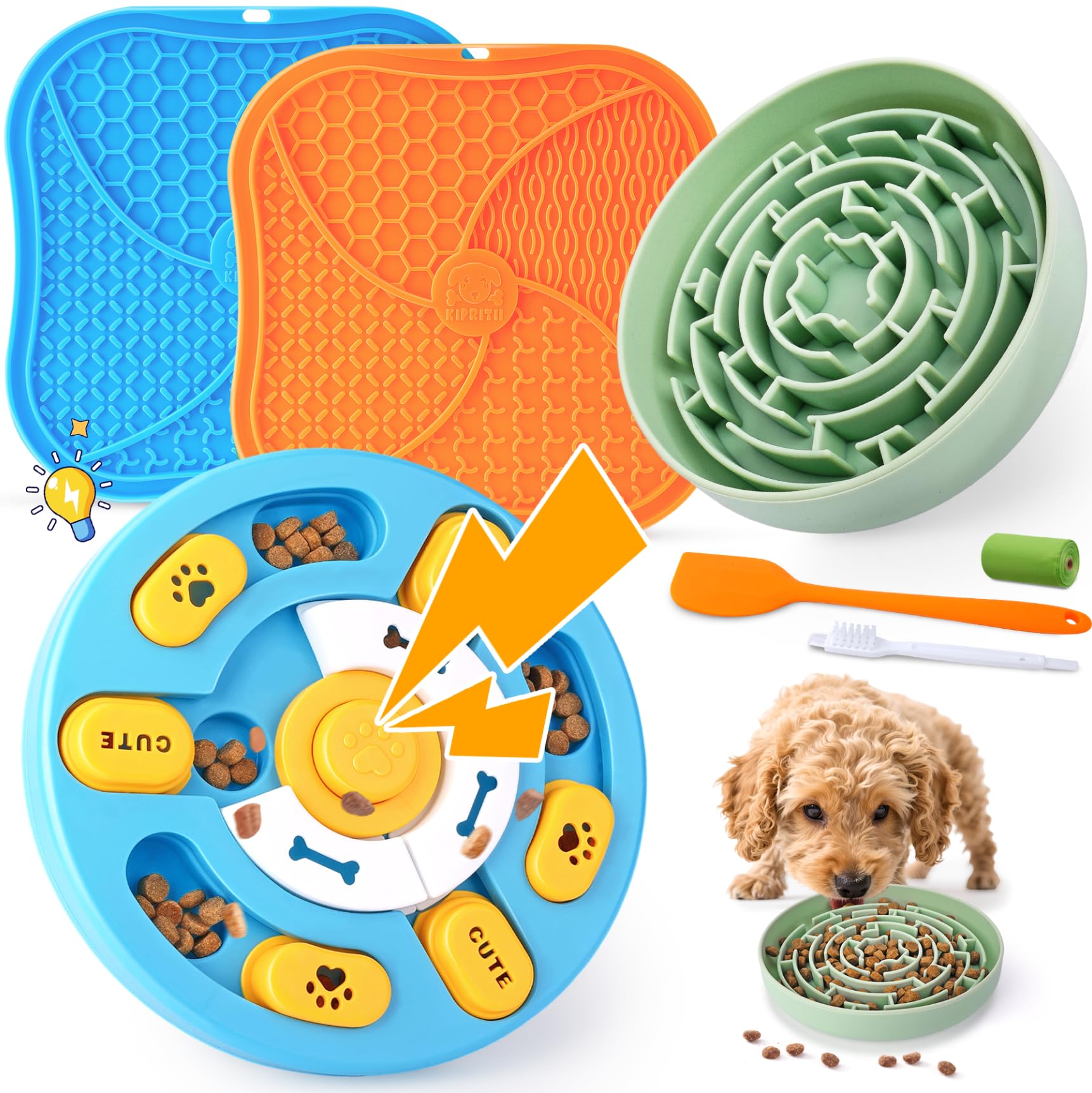
This set hits the sweet spot for owners who want one order that covers multiple boredom-busting methods. You get a puzzle toy with a built-in squeaker, a raised slow-feeder bowl with a maze pattern, two lick mats, and three feeding accessories. The bowl’s raised maze forces a puppy to work around obstacles to reach each kibble, extending meal time from seconds to several minutes. The puzzle toy combines treat-hiding with an audible squeak reward, which holds focus longer than silent puzzles alone.
Owner feedback confirms the slow-feeder bowl is the standout item — multiple owners report it completely stopped gulping behavior within days. The lick mats have a four-quadrant textured design that holds peanut butter or yogurt for about 15 minutes of calming activity. The included spatula and brush make cleanup straightforward, and the materials pass pet-safe standards for small to medium breeds.
The puzzle toy is on the easier side; a determined puppy solves it quickly. Several reviews from owners of smart breeds like Border Collies note the puzzle becomes unchallenging after a few sessions. This set works best as a starter kit for puppies 8 weeks to 5 months old who are still building problem-solving confidence.
Why we love it
- Comprehensive value — covers slow feeding, licking, and puzzle-solving in one box
- Slow feeder bowl dramatically reduces scarf-and-barf behavior
- Accessories (spatula, brush, bags) make daily use convenient
Good to know
- Puzzle toy is basic — advanced puppies lose interest quickly
- Lick mats are thinner than standalone options and need supervision
- Not suitable for aggressive chewers or large-breed puppies
2. Forfon 9 Pack All-Around Dog Puzzle Toy Set
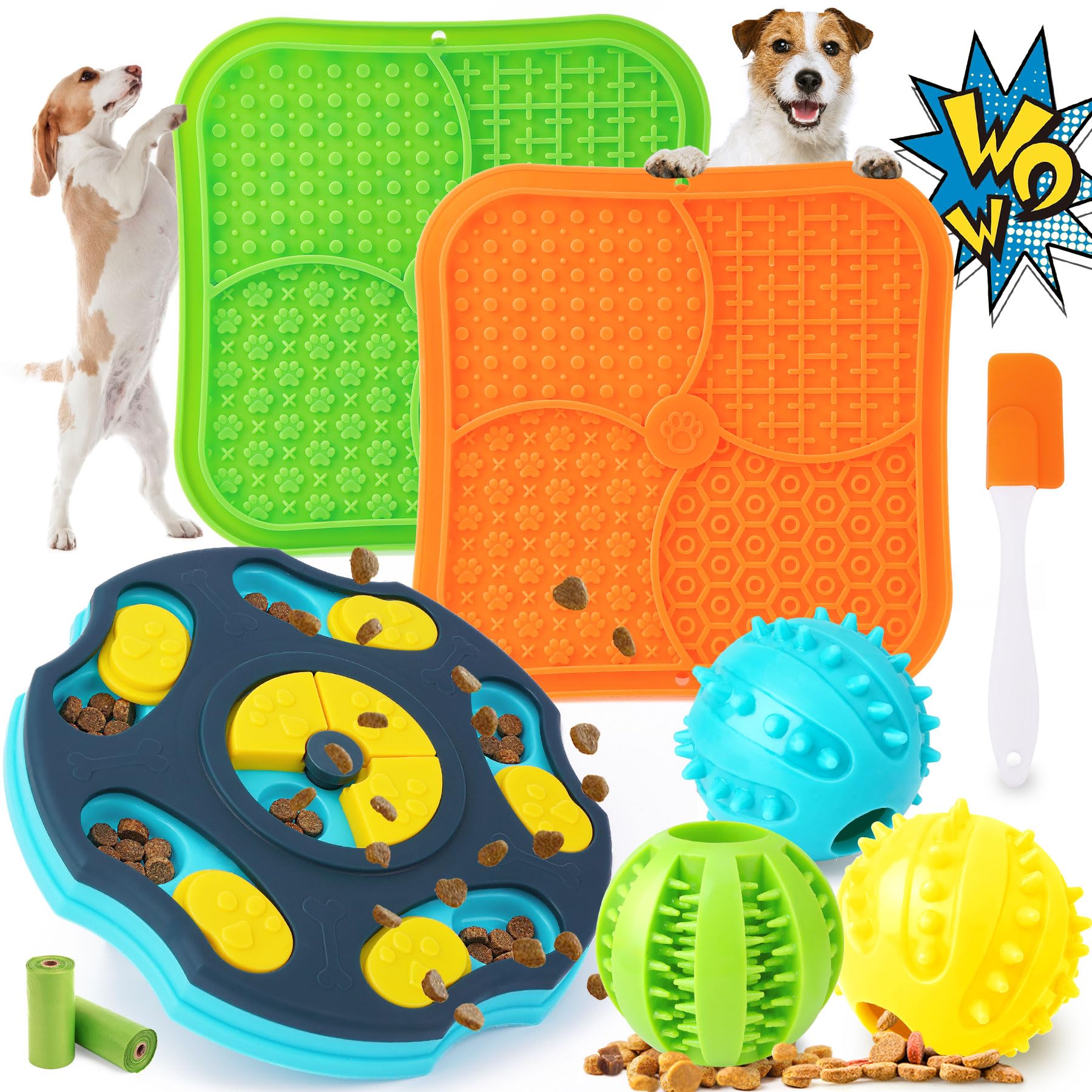
The Forfon set deliberately breaks its nine pieces into three difficulty tiers. The two lick mats with suction cups are the low-difficulty entry — smear peanut butter or yogurt and let the puppy lick until calm. The puzzle toy occupies the middle tier, with sliders that hide treats underneath. Three treat balls offer the highest tier, requiring the puppy to nudge, roll, and chase to release kibble.
Owner reports highlight the lick mats’ suction cup grip as genuinely strong on tile and hardwood. Several reviews note the treat balls kept small-to-medium puppies entertained for 10-15 minute bursts even without treats inside, which suggests the unpredictable rolling motion itself provides engagement. The material is mixed natural rubber and silicone, which holds up well against moderate chewing.
The puzzle toy’s sliders are the weak point — a few owners say they popped off under aggressive pawing. The lighter pieces (especially the silicone spatula and bags) should not be left loose with a puppy. This set is best for owners who want variety and are willing to rotate pieces to maintain novelty.
Why we love it
- Three difficulty levels progression keeps puppy challenged as they learn
- Lick mat suction cups stay put during active licking
- Natural rubber and silicone construction feels safe for mouthing
Good to know
- Puzzle sliders are not chew-proof — supervise during use
- Treat balls are lightweight and small dogs can carry them off
- Silicone spatula and bags are add-ons, not core enrichment tools
3. Snuffle Mat for Dogs (Rose Pink)
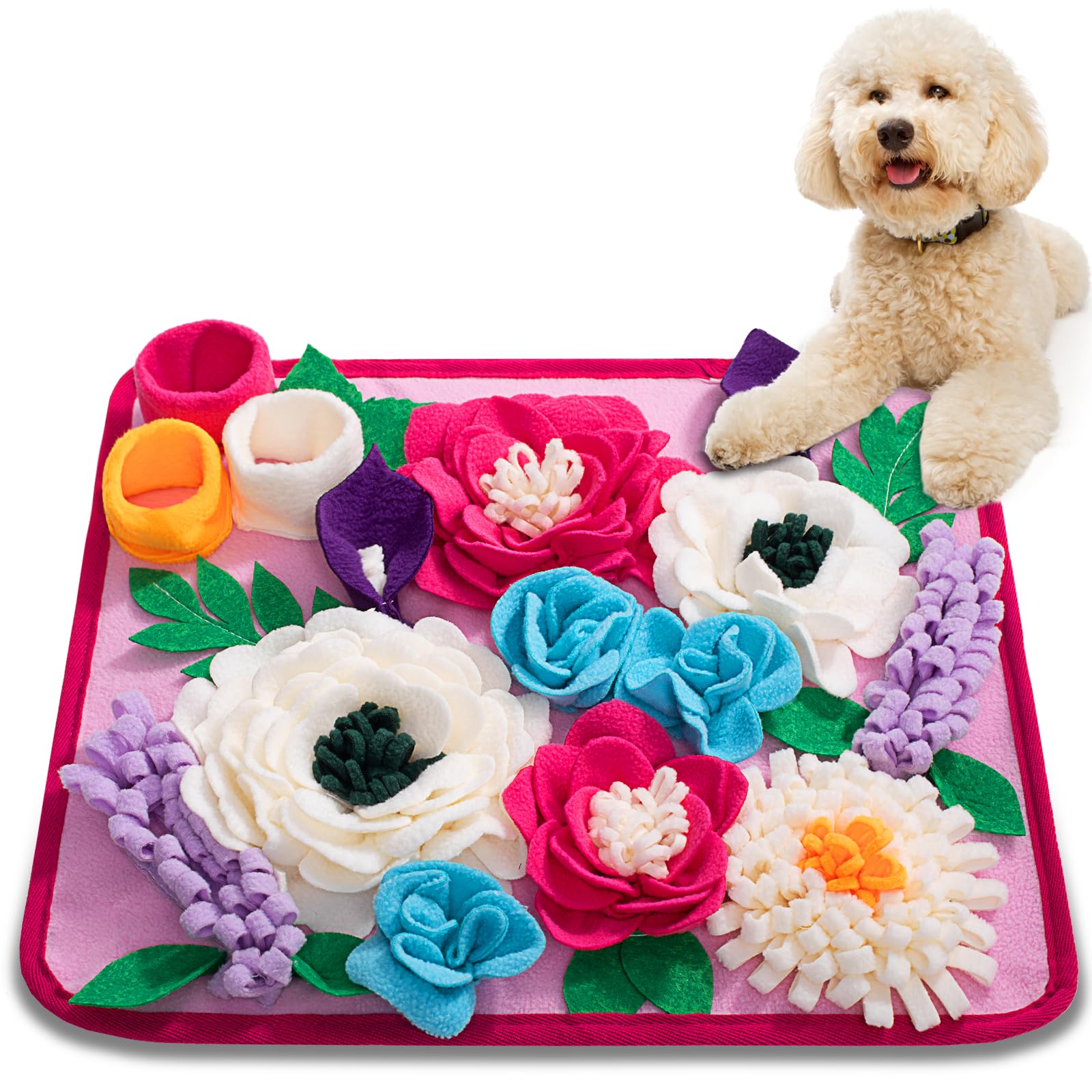
This snuffle mat uses a floral fleece design with layered “petals” that hide kibble or treats at varying depths. The 15.4-inch square is compact enough for crate use but large enough to scatter a full meal’s worth of kibble. The non-slip base uses textured cloth to grip the floor during active sniffing, and the carrying strap doubles as a tie-down loop that can attach to a table leg or crate bar to prevent sliding.
Owners of small breeds — Dachshunds, Cavaliers, Maltese — consistently report their dogs stay engaged for 10-15 minutes per meal. One review from an owner of a blind dog noted the mat restored meal-time enrichment that had been lost. The fleece material is machine washable on a gentle cycle and air-dries quickly without shrinking.
The mat is intentionally shallow compared to heavier-duty snuffle rugs. Puppies who already have strong foraging skills clear it in under 5 minutes. It is best suited for puppies who are new to snuffle play, senior dogs, or as a low-stress meal option for anxious eaters.
Why we love it
- Attractive design that fits visually in a home environment
- Carrying strap doubles as an anchor point for active sniffers
- Non-slip base works well on tile and hardwood without sliding
Good to know
- Too easy for experienced foragers — clears fast
- Fleece can fray if puppy chews edges during unsupervised time
- Smaller than product photos suggest — measure your space
4. Glory To Dog Puppy Snuffle Interactive Foraging Puzzle Ball
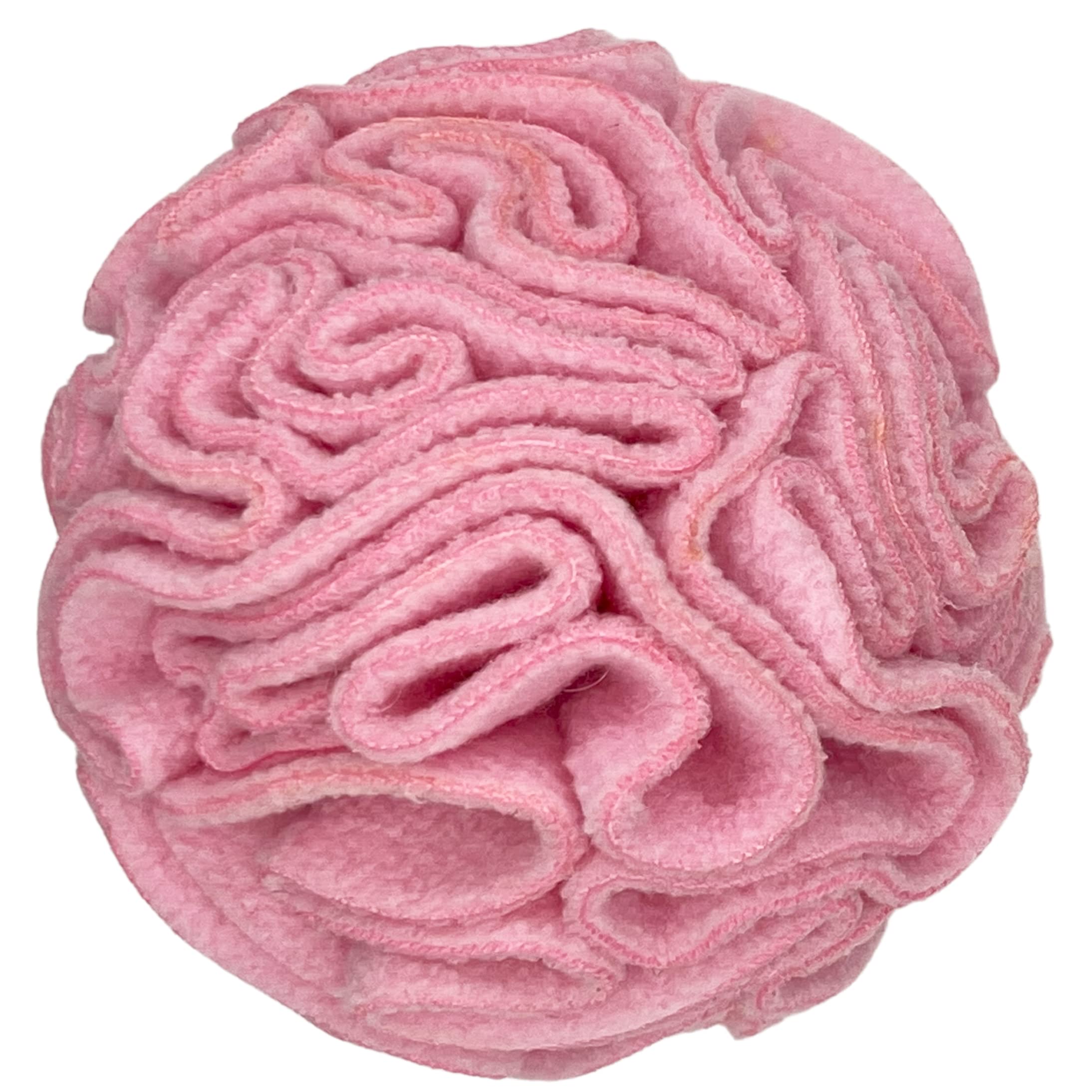
This snuffle ball combines the concept of a snuffle mat with a rolling, tossable form factor. Soft polyester fleece folds create pockets at variable depths for hiding kibble or small treats. When tossed, a few treats often fall out, triggering the puppy’s “treasure hunt” instinct and encouraging them to search the folds for the rest. The 4-inch diameter is sized specifically for small and extra-small mouths.
Reviews from owners of Maltese, Mini-Doxies, and similar breeds show high engagement — puppies will roll the ball, nose through the folds, and work for several minutes per treat load. The soft material makes it safe for dogs with missing teeth or sensitive gums. It is also machine washable, which matters since fleece traps saliva and food particles.
Durability is the main concern. Multiple reviews report aggressive chewers shredding the fleece within 72 hours, turning it into a pile of fabric strips. This ball is strictly for moderate sniff-and-search play, not for sustained chewing. Supervise every session and remove immediately if the puppy starts tearing at the fabric.
Why we love it
- Combines rolling motion with snuffle foraging for multi-sensory play
- Soft fleece gentle on teeth, safe for dogs with missing teeth
- Variable pocket depth lets you adjust difficulty by how deep you push treats
Good to know
- Not durable — aggressive chewers destroy it within days
- Treats may fall out too easily when tossed, reducing challenge
- Only suitable for small breeds (Extra Small to Small)
5. Puppy Chew Toys 20 Pack for Teething and Fun
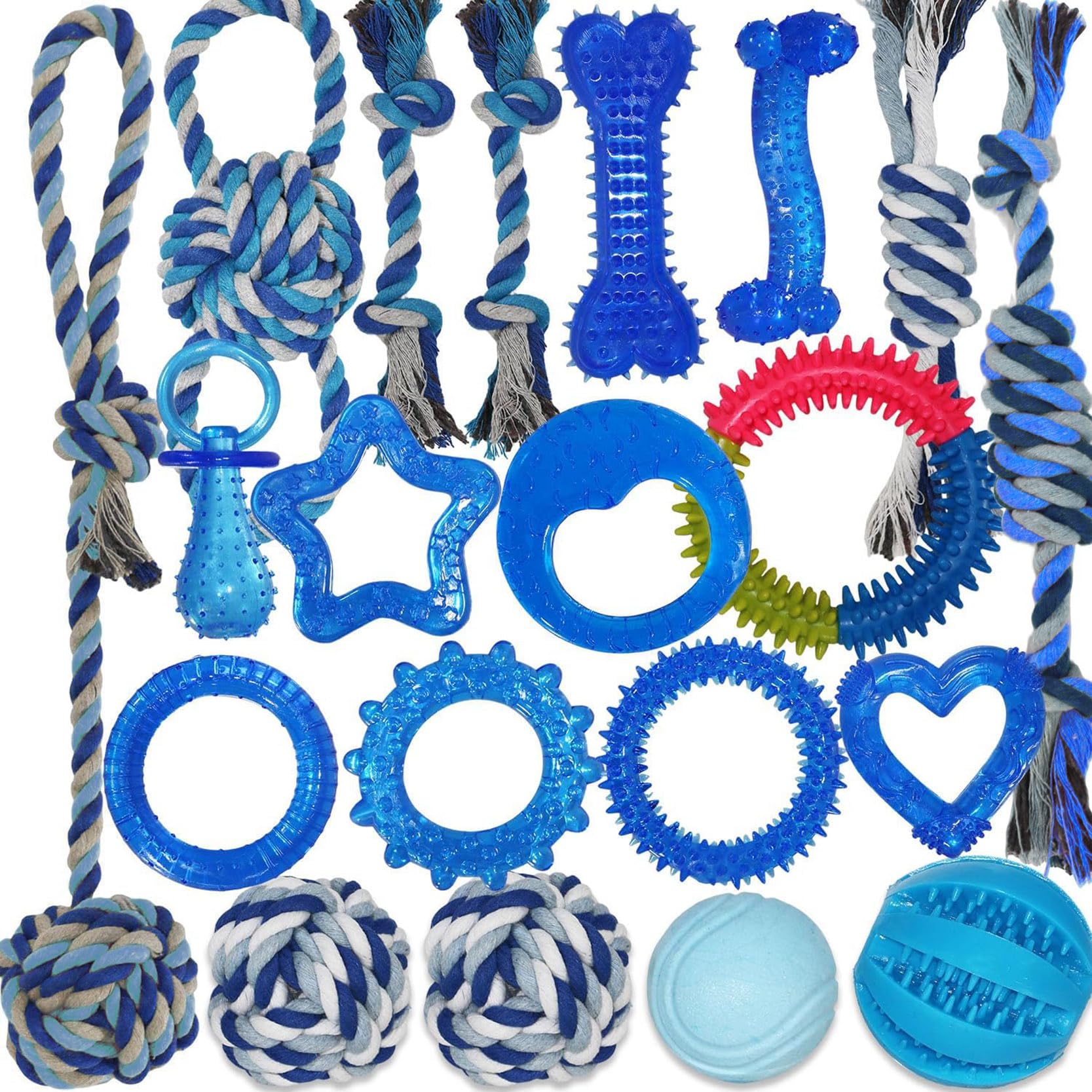
This bulk pack delivers exactly what the name promises: twenty individual toys designed for teething puppies. The assortment includes rubber rings, cotton rope toys, a treat-dispensing ball, a rubber toothbrush bone with soft spikes, a tug-of-war toy, a pacifier-style chewer, and several teething rings. The variety is the main selling point — you can scatter a pile and let the puppy self-select, which mimics the novelty rotation approach that keeps boredom at bay.
Owner feedback strongly praises the value proposition for multi-pup households or for owners who want to leave toys in different rooms. The rubber bone with soft spikes gets specific mentions for gum massage during teething. The rope toys are natural cotton and can double as gentle teeth-cleaning tools as the puppy chews.
Durability across the set is inconsistent. Several owners report the rubber pieces hold up fine for moderate chewing, but the rope toys fray quickly and the treat-dispensing ball is lightweight. This set is ideal for supervised play sessions where you rotate toys and discard damaged items before they become choking hazards.
Why we love it
- Extreme variety — 20 toys cover fetch, tug, chew, and treat-dispensing
- Rubber bone with soft spikes genuinely helps sore teething gums
- Great for multi-dog homes or as a starter stash for new puppies
Good to know
- Not durable enough for aggressive chewers — some pieces fray within days
- Smaller toys may be too large for Maltese-sized mouths
- Supervised play required — rope toys can unravel and cause blockages
FAQ
How many enrichment toys does a puppy need to prevent boredom?
Can a snuffle mat replace a meal for a bored puppy?
At what age should I start using puzzle toys for my puppy?
Are snuffle balls safe for teething puppies that like to shred fabric?
Final Thoughts: The Verdict
For most puppy owners, the best toys for bored puppies winner is the KIPRITII Enrichment Set because it covers slow feeding, licking, and puzzle-solving in one purchase — ideal for owners who want a complete starter kit. If you prefer a larger variety with tiered difficulty levels to grow with your puppy, grab the Forfon 9-Pack Set. And for a compact, calming meal-time solution that fits in a crate, nothing beats the Snuffle Mat for Dogs.