
Watching your flock scratch relentlessly, lose feathers, or develop pale combs is distressing. Lice and mite infestations can quickly spiral from a minor annoyance into anemia, egg drop, and even death if left untreated. Finding a proven treatment for lice and mites in chickens that actually eradicates every stage of the pest lifecycle is the single most critical decision you’ll make for your flock’s health.
I’m Mo Mahin — the founder and writer behind Furric. I’ve spent years comparing poultry care formulations, analyzing active ingredient efficacy against arthropod exoskeletons, and cross-referencing real owner feedback with veterinary entomology data to separate temporary repellents from true cidal solutions.
A permanent fix requires a product that kills on contact and keeps working in the bedding matrix. After rigorous analysis, this guide narrows the field to the very best treatment for lice and mites in chickens available today.
How To Choose The Best Treatment For Lice And Mites In Chickens
Choosing the wrong product wastes money and leaves your flock suffering. You need to understand three core factors: active insecticide chemistry, application form, and environmental persistence. Here’s what separates effective treatments from temporary fixes.
Active Ingredient: Permethrin vs. Essential Oils
Permethrin is a synthetic pyrethroid that attacks the nervous system of lice and mites on contact. It is the gold standard for efficacy, with a residual lifespan that keeps killing even after the initial dust settles. Essential oils like peppermint and citronella, while pleasant-smelling, act primarily as repellents — they drive pests away temporarily but rarely kill every egg and nymph. For an active infestation, permethrin-based dust is the proven choice.
Application Form: Dust vs. Spray vs. Bath Additive
Dust formulations penetrate the feather shaft down to the skin where mites and lice feed. Sprays can wet feathers but struggle to reach the base of dense plumage. Bath additives help maintain general hygiene and offer mild repellent action but lack the knockdown power of direct dust application. For heavy infestations, dust applied directly to the bird and into the coop bedding is non-negotiable.
Re-treatment Schedule: Breaking the Lifecycle
Lice and mites lay eggs (nits) that are impervious to most insecticides. A single application kills adult pests but leaves eggs intact. You must re-treat the flock and the environment every 7 to 10 days for at least three cycles to ensure newly hatched nymphs are killed before they can lay eggs themselves. Products that advertise persistence or include instructions for repeat application are safer bets.
Quick Comparison
On smaller screens, swipe sideways to see the full table.
| Model | Category | Best For | Key Spec | Amazon |
|---|---|---|---|---|
| Prozap Insectrin Dust | Permethrin Dust | Fast knockdown on birds & bedding | 0.5% Permethrin | Amazon |
| Y-Tex Poultry Dust (3-pack) | Permethrin Dust | Multi-pack value for large flocks | 6 lbs total (3 x 2 lb) | Amazon |
| Prozap Garden & Poultry Dust (3-pack) | Permethrin Dust | Coop deep treatment & nesting boxes | 6 lbs, multi-purpose | Amazon |
| Strong Animals Preen Queen | Scented Bath Additive | Odor control & preventative dust baths | 5 lb jar, essential oils | Amazon |
In‑Depth Reviews
1. Prozap Insectrin Dust Livestock Dust
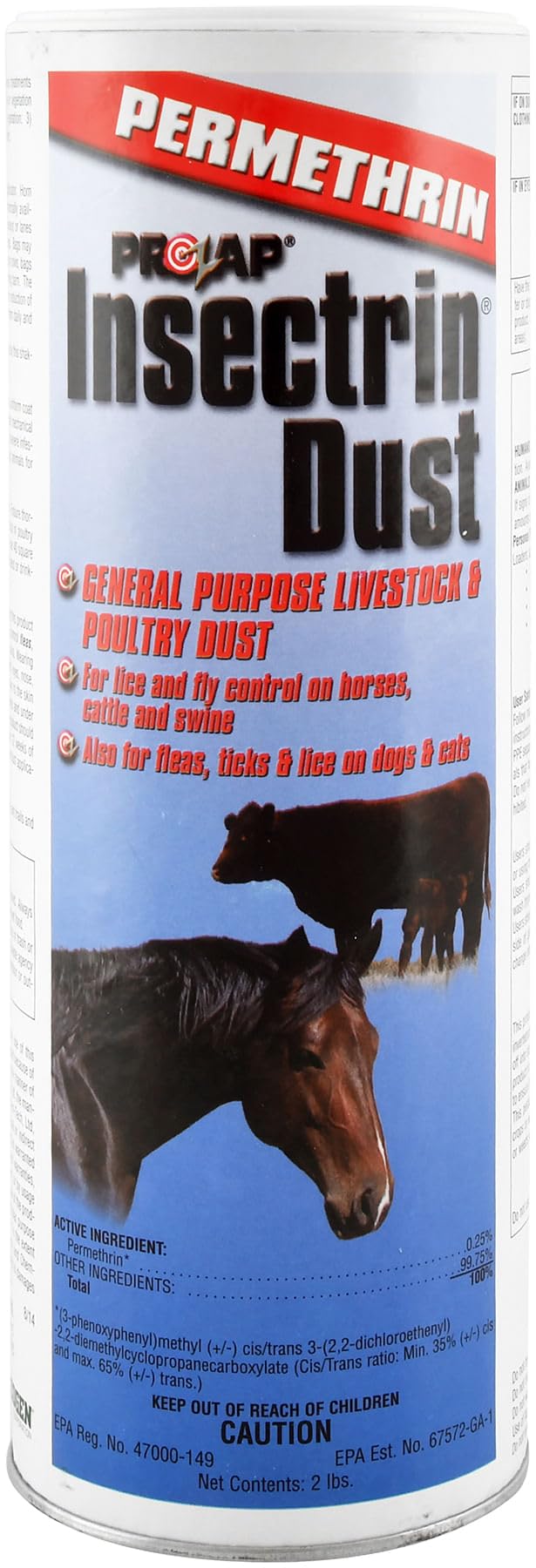
This is the workhorse of poultry pest control. The 0.5% permethrin formulation is ready-to-use straight from the shaker — no mixing, no measuring. Owners report that a light dusting on the bird’s back, under the wings, and around the vent stops visible mite movement within hours. The powder adheres to feathers well and does not wash off in light rain, which matters for free-range flocks exposed to morning dew.
The 2.2-pound container provides enough volume for multiple treatment cycles on a medium-sized flock of 10 to 15 birds. Several reviews note that the shaker top can be stubborn on the first open, but once you get it going, the application is even and waste-free. For direct bird treatment combined with coop bedding dusting, this is the most effective single solution on the list.
The standout detail from owner feedback is the speed of relief — birds visibly stop scratching within a day, and reinfestation rates drop sharply when you re-treat at the 7-day mark. This is the product I recommend first to any backyard flock owner dealing with a confirmed lice or mite problem.
Why we love it
- Fast-acting contact kill on northern fowl mites and lice
- Shaker container allows precise, dust-free application
- Residual activity persists through light moisture
Good to know
- Shaker cap can break if forced open aggressively
- Not recommended for use on egg surfaces or feed areas
2. Y-Tex Poultry Dust (3 Pack) 2 Pounds Each
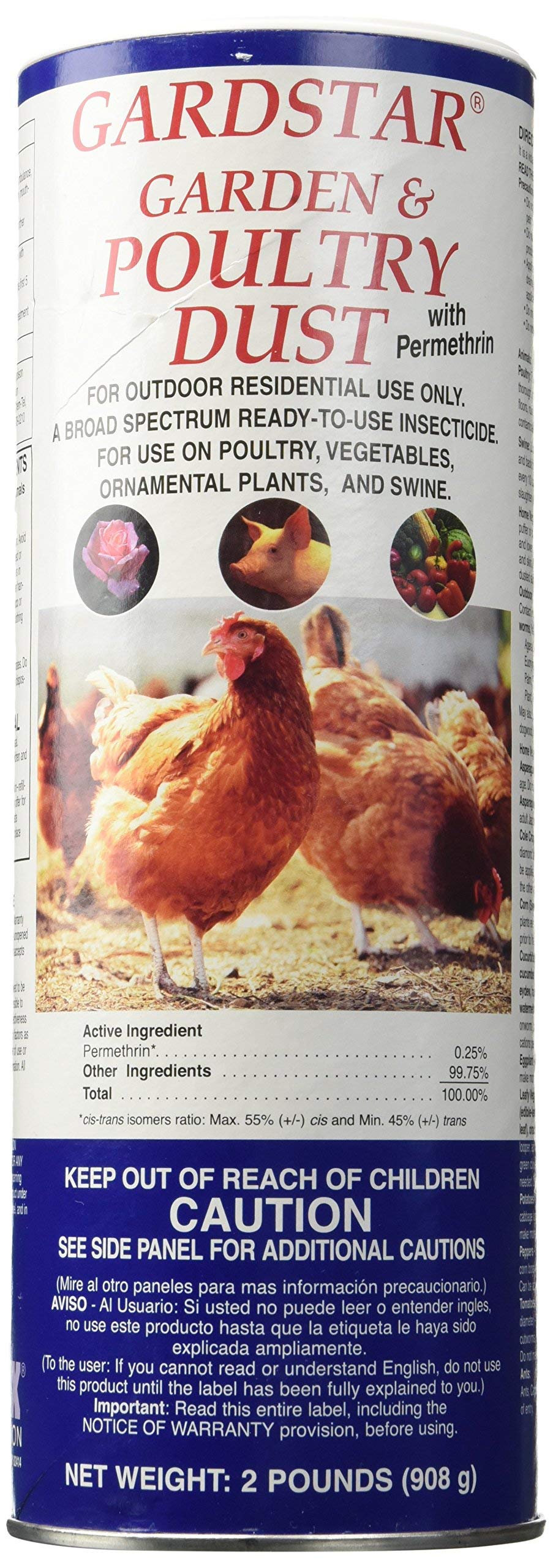
When you have a larger flock or multiple coops, running out of dust mid-treatment is frustrating. The Y-Tex 3-pack gives you six pounds of permethrin dust across three sealed containers, ensuring you have enough product for the full re-treatment cycle. Owners with 20 to 30 birds appreciate not having to reorder mid-week.
User reports consistently mention that one application to the dust bath and coop floor cleared visible lice overnight, with no bugs seen on the birds by the next day. New chicken keepers specifically note how easy it was to apply — sprinkle into the dust bath area and let the chickens self-treat, or dust directly for heavier infestations. The 4.6-star average from over 360 reviews confirms reliable results.
The only recurring complaint involves the container top breaking upon first opening, similar to the single-canister design. If you transfer the dust to a separate shaker after opening, you avoid mess. For the price per pound, this is the most economical way to treat a large coop environment.
Why we love it
- Three 2-pound cans provide excellent volume for large flocks
- Self-treatment via dust bath is effective with minimal handling
- Proven overnight knockdown on visible lice and mites
Good to know
- Lid can detach fully on first open — pour into a shaker
- Shipping packaging sometimes causes dented cans
3. Prozap Garden & Poultry Dust (3 Pack) 2 Pounds Each

This three-pack from Prozap is identical in active ingredient to the single Insectrin Dust but targets the coop environment as aggressively as the birds themselves. The product label explicitly covers garden and poultry use, which means you can dust nesting boxes, floor litter, and even the perimeter of the run to stop mites migrating from wild bird sources.
Owner reviews highlight its effectiveness in cases where sprays and foggers failed. One detailed account describes a sparrow-transferred mite infestation that cleared after applying this dust directly to the hens, in the bedding, and in the dust bath area — with no reinfestation after two weeks. The residual protection in the coop environment is the key differentiator here.
The six-pound total weight means you can dedicate one can for direct bird treatment and use the other two for deep coop coverage. Weekly dusting of nesting material prevents mites from establishing breeding colonies. For keepers who want total environmental control, this is the complete package.
Why we love it
- Designed for both direct bird application and coop treatment
- Killed mites that survived spray and fogger treatments
- Three full pounds give long-term environmental control
Good to know
- Bulk packaging may be excessive for a small backyard flock
- Dust can cloud during heavy application — wear a mask
4. Strong Animals Preen Queen Chicken Dust Bath Additive

Not every flock has an active infestation — some keepers want prevention and odor control. This 5-pound jar is infused with peppermint and citronella essential oils that create an aromatic dust bath experience. Owner reviews are unanimous that chickens absolutely love it, fighting over space in the dust bath area. The scent also masks the ammonia odor common in closed coops.
It is important to understand what this product does not do — it does not contain permethrin or any insecticidal agent that kills on contact. The essential oils act as mild repellents, making the dust bath less inviting to mobile pests. For a flock with zero visible lice or mites, this is a fine preventative. For an active infestation, you need a permethrin dust first, then you can use this as a maintenance layer.
The included scoop makes application simple, and a little goes a long way — reviewers with 6 to 10 birds report the jar lasting several months. If your main goals are smell reduction and encouraging natural dust bathing behavior, this is a pleasant and effective choice.
Why we love it
- Chickens are attracted to the peppermint-citronella scent
- Helps absorb moisture and reduce coop odors effectively
- Scoop included for easy, waste-free application
Good to know
- Essential oils repel but do not kill lice or mites
- Not a substitute for insecticidal dust during active infestations
FAQ
Can I use permethrin dust on laying hens that produce eggs for consumption?
How do I know if my chickens have mites or lice?
How long does permethrin dust stay effective in the coop bedding?
Can I mix essential oil dust bath additives with permethrin dust?
Final Thoughts: The Verdict
For most gardeners, the treatment for lice and mites in chickens winner is the Prozap Insectrin Dust because it delivers fast, reliable knockdown with a simple shaker application that works on both birds and bedding. If you need bulk value for a large flock, grab the Y-Tex Poultry Dust 3-pack. And for total environmental control when previous treatments have failed, nothing beats the Prozap Garden & Poultry Dust 3-pack.