
A single tick in your yard isn’t just a nuisance — it’s a health hazard that can turn a summer barbecue into a trip to the doctor. The challenge is finding a treatment that actually eliminates these pests without forcing you to choose between safety and effectiveness. Whether you have kids rolling in the grass or dogs sniffing every shrub, the wrong product can leave you vulnerable or expose your family to harsh chemistry.
I’m Mo Mahin — the founder and writer behind Furric. Over the last decade, I’ve analyzed hundreds of pest control formulations, cross-referencing active ingredient concentrations, residual kill windows, and real-world application data against thousands of verified owner reports to understand what separates a one-season fix from a reliable perimeter defense.
This guide cuts through the marketing to deliver the five most effective solutions available today. After weeks of comparative research, I’ve assembled a definitive list of the best treatment for ticks in yard spaces that balances immediate knockdown power with lasting residual control.
How To Choose The Best Treatment For Ticks In Yard
Selecting the right tick treatment starts with understanding your yard’s specific layout and your tolerance for chemical exposure. A dense, shaded perimeter with leaf litter requires a different approach than an open, sunny lawn. The most effective strategies combine the right active ingredient with the proper application method.
Active Ingredient Selection
Permethrin-based concentrates deliver the longest residual protection — up to four weeks on surfaces — making them the gold standard for perimeter tick control. Bifenthrin and lambda-cyhalothrin (found in many granular products) provide broader insect coverage but may break down faster in direct sunlight. Natural cedar oil and lemongrass formulations offer shorter residual windows, typically requiring weekly reapplication, but eliminate the toxicity concerns for pets and children.
Application Method: Liquid vs. Granular
Liquid sprays provide precise coverage along fence lines, wood edges, and shaded zones where ticks breed. A backpack or hose-end sprayer delivers uniform droplet size for maximum leaf-surface adhesion. Granular products, broadcast with a spreader, work better for open lawn areas where ticks travel between hosts. For heavy infestations, a two-pronged approach — granular broadcast followed by liquid perimeter spray — produces the most complete suppression across the entire property.
Residual Kill Duration
The window between applications directly correlates with the formulation’s active ingredient concentration. Premium permethrin concentrates at 10% to 13.3% maintain efficacy for three to four weeks, while ready-to-use sprays often drop to one to two weeks. Granular products with bifenthrin typically label a three-month residual, but heavy rain and repeated mowing can reduce that significantly. Matching your reapplication schedule to your region’s rainfall and tick pressure is essential for season-long control.
Quick Comparison
On smaller screens, swipe sideways to see the full table.
| Model | Category | Best For | Key Spec | Amazon |
|---|---|---|---|---|
| Martin’s Permethrin 13.3% | Concentrate | Perimeter barrier control | 13.3% permethrin concentrate | Amazon |
| Ortho Bug B Gon Max | Granular | Whole-lawn broadcast | 10,000 sq ft coverage | Amazon |
| Sevin Lawn Insect Granules | Granular | Large property value | 20 lb bag coverage | Amazon |
| Cedarcide YardSafe | Natural Spray | Pet-safe essential oil control | 5,000 sq ft treatment | Amazon |
| Harris Flea and Tick Killer | Ready-to-Use | Indoor and small area spot treatment | 1 gallon ready-to-spray | Amazon |
In‑Depth Reviews
1. Martin’s 32 oz Permethrin 13.3% Concentrate
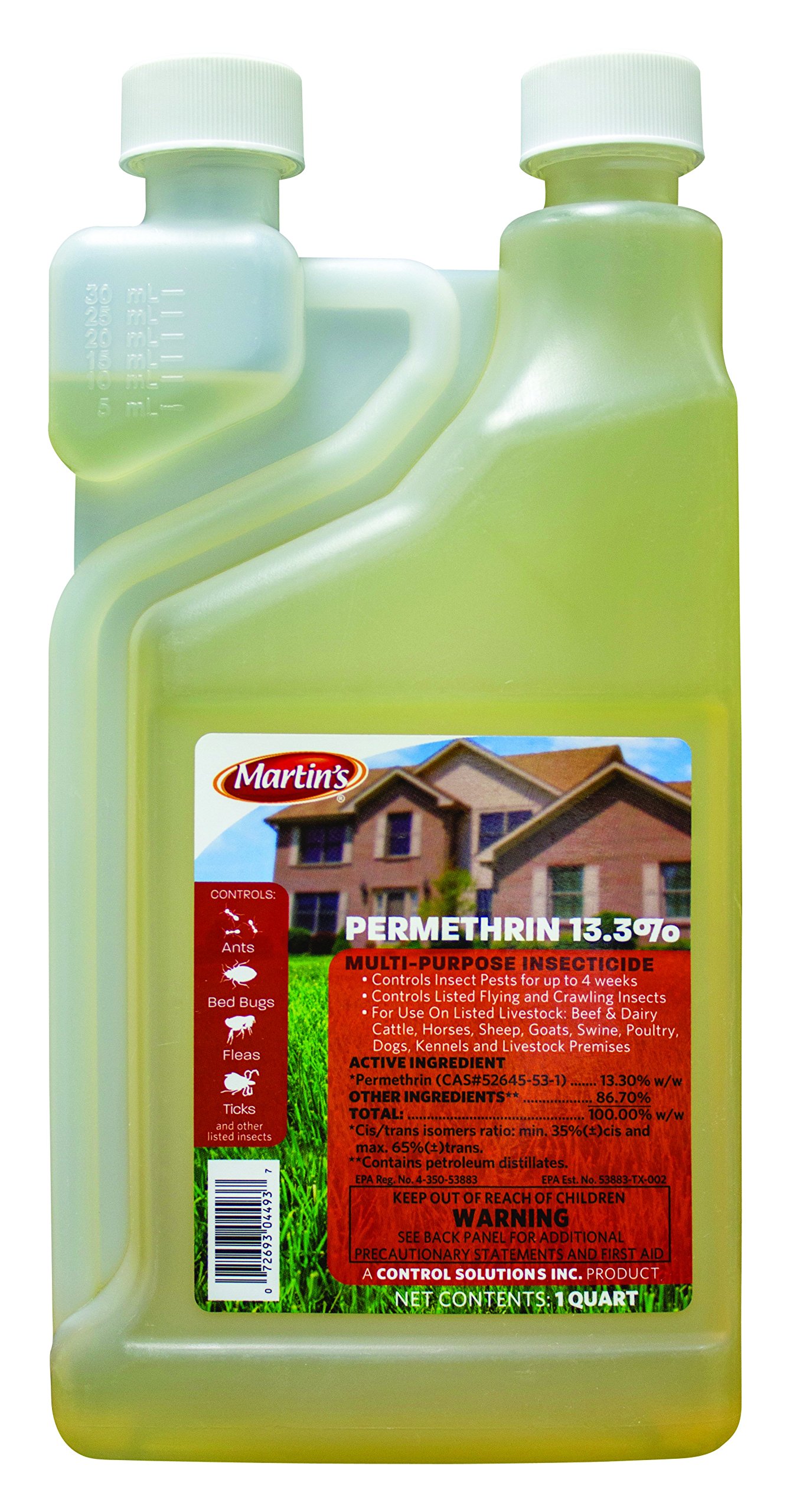
This concentrate delivers the highest active ingredient concentration in this lineup at 13.3% permethrin, giving you the longest residual protection window for a perimeter-based tick defense. Mixed at 1.5 ounces per gallon of water, a single 32-ounce bottle produces over 21 gallons of finished spray — enough to treat a standard suburban property multiple times across the season. Owners consistently report four to six weeks of tick suppression when applied along fence lines and forest edges, which directly reduces the frequency of reapplications compared to weaker ready-to-use alternatives.
The liquid formulation adheres well to grass blades and low foliage, creating a chemical barrier that remains effective through light rain and morning dew. Users pairing this with a backpack sprayer achieve uniform coverage without oversaturation, and multiple verified buyers note dramatic reductions in ticks pulled off pets within days of the first treatment. The synthetic pyrethroid chemistry breaks down relatively quickly in direct sunlight, so focusing application on shaded areas and tall grass where ticks actually harbor maximizes the product’s strengths.
One trade-off to consider is the strong solvent-like odor during mixing and application. Several owners describe it smelling like paint thinner, which requires keeping family members and pets indoors until the spray has fully dried — typically two to three hours in moderate conditions. The concentrate also requires precise measurement and a separate sprayer, so it demands more preparation than grab-and-go options.
Why we love it
- Highest permethrin concentration (13.3%) for extended residual control
- One bottle yields over 21 gallons of mixed spray — exceptional value per treatment
- Consistent four- to six-week tick suppression in heavy-pressure zones
Good to know
- Strong chemical odor during mixing and application requires ventilation
- Needs a separate sprayer and careful measuring — not a ready-to-use product
2. Ortho Bug B Gon Max Insect Killer for Lawns

The 10-pound granular bag treats up to 10,000 square feet, making this a top choice for owners with a quarter-acre lot who want single-product simplicity. The bifenthrin-based formulation kills both above-ground insects and those living in the thatch layer, which is where tick nymphs often develop before climbing up grass blades in search of a host. Long-term users report deploying this product for nearly a decade, noting that the three-month residual window aligns well with a spring-late summer application schedule that covers the entire active tick season.
Application is straightforward with a standard broadcast spreader at the labeled setting, and the granules break down after watering in, releasing the active ingredient into the soil and lower leaf canopy. One clear advantage over liquid concentrates is the safety window — children and pets can re-enter the treated area as soon as the granules are fully watered in and the grass is dry, typically within a few hours. Users also appreciate that the product is labeled for vegetable gardens and flower beds, extending its utility beyond just lawn perimeter defense.
The granular format does have limitations in dense, shaded areas where the upright vegetation blocks granules from reaching the soil surface. Heavily wooded perimeters may require a complementary liquid spray to cover low-hanging branches and leaf litter where adult ticks wait. Some users note that while tick and flea pressure drops dramatically, ants can return within weeks and require a separate spot treatment.
Why we love it
- Covers 10,000 square feet with a single bag — ideal for quarter-acre lots
- Kills both above and below-ground insects, targeting tick breeding zones
- Fast re-entry for pets and children after watering in
Good to know
- Granules may not penetrate dense vegetation along wooded perimeters
- Ant control can fade before the three-month mark
3. Sevin Lawn Insect Granules, 20 Pounds

The 20-pound bag offers the highest volume per dollar in this comparison, making it the smartest choice for owners of larger properties — especially those with multiple acres of grass and ornamentals. Zeta-cypermethrin, the active ingredient, targets over 30 listed pests including ticks, fleas, ants, and various turf-damaging worms, so a single broadcast application addresses several insect problems simultaneously. The granular formulation allows you to walk at a steady pace with a spreader, covering wide swaths without the back-and-forth refill cycles required by liquid sprayers.
Practical feedback from users highlights how effectively it eliminated ant colonies that were damaging tree root systems, a common secondary issue on properties with mature landscaping. The product is labeled for use around vegetables and ornamentals, giving it a broad application scope that covers the entire property — not just the lawn. Spreaders can adjust the flow rate to match the labeled application, and the granules are stable enough to remain effective through multiple rain events if applied correctly.
The primary caveat is that results can be inconsistent depending on application technique. Owners who spread too thinly or fail to water in the granules immediately report noticeably weaker tick suppression compared to those who follow the exact label rate. Additionally, the 20-pound bag is heavy and may be cumbersome for anyone without a walk-behind spreader or a wheeled cart to move the product around the yard.
Why we love it
- 20-pound bag offers the highest volume per dollar for large properties
- Controls over 30 pest species with a single application
- Stable granular format withstands rain after proper watering-in
Good to know
- Heavy bag requires a wheeled spreader for comfortable handling
- Inconsistent results if applied too thinly or not watered in promptly
4. Cedarcide YardSafe | Natural Essential Oil Spray
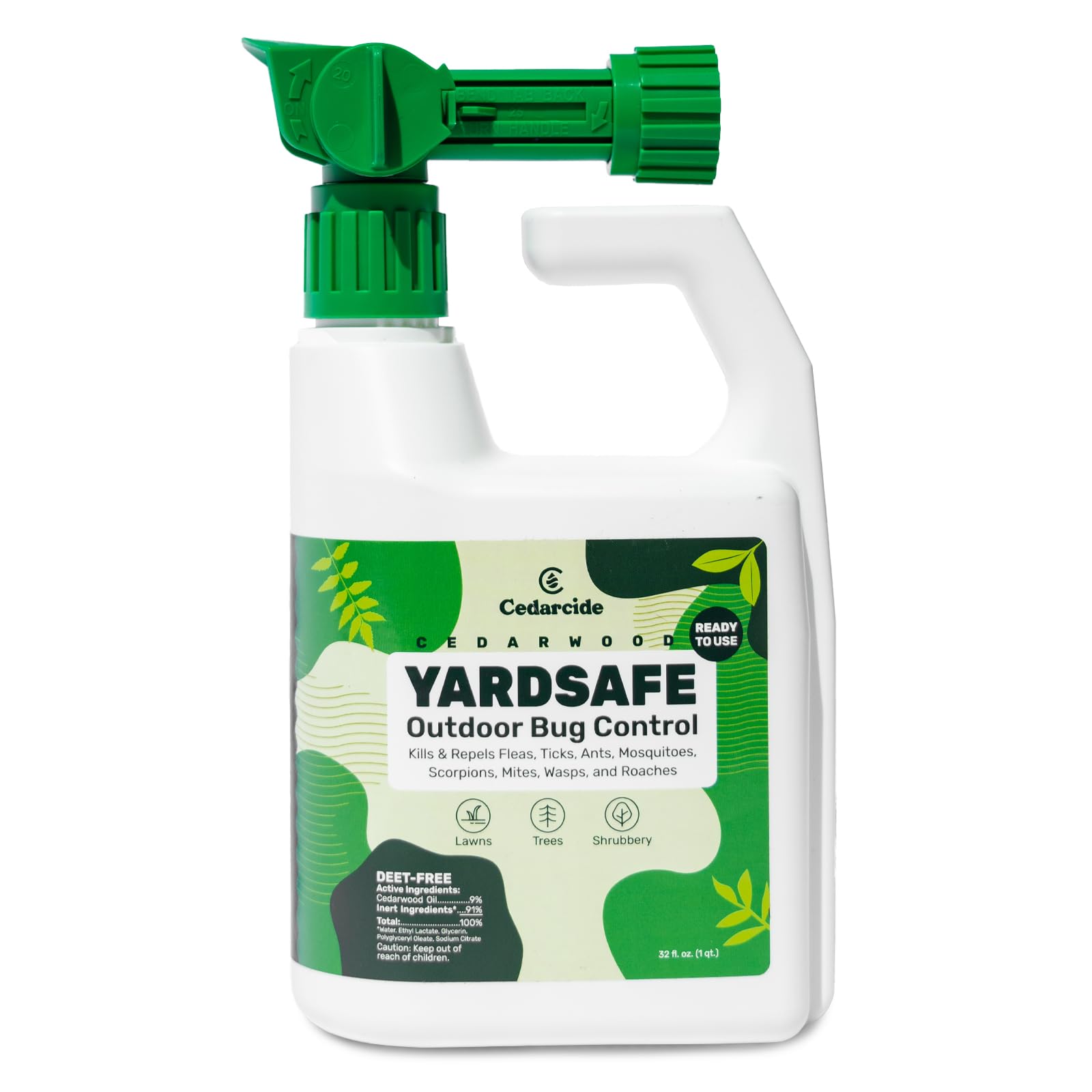
For families who prioritize zero synthetic chemistry in their outdoor spaces, this cedar oil and lemongrass blend provides a genuine alternative that actually kills and repels ticks rather than just deterring them. The quart bottle attaches to a standard garden hose, treating up to 5,000 square feet with a ready-to-spray application that requires no mixing. Users with children and multiple dogs report feeling confident letting everyone back into the yard immediately after the spray dries — typically within 30 minutes — with no chemical residue concerns.
The essential oil mode of action disrupts the tick’s waxy cuticle, causing dehydration and death on contact, and the cedar scent has a proven repellent effect that keeps surviving ticks from re-entering treated zones. Multiple owners in tick-heavy regions like the Southeast and Midwest confirm that ticks visible on grass during application were gone by the next day, with mosquito populations also dropping noticeably. The natural formulation also eliminates the risk of harming pollinators if applied carefully, a growing concern among environmentally conscious gardeners.
The short residual window is the main limitation — the essential oils break down within one to two weeks, requiring weekly reapplication to maintain protection during peak tick season. Some users in high-pressure zones with heavy rainfall found the product ineffective after three bottles, suggesting it works best as a maintenance treatment rather than a heavy-infestation knockdown solution. The cost per application is also higher than synthetic concentrates, so large properties may find it expensive to maintain season-long coverage.
Why we love it
- Zero synthetic chemicals — safe for children and pets immediately after drying
- Attaches to a hose for tool-free application
- Pleasant cedar scent that doesn’t smell like a chemical treatment
Good to know
- Requires weekly reapplication — residual lasts only one to two weeks
- Higher cost per treatment for large properties
5. Harris Flea and Tick Killer, Liquid Spray (Gallon)

This ready-to-use gallon spray delivers the lowest barrier to entry for someone who needs immediate tick and flea control without buying a separate sprayer or measuring concentrate. The odorless, non-staining formula makes it practical for indoor baseboard and pet bedding applications, but the real value emerges when used along the home’s foundation and in shaded corners of the yard where ticks first establish. Owners in high-pressure flea regions like Texas report visible knockdown within 45 minutes of application, with residual control lasting several weeks on treated surfaces.
The built-in trigger sprayer allows precise application to cracks, crevices, and grass edges, which is ideal for targeted spot treatments around patios, dog runs, and play equipment. The EPA registration (No. 3-11) confirms it is approved for use in homes with people and pets when label directions are followed, giving peace of mind for indoor-outdoor applications. The gallon volume supports multiple reapplications across the season, making it a cost-effective option for smaller yards or supplemental spot treatments between granular broadcasts.
Several users report that the sprayer nozzle fails after partial use — it stops priming and only dispenses air, which can leave you stranded mid-application with half a gallon of product you cannot apply. For heavy tick infestations spanning a large property, this works better as a spot treatment alongside a broader granular approach.
Why we love it
- Odorless, non-staining formula safe for indoor and outdoor use
- Trigger sprayer provides precise spot-treatment application
- Cost-effective for small to medium-sized properties
Good to know
- Sprayer nozzle can fail mid-use, limiting application reliability
- Limited coverage area per gallon — not ideal for large properties
FAQ
How often should I reapply tick treatment to my yard?
Can I use tick yard treatment around vegetable gardens?
Does rain wash away tick spray before it works?
What is the best way to apply liquid tick concentrate to a large yard?
Final Thoughts: The Verdict
For most gardeners, the treatment for ticks in yard winner is the Martin’s Permethrin 13.3% Concentrate because it delivers the longest residual control at a per-treatment cost that undercuts ready-to-use alternatives. If you want granular simplicity with broad coverage, grab the Ortho Bug B Gon Max. And for a pet-safe natural option, nothing beats the Cedarcide YardSafe.