
A bag of generic scratch grain gets ignored, but the sound of a treat bag crinkling sends every hen sprinting across the yard. The difference between a flock that merely exists and one that thrives often comes down to what you put in their treat bowl — not just the quantity, but the nutritional density of every morsel. Cheap filler corn fattens them up; targeted ingredients like mealworms and oyster shells actually improve eggshell strength and feather quality.
I’m Mo Mahin — the founder and writer behind Furric. I’ve spent years analyzing avian nutrition studies, comparing ingredient labels on hundreds of chicken feed products, and correlating customer feedback with measurable flock health outcomes so you don’t have to guess which bag delivers real value.
After sifting through lab reports, owner testimonials, and ingredient lists, I’ve singled out the most effective options in the crowded market of treats for chickens — focusing on protein content, calcium availability, and the absence of cheap fillers that undermine a balanced diet.
How To Choose The Best Treats For Chickens
Not all chicken treats are created equal. A treat that works beautifully for a backyard bantam flock might be useless for a heavy-breed laying operation. The key differentiators lie in protein density, calcium availability, and the physical form of the food — granules versus whole insects versus chunk mixes behave very differently inside the bird’s crop and affect foraging behavior.
Protein Density Above All Else
Laying hens need roughly 16-18% protein in their daily diet for optimal egg production. Most scratch grains deliver under 10% protein. When you supplement with treats, you want concentrated protein — ideally 40% or higher — to offset the grain-heavy base feed. Dried mealworms typically hit 50-53% protein, while black soldier fly larvae hover around 40-46%. Avoid bags where the first ingredient is corn or wheat.
Calcium for Shell Strength
Eggshells are roughly 95% calcium carbonate. A hen pulls calcium from her own bones if her diet lacks it, leading to brittle shells and health decline. Oyster shell grit is the classic source, but insect exoskeletons (especially black soldier fly larvae) naturally contain bioavailable calcium. Some premium blends integrate crushed oyster shell directly into the treat mix, giving you two benefits in one scoop.
Foraging Form Matters
Chickens are natural foragers — they want to scratch, peck, and search. Loose granules or whole insects scattered on the ground encourage active foraging behavior, which reduces boredom and feather pecking. Dusty powders or finely ground meals are less engaging and can lead to respiratory irritation. Look for whole or chunky forms that simulate natural food sources.
Quick Comparison
On smaller screens, swipe sideways to see the full table.
| Model | Category | Best For | Key Spec | Amazon |
|---|---|---|---|---|
| Love My Girls Veggie & Worm | Multigrain Mix | Overall balanced nutrition plus calcium | 5 lb bag with oyster shell | Amazon |
| Fluker’s Culinary Coop | Insect Trail Mix | Variety of whole insect shapes | 20 oz mix (crickets, mealworms, grasshoppers) | Amazon |
| Chubby Dried Mealworms | Single-Insect Treat | High-protein feather & egg support | 2 lb, 53% protein content | Amazon |
| Funtacfarm BSFL | Larvae Snack | Eco-friendly high-fat energy boost | 2 lb, 40-46% protein | Amazon |
| TradeKing Dried Mealworms | Single-Source Protein | Entry-level treat for mixed flock | 1 lb resealable bag | Amazon |
In‑Depth Reviews
1. Love My Girls Veggie & Worm

This blend stands apart because it integrates oyster shell calcium directly into the treat mix — a dual-purpose approach that saves you from buying separate grit. At 5 pounds, it stretches further than single-pound bags while delivering vegetables, mealworms, and crushed shell in every scoop. Multiple verified buyers report a noticeable uptick in egg production and shell density within a week of switching from plain scratch grain.
The corn-free formulation addresses a real concern for keepers who avoid corn-based feeds due to mycotoxin risks or dietary preferences. The resealable bag keeps the chunk-form mix fresh between feedings, and owners consistently mention that their hens completely consume this treat — unlike other brands where picky birds leave behind grain filler.
For a mid-sized flock of 6-10 hens, a single bag lasts roughly two to three weeks with daily handfuls, making the per-serving cost difficult to beat when factoring in the built-in calcium supplement. The protein content comes primarily from mealworms rather than synthetic sources, which aligns with natural chicken physiology.
Why we love it
- Oyster shell included eliminates need for separate calcium grit
- Corn-free formula avoids common filler issues
- Large 5 lb bag offers extended use for medium flocks
Good to know
- Chunk form may require scattering to prevent dominant hens from hoarding
- Some very picky birds may initially ignore the vegetable pieces
2. Fluker’s Culinary Coop Premium Chicken Treats

Fluker’s designed this bag as a true insect trail mix — not just mealworms but also whole freeze-dried crickets and grasshoppers. The variety stimulates natural hunting behavior because the different insect sizes and textures trigger distinct pecking responses. Owners report that their chickens actively seek out the larger crickets first, suggesting the mix engages more than just taste.
The nutritional breakdown leans heavily on calcium and omega-3 fatty acids thanks to the whole-insect exoskeletons, which contain bioavailable calcium for eggshell formation. Several reviewers noted their birds ignored the large grasshoppers initially but eventually consumed them, so it may take a few feedings for birds to adjust to unfamiliar prey sizes. The 20-ounce bag is compact but dense — a little goes a long way.
One practical consideration: the full-sized crickets can surprise owners who expect only standard mealworm pieces. If you keep quail or bantams with smaller beaks, the largest grasshoppers might need to be broken up manually. The resealable bag holds up well to repeated opening, which matters when dispensing small daily portions.
Why we love it
- Three insect types mimic diverse natural foraging diet
- High omega-3 content from whole insect bodies
- Sturdy resealable bag preserves freshness
Good to know
- Large grasshoppers may intimidate smaller or newer hens
- Strong insect aroma can attract wild raccoons if stored outdoors
3. Chubby Dried Mealworms
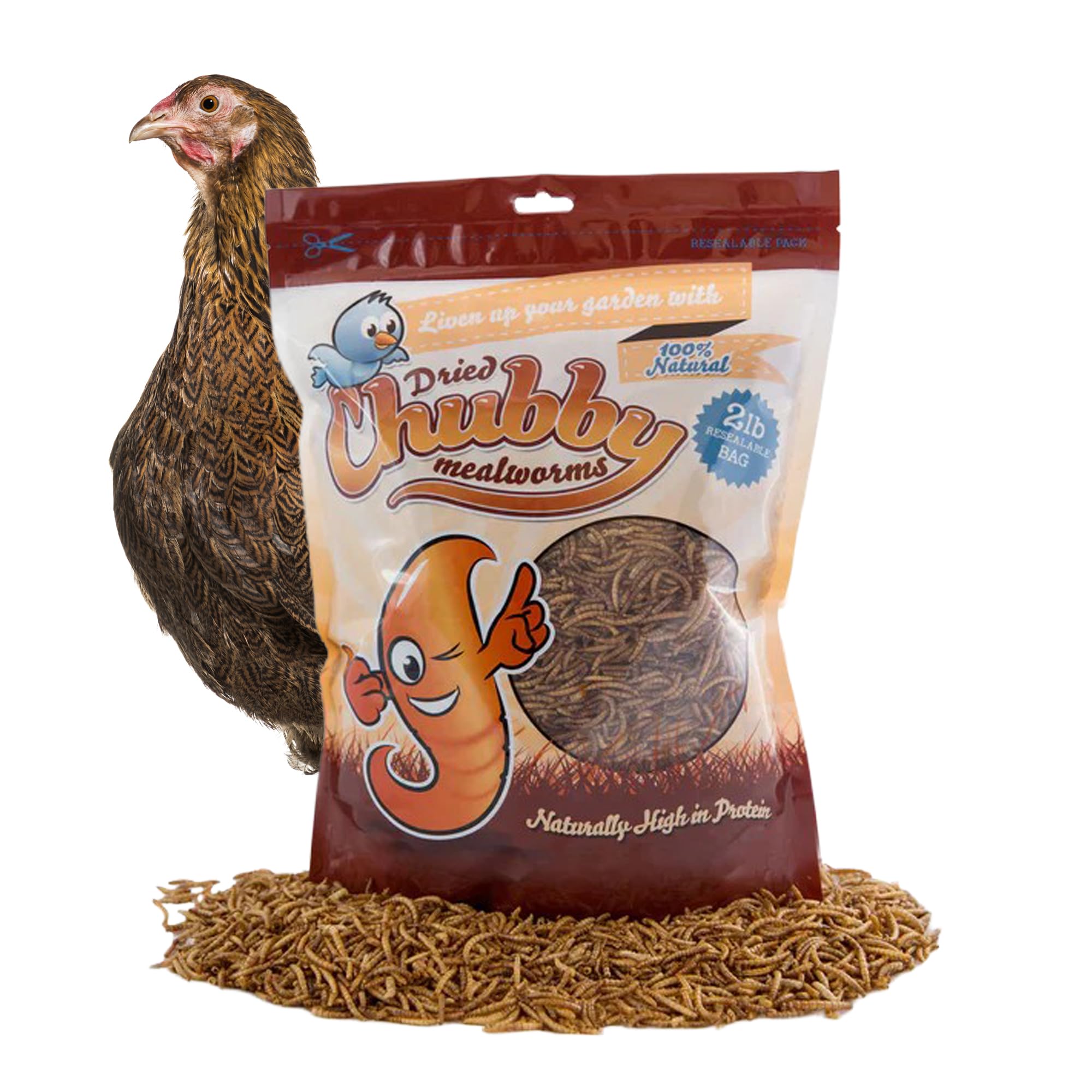
At 53% protein, Chubby’s dried mealworms deliver the highest protein concentration in this comparison. That matters most during molting season when hens need extra amino acids for feather regrowth, or during cold spells when metabolic demands spike. The mealworms are whole and intact — not crumbled — which means the birds get the full nutritional profile of the exoskeleton, fat bodies, and internal tissues.
The 2-pound carton packaging is a trade-off: it protects the mealworms from crushing during shipping better than soft bags, but the carton is not resealable on its own. Many owners transfer the contents to an airtight container, though the inner bag inside the carton can be folded and clipped. Bluebird keepers also report strong success with these worms, indicating they appeal to a broad range of insectivores beyond just chickens.
For heavy-use flocks or those with multiple bird species (ducks, turkeys, game birds), the 2-pound quantity offers better per-weight value than the 1-pound competitors. Rehydration by soaking in water for a few minutes adds a hydration element that benefits hens in hot weather, though most owners serve them dry straight from the container.
Why we love it
- Industry-leading 53% protein supports molting and egg production
- Whole worms retain structural integrity without dust or crumbs
- Versatile for chickens, ducks, wild birds, and reptiles
Good to know
- Carton packaging requires transfer to an airtight container after opening
- Some customers reported variable worm size between batches
4. Funtacfarm Dried Black Soldier Fly Larvae
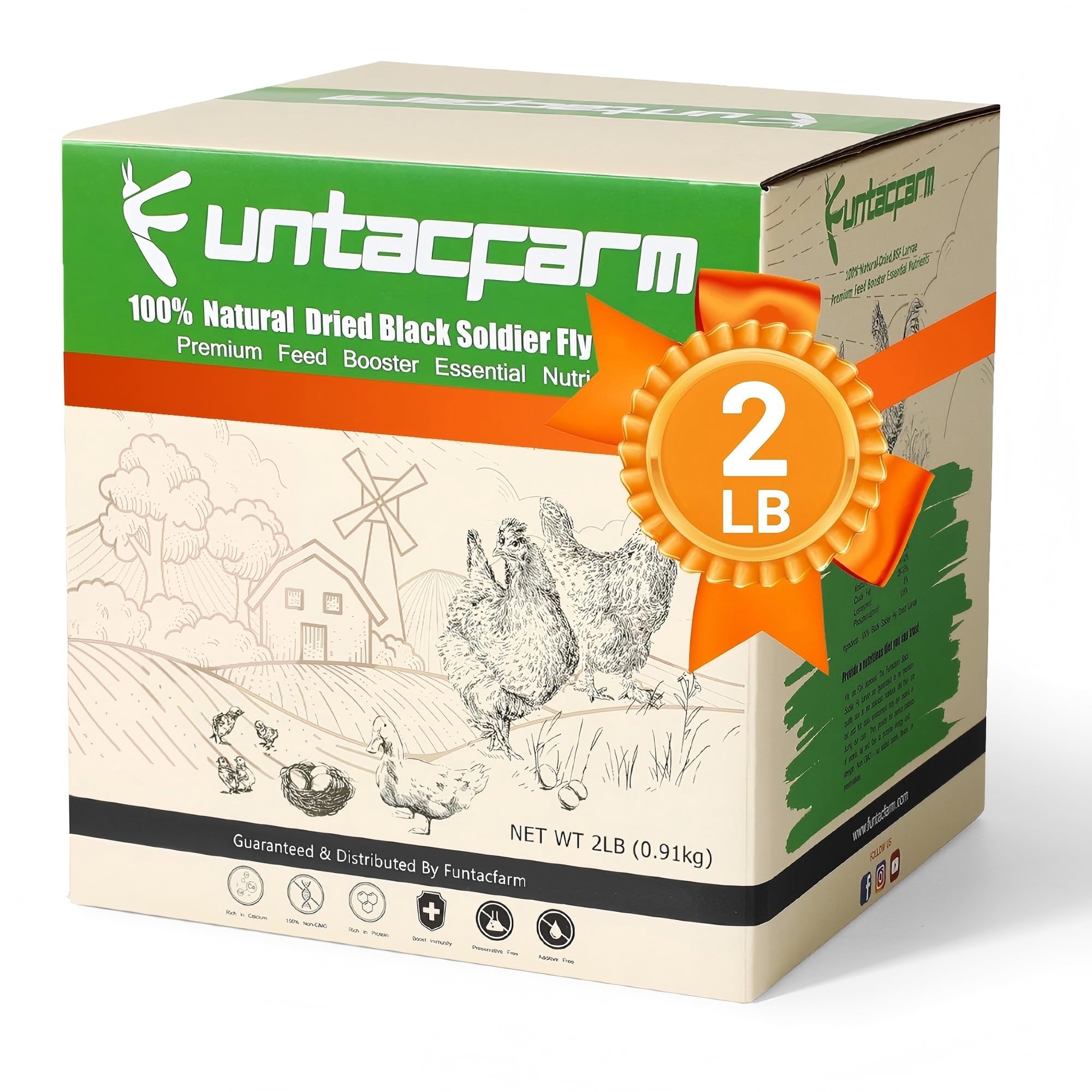
Black soldier fly larvae (BSFL) differ from mealworms in two critical ways: they contain naturally occurring calcium (mealworms do not) and they have a higher fat content (28-33%) that provides sustained energy during winter or brood-rearing. Funtacfarm’s offering arrives in a thick carton with an inner sealed bag, protecting the larvae from crushing. The larvae are microwaved-dried rather than freeze-dried, which some keepers prefer for texture.
The 40-46% protein range is slightly lower than mealworms, but the calcium-to-phosphorus ratio is significantly better for laying hens — BSFL have a calcium content around 8-10% of dry weight, whereas mealworms sit closer to 0.3%. For keepers who want to improve eggshell quality without feeding separate oyster shell, this is a smarter choice. Owners specifically note that their hens produce thicker shells when BSFL replace mealworms in the treat rotation.
The 24-month shelf life if stored dry gives this bag exceptional longevity for small flocks. A 2-pound bag fed as a once-daily treat to 6 hens lasts approximately 3-4 weeks. The larvae have a mild earthy smell that chickens recognize quickly — multiple reviews mention that hens come running at the sound of the bag opening after just one feeding.
Why we love it
- Naturally high calcium content strengthens eggshells
- Superior calcium-to-phosphorus ratio versus mealworms
- Long 24-month shelf life in dry storage
Good to know
- Fat content of 28-33% may contribute to weight gain if overfed
- Not suitable for birds with strict low-fat dietary needs
5. TradeKing Dried Mealworms

TradeKing positions this bag as the simplest entry point: one ingredient, freeze-dried mealworms, no fillers, no artificial additives. The 1-pound format is ideal for keepers testing whether their flock will accept mealworms before committing to larger volumes. The veterinary certification adds a layer of quality assurance that budget-bin mealworms often lack.
Owners consistently describe these mealworms as large, intact, and dust-free — a sign of careful handling during processing. The resealable stand-up bag is functional for daily dispensing, and the zip-top holds up well across multiple weeks of use. Several reviewers who also raise reptiles and wild birds confirm that the same bag works across species, giving it versatility for multi-pet households.
The 1-pound quantity goes quickly with a flock of 5 or more hens — expect to restock every 1-2 weeks depending on how generously you serve. For the lowest commitment-to-test ratio in this guide, TradeKing delivers a reliable, clean product. If your hens devour these, you can confidently upgrade to a larger bulk option from the same brand or a higher-protein alternative.
Why we love it
- Veterinary certified for safety quality assurance
- Large, dust-free worms with no crushed pieces
- Resealable stand-up bag is easy to use and store
Good to know
- 1-pound bag is best suited for small flocks or trial use
- Lower protein density than premium mealworm competitors
FAQ
Can I feed treats for chickens every day without harming egg production?
Are black soldier fly larvae better than mealworms for laying hens?
What ingredients should I avoid in store-bought chicken treats?
How do I introduce a new treat to a hesitant flock?
Final Thoughts: The Verdict
For most backyard keepers, the treats for chickens winner is the Love My Girls Veggie & Worm because it combines mealworm protein, vegetable nutrients, and oyster shell calcium in a single corn-free 5-pound bag — the all-in-one solution that simplifies treat management. If you want maximum protein concentration for molting support, grab the Chubby Dried Mealworms at 53% protein. And for natural calcium enrichment that improves eggshell thickness without separate grit, nothing beats the Funtacfarm Black Soldier Fly Larvae.