
Finding a lawn that survives your dog’s daily running, digging, and bathroom habits is a real puzzle. Most standard grass varieties turn into patchy, yellow messes under the pressure of urine spots and heavy paw traffic, leaving you with soil and frustration instead of a lush yard. The solution lies in choosing a variety built to take the punishment — one that recovers fast and stands up to the nitrogen burn from dog urine.
I’m Mo Mahin — the founder and writer behind Furric. I’ve spent years digging through turfgrass research, comparing seed purity percentages, germination rates, and wear-tolerance data, and analyzing thousands of owner reports to find which grass types actually hold up when a dog is part of the family.
The right choice for your yard depends on your climate, light levels, and how much abuse the turf will take, so I’ve broken down every major contender to help you confidently pick the best type of grass for dogs that will keep both your lawn and your pup happy.
How To Choose The Best Type Of Grass For Dogs
Not every grass seed bag is built for the reality of a dog-occupied yard. Before you buy, focus on these three factors — they determine whether your lawn recovers from daily abuse or slowly disappears.
Urine Burn Tolerance and Nitrogen Management
Dog urine is high in nitrogen, which burns grass blades and roots in concentrated spots. Grasses with a more aggressive growth habit and deeper root systems, like perennial ryegrass and tall fescue, dilute and process nitrogen faster, reducing the visible yellow patches. Avoid varieties with shallow, slow-spreading root systems like standard Kentucky bluegrass in heavy-use dog zones.
Traffic Resistance and Recovery Speed
Paws running, digging, and sleeping on the same spot every day create wear patterns that thin out weak turf. Dense, tillering grasses — those that spread laterally underground or via side shoots — fill in bare patches on their own. Fine fescues and creeping red fescue naturally stitch up worn areas, while perennial ryegrass sprout quickly to repair damage from seed.
Region and Sunlight Match
Cool-season grasses dominate most dog-friendly lawns. In the Northeast and Pacific Northwest, mixes of ryegrass, fescue, and bluegrass work well. For deep shade under decks or dense tree cover, fine fescues like creeping red fescue outperform all other options. If your yard gets less than four hours of direct sun, look specifically for shade-resistant seed varieties that don’t require full sun to fill in.
Quick Comparison
On smaller screens, swipe sideways to see the full table.
| Model | Category | Best For | Key Spec | Amazon |
|---|---|---|---|---|
| GreenView Perennial Ryegrass Blend | Seed | Fast recovery & high traffic | 99.9% weed-free, 7-12 day germination | Amazon |
| Pennington Smart Seed Northeast Mix | Seed Mix | Harsh winters & summer heat | Covers 2,330 sq ft; 8-14 day germination | Amazon |
| Eretz Creeping Red Fescue | Seed | Deep shade & steep slopes | 99.6% pure seed; aggressive tillering | Amazon |
| Scotts Turf Builder Sun & Shade Mix | Seed + Fertilizer | Versatile sun/shade lawns | Includes fertilizer; covers 2,240 sq ft | Amazon |
| Eretz Annual Ryegrass | Seed | Quick soil cover & erosion control | Oregon-grown; weed seed free | Amazon |
| Jonathan Green Dense Shade | Seed | Dense shade recovery | 100% superior seed; 1,800 sq ft cover | Amazon |
| BioTurf Granular Turf Infill | Deodorizer | Artificial grass odor control | 5-gal pail; 30-day scent duration | Amazon |
In‑Depth Reviews
1. GreenView Pure Grass Seed Perennial Ryegrass Blend, 7 lb

Perennial ryegrass is the workhorse grass for dog owners who need fast recovery. This GreenView blend is tested at 99.9% weed-free, meaning you aren’t planting crabgrass or broadleaf weeds alongside your lawn — a crucial spec when you’re trying to establish a thick, uniform turf that can handle urine spots. The 7-pound bag covers up to 3,500 square feet for overseeding, so a single purchase goes a long way on an average suburban yard.
Germination clocks in at 7 to 12 days under proper conditions, which is noticeably faster than many fescue and bluegrass mixes. Owners report seeing tiny green blades within a day or two of consistent watering, and the blend’s dark green color with medium-to-fine texture looks like a classic lawn without feeling stiff under paws. The drought and heat resistance once established means less risk of thinning out during summer months when dogs are outside more often.
Downsides center around establishment patience: some users in cooler northern springs found germination stretched longer than advertised, which is likely tied to soil temperature rather than seed quality. The blend is built for sun and partial shade, so deep-shade corners may need a different companion variety. For a durable, fast-recovering base lawn that handles daily dog life across most climates, this mix earns the top spot.
Why we love it
- 99.9% weed-free seed means less competition for recovering grass.
- Fast germination window helps repair urine spots quickly.
- Stays dark green with a paw-friendly medium texture.
Good to know
- Germination slows noticeably if soil temps stay below 55°F.
- Not ideal for deep, dense shade — pair with fescue.
2. Pennington Smart Seed Northeast Grass Mix 7 lb

Pennington’s Smart Seed Northeast Mix is a three-way blend of Kentucky Bluegrass, Perennial Ryegrass, and Fine Fescues designed specifically for regions that see both summer heat and harsh winter freezes. This combination creates a lawn that tolerates the freeze-thaw cycle while maintaining enough density to survive a dog’s daily wear. The blend needs only 4 to 6 hours of sunlight, which covers many partially shaded backyards where dogs like to lounge.
Drought tolerance is very good for this category, and the included fertilizer boost helps seedlings establish quickly without a separate starter application. Owners in the Northeast and Midwest consistently report thick grass within two weeks of spring seeding, and the Kentucky bluegrass component adds a self-repair ability through underground rhizomes — a valuable trait when urine spots appear in the same area repeatedly.
The main caveat: some buyers received bags of seed that appeared older, resulting in poor germination rates despite proper watering and preparation. The manufacturer responded to complaints with refunds, but it’s a consistency issue worth noting. This mix also requires more water during establishment than a pure fescue, so it’s best for owners who can commit to a regular sprinkler schedule for the first month.
Why we love it
- Self-repairing bluegrass rhizomes help fill urine spots naturally.
- Designed for cold winters and summer heat in the Northeast.
- Drought tolerance saves water once established.
Good to know
- Needs consistent watering during the 8-14 day germination window.
- Occasional reports of older seed with reduced germination.
3. Eretz Creeping Red Fescue Seed, 3 lb
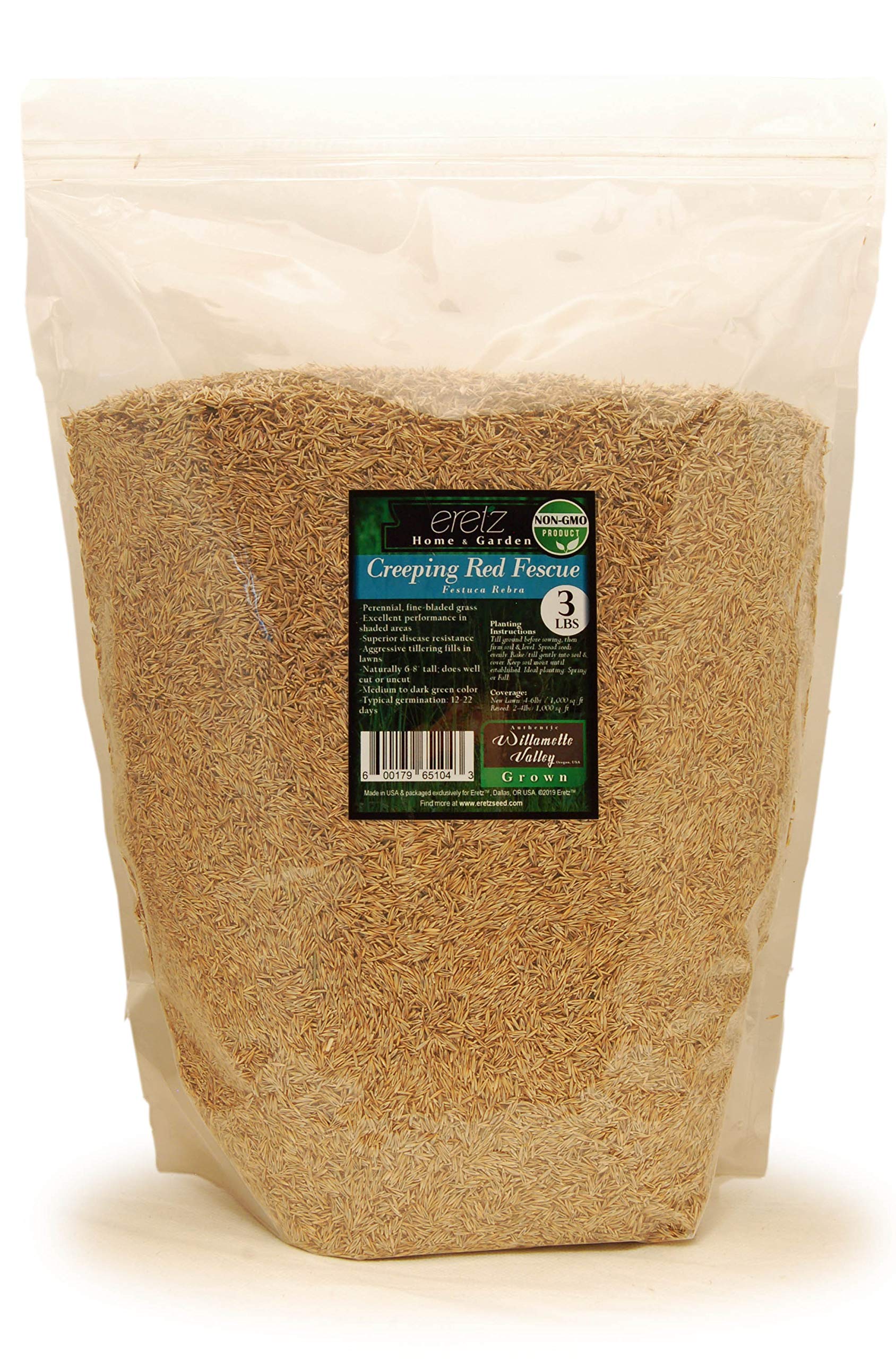
Creeping red fescue is the specialist grass for tough dog-occupied spots — deep shade under trees, steep banks where mowing is hard, and areas where you want grass that survives without constant babying. Eretz grows this variety in Oregon’s Willamette Valley and tests it at 99.6% pure seed with 0% weed or crop seed content, so what you spread is exactly what you intend to grow. The fine-bladed texture is soft under paws and doesn’t hold urine burns as visibly as coarser grasses.
The aggressive tillering habit means this grass spreads sideways naturally, filling in bare patches where dogs have worn the turf down or where urine spots killed the original grass. Owners in Vermont and the Pacific Northwest report it staying green through winter and repairing bald spots by spring without reseeding. It grows to a natural 6-8 inch height and does fine uncut, making it the lowest-maintenance option for dog runs and sloped backyards.
Germination is slower than ryegrass — expect 2 to 3 weeks in cool soil — and the fine blades can lie flat under heavy traffic if you use a dull mower blade. It’s also not meant for high-traffic sports lawns; think of it as the grass for the spaces where dogs spend most of their low-energy time: shaded corners, under the deck, and along fence lines.
Why we love it
- Natural self-repair through tillering reduces reseeding needs.
- Soft, fine texture is gentle on dog paws.
- Excellent shade tolerance outperforms most cool-season mixes.
Good to know
- Slow germination — requires patience and consistent moisture.
- Not the best choice for full-sun high-traffic play zones.
4. Scotts Turf Builder Grass Seed Sun and Shade Mix, 5.6 lb

Scotts Turf Builder Sun and Shade Mix combines seed, lawn fertilizer, and soil improver into one bag, simplifying the process for dog owners who want a single-product solution. The root-building nutrition is designed to help young grass push deep roots quickly, which is the single best defense against urine burn — deeper roots dilute the nitrogen concentration and keep the crown alive. The mix is labeled for full sun and moderate shade, with medium drought resistance and medium to high overall durability.
Owner feedback is consistently positive for fast results: multiple reports of thick, full coverage within three weeks when applied to bare dirt with proper twice-daily watering. The included fertilizer means you don’t need a separate starter, and the coverage — 745 square feet for new lawns or 2,240 for overseeding — fits medium-sized yards easily. The grass texture is soft enough for paws and holds a fairway-type appearance when cut low.
Some users flagged an uptick in crabgrass and weeds in recent batches, possibly due to filler content or contamination during manufacturing. Others noted that heavy rain washed seed away before germination, so timing application around dry weather matters. For a straightforward, all-in-one option that covers sun and shade without mixing custom blends, this mix delivers reliable results for most dog yards.
Why we love it
- Built-in fertilizer simplifies establishment process.
- Fast germination and thick fill reported in three weeks.
- Works across both sunny and partially shaded areas.
Good to know
- Some reports of weed content in recent batches.
- Rain can wash seed away before roots anchor.
5. Eretz Annual Ryegrass Seed, 5 lb

Annual ryegrass is not a permanent lawn solution, but it excels as a fast-growing cover for bare patches, erosion control on dog paths, or a winter overseed that greens up a tired yard before spring. Eretz’s version is grown in the Willamette Valley and tested weed-seed-free, with no filler seeds that dilute your coverage. It’s also an excellent companion for clover or other nitrogen-fixing plants if you want to naturally reduce urine burn over time.
Germination speed is the standout feature: owners report sprouts within days even in poor soil, and the grass creates a dense, vivid green carpet quickly. It’s perfect for dog owners who need to stabilize a muddy run or fill a urine-burned area fast while a perennial grass establishes. The annual lifecycle means it dies after one season, but in practice, many northern owners find it self-seeds enough to maintain coverage year to year.
The trade-off is longevity: annual ryegrass doesn’t spread or repair itself like perennial varieties, so you’ll be reseeding high-traffic zones each season. It also needs more frequent mowing than fine fescues because of its fast vertical growth. For its intended role — quick patch repair, temporary lawn, or erosion blanket — this seed performs exactly as advertised without wasted money on fillers.
Why we love it
- Lightning-fast germination covers bare spots in days.
- No filler seeds — every kernel is pure grass.
- Excellent for temporary erosion control on dog runs.
Good to know
- Annual grass — must be reseeded every season.
- Fast vertical growth requires more frequent mowing.
6. Jonathan Green 40600 Dense Shade Grass Seed, 3 lb
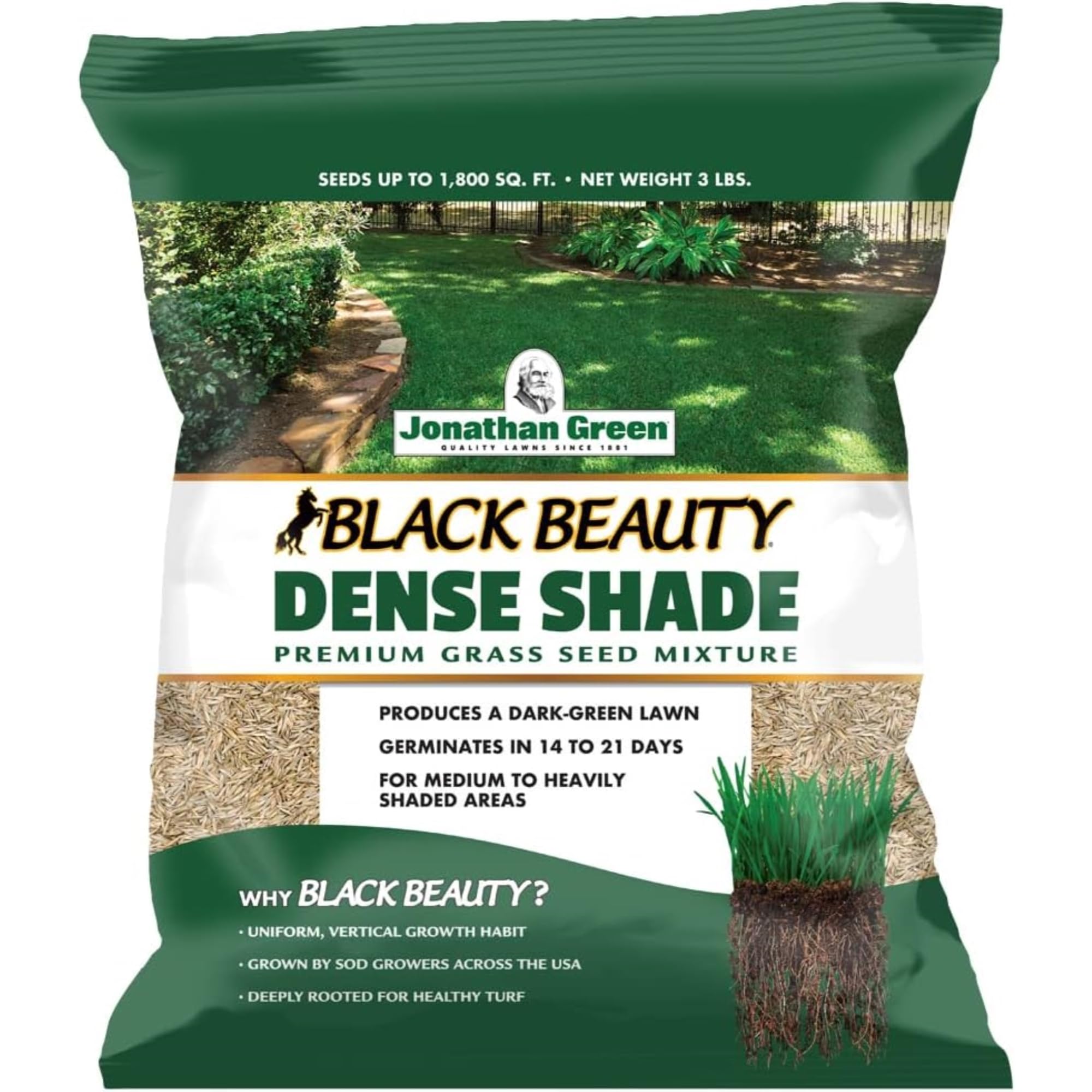
If your yard is dominated by trees, fences, or the north side of the house, standard sun mixes will fail — but Jonathan Green’s Dense Shade formula is engineered specifically for low-light conditions. It’s labeled as 100% superior grass seed with a 3-pound bag covering up to 1,800 square feet, making it one of the most coverage-efficient shade mixes available. The seed blends multiple fescue varieties that thrive in filtered light without getting leggy or thin.
Owners with heavily shaded front yards and clay soil report that this product grows where nothing else would, with germination visible in as little as three days and blades reaching 4-5 inches quickly. The dark green color is richer than typical shade grasses, and the grass shows good hardiness in cool, damp environments. It’s also been successfully used on steep, shaded banks where erosion was a problem — the aggressive root system holds soil in place.
Not every user had success: a small number reported germination rates as low as 5-10% even with proper watering, fertilizer, and soil preparation, suggesting possible batch variability. The mix also struggles under large-leaf trees like oaks and magnolias if leaves aren’t raked, as the leaf layer smothers the young grass. If your shade problem is severe and you’ve tried other mixes without success, this variety is worth trying for its targeted genetics.
Why we love it
- Engineered specifically for dense shade — not a general mix.
- Fast germination reported in difficult clay-soil conditions.
- High coverage per pound reduces cost per square foot.
Good to know
- Batch variability can lead to very low germination rates.
- Must keep large fallen leaves off newly seeded areas.
7. BioTurf Granular Turf Infill – Dog Run Odor Eliminator, 5 Gallon Pail
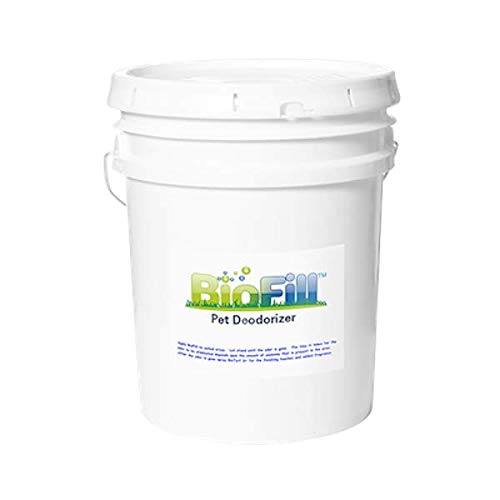
This product shifts focus from growing grass to maintaining artificial turf — if you’ve replaced your lawn with synthetic grass due to dogs, you know the smell problem is real. BioTurf Granular Turf Infill is a naturally derived deodorizer that works by absorbing moisture and breaking down ammonia compounds from dog urine at the source, rather than masking odor with fragrance. The 5-gallon pail covers large artificial lawns, dog runs, and kennels effectively.
In-field performance is impressive: owners report that a single application keeps urine odor away for about two weeks, and a pail lasts six months or more for a typical household. The granules are easy to apply — spread by hand or with a spreader, then brush into the turf fibers — and they’re rated safe for pets, kids, and plants immediately after application. The material handles rain and heat well, though heavy downpours may require a refresher application sooner.
The downsides: it works on artificial turf, not on natural grass, so it’s a different solution for a different lawn problem. Some users noted it can leave a slight white residue if over-applied, and a monthly application routine is recommended for high-traffic areas. For anyone who has switched to artificial grass specifically because of their dogs, this infill solves the one major downside — persistent urine smell.
Why we love it
- Eliminates ammonia odor at the molecular level, not just covers it.
- Long-lasting — one pail lasts most households 6+ months.
- Safe for pets, kids, and plants immediately after use.
Good to know
- Designed for artificial turf only — not for natural grass.
- Can leave a light residue if applied too heavily.
FAQ
What grass type is most resistant to dog urine burn?
Can I train my dog to not kill the grass?
Is artificial grass better than real grass for dogs?
How long does it take for dog urine damaged grass to recover?
Should I use a grass mix or a single variety for a dog lawn?
Final Thoughts: The Verdict
For most gardeners, the best type of grass for dogs winner is the GreenView Perennial Ryegrass Blend because it combines 99.9% weed-free purity, fast 7-12 day germination, and the traffic tolerance that a daily dog routine demands. If you need deep shade performance without constant reseeding, grab the Eretz Creeping Red Fescue for its aggressive self-repair and soft paw-friendly texture. And for owners who have switched to artificial turf but can’t kick the odor problem, nothing beats the BioTurf Granular Turf Infill for neutralizing ammonia at the source.