
Waking up to torn flower beds or discovering that a neighborhood cat has turned your vegetable patch into a litter box is a fast track to frustration. Ultrasonic deterrents offer a hands-off defense, using high-frequency sound waves that annoy pests without harming them or your plants. But with varying frequencies, coverage angles, and solar reliability, picking a unit that actually works requires looking past the generic marketing.
I’m Mo Mahin — the founder and writer behind Furric. My research process involves cross-referencing PIR sensor specifications, ultrasonic frequency ranges, solar panel efficiency ratings, and real-world durability reports from hundreds of verified owners to identify which models consistently deliver on their promise.
Whether you are fighting off stray cats, persistent raccoons, or deer that treat your garden like a buffet, finding a reliable best ultrasonic cat deterrent means focusing on motion detection range, frequency variability, and weatherproof construction more than flashy feature lists.
How To Choose The Best Ultrasonic Cat Deterrent
Not all ultrasonic deterrents are created equal. A cheap unit with a weak sensor and fixed frequency might deter a cautious squirrel but be completely ignored by a determined stray cat. Here are the critical specs to evaluate before you buy.
PIR Sensor Range and Detection Angle
The Passive Infrared (PIR) sensor is the brain of the device. A sensor that only covers 90 degrees with a 20-foot range leaves massive blind spots. Look for a minimum 110-degree detection angle and a range of at least 25-30 feet. This ensures the unit triggers before the animal is already deep in your garden bed. Wider coverage also means you need fewer units to secure a perimeter.
Frequency Variability and Mode Options
Animals can habituate to a single, unchanging tone. Devices that offer a sweeping or variable frequency range (typically 13.5 kHz to 45 kHz) are far more effective over the long term because the changing pitch prevents desensitization. Some units also combine ultrasonic sound with a flashing LED strobe or a flame-effect light, creating a multi-sensory deterrent that works on both nocturnal and daytime pests.
Solar Panel Quality and Backup Charging
Solar-powered units are convenient, but not all solar panels are equal. A unit with a larger panel charges faster and performs better on cloudy days. Models that also include a USB-C charging port as a backup are a significant advantage, as they guarantee full operation even during stretches of overcast weather or in shaded installation spots. Check for an IP65 waterproof rating to ensure the electronics survive rain and snow.
Installation Height and Sun Exposure
Most ultrasonic deterrents are designed to be staked into the ground, with the sensor sitting 9-12 inches above the soil. This height is optimal for detecting small to medium animals like cats and raccoons. Placement in direct sunlight is critical for solar models — a unit installed in constant shade will have a dead battery by nightfall when nocturnal animals are most active.
Quick Comparison
On smaller screens, swipe sideways to see the full table.
| Model | Category | Best For | Key Spec | Amazon |
|---|---|---|---|---|
| PEXPEL 4-Pack | Premium Multi-Unit | Large perimeter coverage | 5 modes + USB backup, 25-30 day battery | Amazon |
| G-Jyuncyou 2-Pack | Premium Dual | Variable frequency & power monitoring | Large adjustable panel, 18-45 kHz sweep | Amazon |
| Jahy2Tech Sonic Fortress Pro 2-Pack | Mid-Range Performance | Day/night variable defense | Day sonic pulse, night strobe, 30ft range | Amazon |
| TFKK 2-Pack | Mid-Range Dual | Wide-angle coverage | 120° sensor, 25-30ft detection range | Amazon |
| YOHHOS Solar Repeller | Mid-Range Single | Adjustable sensitivity & frequency | 13.5-45 kHz range, 110° / 33ft coverage | Amazon |
| WonderMar Solar Repeller | Budget Single | Flame-effect visual deterrent | IP54 rating, 20-30 kHz ultrasonic mode | Amazon |
| Sxaze Solar Repeller | Budget Entry | Basic deterrent for small areas | 3000 sq ft coverage, 15-second activation cycle | Amazon |
In‑Depth Reviews
1. PEXPEL 4-Pack Solar Deer Repellent Devices
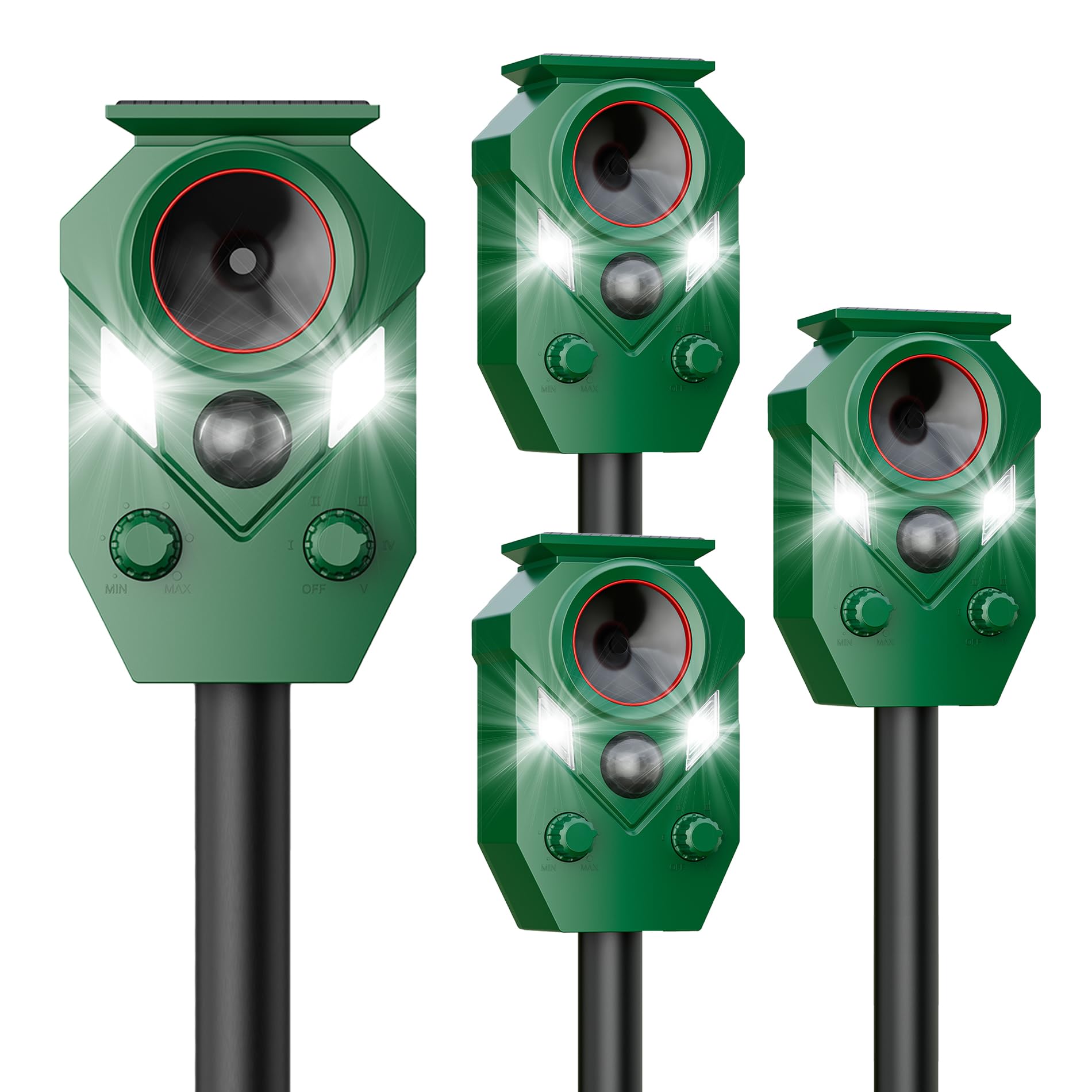
The PEXPEL 4-pack stands out as the most comprehensive perimeter solution in this category. Each unit features an advanced PIR sensor that triggers ultrasonic waves sweeping from 18 to 45 kHz alongside flashing strobe lights. The combination of five adjustable working modes and a sensitivity dial on every unit means you can tune each repeller to target specific animal sizes and activity levels around your property.
What separates this set from the rest is the dual charging system. The solar panel handles daily top-ups, but the USB-C fast-charge port — which fills the battery in roughly three hours — ensures you never have a dead unit after a string of cloudy days. A full charge delivers an impressive 25 to 30 days of continuous operation, making this a true set-and-forget solution for large yards or farm perimeters.
Verified buyers consistently report that deer stopped visiting rose beds within 24 hours of installation, and one reviewer noted that cats completely vanished from their property after setup. The only minor criticism involves the detection range; some users found the effective trigger distance slightly shorter than the advertised maximum. For most gardens, the four-unit coverage more than compensates for this nuance.
Why we love it
- USB backup charging guarantees uptime in all weather
- Five frequency modes prevent animal habituation
- 4-pack provides excellent value per square foot of coverage
Good to know
- Effective trigger range may be slightly less than spec in some conditions
- Requires consistent direct sunlight for optimal solar charging
2. G-Jyuncyou Solar Ultrasonic Animal Repellent 2-Pack
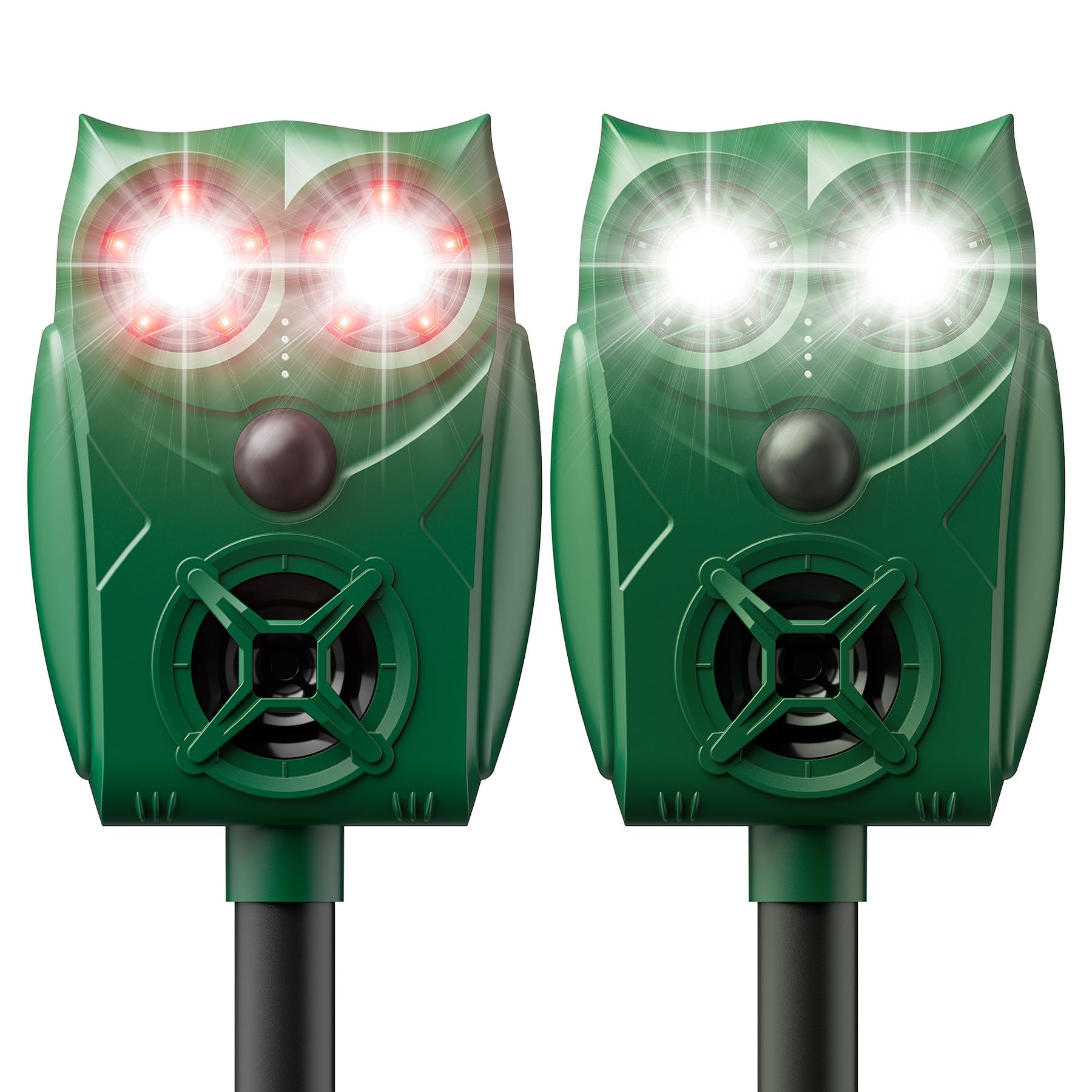
The G-Jyuncyou 2-pack addresses a common frustration with solar repellents: inconsistent charging. Its solar panel is roughly three times larger than standard models and can be tilted from 0 to 90 degrees, letting you angle it toward the sun path for maximum absorption regardless of season. The result is a 30% faster charge rate that keeps the unit active even during shorter winter days.
Beyond the panel, the deterrent itself operates across an 18 to 45 kHz frequency sweep, combining ultrasonic bursts with multi-mode flashing lights. A unique orange spiral breathing light adds a visual element that changes constantly, reducing the chance of animals becoming desensitized to a single strobe pattern. The PIR sensor covers a 110-degree arc up to 26 feet, which is sufficient for garden beds and backyard perimeters.
The real-time 4-stage LED power indicator is a smart touch that lets you check battery status in 25% increments. If solar charging falls short, the included DC cord provides a three-hour full charge as a reliable backup. Reviews highlight its effectiveness against coyotes near wooded areas and a memorable account of a persistent neighbor’s cat fleeing the yard after one encounter.
Why we love it
- Adjustable large solar panel with seasonal tilt range
- Four-stage battery indicator for easy power monitoring
- Orange spiral light adds dynamic visual deterrence
Good to know
- Detection range of 26 feet is adequate but not the longest in its class
- DC backup cord included but not USB-C
3. Jahy2Tech Sonic Fortress Pro 2-Pack
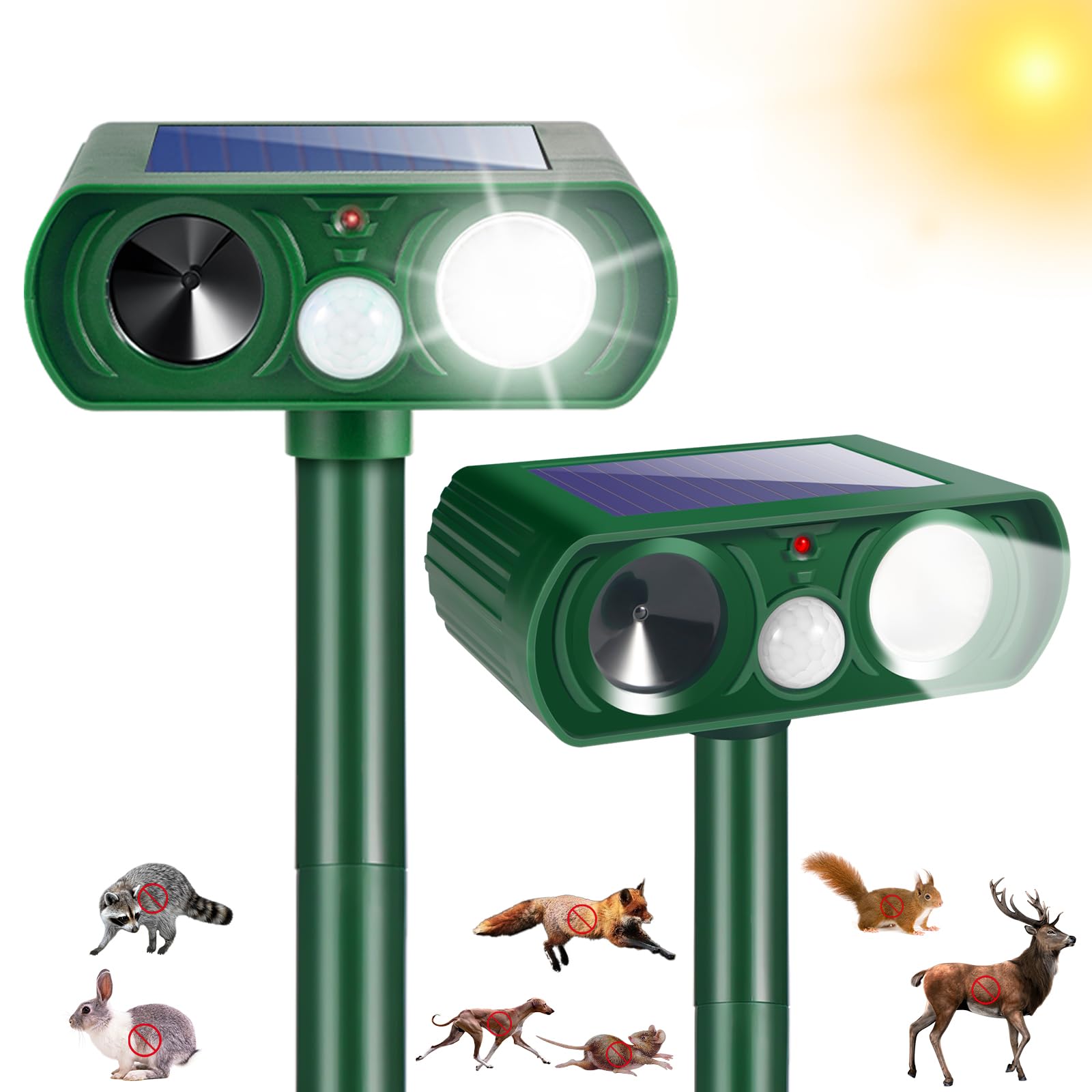
The Sonic Fortress Pro is engineered around a simple principle: change the deterrent signal based on the time of day. During daylight hours, it emits a Variable Sonic Pulse that targets the hearing of deer, rabbits, and squirrels. When the sun goes down, the system automatically switches to intense LED strobe lights that exploit the sensitive night vision of nocturnal raiders like raccoons and skunks.
Each unit in the 2-pack has a 110-degree wide-angle sensor with a 30-foot range, allowing you to set up overlapping coverage zones. The automatic frequency variation means there are no dials to fiddle with — the device cycles through tones on its own, which owners report keeps squirrels off roofs and deer away from courtyard crops with minimal maintenance.
The rugged ABS housing carries an IP65 rating and is rated to operate between -4°F and 122°F, making it suitable for year-round use in harsh climates. A few buyers noted the ultrasonic sound was audible to younger household members, so placement away from windows and patios is recommended. The manufacturer backs the unit with a 12-month quality guarantee, adding confidence to the purchase.
Why we love it
- Automatic day/night mode switching prevents habituation
- No manual tuning required — set and forget
- Wide operating temperature range for extreme climates
Good to know
- Ultrasonic sound may be audible to younger individuals at close range
- Optimal placement requires open line of sight to target area
4. TFKK 2-Pack Solar Animal Repeller
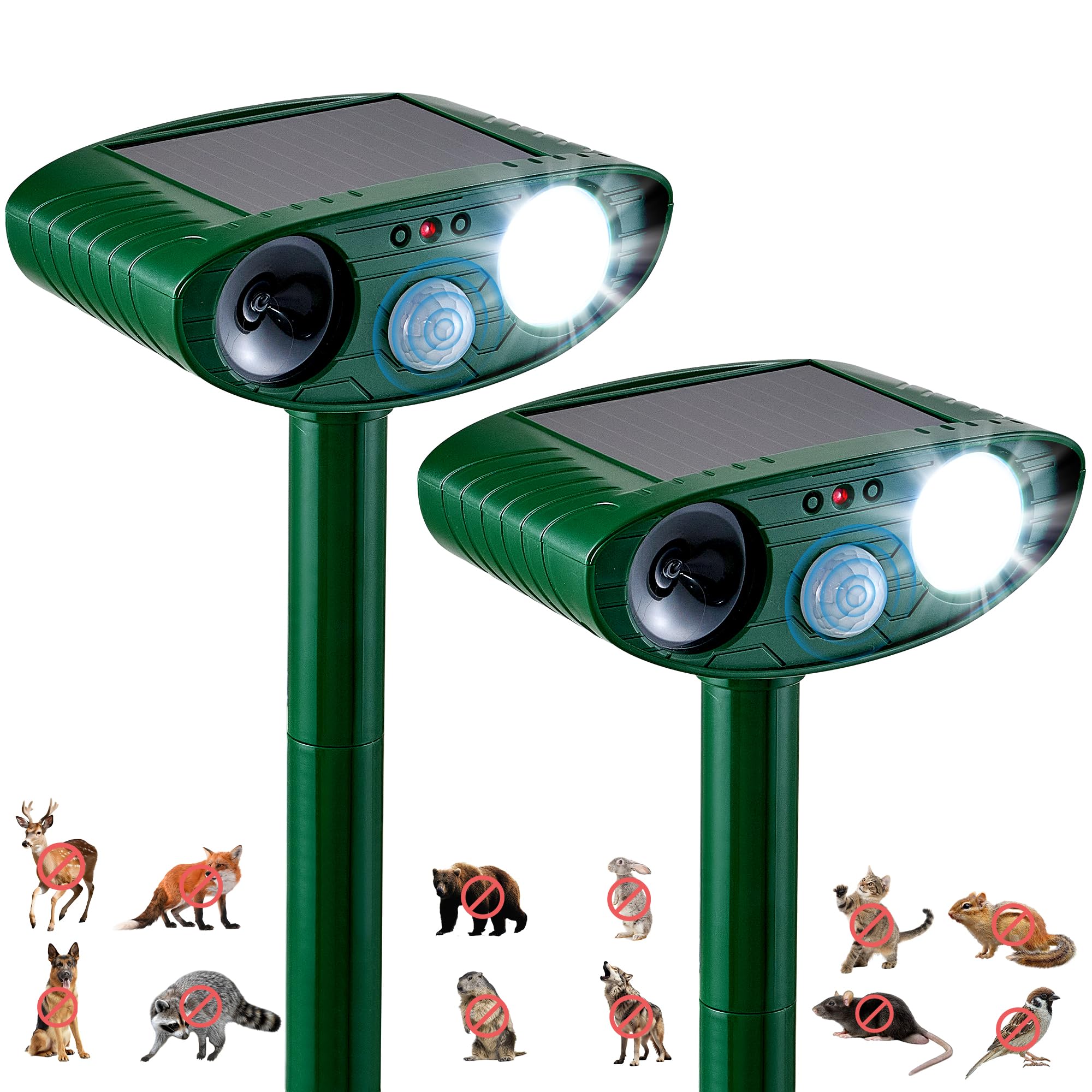
The TFKK 2-pack emphasizes coverage breadth. Its PIR sensor boasts a 120-degree detection angle — wider than the 110-degree standard found on most models — paired with a 25-to-30-foot detection range. This wider field of view means a single unit can monitor a larger section of garden or lawn without requiring as many devices to eliminate blind spots.
Upon activation, the unit emits variable-frequency ultrasonic waves and a flashing LED strobe. The solar panel charges the internal battery during the day, and the IP65-rated ABS housing shrugs off rain and snow. Installation is straightforward with the included ground stakes, and the recommended height of 9-10 inches above ground places the sensor at the ideal level for detecting raccoons, squirrels, and stray cats.
Owner feedback consistently praises the device for reducing animal footprints around garden beds and trash bins. The main caveat is that some particularly bold raccoons and squirrels occasionally ignore the deterrent, especially in noisy environments where ambient sound masks the ultrasonic signal. Placing units in quieter corners of the yard improves effectiveness noticeably.
Why we love it
- Widest PIR detection angle in this roundup at 120 degrees
- Simple stake installation with no wiring required
- Effective against raccoons, squirrels, rabbits, and cats
Good to know
- Performance drops in high-noise environments near roads or machinery
- Some persistent raccoons may ignore the sound after several days
5. YOHHOS Solar Ultrasonic Animal Repeller
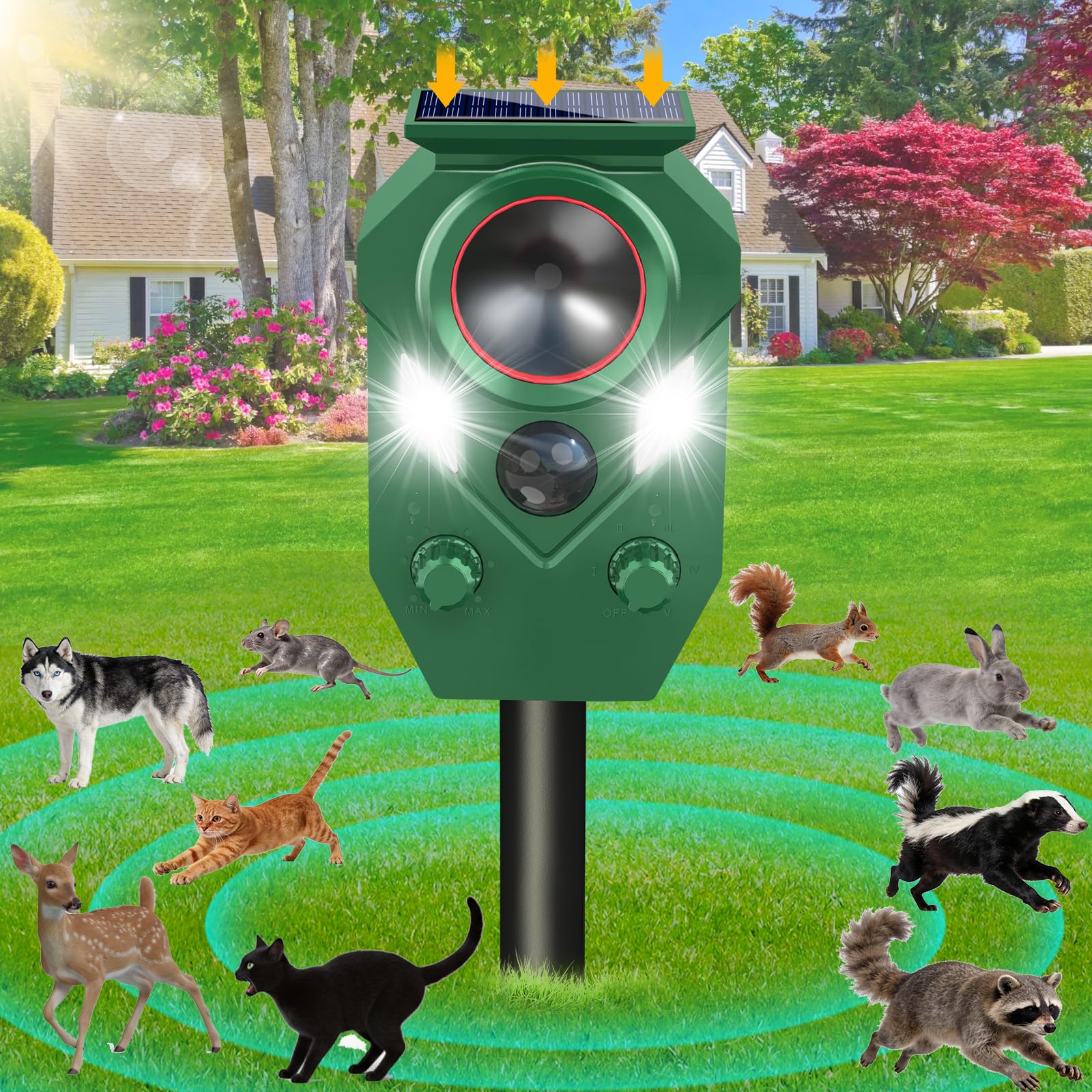
The YOHHOS repeller distinguishes itself with physical control knobs for both sensitivity and frequency range. This tactile adjustability allows you to fine-tune the device specifically for the type of animal causing the most trouble — narrow the frequency for smaller rodents or broaden it for larger mammals like deer. The unit sweeps from 13.5 kHz up to 45 kHz, covering most nuisance wildlife.
The PIR sensor covers 110 degrees with a 33-foot detection range, one of the more generous single-unit specs in the mid-range tier. It runs entirely on solar power with an IP65 waterproof rating. Notably, this model operates silently in the sense that it does not emit an audible alarm sound — only the ultrasonic waves and strobe lights activate, which is ideal for homeowners sensitive to noise pollution.
User reports are largely positive, with many noting the device eliminated nightly rabbit visits within days and stopped raccoons from raiding trash cans. The few negative experiences revolve around occasional unit defects — one reviewer received a unit with an internal rattle that failed out of the box. Checking the unit immediately upon arrival is recommended.
Why we love it
- Manual knobs for tuning sensitivity and frequency to specific animals
- No audible alarm — only ultrasonic and strobe activation
- 33-foot detection range maximizes single-unit coverage
Good to know
- Quality control issues reported on a small percentage of units
- Solar-only charging with no USB backup port
6. WonderMar Solar Ultrasonic Animal Repellent
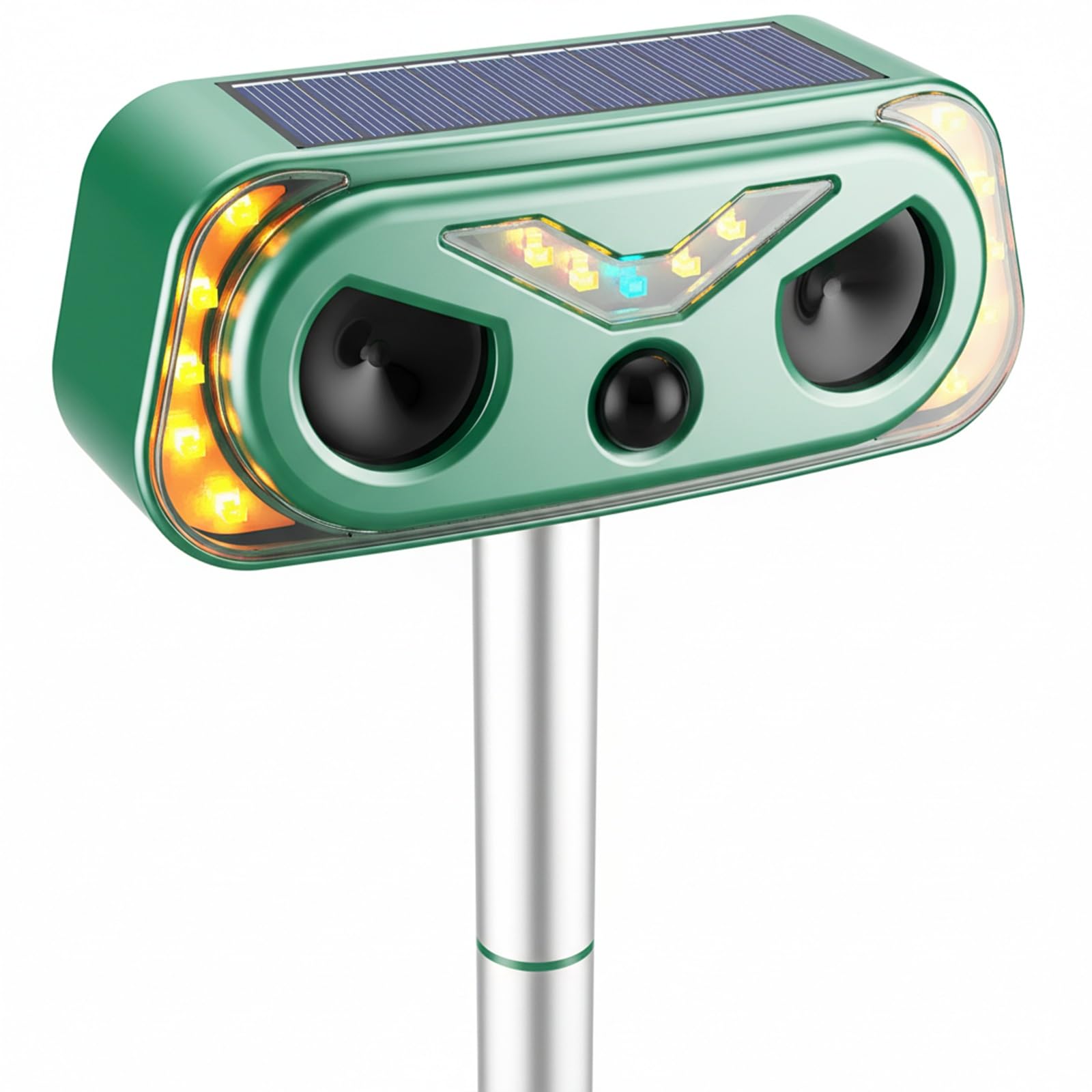
The WonderMar repeller takes a visually aggressive approach. Its alternating LED strobe bursts are paired with a separate flame-effect light that mimics the appearance of fire. For animals with instinctive fear of flames, this creates a powerful psychological deterrent that goes beyond sound alone. The unit operates in two modes: ultrasonic-only at 20-30 kHz for silent rodent deterrence, or a combined ultrasonic-plus-light mode for larger intruders.
The PIR sensor detects motion within a 110-degree horizontal arc and a 15-degree vertical field, with a range of up to 33 feet. The housing is IP54-rated — adequate for splash resistance but less robust than the IP65 standard found on pricier models. The built-in solar panel handles daily charging, and the unit is lightweight at 4.8 ounces, making it easy to reposition as needed.
Feedback is split. Several owners report that the device works well, with raccoons stopping their visits and fewer animals appearing in gardens. However, a significant number of 1-star reviews mention failure within two weeks — lights stop working, or the PIR sensor stops detecting movement altogether. Another buyer noted that a neighborhood cat completely ignored the device and continued digging in flower beds. For the price, the WonderMar offers interesting features, but durability is a gamble.
Why we love it
- Unique flame-effect light adds a primal visual deterrent
- Dual-mode operation for silent or combined deterrence
- Very lightweight and easy to reposition
Good to know
- IP54 rating offers less water protection than IP65 competitors
- Reports of units failing within two weeks of installation
- Effectiveness against determined cats is inconsistent
7. Sxaze Solar Ultrasonic Animal Repellent
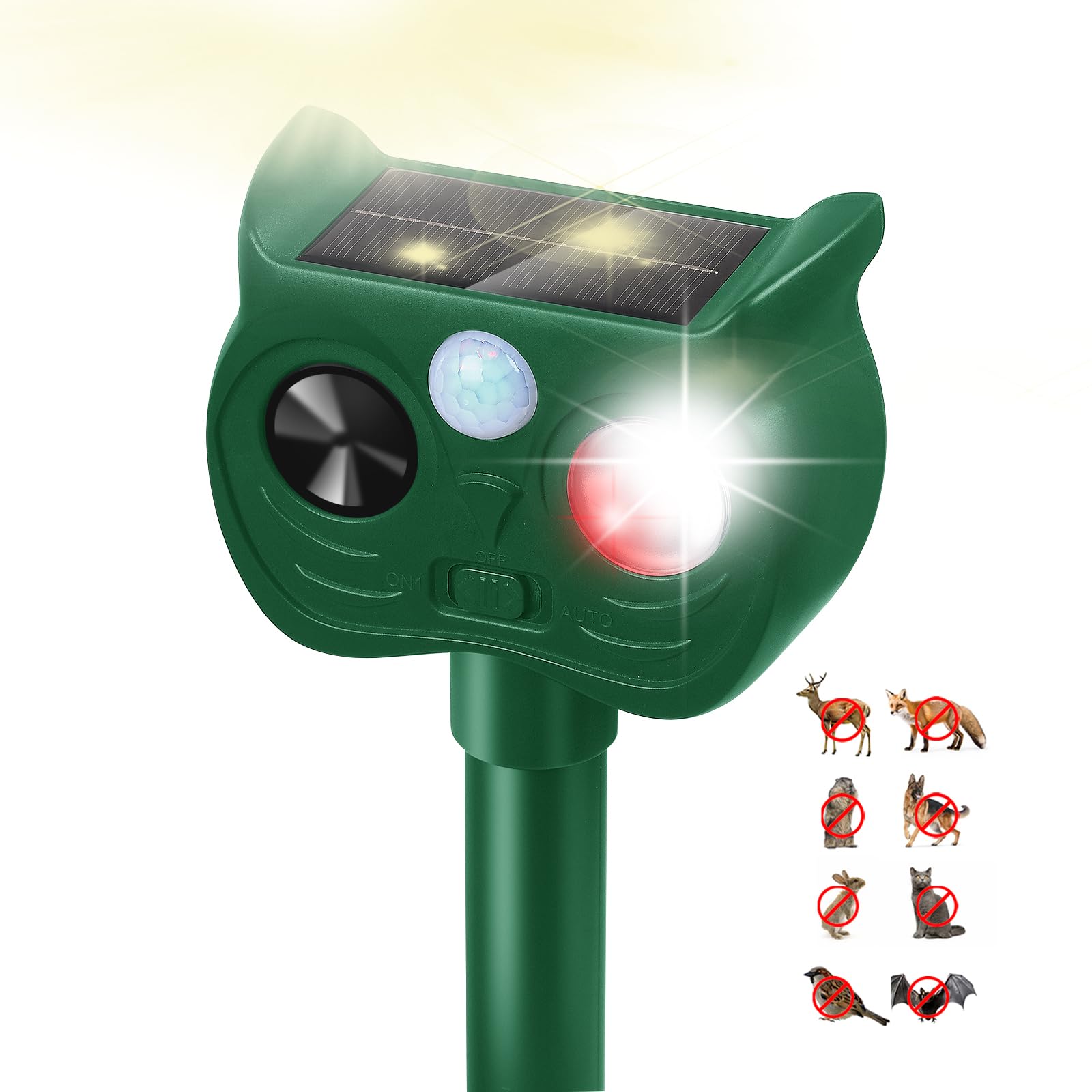
The Sxaze repeller claims a coverage area of up to 3000 square feet, making it an appealing option for homeowners on a budget looking to protect a large yard with a single unit. Its PIR sensor detects motion up to 30 feet within a 120-degree field, activating a 15-second cycle of ultrasonic bursts combined with red and white LED strobe lights. The dual-mode system lets you switch between ultrasound (inaudible to humans) and an audible tone for those who prefer a confirmatory sound.
The unit is solar-powered with an IP65 waterproof rating and constructed from high-strength ABS. Setup requires a two-day initial charge in direct sunlight before deployment, after which the unit enters an automatic standby cycle until the sensor triggers again. The recommended installation height of 9-10 inches above ground positions the sensor at the optimal level for detecting medium-sized pests.
Early reviews are mixed. Some owners are satisfied, noting that the device effectively reduced squirrel and stray cat presence in their gardens without requiring batteries. Others report significant issues: the unit failing after approximately 40 days with a continuous clicking sound and dead red light, or squirrels completely ignoring the device and continuing to raid vegetable beds. A few buyers also noted that the high-frequency noise was audible to younger children, which may be a consideration for families.
Why we love it
- Largest claimed coverage area among budget-priced single units
- Dual-mode sound allows user to switch between silent and audible
- IP65 waterproof rating for reliable outdoor use
Good to know
- Multiple reports of units failing within 40-60 days
- Ultrasonic sound may be audible to younger household members
- Effectiveness against determined squirrels is questionable
FAQ
Do ultrasonic cat deterrents work on all cats?
Can these devices harm my own pets like dogs?
Why does my device stop working after a few weeks?
How high off the ground should I install the repeller?
Final Thoughts: The Verdict
For most gardeners, the best ultrasonic cat deterrent winner is the PEXPEL 4-Pack because its five adjustable modes, USB backup charging, and 25-30 day battery life provide unmatched coverage and reliability for the price. If you want precise frequency and sensitivity tuning for specific animals, grab the G-Jyuncyou 2-Pack with its adjustable large solar panel. And for a budget-friendly entry point to test the technology before scaling up, the YOHHOS Solar Repeller offers manual adjustment knobs and a solid 33-foot detection range at a cost that won’t break the bank.