
You stand between a sticky kitchen floor and a clean one, holding a mop bucket that smells like last week’s regret while the vacuum sits in a closet. That gap — the time wasted switching tools, the dirty water pushed around by a rag, the hair you manually scoop off a wet roller — is exactly what a decent vacuum and mop combo is designed to erase. These machines vacuum debris, wash with fresh water, and dry the floor in a single pass, turning a 45-minute chore into a 15-minute glide through the house.
I’m Mo Mahin — the founder and writer behind Furric. I compare suction wattage, battery chemistry, tank capacity, roller brush geometry, and self-cleaning cycle temperatures by cross-referencing technical spec sheets with aggregated owner feedback from hundreds of verified households.
This guide ranks the top models by quiet suction value, separating the floor cleaners that leave a dry, streak-free shine from those that just redistribute the grime, so you can find the right vacuum and mop combo for your home’s surface types and daily mess load.
How To Choose The Best Vacuum And Mop
A vacuum and mop combo is only as good as its weakest subsystem. If the suction is too low, debris gets pushed around. If the self-cleaning cycle doesn’t dry the roller, the brush smells. If the tank capacity is small, you refill mid-clean. Focus on three pillars: cleaning architecture (dual-tank vs single-pass), battery reliability, and the ease of post-clean maintenance.
Dual-Tank Separation vs Single-Tank Recirculation
The most important hygiene factor is whether the machine keeps clean and dirty water in separate chambers. Units with a true split design always mop with fresh water, preventing the grime you just picked up from being smeared across the next strip of floor. Single-tank or poorly designed separation systems recirculate soiled water, leaving a cloudy film that’s especially visible on dark hardwood or polished tile. Always look for units that list separate clean and dirty water capacities in milliliters — larger tanks reduce trips to the sink.
Battery Runtime and Self-Cleaning Reserve
Manufacturers often quote a maximum runtime, but that figure is usually measured in vacuum-only or low-speed mode. Real-world wet mopping on high suction drains the battery faster. More critically, most self-cleaning cycles require 30–40% remaining battery to run. If your home’s square footage pushes the battery to the limit, you may finish mopping but be unable to trigger the self-clean sequence, leaving a wet brush that develops odors. Look for a runtime that exceeds your home’s cleaning time by at least 30%.
Edge Cleaning and Low-Profile Navigation
Vacuum mop combos with a fixed rectangular head often leave a 1–2 inch gap along baseboards and under furniture. If your home has toe-kick cabinets, low-clearance sofas, or tight corners, prioritize machines with a pivoting brush head, articulating neck, or a “lay-flat” hinge that drops the body to under 6 inches. For robot combos, check for an extending side brush or mop pad that reaches into corners rather than relying on the robot’s circular body path.
Quick Comparison
On smaller screens, swipe sideways to see the full table.
| Model | Category | Best For | Key Spec | Amazon |
|---|---|---|---|---|
| Tineco Floor ONE Stretch S6 | Stick | Low-clearance furniture | 5.1-Inch Lay-Flat + 158°F FlashDry | Amazon |
| Ultenic AC1 Elite | Stick | Long runtime / whole-house | 50-Min Runtime + HEPA Filter | Amazon |
| DREAME G10 Pro | Stick | Heavy wet spills / pet homes | 900 mL Clean Tank + Self-Propelled | Amazon |
| Eureka NEW400 | Stick | Budget pick / small apartments | 30-Min Runtime + Self-Cleaning | Amazon |
| iRobot Roomba Plus 505 | Robot | Hands-off daily maintenance | AutoWash Dock + Extending Mop Pads | Amazon |
| NARWAL Freo X10 Pro | Robot | Pet hair / tangle-free brush | 11,000Pa + Heated Mop Drying | Amazon |
| DREAME L40 Ultra Gen 2 | Robot | Deep carpet + corner reach | 25,000Pa + 231-Min Quiet Mode | Amazon |
| eufy E25 | Robot | Cross-contamination prevention | HydroJet Always-Clean Roller Mop | Amazon |
| Tikom L8000 Plus | Robot | Budget robovac + self-empty | 6000Pa + 90-Day Self-Emptying Bag | Amazon |
In‑Depth Reviews
1. Tineco Floor ONE Stretch S6

The Tineco Stretch S6 collapses to a true 180-degree flat profile, compressing to 5.1 inches to slide under beds and low sofas where fixed-head sticks cannot reach. Its iLoop sensor continuously adjusts water flow and suction based on real-time dirt detection, spraying more on sticky patches and less on dry dust, which extends the 40-minute pouch battery in auto mode to cover roughly 600 square feet per charge on tile.
The FlashDry self-cleaning cycle uses 158°F fresh water to flush the pipe and roller, then seals and blow-dries the brush at the same temperature, which reduces overnight odor development common in budget combos. The 3-chamber dirty water separation system keeps debris away from the motor even while the machine is horizontal, so suction does not drop when cleaning under furniture.
Owners report that the battery reserve must be above 35% to initiate the self-clean cycle, so homes larger than 1,500 square feet may need a mid-clean recharge. The 0.8-liter clean tank is smaller than some competitors, but the intelligent dispensing means you rarely run out mid-run on normal floors. Dual-sided edge cleaning and mini assistive wheels make tight maneuvering effortless.
Why we love it
- True lay-flat design reaches under standard bed frames and couches
- Hot-air FlashDry prevents roller mildew without manual removal
- iLoop sensor adjusts water and suction on the fly, conserving battery
Good to know
- Self-clean cycle requires at least 35% remaining battery
- Liquid and solid separator can be fiddly to empty
- Small clean tank may require refill for homes over 1,200 sq ft
2. Ultenic AC1 Elite

The Ultenic AC1 Elite packs a 50-minute lithium-ion battery, which is roughly 40% longer than the average stick vacuum mop at this price tier, allowing it to clean a three-bedroom house on a single charge without triggering the low-battery alarm. Its smart mess detection system automatically ramps suction when it senses a wet spill or a pile of crumbs, then dials back to conserve power on routine passes.
The digital display shows remaining battery, cleaning mode, and alerts for water refill or dirt tank full. Voice prompts guide you through maintenance steps, which reduces the learning curve for first-time wet-dry users. The self-propelled brush roller provides a slight forward assist, making the 9.5-pound body feel lighter during extended cleaning sessions.
Some owners note that the suction in standard auto mode is moderate — about on par with a mid-range stick vacuum — so very heavy debris may require a pass with a separate vacuum first. The 650 mL clean tank is sufficient for apartments but will need one top-up for larger open-plan spaces. The HEPA filter traps fine dust effectively, and the self-cleaning button triggers a quick flush of the brush roller and tubing.
Why we love it
- True 50-minute runtime covers whole-home cleaning without mid-charge
- Smart detection auto-adjusts suction and water for mess type
- Digital display with voice prompts eases the learning curve
Good to know
- Suction in auto mode is moderate; heavy debris may need pre-vacuuming
- Only Ultenic-brand cleaning solution is recommended to avoid foam issues
- Clean tank capacity is modest for large open-plan homes
3. DREAME G10 Pro

The DREAME G10 Pro is built with a 900 mL clean water tank — the largest among the stick-form units in this roundup — which translates to fewer refills during long cleaning runs. The self-propelled brush roller reduces arm fatigue, and the 35-minute runtime is calibrated for typical suburban homes where you can clean the entire living area before the battery hits 30%.
Dual water tanks keep clean and dirty water fully separated, and the self-cleaning button activates a flush-and-spin cycle that scrubs the roller and internal tubing. The upright form factor is stable on hardwood, tile, laminate, and marble, and has been tested specifically on a range of North American flooring finishes to avoid dulling or streaking. Edge cleaning is respectable, though the fixed head does not pivot as aggressively as some articulating designs.
Owners report strong suction performance on pet litter and muddy paw prints — the motor handles semi-wet messes without clogging. The self-cleaning mode runs for about 90 seconds and leaves the roller damp but not soaking. A few users observed water marks on pull-back passes, which suggests the brush head may deposit a thin film if left stationary. The 11.2-pound weight is noticeable, but the self-propulsion compensates on straight runs.
Why we love it
- Largest clean tank (900 mL) reduces interruption for refills
- Self-propelled drive reduces strain on long straight cleaning passes
- Tested for compatibility with multiple North American hard floor types
Good to know
- Heavier at 11.2 pounds; self-propulsion helps but battery drain increases
- Can leave water marks on pull-back if brush head lingers
- Self-cleaning leaves roller damp; longer drying needed before storage
4. Eureka NEW400

The Eureka NEW400 brings a self-propelled wet-dry cleaner to an entry-level price point, using a motorized brush roll that glides forward with minimal push effort. The dual-tank system keeps fresh and dirty water separate, and the self-cleaning function — activated by holding a button for three seconds — flushes the roller and internal tubing without requiring you to touch the brush. The 30-minute battery is adequate for apartments and small homes up to 800 square feet.
Owner feedback highlights that the vacuum picks up long human hair and golden retriever fur effectively, and the dry time after mopping is instant — floors are walkable immediately. The included cleaning solution delivers a streak-free shine on tile, and the dirty water tank is simple to empty. The 600 mL clean tank capacity is sufficient for a 35-minute mopping session without refill.
The primary limitation is the runtime: 30 minutes on a full charge, with a 6-hour recharge time. For homes with multiple bedrooms, you may need to clean in shifts. Some owners note that the dirty water bin lacks a full-level indicator, so overfilling can cause liquid to escape during use. Self-cleaning removes most residue, but a small amount of dirt can linger under the roller, requiring a quick manual wipe every few cycles to prevent odor.
Why we love it
- Self-propelled drive at an entry-level price reduces physical effort
- Dual-tank system ensures fresh water for every mop pass
- Instant-dry floors on tile — no waiting or water streaks
Good to know
- 30-minute battery and 6-hour charge time limit continuous use
- Dirty water bin lacks a full-level indicator; can leak if overfilled
- Self-cleaning leaves some debris under the roller; occasional manual wipe needed
5. iRobot Roomba Plus 505 Combo
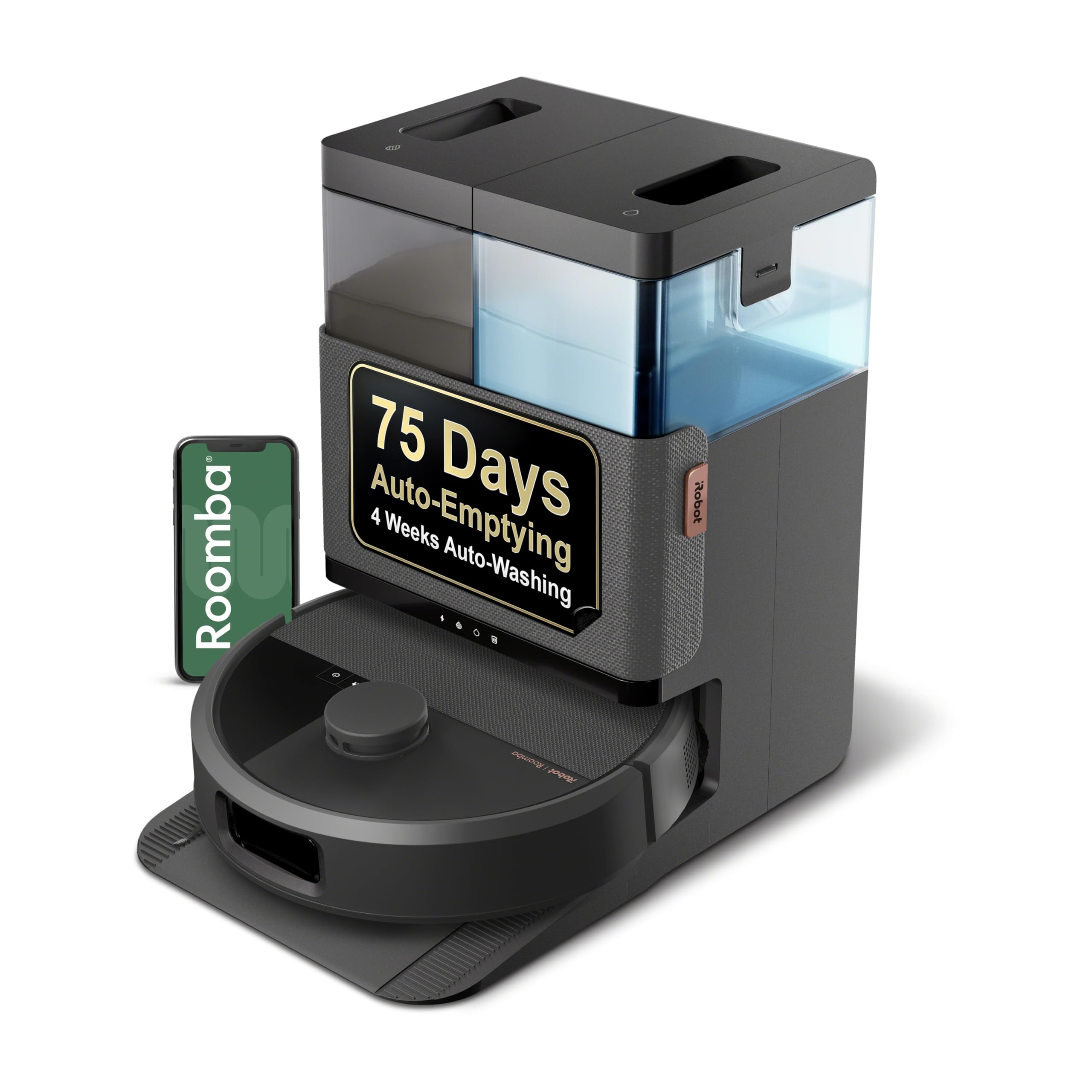
The iRobot Roomba Plus 505 is a robot vacuum and mop with an AutoWash Dock that handles self-emptying (up to 75 days of dust), pad washing, and heated drying without manual intervention. Its DualClean Mop Pads with PerfectEdge extend 18% beyond the robot’s footprint to scrub along baseboards, and the SmartScrub mode delivers 2x deeper agitation on dried-on grime. The PrecisionVision AI recognizes cords, socks, and pet waste, navigating around them rather than pulling them into the brush.
Mapping via ClearView Pro LiDAR is fast — roughly 15–20 minutes for a typical floor plan — and the robot supports up to five saved maps. The 120-minute battery provides ample runtime for most homes, though the clean and dirty water tanks on the AutoWash Dock are 0.5 liters each, which is small for very large houses and may require mid-cycle dock refills. The mop pads auto-lift when the robot senses carpet, keeping rugs dry.
Owner reports highlight the convenience of the self-cleaning cycle: the dock washes the pads with clean water, squeegees them dry, and heats them to prevent bacterial growth. The app supports multiple cleaning modes (vacuum only, mop only, vacuum then mop, or combo), making it flexible for mixed-floor homes. Some users found the initial Wi-Fi setup challenging, and the robot is noticeably louder than stick-form alternatives during operation and docking. The small dust bag fills quickly if you have heavy-shedding pets.
Why we love it
- Fully automated dock washes, dries, and empties — minimal human contact
- Extending mop pads and SmartScrub handle baseboards and dried grime
- PrecisionVision AI avoids cords, socks, and pet waste reliably
Good to know
- Water tanks and dust bag are small for large homes; need frequent emptying
- Audible noise is higher than stick vacuums during dock cycles
- App setup can be frustrating; compatible only with iRobot cleaning solution
6. NARWAL Freo X10 Pro
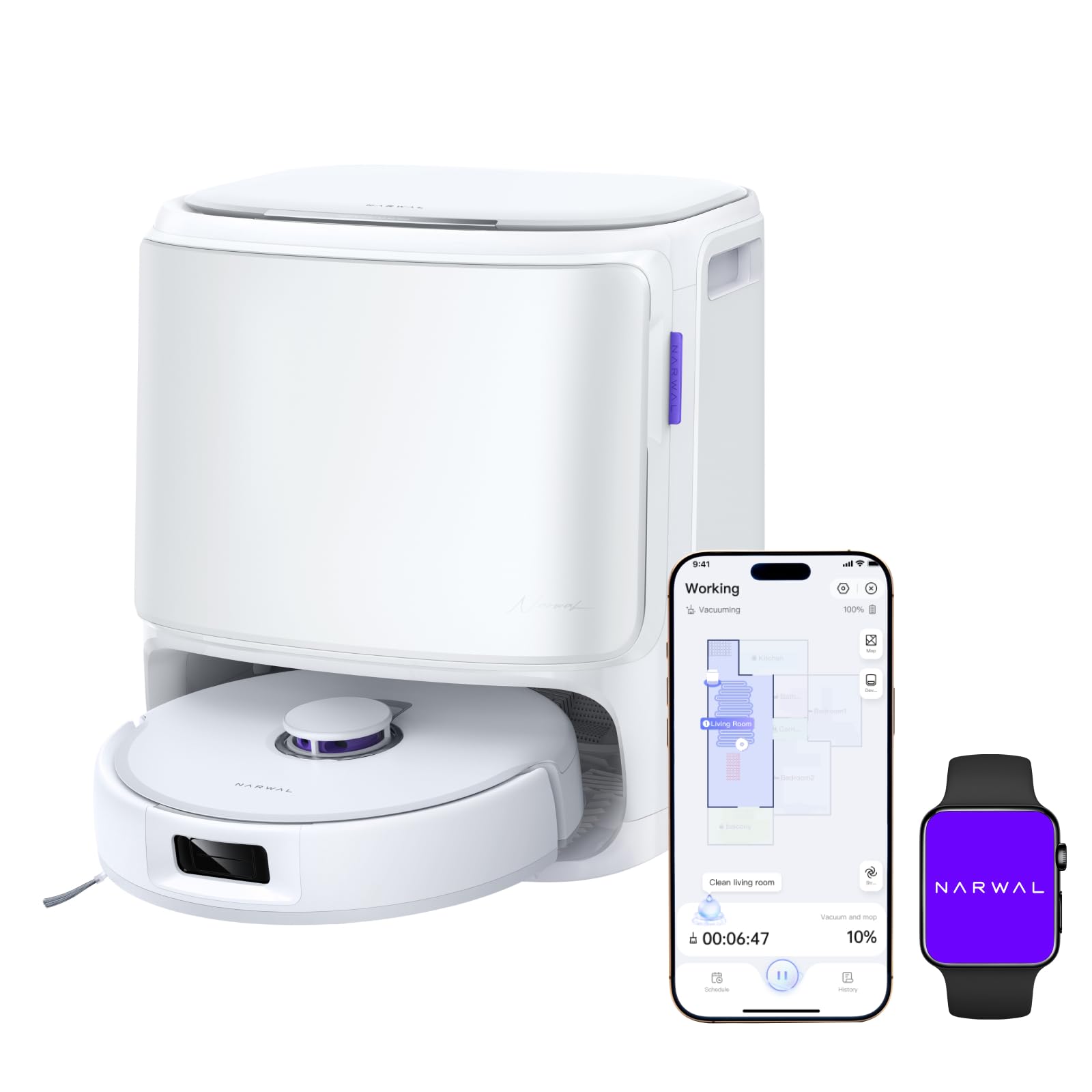
The NARWAL Freo X10 Pro generates 11,000Pa of suction, which is enough to lift embedded pet hair and fine dust from low-pile carpets while remaining quiet enough to run during a conference call. The DualFlow Tangle-Free system uses a dynamic side brush and a roller that guides strands straight into the dustbin, dramatically reducing hair wrap around the brush ends — a common failure point in pet-heavy homes.
The all-in-one base station automatically empties the robot’s bin into a 120-day capacity bag, washes the dual spinning mop pads, and dries them with warm air to prevent odor. The Reuleaux Triangular Mop design applies 8N of downward pressure for scrubbing, and the MopExtend feature pushes one pad outward to reach toe-kicks and corners. The 210-minute battery in quiet mode covers very large floor plans on a single charge.
Owner reports praise the fast and accurate LiDAR mapping and the ability to set no-go zones and no-mop zones through the app. The vacuum-then-mop sequence — where the robot vacuums dry, then returns to the dock to wet the pads before mopping — prevents any debris from being smeared into a paste. Some users experienced durability issues after several months, with the robot entering erratic behavior like spinning in place. The self-emptying mechanism can occasionally fail to fully clear the bin, requiring manual intervention.
Why we love it
- 11,000Pa suction with remarkably quiet operation during cleaning
- DualFlow brush system effectively prevents pet hair tangles
- 120-day self-emptying base minimizes maintenance frequency
Good to know
- Long-term durability concerns reported after 4-5 months of use
- Self-emptying mechanism can leave debris in the robot bin
- Will pull up loose rugs and eat socks if not blocked by no-go zones
7. DREAME L40 Ultra Gen 2
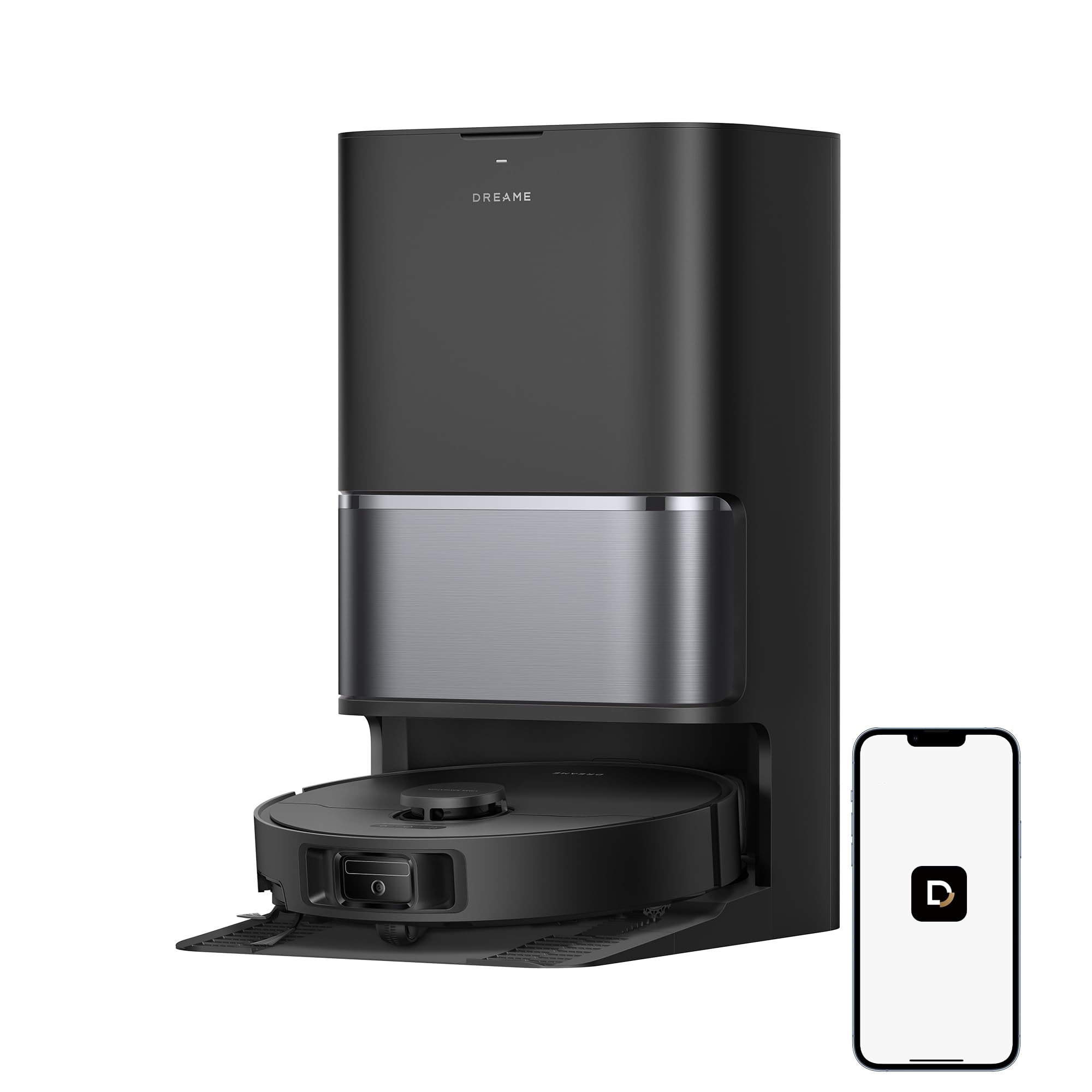
The DREAME L40 Ultra Gen 2 delivers 25,000Pa of suction — the highest raw suction figure in this guide — which makes it genuinely effective on deep-pile carpets where lower-suction robots simply skim the surface. The extendable side brush and extending mop pad push outward to reach corners and furniture toes, solving the circular blind-spot problem that plagues many robovacs. The all-in-one dock empties dust, washes the mop pad, dries it, and refills the clean water tank, so the robot can run multiple cycles unattended.
The 5,200mAh battery supports up to 231 minutes of runtime in Quiet Mode, covering approximately 1,679 square feet in a single session. The dock offers four carpet-specific modes: carpet avoidance, suction boost on carpet, intensive carpet cleaning, and automatic mop lifting by 0.41 inches to keep pile dry. Smart Pathfinder and 3DAdapt navigation map with precision and recognize obstacles like shoes and cables.
Owners report that the L40 Ultra Gen 2 excels at pet hair pickup — golden retriever and cat fur is captured without leaving trails. The mopping system handles maintenance cleaning well but struggles with baked-on stains; it is designed for daily upkeep rather than deep scrubbing. The self-cleaning dock requires occasional manual cleaning of the dirty water tank to prevent biofilm buildup. The optional detergent dispenser module must be purchased separately if you want automatic cleaning solution dosing.
Why we love it
- 25,000Pa suction genuinely deep-cleans medium-pile carpets
- Extendable brush and mop reach corners other robots miss
- 231-minute battery covers very large homes without mid-session charging
Good to know
- Mopping is best for maintenance, not baked-on stains
- Auto-detergent dispenser is an extra-cost add-on module
- Dirty water tank in the dock needs periodic manual cleaning
8. eufy Robot Vacuum E25
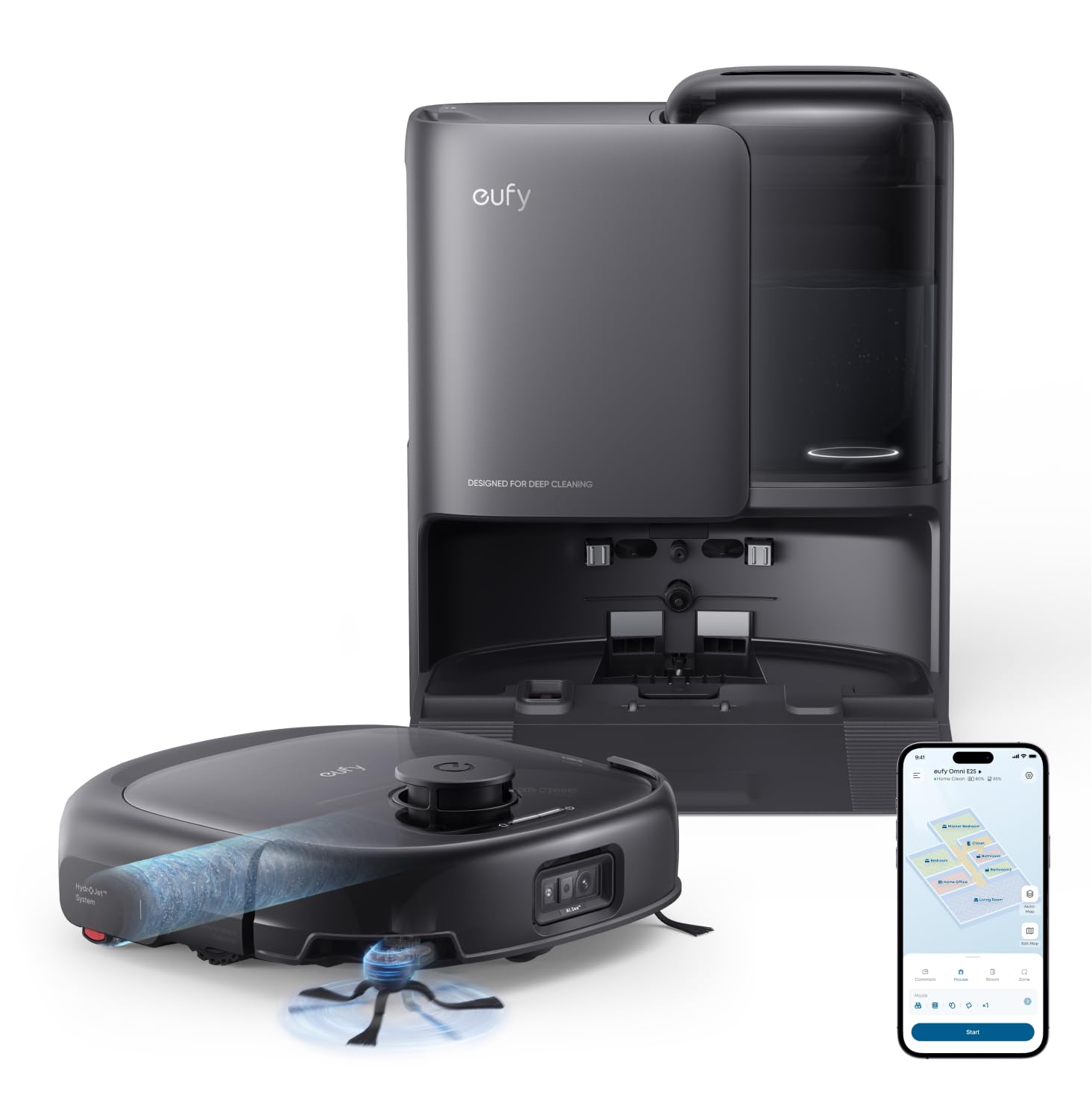
The eufy E25 uses a HydroJet system that refreshes the roller mop with clean water twice per second during mopping, preventing the brush from dragging dirt across the floor. Unlike spinning pad mops that can cross-contaminate between rooms, the single roller always uses fresh water, making it ideal for homes where kitchen-to-living-room hygiene matters. The 20,000Pa suction lifts embedded dirt from carpet fibers and captures dust from grout lines.
The all-in-one station auto-empties dust into a 3-liter bag (approximately 75 days of capacity), self-washes the roller mop, hot-air dries it at 50°C, and auto-refills the clean water. The CornerRover Arm extends to scrub along baseboards and furniture legs, and the 10.8mm mop lift mechanism keeps the damp roller off carpets. The 125-minute runtime in standard vacuum-and-mop mode is sufficient for most homes, and the robot operates at ≤61dB even in max mode — quiet enough to run while you watch television.
Owner reports mention that the E25 replaced a Narwal Freo that failed after a year, and the eufy’s simpler single-roller design avoids the circular streak marks that dual spinning pads can leave. The laser-guided navigation mapped a first floor in under 5 minutes, and the zero-tangle brush system handles pet hair without clogs. Some users experienced minor issues with the app rejecting Wi-Fi passwords containing spaces, and the robot may get stuck on black surfaces that its cliff sensors interpret as drops. The mopping system works best for light maintenance; heavy mud may require a manual spot clean first.
Why we love it
- HydroJet roller constantly flushes with clean water — no cross-contamination
- All-in-one station empties, washes, dries, and refills autonomously
- Quiet operation at ≤61dB allows daytime cleaning without disruption
Good to know
- Mopping is designed for maintenance; heavy mud may need a pre-clean
- App can be finicky with special characters in Wi-Fi passwords
- May stop on black surfaces that look like drop-offs to the cliff sensor
9. Tikom L8000 Plus
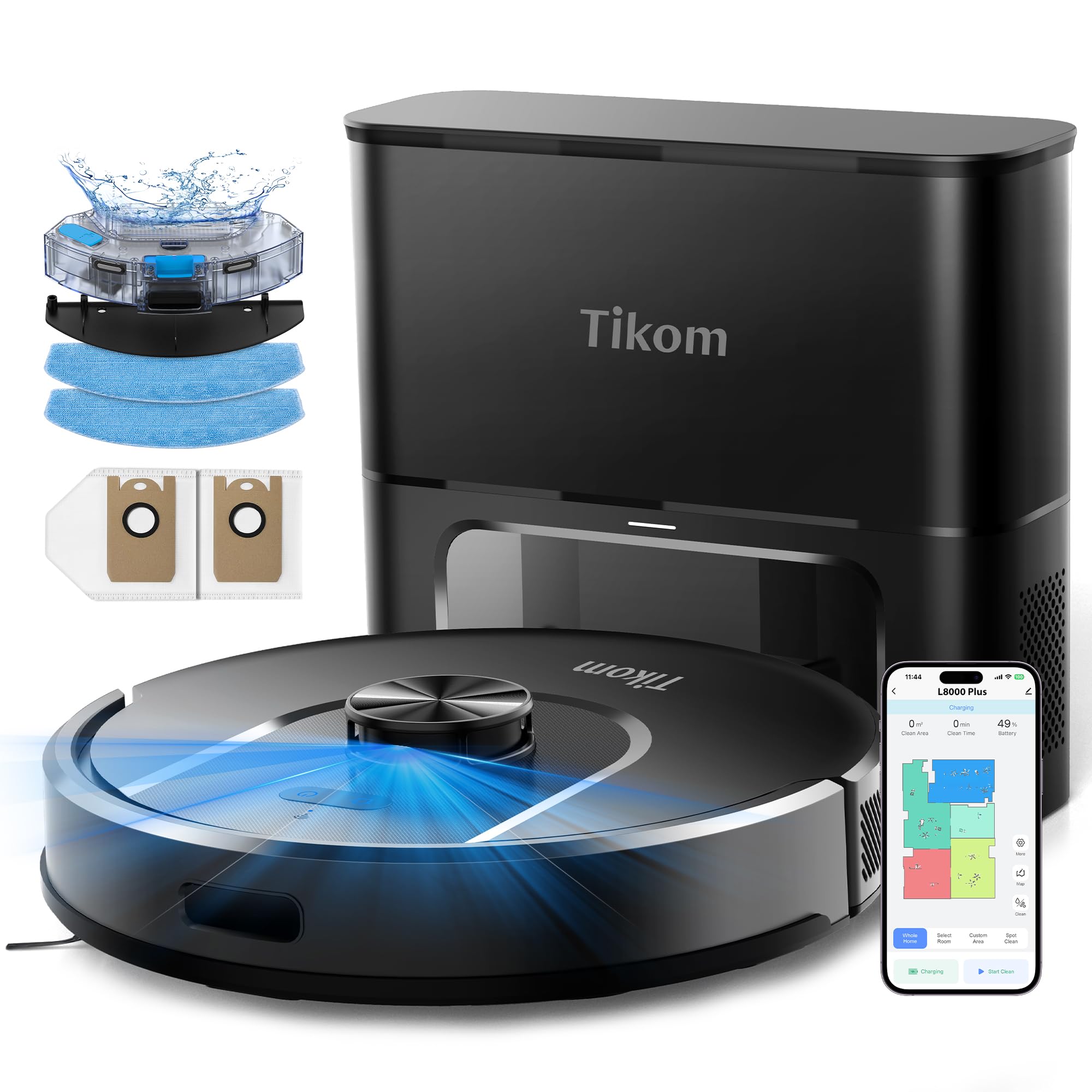
The Tikom L8000 Plus is a robot vacuum and mop combo that brings a 3-liter self-emptying base — offering up to 90 days of hands-free dust disposal — to a price tier far below the premium competition. The 6000Pa suction is strong enough for daily debris, dust, and pet hair on hard floors and low-pile carpet, with an auto-boost function that maxes suction when the LiDAR detects carpeted surfaces. The 360° LiDAR navigation builds detailed maps and supports up to five saved floor plans.
The 150-minute runtime in gentle suction mode covers most medium-sized homes in a single pass, and the auto-recharge/resume feature sends the robot back to the dock when the battery dips, then returns to the exact spot to continue cleaning. The app allows you to draw no-go zones and no-mop zones, set virtual walls, schedule cleanings, and adjust the three suction levels and three water flow settings. Voice control works with Alexa.
Owners report that the L8000 Plus exceeded their expectations as a first robot vacuum, with quiet operation and solid navigation that avoids walls and stairs. The mopping function is basic — essentially a damp cloth pad dragged across the floor — and is best suited for light maintenance on sealed tile or hardwood rather than sticky spills. The self-emptying base works reliably, but the vacuum still needs occasional manual bin cleaning if fine dust accumulates in the filter area. The cliff sensors are dependable, and the robot rarely gets stuck.
Why we love it
- 90-day self-emptying base at an attractive price point
- LiDAR navigation maps accurately and supports five floor plans
- Auto-boost suction on carpet improves deep-cleaning performance
Good to know
- Mopping is a basic damp cloth pad — not effective on sticky messes
- Filter area may need manual cleaning for fine dust accumulation
- Battery runtime quoted is for gentle mode; real-world use is shorter
FAQ
What is the difference between a wet-dry stick vacuum and a robot vacuum and mop combo?
Can I use any floor cleaning solution in a vacuum and mop?
How do I prevent mold and odor in a self-cleaning vac mop?
Do vacuum and mop combos work on carpets?
Final Thoughts: The Verdict
For most households, the best vacuum and mop combo is the Tineco Floor ONE Stretch S6 because its true lay-flat design, iLoop smart sensing, and 158°F FlashDry self-cleaning address the three biggest pain points — under-furniture access, efficient water use, and odor-free storage. If you want a fully automated robot that handles daily mopping without dragging a dirty pad, the eufy E25 with its HydroJet always-clean roller offers the best cross-contamination prevention in the robot category. And for a budget-friendly stick that still delivers self-propelled cleaning and a dual-tank system, the Eureka NEW400 punches well above its weight for small apartments.