
Tile floors trap grit in grout lines, collect sticky kitchen spills, and show every streak left behind by a traditional mop. A vacuum mop combo that both sucks up dry debris and scrubs wet messes in one pass solves this, but only if the suction, brush design, and water management are engineered for hard, unforgiving tile surfaces rather than carpet or sealed wood.
I’m Mo Mahin — the founder and writer behind Furric. I’ve spent years comparing motor specs, tank capacities, brush-roller materials, and edge-cleaning geometries across dozens of models, cross-referencing them against hundreds of verified owner reports to isolate which features actually matter on tile.
Whether you deal with pet hair on porcelain, coffee stains on ceramic, or tracked-in mud on slate, this guide breaks down the top 9 machines that earn their place as the best vacuum mop combo for tile floors on the market right now.
How To Choose The Best Vacuum Mop Combo For Tile Floors
Tile presents a unique combination of hard, often textured, grouted surfaces. A machine that sails through a sealed hardwood floor can leave grime in tile grout or produce visible streaks on glazed ceramic. These four factors separate a capable tile cleaner from a frustrating one.
Suction Power and Grout-Line Depth
Dry debris settles into grout lines that are wider and deeper than the surface of laminate or vinyl. A vacuum mop for tile needs suction in the 15,000Pa to 20,000Pa range to pull dirt from those crevices. Lower-suction models simply glide debris over the grout, leaving a ring of dust behind after mopping.
Water Management and Streak Prevention
Tile shows every water mark. Dual-tank systems that keep clean and dirty water separate are non-negotiable — reusing contaminated water guarantees streaks. Also look for a squeegee-style scraper on the brush head; it wipes excess moisture from the tile surface so the floor dries clear within minutes rather than leaving cloudy residue.
Edge and Corner Geometry
Tile edges meet baseboards and corners that catch debris. Machines with zero-gap or dual-sided edge cleaning can scrub tight against walls without leaving a border of dust. For tile backsplashes or bathroom layouts, a 180° lie-flat body also matters — it lets the brush head slide under vanities and toe kicks where grout lines accumulate hidden dirt.
Self-Cleaning and Maintenance Cycle
Food and soap residue on tile can sour the brush roller within days. Automated self-cleaning cycles that wash the roller with hot water and then dry it with hot air prevent bacterial growth and odor. A model that requires manual roller disassembly after every use will quickly feel like a chore rather than a convenience.
Quick Comparison
On smaller screens, swipe sideways to see the full table.
| Model | Category | Best For | Key Spec | Amazon |
|---|---|---|---|---|
| Ultenic AC1 Elite | Stick | Whole-home efficiency | 50-min runtime | Amazon |
| DREAME G10 Pro | Upright | Balanced power & value | 900ml clean tank | Amazon |
| Bissell CrossWave Edge | Upright | Edge-to-edge tile cleaning | ZeroGap edge tech | Amazon |
| dreame H14 | Stick | Under-furniture access | 18,000Pa suction | Amazon |
| Bissell CrossWave HydroSteam Deluxe | Upright | Stubborn grease & stains | Steam function | Amazon |
| Tineco Floor ONE i5 Stretch | Stick | Higher-power tile suction | 20,000Pa suction | Amazon |
| Tineco Floor ONE Stretch S6 | Upright | Long runtime & hot drying | 40-min runtime | Amazon |
| NARWAL Freo X10 Pro | Robot | Hands-off daily maintenance | 11,000Pa suction | Amazon |
| eufy Robot Vacuum E25 | Robot | High-suction autonomous mopping | 20,000Pa suction | Amazon |
In‑Depth Reviews
1. Ultenic AC1 Elite Wet Dry Vacuum Cleaner

The Ultenic AC1 Elite offers a balanced package for tile floors: 50 minutes of runtime covers most multi-room layouts, and its smart detection system ramps suction when it encounters sticky spills like juice or sauce on tile. The self-cleaning cycle washes the brush roller automatically, so you are not manually scraping hair and debris off the roller after each use.
At under 9.5 pounds, the unit is light enough to carry between levels, and the self-propelled brush roller reduces arm fatigue during longer sessions. The dual-tank design keeps dirty and clean water separate, which is critical for avoiding the cloudy streaks that plague single-tank moppers on dark tile.
Some owners note that the suction, while adequate for daily surface dirt, is not the strongest in the category — if you have deep, gritty grout lines you may still need to pre-sweep heavily soiled areas. The included cleaning solution should be the Ultenic brand to prevent foam-related malfunctions.
Why we love it
- Long battery life for whole-home cleaning
- Self-cleaning roller reduces maintenance effort
- Lightweight and self-propelled for easy maneuvering
Good to know
- Suction is moderate; may struggle on heavily embedded grout dirt
- Requires Ultenic-brand cleaning solution to avoid foam issues
2. DREAME G10 Pro Wet Dry Vacuum Mop

The DREAME G10 Pro brings a 900ml clean water tank — the largest in this mid-range grouping — which means fewer trips to the sink when covering large tile expanses. Its self-propelled motion and upright form factor make it glide across ceramic, porcelain, and marble with minimal pushing effort.
Owner feedback consistently highlights the unit’s effectiveness on puppy messes and tracked-in mud, both of which dry onto tile and normally require scraping. The self-cleaning dock flushes the roller after each session, and the 35-minute runtime is sufficient for most open-plan homes.
A few users report that the machine can leave water marks when pulling backward on tile, suggesting that a slower forward-only pass produces the best streak-free finish. The brush head also requires occasional manual hair removal because the self-cleaning cycle does not catch every strand.
Why we love it
- Large 900ml clean tank reduces mid-cleaning refills
- Self-propelled glide is effortless on large tile areas
- Strong suction handles wet pet messes effectively
Good to know
- Can leave streaks if pulled backward
- Occasional manual hair removal from brush needed
3. Bissell CrossWave Edge Floor Cleaner 4111A

The Bissell CrossWave Edge tackles the single biggest frustration on tile floors: the half-inch border of dust that standard brush heads leave against baseboards. Its ZeroGap Technology extends the cleaning path to the edge of the housing, collecting crumbs and dirt flush with the wall without requiring a separate detail tool.
As a corded unit, it never loses suction or runs out of battery mid-cleaning, which is a practical advantage for large tile installations. The self-cleaning mode uses a rinse cycle to flush debris from the brush roll, and the included CrossWave Pet Pro Oxy Formula handles organic stains on grout effectively.
The trade-off is the cord itself — a 20- to 25-foot range means you will swap outlets between rooms. Some owners find the self-cleaning cycle insufficient for dried-on sticky messes, so pre-treating caked-on spills before vacuum-mopping is advisable.
Why we love it
- Cleans flush to baseboards with ZeroGap design
- Corded power never runs out mid-cleaning
- Tangle-free brush roll reduces hair wrap
Good to know
- Corded operation requires outlet switching
- Self-cleaning struggles with heavily dried-on messes
4. dreame H14 Cordless Vacuum Mop

The dreame H14 solves a problem that other stick vacuums ignore: cleaning tile under low furniture. Its 180° lie-flat hinge allows the brush head to slide into gaps as low as 3.86 inches, reaching dust and debris that accumulate under sofas, bed frames, and bathroom vanities. The motor maintains full 18,000Pa suction even in the flat position.
Beyond reach, the self-cleaning cycle uses 140°F hot water to wash the brush roller, followed by a 5-minute hot-air dry that prevents the sour smell that develops when a damp roller sits idle. This is especially valuable on tile where food spills can seed bacteria in the brush material.
Some users report that the clean water tank is on the smaller side, requiring refills for larger homes. The unit is also heavier than the Ultenic, at roughly 11 pounds, which becomes noticeable during extended use on multiple tile floors.
Why we love it
- 180° lie-flat reaches deep under low-profile furniture
- Hot water self-cleaning and fast drying prevent roller odor
- 18,000Pa suction handles grout-line dirt effectively
Good to know
- Clean water tank is smaller than some competitors
- Heavier stick design may tire arms during long sessions
5. Bissell CrossWave HydroSteam Deluxe 3515G

For tile that accumulates greasy kitchen residue or dried-on food, the Bissell CrossWave HydroSteam adds a steam function that loosens stuck-on stains 20% faster than steam-only cleaners, per the manufacturer’s testing. The 3-in-1 action vacuums dry debris, dispenses steam-hot water, and scrubs simultaneously — a genuine advantage for ceramic tile with textured surfaces.
The tangle-free brush roll design is well-reviewed by multi-pet households, and the dual-tank system separates soapy cleaning water from dirty rinse water. Owners of large tile areas report that the self-cleaning cycle keeps the brush fresh between uses, and the included storage tray simplifies drying.
Notable downsides: the steam is warm rather than hot, so it won’t sanitize tile grout as effectively as a dedicated steam mop. A small subset of owners report that the steam and solution dispensing mechanism stopped working after several months, so extended warranty consideration is wise.
Why we love it
- Steam function dissolves dried grease and sticky spills
- Tangle-free brush is excellent for pet hair on tile
- Self-cleaning cycle maintains brush freshness
Good to know
- Steam temperature is warm, not hot enough for true sanitization
- Mechanical reliability varies; some units fail within months
6. Tineco Floor ONE i5 Stretch Wet Dry Vacuum Cleaner

With 20,000Pa of suction, the Tineco Floor ONE i5 Stretch is one of the most powerful stick-style vacuum mops for tile. That suction level pulls deeply embedded dirt from grout lines and picks up heavier debris like cat litter or cereal in a single pass. The anti-tangle design routes hair directly into the dirty water tank rather than wrapping around the roller.
The i5 also features a 180° lay-flat body that compresses to 5.1 inches, letting it reach under furniture where tile collects the most hidden dust. Dual-sided edge cleaning scrubs along baseboards on both the left and right side, eliminating the need to flip the machine to clean corners.
The 30-minute runtime is adequate for typical apartment or small-home tile layouts but may require a recharge for houses over 1,200 square feet. Tineco recommends cleaning the filter and HEPA monthly to maintain suction stability.
Why we love it
- 20,000Pa suction is best-in-class for grout-line cleaning
- Anti-tangle design keeps hair off the brush roller
- Dual-sided edge cleaning reaches both left and right baseboards
Good to know
- 30-minute runtime is tight for large homes
- Requires monthly filter/HEPA cleaning to maintain power
7. Tineco Floor ONE Stretch S6 Cordless Wet Dry Vacuum Cleaner

The Tineco Stretch S6 extends the brand’s tile-cleaning formula with a 40-minute runtime — a meaningful upgrade for whole-home tile layouts. Its FlashDry self-cleaning uses 158°F water to wash the brush roller and then seals it with hot air drying, which eliminates the damp-roller odor that can develop on tile after wet cleanup.
The 180° lay-flat design is paired with Tineco’s HyperStretch Technology, which compresses the body to 5.1 inches while keeping dirty water separated from the motor via a 3-chamber system. That engineering detail means full suction power is maintained even when the unit is completely horizontal under a low bed or cabinet.
Owners note that the self-cleaning cycle requires at least 30-35% battery remaining, so it is best to dock the unit while there is still charge left. The drying dock itself is well-liked, with the roller emerging fluffy and dry after the 5-minute cycle.
Why we love it
- 40-minute runtime covers large tile homes in one charge
- 158°F hot-air drying prevents roller odor
- HyperStretch maintains full suction when lying flat
Good to know
- Self-cleaning needs 30%+ battery to operate
- Daily rinsing recommended to avoid odor buildup in tank
8. NARWAL Freo X10 Pro Robot Vacuum and Mop Combo
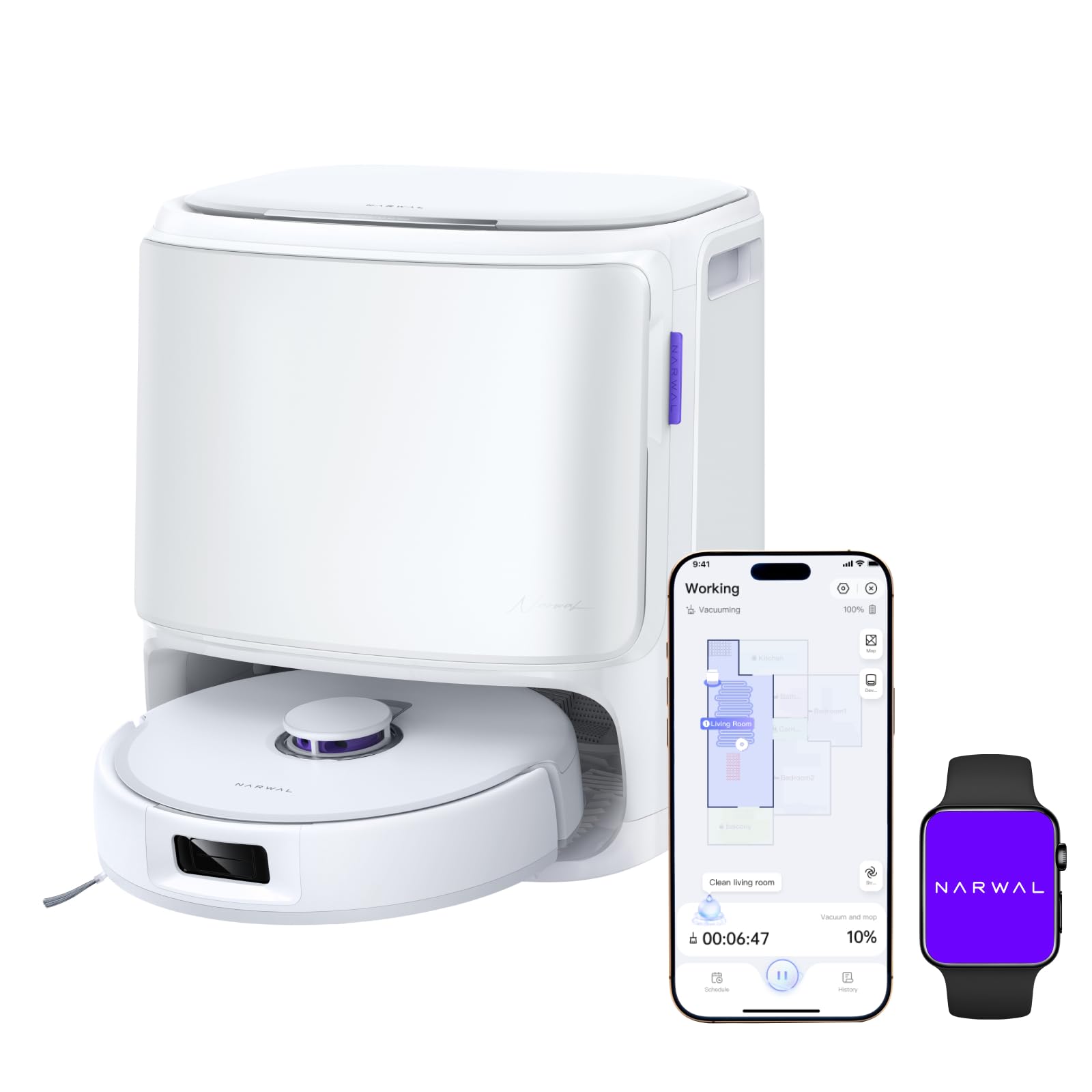
The NARWAL Freo X10 Pro takes a different approach: it is a robot that vacuums and mops tile autonomously, using dual spinning mops with 8N of downward pressure to scrub stubborn stains. Its 11,000Pa suction is moderate compared to stick units, but on robot scale it lifts debris from grout effectively for daily maintenance cleaning.
The all-in-one base station automatically washes the mop pads, dries them with warm air, and self-empties the dust bin into a bag that holds up to 120 days of debris. For hands-off tile maintenance between deep cleans, this robot reduces the labor of manual vacuum-mopping significantly.
Some owners report that after several months the robot’s navigation degrades, causing it to spin in place or ignore no-go zones. The mop pads also require periodic replacement to maintain scrubbing effectiveness. It works best as a daily maintenance tool rather than a primary deep-cleaner for heavily soiled tile.
Why we love it
- Fully automated vacuum and mop with self-cleaning base
- Dual spinning mops scrub tile stains with pressure
- 120-day dust bag reduces emptying frequency
Good to know
- Navigation reliability can degrade after months of use
- Mop pads need regular replacement for best scrubbing
9. eufy Robot Vacuum E25
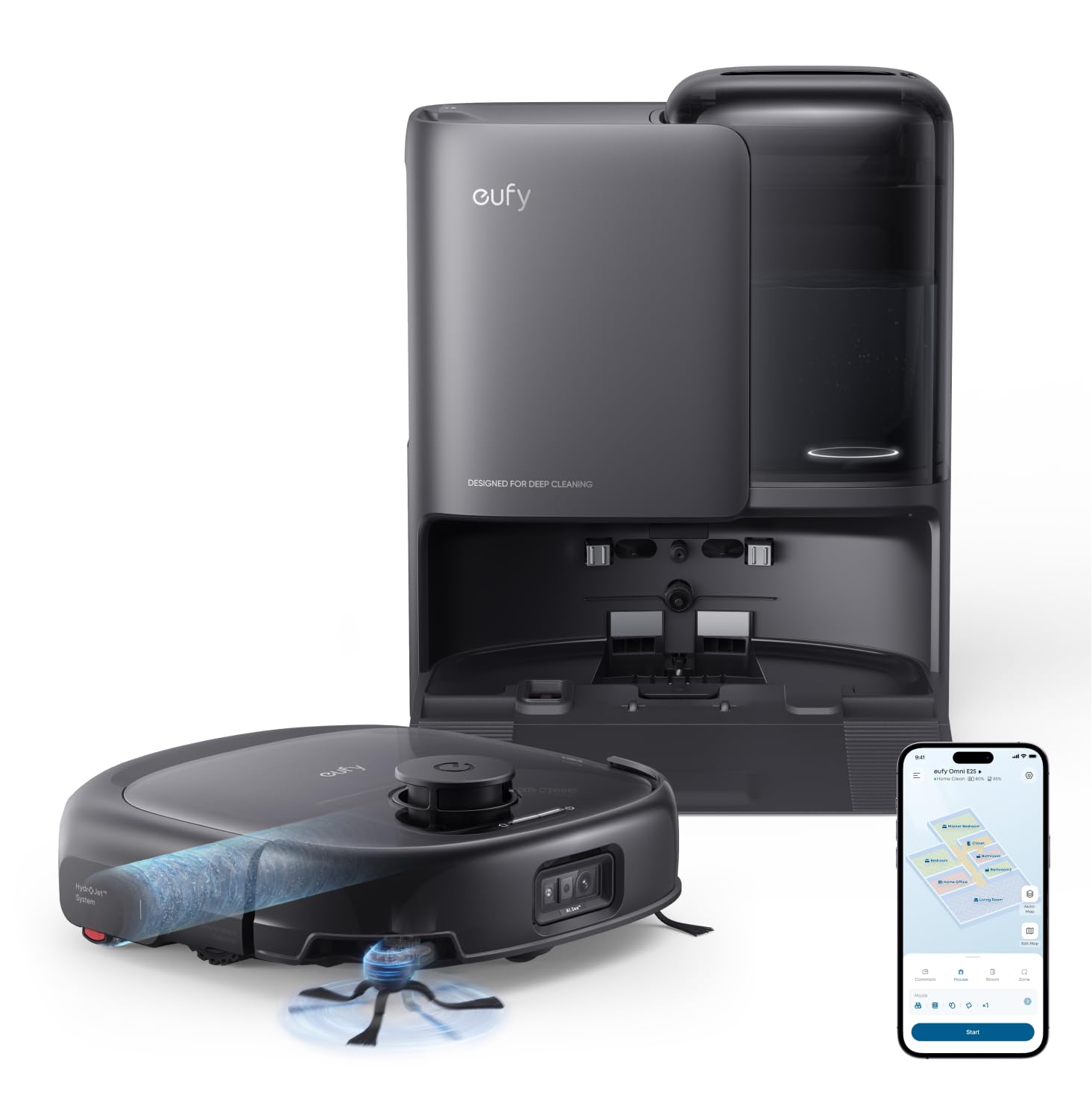
The eufy E25 brings 20,000Pa suction to a robot format, matching the raw power of top stick models. Its HydroJet system refreshes the roller mop twice per second with clean water, preventing it from smearing dirty water across tile during long cleaning runs — a common complaint with pad-based robot mops.
The CornerRover arm extends the mop to scrub along baseboards and furniture legs, addressing the edge-cleaning weakness of most round robots. The all-in-one station auto-empties dust, washes the mop roller, dries it at 50°C, and refills the water tank, making it one of the most complete self-maintaining robot systems for tile.
Some users report that the robot sometimes bumps black floor mats or dark tile transitions because the cliff sensors interpret dark surfaces as drops. The 2.4GHz Wi-Fi requirement also limits compatibility in dual-band networks without a dedicated 2.4GHz SSID.
Why we love it
- 20,000Pa robot suction rivals stick vacuum power
- HydroJet refreshes mop roller with clean water constantly
- CornerRover arm scrubs tile edges and baseboards
Good to know
- Dark tile or mats can confuse cliff sensors
- Only works on 2.4GHz Wi-Fi networks
FAQ
Can a vacuum mop combo replace a regular vacuum on tile floors?
Why does my vacuum mop leave streaks on tile floors?
What suction power is enough for tile and grout?
How often should I replace the brush roller on a tile vacuum mop?
Final Thoughts: The Verdict
For most tile-floor homes, the best vacuum mop combo for tile floors winner is the Ultenic AC1 Elite because it balances a long 50-minute runtime, automatic self-cleaning, and a lightweight body that makes daily tile maintenance effortless. If you need high suction to pull grout-line dirt or want to reach under low furniture, grab the dreame H14 with its 18,000Pa power and 180° lie-flat reach. And for stubborn, greasy tile in a kitchen, nothing beats the steam-augmented Bissell CrossWave HydroSteam Deluxe.