
Coprophagia — the technical term for a dog eating its own or another animal’s stool — is one of the most frustrating and unhygienic habits a pet can develop. While the behavior has multiple root causes, from nutritional deficiencies to digestive enzyme shortages, a targeted B vitamin intervention is often the first line of defense recommended by veterinarians for breaking the cycle.
I’m Mo Mahin — the founder and writer behind Furric. I’ve spent years analyzing veterinary literature on canine nutrition, cross-referencing supplement formulas against published deficiency markers, and studying owner-reported outcomes to separate what actually works from what just smells like a marketing pitch.
After reviewing dozens of formulations and thousands of owner accounts, I’ve assembled the definitive lineup of supplements that deliver real results for this specific digestive behavior. This guide covers the best vitamin b for dogs who eat poop, breaking down ingredient quality, bioavailability, and real-world effectiveness for each product.
How To Choose The Best Vitamin B For Dogs Who Eat Poop
Not every B vitamin supplement is formulated to address coprophagia. The mechanism relies on making the stool taste or smell unappealing through targeted enzyme and vitamin activity, so choosing the wrong formula means wasting weeks of dosing with zero behavioral change. Focus on three critical areas.
Bioavailable B Vitamin Forms
Cheap supplements use cyanocobalamin, a synthetic form of B12 that dogs absorb poorly. Effective formulas use methylcobalamin — the metabolically active form — often combined with cobalamin and folate (5-MTHF) for maximum uptake. Without high bioavailability, the B vitamins pass through the digestive tract without correcting the enzyme shortage that triggers stool eating.
Digestive Enzyme & Probiotic Blend
Coprophagia-specific deterrents succeed by adding protease, amylase, and cellulase enzymes that break down undigested protein and starch in the stool itself. When stool contains fewer appealing residual nutrients, the dog loses interest. Probiotic strains like Bacillus coagulans further support gut flora balance, addressing the underlying digestive distress that often drives the habit.
Palatability & Dosing Consistency
If your dog refuses to eat the chew, the supplement has zero chance of working. Beef liver and chicken flavors dominate the effective products because they mask the bitter taste of B vitamins. Check the unit count against the recommended daily dose — a 120-count bag at two chews per day lasts exactly two months, which is the minimum window to break a behavioral cycle.
Quick Comparison
On smaller screens, swipe sideways to see the full table.
| Model | Category | Best For | Key Spec | Amazon |
|---|---|---|---|---|
| Grateful Pawz No Poo Chews | Stool Deterrent | Direct coprophagia habit correction | 170 Count; Probiotic & Enzyme Blend | Amazon |
| Wonder Paws B12 Supplement | B12 Specific | High-bioavailability B12 correction | Methylcobalamin + 5-MTHF Folate | Amazon |
| Pawsential No Poo Chews | Stool Deterrent | Multi-dog households / picky eaters | 120 Count; Beef Liver Flavor | Amazon |
| OKKÖBI Dog Multivitamin Chews | Broad Multivitamin | Prevention & general nutritional gap filling | 150 Count; 20-in-1 Blend + Probiotics | Amazon |
| Durvet Vitamin B Complex | Livestock Liquid | Farm/large breed emergency boost | 30ml liquid; 5ml per 100 lbs dosing | Amazon |
In‑Depth Reviews
1. Grateful Pawz No Poo Chews for Dogs

This is the one product purpose-built to break the coprophagia cycle from the inside out. Grateful Pawz packs a probiotic and digestive enzyme blend — specifically protease, cellulase, and amylase — that targets the undigested proteins left in stool, making it progressively less appealing with each dose. Owner reports consistently mention the habit fading within the first 30 days of consistent daily use.
At 170 chews per bottle, you get nearly three months of twice-daily dosing, which aligns perfectly with the behavioral retraining window. The chicken flavor is widely accepted across breeds, even by the picky eaters that typically reject bitter B-complex tablets. Veterinarians formulated the blend in an FDA-registered US facility, so the enzyme potency standard is verifiable — not just a label claim.
The one documented drawback: a small number of dogs experienced vomiting during the first week, likely due to the sudden enzyme load adjusting their gut flora. Starting with half a chew for the first three days helps mitigate this. For most owners, the digestive normalization that follows makes the temporary adjustment period well worth it.
Why we love it
- High unit count (170 chews) supports the full behavioral retraining period
- Enzyme blend directly targets appeal of stool, not just masking taste
- Made in FDA-registered US facility with vet formulation standards
Good to know
- A minority of dogs experience initial vomiting during enzyme adjustment
- Chicken flavor may not suit dogs with poultry sensitivities
2. Wonder Paws B12 Supplement for Dogs

When the root cause of stool eating is a specific B12 deficiency — common in senior dogs with failing gut absorption — a general multivitamin won’t cut it. Wonder Paws delivers methylcobalamin, the metabolically active form of B12, paired with cobalamin and folate (5-MTHF) for dual-pathway absorption. Owners of senior and kidney-compromised dogs report appetite normalization and energy return within two to three weeks.
The NASC certification is a meaningful differentiator here. The National Animal Supplement Council audits manufacturing for label claim accuracy and contaminant testing, so the 90-count bottle actually contains the stated dose of active B12 per chew. The beef flavor is palatable enough that most dogs take it as a treat, though a minority of picky individuals may crush the tablet into food to mask the slight B-vitamin bitterness.
This is not a direct stool-deterrent formula — it lacks the digestive enzymes that make feces taste bad. Instead, it addresses the metabolic deficiency that drives the behavior. For dogs whose coprophagia is secondary to low B12 levels (confirmed by a vet), this is the most targeted solution on the market. For dogs eating stool out of habit rather than deficiency, pair it with an enzyme chew for best results.
Why we love it
- NASC certified for label accuracy and quality control
- Uses highly absorbable methylcobalamin + 5-MTHF folate
- Proven appetite stimulation in senior and ill dogs
Good to know
- Lacks digestive enzymes — not a standalone stool deterrent
- Requires veterinary confirmation of B12 deficiency for optimal use
3. Pawsential No Poo Chews for Dogs
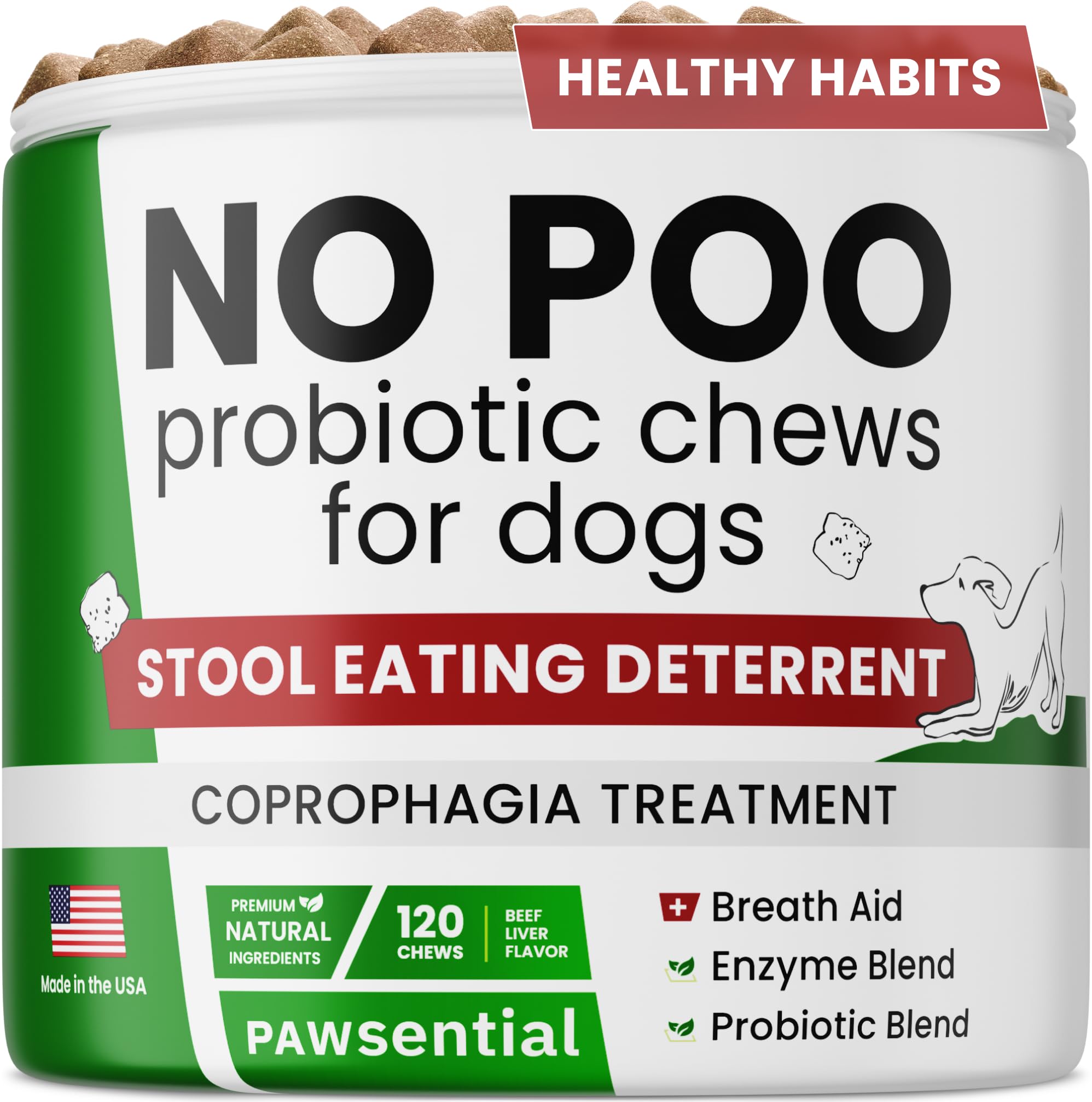
Pawsential takes a similar enzyme-based approach to Grateful Pawz but differentiates itself with a beef liver flavor that tends to have higher acceptance rates across multi-dog households. The veterinarian-formulated formula delivers probiotics and digestive enzymes in a 120-count bottle, providing roughly two months of daily dosing at the standard two-chews-per-day rate.
Owner feedback highlights a notable improvement in stool firmness and reduced anal gland odor — both indicators that the enzyme-probiotic blend is actively improving nutrient absorption. The beef liver base is rich in natural B vitamins (including B12 and B6), offering a food-sourced boost alongside the enzyme action. This dual approach supports dogs whose coprophagia stems from both habit and marginal nutritional status.
The trade-off is unit count: 120 chews versus 170 in the Grateful Pawz bottle means you’ll reorder sooner at a similar price point per bottle. A small subset of owners reported the product did not stop the behavior entirely after eight weeks, suggesting it works better as a deterrent for mild-to-moderate coprophagia than for deeply entrenched cases that require higher enzyme dosing.
Why we love it
- Beef liver flavor is highly palatable across most breeds
- Improves stool firmness and reduces anal gland odor
- Food-sourced B vitamins support overall digestion
Good to know
- 120-count supply runs shorter than competing 170-count options
- Less effective for severe, long-established coprophagia habits
4. OKKÖBI Dog Multivitamin Chews
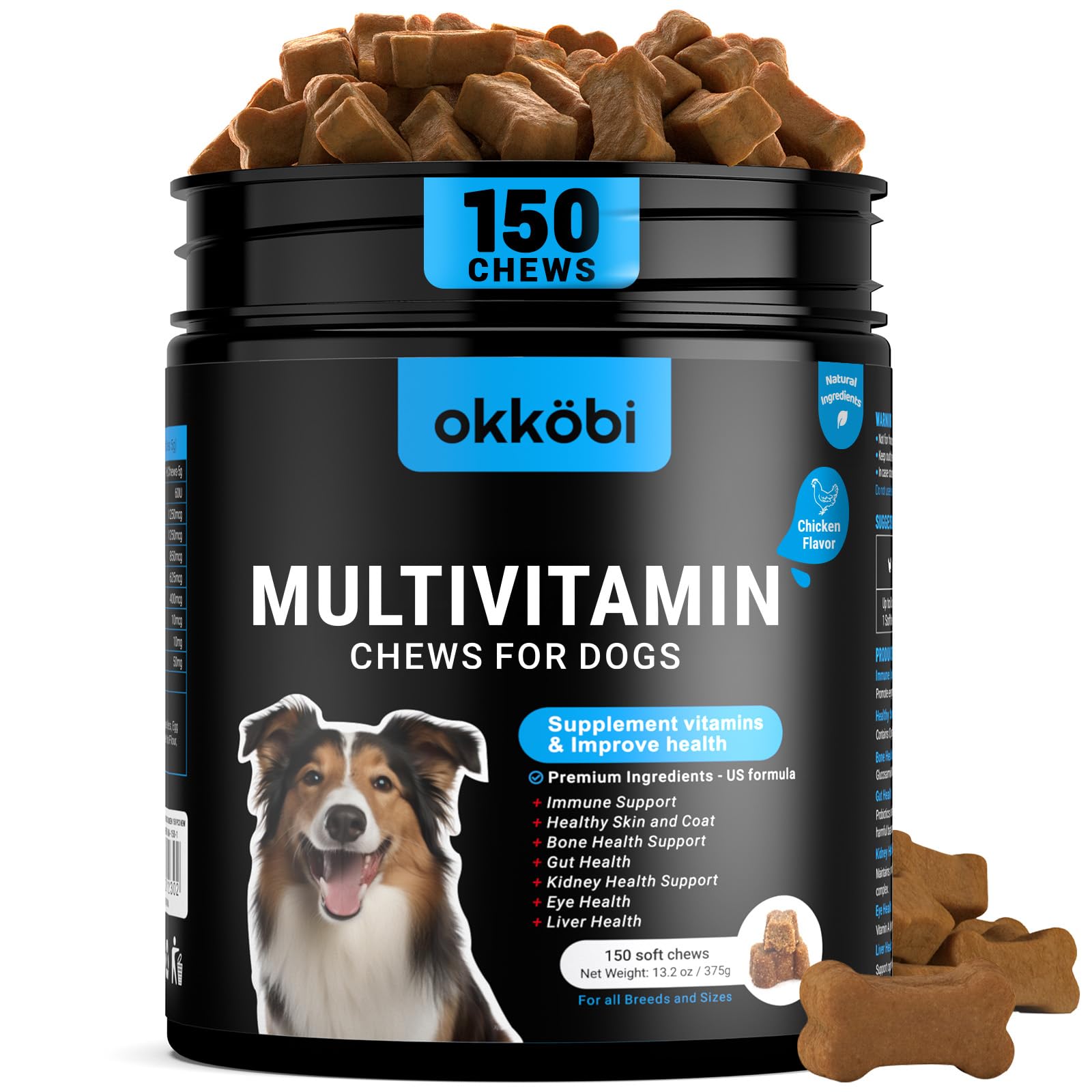
Not every case of stool eating demands a dedicated deterrent. For dogs whose habit is driven by a general nutritional shortfall — missing B12, B6, or thiamine due to a low-quality diet — a comprehensive multivitamin can close the gap without the need for specialized enzyme formulations. OKKÖBI packages 20 essential nutrients including B vitamins, omega-3s from flaxseed oil, glucosamine, and probiotics into a single chicken-flavored chew.
The 150-count supply is generous, and the inclusion of pumpkin and cranberry powder adds prebiotic fiber that firms up loose stool — a common trigger for coprophagia since soft, undigested stool smells and tastes more appealing to dogs. Owners of puppies and seniors appreciate the all-life-stages safety labeling, which removes the guesswork of switching formulas as the dog ages.
The main limitation is enzyme content. OKKÖBI includes probiotics but not the concentrated protease-cellulase-amylase blend found in dedicated stool deterrents. If your dog has been eating poop for months and the habit is deeply embedded, this multivitamin alone likely won’t break it. It works best as a preventative or supportive measure alongside a targeted enzyme deterrent.
Why we love it
- 20-in-1 formula covers B vitamins, omega-3s, glucosamine, and probiotics
- Pumpkin and cranberry fiber improves stool firmness
- Safe for all life stages from puppy to senior
Good to know
- Lacks the concentrated digestive enzymes in dedicated deterrent chews
- Best used as prevention or alongside an enzyme-based product
5. Durvet Vitamin B Complex 30ml
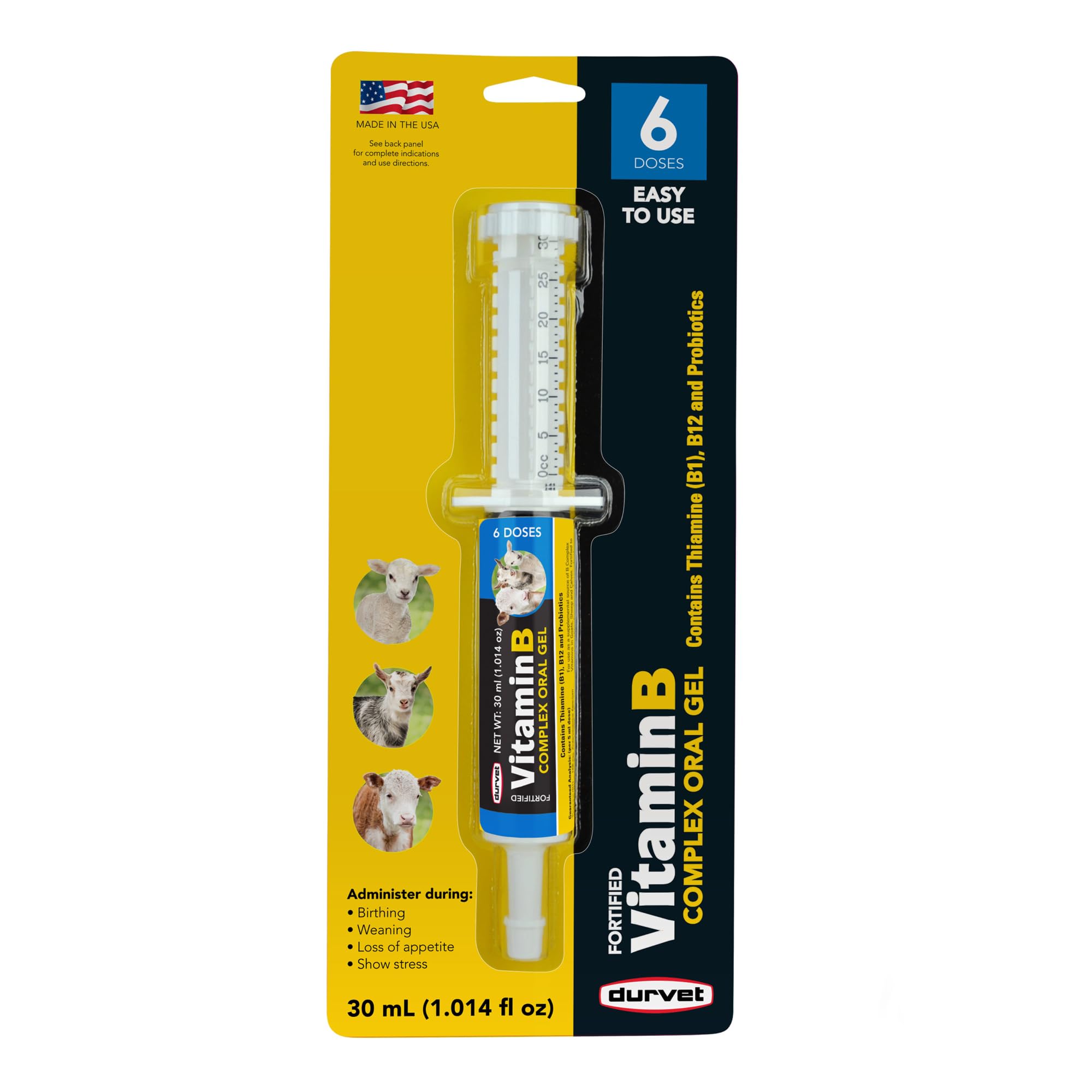
Durvet’s Vitamin B Complex is an outlier in this comparison because it is officially labeled for livestock — sheep, goats, and calves — not dogs. However, many rural dog owners and hobby farmers use it off-label as a rapid B vitamin injection or oral dose for large-breed dogs experiencing acute deficiency-related coprophagia. The 5ml-per-100lbs dosing is straightforward if you have a 70lb+ dog and a syringe.
The liquid form offers faster absorption than chews, making it useful for emergency scenarios — a dog that has stopped eating entirely, a senior in metabolic decline, or a working farm dog that needs quick B-complex replenishment. The bottle is labeled with thiamine, B12, and probiotics, providing a broad B spectrum in a single concentrated dose.
The major caveat is precision. Oral dosing requires careful measurement; over-supplementing B complex can cause temporary nausea or hyperactivity. Additionally, the unflavored oil is unpalatable to most dogs, so you will need to mix it into wet food or use a dosing syringe. This is not a maintenance supplement — it is a tactical tool for knowledgeable owners who understand how to dose livestock-grade products safely.
Why we love it
- Liquid form provides faster absorption than chews or tablets
- Cost-effective B-complex source for large-breed dogs
- Useful for acute deficiency scenarios and senior dog support
Good to know
- Labeled for livestock — off-label use requires careful dosing
- Unflavored oil is unpalatable and must be mixed into food
FAQ
How long does it take for B vitamin supplements to stop stool eating?
Can I give my dog human B complex vitamins instead?
Why do probiotics help stop a dog from eating poop?
Is methylcobalamin better than cyanocobalamin for dogs?
Can I use Durvet Vitamin B Complex on my small breed dog?
Final Thoughts: The Verdict
For most dogs and owners, the vitamin b for dogs who eat poop winner is the Grateful Pawz No Poo Chews because it combines a high 170-count supply with a veterinarian-formulated enzyme-probiotic blend that directly attacks the cause of stool eating rather than hoping generic nutrients will fix it. If your dog’s coprophagia is linked to a specific B12 deficiency confirmed by bloodwork, grab the Wonder Paws B12 Supplement for its superior methylcobalamin absorption. And if you’re looking for a budget-friendly beef-liver option that still delivers strong enzyme action, the Pawsential No Poo Chews will fit your rotation without sacrificing results.