
A weight pulling harness is not a walk harness. It’s a piece of functional gear engineered to transfer your dog’s forward drive from the neck and throat to the chest and back — allowing them to dig in and haul without choking. Whether you’re training for competition, working a sled line, or just trying to drain the energy out of a high-drive breed, the wrong harness will restrict breathing, rub raw spots, or fail at the first hard pull. The right one becomes an extension of your dog’s movement.
I’m Mo Mahin — the founder and writer behind Furric. I’ve spent years analyzing load distribution patterns, webbing tensile strengths, and attachment point geometries across dozens of pulling-specific harnesses to separate the functional tools from the fashion accessories.
Every harness on this list has been selected because it meets the structural demands of true pulling work, not casual walking. This guide cuts through the noise to find the genuine best weight pulling harness for dogs that will hold up to serious training and competition stress.
How To Choose The Best Weight Pulling Harness For Dogs
A pulling harness’s job is to convert your dog’s natural forward drive into usable force without cutting off airflow or damaging their gait. Three specific factors determine whether a harness will help or hinder your dog.
Back Style: X-Back vs. Y-Front
The X-back design puts the pulling loop at the rear of the dog’s back, distributing pressure evenly across the ribcage and shoulders. This is the standard for sled work and weight pulling because it leaves the front legs completely free. A Y-front design splits the chest strap into two points over the shoulders, giving more control over lateral movement but slightly restricting the front shoulder rotation compared to an X-back. For pure straight-line pulling or weight dragging, X-back is the correct choice.
Webbing Material and Stitching: Look for polypropylene or high-density nylon webbing with a minimum width of 40mm for medium dogs and 50mm for large or extra-large breeds. Reinforced bar-tack stitching at every stress point — the D-ring attachment, the chest loop, and the rear pulling loop — is non-negotiable. Single-needle stitching will separate under competition loads. The Neewa and PET ARTIST harnesses in this list use the required reinforcement pattern; entry-level harnesses often do not.
Attachment Point Configuration
A true pulling harness must have a rear pulling ring positioned at the lower back, not the upper neck. This low-and-back attachment point lets the dog engage their full body weight by lowering their center of gravity. Harnesses that only offer a single D-ring on the top of the back are walking harnesses, not pulling harnesses. The pulling ring should be welded or heavy-duty cast metal — never a stamped or folded ring that can open under tension.
Quick Comparison
On smaller screens, swipe sideways to see the full table.
| Model | Category | Best For | Key Spec | Amazon |
|---|---|---|---|---|
| Neewa Pro Sled Dog Harness | Premium | Competition sledding, serious weight pull training | 50mm polypropylene X-back, ribcage padding | Amazon |
| PET ARTIST Dog Sled Harness | Premium | Large breed weight pulling, canicross | 50mm nylon webbing, 1200 lb resistance | Amazon |
| LASALINE XBack Pulling Harness | Mid-Range | Canicross, bikejoring, entry-level weight pull | Breathable padding, free-lying shoulders | Amazon |
| Carhartt Nylon Duck No Pull Harness | Mid-Range | Daily handling, no-pull training, reactive dogs | 500-denier polyester, Rain Defender DWR | Amazon |
| KNK Heavy Duty Dog Harness | Mid-Range | Power breed daily control, bully proof struct | Reinforced internal webbing, welded hardware | Amazon |
In‑Depth Reviews
1. Neewa Pro Sled Dog Harness

The Neewa Pro Sled Harness is built around a true X-back geometry with polypropylene webbing that stays stiff under wet conditions and doesn’t absorb water weight — a critical detail for sled work or wet-paw weight pull training. The ribcage and neck padding are dense enough to prevent chafing during long pulls but thin enough to avoid adding bulk that restricts the dog’s natural stride.
The rear pulling loop is positioned low on the back, allowing a pure straight-line pull without the harness riding up into the dog’s neck. Reflective inserts improve visibility for dusk runs, and the breathable material prevents heat buildup during intensive sprint pulls. Made for wolf-like breeds — huskies, malamutes, Greenland dogs — with a fit that hugs the ribcage without pinching the front shoulders.
For serious weight pull competitors and mushers who need a harness that handles daily abuse, the Neewa delivers consistent load distribution and holds its shape pull after pull. The snap closure system is simple and field-reliable — no buckles to freeze or clog with mud.
Why we love it
- Non-absorbent polypropylene webbing resists water weight gain
- Low rear pulling ring enables proper full-body engagement
Good to know
- Fits Nordic breeds best; chest proportions of short-muscled breeds may need adjustment
2. PET ARTIST Dog Sled Harness
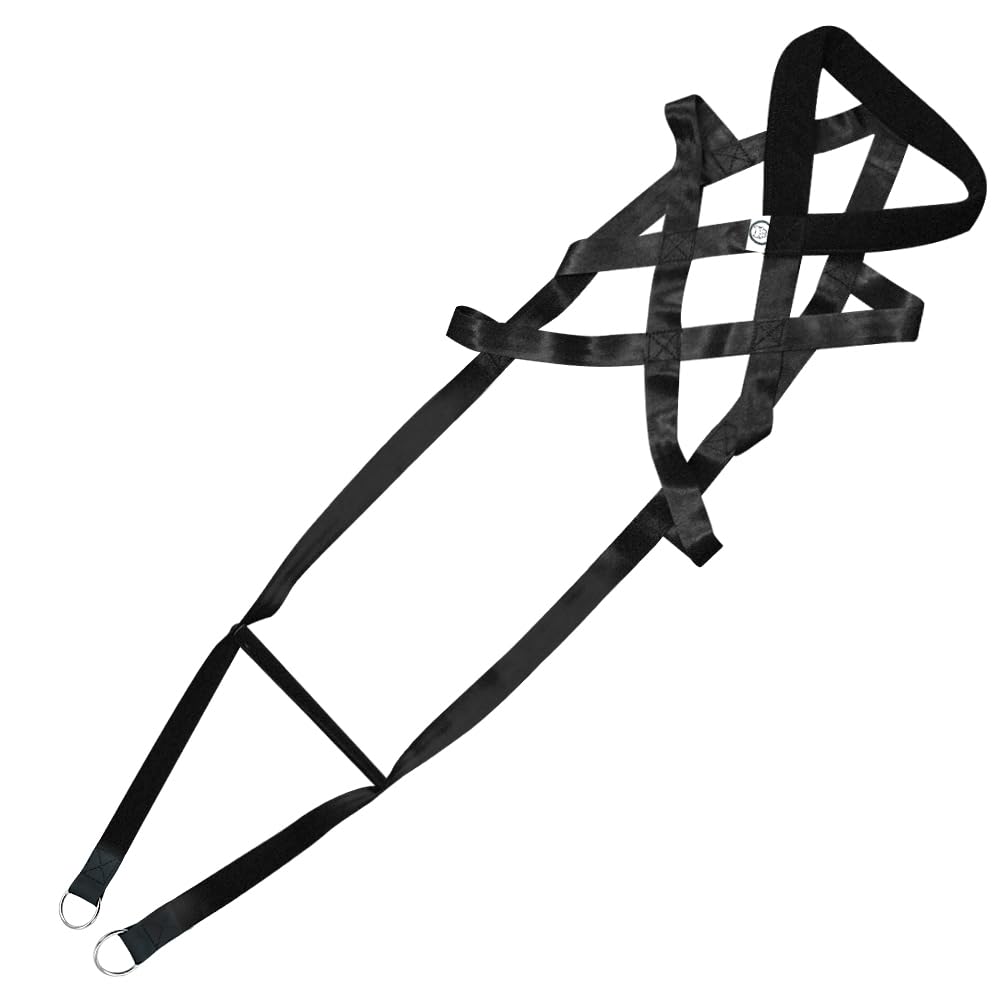
The PET ARTIST harness is built from 50mm wide nylon webbing with reinforced stitching that carries a 1200-pound breaking strength — overkill for most dogs, but exactly what you need when a 100-pound Alaskan Malamute hits the end of the line at full sprint. The X-back design distributes the load across the ribcage rather than the throat, and the wide padding strips in the neck and chest prevent the webbing from digging in under heavy tension.
This harness is designed specifically for large, powerful breeds — Pit Bulls, Rottweilers, Boxers, and sledding types — with a neck circumference allowance of up to 31.5 inches. The rear pulling ring is positioned correctly for weight pull competition or canicross training, allowing the dog to lower their center of gravity and engage the hindquarters for maximum pulling force.
While the harness is primarily built for straight-line pull work, the padding is thick enough to make extended training sessions comfortable without overheating. The hand-wash-only care is a small trade-off for the durability level on offer. If you need a harness that can survive weekly competition stress and still look new, this is your answer.
Why we love it
- 1200 lb breaking strength webbing handles extreme loads
- Thick chest and neck padding prevents rub burns on long pulls
Good to know
- Designed for large breeds; smaller dogs may not fill the chest panel properly
3. LASALINE XBack Pulling Harness

The LASALINE XBack harness brings competition-grade geometry — free-lying shoulders and a laterally open chest area for unrestricted breathing — into a price point accessible to hobby canicross runners and beginner weight pull handlers. The X-back design distributes pressure evenly across the back, and the breathable padding is ventilated to prevent heat buildup during sustained effort.
This harness is suitable for canicross, bikejoring, ski joring, and sled work, and the manufacturer specifically offers individual sizing advice — a genuine differentiator, since pulling harness fit is notoriously tricky across different breed body types. The water-repellent chest surface reduces friction and prevents fur matting, a detail that matters on long training runs.
Made in Europe with a lightweight but tear-resistant build, the LASALINE is the entry point for owners who want a true pulling harness without jumping to premium pricing. The medium size fits dogs up to about 42 pounds in the real world; check the size chart carefully and size up if your dog has a deep chest or heavy muscle mass.
Why we love it
- Breathable padding with heat-dissipating design for warm-weather pulls
- Manufacturer offers personalized sizing support for tricky fits
Good to know
- Runs small in practice; size up from chart measurements for deep-chested breeds
4. Carhartt Nylon Duck No Pull Dog Harness

The Carhartt Nylon Duck Harness uses a martingale chest strap design that tightens gently when the dog pulls, providing a no-pull training function that discourages lunging without choking. This is not a full X-back competition pulling harness — it is a daily handling tool for dogs who need redirection on leash, making it ideal for owners who want control over a strong puller without entering formal weight pull training.
The 500-denier polyester outer with Rain Defender DWR coating repels light rain and mud, and the material does not pick up burrs or sticker weeds during field walks — a practical advantage over open-weave webbing. The over-the-head yoke style with a single buckle makes the pre-walk ritual fast, even with an excited dog bouncing at the door.
While the Carhartt is not designed for competition weight pulling, its sturdy construction and martingale action make it the right choice for reactive or high-drive dogs who need controlled walking before they graduate to formal pull training. The spacer mesh backing prevents rubbing on walks, and the reflective low-light stitching adds safety for evening outings.
Why we love it
- Rain Defender coating keeps harness dry and lightweight in wet conditions
- Martingale chest provides no-pull training without choking pressure
Good to know
- Not an X-back design; not intended for formal weight pull competition
5. KNK Heavy Duty Dog Harness for Pitbull and Bullies

The KNK Heavy Duty Harness is built specifically for power breeds — Pitbulls, Bullies, and muscular large dogs that destroy standard harnesses in days. One-piece straps, welded D-rings and O-rings, and reinforced internal webbing create a structural cage that withstands explosive lunging and sustained pulling from dogs that punch well above their weight class.
The thick padded chest panel distributes pressure across the entire sternum, preventing the concentrated pressure points that cause pacing or refusal in hard-pulling dogs. The slide-adjustment straps accommodate necks from 24 to 34 inches and chests from 24 to 45 inches, covering the full range of bully breed sizes from medium to XXL.
This harness is best suited for daily control of power-breed pullers on walks and training sessions. It is not a competition X-back sled harness — the attachment point is a top D-ring rather than a low rear loop — but for owners who need a harness that literally cannot be snapped by a 100-pound dog on a tie-out, the KNK delivers unmatched structural integrity. The hand-wash care is easy; the real question is whether your dog can break it, and most cannot.
Why we love it
- Welded hardware and reinforced webbing survive extreme pulling force
- Thick chest pad prevents rub burns on short-haired power breeds
Good to know
- Top D-ring placement means this is a control harness, not a pure pulling harness
FAQ
What is the difference between a pulling harness and a walking harness?
How do I measure my dog for an X-back pulling harness?
Is a weight pulling harness safe for daily walks?
Final Thoughts: The Verdict
For serious weight pull competitors and mushers who need a harness that moves as an extension of the dog’s body, the Neewa Pro Sled Dog Harness is the winner because its polypropylene X-back design resists water weight and maintains consistent load distribution under competition stress. If you need a heavy-duty harness for daily handling of a power breed like a Pitbull or Rottweiler, the KNK Heavy Duty Dog Harness delivers the welded hardware and reinforced webbing that prevent equipment failure. And for entry-level canicross runners and hobby weight pullers, the LASALINE XBack Pulling Harness provides true X-back geometry with breathable padding at a price that makes sense for beginners building their gear kit.