
Managing chronic kidney disease in cats means walking a tightrope between palatability and precise nutritional chemistry — the wrong ratio of phosphorus or protein can accelerate the condition, while a formula that a cat refuses to eat leads to dangerous weight loss and muscle wasting. The best wet cat food for kidney problems deliberately restricts phosphorus and sodium without resorting to cheap fillers or synthetic appetite stimulants, and it must deliver highly bioavailable protein to maintain lean body mass even in geriatric cats who are notoriously finicky.
I’m Mo Mahin — the founder and writer behind Furric. I’ve spent years analyzing veterinary nutrition research, cross-referencing AAFCO nutrient profiles against clinical data on feline renal diets, and extracting patterns from thousands of owner-reported outcomes on phosphorus reduction and appetite acceptance across prescription and non-prescription brands.
The goal is to find a renal support diet your cat will actually eat consistently. This guide breaks down five proven options, from variety packs that help you discover your cat’s texture preference to early-intervention dry formulas, so you can make an informed choice alongside your veterinarian. The best wet cat food for kidney problems must balance low phosphorus, high-quality protein, and irresistible taste to protect kidney function while keeping your cat at a healthy weight.
How To Choose The Best Wet Cat Food For Kidney Problems
Feline Chronic Kidney Disease (CKD) affects an estimated 30-40% of cats over 10 years old, making dietary management the cornerstone of slowing disease progression. The right wet food for kidney problems does more than just restrict phosphorus — it must provide enough high-quality protein to prevent sarcopenia (muscle wasting) while limiting sodium to avoid hypertension. Here are the three most critical factors to evaluate.
Phosphorus Restriction: The Primary Target
The goal is to keep dietary phosphorus below the AAFCO minimum of 1.0% on a dry matter basis. Most veterinary renal diets target 0.5-0.8% phosphorus, and some non-prescription options like Weruva Wx Phos Focused reduce phosphorus by up to 50% below AAFCO levels. For IRIS Stage 2 or higher CKD, a therapeutic diet with strictly controlled phosphorus is essential — non-prescription “low phosphorus” foods may not be restricted enough for advanced cases. Always check the guaranteed analysis for phosphorus content on a dry matter basis, and run it by your veterinarian.
Protein Quality vs. Quantity
Old-school renal diets severely restricted protein to reduce urea production, but modern research shows that high-quality, highly bioavailable protein is actually protective. Look for ingredients like real chicken, salmon, or chicken liver as the primary protein source rather than by-products or plant-based proteins. The key is to provide the essential amino acids a cat needs for lean muscle maintenance while avoiding excess protein that creates metabolic waste. Therapeutic diets strike this balance precisely — non-prescription brands may have higher total protein, so portion control becomes more important.
Appetite Acceptance and Texture Profile
Renal disease often causes nausea and reduced appetite, so palatability is not a luxury — it is a medical necessity. Cats with CKD can be extremely texture-sensitive; some will only eat smooth pate, others prefer shreds in broth, and a few might lick the gravy and leave the solid pieces. Variety packs (like the Hill’s Starter Kit) allow you to sample multiple textures and flavors without committing to a 24-pack. If your cat rejects a food, try a different form factor before giving up on the brand — the same nutritional profile in a pate versus stew can mean the difference between a clean dish and uneaten food.
Quick Comparison
On smaller screens, swipe sideways to see the full table.
| Model | Category | Best For | Key Spec | Amazon |
|---|---|---|---|---|
| Weruva Wx Phos Focused Variety Pack | Non-Prescription | Owners who want a low-phosphorus diet without a vet prescription | Up to 50% less phosphorus than AAFCO minimum | Amazon |
| Hill’s k/d Starter Kit Variety Pack | Veterinary Diet | Sampling multiple textures/flavors before committing to a full case | ActivBiome+ Kidney Defense prebiotics | Amazon |
| Purina Pro Plan NF Early Care Dry | Veterinary Diet | Early-stage CKD cats who prefer kibble as a dry option | Controlled phosphorus + moderate protein | Amazon |
| Hill’s k/d Chicken & Vegetable Stew | Veterinary Diet | Long-term kidney care with clinically proven results for advanced CKD | Reduced phosphorus + sodium + ActivBiome+ | Amazon |
| Purina Pro Plan NF Early Care Wet Pate | Veterinary Diet | Cats who need kidney support but prefer a pate texture | Restricted phosphorus + omega-3 fatty acids | Amazon |
In‑Depth Reviews
1. Weruva Wx Phos Focused Chicken Formulas Variety Pack
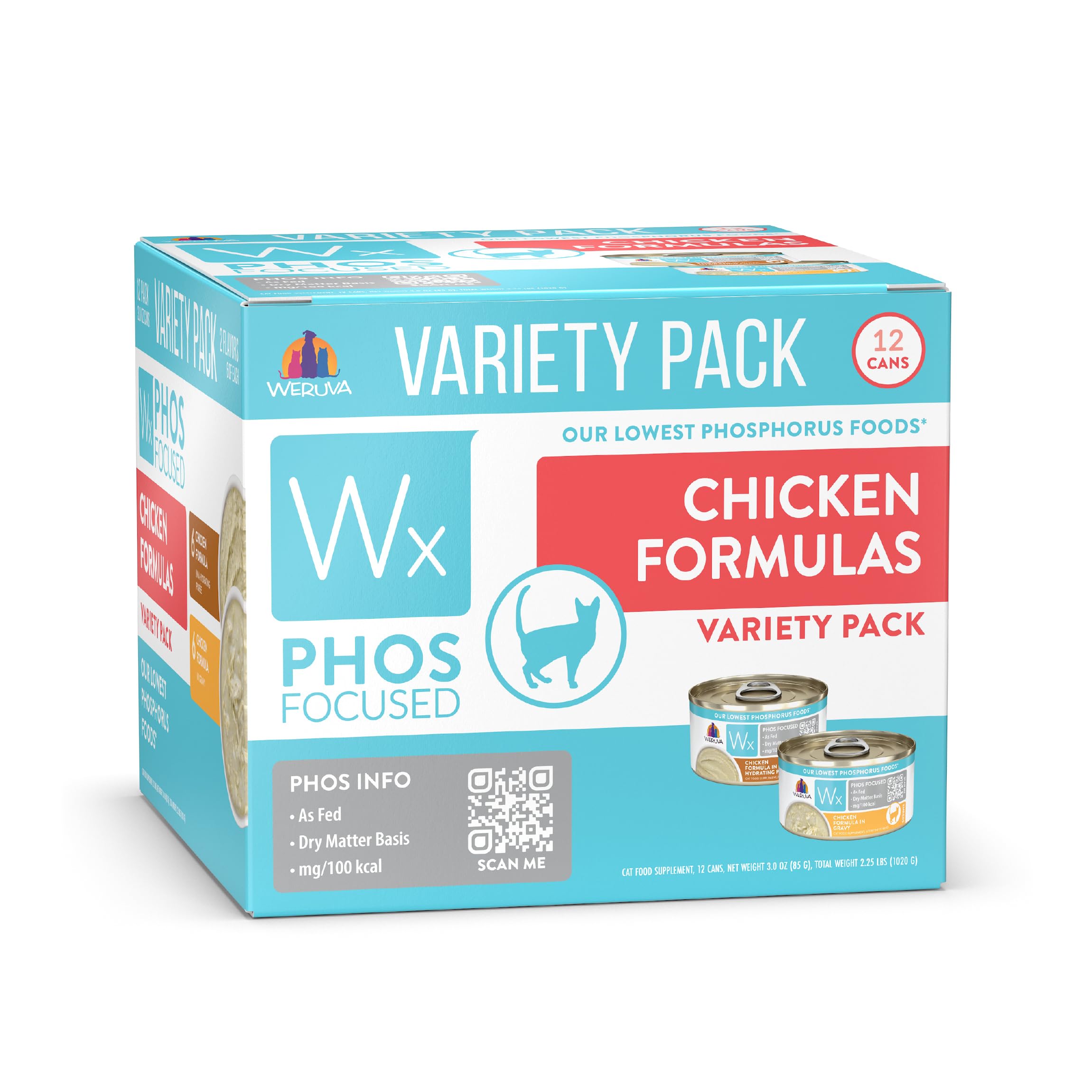
This non-prescription variety pack from Weruva is a standout for CKD management because it delivers up to 50% less phosphorus than the AAFCO minimum without relying on powdered cellulose or carbohydrate fillers that artificially lower phosphorus percentages. The formula uses free-range chicken and bone-free proteins, providing highly bioavailable amino acids that help maintain muscle mass in aging cats. The three textures — chicken purée, chicken in gravy, and chicken shreds in broth — give you room to navigate finicky preferences without switching brands.
Owner reviews consistently report that cats with stage 2 to stage 3 CKD saw kidney values improve after switching, with one cat’s creatinine dropping from 2.4 to 1.6 over a year. The biggest hurdle is texture selectivity: several cats lick the gravy and refuse the chicken shreds, while others devour the purée. The pack allows you to identify which form your cat will accept before buying a larger quantity. It also contains no corn, wheat, gluten, soy, or artificial colors, making it an excellent option for cats with multiple sensitivities alongside kidney issues.
The primary trade-off is that because this is not a veterinary prescription diet, the phosphorus restriction may not be adequate for IRIS Stage 4 or cats with very advanced disease. For early to moderate CKD, however, the combination of ingredient quality, hydration support from the gravy, and the absence of fillers makes this a first-line recommendation for owners who want to avoid the prescription-only requirement.
Why we love it
- Up to 50% less phosphorus than AAFCO minimum without cheap fillers
- Three texture options let you find what your cat will accept
- Free-range chicken with no corn, wheat, gluten, soy, or artificial additives
Good to know
- Not a prescription diet — may not be restrictive enough for advanced Stage 4 CKD
- Some cats will only eat the purée and reject the shreds in gravy
- Requires a prescription-free purchase, but still needs vet oversight for phosphorus levels
2. Hill’s Prescription Diet k/d Starter Kit Variety Pack

This starter kit from Hill’s is explicitly designed for the “sampling phase” of renal diet selection — it contains two pouches of dry food, two 5.5 oz cans of wet food, and four 2.9 oz cans of wet food across multiple flavors and textures (pate, stew, chicken, tuna, seafood). The dry food incorporates Hill’s Enhanced Appetite Trigger (E.A.T.), a clinically tested technology that stimulates food intake in cats who are nauseous from kidney disease. The wet food options include the ActivBiome+ Kidney Defense blend, a proprietary prebiotic that supports the gut-kidney axis.
Owners report that even picky cats in stage 1 or early stage 2 CKD tend to accept at least one of the flavor-texture combinations in the box, making this a low-risk entry point before committing to a full case. The dry food uses smaller kibble pieces that are easier for senior cats with dental sensitivity. Multiple reviewers noted that their cats preferred the chicken dry food and the seafood wet food, and that the variety helped them identify which textures their cat would reliably eat over the long term.
The main limitation is that this is strictly a trial kit — it contains only about 2.1 pounds of total food, so you will need to order a full-size product once you identify your cat’s preference. The kit also requires a veterinary prescription, which adds a step compared to non-prescription alternatives. That said, for cats who refuse to eat any renal diet, the E.A.T. technology in the dry food can be the difference between a cat who eats nothing and one who maintains her weight.
Why we love it
- Includes dry and wet food samples to test texture/flavor preferences
- Enhanced Appetite Trigger helps nauseous cats want to eat the dry food
- ActivBiome+ prebiotics support kidney function through the gut microbiome
Good to know
- Small quantity — you’ll need to order a full case once you know what works
- Requires veterinarian prescription, non-returnable if cat refuses all options
- Novelty can wear off; some cats initially accept but later reject the food
3. Purina Pro Plan Veterinary Diets NF Kidney Function Early Care Dry

Purina Pro Plan’s NF Kidney Function Early Care dry formula is built around controlled phosphorus and moderate protein, making it a targeted option for cats in the early stages of renal insufficiency. The kibble is smaller than standard adult formulas, which easier for older cats with tooth loss or dental pain to chew. It also contains omega-3 fatty acids (EPA and DHA) that support kidney health and reduce inflammation, plus antioxidants to bolster the immune system as kidney function declines.
Owner feedback highlights that cats with early-stage CKD (IRIS Stage 1 or early Stage 2) tend to accept this food readily — many reviews mention cats eating it without needing a transition period. The moderate protein level provides enough amino acids to maintain muscle without overloading the kidneys with nitrogenous waste. Some owners noted that their cats became more playful and energetic after a month on this diet, which aligns with the formula’s emphasis on balanced nutrition rather than severe restriction.
The limitation is that this is a dry-only formula — cats with CKD need increased water intake, so if you feed this as the sole diet, ensure your cat is drinking enough or supplement with wet food. This formula is also a veterinary diet requiring a prescription, and some cats with more advanced CKD may need a stricter phosphorus restriction than what this “early care” formula provides. It works best as part of a combined feeding plan that includes a wet renal diet.
Why we love it
- Smaller kibble size easier for senior cats with dental issues
- Contains EPA and DHA omega-3s for kidney and joint anti-inflammatory support
- Moderate protein prevents muscle wasting without stressing the kidneys
Good to know
- Dry food only — must ensure adequate water intake or feed alongside wet food
- Designed for early-stage CKD; may not be restrictive enough for advanced disease
- Requires veterinarian prescription
4. Hill’s Prescription Diet k/d Kidney Care Chicken & Vegetable Stew

Hill’s Prescription Diet k/d in the Chicken & Vegetable Stew form is one of the most clinically studied renal diets on the market, with published research showing that it improves and lengthens quality of life in cats with CKD. The formula combines reduced phosphorus and sodium with the ActivBiome+ Kidney Defense prebiotic blend that supports the gut-kidney axis. Each can provides more essential amino acids than the AAFCO minimum requirement, helping cats maintain lean muscle even when appetite is suppressed.
Owner reviews from cats with stage 2 and stage 3 CKD are overwhelmingly positive: cats who were refusing food or losing weight often clean their dishes with this stew. One reviewer reported their 18-year-old cat with stage 2 CKD gained weight from 4.2 to 5 pounds after switching, while another noted that kidney values (BUN and CREA) improved after several months. The stew texture is appealing to cats who prefer small bite-sized chunks in gravy rather than pate or shreds, and the 2.9 oz cans are perfectly portioned for a single meal.
The downsides are the cost and the fact that some cats become bored with the flavor over time. Multiple owners reported that after weeks or months, their cat started refusing the stew and needed to be rotated with another k/d flavor or form. The stew has a noticeable odor that some owners find unpleasant, though cats seem to tolerate or even prefer it. Like all Hill’s prescription diets, it requires veterinary authorization to purchase.
Why we love it
- Clinically proven to improve quality of life in cats with chronic kidney disease
- Chunks in gravy texture is widely appealing to picky CKD cats
- ActivBiome+ prebiotics support kidney function via the gut microbiome
Good to know
- Requires a veterinarian prescription
- Some cats develop flavor fatigue and need rotation with other k/d recipes
- Higher cost per meal than non-prescription alternatives
5. Purina Pro Plan Veterinary Diets NF Kidney Function Early Care Wet Pate
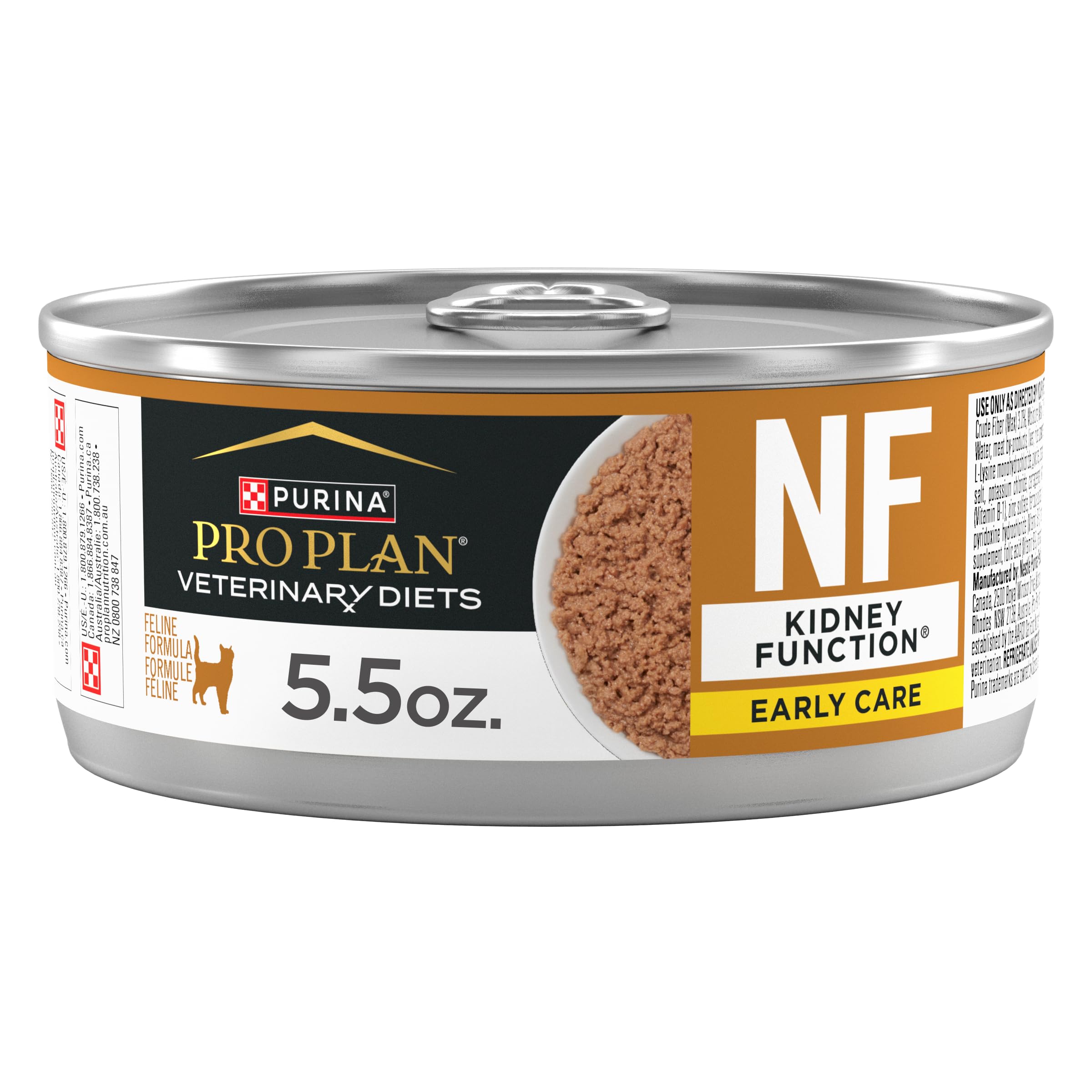
This Purina Pro Plan NF Early Care wet pate offers a smooth, uniform texture that many CKD cats who have difficulty chewing or who refuse chunks and shreds will accept. The formula provides restricted phosphorus, moderate high-quality protein (from salmon), and omega-3 fatty acids (EPA and DHA) to support kidney and joint health. Each can also contains a prebiotic fiber that helps nourish a healthy GI tract, which is important because kidney disease often causes gastrointestinal upset.
Owner reports show a split in palatability: some cats who previously refused Hill’s k/d will eagerly eat this pate, while others (especially those in later stages of CKD) resist it and require flavor enhancers like Hydra Care or baby food squash puree. For cats who do accept it, the 5.5 oz can size provides two meals for most cats, making it a good value for a prescription renal diet. One owner reported that their cat in stage 4 CKD has remained alive, active, and affectionate since January 2026 on this food, though the owner supplements with a previous brand to improve acceptance.
The texture is finely ground rather than a solid pate, which means it mixes easily with water or supplements for cats who need extra hydration or medication. The main complaint is that some cats simply refuse it outright — even after gradual transition and flavor-mixing attempts — leaving owners with nearly full cases they cannot return. If your cat prefers pate, this is worth trying, but consider starting with a smaller quantity before committing to the 24-can pack.
Why we love it
- Fine-ground pate texture is ideal for cats who reject chunks or shreds
- Salmon-based protein with omega-3s for kidney and joint support
- Large 5.5 oz cans provide two meals per can for most cats
Good to know
- Approximately 20-30% of cats refuse this formula entirely
- Requires a veterinarian prescription
- Some owners need to mix with baby food or Hydra Care for acceptance
FAQ
Can I feed a non-prescription low-phosphorus food instead of a veterinary renal diet?
My cat refuses to eat any prescription renal food. What are my options?
How much phosphorus is too much for a cat with kidney disease?
Should I feed only wet food for my cat’s kidney problems?
Final Thoughts: The Verdict
For most owners managing feline CKD, the best wet cat food for kidney problems is the Weruva Wx Phos Focused Variety Pack because it delivers meaningful phosphorus reduction (up to 50% below AAFCO minimum) without cheap fillers, and its three textures give you the best chance of finding something your picky cat will accept — all without needing a prescription. If your cat is in advanced CKD or requires stricter phosphorus control, the clinically proven Hill’s Prescription Diet k/d Chicken & Vegetable Stew offers the most research-backed nutritional support for extending quality of life. And for cats in early-stage disease who need a dry food option alongside wet, the Purina Pro Plan NF Early Care Dry provides controlled phosphorus with smaller kibble that older cats can manage easily.