
Choosing the first wet food for a growing puppy means balancing high-calorie growth nutrition with a texture tiny jaws can handle without choking. Many formulas marketed for puppies still rely on fillers that displace the dense animal protein and DHA young bodies need for cognitive development. The wrong pick can lead to loose stools, a picky eater, or nutritional gaps that affect bone formation.
I’m Mo Mahin — the founder and writer behind Furric. I’ve spent years dissecting veterinary nutritional standards for growth-stage diets, comparing declared DHA levels, calcium-to-phosphorus ratios, and texture consistency across dozens of canned lines, while aggregating feedback from breeders and owners who see the real-world results at the bowl.
This guide walks through the five most reliable canned options for teething and weaning pups, and helps you match the formula to your puppy’s breed size and digestive sensitivity. Finding the best wet dog food for puppies means filtering for species-appropriate protein sources first, then checking that the texture suits your pup’s current chewing ability.
How To Choose The Best Wet Dog Food For Puppies
Puppy wet food is not just adult food with a cute label. The calcium-to-phosphorus ratio must support large-bone development without overshooting, and the calorie density must fuel rapid growth without encouraging a fat puppy. Pay attention to three factors that separate a growth formula from an all-life-stages filler.
DHA Concentration and Source
Docosahexaenoic acid (DHA) is the omega-3 fatty acid directly linked to retinal and neural development in puppies. Look for a named source like fish oil fish oil or marine microalgae on the ingredient list. Avoid formulas that only list a generic “fish meal” — the DHA content may degrade during processing. A premium formula will declare DHA as a minimum guarantee on the guaranteed analysis panel.
Texture Match for Teething Stage
Puppies between 8 and 16 weeks old often have sore gums and loose baby teeth. A smooth pate or fine loaf-in-sauce texture is easier to lap up without effort. Chunks, shreds, or thick meatballs can frustrate a pup that hasn’t developed a scissors bite yet. Thin slices in gravy, like those found in Royal Canin X-Small, allow the pup to separate the meat from the sauce without excessive chewing.
Protein Density Without Fillers
Wet food already contains about 78% moisture, so every dry-matter calorie counts. The first ingredient should be a named meat — chicken, turkey, beef — not “meat by-product” or “poultry meal.” For grain-free formulas like Purina Pro Plan Turkey, verify that potato or pea protein does not push the meat protein down past 30% on a dry-matter basis. Growing muscles need a consistent amino acid profile from real tissue, not starch.
Quick Comparison
On smaller screens, swipe sideways to see the full table.
| Model | Category | Best For | Key Spec | Amazon |
|---|---|---|---|---|
| Royal Canin X-Small Puppy Thin Slices | Pate in Gravy | Extra-small breeds under 8 lb | Thin slices, 3 oz can size | Amazon |
| Purina Pro Plan Grain Free Turkey | Classic Turkey | High-protein growth needs | Turkey first ingredient | Amazon |
| Blue Buffalo Freedom Chicken | Grain Free Pate | Sensitive digestion / picky eaters | DHA + ARA for brain | Amazon |
| Merrick Real Beef Lamb Bison | Pate | Poultry-free protein variety | Deboned beef #1 ingredient | Amazon |
| Royal Canin Puppy Loaf in Sauce | Pate in Sauce | General all-breed growth support | Antioxidant + prebiotic blend | Amazon |
In‑Depth Reviews
1. Royal Canin X-Small Puppy Thin Slices in Gravy

This formula uses thin slices suspended in a light gravy — a texture specifically engineered for puppies under 8 pounds whose mouths cannot handle large pucks. The 3-ounce can size is deliberate: a single can matches the stomach capacity of a two-month-old Chihuahua or Yorkie without waste. The DHA comes from fish oil rather than synthetic fortification, and the prebiotic blend (MOS and FOS) keeps stool consistency firm during the transition from mother’s milk.
The calorie density is tightly controlled at roughly 88 kcal per can, preventing overfeeding in breeds prone to obesity. Clinically proven antioxidants (vitamins E and C) provide immune support without overloading the liver with synthetic additives. The gravy base also encourages hydration in pups that resist drinking from a bowl — a common issue in toy breeds.
I recommend this for breeders and first-time owners of teacup puppies who need a formula that won’t overwhelm a tiny digestive system. The downside: once the puppy exceeds 8 months or 8 pounds, you need to transition to the next size tier. This is a niche, not a universal food.
Why we love it
- Thin slices reduce choking risk for tiny mouths
- DHA from fish oil, not synthetic
- Calcium-phosphorus ratio precise for small-bone development
Good to know
- Only suited for dogs under 8 pounds adult weight
- Higher cost per ounce than standard 13 oz cans
2. Purina Pro Plan Grain Free Turkey Classic Entrée

Turkey is the first ingredient in this grain-free, high-protein wet formula that targets puppies up to 12 months old (24 months for giant breeds). The 13-ounce can size makes it cost-effective for medium and large breed owners, and the pate texture breaks down easily with a spoon for mixing into kibble. DHA is listed on the guaranteed analysis, sourced from marine fish oil, supporting both brain and vision development in the first year.
The formula is free from corn, wheat, soy, and artificial colorings — a clean profile for pups with mild environmental sensitivities. The high protein content (around 45% on a dry-matter basis) fuels lean muscle growth during the rapid height-extension phase of large-breed puppies. The gravy-to-pate ratio is slightly thicker than Royal Canin’s X-Small, so it works better for pups that have already cut their incisors.
Purina manufactures this in their own U.S. facilities, which adds traceability and batch consistency. The main trade-off: the grain-free status means higher carbohydrate content from peas and potatoes, which can loosen stools in some sensitive pups. Transition slowly over 7 days if your puppy has a history of soft poop.
Why we love it
- Turkey as single meat source reduces novel protein reactions
- Grain-free with no wheat or corn thickeners
- High protein supports large-breed growth spurts
Good to know
- Pea starch may cause loose stool in sensitive pups
- Large 13 oz cans require refrigeration after opening
3. Blue Buffalo Freedom Grain Free Chicken

Blue Buffalo Freedom uses real chicken as the first ingredient and includes DHA plus ARA — the fatty acid pair linked to both retinal and neural membrane development. The 12.5-ounce can avoids the typical synthetic thickeners used by other grain-free lines; the texture comes from natural carrageenan-free gums and a high ratio of deboned chicken. This makes it a reliable choice for puppies that develop loose stools on standard grain-inclusive formulas.
The formula excludes chicken by-product meal, corn, soy, and artificial preservatives. The pate is fine enough to mix with warm water for a slurry-like consistency that weaning puppies (4-6 weeks) can lap easily. For picky eaters, the strong chicken aroma and visible gravy trigger a feeding response even in pups that refuse other proteins.
The catch: the DHA and ARA are listed on the guaranteed analysis but the source is not specified — it could be synthetic fortification rather than a whole-food marine oil. For most puppies this still delivers results, but owners seeking clean-label DHA from fish oil may prefer the Purina Pro Plan formula.
Why we love it
- Strong chicken aroma triggers appetite in picky weaning pups
- No chicken by-product meal or artificial thickeners
- Versatile texture — can be mashed into slurry for 4-week-olds
Good to know
- DHA source not specified (may be synthetic)
- Grain-free may cause softer stool in some pups
4. Merrick Grain Free Beef Lamb Bison Dinner
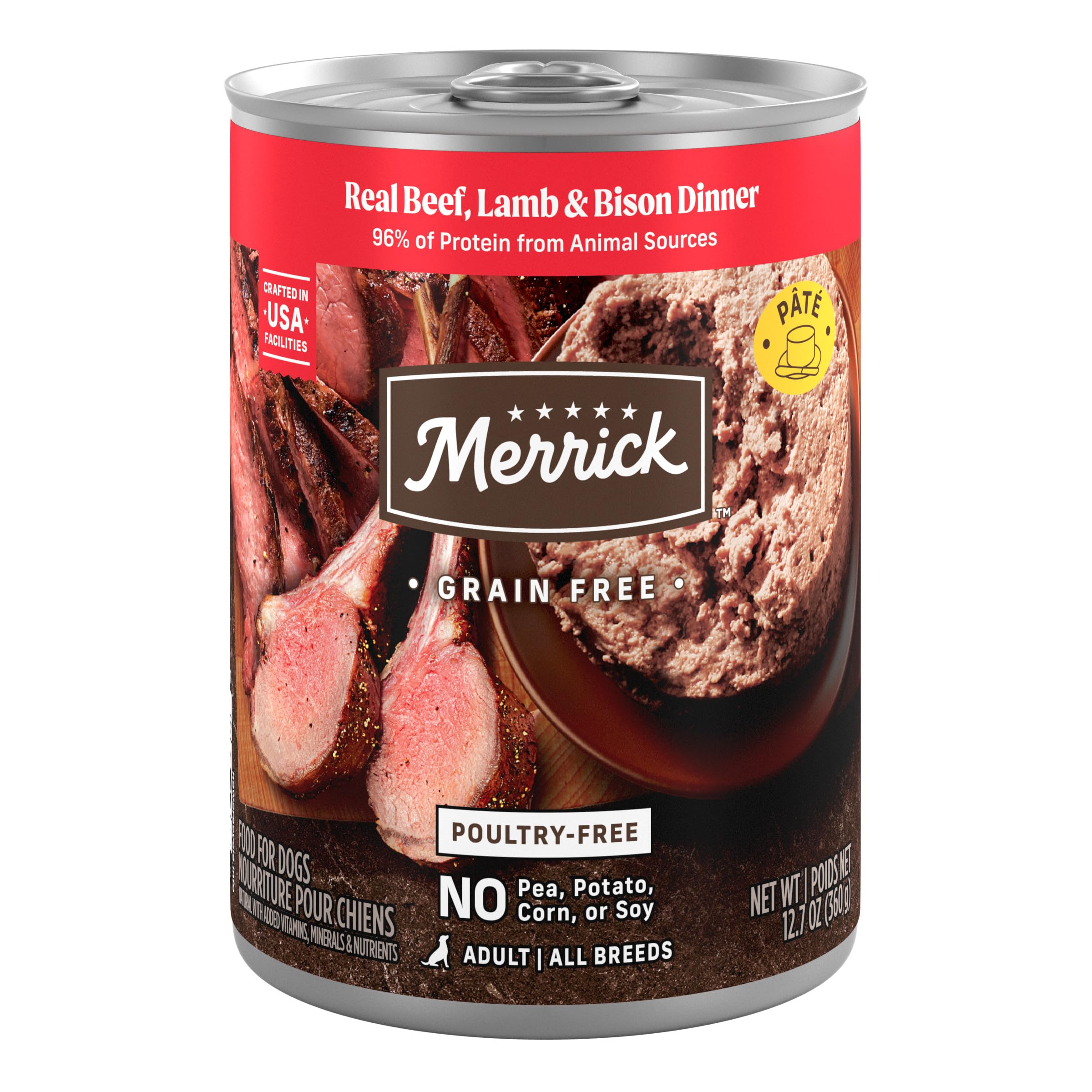
Merrick’s pate uses deboned USDA-inspected beef as the first ingredient, followed by lamb and bison — a novel protein mix that works exceptionally well for puppies showing signs of chicken or turkey intolerance. The formula is completely poultry-free, making it one of the few options for owners following an elimination diet. The pate texture is dense and velvety, holding together when scooped but crumbling easily when pressed with a fork.
The guaranteed analysis shows 96 percent of the protein coming from animal sources, with no meat meal or rendered by-products diluting the amino acid profile. The grain-free base uses sweet potato and potato, but the carbohydrate load is lower than many competing grain-free lines because the meat content is unusually high for a canned food. This reduces the risk of blood sugar spikes in hyperactive toy breeds.
The primary limitation: this formula is labeled for adult dogs, not specifically for puppies. That means the calcium-phosphorus ratio is not calibrated for rapid skeletal growth. It works as a transitional food for puppies over 6 months old who have finished their most intense growth phase, but I would not recommend it as a sole diet for a 3-month-old large-breed puppy.
Why we love it
- Poultry-free — ideal for chicken-sensitive puppies
- 96% protein from animal sources
- Dense pate stays firm in the bowl without gravy separation
Good to know
- Labeled as adult food, not specifically for puppy growth
- Lacks DHA fortification found in puppy-specific lines
5. Royal Canin Puppy Loaf in Sauce
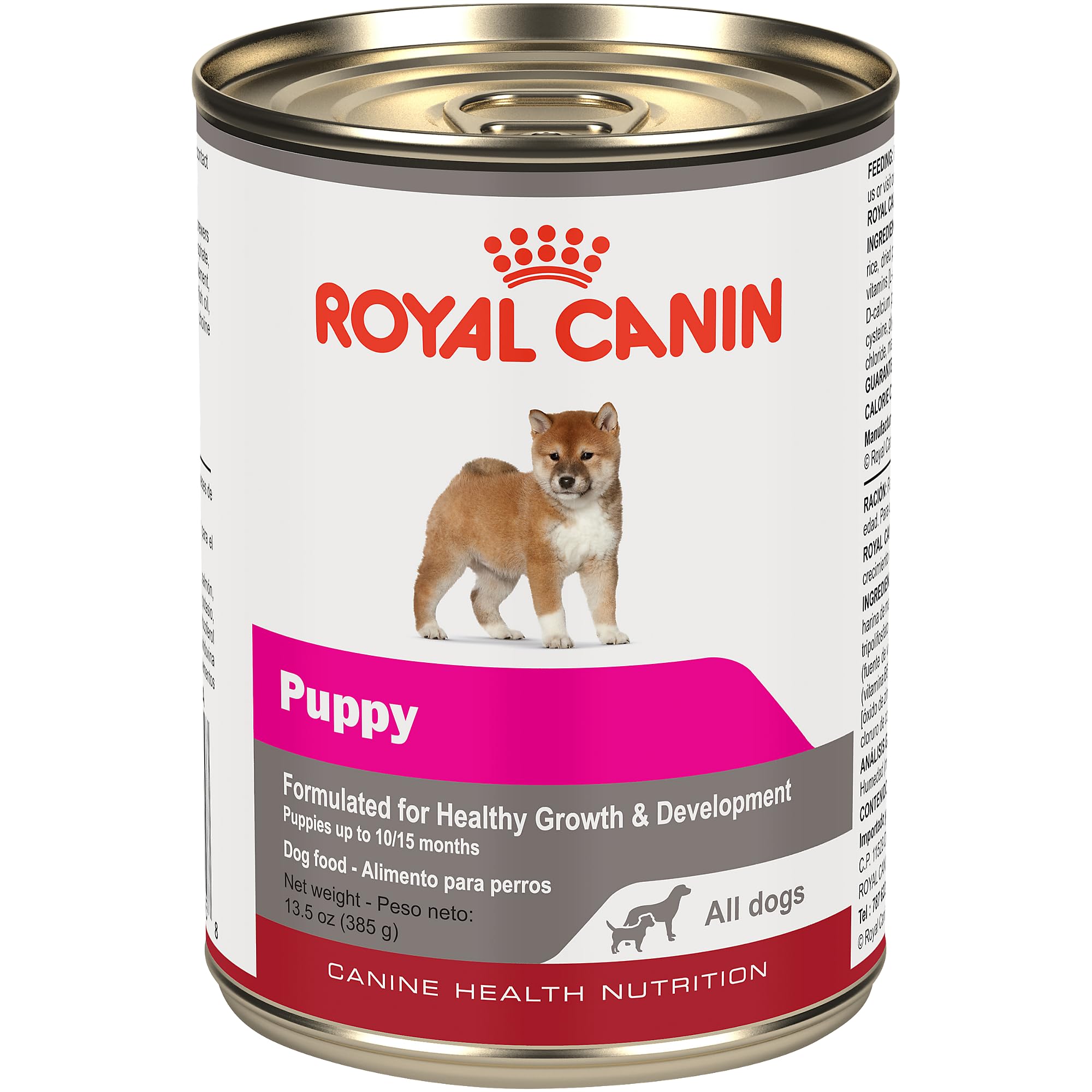
This Royal Canin formula is designed for all puppies up to 10-15 months old (depending on expected adult size), making it the most universally applicable option on this list. The pate-in-sauce texture offers more firmness than the X-Small thin slices, meaning it holds its shape when scooped but still breaks apart with light pressure — ideal for puppies transitioning from soft to semi-soft textures. The formula includes fish oil for DHA, beet pulp for soluble fiber, and a precise balance of calcium and phosphorus calibrated for large-bone development.
The 13.5-ounce can is the most economical serving size among the premium-tier options, and the formula can be mixed directly with Royal Canin dry kibble without disrupting the nutritional profile. The antioxidant complex (vitamins E and C, plus beta-carotene) supports immune system maturation during the vaccine window. The sauce layer adds moisture without causing the pate to dissolve into soup, which prevents messy bowls during the early feeding frenzy.
Drawbacks: the flavor is chicken-based, which may trigger reactions in pups with poultry sensitivities. The loaf-in-sauce texture can also be too dense for very young weaning puppies (under 6 weeks) that still need a slurry. For those cases, the X-Small thin slices or a water-mashed Blue Buffalo are better fits.
Why we love it
- Calibrated calcium-phosphorus ratio for all breed sizes
- Can mix with dry Royal Canin kibble without imbalance
- 13.5 oz cans offer better value per feeding than small packs
Good to know
- Too firm for 4-6 week old weaning puppies
- Chicken base — not suitable for poultry-sensitive pups
FAQ
How much wet food should I feed a 10-week-old puppy per day?
Can I mix wet puppy food with dry kibble in the same bowl?
Does grain-free wet food cause heart problems in puppies?
Why is DHA important in puppy wet food and how can I verify the amount?
Final Thoughts: The Verdict
For most pet parents, the best wet dog food for puppies winner is the Royal Canin X-Small Puppy Thin Slices because it nails the two highest-stakes variables: DHA from fish oil for neural development and a thin-slice texture that tiny mouths can manage without choking. If you want a grain-free high-protein option with turkey as a single meat source, grab the Purina Pro Plan Turkey. And for a poultry-free rotation food that works for older puppies with chicken sensitivities, nothing beats the Merrick Beef Lamb Bison Dinner.