
Choosing a wet food for a cat diagnosed with chronic kidney disease (CKD) is a constant balancing act between strict nutritional science and your feline’s stubborn, life-of-the-party pickiness. The wrong protein-to-phosphorus ratio can speed up renal decline, while a food your cat refuses to eat creates a severe calorie deficit that’s equally dangerous. You need a formula that restricts phosphorus and sodium without sacrificing the high-quality, bioavailable protein that maintains muscle mass and provides the hydration that flushes the kidneys.
I’m Mo Mahin — the founder and writer behind Furric. I’ve spent the last 15 years analyzing comparative veterinary nutrition data, cross-referencing clinical feeding trials, and mapping owner satisfaction with the latest renal-support ingredient science.
After reviewing the leading therapeutic diets, the clear focus for any owner is finding a wet food that controls phosphorus levels and provides high-quality protein in a palatable format. This guide will help you navigate the best options for wet food for cats with kidney disease.
How To Choose The Best Wet Food For Cats With Kidney Disease
Selecting a renal diet goes beyond grabbing a can labeled “kidney.” The food’s ability to slow disease progression depends on three tightly controlled pillars: phosphorus restriction, protein quality, and electrolyte balance. Here is what the spec sheet must tell you.
Phosphorus Restriction: The Primary Metric
For a cat with CKD, elevated serum phosphorus accelerates kidney tissue calcification. A therapeutic wet food must target under 0.5% phosphorus on a dry matter basis. Look for explicit claims like “Low Phosphorus” or labels that show a phosphorus level 50% below AAFCO’s general minimum.
Protein: Quality Over Quantity
The myth that kidney diets must be low-protein is outdated. The modern science targets moderate, highly bioavailable protein. You want a food that lists real chicken, salmon, or chicken liver as the primary ingredient without relying on carb-based fillers (like powdered cellulose) to artificially lower the phosphorus percentage. High digestibility means less kidney workload.
Hydration & Palatability
Wet food provides the moisture cats with compromised kidneys critically need. The texture matters: a pate often mixes well with water, while chunks in gravy can entice a picky eater who refuses a pate. A food that your cat consistently eats is infinitely better than a theoretically perfect formula that sits untouched in the bowl.
Quick Comparison
On smaller screens, swipe sideways to see the full table.
| Model | Category | Best For | Key Spec | Amazon |
|---|---|---|---|---|
| Weruva Wx Phos Focused | Variety Pack | Cats who refuse standard prescription foods | 50% less phosphorus than AAFCO minimum | Amazon |
| Hill’s Prescription Diet k/d | Stew | Comprehensive kidney support with microbiome tech | ActivBiome+ Kidney Defense prebiotics | Amazon |
| Blue Buffalo K+M | Pate | Cats needing dual kidney & joint support | Glucosamine & Chondroitin + kidney support | Amazon |
| Pro Plan NF Advanced Care | Pate | Late-stage CKD management | Reduced high-quality protein + restricted phosphorus | Amazon |
| Pro Plan NF Early Care | Ground | Proactive support for early-stage kidney decline | Moderate protein + Omega-3 EPA/DHA | Amazon |
In‑Depth Reviews
1. Hill’s Prescription Diet k/d Kidney Care

Hill’s k/d is the clinical gold standard for a reason. This formula is built on the ActivBiome+ Kidney Defense technology—a proprietary prebiotic blend designed to activate the gut microbiome to actively help protect kidney function, not just reduce phosphorus. Each 2.9 oz can is packed with more essential amino acids than the AAFCO daily minimum, ensuring your cat builds muscle even while managing a restricted renal workload.
The chicken and vegetable stew format is a major win for palatability. Owners of notoriously picky cats report that the bite-sized chunks in real gravy make transition from standard foods less of a battle. This is a food that was developed through rigorous clinical trials, and multiple owner accounts note significant improvements in BUN/CREA levels and a marked reduction in vomiting.
It requires a vet prescription, and its reduced sodium and phosphorus levels are precisely calibrated. Some cats may find the aroma stronger than standard foods, but this generally improves acceptance. The 24-pack gets you through a month of feeding, and the portion size is perfect for splitting into two meals.
Why we love it
- Clinically proven to improve and extend quality of life for CKD cats
- ActivBiome+ prebiotic technology provides comprehensive kidney defense
- High palatability with bite-sized chunks in a meaty stew
Good to know
- Requires a vet prescription to purchase
- Odor is stronger than non-prescription foods, which some owners dislike
- Limited flavor variety compared to non-therapeutic brands
2. Pro Plan Veterinary Diets NF Kidney Function Advanced Care

Purina’s NF Advanced Care formula is designed for cats in the later stages of kidney disease, where a more aggressive reduction in protein load is warranted. This pate features a reduced amount of high-quality protein, ensuring the kidneys have less work filtering byproducts while still providing enough bioavailable amino acids to slow muscle wasting. The restricted phosphorus is critical for managing hyperphosphatemia in advanced CKD.
This formula also integrates omega-3 fatty acids (EPA and DHA) as a source of anti-inflammatory support, along with a prebiotic fiber to nourish the GI tract. In owner reports, even cats at Stage 3 and early Stage 4 have maintained a stable weight and shown improved kidney values when switched to this diet. The consistency of the pate makes it easy to mix with a small amount of warm water to boost hydration further.
Some buyers report occasional packaging issues like dented cans, so inspecting upon delivery is wise. A small percentage of cats refuse the taste out of the gate, but blending it with a touch of baby food (with vet approval) or the Purina Hydra Care supplement usually solves the transition.
Why we love it
- Targeted for advanced kidney disease with reduced protein and phosphorus
- Includes omega-3 fatty acids for anti-inflammatory benefits
- Prebiotic fiber supports overall digestive health
Good to know
- Some cans may arrive dented due to shipping
- Pate texture may require added water to improve acceptance for some cats
- Vet script required; a bad batch reported by one owner (hard white discoloration)
3. Blue Buffalo Natural Veterinary Diet K+M Kidney + Mobility Support

Blue Buffalo takes a unique approach by targeting two simultaneous problems: declining kidney function and decreased mobility. The K+M formula starts with high-quality, real chicken and controls protein levels to manage kidney workload, all while adding glucosamine and chondroitin to support joint health. This dual action is a major time-saver for owners of older cats who often struggle with both CKD and arthritis.
The pate texture is smooth and can be easily portioned into smaller meals. Because Blue Buffalo avoids corn, wheat, and soy (common thickening agents in other brands), this food stays closer to a natural, prey-model diet. It is still a veterinary diet requiring a prescription, but it leans into the philosophy of using the “finest natural ingredients” enhanced with vitamins and minerals rather than synthetic fillers.
At 5.5 oz per can, the 24-pack offers a generous 132 ounces of food, making it a strong value. Owners of cats who also show stiffness or difficulty jumping report noticeable improvement in gait coordination over a few weeks when combining this diet with the joint supplements.
Why we love it
- Simultaneously addresses kidney health and joint mobility
- Contains glucosamine and chondroitin for long-term care
- No corn, wheat, or soy fillers—clean ingredient profile
Good to know
- Requires vet prescription for purchase
- Pate texture may not appeal to all cats—some prefer chunkier formulas
- Limited flavor (only Chicken) compared to multi-flavor packs
4. Pro Plan Veterinary Diets NF Kidney Function Early Care
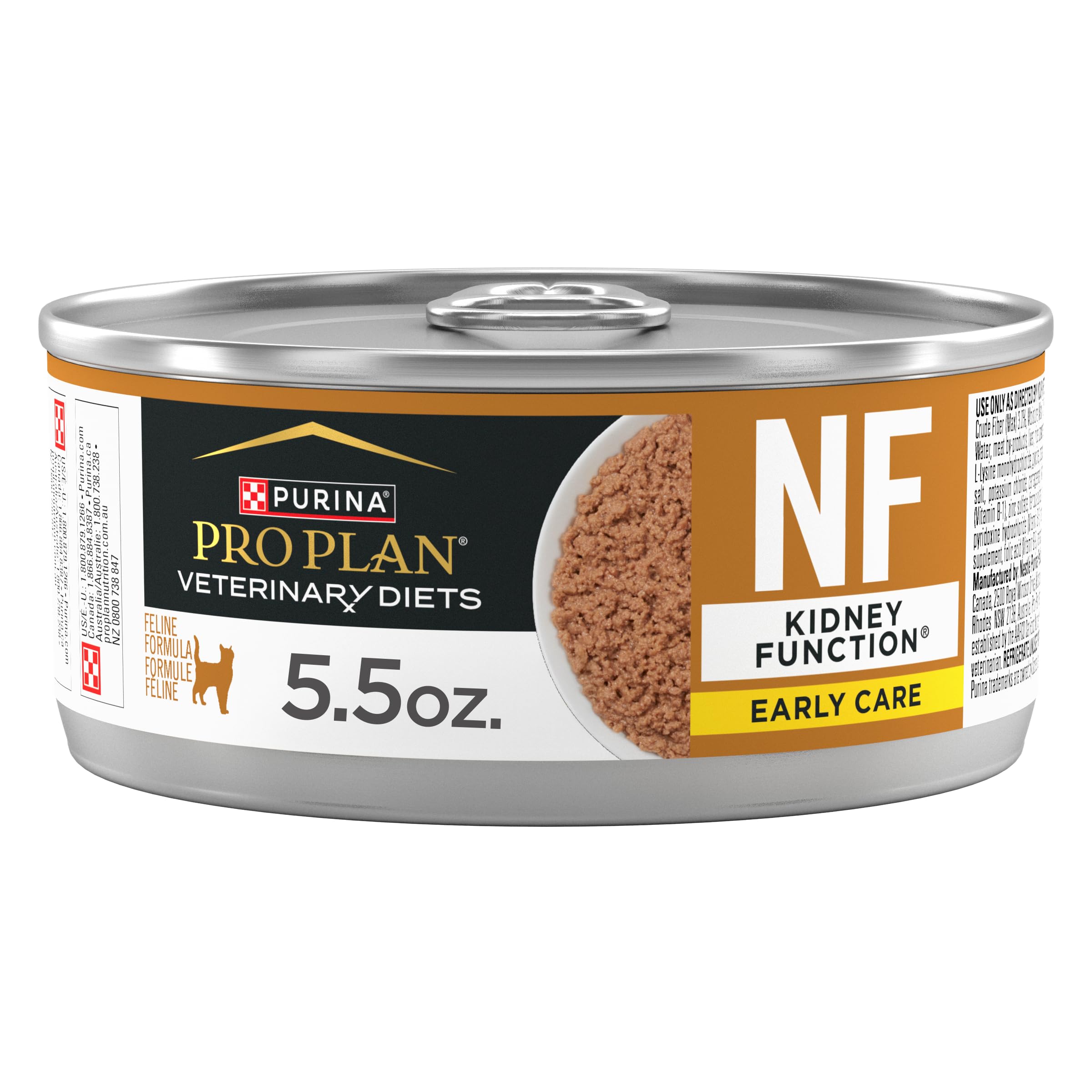
For cats in the early stages of CKD—before elevated BUN/CREA becomes severe—Purina’s NF Early Care offers a moderate protein formula that provides pro-active nutritional support. Where the Advanced Care aggressively restricts protein, this version provides a moderate amount of high-quality protein combined with restricted phosphorus. This balance is ideal for maintaining muscle mass early in the disease while supporting the kidneys through their first signs of stress.
The ground texture features a Salmon flavor, which is a distinct fish-based alternative to the standard chicken and poultry profiles common in kidney diets. Owners report that finicky cats who reject the poultry-based Hill’s diet often accept this salmon formula. The addition of omega-3 fatty acids helps manage systemic inflammation, which is a known contributor to further kidney damage.
It also requires a vet prescription. Some cats may be resistant to the ground texture if they are used to shreds or chunks. Owners recommend mixing with a bit of warmer water or blending in a small amount of their cat’s previous food to aid the transition. The 24-pack of 5.5 oz cans provides excellent value for an early-stage maintenance diet.
Why we love it
- Moderate protein approach ideal for early-stage CKD without over-restricting
- Salmon flavor offers a fish-based alternative to chicken/poultry fatigue
- Positive owner reviews show improved kidney values over time
Good to know
- Ground texture may not be accepted by cats used to chunks
- Requires vet prescription to purchase
- A small portion of owners report their cat refusing it outright
5. Weruva Wx Phos Focused Chicken Formulas Variety Pack
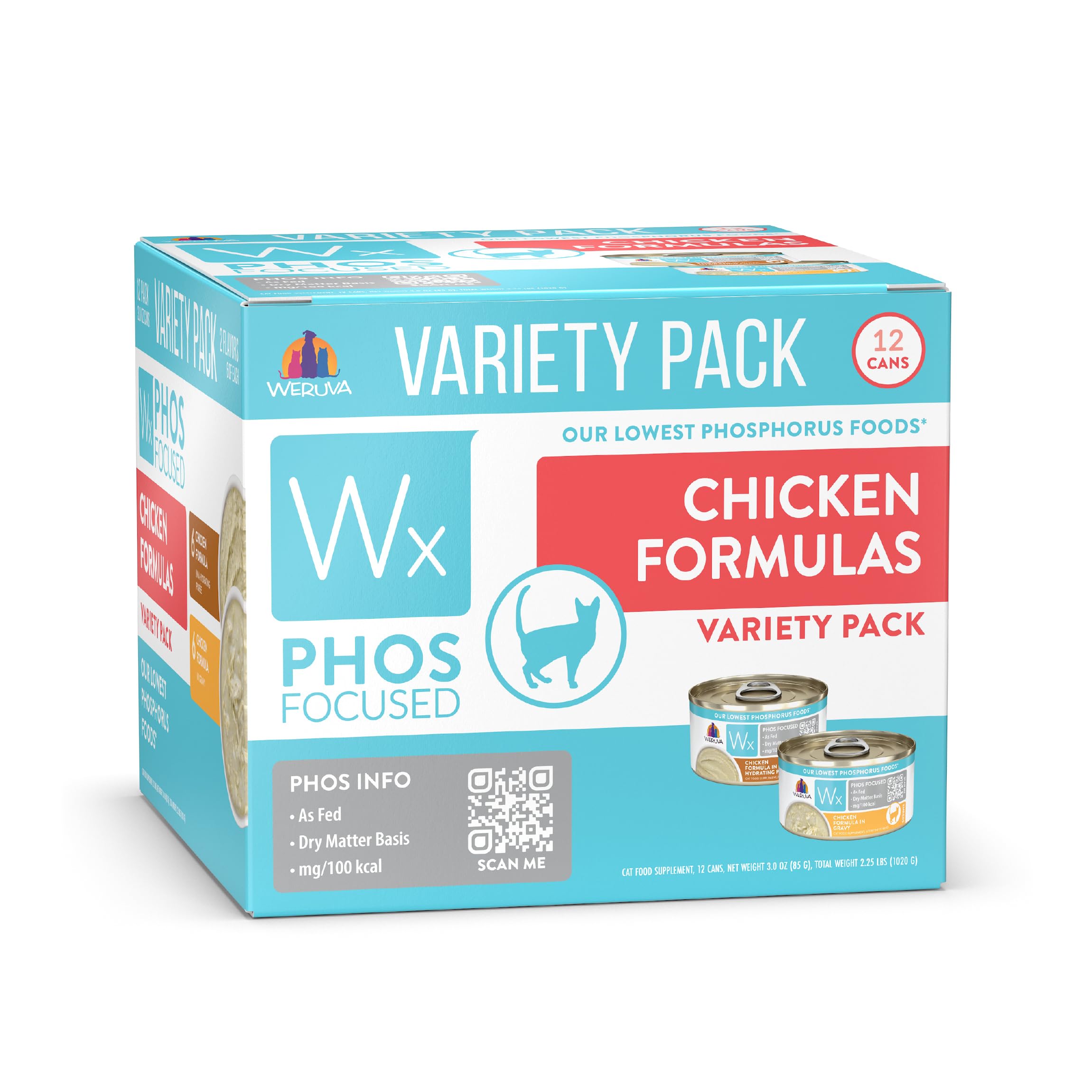
Weruva’s Wx Phos Focused variety pack stands out because it does not require a prescription. This makes it a strong mid-range option for owners who cannot easily get a vet authorization or whose vet approves a more flexible dietary approach.
The variety pack features Chicken Formulas in a chunks-in-gravy texture. The high moisture content helps with hydration, while the bone-free proteins ensure highly bioavailable amino acids for muscle maintenance. It is completely free of powdered cellulose and carbohydrates that some brands use to superficially lower the phosphorus percentage—a meaningful difference for owners concerned about ingredient quality.
Because it is not a prescription diet, the phosphorus control might not be as tightly calibrated as a Hill’s or Purina formula for late-stage CKD. It is best suited for cats in early to moderate stages of disease, or as a supplemental rotation diet with a prescription food. The 12-pack of 3 oz cans is also excellent for portion control and rotation through different flavors to keep the cat interested.
Why we love it
- No prescription required—accessible for immediate purchase
- Exceptionally low phosphorus without resorting to carb fillers
- All-natural ingredients with high protein bioavailability
Good to know
- Slightly less controlled phosphorus than veterinary-prescription-only formulas
- 12-pack provides less volume than the 24-can prescription packs
- Not designed for late-stage (Stage 3/4) CKD management
FAQ
Can I feed my CKD cat non-prescription wet food from the grocery store?
How much wet food should I feed a cat with kidney disease?
What protein sources are best for cats with kidney disease?
Do all kidney disease wet foods require a vet prescription?
Final Thoughts: The Verdict
For most cats with chronic kidney disease, the winner is the Hill’s Prescription Diet k/d because its ActivBiome+ Kidney Defense technology and clinically-proven formulation provide the most comprehensive support for protecting kidney function while maintaining high palatability. If your cat needs dual support for both kidney and joint issues, grab the Blue Buffalo K+M. And for a non-prescription option that still delivers exceptional low-phosphorus levels, nothing beats the Weruva Wx Phos Focused Variety Pack.