
A video doorbell that constantly needs a recharge, chokes on a package delivery, or misses a visitor because the field of view is too narrow is not a security upgrade — it’s a new frustration. The modern wireless video doorbell market has evolved dramatically beyond the simple ding-dong camera, now offering solar-powered units, dual-lens systems for head-to-toe package visibility, and on-device AI that tells you if it’s a person in a hoodie or a stray cat before you even open the app. Choosing the wrong one means signing up for recurring subscription fees, unreliable motion triggers, or a battery that dies right when you need it most.
I’m Mo Mahin — the founder and writer behind Furric. I’ve spent the last 15 years analyzing Amazon product data, cross-referencing technical specs against aggregated owner feedback, and studying how smart home hardware performs in real-world conditions to separate well-engineered solutions from marketing hype.
After evaluating resolution performance, field-of-view coverage, battery management systems, storage flexibility, and long-term owner satisfaction across the current landscape, these seven models stand out as the definitive choices in the best wireless video doorbell category for 2025.
How To Choose The Best Wireless Video Doorbell
A video doorbell is a long-term installation, not a gadget you swap monthly. Prioritizing the wrong spec — like resolution without field of view — will leave you with a crisp video of a torso and a missing package. Focus on these four decision points first.
Resolution and Aspect Ratio
2K (1440p or 2560×1440) is the current sweet spot for detail without overwhelming your Wi-Fi bandwidth. More important than raw pixel count is the aspect ratio. A 4:3 or 1:1 ratio captures the full figure of a visitor from head to toe, including packages at your feet, whereas a standard 16:9 frame often crops out the ground entirely. If package theft is a concern, prioritize a doorbell with a vertical or square aspect ratio over a wider horizontal one.
Power Source and Battery Capacity
Wireless doorbells fall into three categories: fully battery-powered, solar-assisted, and hardwired (which still often contain a battery as a backup). Pure battery units need removal and USB charging every 30-90 days depending on traffic and settings. Solar panels eliminate that chore but require direct sunlight on the panel. Hardwired units provide 24/7 recording without recharge anxiety but require existing doorbell wiring and a compatible transformer. The eufy C31’s 6,500mAh battery is among the largest in the battery-first category, while the BOTSLAB’s integrated solar panel effectively removes the battery from your maintenance cycle.
Storage Strategy: Local vs. Cloud
Subscription fatigue is real. Many premium doorbells (Ring, Google Nest) offer essential features like video history and AI-powered alerts only behind a monthly paywall. The better long-term value lies in units with onboard storage — either a built-in eMMC chip (the eufy E340 comes with 8GB) or a microSD slot (Wyze, BOTSLAB). These store clips locally with zero recurring fees, though you lose remote playback if the camera is stolen. Some manufacturers offer a free tier of cloud storage (BOTSLAB provides 48 hours free; Google Nest gives 3 hours free event history) that covers casual use without commitment.
Wi-Fi Connectivity and Real-World Range
2.4GHz Wi-Fi penetrates walls and metal siding better than 5GHz, making it the only reliable option for doorbells installed through brick, aluminum, or long distances from the router. Many budget units (Wyze, Chamberlain myQ) require 2.4GHz and will not connect during setup on 5GHz at all. Higher-end units like the Ring Battery Doorbell Plus and Google Nest Doorbell support dual-band, automatically falling back to 2.4GHz when signal strength drops. If your router is far from your front door, look for units with explicit dual-band support and test your signal strength before installing the bracket.
Quick Comparison
On smaller screens, swipe sideways to see the full table.
| Model | Category | Best For | Key Spec | Amazon |
|---|---|---|---|---|
| BOTSLAB 2K Doorbell + Solar | Solar-Powered | Zero-maintenance charging | 5,200mAh battery + 2K resol. | Amazon |
| eufy C31 2K FHD | Battery/Wired | Dual power flexibility | 6,500mAh quick-release batt. | Amazon |
| Chamberlain myQ | Battery/Wired | Garage-app integration | 150° wide-angle lens | Amazon |
| Wyze Video Doorbell Pro | Wire-Free | Budget-friendly head-to-toe | 1:1 aspect ratio + chime | Amazon |
| Ring Battery Doorbell Plus | Battery-Powered | Ecosystem & familiar app | Retinal 2K + 6x Enhanced Zoom | Amazon |
| eufy E340 Dual Camera | Premium Battery | Dual camera no-subscription | 8GB built-in eMMC storage | Amazon |
| Google Nest Doorbell (Wired, 2nd Gen) | Wired-Only | Google Home ecosystem | 24/7 continuous recording | Amazon |
In‑Depth Reviews
1. BOTSLAB 2K Doorbell Camera Wireless with Solar Panel
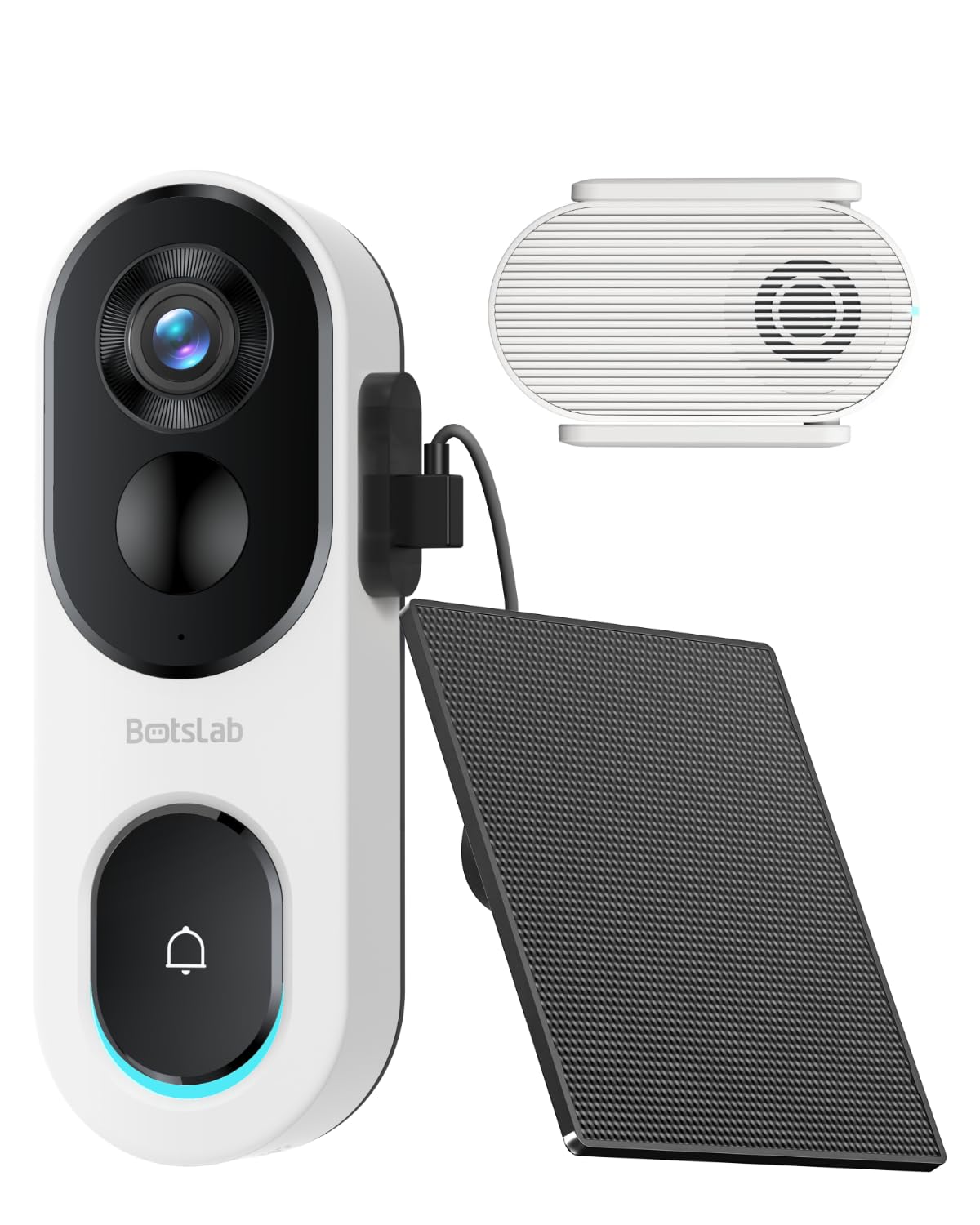
The BOTSLAB R810SE Solar Set is the most hands-off wireless doorbell in this lineup, thanks to its integrated solar panel that maintains the 5,200mAh battery without ever needing a manual recharge after the initial setup. The 2K sensor paired with a 180° diagonal field of view creates a head-to-toe capture zone that shows packages, children, and pets in a single frame — eliminating the guesswork of traditional 16:9 crop sensors. Its 48 hours of free cloud storage, supplemented by a microSD slot, means you can operate entirely without a subscription while keeping clips accessible from the app.
Owner feedback consistently highlights two specific wins: the AI-driven “BOTSLAB IQ” notifications that send descriptive text alerts (e.g., “person in purple hoodie walking with white package”) rather than generic motion pings, and the negligible latency between motion trigger and notification. The solar panel performs reliably even in indirect light, though users in covered porches may still need to recharge every few months. The app interface draws some criticism for requiring manual deletion of images daily to keep the free storage clean, but the 24/7 customer support and extended 18-month warranty (activated in-app) mitigate most post-purchase friction.
For any household that prioritizes uninterrupted power, full-package visibility, and zero monthly costs, the BOTSLAB delivers a feature set that typically costs twice as much in premium-branded units. The 2.4GHz-only Wi-Fi is the only notable constraint — ensure your router supports the band before committing to the adhesive or screw mount installation.
Why we love it
- Solar panel eliminates battery recharging entirely after setup.
- 180° diagonal FOV captures packages and visitors in one frame.
- 48-hour free cloud storage plus microSD expansion — no subscription required.
Good to know
- Only connects to 2.4GHz Wi-Fi; no 5GHz support.
- App interface requires manual deletion of stored images to manage free tier.
2. eufy Security Video Doorbell E340 Kit

The eufy E340 represents the most complete “no subscription” premium package currently available, integrating a dual-camera system — a front-facing lens for visitors and a downward-facing lens dedicated to packages and floor-level activity — paired with 2K FHD clarity and an industry-first dual-light system for color night vision up to 16 feet. The kit includes two 6,500mAh quick-release batteries, allowing one to charge while the other powers the doorbell, ensuring zero downtime. The 8GB eMMC on-board storage eliminates the need for any cloud subscription, saving an estimated per year compared to Ring or Nest equivalents.
Real-world owners confirm the dual camera setup is transformative for package theft monitoring: the downward lens catches delivery placement that single-camera units regularly miss. The AI motion detection accurately distinguishes people, animals, and vehicles with low false-positive rates, and the local processing respects privacy by never uploading footage to external servers. The primary drawback reported is battery life under default settings — approximately 30 days per charge with moderate traffic, meaning the second battery is not just a convenience but a near-necessity. Some users note the software can feel buggy after firmware updates, requiring occasional reconnection to HomeBase 3 for full functionality.
For buyers who want the most advanced visual coverage without a monthly fee and are comfortable swapping a battery every month, the E340 is the strongest contender. The wired version’s slower recharge rate compared to draw is worth noting for those planning a hardwired install — battery-first operation may actually perform better.
Why we love it
- Dual cameras provide front-facing and downward package views simultaneously.
- 8GB built-in eMMC storage with zero subscription fees.
- Extra quick-release battery included for continuous uptime.
Good to know
- Battery lasts roughly 30 days on default settings — keep the spare charged.
- No HomeKit support and the app can have post-update bugs.
3. eufy Security Video Doorbell Camera C31

The eufy C31 strips away the dual-camera complexity of its premium sibling and delivers a very strong single-camera 2K FHD experience with a 4:3 aspect ratio that naturally frames visitors and packages in a single portrait-oriented view. Its 6,500mAh quick-release battery is the largest standard-capacity cell in the mid-range group, supporting both fully wireless operation and the option to hardwire for 24/7 continuous recording with a 5-second pre-roll on motion events. The camera supports local storage via microSD card, keeping you out of a subscription cycle while maintaining full access to recorded clips through the eufy Security app.
User sentiment is overwhelmingly positive on video quality and installation ease, with many reporting a smooth transition from older ADT or Google Nest hardware. The pop-up video call feature when someone rings the doorbell is a well-designed touch — it treats the interaction like a phone call rather than forcing you to open the app manually. The main criticism from long-term eufy users is that the Wi-Fi models (including this one) occasionally miss motion-triggered events, a recurring observation across the brand’s wireless product line. Additionally, the doorbell does not ring an internal mechanical chime without bypassing your existing wiring, so you’ll need a separate chime device (or a smart speaker) for audible alerts throughout the house.
The C31 is the best single-camera wireless option for buyers who want eufy’s local-storage ecosystem with the largest battery capacity available and the option to wire for 24/7 recording later. The occasional missed detection is a real compromise — if event capture reliability is non-negotiable, consider the wired Nest or a Ring subscription model instead.
Why we love it
- 6,500mAh battery is the largest in the mid-range tier — charges less often.
- 4:3 aspect ratio provides natural head-to-toe framing for visitors and packages.
- Supports hardwiring for 24/7 recording with pre-roll without losing wireless backup.
Good to know
- Wi-Fi model can occasionally miss motion-triggered events.
- Requires bypassing existing chime for hardwire install; no internal chime sound.
4. Chamberlain myQ Video Doorbell
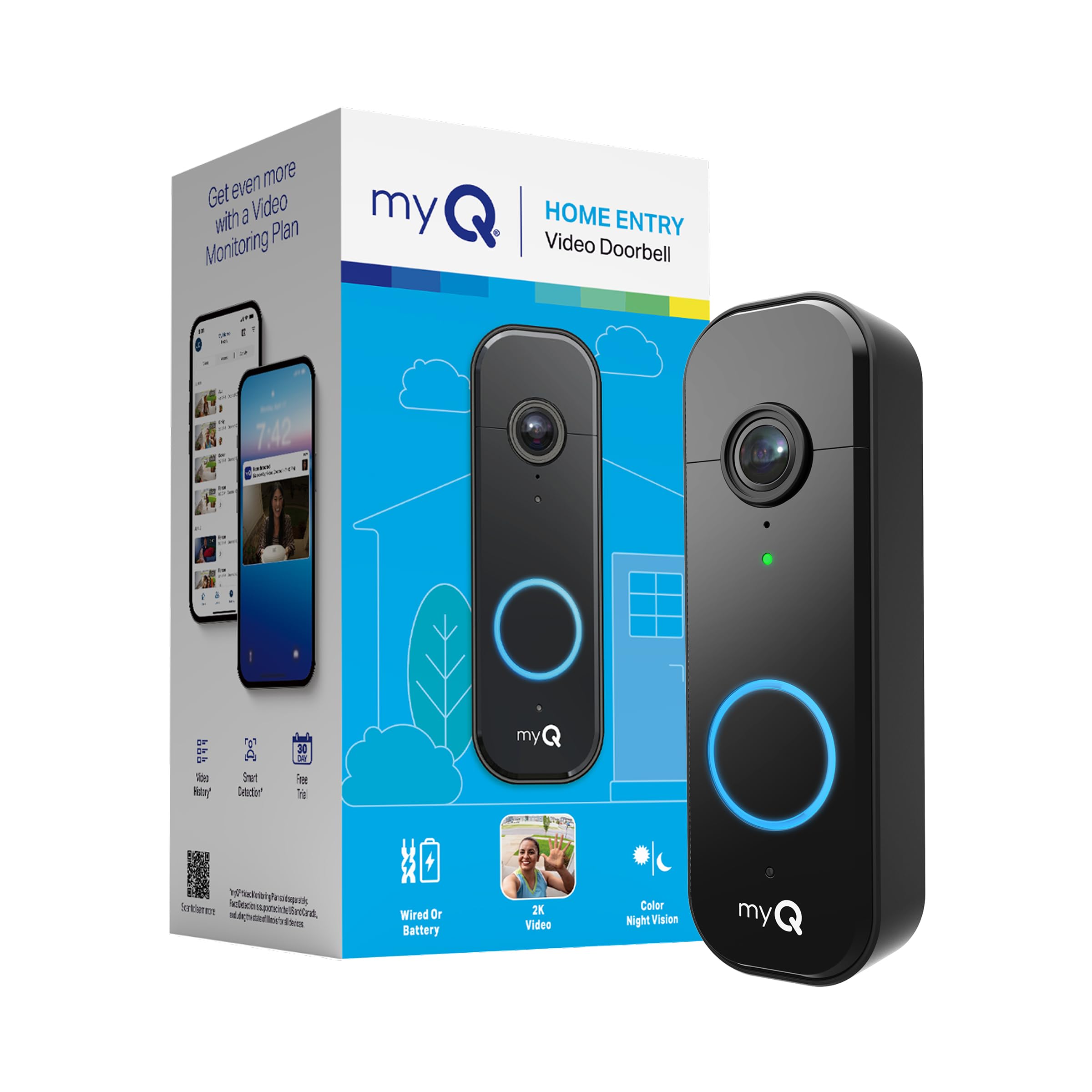
Chamberlain brings its myQ smart garage ecosystem to the doorbell world with a 2K camera that features the widest horizontal lens in this roundup at 150°, combined with color night vision that maintains natural tones even in very low light. The myQ Video Doorbell is designed to integrate seamlessly with the myQ app already used by millions for garage door control, creating a unified front-door and garage management experience. It ships as a battery or wired dual-purpose unit and includes AI alerts that can recognize familiar faces and unknown persons, though full AI functionality requires a separate Video Monitoring Plan subscription.
Early adopters appreciate the wide-angle coverage that captures porches, driveways, and side approaches without blind spots, and the integration with existing myQ hardware streamlines app clutter into a single dashboard. The color night vision is genuinely useful for identifying vehicle colors and clothing details after sunset. However, two consistent pain points emerge: the doorbell’s internal chime is reported as extremely loud with no volume control, and the mounting screw for the bracket is very small, making installation fiddly. The 2.4GHz-only Wi-Fi requirement during setup also frustrates users on modern dual-band routers who have to create a guest network to complete the pairing.
The myQ is a compelling pick for existing Chamberlain smart home users who want to consolidate apps and prefer a very wide field of view over a tall vertical one. The subscription-gated AI features and the fixed-loudness chime issue should be carefully evaluated before purchase — this is a good doorbell that requires accepting a few quirks.
Why we love it
- 150° wide-angle lens offers the broadest horizontal coverage in this group.
- Color night vision maintains natural hues in low-light conditions.
- Seamless app integration with existing myQ garage door openers.
Good to know
- Setup requires 2.4GHz Wi-Fi only — no 5GHz compatibility.
- Doorbell chime is very loud with no adjustable volume setting.
5. Ring Battery Doorbell Plus
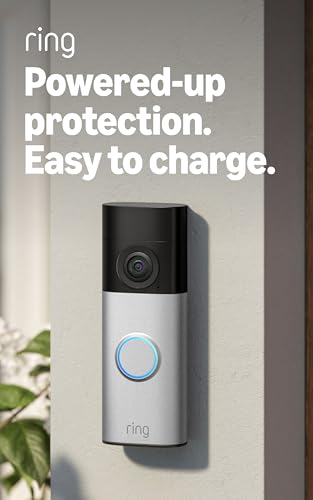
The Ring Battery Doorbell Plus (newest model) refines the formula that made Ring a household name in smart security, now offering Retinal 2K video resolution with up to 6x Enhanced Zoom that lets you inspect faces, packages, and details from a significant distance without digital blur. The Quick Release Battery Pack makes recharging a snap — pop it off, charge it via USB-C, and snap it back on without restarting the doorbell or removing the mounting bracket. The Motion Detection engine is among the most responsive in the market, delivering near-instant mobile alerts with the option for AI-powered pre-roll previews via a compatible Ring Protect subscription.
Owner feedback across hundreds of installations confirms that the Plus model significantly reduces the missed-event issues that plagued earlier Ring generations — the camera now picks up vehicles, pedestrians, and delivery drivers with greater consistency, even at the edge of its field of view. Battery consumption averages about 10% per week with typical use, translating to roughly two months between charges without a solar accessory. The trade-off is almost entirely tied to the subscription: essential features like video history, person detection, and package alerts are locked behind the Ring Protect plan, making this a financially recurring commitment rather than a one-time purchase. Users who love the simplicity of the Ring app and the wide ecosystem of accessories (Chime Pro, solar panels, security lights) will find the subscription acceptable; budget-conscious buyers should weigh the long-term cost.
The Ring Battery Doorbell Plus earns the Best Overall designation because it delivers the most polished, reliable, and ecosystem-rich wireless doorbell experience available, even with its subscription requirement. If you want the most predictable performance across the widest range of home configurations and don’t mind the monthly fee, this is the doorbell to beat.
Why we love it
- Retinal 2K video with 6x Enhanced Zoom for detailed long-distance identification.
- Quick Release Battery Pack allows tool-free removal and charging without unmounting.
- Responsive motion detection with near-zero false alert delay.
Good to know
- Requires Ring Protect subscription for video history and AI-driven alerts.
- Battery life averages 2 months with typical use — solar panel suggested for frequent traffic.
6. Wyze Video Doorbell Pro (Chime Included)
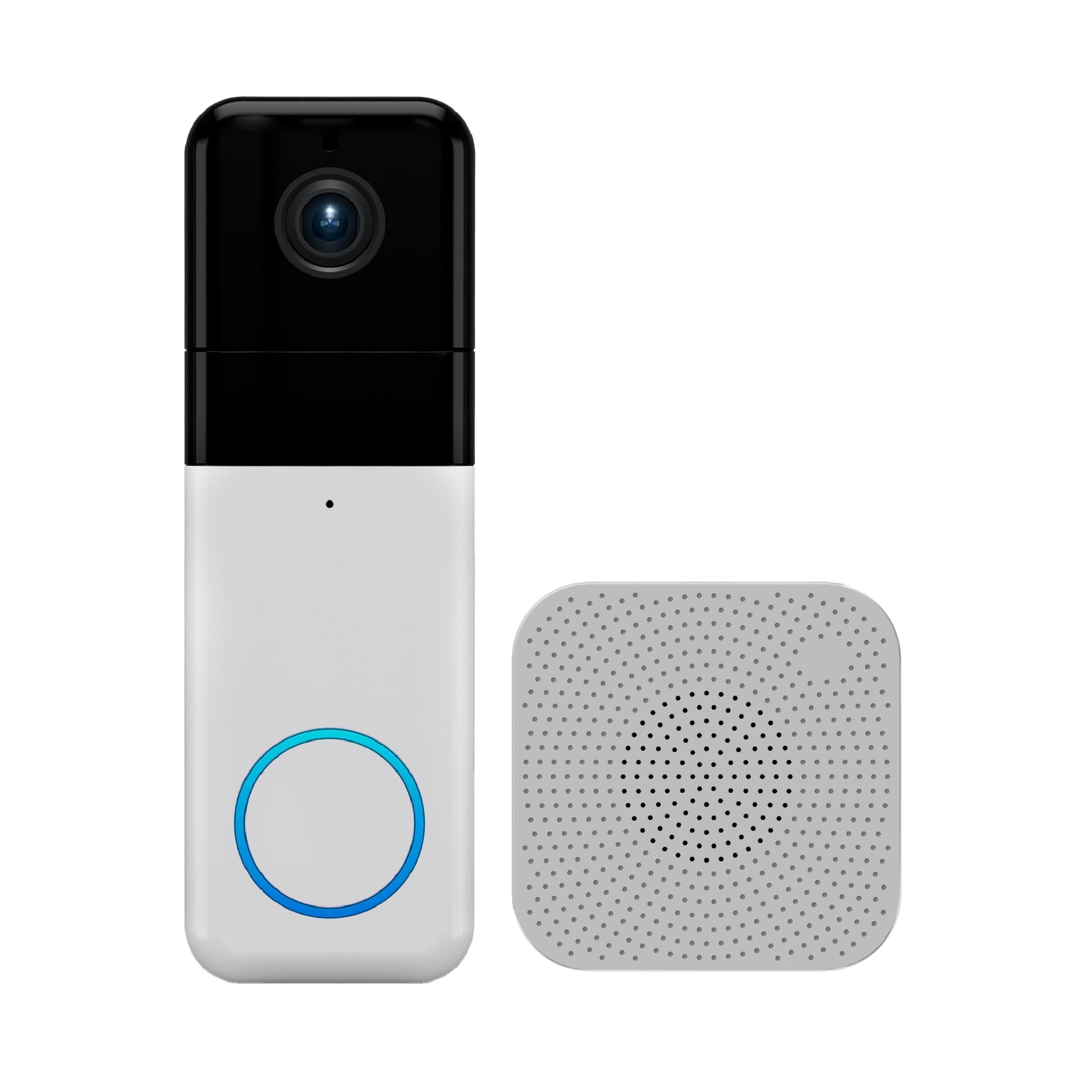
Wyze delivers its hallmark high-value proposition with the Video Doorbell Pro, featuring a 1:1 aspect ratio 1440 HD sensor that provides true head-to-toe framing for visitors and packages without cropping. The unit ships with a customizable wireless chime offering 20 tunes and 8 volume levels — a rare inclusion at this price point that saves you the -50 cost of buying a separate chime from competitors. The 30-second screw-free adhesive installation targets renters and homeowners who want a quick setup without drilling into brick or stucco, while the included wire nuts and screws accommodate hardwiring to existing doorbell lines for permanent placement.
Real-world owners consistently praise the ease of setup: the app guides you through connection before you mount the device, and most users report being fully operational within 10 minutes. The 1:1 aspect ratio genuinely solves the “torso-only” problem that plagues 16:9 doorbell cameras, capturing the full height of a delivery person and the package at their feet in the same frame. The “dog bark” chime tone is a fun deterrent feature, though its effectiveness is debatable. The primary frustration reported is the 2.4GHz-only Wi-Fi requirement — multiple users have noted the product listing incorrectly states 5GHz compatibility, causing connectivity issues during setup for those who run modern dual-band networks exclusively on 5GHz.
The Wyze Doorbell Pro is the strongest entry-level recommendation for budget-conscious buyers who refuse to pay a subscription. The optional Cam Plus upgrade adds human detection and 14-day cloud storage for a low annual fee, but the free tier with microSD local storage covers the basics well. Just confirm your router supports 2.4GHz before purchasing.
Why we love it
- 1:1 aspect ratio captures visitors and packages without cropping the ground.
- Includes a wireless chime with 20 tunes — no extra purchase needed.
- 30-second adhesive installation with optional hardwiring for permanence.
Good to know
- Only works with 2.4GHz Wi-Fi; 5GHz is not supported despite some listing confusion.
- Free tier is functional but the Cam Plus subscription enhances human detection and cloud storage.
7. Google Nest Doorbell (Wired, 2nd Gen)

The Google Nest Doorbell (Wired, 2nd Gen) is the only hardwired-only entry in this roundup, designed as a permanent replacement for your existing doorbell rather than a flexible wireless unit. Its defining advantage is true 24/7 continuous recording — not just event-triggered clips — so you can scrub through every moment of the day, not just algorithmically detected activity. The on-device AI differentiates between people, packages, animals, and vehicles without requiring a subscription for the basic detection, though full event history (up to 30 days) and familiar face recognition require a Nest Aware plan. The 2nd Gen design uses 43% post-consumer recycled materials and supports both 2.4GHz and 5GHz Wi-Fi for the most flexible networking compatibility in this group.
Users consistently highlight the smooth Google Home app integration, the excellent day and night video quality, and the ease of installation for anyone with a standard wired doorbell setup. The free 3-hour event video history is generous for a no-commitment baseline. However, the reliance on the Google Home app (rather than the old Nest app) draws criticism for its less polished interface and inability to export clips easily. The field of view is narrower than competitors at roughly 145° diagonal, and some units require the included wedge for optimal porch framing. The wired requirement also means you need a compatible transformer and chime, which may need upgrading in older homes.
The Nest Doorbell (Wired) is the definitive choice for Google smart home households that already use Nest Hub displays, Google Assistant speakers, and the Home app ecosystem. The 24/7 recording capability is unmatched by any wireless battery unit, making it ideal for high-traffic front doors where every second of footage matters. Just be prepared to deal with wiring compatibility and accept the narrower field of view.
Why we love it
- True 24/7 continuous recording — no event-triggered gaps in footage.
- Supports both 2.4GHz and 5GHz Wi-Fi for maximum router compatibility.
- 3 hours of free event history included with no subscription required.
Good to know
- Hardwired-only — requires existing doorbell wiring and a compatible transformer.
- Narrower diagonal field of view (~145°) compared to wide-angle competitors.
FAQ
Do I need a subscription for a wireless video doorbell to work?
How long does the battery last on a wireless video doorbell?
Can a wireless video doorbell connect to my existing mechanical chime?
Will a wireless doorbell work if my Wi-Fi goes down?
Final Thoughts: The Verdict
For most households, the best wireless video doorbell winner is the Ring Battery Doorbell Plus because it combines the most polished and responsive motion detection ecosystem with Retinal 2K zoom capability and a tool-free quick-release battery that keeps the installation clean and the maintenance simple. If you want zero recurring costs and dual-camera package visibility, grab the eufy Security E340 Kit. And for complete hands-off power with no charging anxiety, nothing beats the BOTSLAB 2K Solar Doorbell.