
That generic synthetic rug you’re eyeing? It might off-gas VOCs, trap dust mites, and start fraying at the edges within two years. A real wool rug breathes naturally, self-cleans through its lanolin content, and can last decades when properly maintained — but only if you know the difference between a 15-micron Merino pile and a coarse blended weave. The wrong choice means constant shedding and a fiber-dusted vacuum.
I’m Mo Mahin — the founder and writer behind Furric. I spend my days cross-referencing fiber micron counts, latex vs. cotton backing durability, and hand-tufted knot density across hundreds of wool rug listings to separate marketing spin from structural quality.
After analyzing owner feedback and construction specs on dozens of models, I have identified the best wool rugs for living room applications that balance softness, longevity, and real-world practicality.
How To Choose The Best Wool Rugs For Living Room
Selecting a wool rug for a living room isn’t about picking a color that matches your sofa. The construction method, fiber quality, and backing material determine whether the rug looks pristine in year 10 or starts balding in year 2. Here are the three specifications that separate a long-term investment from a floor-dusting annoyance.
Fiber Quality: Micron Count and Wool Percentage
The diameter of individual wool fibers, measured in microns, directly dictates softness and shedding behavior. Premium Merino wool with fibers between 15 and 20 microns feels noticeably smoother under bare feet and produces less initial shedding than coarser wools. A rug labeled simply “wool” could use a blend that includes recycled or coarse wool cut from lower-grade fleece. Rugs that combine 80% wool with 20% cotton, as several reviewed models do, reduce shedding by anchoring shorter fibers into the weave without sacrificing natural breathability.
Backing Material: Latex vs. TPR vs. Cotton
Every wool rug needs a secondary backing to maintain shape and stay flat on the floor. Cotton backings offer breathability and a natural feel, but they lack the grip needed on hardwood or tile without a separate rug pad. TPR (thermoplastic rubber) backings provide excellent non-slip performance without gluing the rug to the floor, making them ideal for high-traffic living rooms. Latex backings, while common on hand-tufted rugs, can degrade over time in humid environments and may cause a “crunch” sound when walked on. Cotton-backed rugs require a pad underneath, whereas TPR-backed models often eliminate that need entirely.
Construction Method: Hand-Tufted vs. Power-Loomed
The way a rug is made directly impacts its price and longevity. Hand-tufted rugs use a tool to punch wool yarn through a canvas backing, creating dense loops that are then sheared to an even pile height. This method produces richer texture and often tighter knot density as individual artisans control the process. Power-loomed rugs are machine-woven from polypropylene or polyester fibers mimicking wool, and while they offer consistent sizing and lower cost, they lack the resilience of natural wool under repeated foot traffic. For a living room that sees daily use, a hand-tufted wool rug with a cotton or latex backing will outlast a machine-made alternative by several years.
Quick Comparison
On smaller screens, swipe sideways to see the full table.
| Model | Category | Best For | Key Spec | Amazon |
|---|---|---|---|---|
| ANSSO 8×10 Merino | Solid Merino | Large premium area | 15-20 micron Merino | Amazon |
| ANSSO 5×7 Merino | Solid Merino | Medium premium area | 15-20 micron Merino | Amazon |
| SAFAVIEH Abstract 9×12 | Handmade Wool | Large high-traffic rooms | 0.3-inch pile | Amazon |
| Allen Home Nicol 5×8 | Handcrafted Wool | Traditional decor | 0.4-inch pile height | Amazon |
| SAFAVIEH Blossom 6×9 | Handmade Wool | Floral accent piece | 46-pound weight | Amazon |
| S & L Homes Chunky 5×8 | Handwoven Wool | Boho/cottage style | 0.7-inch thickness | Amazon |
| palohom 10×12 | Faux Wool | Washable large space | 0.3-inch low pile | Amazon |
| Ruaruarug 9×12 | Faux Wool | Washable high traffic | 0.23-inch low pile | Amazon |
| Loloi Pace 7’10” x 10′ | Poly Designer | Joanna Gaines style | Power-loomed poly | Amazon |
In‑Depth Reviews
1. ANSSO Wool Rugs 8×10 for Living Room
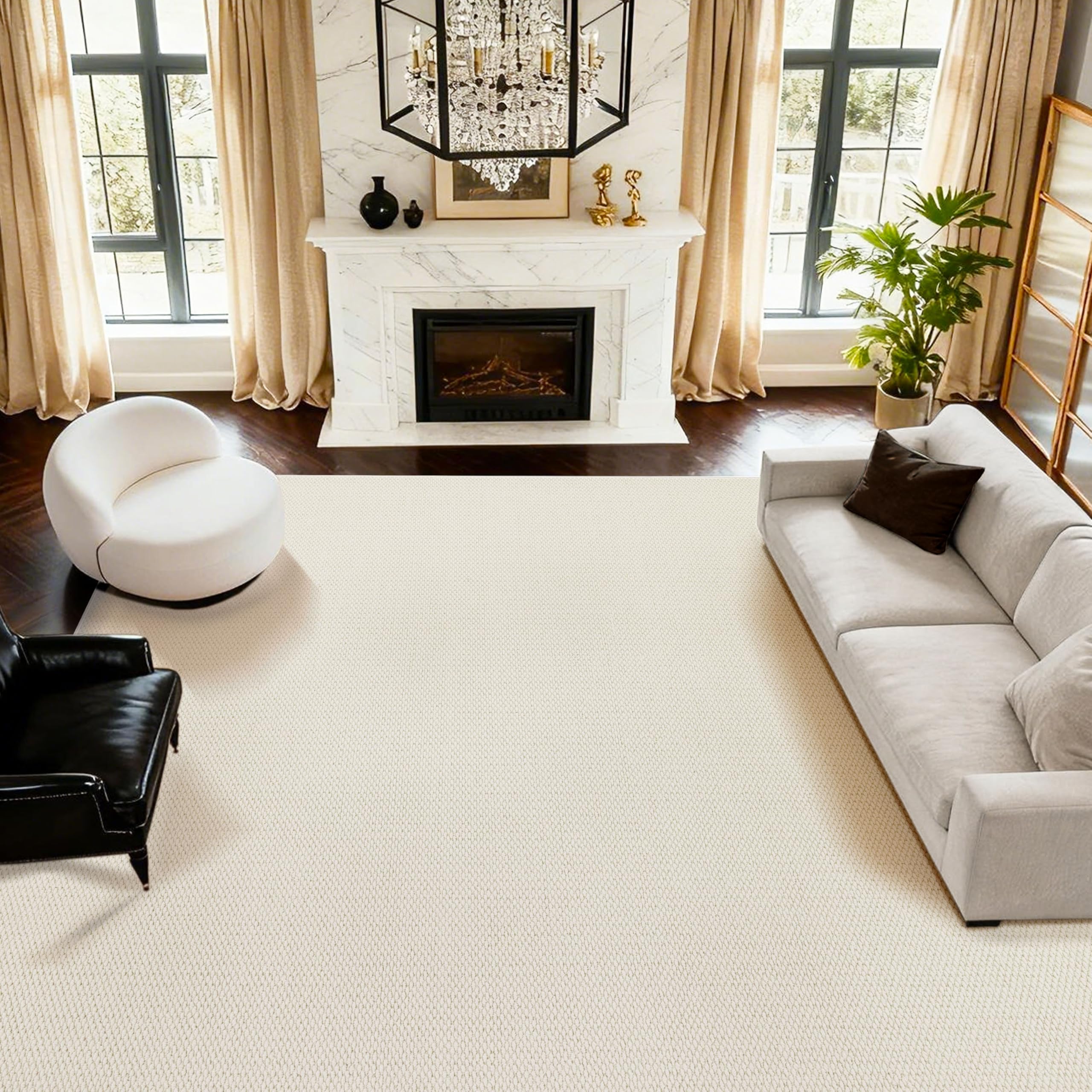
This 8×10 rug delivers the softest underfoot experience on this list thanks to its 15-to-20-micron Merino wool pile. The 80% Merino and 20% organic cotton blend targets the shedding problem that plagues pure-wool rugs — the cotton fibers mechanically bind shorter wool strands into the weave, reducing visible lint after vacuuming. The 100% cotton non-slip backing keeps the rug anchored on hardwood without the crunch or degradation that plagues TPR backings over time.
The breathability advantage of this micron-range Merino matters in living rooms with fluctuating humidity. Wool fibers can absorb up to 30% of their weight in moisture vapor without feeling damp, and the open weave of the tufted construction allows air circulation that discourages dust mite colonization. At 16mm thickness, the pile feels cushioned underfoot without being thick enough to trip the vacuum cleaner beater bar.
Owners report minimal initial shedding that stabilizes within the first three weeks, which is exceptionally low for a high-wool-content rug. The OEKO-TEX certification adds confidence for households with young children who spend time on the floor. For anyone wanting genuine Merino performance at a sub-entry-premium price point, this is the most balanced option available.
Why we love it
- 15-20 micron Merino for superior softness
- Cotton backing eliminates need for separate pad
- OEKO-TEX certified for safety
Good to know
- Limited to cream white color option
- Some shedding expected during break-in period
2. ANSSO 5×7 Wool Rugs for Living Room
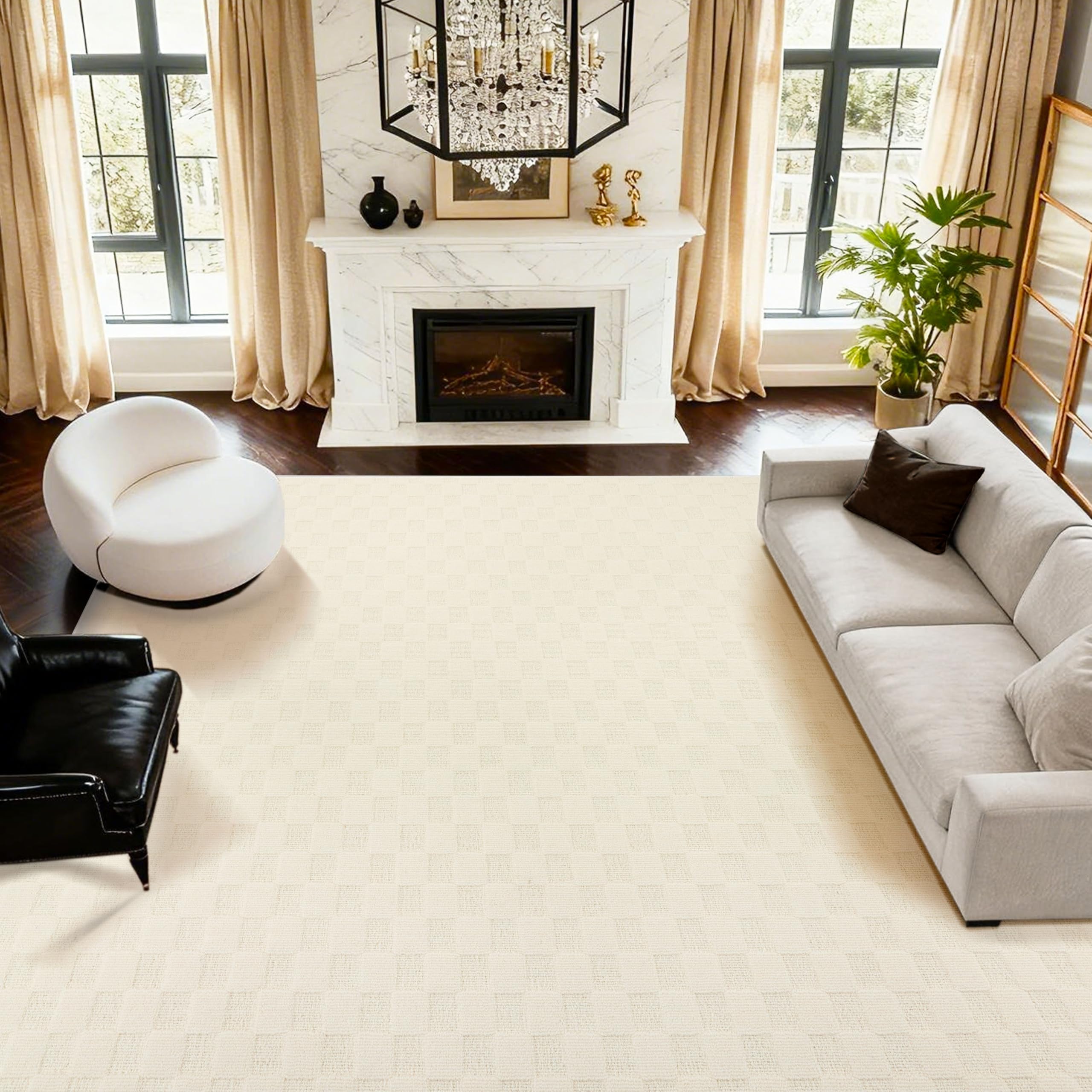
This 5×7 version uses the identical 80% Merino wool and 20% organic cotton construction as the larger model, making it a perfect fit for living rooms where a full 8×10 would overwhelm the space. The 15-to-20-micron fiber diameter delivers that same cloud-like walking sensation, and the 100% cotton backing grips well on hardwood and engineered floors without requiring a separate non-slip pad.
The moisture-wicking capability of this micron-range Merino actively pulls humidity away from the surface, reducing the musty basement smell that can develop under less breathable rugs in rooms with eastern or northern exposure. At 0.62 inches thick, the pile height hits the sweet spot between providing adequate cushion for sitting or lounging and remaining thin enough to lie flat under furniture legs without creating gaps.
Owners consistently note that after the first two weeks of vacuuming twice a week, the shedding drops to near zero — an indicator of the cotton-to-wool ratio working as designed. The solid cream color works well as a neutral base layer for layered rug styling or as a standalone piece in minimalist spaces.
Why we love it
- Identical premium Merino blend as the larger size
- Breathable cotton backing prevents moisture buildup
- Shedding stabilizes faster than pure-wool alternatives
Good to know
- Only available in cream color
- Requires spot cleaning only
3. SAFAVIEH Abstract Collection 9×12 Area Rug
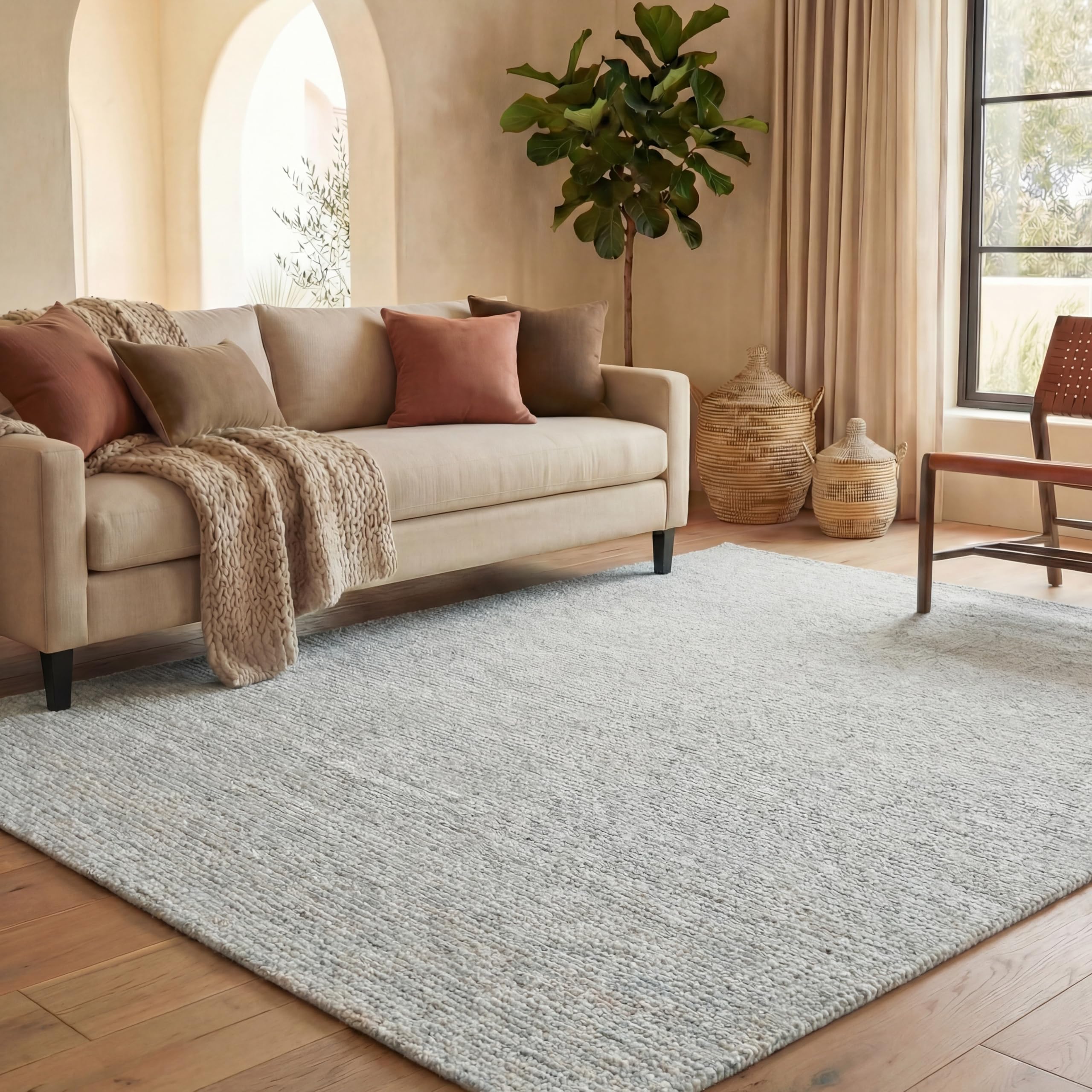
At 65 pounds and 9×12 feet, this is the heaviest rug on this list, and that weight comes from dense hand-tufted 100% wool construction rather than cheap fillers. The 0.3-inch low pile is intentionally short enough to accommodate heavy furniture casters and vacuum cleaner beater bars without pulling or fraying, making it one of the most durable options for a living room that doubles as a family gathering space.
The abstract pattern in light grey and ivory uses yarn-dyed wool fibers, meaning the color is locked into each strand before tufting rather than printed on after weaving. This prevents the fade lines that develop under windows with direct afternoon sun exposure. The latex-containing backing provides a firm foundation that resists curling at the corners, though pairing it with a separate rug pad is still recommended for maximum grip on hardwood.
Owners with pets report that the tight construction resists claw snags far better than looser-weave wool rugs, and vacuuming picks up pet hair without the wool fibers balling up in the brush roll. The initial shedding period lasts slightly longer than cotton-blended alternatives, but the rug’s long-term resilience at this size and price makes it a solid investment for a primary living area.
Why we love it
- Dense hand-tufted 100% wool holds up to pets and furniture
- Yarn-dyed fibers resist sun fading
- Low 0.3-inch pile works with robot vacuums
Good to know
- Requires separate rug pad for slip resistance
- Heavy at 65 pounds — two-person unboxing
4. Allen Home Hand Crafted Wool Rug Nicol Natural 5×8
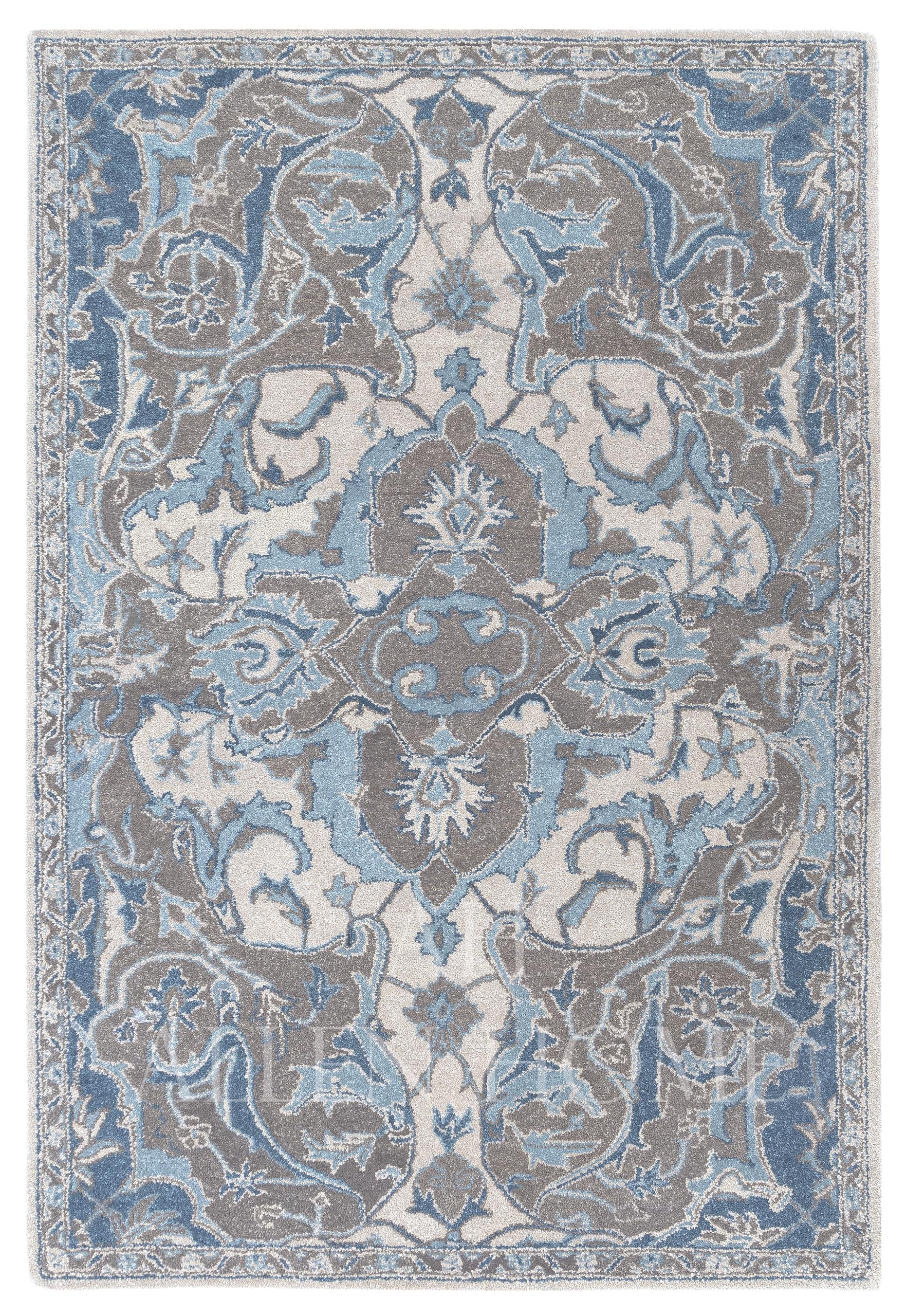
This handcrafted rug uses 100% wool pile with a 100% cotton backing reinforced by natural latex adhesive, creating a traditional construction that has been favored by rug weavers for generations. The 0.4-inch pile height is slightly taller than the SAFAVIEH Abstract rug, providing a noticeably cushier feel underfoot while still maintaining a low profile that doesn’t interfere with door swings or furniture placement.
The yarn-dyed and washed production method gives the Nicol Natural rug a subtle sheen and color depth that machine-made rugs cannot replicate. Because each rug is hand-tufted, buyers should expect up to 5% size variation and 10% color variation between units — this is a feature of artisan production, not a defect. The natural latex backing breathes better than synthetic alternatives, but it does mean the rug needs a well-ventilated area during the first week to allow the initial “new carpet” smell to dissipate.
Owners describe the surface as unusually smooth compared to other hand-tufted wool rugs at this price level, which reduces the likelihood of snagging on socked feet or pet claws. The shedding period is longer than Merino blends — typically four to six weeks of regular vacuuming — but the resulting patina and durability justify the patience for buyers who prioritize traditional craftsmanship.
Why we love it
- Authentic hand-tufted artisan construction
- Yarn-dyed for rich, lasting color
- Smooth surface resists snagging
Good to know
- Natural variation in size and color between units
- Longer initial shedding period than blended options
5. SAFAVIEH Blossom Collection 6×9 Area Rug
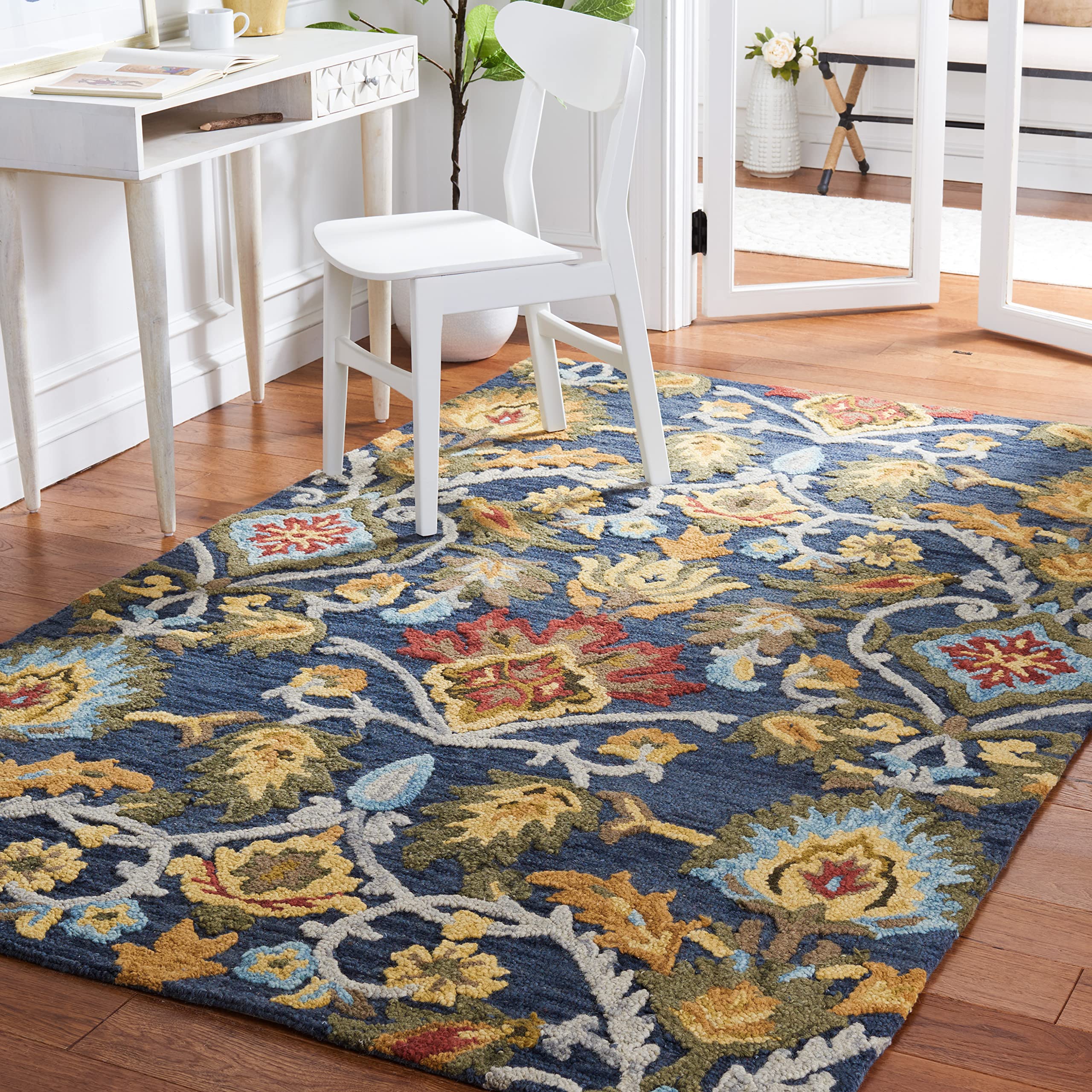
The Blossom Collection brings a decorative floral pattern to the wool rug category without sacrificing construction quality. Hand-tufted from 100% pure wool with a cotton canvas backing, this 6×9 rug weighs 46 pounds — a sign of the dense wool packing that gives it the weight to stay put on its own. The 0.25-inch pile is the shortest on this list, which is actually an advantage for placement under dining tables or in entries where chair legs and foot traffic create repeated friction.
The navy and multi color scheme uses high-contrast wool fibers that hide dirt and debris better than solid light colors, making this rug a practical choice for living rooms adjacent to kitchen or patio doors. The canvas backing allows for better air circulation than rubber-based alternatives, though a rug pad is strongly recommended to prevent the canvas from abrading against the floor finish over time.
Owners report that the floral pattern’s complexity helps mask the normal shearing inconsistencies that occur in hand-tufted production, giving the rug a charming handmade character rather than feeling mass-produced. The shedding is moderate and decreases noticeably after the first month, and the wool’s natural lanolin provides a mild stain resistance that gives you a cleaning window before liquids set in.
Why we love it
- Dense wool construction stays flat without a pad
- Navy pattern hides dirt between cleanings
- Short pile works under dining tables
Good to know
- Canvas backing needs pad to protect floor
- Floral pattern limits styling flexibility
6. S & L Homes 100% Wool Hand Woven Chunky Knit 5×8

This chunky knit rug stands apart from every other product on this list with its handwoven popcorn texture — the individual wool tufts are thick enough to create a three-dimensional surface that adds visual depth and acoustic dampening to a living room. The 80% wool and 20% cotton blend gives it a 0.7-inch pile height that feels like stepping onto a loosely woven blanket, though the open construction means it is best suited for low-traffic living rooms or reading nooks where heavy foot traffic won’t compress the tufts unevenly.
The handwoven nature means each rug has slight variations in tuft spacing and color, making every unit functionally one-of-a-kind. The bohemian aesthetic pairs well with farmhouse and coastal decor, but buyers should note that this rug is not stain-resistant and requires spot cleaning only. The loose weave also means pet claws can catch on individual tufts more easily than on low-pile or tightly tufted alternatives.
The beige color is achieved through natural wool tones rather than dyes, so the color will gradually warm with age as the lanolin oxidizes. Owners who appreciate handmade textiles will enjoy the rug’s character progression over the first year, but those seeking uniform color and low maintenance should look at the low-pile SAFAVIEH options instead.
Why we love it
- Unique chunky knit texture adds acoustic warmth
- Handwoven artisan quality with individual character
- Substantial 0.7-inch pile for cushioning
Good to know
- Not stain resistant — spot clean only
- Loose weave can snag on pet claws
7. palohom 10×12 Washable Faux Wool Rug
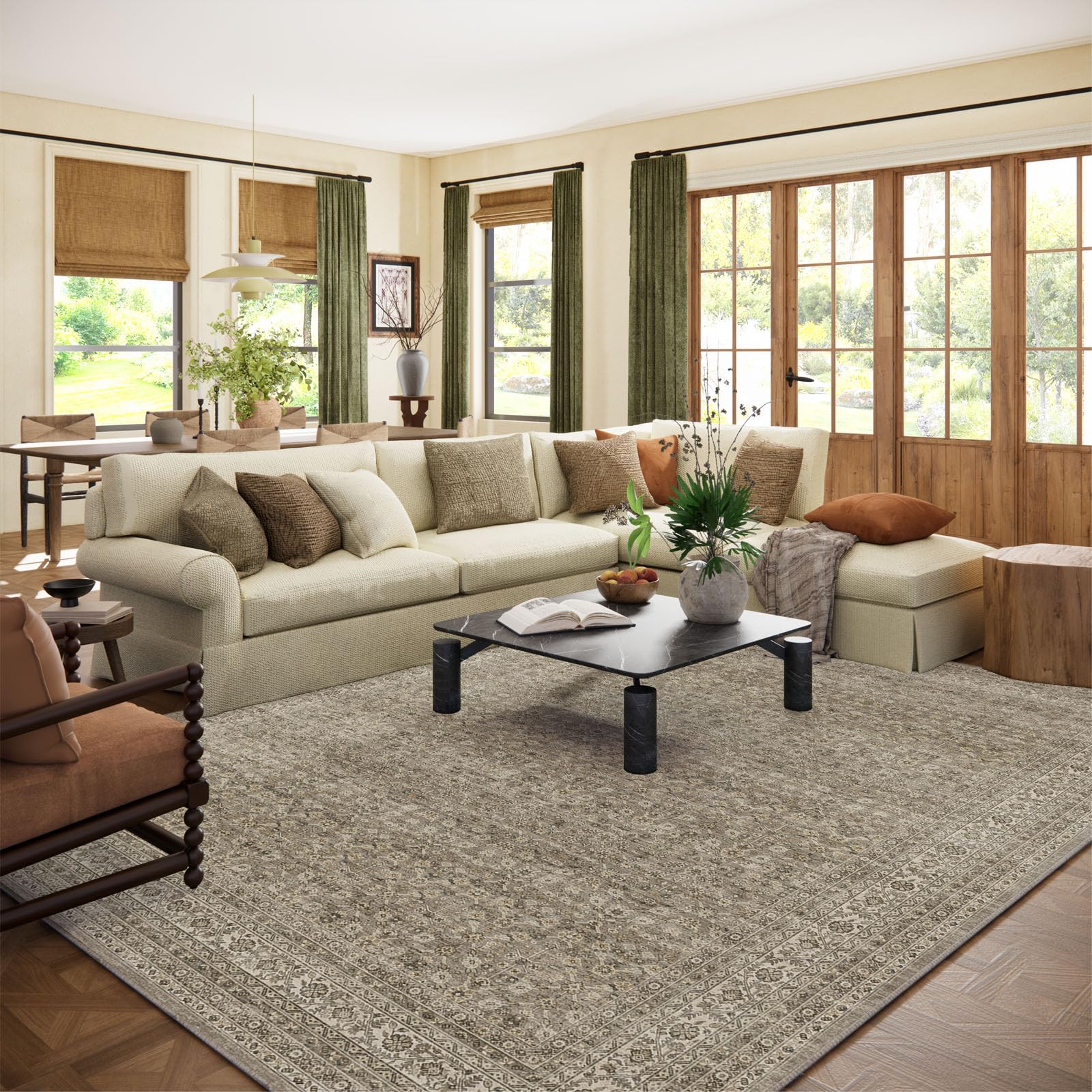
This is not a real wool rug — it is a faux wool rug made from polyester with a TPR rubber backing — but it earns a spot on this list because it addresses the two biggest pain points of genuine wool ownership: washing difficulty and shedding. The machine-washable capability up to a 10×12 size means you can throw this rug into a commercial washer when spills or pet accidents occur, something no real wool rug can survive without felting.
The stain-resistant technology keeps surface liquids beaded on top of the polyester fibers without penetrating, giving you time to blot spills before they cause discoloration. The 0.3-inch low pile is dense enough to feel soft underfoot without collecting debris at the base, and the TPR backing grips hardwood and tile aggressively enough to eliminate the need for a separate pad. The boho distressed pattern in brown, grey, and cream coordinates with most living room color schemes.
The primary trade-off is texture: faux wool lacks the natural crimp and lanolin of real wool, so it will never develop the same patina or breathability. Owners who are committed to natural fibers should skip this entry, but for households with young children or heavy food traffic where washability is non-negotiable, this budget-friendly option outperforms every authentic wool rug in ease of maintenance.
Why we love it
- Fully machine washable at 10×12 size
- Stain-resistant technology prevents liquid penetration
- TPR backing eliminates need for rug pad
Good to know
- Faux wool lacks natural wool’s breathability and patina
- Distressed pattern may not suit modern decor
8. Ruaruarug Washable 9×12 Faux Wool Rug

Similar in concept to the palohom entry, this Ruaruarug model uses a flame-retardant faux wool linen fabric laminated to a TPR rubber backing. The key differentiator is the dark grey color and slightly thinner 0.23-inch pile height, which makes this rug even lower-profile for placement under furniture with limited clearance. The five-wire high-density stitching reinforces the seams to prevent edge fraying in high-traffic pathways.
The machine-washable capability works at the 9×12 size, though the manufacturer notes that temporary wrinkling from packaging is normal and typically resolves within two days of laying flat. The TPR backing is the same upgraded type used in the palohom rug, providing reliable grip on smooth flooring without the crumble that some budget rubber backings develop after repeated washing cycles.
The flame-retardant label is a genuine safety feature for households with fireplaces or candles in the living room, but it comes with the same trade-off as the palohom rug: the synthetic fibers cannot replicate the moisture-wicking or temperature-regulating properties of natural wool. Buyers who want the aesthetic of wool without the maintenance burden will find this entry-level option practical, but it will need replacement sooner than any genuine wool rug on this list.
Why we love it
- Flame-retardant material for fireplace rooms
- Extra-thin 0.23-inch pile fits under low furniture
- TPR backing stays grippy after washing
Good to know
- Faux wool won’t develop natural wool patina
- Temporary packaging wrinkles need time to flatten
9. Loloi Magnolia Home Pace 7’10” x 10′ Rug
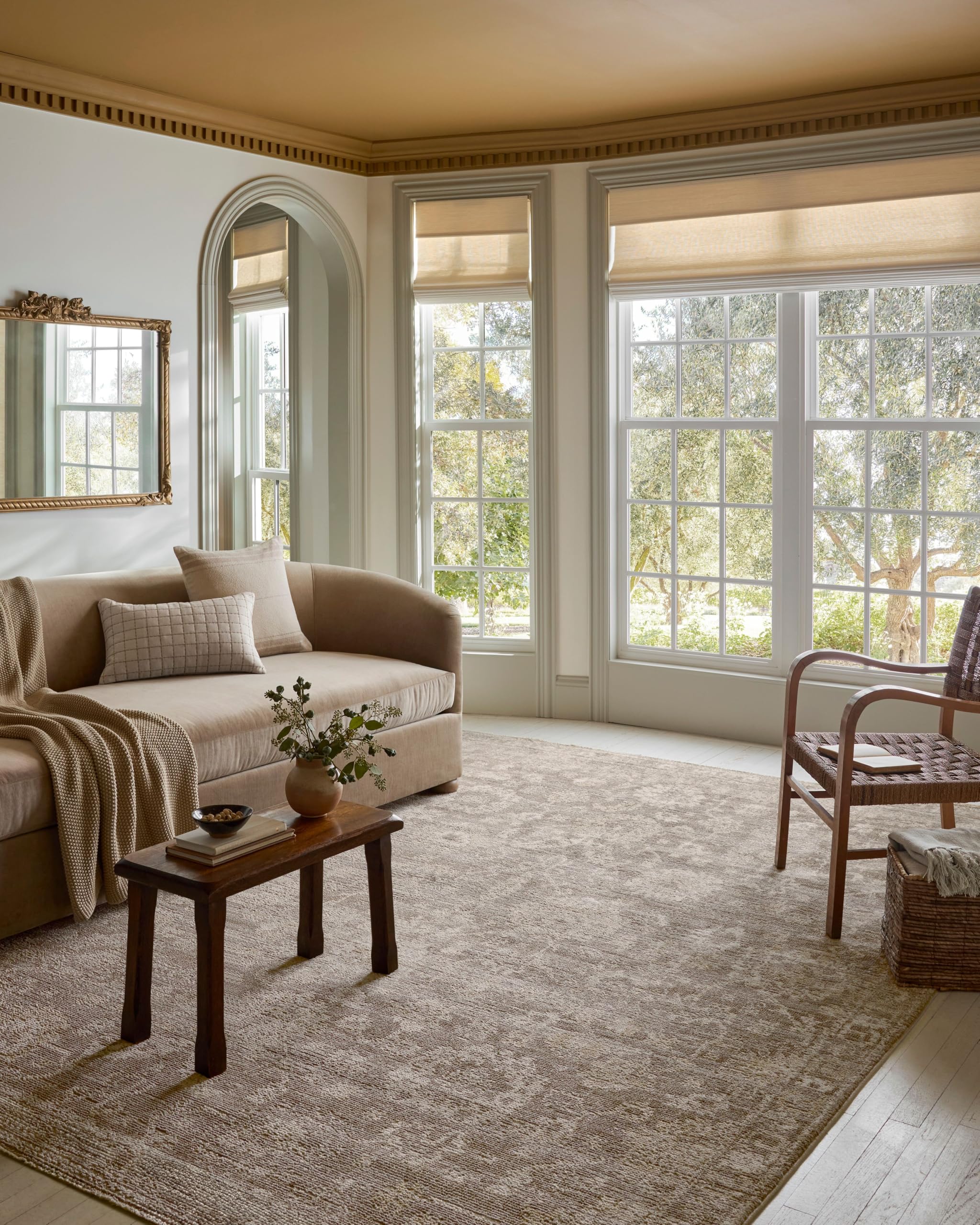
This Joanna Gaines collaboration rug is made from polypropylene and polyester, not wool, but its design influence on the mid-range wool rug market is significant enough to warrant inclusion. The Pace collection uses a power-loomed construction in Turkey that produces a consistent low-pile surface with zero shedding — the benefit of synthetic fibers that real wool cannot match. The taupe and wheat color palette exemplifies the neutral trend that many wool rug manufacturers are now adopting.
The stain resistance is inherent to the polypropylene fibers, which are solution-dyed to lock color into the material rather than applying it as a coating. This means bleach-based cleaners and direct sunlight won’t cause the color to fade or shift, unlike natural wool which can yellow from bleach exposure and fade under UV. The 2.5-pound weight for this 7’10” x 10′ rug confirms it is lightweight and easy to reposition for seasonal decor changes.
The trade-off is that the synthetic fibers lack the natural lanolin coating that gives wool its self-cleaning ability and dirt resistance. This rug will require more frequent vacuuming to look fresh, and the polyester backing uses vinyl that can trap humidity underneath in damp climates. Buyers who prioritize designer name aesthetics over natural fiber performance will appreciate the zero-shedding maintenance, but for sustainable home decor, the entry-level wool options above offer better long-term value.
Why we love it
- Zero shedding from synthetic fibers
- Solution-dyed colors resist sun and bleach fading
- Lightweight for easy seasonal rotation
Good to know
- Synthetic fibers lack wool’s self-cleaning lanolin
- Vinyl backing can trap moisture in damp climates
FAQ
How long does it take for a wool rug to stop shedding?
Can I use a rug pad with a TPR-backed wool rug?
Why does my new wool rug smell like sheep?
Are faux wool rugs safe for households with allergies?
Final Thoughts: The Verdict
For most living rooms, the best wool rugs for living room winner is the ANSSO 8×10 because its 15-to-20-micron Merino wool blend delivers genuine softness and breathability while the cotton backing eliminates the need for a separate pad — all without the price premium of designer brands. If you want a hand-tufted 100% wool option that withstands heavy foot traffic and pet claws, grab the SAFAVIEH Abstract 9×12. And for households where washability is non-negotiable due to kids or constant spills, nothing beats the machine-washable convenience of the palohom 10×12.