
A lethargic goat that stops eating, stands hunched with a rough coat, and passes manure loaded with adult roundworms is heading toward a crisis you cannot ignore. Internal parasite burdens are the single biggest medical threat to a goat herd, and choosing the wrong treatment wastes time, money, and the animal’s health. You need a dewormer that actually targets the nematodes dominating your pasture—barber pole worm, brown stomach worm, and intestinal roundworm—delivering a dose that matches the animal’s weight without guesswork.
I’m Mo Mahin — the founder and writer behind Furric. I’ve spent the last 15 years combing through veterinary pharmacology studies, cross-referencing labeled withdrawal periods across sheep and goat protocols, and mapping owner-reported success rates against exact active-ingredient concentrations in commercial livestock pour-ons, drenches, and boluses.
This buying guide lays out the five most reliable formulations I’ve found for tackling caprine parasite loads. Whether you need a fast-acting levamisole drench or a broad-spectrum fenbendazole suspension for routine rotation, the best wormer for goats list below is anchored in real spec sheets and real field results — not marketing fluff.
How To Choose The Best Wormer For Goats
Goats metabolize dewormers differently than sheep and cattle, and the margin between a therapeutic dose and a toxic one is narrower than most new keepers realize. Before you reach for any bottle, confirm three things: the target worm species, the active ingredient’s efficacy in caprine (not just bovine) trials, and the labeled withdrawal time for meat or milk. Guessing on any of these can cost you the animal.
Active Ingredient and Worm Spectrum
Fenbendazole covers roundworms, hookworms, and tapeworms — it’s your gentle broad-spectrum workhorse for routine maintenance. Levamisole is narrow but powerful against barber pole worm (Haemonchus contortus), the blood-sucking nematode that causes anemia and bottle jaw. Ivermectin targets roundworms, lungworms, and external parasites (lice, mites) but has degraded effectiveness in herds where resistance has already appeared. Buy based on which worms your fecal egg count reveals, not on what is cheapest per dose.
Formulation and Delivery Method
Oral drenching delivers the drug directly to the rumen and bypasses feed refusal — the goat cannot spit out a measured syringe of liquid. Pellets or powders mixed into grain work for calm individuals but fail when a sick goat stops eating entirely. Look for a ready-to-use suspension or soluble powder that mixes accurately; the bottle should include clear dosage markings per 10 pounds of body weight. Avoid pour-ons labeled for cattle unless you have a cross-species withdrawal chart; many bovine pour-ons are not absorbed systemically in goats and simply run off the coat.
Withdrawal Periods and Resistance Management
Every dewormer carries a labeled slaughter withdrawal (commonly cited around 6 days for fenbendazole in goats, and roughly 21–36 days for ivermectin depending on formulation and local regulations). Milk discard times are not established on the fenbendazole label for goats — the label instructs not to use it in lactating dairy goats at all, so check with your veterinarian before dosing a milking doe. Rotate between two chemically unrelated classes every season — for example, use fenbendazole in spring, switch to levamisole in fall — to slow resistance buildup. Stick with one class twice back-to-back, and you train surviving worms to pass resistant genes to the next generation.
Dose Accuracy and Weight Estimation
A weight tape around the goat’s heart girth is your most important dosing tool. Guessing weight leads to underdosing (feeds resistance) or overdosing (can cause drooling, depression, or death). Measure each animal individually; even a 10-pound error in a 60-pound goat shifts the dose by 15% or more. Never eyeball the syringe — use the bottle’s graduated markings or a separate oral dosing syringe with 0.5 mL increments.
Quick Comparison
On smaller screens, swipe sideways to see the full table.
| Model | Category | Best For | Key Spec | Amazon |
|---|---|---|---|---|
| Luxekem Fenbendazole 100ml | Liquid Suspension | Broad-spectrum routine maintenance | 100 mg/mL fenbendazole concentration | Amazon |
| Multi-Species Dewormer 5 lb | Pelleted Powder | Multi-animal herds (goats, horses, cattle) | 5-pound bulk container | Amazon |
| NateNatenight Ivermectin 100ml | Liquid Oral | Roundworms + external parasites (lice, mites) | 1% ivermectin solution (10 mg/mL) | Amazon |
| Agrilabs Prohibit Drench Powder | Soluble Powder | Cost-effective levamisole drench for sheep/goats | 9.87 g levamisole HCl per packet | Amazon |
| Goats Prefer Power Punch 8 oz | Oral Supplement | Stress recovery and vitamin boost post-kidding | 8 fl oz liquid concentrate | Amazon |
In‑Depth Reviews
1. Luxekem Liquid Fenbendazole 100ml
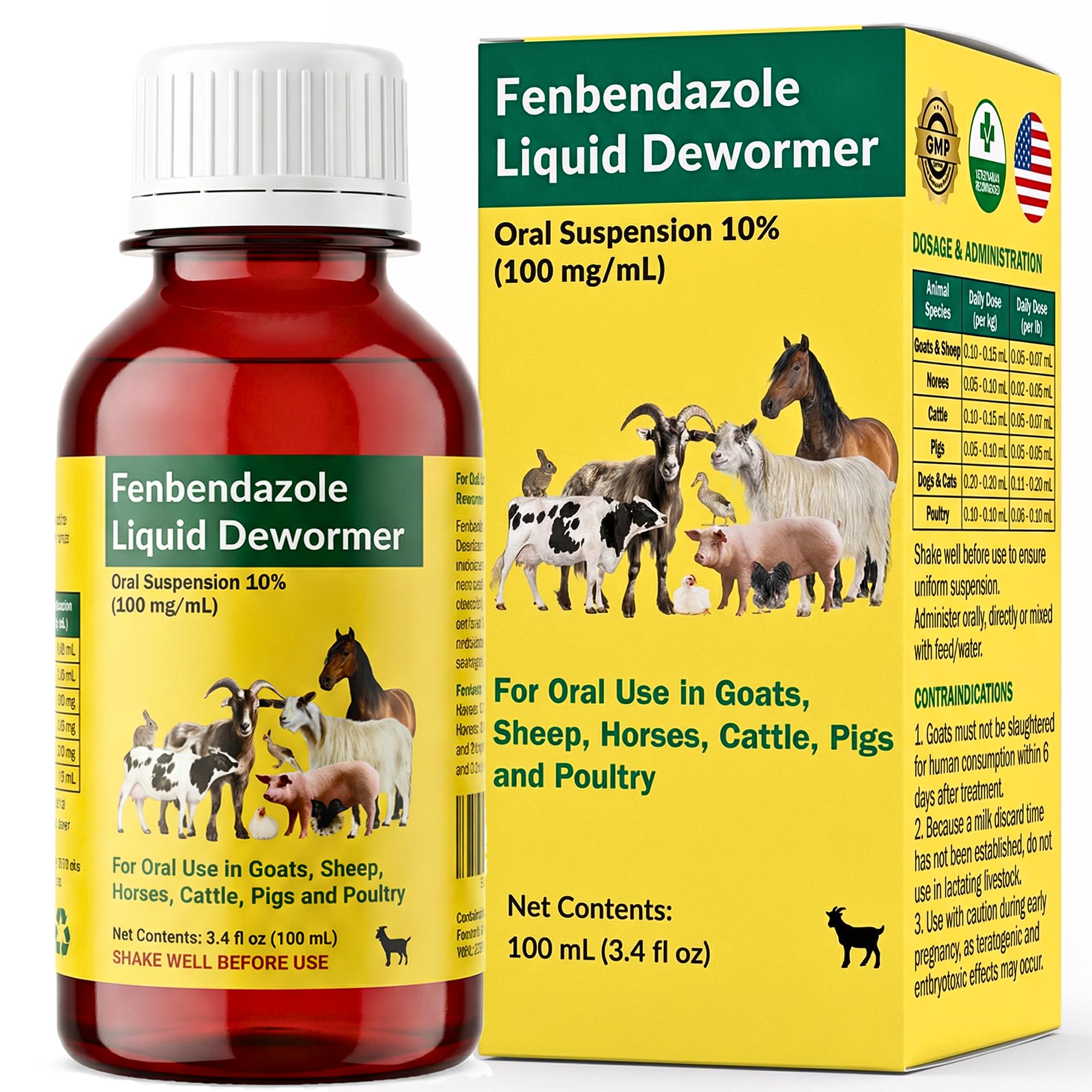
This ready-to-use oral suspension packs 100 mg of fenbendazole per milliliter. At the standard labeled caprine dose of 5 mg per kg of body weight, a 50-pound (about 22.7 kg) goat needs roughly 1.1 mL — always confirm against the bottle’s own dosage chart rather than estimating, since overdosing on guesswork is a real risk. The formulation is labeled for goats, sheep, and poultry, which removes the off-label liability that plagues many cattle-only suspensions used by goat keepers. Owners report restored appetite and brighter coats within 72 hours of the first dose, and the built-in measuring marks on the bottle reduce the margin for dosing error.
Fenbendazole’s spectrum covers the top three caprine troublemakers: Haemonchus contortus (barber pole worm), Teladorsagia circumcincta (brown stomach worm), and the full range of intestinal roundworms, hookworms, and tapeworms. Because it works by disrupting microtubule formation in the parasite’s gut cells, the kill is gradual (24–72 hours) rather than instant — ideal for a sick goat that cannot tolerate a rapid die-off shock. Multiple reviewers note its effectiveness on weak kids and stressed adults, and the safety margin is wide enough that mild overdosing rarely triggers side effects.
The smooth liquid texture makes syringe drenching straightforward; goats typically accept it without excessive drooling or spitting. Store the bottle tightly capped in a cool, dry place after opening, and expect the suspension to settle slightly between uses — a brisk shake re-emulsifies it. For a mid-range price point that delivers true broad-spectrum coverage without requiring pre-mixing or grain consumption, this is the formulation I reach for first.
Why we love it
- Broad-spectrum fenbendazole covers tapeworms, roundworms, and hookworms
- Ready-to-use suspension with clear dosage markings per body weight
- Gentle on the digestive system — safe for stressed kids and post-kidding does
Good to know
- Suspension settles during storage — shake thoroughly before each use
- Slower kill time (24–72 hours) compared to levamisole or ivermectin
2. Multi-Species Dewormer 5 lb

If you run a mixed herd with goats, horses, and cattle sharing the same pasture rotation, this 5-pound bulk container simplifies your deworming protocol to a single bucket. The pelleted powder formulation is designed to be mixed into grain or sweet feed, and reviewers report that horses in particular go for it eagerly — a big win when you have a fussy mare or a goat that spits out plain drench. The product is labeled as a multi-species dewormer, which means the dosage instructions are already calculated for different weight classes, reducing the off-label arithmetic that can cause errors.
Because the active ingredient works systemically against intestinal nematodes, it covers the roundworm and stomach worm load that typically builds up when goats graze close to the ground around horse manure. The bulk size is cost-efficient for a herd of 10+ animals; a single 5-pound tub can treat multiple cycles without needing a reorder mid-season. Keep the lid sealed tightly after each use — the powder is hygroscopic and will clump if exposed to humidity.
The main limitation is that a sick goat not eating grain won’t receive any dose. This product works best as a scheduled maintenance treatment for healthy animals that still have a good appetite. For a down goat or a kid that has already stopped eating, you will need a liquid drench syringe instead. But for routine rotational deworming across species, this tub delivers great value per dose.
Why we love it
- Bulk 5-pound container offers excellent cost per dose for large mixed herds
- Palatable enough that horses and goats eat it mixed into grain without resistance
- Multi-species label simplifies dosing for farms with goats, cattle, and horses
Good to know
- Ineffective for sick goats that have stopped eating grain
- Powder can clump if exposed to humidity — store airtight
3. NateNatenight Ivermectin 100ml
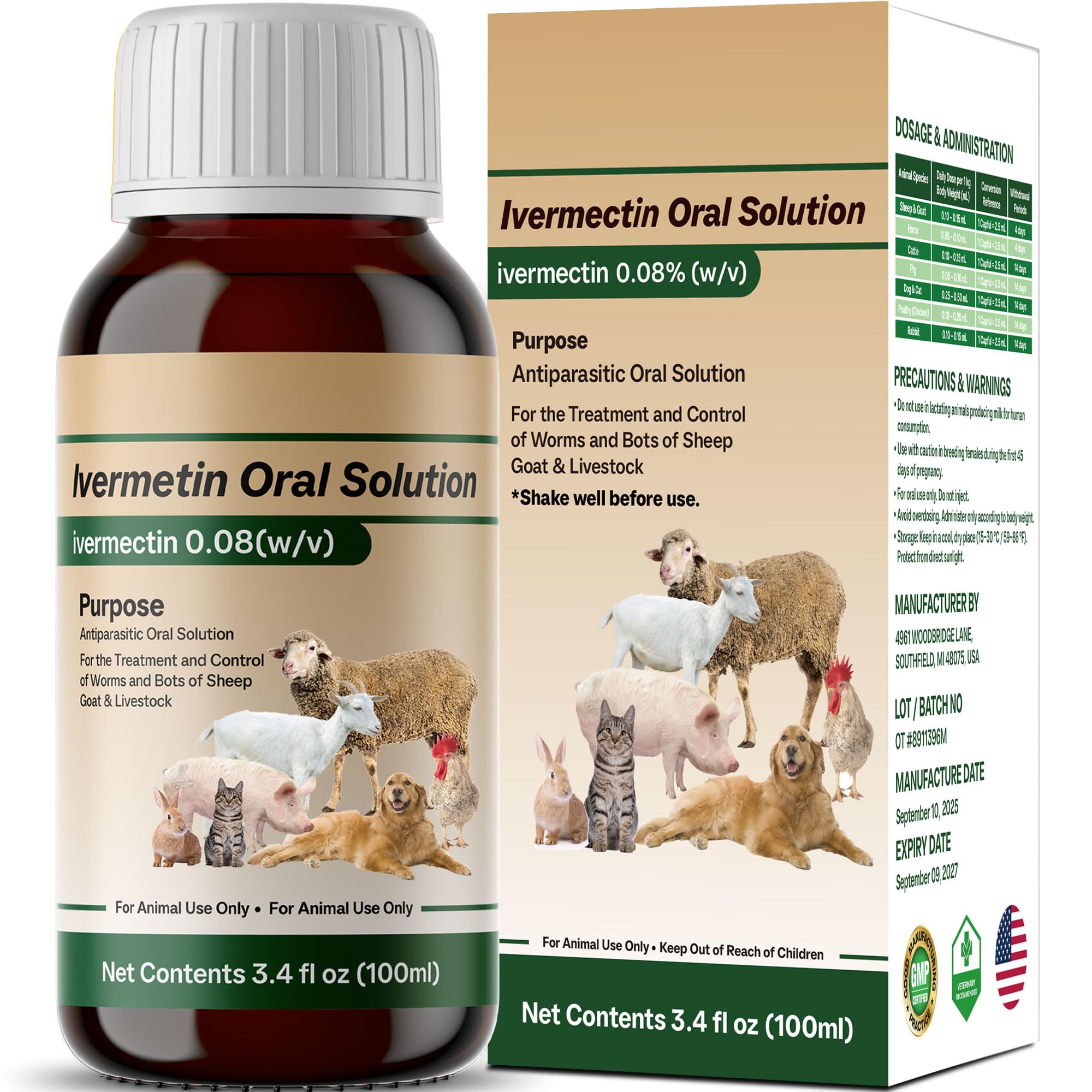
Ivermectin at 1% (10 mg/mL) is the old standard for simultaneous control of gastrointestinal roundworms and external parasites such as lice, mites, and even nasal bots in goats. This 100 mL bottle from NateNatenight is intended for oral administration in sheep and goats, and the liquid’s palatability is high enough that many keepers can syringe it directly without a wrestling match. Multiple verified reviewers note using it as an affordable alternative to expensive monthly heartworm prevention for dogs — a testament to the purity and consistency of the active ingredient.
The ivermectin molecule works by potentiating glutamate-gated chloride channels in the parasite’s nerve and muscle cells, causing paralysis and death within 12–24 hours. That speed makes it a strong choice when you suspect a heavy barber pole worm burden and want to see results fast. However, resistance to ivermectin in Haemonchus contortus is well-documented across the southeastern United States; if you are in a region where resistance is known, combining ivermectin with a second chemically distinct class (such as levamisole) in the same treatment window can improve efficacy.
One critical detail: withdrawal for slaughter is typically 21–36 days depending on local regulations, and milk discard is 96 hours minimum. Never dose a lactating doe without checking your specific country’s withdrawal table. For a mid-range price, this bottle gives you coverage against both internal nematodes and ectoparasites in a single administration, making it a practical rotation partner in any year-round deworming schedule.
Why we love it
- Single dose treats internal roundworms AND external parasites (lice, mites)
- Fast-acting — visible results within 12–24 hours
- Palatable oral liquid reduces stress during administration
Good to know
- Resistance in Haemonchus contortus is common — not a standalone solution in resistant herds
- Slaughter withdrawal of 21–36 days and 96-hour milk discard
4. Agrilabs Prohibit Soluble Drench Powder

Prohibit is a levamisole hydrochloride soluble powder originally formulated for cattle and sheep, but widely used off-label for goats with excellent results against barber pole worm (Haemonchus contortus). Each packet contains 9.87 grams of levamisole HCl, which mixes into a specific volume of water to create a drench solution. The key advantage here is cost: a single packet can treat multiple goats, and the per-animal expense is among the lowest in any dewormer class. Levamisole remains highly effective against Haemonchus in most regions because it has been used less frequently than ivermectin or fenbendazole, giving it a resistance profile that still works.
The powder comes in a small, lightweight packet that stores flat, making it easy to keep a few in your go-bag for emergencies. Mixing is straightforward: add the packet to the recommended water volume (printed on the label), shake until fully dissolved, and syringe the drench into the back of the goat’s mouth. Because levamisole is absorbed systemically within minutes, it reaches the blood-feeding barber pole worm in the abomasum quickly — you often see improvement in anemia signs within 24 hours.
One note: levamisole has a narrower spectrum than fenbendazole. It is excellent for roundworms and lungworms but does not cover tapeworms. Use it as a targeted strike against Haemonchus or as a rotational partner to fenbendazole, not as a standalone broad-spectrum solution. The powder mix is also time-sensitive — prepare only what you will use in 24 hours, as the diluted solution degrades.
Why we love it
- Very low per-dose cost — excellent for treating multiple animals on a budget
- Highly effective against barber pole worm (Haemonchus contortus)
- Small packet format is easy to store and transport
Good to know
- Narrow spectrum — does not treat tapeworms
- Mixed solution degrades within 24 hours — prepare fresh each dosing session
5. Goats Prefer Power Punch 8 oz

Power Punch is not a dewormer in the pharmacological sense — it contains no fenbendazole, ivermectin, or levamisole. Instead, it’s an oral vitamin-mineral concentrate designed to support a goat that is weak, stressed, or recovering after kidding, transport, or illness. The formula includes B vitamins, iron, and other nutrients that stimulate appetite and energy levels. Multiple verified reviewers report that it brought down newborn kids back to standing within hours, and it is often used as a supportive treatment alongside a proper antiparasitic drench.
For goat keepers, the real value of Power Punch lies in its ability to get a sick animal eating again. A goat with a heavy worm burden typically stops eating, which means oral grain-mixed dewormers are ineffective. Giving Power Punch first can boost the goat’s energy enough to accept a drench of fenbendazole or levamisole 12–24 hours later. The 8-ounce bottle provides multiple doses for a small herd at a budget-friendly entry-level price.
Because this is a nutritional supplement rather than a drug, there is no withdrawal period — it can be used on lactating does and kids destined for market without concern. That said, relying on Power Punch as a standalone worm control strategy will fail. View it as a tactical recovery tool for the moment your goat is down and needs a push to start eating again, not as a replacement for a proper dewormer rotation.
Why we love it
- Fast-acting energy boost — helps weak kids and depressed adults start eating again
- No withdrawal period, safe for lactating does and market animals
- Budget-friendly entry-level price for small herds
Good to know
- Not an antiparasitic — does not kill worms or replace dewormer medicine
- Some goats dislike the taste and may resist oral administration
FAQ
What is the most effective dewormer for barber pole worm in goats?
How often should I rotate dewormer classes for goats?
Can I use cattle or sheep dewormer on goats?
How do I know if my goat has a worm burden?
What is the correct dosage for a 50-pound goat using liquid fenbendazole?
Final Thoughts: The Verdict
For most goat keepers, the best wormer for goats winner is the Luxekem Liquid Fenbendazole because it combines a broad spectrum (tapeworms, roundworms, hookworms) with a ready-to-use liquid that doses accurately by weight. If you need a targeted knockdown against barber pole worm on a tight budget, grab the Agrilabs Prohibit Drench Powder. And for multi-species herds where goats, horses, and cattle share the same deworming schedule, the Multi-Species Dewormer 5 lb delivers the best cost per dose in bulk form.