
Choosing the right substrate for your bearded dragon isn’t just about looks — it’s about recreating a slice of their natural Australian outback while keeping them safe from respiratory irritation and gut impaction. The wrong sand can turn a thriving habitat into a health hazard, but the right one supports digging, thermoregulation, and natural behavior.
I’m Mo Mahin — the founder and writer behind Furric. I’ve spent countless hours analyzing veterinary safety standards, evaluating substrate particle sizes, and studying real owner feedback to understand what truly works for desert reptiles.
This guide cuts through the marketing noise to focus on what matters: your dragon’s health and natural behaviors. Drawing on years of reptile husbandry research and community feedback, here is my curated selection of the best sand for bearded dragons for every setup.
How To Choose The Best Sand For Bearded Dragons
Not all sand is created equal. Your dragon’s health depends on choosing a substrate that mimics their natural environment without introducing risks. Here are the three most important factors to evaluate before you buy.
Grain Size and Impaction Risk
Particle size is the single most critical safety factor. Sand that is too fine or too coarse can cause impaction if ingested, especially for young dragons. Look for sand with consistent grains around 1–2 mm that pass through the digestive system safely. Avoid play sand or construction sand with sharp, irregular particles that can cause internal damage. Many keepers also choose to feed their dragons in a separate dish to minimize accidental ingestion.
Calcium Sand vs. Natural Sand
Calcium sand is a popular option because it claims to be digestible, but many reptile veterinarians warn that it can clump inside the gut when exposed to moisture, increasing impaction risk. Natural silica sand or quartz sand does not clump and is less likely to cause blockages. If you prefer a calcium-based option, choose a finely ground variety and monitor your dragon closely. For most keepers, natural sand with a consistent grain size is the safer long-term choice.
Bioactive Substrates for Long-Term Health
Bioactive substrates go beyond plain sand by incorporating organic matter, clay, and beneficial microfauna like springtails and isopods. These systems break down waste naturally, reduce odor, and create a self-cleaning environment. Bioactive setups also support live desert plants, which help maintain humidity levels and provide enrichment. While the upfront cost is higher, bioactive substrates can last for years without replacement, making them a smart investment for dedicated keepers.
Quick Comparison
On smaller screens, swipe sideways to see the full table.
| Model | Type | Best For | Key Feature | Amazon |
|---|---|---|---|---|
| The Bio Dude Terra Sahara | Bioactive | Keepers wanting a self-cleaning ecosystem | Holds burrows and supports live plants | Amazon |
| Josh’s Frogs BioBedding Desert | Bioactive | Enthusiasts who want ready-to-use bioactive mix | Years of use with microfauna support | Amazon |
| Zoo Med Vita-Sand Gobi Gold | Calcium | Owners who prefer vitamin-fortified substrate | Fortified with vitamins and beta carotene | Amazon |
| Zoo Med ReptiSand Desert White | Natural | Budget-conscious keepers wanting natural sand | All-natural, no dyes, excellent heat conduction | Amazon |
| Carib Sea Sunset Gold Sand | Aquarium | Keepers with soft-bellied reptiles or fish | pH neutral, soft grains for sensitive species | Amazon |
In-Depth Reviews
1. The Bio Dude Terra Sahara Bioactive Substrate

The Bio Dude Terra Sahara is the closest thing to a real desert floor that you can pour out of a bag. This precise blend of organic soil, clay, sand, and coconut fiber is engineered to support both your bearded dragon and live desert plants. It holds tunnels and burrows beautifully, which is essential for dragons that love to dig, and it maintains proper aeration and drainage so the substrate never clogs or stagnates. The mix is also bio-balanced, meaning it works with microfauna to break down waste naturally.
What sets this substrate apart is how well it manages moisture without raising humidity. The middle and bottom layers retain just enough water to support plant roots and clean-up crews, while the top layer stays dry and comfortable for your dragon. Users consistently praise how their succulents and cacti thrive in this mix, and the substrate lasts the life of the animal when maintained properly. A long-time leopard gecko owner noted that their pet explored the new setup immediately and that the substrate maintained ideal warm-side temperatures with a heating mat.
If you want a substrate that mimics nature, supports bioactive cycling, and reduces the need for frequent full replacements, this is the one. Keep in mind that the mix contains larger chunks and twigs, so tong-feeding is recommended to minimize impaction risk. For keepers serious about creating a self-sustaining desert habitat, the Terra Sahara delivers on every front.
Why we love it
- Holds burrows and tunnels perfectly for digging dragons
- Supports live desert plants and bioactive microfauna
- Lasts the life of the animal with proper maintenance
Good to know
- Contains larger chunks that may pose impaction risk if ingested
- Requires tong-feeding or a separate feeding dish
2. Josh’s Frogs BioBedding Desert Bioactive Substrate
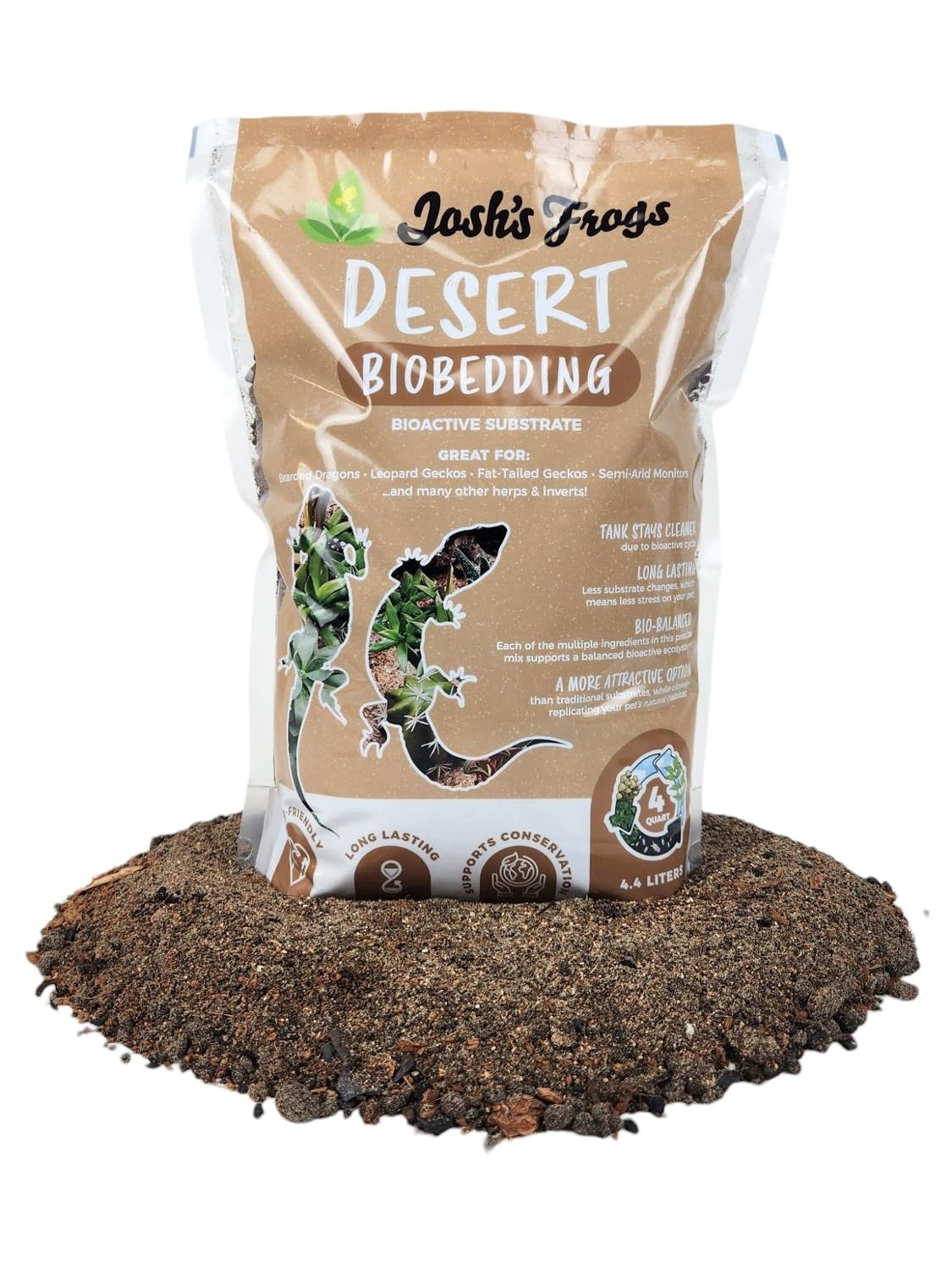
Josh’s Frogs BioBedding Desert takes the guesswork out of building a bioactive enclosure. This ready-to-use mix is formulated specifically for arid environments and works beautifully with springtails and isopods to create a self-cleaning cycle. One of the biggest advantages is that you do not need a separate drainage layer — the substrate itself handles moisture management, which simplifies setup considerably. The texture is soft and holds its structure after digging, so your dragon can burrow without the tunnels collapsing.
The substrate is remarkably dust-free, which is a huge win for respiratory health. A keeper who switched their young leopard gecko to BioBedding noted that their pet loved digging through it and that the substrate kept its shape well. Another user appreciated that isopods thrived in the mix, confirming that the bioactive cycle was functioning correctly. The bag size is modest at 4 quarts, but because the substrate is dense and nutrient-rich, it covers a 20-gallon tank with room to spare. The instructions clearly state not to place a heating pad underneath, as the substrate insulates too well — heat must come from above.
For keepers who want a bioactive system without the hassle of mixing their own ingredients, this is a premium choice. The upfront cost is higher than basic sand, but the years-long lifespan and reduced cleaning requirements make it cost-effective over time. If you value a natural appearance, cleaner environment, and less frequent maintenance, BioBedding Desert is worth every bit of the investment.
Why we love it
- No drainage layer needed — simplifies bioactive setup
- Dust-free texture supports respiratory health
- Holds burrow structure well after digging
Good to know
- Cannot use under-tank heating pads with this substrate
- Smaller bag size may require multiple bags for large enclosures
3. Zoo Med Vita-Sand in Gobi Gold

Zoo Med Vita-Sand in Gobi Gold is a calcium carbonate sand that has been fortified with vitamins and beta carotene to support your reptile’s overall health. The warm gold color looks strikingly natural in a desert terrarium and makes spotting feces easy for quick cleanups. The sand is fine-grained and passes through the digestive system more readily than coarser alternatives, which some keepers prefer for peace of mind. Many long-time users report using this sand for years with sand boas, geckos, and bearded dragons without any health issues.
One aspect that comes up consistently in owner feedback is the fine, powdery texture. A tortoise keeper noted that the sand stuck to their pet’s face and feet after eating and drinking, and described the consistency as similar to cornmeal. Another user mentioned that filling the tank requires a slow, careful pour to avoid creating a dust cloud. On the positive side, the fine grain means the sand is comfortable for burrowing species, and the vitamin fortification adds a nutritional bonus that plain sand cannot offer. A leopard gecko keeper specifically mentioned that their pet preferred this sand over coconut husk and showed more natural digging behavior.
Zoo Med Vita-Sand is a solid mid-range option for keepers who want the benefits of a calcium-based substrate with added nutritional value. The dustiness is worth noting, so take your time during setup and monitor your dragon for any signs of respiratory irritation. If you are comfortable with the fine texture and appreciate the vitamin boost, this Gobi Gold blend delivers reliable performance and a natural desert look.
Why we love it
- Fortified with vitamins and beta carotene for extra nutrition
- Natural Gobi Gold color looks beautiful in desert setups
- Fine grains comfortable for burrowing species
Good to know
- Fine, powdery texture can create dust during setup
- May stick to your dragon’s face after feeding or drinking
4. Zoo Med ReptiSand, Desert White, 10 Pounds

Zoo Med ReptiSand in Desert White is the entry-level gold standard for reptile keepers who want a straightforward, all-natural sand without any additives or dyes. This is pure quartz sand that has been washed and screened to remove fine dust particles, making it safer for your dragon’s respiratory system than many generic play sands. The light tan color — despite the “white” name — creates a bright, natural-looking desert floor that reflects heat well and helps with thermoregulation. The 10-pound bag offers plenty of coverage for a standard 40-gallon tank.
A surprising number of owners actually buy this sand for small mammals like hamsters and gerbils, praising its clumping ability and odor control for urine. Reptile keepers appreciate that the sand stimulates natural digging behavior without introducing artificial colors or chemicals. The grains are consistent in size and free of sharp edges, which reduces the risk of internal damage if small amounts are ingested. Several long-term users noted that their bearded dragons and sand boas dug enthusiastically and that the sand maintained its structure well between cleanings.
For keepers on a tighter budget who still want a reliable, natural sand, Zoo Med ReptiSand is the smart choice. It does not offer the nutritional benefits of a calcium sand or the self-cleaning properties of a bioactive mix, but it delivers exactly what plain sand should: a safe, attractive, and functional substrate. If you are new to bearded dragons or just want a no-fuss sand that works, this Desert White bag is a proven winner.
Why we love it
- All-natural, no dyes or artificial additives
- Excellent heat conductor for basking spots
- Consistent grain size minimizes dust and impaction risk
Good to know
- Color is light tan, not pure white as the name suggests
- No added vitamins or calcium fortification
5. Carib Sea Super Natural Sunset Gold Sand

Carib Sea Super Natural Sunset Gold Sand is primarily marketed for aquariums, but its soft, rounded grains and pH-neutral composition make it a viable option for certain reptile setups. The warm golden hue creates a stunning natural look that mimics the sandy deserts of Australia, and the fine texture is gentle on soft bellies — a feature that aquarium keepers love for their corydoras and turtles. For bearded dragon owners who also maintain planted terrariums or paludariums, this sand bridges the gap between aquatic and terrestrial use.
The biggest caveat with this sand is the initial preparation. Multiple owners emphasize that you must rinse it thoroughly — sometimes for 20 minutes or more — until the water runs completely clear. The dust content straight out of the bag is significant, and skipping this step will leave your tank looking like a dust storm. Once properly cleaned, the sand settles quickly and stays clear, even when your dragon kicks it around. A fish keeper noted that their corydoras loved sifting through the clean sand for food, and the water remained crystal clear after water changes.
This sand is best suited for experienced keepers who are comfortable with the rinsing process and want a budget-friendly substrate with a beautiful finish. It is not designed specifically for reptiles, so you need to be mindful of grain size and dust management. If you are willing to put in the prep work, Sunset Gold Sand delivers a premium aesthetic at a budget-friendly price point. For most bearded dragon setups, however, a dedicated reptile sand will save you time and effort.
Why we love it
- Beautiful natural gold color enhances any terrarium
- Soft, rounded grains safe for sensitive species
- pH neutral so it won’t alter water or substrate chemistry
Good to know
- Requires extensive rinsing to remove dust
- Not specifically formulated for reptile use
Safety & Care Tips
Feed Your Dragon on a Flat Surface
One of the simplest ways to reduce impaction risk is to offer insects and greens on a flat dish or tile rather than directly on the sand. Bearded dragons naturally lick and taste their environment, so leaving food on the substrate increases the chance of accidental ingestion. A separate feeding area keeps your dragon’s mouth away from the sand during meals. This is especially important for juveniles, who are more curious and have smaller digestive tracts.
Spot Clean Daily, Replace Fully When Needed
Scoop out soiled sand as soon as you see it — wet spots, feces, and leftover food should be removed daily to prevent bacterial growth and odor. For non-bioactive sands, a full substrate replacement every one to three months keeps the environment fresh. Bioactive substrates, by contrast, can last for years with proper microfauna populations and only need occasional top-ups. A good rule of thumb: if the sand starts to smell even after spot cleaning, it is time for a full change.
FAQ
Is sand safe for bearded dragons?
How often should I replace the sand in my bearded dragon’s enclosure?
What is the difference between calcium sand and natural sand?
Final Thoughts: The Verdict
For most bearded dragon keepers, the best sand for bearded dragons winner is the The Bio Dude Terra Sahara because it combines natural burrow-holding structure with bioactive self-cleaning properties, creating the healthiest long-term environment. If you want a ready-to-use bioactive mix that skips the drainage layer hassle, grab the Josh’s Frogs BioBedding Desert. And for a budget-friendly natural sand that performs reliably day after day, nothing beats the Zoo Med ReptiSand Desert White.