
The Lhasa Apso is a breed that demands more than just a generic bag of kibble. With their long double coats, moderate energy levels, and a tendency toward picky eating, the structure of the kibble and the quality of the protein source directly impact their digestion, skin health, and coat luster. A food that works for a Labrador will likely fail a Lhasa.
I’m Mo Mahin — the founder and writer behind Furric. I’ve spent years cross-referencing small-breed nutritional requirements with owner-reported outcomes, analyzing ingredient sourcing, and studying how kibble size and shape affect eating behavior in brachycephalic-prone breeds like the Lhasa Apso.
Finding the optimal food for lhasa apso means balancing high-quality animal protein with a small kibble size that prevents gulping and supports dental health, all while avoiding fillers that trigger skin sensitivities.
How To Choose The Best Food For Lhasa Apso
A Lhasa Apso is not a generic small dog. Their long back, brachycephalic face, and double coat create specific nutritional demands that standard small-breed formulas often address imperfectly. You need to look past the marketing and focus on three decisive factors.
Kibble Size and Shape
A Lhasa Apso’s mouth is narrow, and their teeth are small. Oversized kibble forces them to crunch aggressively or gulp, which can cause choking or gagging. Look for kibble explicitly labeled “Small Breed” or “Small & Mini,” ideally with a rounded shape that fits their bite. The Hill’s Science Diet and Royal Canin lines use specific kibble geometries designed for small jaws.
Protein Quality and Fat Content
Lhasas are moderately active but prone to weight gain if fed high-fat diets. You want a protein-to-fat ratio around 26–30% protein and 12–16% fat. Real meat as the first ingredient is non-negotiable, but avoid formulas with excessive rendered fat or unnamed animal meals. The Blue Buffalo Wilderness line delivers high protein for muscle maintenance, while the Purina Pro Plan balances protein with probiotics for digestive stability.
Grain Inclusion vs. Grain-Free
Many Lhasa owners report skin and coat improvements when feeding grain-inclusive recipes that contain oats, brown rice, or quinoa. These grains provide fiber and B vitamins that support coat health without triggering the legume sensitivities some Lhasas develop. The Open Farm Ancient Grains recipe is specifically designed for sensitive stomachs and avoids peas, potatoes, and legumes entirely.
Quick Comparison
On smaller screens, swipe sideways to see the full table.
| Model | Category | Best For | Key Spec | Amazon |
|---|---|---|---|---|
| Hill’s Science Diet Small & Mini | Veterinarian Recommended | Sensitive stomachs & picky eaters | Small kibble (8mm diameter) | Amazon |
| Purina Pro Plan Shredded Blend | Probiotic-Enriched | Digestive health & texture variety | Guaranteed live probiotics | Amazon |
| Royal Canin Small Puppy | Puppy-Specific | Puppy growth & brain development | Kibble designed for 9-22 lb adult weight | Amazon |
| Open Farm Ancient Grains | Premium Traceable | Sensitive skin & coat health | 90% animal protein, traceable ingredients | Amazon |
| Blue Buffalo Wilderness Small Breed | High-Protein | Active small dogs & muscle maintenance | Antioxidant-rich LifeSource Bits | Amazon |
In‑Depth Reviews
1. Hill’s Science Diet Adult 1-6 Small & Mini Dry Dog Food

The Hill’s Science Diet Small & Mini formula is the most frequently recommended food by veterinarians for small-breed digestive health, and the feedback from Lhasa Apso owners backs that up. The 8mm kibble diameter is specifically designed for small jaws, reducing gulping risk while encouraging chewing. Owners of picky Lhasas report that the Chicken & Brown Rice flavor is consistently accepted even by dogs that refuse other premium brands.
Pumpkin is included as a digestible carbohydrate source, which helps regulate stool consistency — a common pain point for Lhasas prone to soft stools during transitions. The protein level sits at approximately 25%, which is adequate for a Lhasa’s moderate activity without overloading the kidneys. The formula uses natural ingredients with no artificial colors or flavors, which aligns with the breed’s tendency toward skin reactions from synthetic additives.
A small but recurring observation from owners is that the kibble can sometimes be too small for older Lhasas who prefer a slightly larger piece to crunch on. However, for puppies and young adults, the size is ideal. The bag also lacks a resealable zipper, so transferring to an airtight container is recommended.
Why we love it
- Small kibble shape perfectly matches Lhasa jaw anatomy
- Pumpkin and easy-to-digest ingredients reduce stomach upset
- Backed by decades of veterinary research and clinical feeding trials
Good to know
- Some senior Lhasas may prefer slightly larger kibble texture
- Bag does not have a resealable closure
- Protein level is moderate, not high-protein
2. Purina Pro Plan Small Breed Shredded Blend Chicken & Rice

The Purina Pro Plan Shredded Blend is engineered with two distinct kibble textures — a dense pellet and a tender shredded piece — which appeals to Lhasas who get bored with uniform kibble. The inclusion of guaranteed live probiotics supports a microbiome that can be disrupted during food transitions, a common frustration for Lhasa owners who switch brands trying to settle digestion.
Real chicken is the first ingredient, delivering a protein level around 26% that supports lean muscle without the high fat content that can trigger pancreatitis in small breeds. The formula is also fortified with omega-6 fatty acids and zinc, both of which contribute to skin barrier function and coat sheen — a crucial consideration for the Lhasa Apso’s long double coat.
One practicality note: the 6-pound bag is relatively small, and for Lhasas weighing 12–18 pounds, it will last approximately 25–30 days. The kibble size is slightly larger than Hill’s Small & Mini, so very small Lhasas under 10 pounds may find the pieces a bit bigger than ideal. Owners of puppies using this formula should monitor chewing behavior closely.
Why we love it
- Dual texture combats picky eating behavior
- Live probiotics support digestive transitions
- Omega-6 and zinc promote healthy skin and coat
Good to know
- Kibble size may be large for Lhasas under 10 pounds
- Small bag size requires frequent repurchasing
- Shredded pieces can create powdery residue at bag bottom
3. Open Farm Ancient Grains Small Breed Dry Dog Food
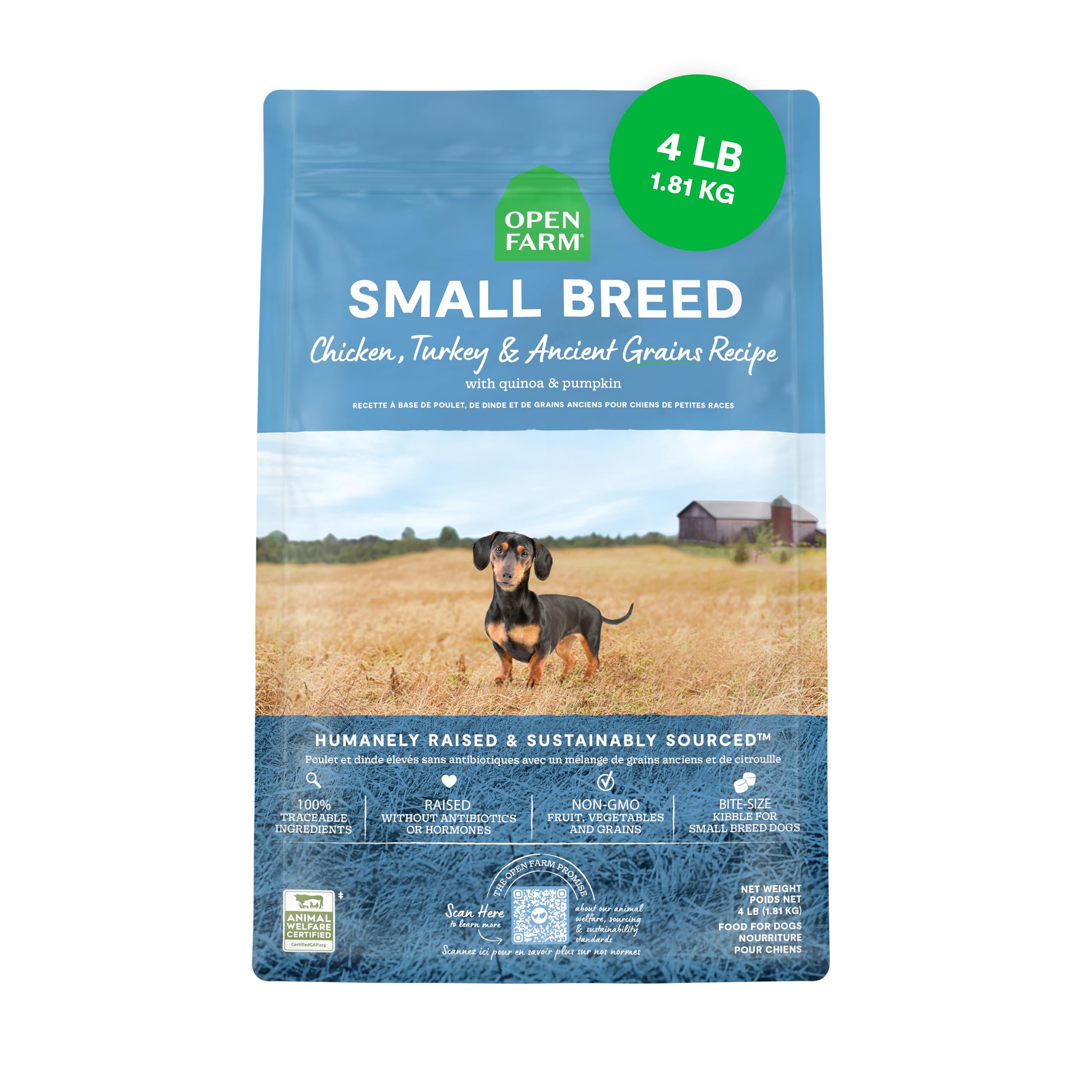
Open Farm’s Ancient Grains recipe stands apart through its ingredient transparency — every component is traceable to its geographic origin, and the formula is 90% animal protein from humanely raised chicken and turkey. This is critical for Lhasa Apso owners who suspect their dog has legume or potato sensitivities, as the recipe explicitly avoids peas, potatoes, and legumes.
The inclusion of oats, quinoa, and coconut oil provides a balanced omega-3 to omega-6 ratio that supports the Lhasa’s dense coat from the inside out. Owners frequently report reduced itching and less tear staining within two weeks of switching. The small-breed kibble size is slightly larger than Hill’s but still appropriate for Lhasas weighing over 12 pounds.
The biggest adjustment for owners accustomed to mainstream brands is the price point, which lands in the premium tier. However, the 4-pound bag is dense in calories, so daily feeding portions are smaller than lower-calorie formulas. The bag uses a resealable zipper, which helps maintain freshness for the duration of the bag.
Why we love it
- 100% traceable ingredients for complete transparency
- Legume-free and potato-free for sensitive Lhasas
- Coconut oil and quinoa support coat health and sheen
Good to know
- Premium pricing compared to grocery-store brands
- Small-breed kibble may still be large for Lhasas under 10 pounds
- Transition period of 7–10 days recommended for sensitive stomachs
4. Blue Buffalo Wilderness Small Breed Chicken Recipe

The Blue Buffalo Wilderness Small Breed formula delivers a high-protein profile approximately 34% protein that supports muscle maintenance in active Lhasas without the excessive fat content of some competition-style foods. The first ingredient is deboned chicken, and the inclusion of antioxidant-rich LifeSource Bits provides immune support that is particularly valuable for Lhasas prone to environmental allergies.
Kibble size is appropriately small for the breed, and the formula contains no chicken by-product meals, corn, wheat, or soy. Owners of Morkies and Lhasas with allergy-prone skin have reported reduced scratching and fewer hot spots after switching. The 4.5-pound bag size is convenient for households that rotate proteins or feed small quantities.
A trade-off to acknowledge is that the high protein content may not suit every Lhasa, particularly those with early-stage kidney concerns or senior dogs whose metabolism slows. Additionally, some Lhasas find the LifeSource Bits too hard, leading them to eat around the bits and leave them in the bowl. Crushing the bits before serving can help.
Why we love it
- High protein supports lean muscle and energy levels
- LifeSource Bits deliver antioxidant immune support
- No corn, wheat, soy, or poultry by-product meals
Good to know
- High protein may be unsuitable for senior or kidney-sensitive Lhasas
- LifeSource Bits can be too hard for some picky eaters
- Kibble coating can leave oily residue on bowl
5. Royal Canin Size Health Nutrition Small Puppy Dry Dog Food

The Royal Canin Small Puppy formula is purpose-built for puppies with an expected adult weight between 9 and 22 pounds, which covers the Lhasa Apso’s standard range. The kibble is engineered to be crunchy enough to promote chewing but small enough to fit the jaw structure of a growing Lhasa puppy. The protein level is around 30%, supporting rapid brain development and bone growth.
Prebiotics and highly digestible proteins support the sensitive digestive systems of young Lhasas, who are prone to loose stools during teething or vaccination periods. The formula also contains DHA to support cognitive development, which is relevant for a breed known for its intelligence and occasional stubbornness. Owners consistently report that puppies transition to this food with minimal digestive upset.
The main limitation is that this formula is specifically for puppies 2 to 10 months old. Lhasa Apso owners should plan to transition to an adult formula once growth plates close. The 4-pound bag is also relatively small for a growing puppy’s appetite. Some owners note that the kibble size is so small that puppies inhale it without chewing, so slow-feeder bowls are recommended.
Why we love it
- Kibble geometry designed for small puppy jaws
- DHA supports brain development in intelligent breeds
- Prebiotics and digestible proteins reduce puppy digestive issues
Good to know
- Only suitable for puppies up to 10 months old
- Small kibble encourages gulping without slow-feeder strategies
- Bag size may require frequent repurchasing for growing puppies
FAQ
Should I choose grain-free or grain-inclusive food for my Lhasa Apso?
How much protein does a Lhasa Apso need in their food?
Why does my Lhasa Apso keep refusing to eat certain dog foods?
Can I feed my Lhasa Apso puppy an adult formula?
How do I know if the kibble size is right for my Lhasa Apso?
Final Thoughts: The Verdict
For most Lhasa Apso owners, the food for lhasa apso winner is the Hill’s Science Diet Small & Mini because its precisely sized kibble, balanced protein level, and veterinarian-backed digestibility address the breed’s most common pain points — picky eating, sensitive digestion, and coat maintenance. If you want a premium ingredient traceability that supports sensitive skin, grab the Open Farm Ancient Grains. And for a Lhasa puppy, nothing beats the breed-specific Royal Canin Small Puppy formula.