
Wrens are acrobatic, insect-loving cavity dwellers, not seed-scavenging ground feeders. The wrong feeder either lets bullying squirrels steal the show or fails to deliver the live mealworms these birds actually crave. Getting the right setup means understanding their tiny perching style, their need for cover, and their preference for a single, protected food source.
I’m Mo Mahin — the founder and writer behind Furric. I’ve spent years analyzing Amazon sales data, cross-referencing technical specs like entrance-hole diameters and mesh gauge, and reading thousands of owner reviews to isolate exactly which feeders consistently attract wrens without attracting trouble.
Whether you are setting up a backyard sanctuary or a single station near a brush pile, finding a reliable bird feeder for wrens means prioritizing predator-proof construction, mealworm compatibility, and easy cleaning access above all else.
How To Choose The Best Bird Feeder For Wrens
Wrens are small, active, and prefer to feed close to cover. The ideal feeder is not just about holding seed — it must exclude larger birds and squirrels while offering easy access to high-protein foods like mealworms. Here are the key factors to consider before buying.
Entrance Hole Diameter
Wrens need a hole size around 1-1/8 inches. This is small enough to block starlings, grackles, and larger cavity-nesting birds, yet large enough for a Carolina wren or house wren to enter comfortably. Any hole larger than 1-1/4 inches invites competition and predator access.
Food Type Compatibility
Wrens are insectivores at heart. While they will occasionally eat hulled sunflower chips, their primary attraction is live or dried mealworms. Ensure the feeder you choose can hold mealworms without them falling through large gaps. Mesh-bottom trays or cage-style feeders with fine mesh bowls work best.
Predator Deterrence
Squirrels, chipmunks, and larger birds will raid a wren feeder if given the chance. A cage-style feeder with bars spaced less than 1.5 inches apart physically excludes squirrels. For a nesting box, a predator guard around the entrance hole prevents raccoons or snakes from enlarging the opening.
Cleaning Accessibility
Mold and bacteria build up fast in any feeder, but especially in enclosed wren houses and tube feeders. Look for a design with a removable door, a wide-mouth opening, or a disassemble-friendly body. A feeder you can open and wipe down in under two minutes is far more likely to stay sanitary.
Quick Comparison
On smaller screens, swipe sideways to see the full table.
| Model | Category | Best For | Key Spec | Amazon |
|---|---|---|---|---|
| SEWANTA Squirrel Resistant Cage Feeder | Cage Feeder | Squirrel-proof mealworm feeding | 22 oz capacity, 4 feeding ports | Amazon |
| SISTERBIRD Cedar Nesting Box | Nesting Box | Providing a safe nesting site | 1-1/8 inch entrance hole | Amazon |
| Wildlife Sciences Mesh Mealworm Feeder | Mesh Bowl Feeder | Dedicated mealworm feeding station | 5 x 5 inch mesh bowl | Amazon |
| Gtongoko WPC Platform Feeder | Platform Feeder | Large capacity seed and mealworm tray | 3.5 lbs capacity, 10×10 inch tray | Amazon |
| Metal Wild Bird Feeder | Tube Feeder | Budget-friendly seed feeder | Waterproof and rust-proof build | Amazon |
In‑Depth Reviews
1. SEWANTA Squirrel Resistant Bird Feeder

The SEWANTA cage feeder is purpose-built to solve the single biggest headache for wren enthusiasts: squirrel theft. Its outer cage bars are spaced just wide enough for tiny birds like wrens, chickadees, and goldfinches to slip through, but too narrow for a squirrel’s head or body. The 22-ounce transparent tube holds a generous supply of mealworms or hulled sunflower, and the wide mouth makes refilling fast without spilling.
Construction is where this feeder shines. The steel frame is coated in a rustproof green plastic that holds up against rain and UV exposure without flaking. The top screws on tightly with a locking seal that keeps both squirrels and rainwater out. Four feeding ports are arranged circularly on multiple levels, giving several wrens access at once without aggressive crowding.
Wrens love the security of feeding inside a cage where they are visually shielded. Owners consistently report seeing Carolina wrens and house wrens feeding comfortably while larger birds and squirrels are forced to watch from the outside. The hanging wire loop is thick enough for a 5-foot suspension, keeping it out of reach of jumping rodents.
Why we love it
- Cage design physically excludes squirrels without harming them
- Large 22 oz capacity reduces refill frequency
- Multiple port levels accommodate several birds at once
Good to know
- Only works with small birds — finches and sparrows also fit, but cardinals cannot
- Plastic coating may wear over years of direct sun exposure
2. SISTERBIRD Cedar Wren Bird House
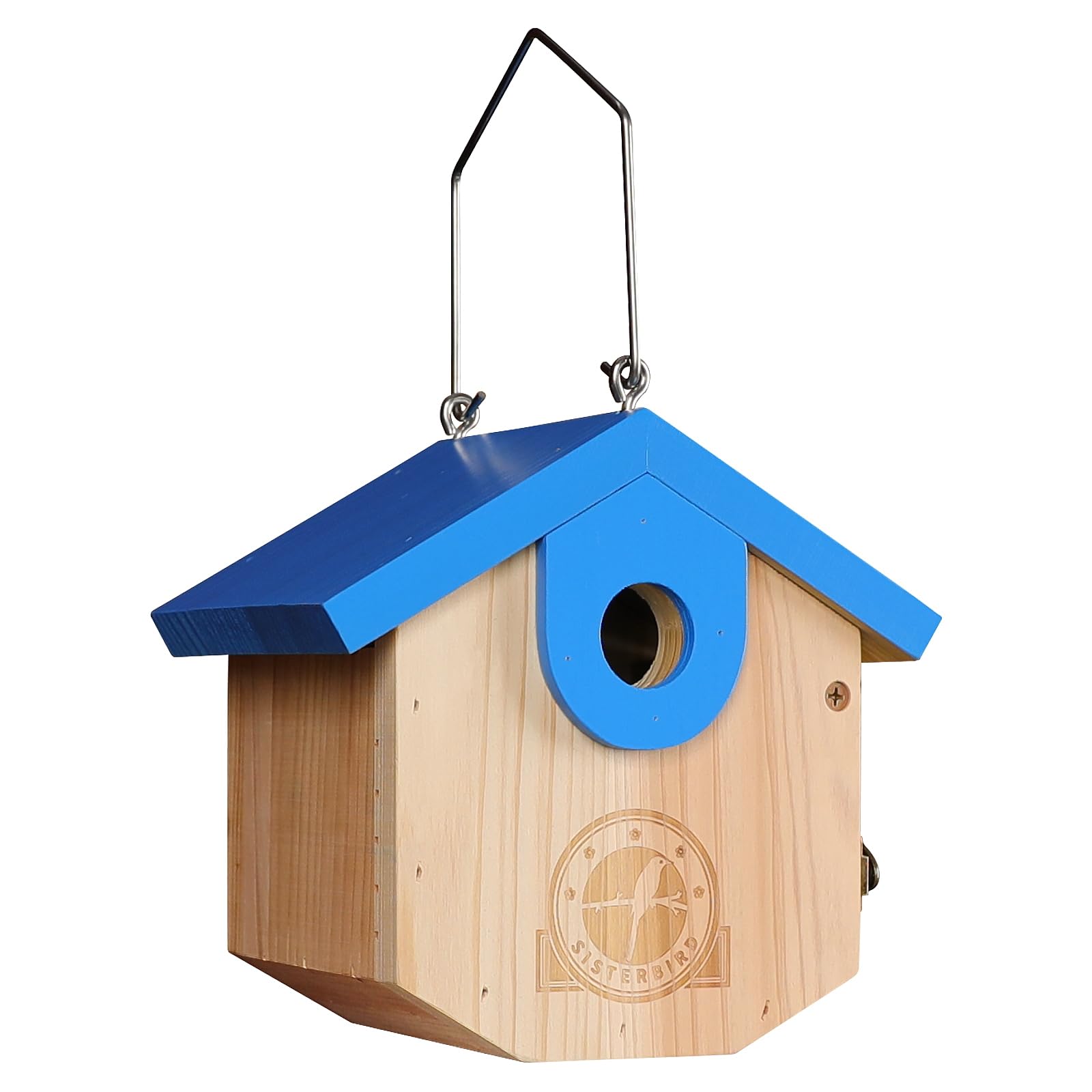
While feeders attract wrens for food, a nesting box keeps them resident. The SISTERBIRD cedar house features a precise 1-1/8 inch entrance hole that is species-specific for wrens, chickadees, titmice, and nuthatches — excluding starlings and larger competitors. The hanging design with a heavy-duty 304 stainless steel hook allows you to place it in a hidden, brush-covered area where wrens naturally prefer to nest.
The build quality is noticeably above average for this price tier. The cedar wood is aromatic and naturally rot-resistant, resisting warping even after rainy seasons. The roof extends over the front face with a sloped design that channels rainwater away from the opening. A metal predator guard encircles the entrance hole, preventing squirrels or raccoons from chewing the wood to enlarge it.
Inside, five fledgling kerfs (grooves) on the wall below the entrance help baby wrens climb up to the exit hole — a feature often missing on cheaper kits. The bottom is shaped into a U-form that imitates a real nest cup, making it more inviting for wrens. The front door opens via a metal latch secured with four screws, giving easy access for seasonal cleaning without risking accidental opening by curious critters.
Why we love it
- Species-specific 1-1/8 inch hole keeps out larger birds
- Cedar construction resists rot and provides natural insulation
- Fledgling kerfs help young birds exit safely
Good to know
- Color received may occasionally differ from the ordered listing
- No external perch is included — wrens do not need one, but some owners add a small dowel
3. Wildlife Sciences Mealworms Bird Feeder

Wrens are insectivores, and a dedicated mealworm feeder is the most direct way to bring them into your yard. The Wildlife Sciences feeder uses a powder-coated mesh bowl that is perfectly sized for dried mealworms — the fine grid prevents the worms from falling through while allowing airflow that keeps the food fresh. The bowl measures 5 inches square and provides enough surface area for several wrens to feed simultaneously.
The adjustable stainless steel roof is the standout feature here. Unlike plastic lids that warp or crack under sun, this metal roof slides up and down the central post, locking in place with a thumbscrew. You can set the roof height to accommodate larger birds like bluebirds or lower it to exclude jays. The roof also shields the mealworms from rain, a critical factor since soaked mealworms mold quickly and become inedible.
Mounting is flexible — the feeder comes with a built-in hanger for suspending from a hook or branch. The all-metal construction (mesh bowl plus stainless roof) is long-lasting and resists raccoon damage far better than plastic. Owners who switch from open trays to this covered mesh design report significantly less waste and fewer visits from starlings.
Why we love it
- Adjustable stainless roof shields mealworms from rain
- Powder-coated mesh prevents mealworms from falling through
- All-metal construction is durable and predator-resistant
Good to know
- Only holds mealworms — not suitable for mixed seed blends
- Stake mount is listed but hook is included; stake sold separately
4. Gtongoko WPC Composite Platform Bird Feeder
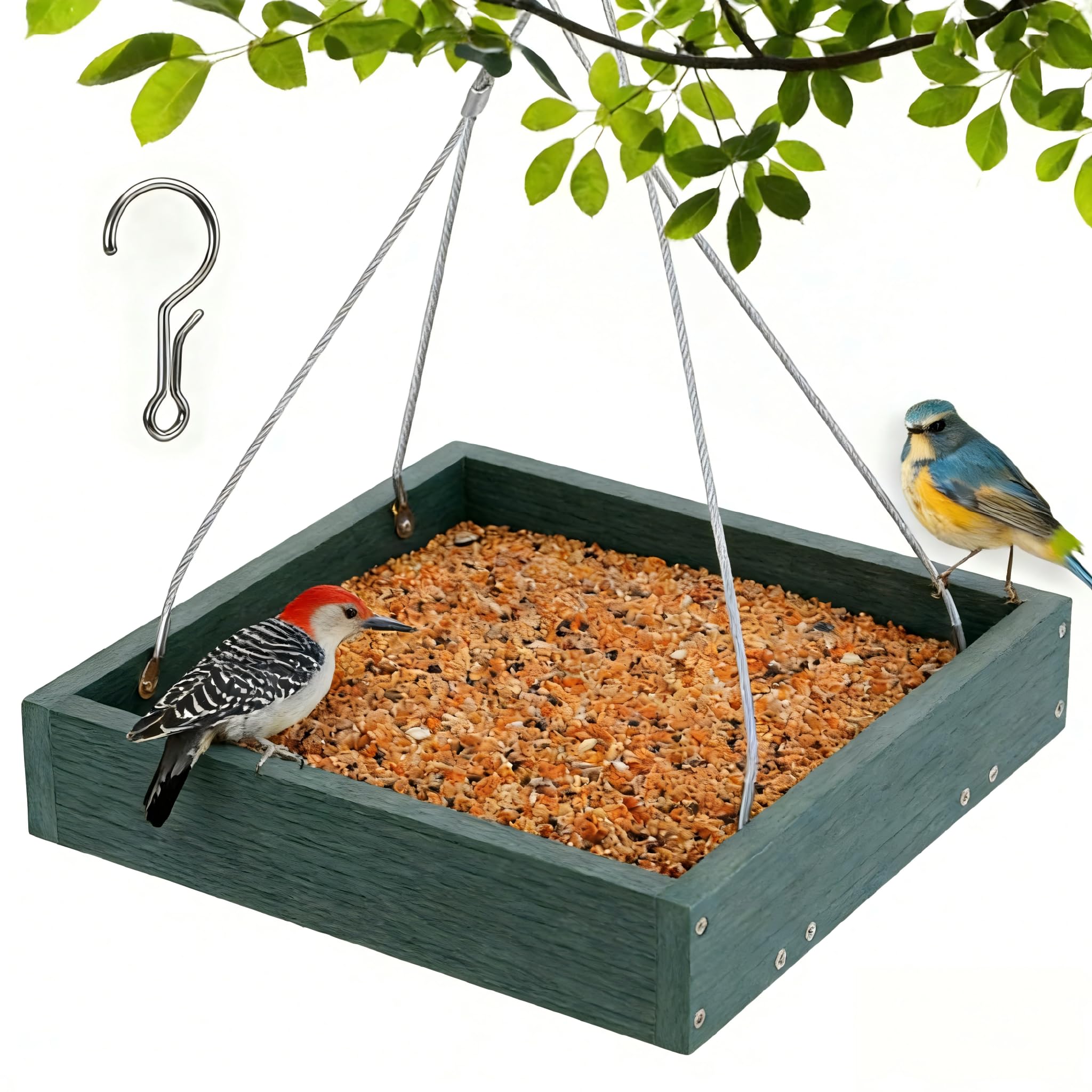
The Gtongoko platform feeder takes a different approach — instead of a cage or tube, it offers a spacious 10-by-10 inch feeding tray that holds up to 3.5 pounds of seed or mealworms. Wrens are ground-feeding birds by nature, and a flat tray suspended at waist height feels natural to them. The wide surface also allows multiple smaller birds to feed without wing-flapping conflict.
What sets this feeder apart is the powder-coated metal mesh bottom. Unlike solid plastic trays that trap moisture, the mesh allows rainwater to drain straight through, keeping the food dry and preventing mold. This design is particularly valuable during wet spring and fall seasons when wrens are most active. The frame is built from recycled WPC (wood-plastic composite) that resists cracking, fading, and warping better than pure wood.
Sturdy braided hanging cables keep the tray level even in gusty wind, and the open design makes cleaning trivial — a quick rinse and wipe restores it. While the lack of a roof means food gets wet during storms, the mesh bottom compensates by ensuring the moisture does not linger. For wren enthusiasts who also attract cardinals, finches, and woodpeckers, this feeder serves as a universal station that welcomes all.
Why we love it
- Metal mesh bottom drains water instantly, preventing seed rot
- Large 3.5 lbs capacity means fewer refills
- Stable hanging cables resist tipping in wind
Good to know
- No cover — food is exposed to rain unless placed under an eave
- Open design attracts larger birds and squirrels if not monitored
5. Metal Wild Bird Feeder
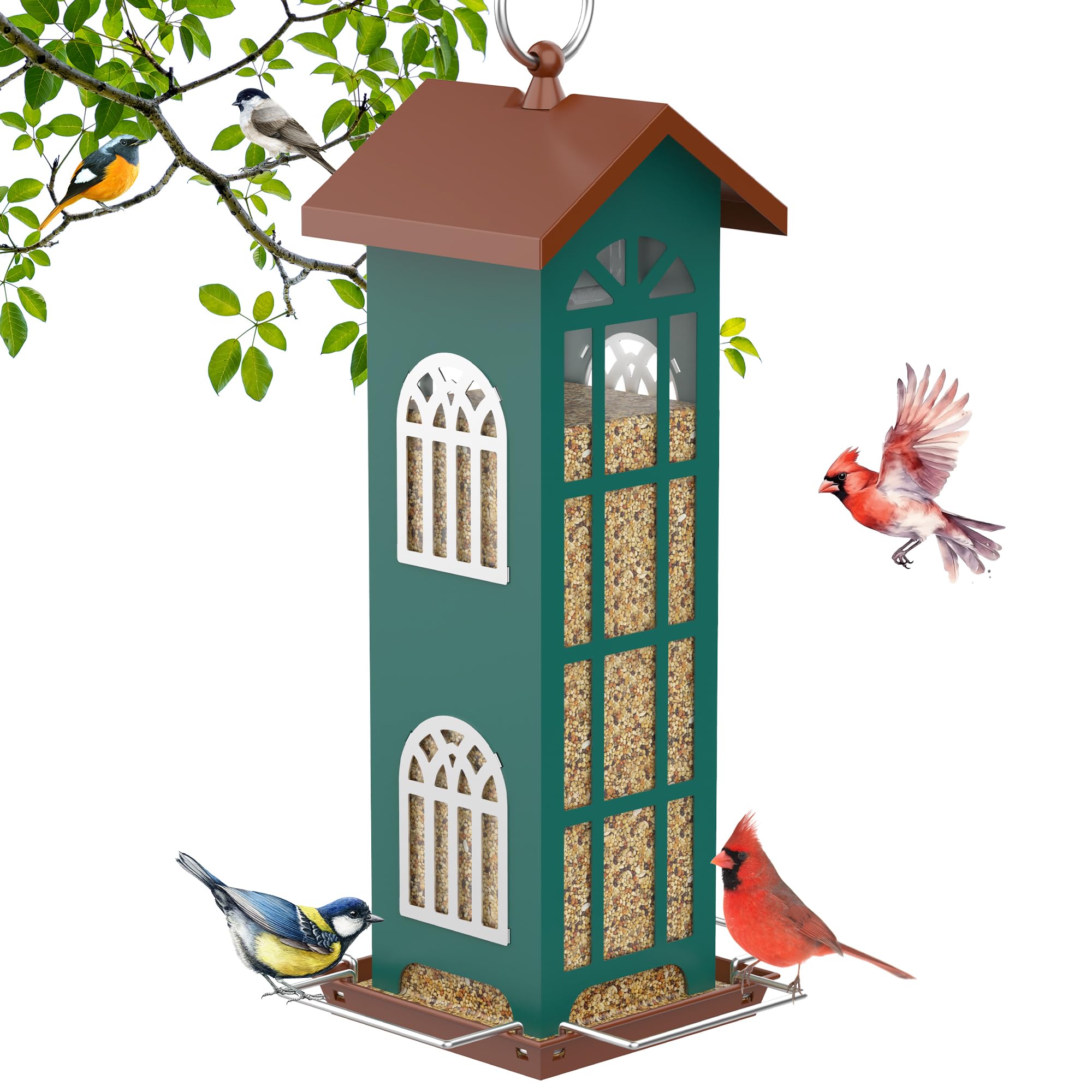
For those looking to start feeding wrens without a major upfront investment, this basic metal tube feeder offers a no-fuss entry point. It is designed to be waterproof and rust-proof, with a metal body that holds up better than clear plastic tubes that yellow and crack after a season. The straightforward hanging design lets you place it anywhere a branch or hook exists.
The real advantage here is cleanability. The feeder disassembles into separate parts — tube, base, and top — making it easy to wipe down every interior surface. Seed buildup and mold are common problems in inexpensive feeders, but the ability to fully separate the components allows a thorough scrub that keeps the food safe for wrens. The perches are made of durable metal that resists chewing from squirrels.
Wrens will use it, but they prefer it when filled with hulled sunflower chips or shelled peanuts rather than large mixed seed. The tube design works best with small seed types; large sunflower seeds get stuck in the ports. It is a solid, affordable option for someone wanting to test if wrens are in the area before upgrading to a specialized mealworm or cage feeder.
Why we love it
- Fully disassembles for thorough cleaning
- Rust-proof metal body outlasts plastic alternatives
- Low cost makes it easy to try wren feeding
Good to know
- No squirrel protection — expect visits from larger birds and squirrels
- Only suited for small seeds; mealworms may fall through ports
FAQ
What is the best food to put in a wren feeder?
Should a wren feeder have a perch?
How high should I hang a wren feeder or house?
Final Thoughts: The Verdict
For most gardeners, the bird feeder for wrens winner is the SEWANTA Squirrel Resistant Cage Feeder because it grants wrens exclusive access to food while physically blocking the squirrels that would otherwise dominate the station. If you want a dedicated nesting site that encourages wrens to stay year-round, grab the SISTERBIRD Cedar Nesting Box. And for a premium mealworm feeding station that keeps food dry and fresh, nothing beats the Wildlife Sciences Mesh Mealworm Feeder.