
Your hands shake. That bird shakes. Even on a calm morning, the image through a typical 12x binocular dances just enough to turn a warbler’s wing pattern into a green blur. Image-stabilized binoculars solve this with internal gyros and actuated prisms that cancel human tremor, turning handheld high-power glass into a tripod-steady experience. If you chase canopy-level warblers, scan marsh edges for rails, or identify distant raptors by subtle field marks, this technology is the single largest performance leap you can make.
I’m Mo Mahin — the founder and writer behind Furric. I’ve spent months comparing the optical paths, stabilization correction angles, and battery-life realities of every image-stabilized model on the market, cross-referencing laboratory specs with hundreds of owner reports to separate the optically sublime from the merely gimmicky.
Whether you need pocket-friendly steadiness for travel or extreme-range resolution for pelagic birding, the best image stabilized binoculars for birding live at the intersection of stabilization authority, glass clarity, and field-friendly weight.
How To Choose The Best Image Stabilized Binoculars For Birding
Choosing an image-stabilized binocular is not like picking traditional glass. The stabilizer mechanism, battery life, and optical path all compete for budget and weight. Here are the critical specs that separate a solid field companion from a paperweight.
Stabilization Type and Correction Angle
Most consumer IS binoculars use a vari-angle prism (Canon, Nikon) or a gimbal-controlled platform (Vixen, Kite Optics). Correction angle — measured in degrees (±2°, ±3°, ±6°) — tells you how much hand shake the system can cancel before the stabilizer hits its mechanical limit. For birding from a standing position, ±2° is sufficient. For use on a moving boat or vehicle, look for ±3° or more.
Exit Pupil and Low-Light Performance
Dividing objective lens diameter by magnification gives you exit pupil. An exit pupil of 3mm or larger provides a bright image in dawn/dusk conditions when many birds are most active. A 2.1mm exit pupil (like a 12×25) forces your eye to align perfectly and delivers a dimmer view in twilight — acceptable for midday birding but limiting in the golden hours.
Battery Life and Power Source
Standard AA batteries are field-friendly — you can swap them at any convenience store. Proprietary rechargeable packs offer better energy density and often longer runtime per charge, but leave you helpless when they die mid-trip. Look at auto-shutoff timers that conserve battery if you forget to power down.
Quick Comparison
On smaller screens, swipe sideways to see the full table.
| Model | Category | Best For | Key Spec | Amazon |
|---|---|---|---|---|
| Canon 12×36 IS III | Mid-Range | Best Overall Balance | +$ stabilization, Porro II, 12x | Amazon |
| Canon 10×30 IS II | Mid-Range | Compact Travel Birding | 14.5mm eye relief, 10x | Amazon |
| SIG SAUER Zulu6 16×42 | Premium | Long-Range & Open Country | 2-mode OIS, HDX glass | Amazon |
| Fujinon TS-X 14×40 | Premium | Extreme Stabilization (±6°) | ±6° correction, EBC coating | Amazon |
| Kite Optics APC 16×42 | Premium | Military-Grade Durability | ±2°/±3° correction, 16x | Amazon |
| Nikon Stabilized 10×25 | Mid-Range | Ultra-Compact Carry | 12-hr AA, 10×25 | Amazon |
| Nikon Stabilized 12×25 | Mid-Range | Pocket-Sized 12x Power | 12-hr AA, 12×25 | Amazon |
| Vixen ATERA II 14×42 | Premium | Two-Mode Gimbal Control | 2-axis gimbal, 30-hr AAA | Amazon |
| ZEISS Conquest HDX 10×42 | Mid-Range | Optical Purity (No IS) | 90% transmission, T* coating | Amazon |
| Vortex Razor UHD 10×42 | Premium | Ultra-High Definition Glass | Index-matched lenses, 10x | Amazon |
| Swarovski NL Pure 10×42 | Premium | Alpha-Tier Optical Experience | Widest FOV, ergonomic | Amazon |
In‑Depth Reviews
1. Canon 12×36 Image Stabilization III Binoculars

The Canon 12×36 IS III occupies the sweet spot of the entire IS binocular market. At 12x magnification with a 36mm objective, it delivers a 3mm exit pupil — bright enough for twilight birding without the bulk and cost of a 42mm platform. The vari-angle prism stabilization engages instantly with one button and cancels hand shake so effectively that the image feels magnetically locked to the horizon.
Doublet field-flattener lenses eliminate the curved-field softness that plagues many stabilized binoculars, giving you tack-sharp warbler plumage across the entire 55.3° apparent field of view. The Porro II prism design delivers outstanding depth and resolution while keeping weight under 740g. Owners consistently report that the stabilization makes a 12x binocular hand-holdable for minutes at a time — something impossible with non-stabilized 12x glass.
Battery life is rated for roughly 15 hours of continuous stabilization on two AA batteries, and the low-reflective exterior prevents glare that would spook skittish birds. The lens caps are sold separately, which feels like a strange omission at this price, but the optical and stabilization performance sets the benchmark that all others chase.
Why we love it
- Class-leading stabilization clarity at 12x
- Exceptional edge-to-edge sharpness from field-flattener
- Light enough for all-day neck carry
Good to know
- Front lens caps not included
- AA batteries drain faster in cold weather
2. SIG SAUER Zulu6 FDE HDX OIS 16x42mm

SIG Sauer’s Zulu6 HDX brings a dual-mode Optical Image Stabilization system that adapts to how you bird. Scan Mode cancels vibration for sweeping ridge-line searches, while Target Mode boosts stability by up to 50% for locking onto a specific bird. The 16x magnification with 42mm objectives yields a 2.63mm exit pupil — adequate in good light but best for open-country species where you need raw reach.
HDX glass lenses improve light transmission and resolution noticeably over standard coatings. The SpectraCoat anti-reflective layers suppress glare when you glass into the sun. At 16x, the field of view is understandably narrow (164 feet at 1000 yards), so you will want a spotting scope-like scanning technique — pick a reference point and let the birds come into frame.
The IPX-7 waterproof rating protects against immersion, and the aluminum housing feels rugged enough for hard-field use. Early adopters rave about the stabilization authority, with some reporting that the Zulu6 outperforms the Fujinon TS-X in fine-detail steadiness. No objective lens covers are included, which is a frustrating oversight at this premium tier.
Why we love it
- Dual stabilization modes for scanning vs. targeting
- HDX glass delivers exceptional resolution
- IPX-7 waterproof for all-weather birding
Good to know
- Narrow FOV requires deliberate scanning technique
- Objective lens covers not included
3. Fujinon Techno-Stabi TS-X 14×40

The Fujinon TS-X 14×40 is the heavy-lifter of image-stabilized birding glass, deploying a ±6° vibration correction angle — three times the correction of most consumer IS models. That headroom makes it the only binocular on this list that feels truly steady on a moving boat deck in chop or from a helicopter seat. The gyro sensor detects the smallest tremor and drives the prism with authority.
Fujinon’s proprietary EBC (Electron Beam Coating) multi-coating controls flare and ghosting while maximizing light transmission through the 40mm objectives. The 2.86mm exit pupil is serviceable in moderate light, but the 13mm eye relief is shorter than competitors — eyeglass wearers will need to press in tight. The fixed-focus design (individual eyepiece adjustment per user) eliminates focus drift but means you cannot quickly refocus on a bird at a different distance.
The nitrogen-purged body is fog-proof, and the rubber armor provides a secure grip in wet conditions. Weighing roughly 850g, it is heavier than the Canon 12×36 but lighter than its bulk suggests. The 4 AA battery configuration delivers long runtime, though replacing four batteries adds cost per field day.
Why we love it
- ±6° correction handles the most severe hand/vehicle shake
- Excellent EBC coating for contrast and flare control
- Nitrogen-purged and fog-proof for all conditions
Good to know
- Fixed focus limits quick distance changes
- Shorter eye relief (13mm) challenges eyeglass users
4. Kite Optics APC Stabilized 16×42
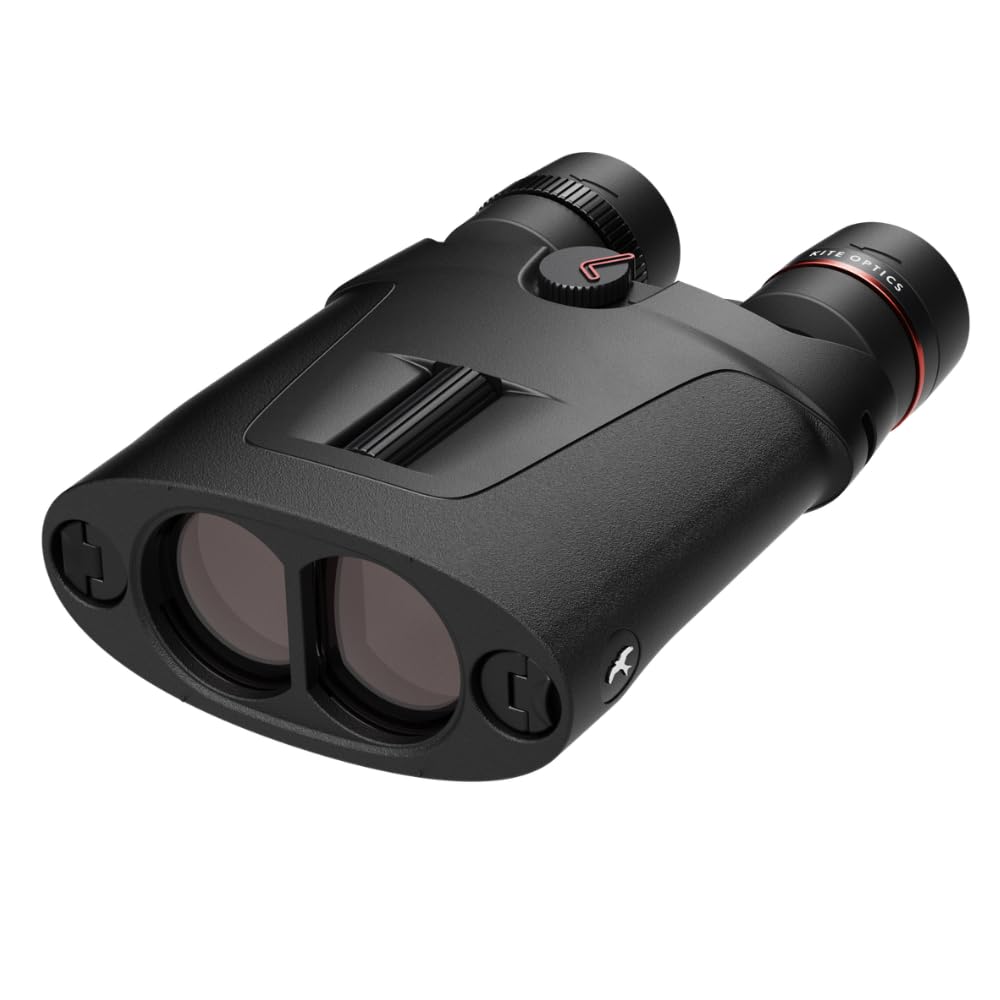
The Kite Optics APC Stabilized 16×42 packs a 2-axis gimbal stabilization system with user-selectable correction modes: ±2° for fine tremor cancellation and ±3° for absorbing larger movements from wind or vehicle vibration. The 42mm roof-prism design paired with 16x magnification delivers serious reach for shorebird scanning or mountain birding.
Optical clarity is strong, with multicoated glass that produces bright, contrasty images in decent light. The exit pupil sits at 2.62mm — typical for a 16×42 — so plan your birding sessions around midday brightness for best results. Field of view is listed at 56°, which is surprisingly wide for a 16x platform.
Weighing just 25 ounces (709g), it is remarkably light for a full-sized stabilized binocular, reducing arm fatigue during long scanning sessions. The IPX7 waterproof rating means it can survive submersion to 1m for 30 minutes. Some users note that the interpupillary distance adjustment uses a dial rather than the traditional barrel-squeeze, which feels awkward at first.
Why we love it
- Dual correction modes adapt to conditions
- Lightweight for a 16×42 stabilized binocular
- Wide apparent FOV for high magnification
Good to know
- IPD adjustment dial takes practice
- 2.62mm exit pupil dims in twilight
5. Canon 10×30 Image Stabilization II Binoculars
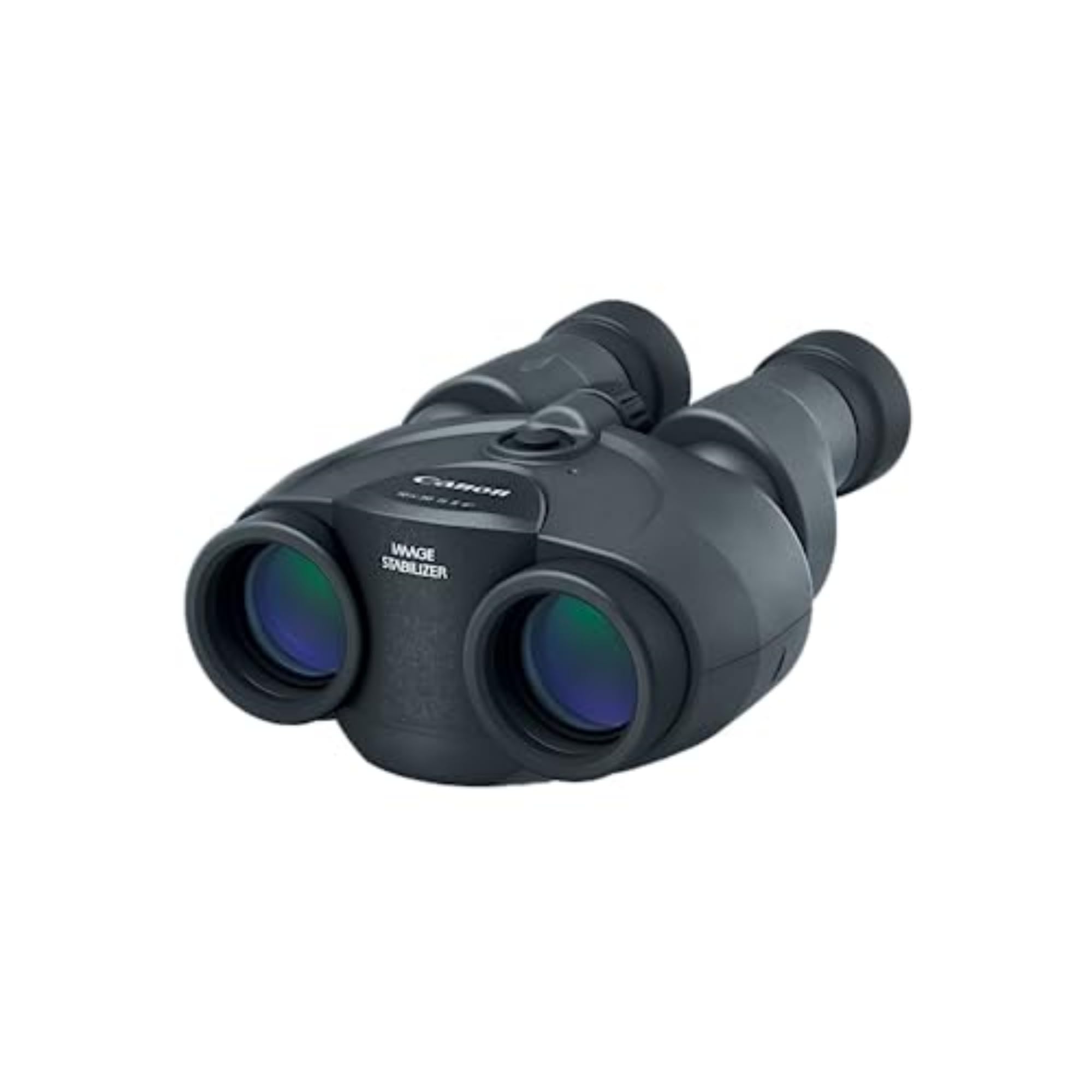
The Canon 10×30 IS II shrinks the stabilization experience into a form factor that slips into a jacket pocket. Ten power is low enough that you could get by without stabilization on a calm day, but the vari-angle prism turns it into a rock-solid 10x that reveals feather detail normally lost to micro-tremors. The 30mm objective yields a 3mm exit pupil — brighter than most compact bins.
Porro II prisms provide excellent depth perception and resolution, while the doublet field-flattener keeps the view sharp across the 60° apparent field of view. The 14.5mm eye relief accommodates eyeglass wearers comfortably. Owners praise the improved power efficiency over the original 10×30 IS, with the II model squeezing roughly 15 hours from two AA batteries.
At 510g, it is light enough for all-day neck carry on a birding trail. The lead-free glass construction is an environmental plus. The main trade-off is the 30mm objective — you lose some low-light gathering power compared to a 36mm or 42mm design, so first-light and dusk birding sessions will feel dimmer.
Why we love it
- Pocketable size with real IS performance
- Excellent eye relief for glasses users
- Lead-free glass and improved battery life
Good to know
- 30mm objective limits twilight brightness
- 10x magnification may feel underwhelming for long-range
6. Nikon STABILIZED 10×25 Binoculars
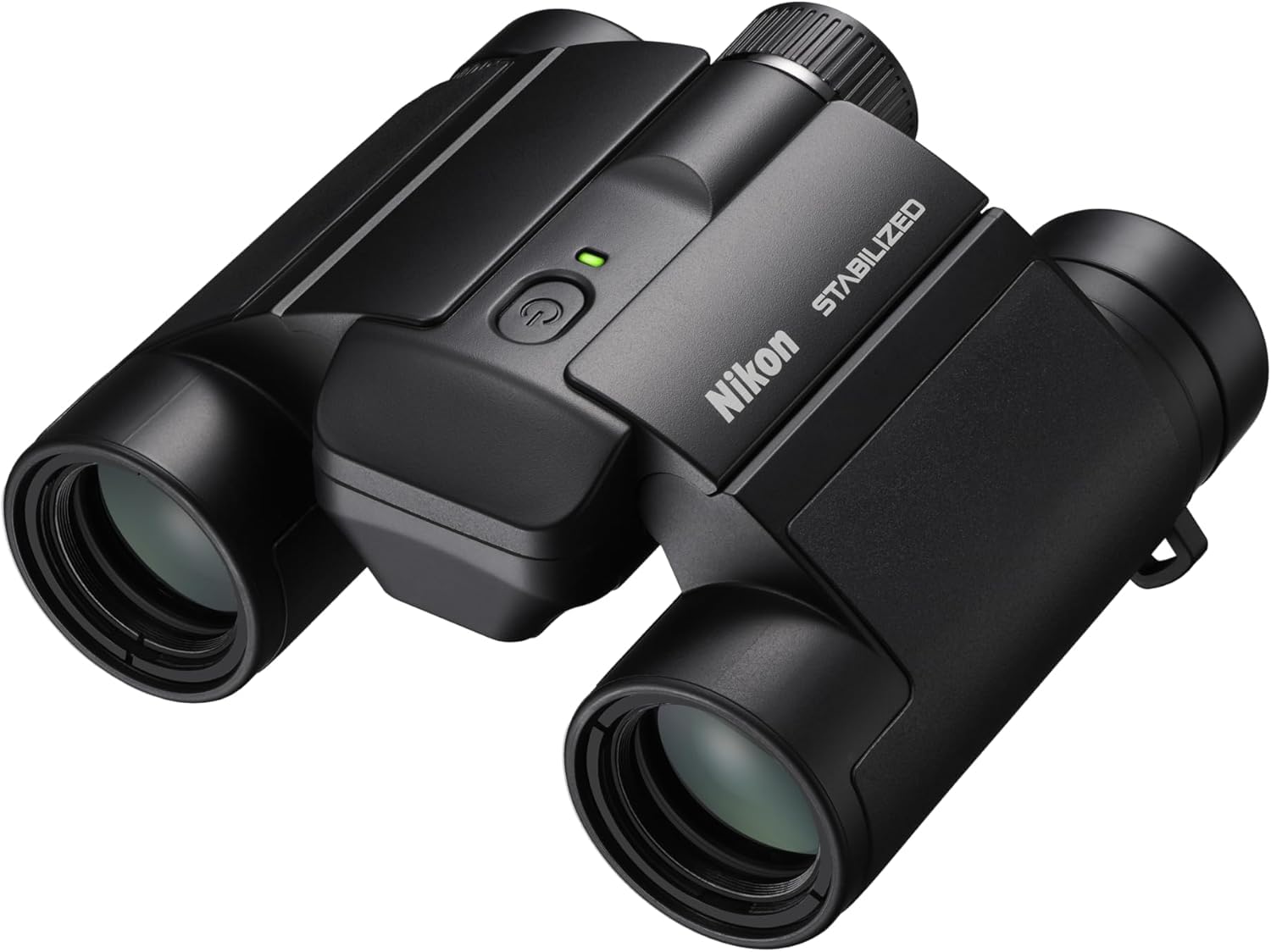
Nikon’s entry into the consumer IS space uses a 10×25 form factor that is barely larger than a deck of cards. The electronic stabilization compensates for natural hand movement effectively at 10x, turning a pocket binocular into a genuinely steady viewing tool. The 2.5mm exit pupil is small, so this is a midday birding companion, not a twilight specialist.
The multicoated lenses with high-reflectivity silver alloy prism coatings deliver sharp colors and decent contrast for the size. The 14mm eye relief is adequate, and the turn-and-slide eyecups provide a comfortable fit. Nikon claims up to 12 hours of operation on standard AA batteries with an automatic shutoff after 60 minutes of inactivity — a thoughtful power-saving feature.
The roof prism design keeps weight low, making these ideal as a backup pair or a first IS binocular for a hiker who wants stabilization without bulk. The 101° apparent field of view is generous for a 10×25. The biggest limitation is the objective lens size — you lose roughly two full stops of light compared to a 30mm or 36mm binocular, so use them where the sun is strong.
Why we love it
- Extremely compact and lightweight
- Auto shutoff prevents battery drain
- Wide apparent FOV for a 25mm objective
Good to know
- 2.5mm exit pupil dims quickly in low light
- 10x is the ceiling — no high-power option in this size
7. Nikon STABILIZED 12×25 Binoculars
The Nikon Stabilized 12×25 is essentially the same body as the 10×25, but with 12x magnification packed into the same tiny chassis. This is the most magnification you will find in a pocket-sized IS binocular. The electronic stabilization works hard to keep the 12x view steady, and it largely succeeds — though the correction is visibly taxed by aggressive shaking.
The trade-off for 12x in a 25mm objective is a very small 2.1mm exit pupil. Your eye must be precisely aligned with the eyepiece to see the full image, and any misalignment creates blackouts. Low-light performance is genuinely poor — these are for bright-sun, open-ground birding only. The multicoated optics with silver alloy prism coatings do their best with available light, but physics is unforgiving.
Battery life matches the 10×25 at up to 12 hours on AA cells. The build quality is the same robust housing with a slip-resistant focus wheel. For a birder who needs 12x reach in a jacket pocket and always birds in good light, this is a unique and compelling option. For anyone who birds dawn/dusk or in forest understory, the dim image will frustrate.
Why we love it
- 12x magnification in a truly pocketable size
- Stabilization works for casual handheld use
- Auto shutoff extends battery life
Good to know
- 2.1mm exit pupil is very dim in low light
- Critical eye alignment required to avoid blackouts
8. Vixen ATERA II 14×42 Anti-Vibration Binoculars

The Vixen ATERA II 14×42 uses a 2-axis gimbal vibration dampening mechanism rather than a vari-angle prism, giving it a unique feel — the image floats rather than snaps still. Two user-selectable modes let you choose V1 for absorbing tiny vibrations (ideal for steady handheld viewing) or V2 for larger, slower movements (such as from a moving car or boat).
The 42mm objective on a 14x package delivers a 3mm exit pupil, making this one of the brighter high-magnification stabilizers in the mid-range category. The three-coat lens system — anti-reflective multi-layer, phase coat on the prisms, and high-reflective coat — produces crisp, bright images with minimal stray light. The 3.8° field of view is narrow but expected at 14x.
Battery life is the standout feature here: approximately 30 hours on two AAA alkaline batteries, tripling the runtime of most competitors. That endurance makes the ATERA II an outstanding choice for multiday birding trips where recharging or battery swaps are inconvenient. The auto power-off prevents accidental drain. The metal enclosure feels solid but adds weight — 559g is reasonable for its size.
Why we love it
- 30-hour AAA battery life is class-leading
- Dual gimbal modes for fine vs. large vibrations
- 3mm exit pupil is bright for 14x
Good to know
- Gimbal system feels different from prism-based IS
- Narrow field of view at 14x
9. ZEISS Conquest HDX 10×42

The ZEISS Conquest HDX 10×42 does not have image stabilization — but its optical quality is so good that it deserves a place in this conversation as the non-IS alternative for purists who prioritize unmediated glass quality over electronics. The 90% light transmission, thanks to ZEISS T* multicoating, delivers some of the brightest, most color-accurate views in the 10×42 class.
The ED glass, aspheric lenses, and FieldFlattener technology combine to produce edge-to-edge sharpness that rivals alpha-tier bins at a lower cost. The 18mm eye relief is generous, and the LotuTec coating causes water to bead up and roll off instantly — a huge advantage in fog or drizzle when a rain-spotted lens ruins the view. The magnesium housing is both lighter and more durable than aluminum.
The locking diopter and removable flip-down lens covers are welcome refinements. The 1.3 rotations on the focus wheel make it fast to acquire birds. If you are certain you want image stabilization, look elsewhere. If you want the best possible non-stabilized image in its price range, this is a serious contender that will outperform many stabilized bins in pure optical clarity.
Why we love it
- 90% light transmission is exceptional for the price
- LotuTec coating repels water and dirt effectively
- ED glass and FieldFlattener for edge-to-edge sharpness
Good to know
- No image stabilization — requires steady hands
- Premium price without electronic assistance
10. Vortex Optics Razor UHD 10×42

The Vortex Razor UHD 10×42 exists at the upper edge of traditional binocular performance without image stabilization. Index-matched lenses correct color across the entire visual spectrum, producing colors that appear saturated and neutral — no red shift, no blue cast. The 4.2mm exit pupil is excellent for low-light work, making it a strong dawn/dusk tool.
The open-hinge magnesium chassis reduces weight while improving ergonomics. The rubber armor provides a secure grip even in wet conditions. Argon purging and O-ring seals guarantee waterproof and fogproof performance for life. The 346-foot field of view at 1000 yards is competitive for a 10×42, offering generous panorama for scanning treelines.
Vortex’s VIP Warranty is unconditional, unlimited, and lifetime — if you break them, they repair or replace them, no questions asked. That guarantee adds tremendous long-term value. The trade-off is straightforward: no stabilization means your hands must be steady or you need a tripod. For birders with rock-solid technique or those who shoot from a rest, the optical purity is hard to beat.
Why we love it
- Color-faithful, low-dispersion UHD optics
- Lifetime VIP warranty is best in industry
- Argon-purged for reliable fog-free performance
Good to know
- No stabilization — best for steady-handed users
- Premium price competes near alpha-bin territory
11. Swarovski NL Pure 10×42
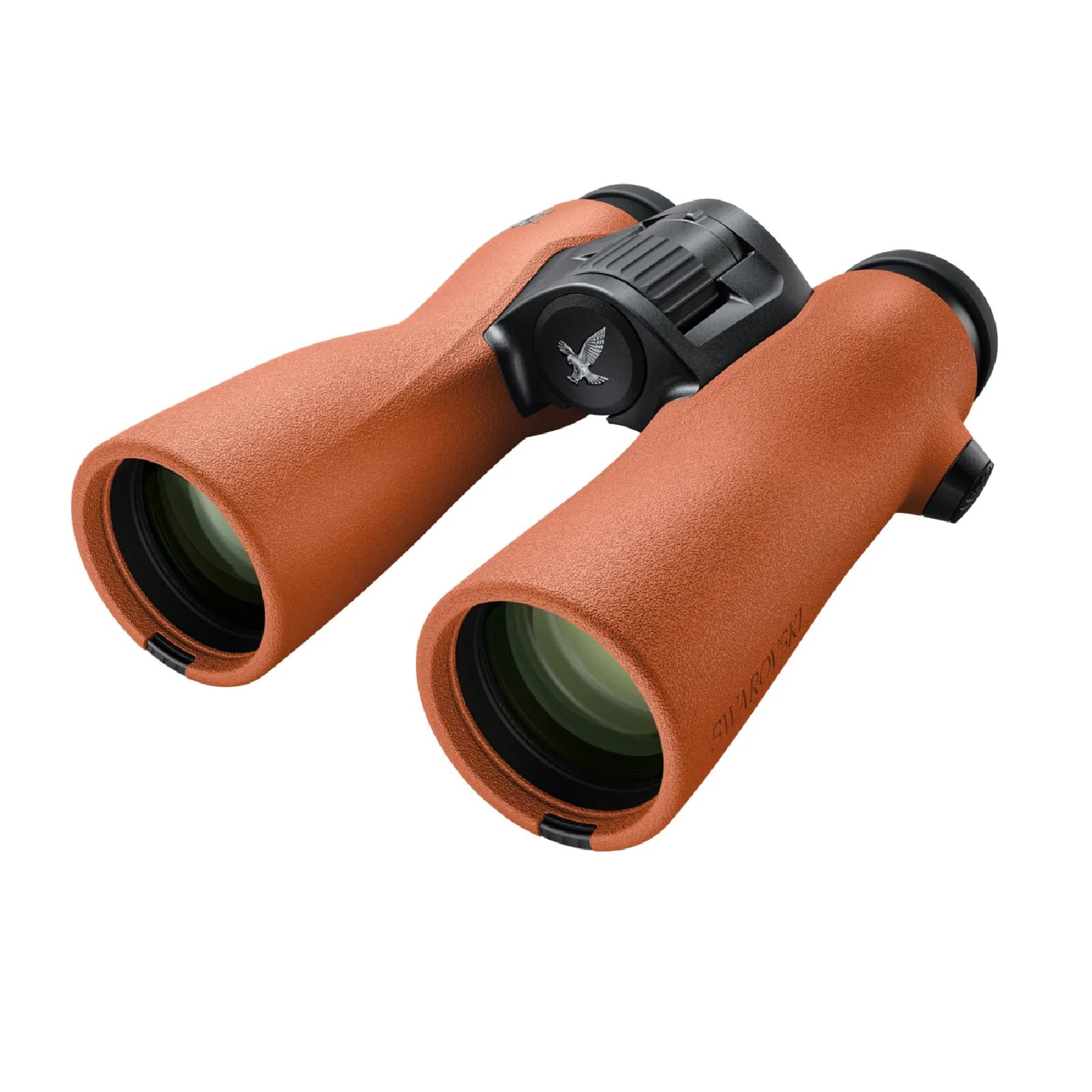
The Swarovski NL Pure 10×42 represents the apex of non-stabilized optical engineering. Its ultra-wide apparent field of view — substantially wider than any other 10×42 binocular — immerses you in the scene, making tracking birds through heavy foliage feel effortless. The burnt orange color option adds distinctiveness, but the real story is in the glass.
The field-flattener system delivers sharpness that is consistent from the center to the very edge of the view. The ergonomic body, combined with the optional headrest accessory (sold separately), allows for hours of hands-free viewing without fatigue. The 4.2mm exit pupil provides excellent low-light brightness, and the multicoated optics produce contrast and color fidelity that set the reference standard.
This is the binocular to buy if budget is secondary to the absolute best non-stabilized viewing experience. Owners consistently report that the combination of wide field and ergonomic balance makes hand-held micro-movements less perceptible than with any other traditional binocular. For birders who want stabilization but refuse to compromise on raw optical excellence, the NL Pure justifies its premium status.
Why we love it
- Class-widest field of view at 10×42
- Perfect edge-to-edge sharpness
- Ergonomic design minimizes hand fatigue
Good to know
- Extremely high cost of entry
- No image stabilization — hand steadiness required
FAQ
What does stabilization correction angle mean for birding binoculars?
Can I use image stabilized binoculars with a tripod?
How does exit pupil size affect my birding experience at dawn?
Are image stabilized binoculars waterproof?
Why would a birder choose a non-stabilized premium binocular over an IS model?
Final Thoughts: The Verdict
For most birders seeking the best balance of stabilization authority, optical clarity, and value, the winner of the best image stabilized binoculars for birding category is the Canon 12×36 IS III because it delivers 12x magnification with a class-leading stabilizer, field-flattener optics, and a bright 3mm exit pupil in a package that weighs under 750g. If you need maximum magnification in a pocketable body, grab the Nikon Stabilized 12×25. And for extreme conditions — pelagic trips, helicopter scanning, or long-range open-country glassing — nothing beats the stabilization authority of the Fujinon TS-X 14×40.