
Walking down the pet aisle of your local supermarket means facing rows of bags and cans promising everything from shiny coats to long lives, yet most labels read like chemistry tests. The real challenge is finding a formula that uses actual meat as the first ingredient, skips the corn and soy fillers, and still fits a reasonable weekly budget for a medium-sized dog.
I’m Mo Mahin — the founder and writer behind Furric. I spend my days comparing pet food ingredient panels, cross-referencing AAFCO nutrient profiles, and analyzing hundreds of verified owner reviews to separate smart supermarket picks from marketing fluff.
After crunching the data on protein percentages, fat content, and real-world digestibility reports, I’ve narrowed down the five most reliable options you can grab on your next grocery run. This is the definitive guide to choosing your next bag of supermarket dog food with clarity and confidence.
How To Choose The Best Supermarket Dog Food
Supermarket dog food spans a wide range of quality, from commodity-level bags packed with grain filler to premium lines that rival specialty pet-store brands. Understanding a few key specs will help you pick the right formula for your dog’s age, size, and digestive sensitivity without overthinking every label.
Guaranteed Analysis: Protein, Fat, and Fiber
The guaranteed analysis box on the back of the bag tells you the minimum crude protein, minimum crude fat, and maximum crude fiber. For adult maintenance, look for a protein floor of at least 28% (dry matter basis) and a fat minimum around 12%. Lower numbers often mean more cheap carbohydrates like corn or wheat, which provide empty calories and can trigger food sensitivities.
First Ingredient Rule
Ingredients are listed by weight before cooking. A named meat source — chicken, salmon, beef — should sit in the number-one spot. If you see “poultry by-product meal” or “corn” first, the protein content is likely derived from rendered scraps or plant sources rather than whole muscle meat, reducing the biological value for your dog.
Kibble Size vs. Wet Food vs. Fresh
Small-breed dogs need smaller kibble to avoid choking and encourage chewing, while large breeds benefit from larger, crunchier pieces that promote dental scraping. Wet food (cans or trays) offers higher moisture content for dogs that don’t drink enough water, but it has a shorter shelf life once opened. Fresh-refrigerated food sits between kibble and canned — it requires fridge space but delivers a minimally processed texture that most dogs find highly palatable.
Quick Comparison
On smaller screens, swipe sideways to see the full table.
| Model | Category | Best For | Key Spec | Amazon |
|---|---|---|---|---|
| Blue Buffalo Wilderness Chicken (Small Breed) | Dry Kibble | Small breed dogs needing high protein | 36% Protein, No Corn/Wheat/Soy | Amazon |
| Blue Buffalo Wilderness Salmon (All Breeds) | Dry Kibble | Dogs with sensitive stomachs or skin issues | 34% Protein, Omega 3 & 6 | Amazon |
| Freshpet Fresh From the Kitchen | Fresh-Refrigerated | Owners who want minimally processed food | U.S. Farm Raised Chicken, No Preservatives | Amazon |
| Cesar Classic Loaf Chicken & Liver (Wet) | Wet Food | Small breeds that prefer soft texture | 3.5 oz Easy Peel Trays, No Artificial Flavors | Amazon |
| IAMS Proactive Health Wet Variety Pack (Chicken & Beef) | Wet Food | Multi-dog households on a budget | 13 oz Cans, Omega 6 for Skin & Coat | Amazon |
In‑Depth Reviews
1. Blue Buffalo Wilderness Adult Small Breed Dry Dog Food (Chicken)

This small-breed formula leads with real chicken as the first ingredient and delivers 36% crude protein, placing it well above the typical supermarket baseline. The kibble size is noticeably smaller, designed to fit a 10-pound dog’s jaw without requiring excessive chewing effort. Owner reports consistently mention that picky eaters and dogs with sensitive tummies tolerate this recipe well, with very few complaints about loose stools.
Blue Buffalo includes their exclusive LifeSource Bits — cold-formed antioxidant pellets that survive the baking process without degrading. While some purists argue that cold-forming is a marketing distinction, the absence of corn, wheat, soy, and poultry by-product meals is a tangible quality signal. A 4.5-pound bag lasts a small breed roughly three weeks when fed as directed.
Owners of Morkies, dachshunds, and Shih Tzus report improved coat shine within two weeks of switching. The only gap is the lack of a grain-inclusive option in this specific Wilderness line — if your small dog tolerates grains well, you might prefer Blue Buffalo’s Life Protection Formula instead. Still, for a high-protein small-breed kibble you can pick up at most grocery chains, this is the strongest candidate.
Why we love it
- First ingredient is deboned chicken at 36% protein
- Small kibble size prevents choking in tiny jaws
- No corn, wheat, soy, or artificial preservatives
Good to know
- Only available in 4.5-lb bag for this formula
- Grain-free formula may not suit all dogs
- Slightly more expensive than store-brand small-breed bags
2. Blue Buffalo Wilderness with Salmon High Protein Dry Dog Food

Where the chicken formula targets small breeds, this salmon version accommodates all breed sizes — large, medium, and small — with a single 4.5-pound bag. The protein floor sits at 34%, and the fat profile is boosted by Omega 3 and 6 fatty acids from the salmon itself, making this a strong choice for dogs dealing with dry, flaky skin or dull coats. Multiple owners of doodle mixes reported visibly softer fur within two weeks of switching.
Salmon is a novel protein for many dogs, which can help if they’ve developed a sensitivity to chicken or beef over years of eating the same rotational diet. The recipe also avoids poultry by-product meals and artificial flavors. The LifeSource Bits are present here too, providing a vitamin-and-antioxidant blend that supports immune function without relying on synthetic fortification.
The consistency of the kibble is uniform and not overly dusty, which reduces mess in the bowl. One minor trade-off is that the bag only holds 4.5 pounds — if you own a 70-pound Labrador, you’ll be buying this every week. Some owners mentioned that the salmon odor is noticeable when opening the bag, though most dogs didn’t mind it. If coat quality is your priority, this formula is worth the premium over standard supermarket salmon blends.
Why we love it
- Salmon provides novel protein for food-sensitive dogs
- Omega 3 & 6 fatty acids support healthy skin and coat
- LifeSource Bits add antioxidant immune support
Good to know
- 4.5-lb bag is small for large-breed owners
- Salmon aroma may be strong for some owners
- No grain-inclusive version in this product line
3. Freshpet Fresh From the Kitchen Dog Food
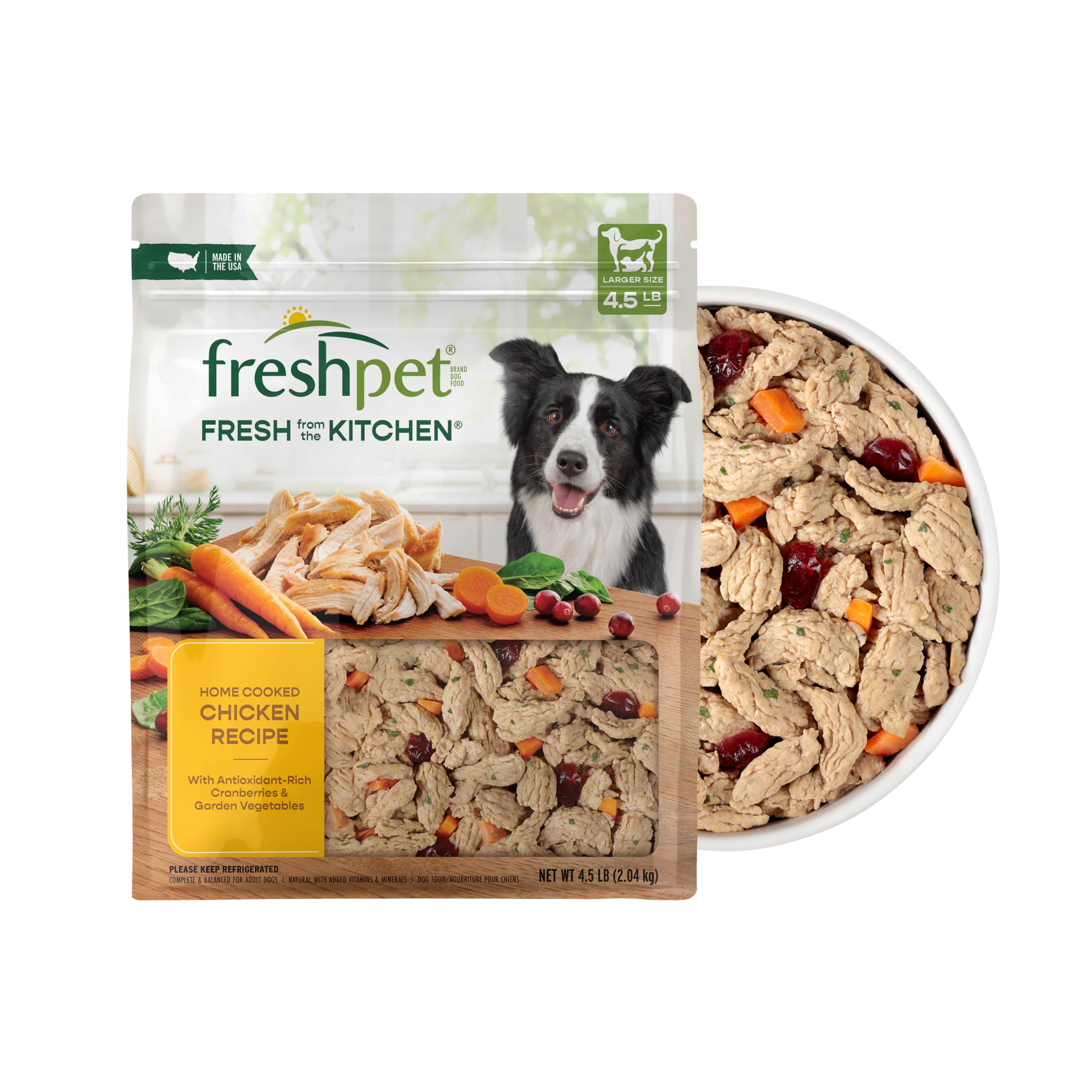
This is the only fresh-refrigerated entry on the list, and it sits in a different category from kibble and canned food because the ingredients are gently steam-cooked rather than extruded under high pressure. The result is a texture that looks like ground meat and vegetables — visible bits of carrot and green beans — with no meat meals, by-products, artificial preservatives, or fillers. The Clean Label Project certification means the batch was independently screened for over 100 contaminants including heavy metals and pesticide residues.
The protein comes from U.S. farm-raised chicken, and the moisture content is significantly higher than dry kibble, which helps dogs that don’t drink enough water stay hydrated. Owners of Shih Tzus and doodle mixes noted that the food smells more like human food than pet food, reducing the “ick factor” during serving. The 4.5-pound roll requires refrigeration and must be used within seven days of opening, which forces a faster consumption pace than sealed kibble.
The major practical hurdle is shelf life — you cannot stockpile this the way you would kibble or cans. It also costs more per pound than any dry option here. That said, for owners who prioritize a minimally processed diet with visible whole ingredients and don’t mind weekly grocery runs, Freshpet delivers a noticeably fresher alternative to extruded supermarket dry food.
Why we love it
- Visible whole ingredients — chicken and vegetables you can recognize
- Clean Label Project certified for contaminant testing
- Gentle steam cooking preserves more natural nutrients
Good to know
- Requires continuous refrigeration and 7-day use after opening
- Higher cost per pound than kibble options
- Not suitable for bulk buying or long-term pantry storage
4. IAMS Proactive Health Wet Dog Food Variety Pack

This 12-pack of 13-ounce cans offers two flavors — chicken chunks in gravy and beef chunks in gravy — giving you variety without forcing a commitment to a single protein source. The high-quality animal protein supports muscle maintenance, and the omega-6 fatty acids target skin and coat health. Owners of boxers and vizslas reported that even picky eaters finished the bowl, while the gravy texture made it easy to mix into dry kibble for picky seniors.
IAMS has a long track record in the supermarket aisle, and this formula sticks to the basics: no artificial flavors, no fillers, and no soy. The cans are large enough to split into two meals for a 40-pound dog, making the per-serving cost noticeably lower than competing wet-food brands in the same aisle. The packaging is straightforward ring-pull cans that don’t require a special opener, which is convenient for quick preparation.
The biggest limitation is the lack of a grain-free or limited-ingredient option — if your dog has specific grain or protein sensitivities, you may need to check the full ingredient list for trace soy from cross-contact. Some owners also noted that the cans produce a strong odor when opened, though most dogs saw that as a positive. For a budget-friendly wet food that covers the basics without gimmicks, this pack delivers solid value.
Why we love it
- Generous 13-oz cans with two flavor options
- No artificial flavors, fillers, or soy
- Very low per-serving cost compared to specialty wet foods
Good to know
- May contain trace soy from cross-contact
- Strong odor when opening the can
- Not suitable for grain-free dietary needs
5. Cesar Classic Loaf in Sauce Adult Wet Dog Food Chicken & Liver

Cesar’s loaf-in-sauce format targets small-breed dogs — the 3.5-ounce tray is roughly a single meal for a 10- to 15-pound dog, eliminating the need to store half-used cans in the fridge. Real chicken is listed as the number-one ingredient, and the loaf texture is soft enough for seniors or dogs with dental issues to eat without straining. The 24-count pack provides a full month of meals for a small dog at a reasonable per-tray cost.
The recipe is 100% complete and balanced for adult maintenance according to AAFCO standards, with no added sugar, fillers, or artificial flavors. The gravy adds palatability that picky dogs respond to, and the slow-cooking process gives the loaf a tender consistency that holds its shape when spooned out. Owners of Shih Tzus and small terriers consistently report that their dogs finish the tray and lick the bowl clean.
The trade-off is that this is a wet-only food — if you rely on kibble for dental tartar control, you’ll need to continue offering dry food separately. Some owners also noted that the loaf can leave a residue in the bowl that requires a quick rinse. For owners of small breeds who want a convenient, portion-controlled wet food they can buy at any supermarket, Cesar’s trays hit the mark.
Why we love it
- Real chicken is the first ingredient with no fillers
- Single-serve trays eliminate leftover storage
- Soft loaf texture ideal for senior or dental-sensitive dogs
Good to know
- Only 3.5 oz per tray — not enough for large breeds
- Wet-only diet may accelerate tartar buildup
- Loaf residue requires quick bowl cleaning after each meal
FAQ
How do I know if a supermarket dog food is actually high protein?
What does AAFCO complete and balanced actually mean for supermarket brands?
Should I avoid corn and wheat entirely in supermarket dog food?
Can I mix fresh-refrigerated food with dry kibble from the same supermarket?
Final Thoughts: The Verdict
For most dog owners, the supermarket dog food winner is the Blue Buffalo Wilderness Small Breed Chicken because it combines a 36% protein floor with real chicken as the first ingredient and a complete ban on corn, wheat, and by-products. If you want a novel protein for sensitive skin, grab the Blue Buffalo Wilderness Salmon. And for owners chasing minimally processed, refrigerated freshness, nothing beats the Freshpet Fresh From the Kitchen.