
For an asthma sufferer, the air inside your home can harbor a complex soup of triggers: microscopic dust mite feces, volatile organic compounds from fresh paint, pet dander particles that linger for months, and seasonal pollen that sneaks through every open window. A standard box fan with a furnace filter simply cannot capture the sub-micron particulates that provoke airway inflammation and bronchial constriction. You need a machine engineered specifically to scrub those irritants from your breathing zone.
I’m Mo Mahin — the founder and writer behind Furric. I have spent hundreds of hours cross-referencing Clean Air Delivery Rate (CADR) data against real-world owner experiences, studying independent AHAM VERIFIDE test results, and mapping filter stage configurations to the specific particle sizes that trigger asthma exacerbations.
After analyzing the filtration specs, sensor accuracy, and noise profiles of nine leading models, I have identified the machines that deliver measurable improvements for asthma sufferers. This guide presents my findings for selecting the right asthma air purifier to match your room size and sensitivity level.
How To Choose The Best Asthma Air Purifier
Selecting an air purifier for asthma management is not simply about picking the highest fan speed or the most expensive brand. The machine must match the volume of your room, the types of triggers you face, and the level of filtration your airways demand. Here are the critical factors to evaluate before making a purchase.
Understand CADR and Room Sizing
Clean Air Delivery Rate (CADR) is the industry-standard metric that tells you how many cubic feet of air per minute the unit can clean of smoke, dust, and pollen. For asthma control, the smoke CADR is most relevant because smoke particles (0.1–0.3 microns) are similar in size to many asthma triggers. A good rule of thumb is to choose a unit with a smoke CADR at least two-thirds of your room’s square footage. Oversizing slightly means the machine can run at a lower, quieter speed while still achieving the recommended 4.8 air changes per hour.
HEPA vs. UltraHEPA vs. HEPASilent
True HEPA filters capture 99.97% of particles at 0.3 microns — the most penetrating particle size. Some manufacturers, like AirDoctor, use UltraHEPA media that captures 99.99% at 0.003 microns, which is 100 times smaller. Blueair’s HEPASilent technology combines electrostatic charging with mechanical filtration to achieve high CADR with less noise and energy consumption. For asthma, any True HEPA or better rating is sufficient, but the extra margin in UltraHEPA can be valuable for homes with multiple sensitivities.
Auto Mode and Real-Time Sensors
An air purifier’s Auto Mode is only as good as its sensor. Some units use a simple particulate sensor that reacts to large dust particles but ignores VOCs or cooking smoke. Others, like the Blueair DustMagnet 5440i, have hyper-responsive sensors that detect microscopic changes instantly. For asthma, a machine that can ramp up fan speed before you notice a trigger — such as when someone sprays aerosol nearby — provides a meaningful layer of protection.
Filter Replacement Cost and Availability
The purchase price is only half the story. HEPA and carbon filters need replacement every six to twelve months, and those costs add up. The Coway Airmega 200M and LEVOIT Core 300-P have relatively affordable replacement filters, while Blueair and AirDoctor models command a premium. Always check that replacement filters remain in production and are in stock before committing to a machine.
Quick Comparison
On smaller screens, swipe sideways to see the full table.
| Model | Category | Best For | Key Spec | Amazon |
|---|---|---|---|---|
| LEVOIT Core 400S-P | Mid-Range | Smart control & large rooms | Smoke CADR 231 CFM | Amazon |
| Coway Airmega 200M | Mid-Range | Silent operation & Eco Mode | Coverage 1,748 sq ft/hr | Amazon |
| Coway Airmega AP-1512HH | Mid-Range | Reliable 4-stage filtration | Smoke CADR 233 CFM | Amazon |
| WINIX 5510 | Mid-Range | Pet allergies & odors | Washable pre-filter | Amazon |
| LEVOIT Core 300-P | Mid-Range | Small budget bedrooms | 56W high torque motor | Amazon |
| Blueair DustMagnet 5440i | Premium | Dust reduction & design | 30 dB on low setting | Amazon |
| CleanForce Rainbow | Premium | Large rooms & smart app | 550 CADR HEPA filter | Amazon |
| Blueair Blue Signature | Premium | XL spaces & side-table design | Covers 3,385 sq ft/hr | Amazon |
| AirDoctor AD2000 | Premium | Ultra-fine particle capture | UltraHEPA 0.003 microns | Amazon |
In‑Depth Reviews
1. LEVOIT Core 400S-P

The LEVOIT Core 400S-P strikes the hardest balance between coverage, smart features, and filter replacement cost for asthma management. With an AHAM VERIFIDE smoke CADR of 231 CFM, it delivers 4.8 air changes per hour in a 360 sq ft room and refreshes spaces up to 1,733 sq ft once per hour. The AirSight Plus laser dust sensor provides a PM2.5 display that updates continuously, giving you real-time feedback on the particulate levels that matter most for asthma triggers.
The three-stage filtration system — pre-filter, activated carbon, and True HEPA — captures 99.97% of particles down to 0.3 microns. The Votexair technology and ARC Formula work together to push clean air outward while absorbing VOCs from cooking, cleaning products, or off-gassing furniture. In Sleep Mode, the noise level drops to 24 dB, which is barely audible and ideal for bedroom use throughout the night.
The VeSync app integration allows remote control of fan speed, timer settings, and filter life tracking, plus compatibility with Alexa and Google Assistant. A few users note that the Wi-Fi setup can be finicky with 2.4 GHz networks, and the PM2.5 sensor may not always trigger Auto Mode as aggressively as expected during smoke events. However, for the combination of room coverage, verified CADR, and sub- investment, this unit offers the most comprehensive asthma protection package available today.
Why we love it
- AHAM VERIFIDE with smoke CADR of 231 CFM ensures reliable particle removal
- 24 dB Sleep Mode allows uninterrupted rest for asthma sufferers
- 360-degree intake design maximizes air circulation in large rooms
Good to know
- Wi-Fi setup requires 2.4 GHz band, which can be problematic with mesh routers
- Auto Mode may not respond quickly to smoke or VOCs without a firmware update
- Replacement filters cost around – every 6–8 months
2. Coway Airmega 200M

The Coway Airmega 200M stands apart for its near-silent operation and thoughtful energy-saving design. It covers up to 874 sq ft in 30 minutes and 1,748 sq ft in 60 minutes, making it suitable for open-concept living spaces common in modern homes. The HyperCaptive Filtration System combines a washable pre-filter, a deodorization carbon filter, and a True HEPA filter that captures 99.97% of 0.3-micron particles, including pollen, dust, and pet dander — all critical asthma triggers.
Auto Mode continuously monitors the air quality and adjusts fan speed in real time. When the air remains clean for 30 minutes or more, Eco Mode automatically turns off the fan to conserve energy, then reactivates when the sensor detects a spike in pollution. This is particularly valuable for asthma sufferers who want the machine running all day without a noticeable electricity bill increase. The three-speed manual control gives you full override capability when you need maximum filtration during a high-pollen day.
Owners consistently praise the low-pitched whoosh sound at medium speed, which is less intrusive than the higher-pitched fan noise of competitors. The pre-filter slides out easily for vacuuming, extending the life of the main HEPA filter. The only notable drawback is that the green LED lights on the display cannot be turned off, which may bother light-sensitive sleepers. For those prioritizing quiet, energy-efficient, round-the-clock operation, the Airmega 200M is a compelling choice.
Why we love it
- Eco Mode saves energy by shutting off fan when air is clean for 30 minutes
- Washable pre-filter reduces replacement frequency and long-term costs
- Low-pitched fan noise at medium speed is less fatiguing than high-pitch alternatives
Good to know
- Bright green LED lights on the front cannot be dimmed or turned off
- Some users report a temporary chemical off-gassing smell from the HEPA filter
- Auto Mode sensor may not detect VOCs as quickly as dedicated laser-based sensors
3. Coway Airmega AP-1512HH (Mighty)
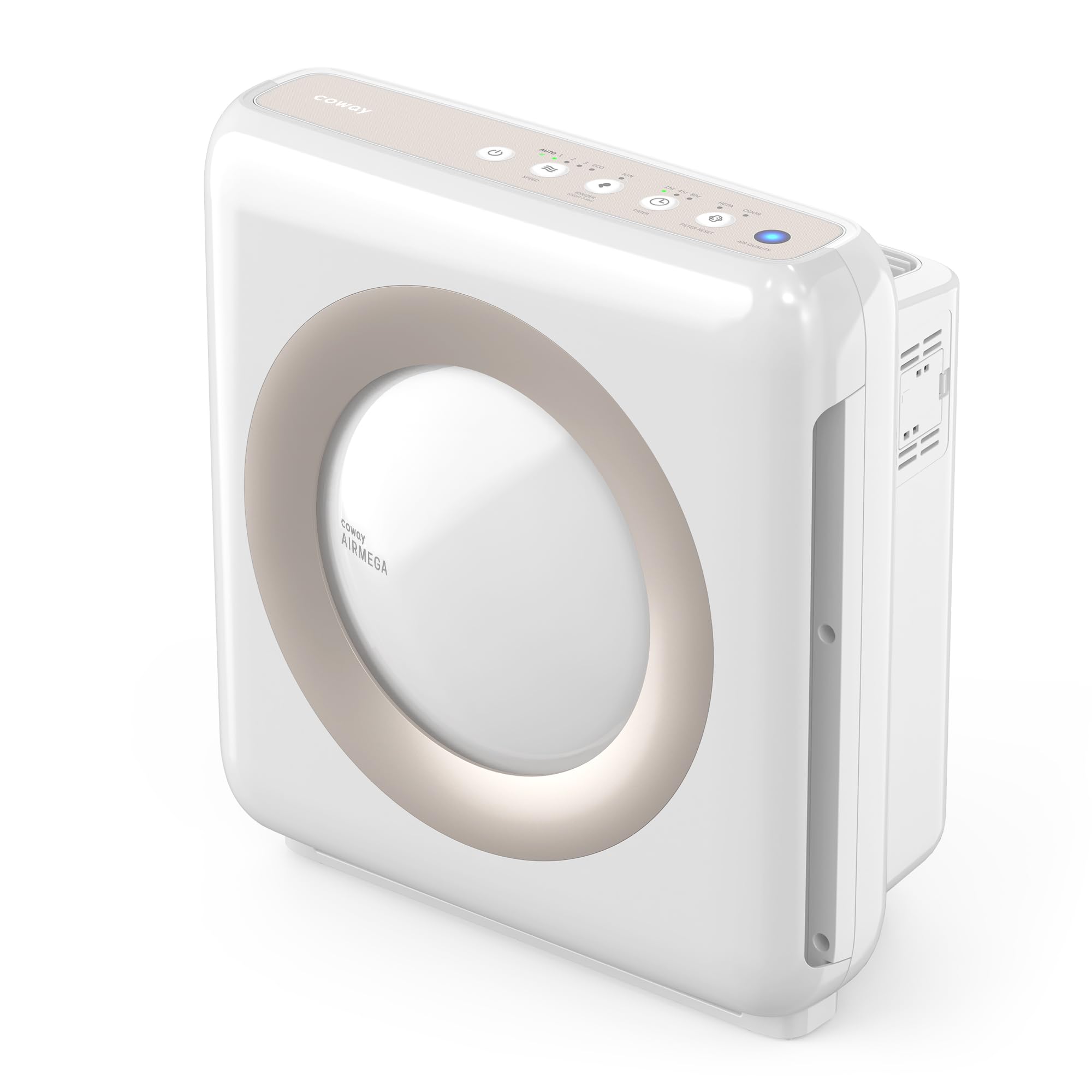
The Coway Mighty has earned its reputation as a perennial top pick from reviewers like Wirecutter and TopTenReviews, and for good reason. With a smoke CADR of 233 CFM, dust CADR of 246 CFM, and pollen CADR of 240 CFM, it cleans rooms up to 361 sq ft with exceptional efficiency. The 4-stage filtration system — pre-filter, deodorization carbon filter, True HEPA filter, and Vital Ion — captures up to 99.97% of 0.3-micron particles while also reducing VOCs and cooking odors.
The real-time pollution sensor communicates air quality through a brightly colored LED display that shifts from blue (clean) to red (polluted) based on particulate levels. The Auto Mode optimizes fan speed between levels 1 and 3, and the Eco Mode shuts off the fan after 30 minutes of clean air, then reactivates when needed. The timer can be set for 1, 4, or 8 hours, and the filter indicator separately tracks both the pre-filter and the HEPA filter, so you know precisely when to wash or replace each component.
Owners of the Mighty consistently note its rapid response to smoke — one user reported the sensor turning from red to blue within five minutes after a smoke event. The upward airflow design pushes clean air up and away from the unit rather than blowing it directly at people, which many find more comfortable. The noise level ranges from 24.4 dB on low to 53.8 dB on high, and at medium speed, it is quieter than many competing units. The primary trade-off is the lack of WiFi or app connectivity, but for those who value proven mechanical reliability over smart features, the Mighty remains the gold standard.
Why we love it
- Smoke CADR of 233 CFM is among the highest in its size class
- Separate pre-filter and HEPA filter indicators eliminate guesswork
- Upward airflow design avoids direct drafts on occupants
Good to know
- No WiFi or app control — manual and timer only
- Highest fan speed (level 3) is noticeably loud at 53.8 dB
- Auto Mode does not allow setting a default speed below level 3
4. WINIX 5510

The WINIX 5510 brings a robust four-stage filtration system to the mid-range market including a washable Fine Mesh Pre-Filter, an Advanced Odor Control Carbon Filter, a True HEPA filter, and the brand’s proprietary Plasmawave ionizer. It is AHAM Verifide at 392 sq ft, with the ability to clean rooms up to 1,882 sq ft in one hour. The carbon filter is specifically formulated to reduce VOCs and household odors from cooking, pets, and smoke — making this a strong option for asthma sufferers who live with pets or in urban environments with traffic pollution.
The built-in air quality sensor displays real-time conditions through an LED indicator (blue/amber/red) and activates Auto Mode to adjust fan speed automatically. The unit supports the Winix Smart App for remote control and monitoring, which is a relatively rare feature at this price point. Sleep Mode automatically activates when the room is darkened, switching to near-silent operation at 23.5 dB — the quietest on this list. The magnetic front panel provides tool-free access to all filters for easy cleaning and replacement.
Owners with multiple dogs report that the washable pre-filter captures large amounts of pet hair and dander, keeping the inner HEPA filter cleaner for longer. The Plasmawave ionizer can be turned off independently for those who prefer zero-ozone operation. The main design quirk is that the vertical side air intakes may reduce efficiency if the unit is placed too close to walls. For households where pet dander and cooking odors are the primary asthma triggers, the WINIX 5510 offers excellent value with smart features that rival more expensive units.
Why we love it
- Washable pre-filter captures pet hair before it reaches the HEPA stage
- 23.5 dB Sleep Mode is the quietest among mid-range competitors
- Winix Smart App provides remote control at a mid-range price
Good to know
- Vertical side intakes require at least 12 inches of clearance on each side
- Plasmawave ionizer must be manually turned off if zero-ozone operation is needed
- Auto Mode sensor responds well to smoke but may miss slow VOC buildup
5. LEVOIT Core 300-P

The LEVOIT Core 300-P proves that effective asthma filtration does not require a large footprint or a high budget. Powered by a 56W high-torque motor with a 143 CFM CADR for smoke, it delivers 4.8 air changes per hour in rooms up to 222 sq ft and can refresh a 1,073 sq ft space once per hour. The 3-in-1 filter system — pre-filter, activated carbon, and HEPA-grade media — captures 99.97% of airborne particulates down to 0.3 microns, including pollen, dust, and animal dander allergens.
QuietKEAP Technology reduces noise to a near-silent 24 dB in Sleep Mode, making this unit particularly suitable for nighttime use in a child’s bedroom or a small master bedroom. The touch controls allow you to set a timer for 2, 4, 6, or 8 hours, and the display lights can be turned off completely for undisturbed sleep. The unit is FCC Certified, ETL Listed, and CARB Compliant, meeting California’s strict indoor air quality standards.
One of the strongest advantages of the Core 300-P is its filter flexibility: LEVOIT offers specialized replacement filters including a Toxin Absorber for smog and VOCs, a Smoke Remover for wildfire smoke, and a Pet Allergy Filter for dander and odors. Owners consistently report that visible dust and allergen levels drop within days of use, and the compact 8.7-inch square footprint fits easily on nightstands or desks. However, the 7.9-pound unit is underpowered for rooms larger than 250 sq ft, and the small filter surface area means replacement may be needed every 4–6 months in heavy-use environments.
Why we love it
- Specialized replacement filters target specific asthma triggers like VOCs and smoke
- 24 dB Sleep Mode ensures quiet overnight operation in small bedrooms
- AHAM VERIFIDE certification provides third-party performance validation
Good to know
- Best suited for rooms under 250 sq ft — not a whole-house solution
- Replacement filters may need changing every 4–6 months with heavy use
- No Auto Mode or air quality sensor — manual speed control only
6. Blueair DustMagnet 5440i

The Blueair DustMagnet 5440i represents a step-change in filtration design philosophy. Instead of simply pulling air through a filter, it uses dual air intakes and vortex airflow to keep dust particles airborne, then electrostatically charges them so they stick to the stainless steel pre-filters — catching 99% of dust before it can settle on surfaces. For asthma sufferers, this means fewer dust mites and less settled allergen accumulation on bedding and furniture.
HEPASilent dual filtration technology delivers up to 45% faster cleaning and 67% less noise than traditional HEPA-only systems. The unit cleans a 357 sq ft room in about 12.5 minutes on high and can handle up to 1,713 sq ft in 60 minutes. The five-color LED display provides in-app real-time tracking, and the Auto Mode adjusts fan speed based on the hyper-responsive sensor that detects cooking, aerosols, vaping, and even hair dryers almost instantly.
Night Mode lowers the fan speed and dims the LEDs for uninterrupted sleep, operating at just 30 dB — officially certified as the Quietest Air Purifier by Quiet Mark. The activated carbon filter traps light household odors from smoking, pets, and cooking. Owners report that dusting frequency drops from every few days to every two weeks after installation. The main drawbacks are the high replacement filter cost (around per filter) and the relatively small coverage area for the price point compared to similarly priced competitors.
Why we love it
- Electrostatic pre-filter captures 99% of dust before it settles on surfaces
- Hyper-responsive sensor detects microscopic air quality changes instantly
- 30 dB operation on low is certified as the quietest in its class
Good to know
- Replacement filters cost approximately each and need changing annually
- Best for medium rooms up to 500 sq ft, not whole-house coverage
- Instruction manual is unclear about which direction the filter should face
7. CleanForce Rainbow
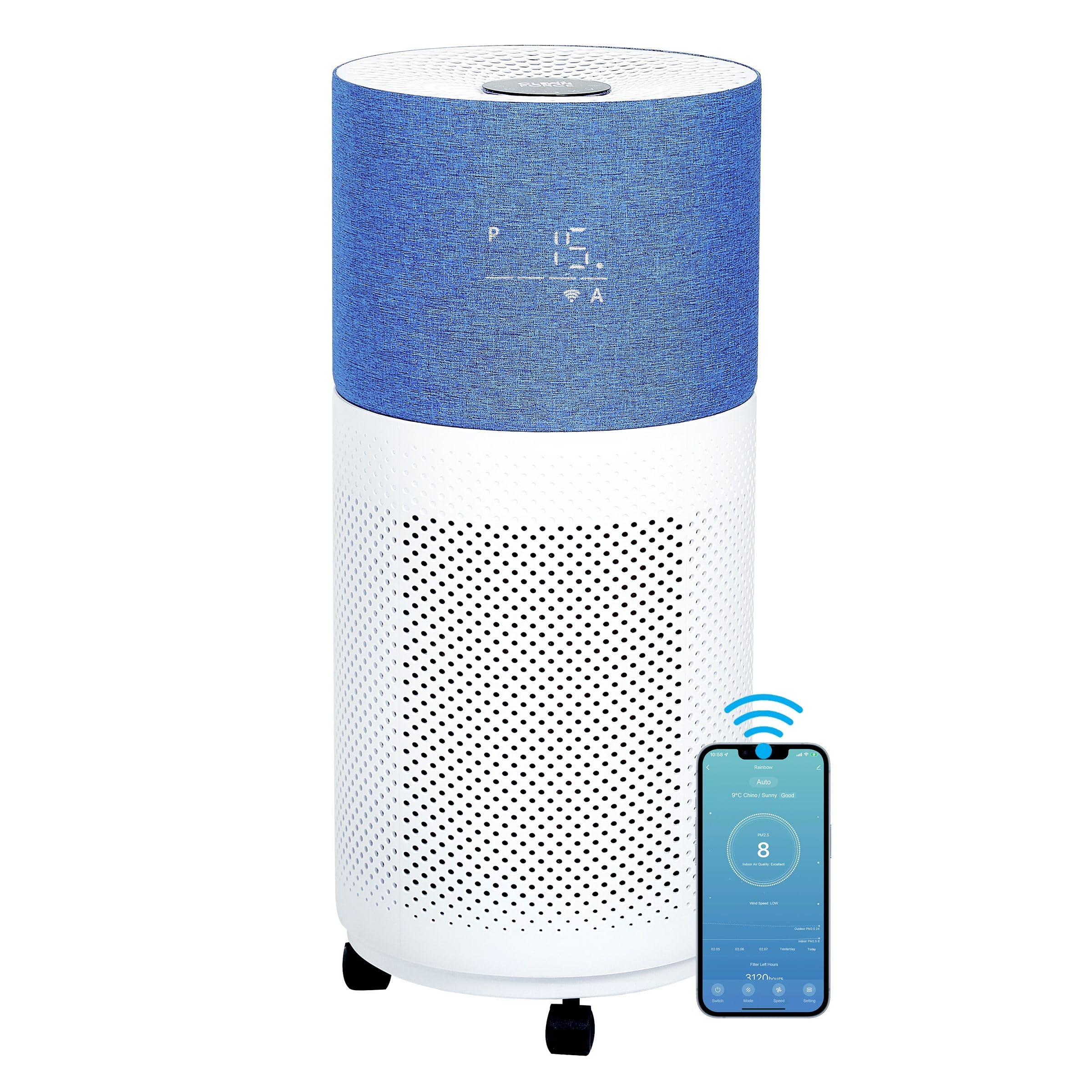
The CleanForce Rainbow is built for asthma sufferers who need to cover a large living room, open-concept apartment, or basement in a single pass. With a CADR of 550 CFM, it can purify up to 2,550 sq ft per hour, which puts it in a different performance tier than the mid-range units. The triple-filtration system includes a pre-filter for large particles like hair and pollen, an H13 True HEPA filter that captures 99.97% of particles down to 0.3 microns, and an iMACT activated carbon filter that absorbs wildfire smoke, cooking odors, and VOCs.
The smart controls include an HD LED display that monitors air quality in real time, a 12-hour timer, three fan speeds, and filter replacement reminders. The unit is compatible with app remote control and voice assistants, giving you flexibility in how you manage the machine. At 29 dB on the lowest setting, it is nearly as quiet as the Blueair units while moving significantly more air per minute. The clog-resistant design and high energy efficiency mean it can run 24/7 without a noticeable impact on your electric bill.
The unit comes with pre-installed wheels for easy mobility, which is important given its 15.4-pound weight. Owners in the HVAC industry report that this is the best air purifier they have tested — speed 2 is essentially silent while pulling more air than smaller units at maximum speed. The main considerations are the physical size (25.5 inches tall) and the need to vacuum the pre-filter monthly to maintain airflow. For those with severe asthma in large spaces, the CleanForce Rainbow delivers hospital-grade filtration volume at a competitive premium price.
Why we love it
- 550 CADR covers 2,550 sq ft per hour, outperforming most residential units
- H13 HEPA and iMACT carbon filters capture both particles and VOCs
- Pre-installed wheels allow easy movement between rooms
Good to know
- Large physical footprint (25.5 inches tall) requires dedicated floor space
- Pre-filter requires monthly vacuuming to maintain optimal airflow
- White plastic housing may yellow if exposed to direct sunlight
8. Blueair Blue Signature
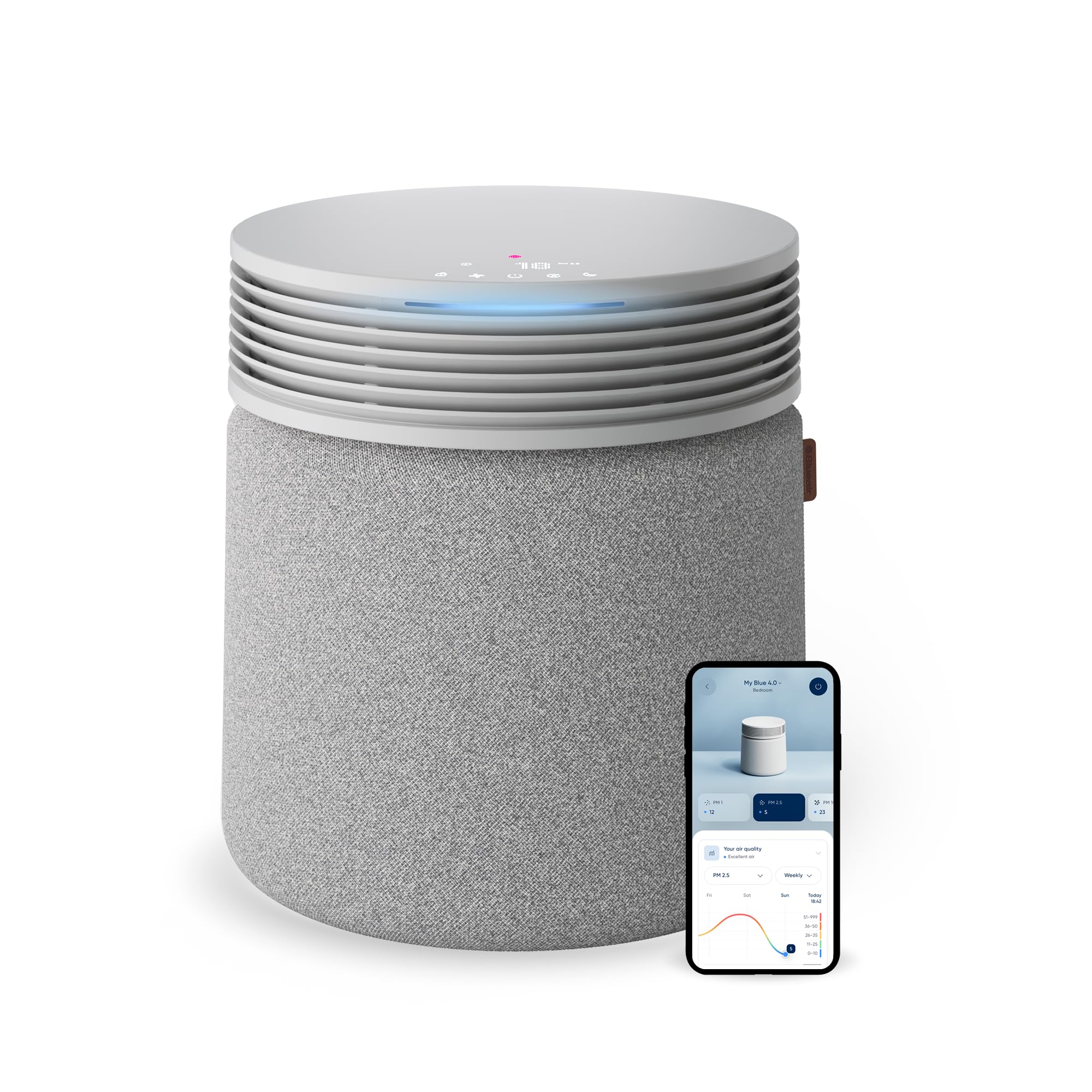
The Blueair Blue Signature solves one of the biggest objections to large air purifiers: where to put it. The unit is designed to double as a stylish side table, with a flat top surface that can hold plants, lamps, or books while it silently cleans the air. It covers an enormous 3,385 sq ft in one hour, making it the highest-coverage unit on this list and ideal for open-plan homes, large basements, or commercial office spaces where asthma triggers can accumulate throughout the day.
HEPASilent filtration removes dust, pollen, wildfire smoke, pet dander, and odors without the noise levels typically associated with high-CADR units. The built-in smart sensors monitor air quality and automatically adjust fan speed to maintain optimal conditions. The Blueair app provides remote control, air quality tracking, and filter life monitoring from your phone. Auto Mode and quiet operation make it suitable for continuous use in living rooms, kitchens, and open-concept spaces.
Owners consistently praise the modern aesthetic, noting that it blends into the room rather than sticking out as a medical appliance. The unit is effective at clearing cooking odors and stuffy air within minutes of detection. The primary trade-off is the premium price point and the cost of replacement filters, which run higher than most competitors. Additionally, some users find the app occasionally slow to update. For asthma sufferers who want powerful coverage without sacrificing living space, the Blue Signature delivers performance and design in one package.
Why we love it
- Side-table design integrates into living spaces without looking like a medical device
- Covers 3,385 sq ft per hour — the highest coverage in this guide
- HEPASilent technology delivers quiet operation despite high air volume
Good to know
- Replacement filters are expensive and require annual replacement
- Blueair app has occasional lag and connectivity issues reported by users
- Higher upfront investment compared to mid-range units with similar coverage
9. AirDoctor AD2000
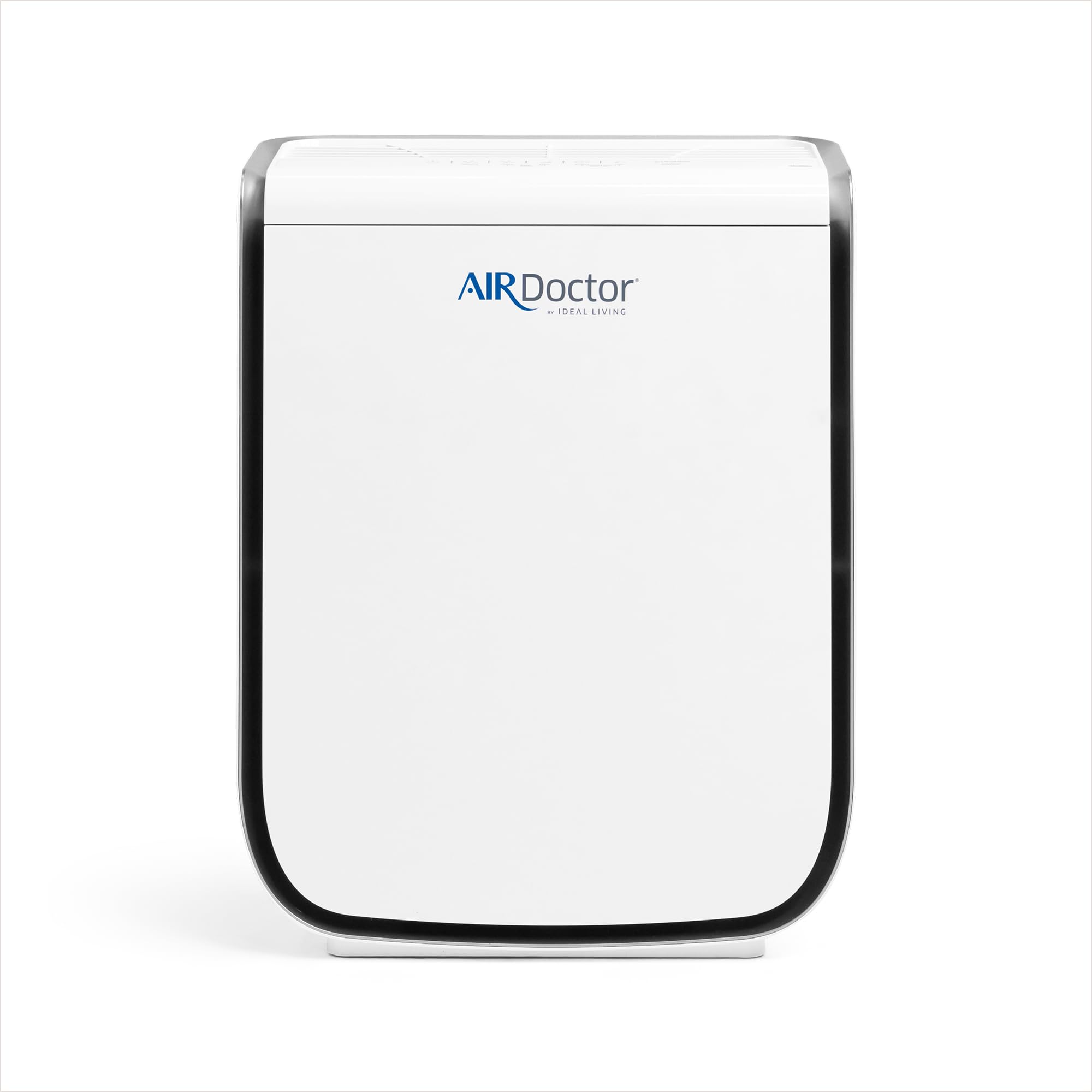
The AirDoctor AD2000 is engineered for asthma sufferers who need the highest possible filtration standard available in a residential unit. Its UltraHEPA media captures 99.99% of airborne particles at 0.003 microns — 100 times smaller than the traditional HEPA standard. For context, the smallest particles capable of triggering an asthma response (such as smoke ultrafines, bacteria, and virus-sized particles) fall well within this filtration envelope. The 3-stage system includes a washable Pre-Filter, a Premium Activated Carbon filter with potassium permanganate for gas and VOC absorption, and the UltraHEPA filter.
The unit is designed for small to medium rooms up to 305 sq ft, which it can clean in 15 minutes, with a total coverage of 1,220 sq ft in one hour. The AirDoctor Halo PM2.5 sensor provides color-coded real-time air quality feedback on the display, and Auto Mode adjusts the fan speed accordingly. The four-speed fan, timer, and filter indicator give you full control. The unit operates at 30 dB on the lowest setting, making it suitable for bedroom or nursery use throughout the night.
One standout detail is that the AD2000 is FSA and HSA eligible, meaning you can use pre-tax healthcare dollars to purchase it — a significant benefit for those managing asthma as a chronic condition. Owners report dramatic dust reduction within the first week of use, and the carbon/VOC filter has been effective at eliminating strong off-gassing odors from new furniture. The downsides are the high replacement filter cost (carbon filter every 6 months, UltraHEPA every 12 months) and the fact that some initial units reportedly had sensor responsiveness issues, though customer service quickly resolved those cases.
Why we love it
- UltraHEPA captures 99.99% of particles at 0.003 microns, 100x smaller than HEPA standard
- FSA and HSA eligibility allows purchase with pre-tax healthcare funds
- Activated carbon plus potassium permanganate targets VOCs that trigger asthma
Good to know
- Coverage area (305 sq ft) is smaller than many mid-range competitors
- Replacement filters are expensive: carbon every 6 months, UltraHEPA every 12
- Some early units had sensor reliability issues, though replacements were provided
FAQ
What CADR rating is ideal for an asthma air purifier?
Should I get a unit with an ionizer or ozone generator for asthma?
How often should I run my air purifier for asthma?
Can a single air purifier handle my whole home for asthma?
What is the difference between AHAM VERIFIDE and regular HEPA claims?
Final Thoughts: The Verdict
For most gardeners, the asthma air purifier winner is the LEVOIT Core 400S-P because it delivers a verified smoke CADR of 231 CFM, real-time PM2.5 monitoring, and smart control features at a price that leaves room in your budget for replacement filters. If you need near-silent round-the-clock operation with energy-saving Eco Mode, grab the Coway Airmega 200M. And for the highest available filtration standard — capturing 99.99% of particles at 0.003 microns — nothing beats the AirDoctor AD2000.