
The single biggest mistake duck owners make is buying a feed that sinks before a duck can eat it. Ducks are surface-feeders by instinct — if the pellet hits the bottom of the pond or the mud of a pen floor, they lose interest, the feed rots, and you are left guessing whether your birds are actually getting their nutrition. The right feed for ducks solves this with buoyancy, digestible protein levels, and a complete vitamin profile that matches what a duck’s body actually needs.
I’m Mo Mahin — the founder and writer behind Furric. I spend my time cross-referencing formulation data, studying waterfowl dietary requirements (niacin levels, crude protein percentages, calcium-to-phosphorus ratios), and reading through hundreds of verified owner reports to separate the floating winners from the sinking duds.
You are here to find a bag that your ducks will actually eat without waste, that keeps their feathers glossy and their eggs strong. This guide compares five distinct formulations so you can confidently choose the right feed for ducks based on your flock’s age, living situation, and your own feeding routine.
How To Choose The Best Feed For Ducks
Ducks have different nutritional needs than chickens, yet many generic poultry feeds treat them the same. Selecting the right bag means matching the formulation to your duck’s life stage, environment, and purpose. These three factors matter most.
Protein Content: Starter, Grower, or Layer
Ducklings need roughly 20 to 22 percent crude protein during their first eight weeks to support rapid bone and feather development. Adult laying ducks require 16 to 18 percent protein — anything lower can reduce egg size and frequency. A maintenance feed for non-laying adult ducks can drop to 14 percent, but never go below that or the birds will lose condition.
Floating Ability and Pellet Size
Standard chicken pellets are too dense and sink immediately, which leads to wasted feed and clogged water sources. A dedicated duck feed should float on the water surface for at least 30 minutes so the birds can grab it before it breaks apart. Mini pellets work well for bantam breeds and ducklings; larger pellets suit heavy breeds like Pekins and Muscovies.
Niacin Fortification and Calcium Balance
Ducks require more niacin than chickens — a deficiency leads to bowed legs and joint swelling. A good duck feed will list added niacin on the guaranteed analysis. For laying ducks, calcium levels near 3.5 percent support strong eggshells without overloading the kidneys. Avoid feeding straight layer crumbles designed for chickens because the calcium can be too high for ducks not in active lay.
Quick Comparison
On smaller screens, swipe sideways to see the full table.
| Model | Category | Best For | Key Spec | Amazon |
|---|---|---|---|---|
| Natural Waterscapes Waterfowl Feed | Floating Pellet | Pond and wild ducks | Floats for 1+ hour | Amazon |
| Kalmbach Feeds Duck and Goose Feed | Mini Pellet | Large backyard flocks | 50 lb bag, LifeGuard blend | Amazon |
| Scratch and Peck Starter Mash | Organic Mash | Ducklings under 8 weeks | 20.5% protein, organic | Amazon |
| Wholesome Harvest Waterfowl Layer | Whole Grain Mix | Laying ducks on pasture | 18% protein with herbs | Amazon |
| Purina Layena+ Layer Feed | Omega-3 Pellet | Egg quality focus | 250 mg omega-3 per egg | Amazon |
In‑Depth Reviews
1. Natural Waterscapes Waterfowl Feed (5 lb)

That matters enormously for ducks that live on a pond or a large water feature. The pellets contain fishmeal, which provides a natural source of protein and omega fatty acids that mirror a duck’s wild diet. Owners of wild mallards, mute swans, and resident geese all report that the birds recognize this product immediately and prefer it over frozen peas or cracked corn.
The resealable bag helps keep the pellets crisp between feedings, and the dust level is noticeably lower than cheaper grain mixes. At 5 pounds, this bag is compact enough for a single owner feeding a small flock or a regular park visitor. The main tradeoff is the higher per-pound cost — but since very little sinks to the bottom, waste is minimal, and a 5-pound bag lasts longer than a 10-pound bag of sinking feed.
Reviewers consistently mention that wild waterfowl “spread the word” and come running the moment they spot the bag. That kind of acceptance across different bird species — wild and domestic — speaks to the natural formulation. If your ducks live on open water, this is the most efficient delivery system for their daily ration.
Why we love it
- Pellets float for 60+ minutes with minimal breakup
- Fishmeal provides high-quality protein and omega-3s
- Very low dust — less breathing irritation for birds
- Wild and domestic ducks both accept it eagerly
Good to know
- 5-pound bag is small for large flocks
- Higher per-pound cost than standard layer pellets
- Not formulated for ducklings under 8 weeks
2. Kalmbach Feeds 18% Duck and Goose Feed Mini Pellet (50 lb)
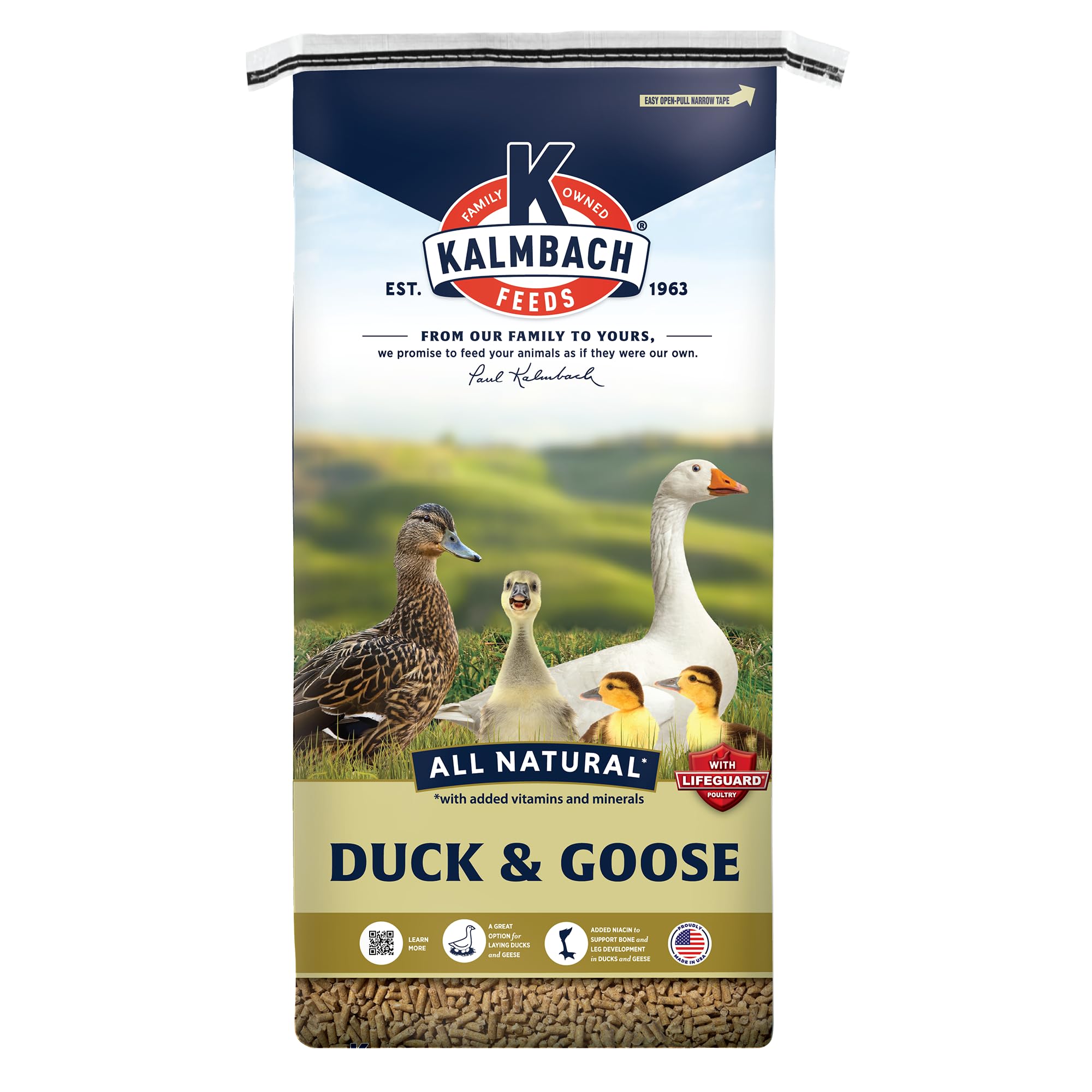
Kalmbach is a well-known name in the waterfowl feed space, and this 50-pound bag represents the best value for owners with a dedicated flock of six or more birds. The mini pellet size is ideal for bantam ducks, call ducks, and geese — the small diameter reduces sorting behavior so every bird consumes a balanced ration. The 18 percent crude protein level hits the sweet spot for adult ducks in active lay without pushing excess nitrogen into the environment.
The proprietary LifeGuard additive package includes prebiotics, probiotics, essential oils, and enzymes. That translates to fewer loose droppings, better feed conversion, and stronger immune response during wet or cold weather. Multiple owners of Embden geese noted that Kalmbach was the only feed their picky geese would consistently eat, which is a strong endorsement of the palatability. The bag arrives sealed with minimal dust compared to commodity brands.
One consistent note from reviewers is that the bag can contain some powdery fines at the bottom, but that is true of almost any pelleted feed shipped long distance. The freshness upon arrival is excellent — the feed smells like toasted grain, not stale or musty. For the price per pound, this is the most economical way to keep a mid-sized flock in top condition without sacrificing ingredient quality.
Why we love it
- LifeGuard probiotic blend supports gut health through seasonal stress
- Mini pellet size prevents selective eating in mixed flocks
- Excellent fresh smell and texture — geese approve consistently
- Very low cost per pound for a 50-pound bag
Good to know
- Powdery dust settles at the bottom of the bag
- Not a floating pellet — use a trough feeder
- Contains soy, so not suitable for soy-free diets
3. Scratch and Peck Whole Grain Starter Mash (10 lb)

Ducklings have a very narrow window — roughly the first eight weeks — where protein demand is highest. This mash from Scratch and Peck delivers 20.5 percent protein from certified organic whole grains, with no corn and no soy. That matters because corn and soy are common fillers that can trigger digestive upset in young birds. The whole grain texture encourages natural foraging behavior and prevents the pasty vent issues sometimes seen with finely ground powders.
The formula works both as a dry mash and as a fermented feed. Fermenting reduces selective eating — ducklings cannot pick out only the tasty bits — and the natural probiotics from fermentation support gut development. Owners of rescued ducklings recovering from vitamin deficiency saw visible improvement within days of switching to this mash. The 10-pound bag is a practical size for a small hatch; reviewers with 28 chicks reported the bag lasted about three weeks.
The eco-friendly packaging is compostable, which aligns with the organic philosophy of the brand. The only limitation is the absence of insect-based protein — ducklings in the wild eat a lot of bugs, and this mash relies entirely on plant-based protein sources. For most backyard hatches, however, the amino acid profile is complete enough to produce strong legs and early feathering.
Why we love it
- Certified organic and Non-GMO with no corn or soy fillers
- Works as dry mash or fermentable feed for gut health
- Resealable bag keeps grain fresh between feedings
- Ducklings show immediate preference and improved activity
Good to know
- Insect protein is missing — supplement with dried mealworms if possible
- Paper packaging can tear during shipping if handled roughly
- Not suitable for adult layer nutrition — too high in protein
4. Wholesome Harvest Duck, Goose, and Waterfowl Layer Feed (10 lb)
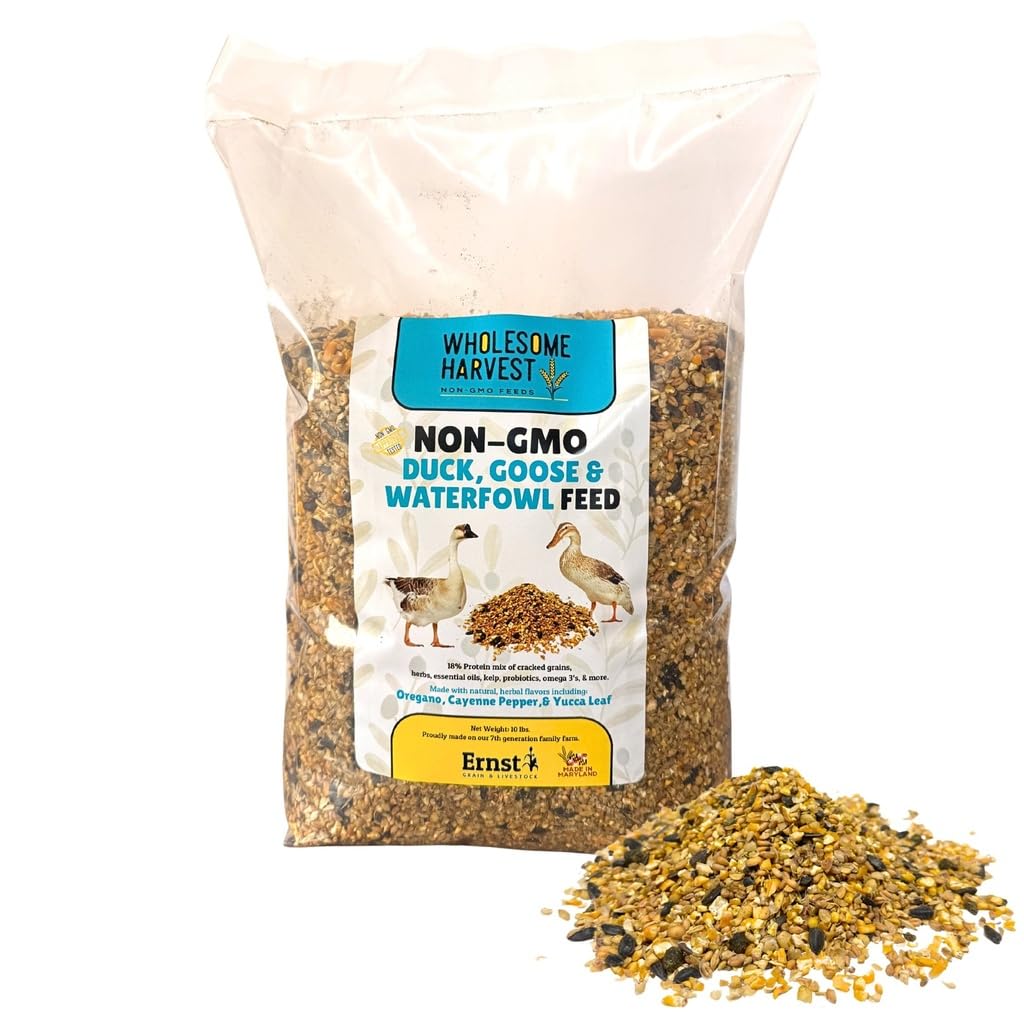
This feed combines cracked corn, wheat, soybeans, and sunflower seeds with a proprietary blend of oregano and garlic essential oils. The 18 percent protein level is appropriate for actively laying ducks, and the visible whole grain format gives owners confidence that they are not buying a bag full of dust. The herbs serve a functional purpose — oregano oil has natural antimicrobial properties, and garlic is traditionally used to discourage external parasites. Ducks at public parks and private ponds alike show immediate enthusiasm for this mix.
Ernst Farm, the source of the grains, uses green cropping methods that improve soil health, which adds an ethical dimension for sustainability-minded buyers. The bag is smaller at 10 pounds, but the feed is dense enough that a small backyard flock of four to six ducks will get two to three weeks of daily meals. Owners who feed at local parks report that ducks prefer this over commodity-brand pellets and will ignore other food until this mix is gone.
The one limitation is the cracked corn content — while ducks love the taste, corn is lower in digestible protein than soybean meal. This is not a concern for healthy adult ducks on a mixed diet, but owners of birds with specific protein needs should pair it with a higher-protein supplement. The herbal blend is mild enough not to discourage picky eaters, and the probiotics in the formula help maintain consistent digestion.
Why we love it
- Herbal essential oils support immunity and parasite resistance
- Visible whole grains — you see exactly what you are feeding
- Non-GMO grains from sustainable cropping practices
- Ducks actively prefer it over standard layer pellets
Good to know
- Cracked corn reduces overall protein density
- Small 10-pound bag needs frequent reordering for larger flocks
- No floating capability — best served in a trough or on dry ground
5. Purina Layena+ Layer Hen Feed Omega 3 Formula (40 lb)
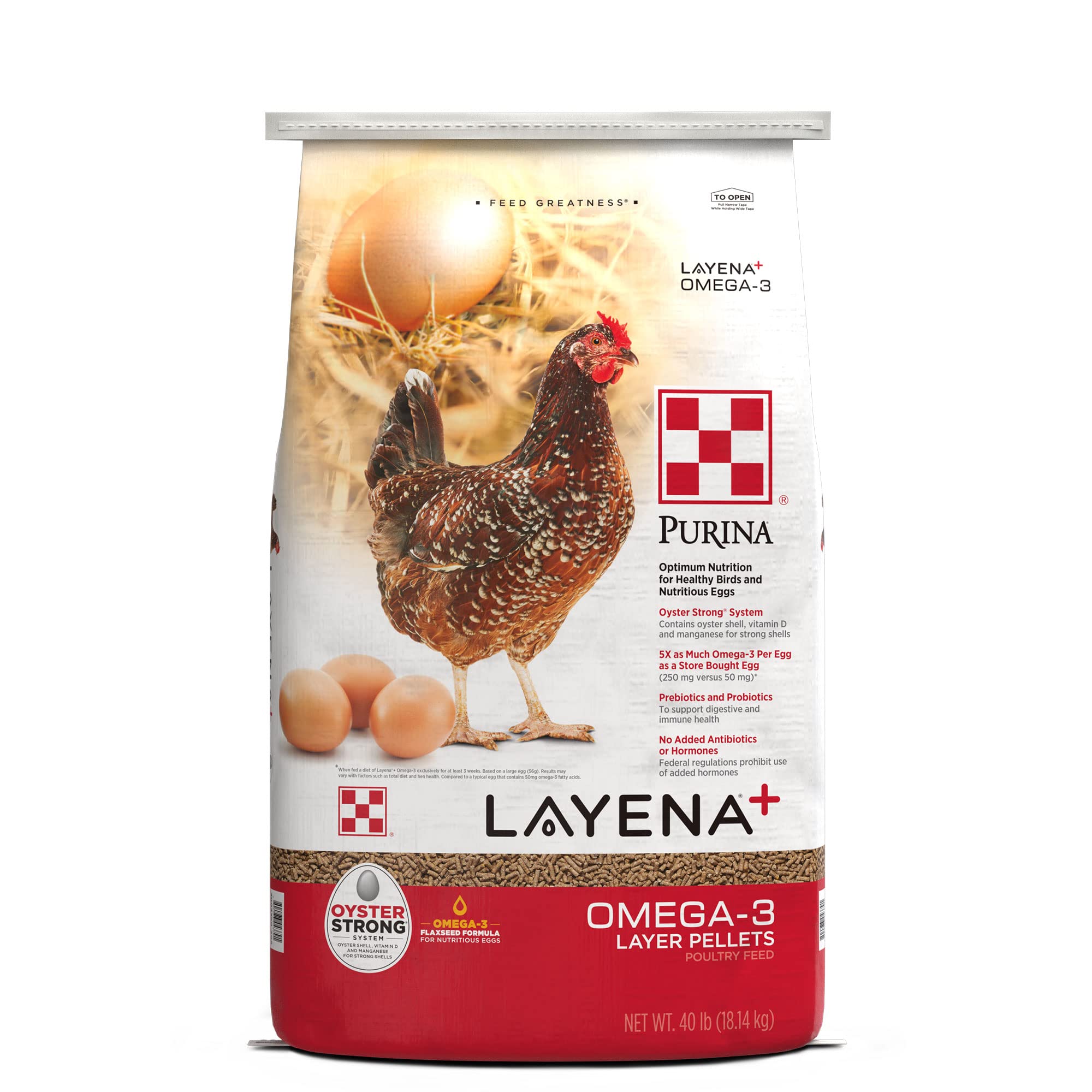
Purina Layena+ is technically formulated for laying hens, but many duck owners use it successfully because the 16 percent protein and elevated calcium levels match what laying ducks require. The standout feature is the Omega-3 enrichment — ducks that eat this feed produce eggs with 250 mg of omega-3 fatty acids per egg, compared to 50 mg in a standard supermarket egg. If you are raising ducks for egg sales or personal nutrition density, this product gives you a measurable upgrade that buyers notice.
The Oyster Strong System provides a steady calcium release through the laying cycle, which translates to thicker shells and fewer broken eggs. The pellets are a standard crumble size that ducks manage well, though the feed does not float. Owners who use a hanging feeder over a solid surface report very little waste. The 40-pound bag is a practical size for a flock of 8 to 12 laying ducks and will last roughly a month with daily feeding.
The main consideration is that this is a chicken formula — it lacks the higher niacin level that duck specialists recommend. Ducks on this feed long-term should have access to supplemental niacin, either through brewer’s yeast or a niacin-enriched treat. Reviewers note that the bag is consistently fresh and that birds produce eggs with dark, rich yolks and thick shells. For owners focused on egg quality above all else, this is a strong option at a competitive per-pound price.
Why we love it
- Proven omega-3 boost — 250 mg per egg for nutritional value
- Oyster Strong System creates thick, crack-resistant shells
- Large 40-pound bag offers low per-pound cost
- Consistent freshness and aroma batch after batch
Good to know
- No added niacin — supplement needed for long-term duck health
- Standard chicken crumble does not float
- Often out of stock during spring peak season
FAQ
Can ducks eat standard chicken layer feed?
How long can floating duck feed stay on the water?
What protein percentage is best for laying ducks?
Final Thoughts: The Verdict
For most gardeners and backyard flock owners, the feed for ducks winner is the Natural Waterscapes Waterfowl Feed because it solves the fundamental waste problem with floating pellets that ducks actually eat. If you want the best per-pound value for a larger flock, grab the Kalmbach Feeds Duck and Goose Feed — the LifeGuard probiotic blend and 50-pound bag size make it the smartest choice for serious keepers. And for ducklings under eight weeks, nothing beats the Scratch and Peck Starter Mash with its organic, corn-free, fermentable formula.