
A platform feeder built for blue jays solves a problem that tube and hopper designs simply cannot: these large, assertive birds need a stable, open landing zone to inspect their food before committing. Without it, they often scatter seed to the ground in frustration, attracting unwanted rodents. The right tray feeder turns a messy feed station into a controlled, high-traffic dining area for jays and their companions.
I’m Mo Mahin — the founder and writer behind Furric. I’ve spent years studying buyer feedback, comparing composite wood formulations against solid cedar, and measuring how different tray depths, mesh sizes, and hanging hardware hold up against weather and repeated use in backyards across multiple climate zones.
Whether you need a tray that resists warping after ten winters or a ground-level station that keeps five pounds of seed dry through a spring downpour, the right feeder for blue jays balances open sightlines with the drainage and durability that make daily refills a pleasure instead of a chore.
How To Choose The Best Feeder For Blue Jays
Blue jays are larger, more cautious birds that prefer a stable, open platform where they can land, assess, and eat without feeling trapped. A poorly chosen tray can result in spilled seed, wet food, or a feeder that swings violently in the wind. Focus on these four characteristics before buying.
Tray Size and Depth
A platform that is too small will crowd out jays or cause them to perch on the edge, knocking seed to the ground. Look for a tray at least 10 inches square — many premium options hit 11 or even 12 inches. The rim should be deep enough (around 2 inches) to hold a scattering of peanuts, sunflower hearts, and suet bits without everything blowing off in a gust, yet shallow enough that jays can see their surroundings while feeding.
Drainage and Airflow
Moisture is the enemy of stored seed, especially for open tray feeders exposed to rain and dew. A metal mesh or perforated bottom allows water to drain through while keeping the seed bed aerated. Without this feature, wet seed quickly grows mold that can spread disease among visiting birds. Some designs also incorporate a screened bottom that filters out dust and hull fragments, extending the freshness of the remaining seed.
Material Longevity and Weight
Solid cedar offers a natural look but requires periodic sealing to prevent warping and rot after repeated wet-dry cycles. Wood-plastic composite (WPC) mimics the grain of wood while resisting UV fading and moisture absorption, often with a decade-long warp-free guarantee. Heavier feeders (above 2.5 pounds) resist tipping and swaying in the wind better than lightweight plastic trays, which is especially important for ground-level or hanging platforms that jays visit frequently.
Mounting and Access Control
Hanging feeders need robust cables that prevent swinging, while ground feeders require stable legs that won’t collapse under the weight of multiple jays. Some models include an adjustable dome that can be lowered to block larger bully birds or raised to give small birds an opening. If squirrels are a persistent problem, a rotating dome that spins when weight is applied can keep the tray mostly jay-accessible while frustrating climbers.
Quick Comparison
On smaller screens, swipe sideways to see the full table.
| Model | Category | Best For | Key Spec | Amazon |
|---|---|---|---|---|
| Kingsyard Ground Feeder | Ground Platform | Large-capacity ground feeding with no assembly | 5 lb capacity, mesh floor | Amazon |
| iBorn Platform Feeder | WPC Hanging Tray | Vibrant cedar-look composite with long warranty | 3 lb capacity, 10.6″ tray | Amazon |
| Gtongoko WPC Feeder | WPC Hanging Tray | Budget-friendly composite with good mesh drainage | 3.5 lb capacity, 10″ tray | Amazon |
| Cedar Alpha Tray Feeder | Solid Cedar Tray | Natural wood aesthetic with hand-polished finish | 12″ x 12″ solid cedar tray | Amazon |
| Kingsyard Dome Feeder | Hanging Dome Tray | Squirrel-deterring dome with adjustable height | 11″ hex tray, mesh bottom | Amazon |
In‑Depth Reviews
1. Kingsyard Ground Bird Feeder

The Kingsyard ground feeder uses recycled plastic construction that resists cracking and fading, with a feeding tray that sits six inches above the ground to keep seed off damp soil. The 13.5-inch by 10.2-inch platform holds a full five pounds of mixed seed, making it the largest capacity option in this review and ideal for attracting multiple blue jays simultaneously without constant refilling.
The metal mesh floor provides excellent drainage, allowing rainwater and dust fragments to fall through rather than pooling inside the tray. Users consistently mention that the feeder comes fully assembled — simply pull out the support legs, fill with seed, and place it on a flat surface. Several reviews highlight that the sturdy legs and recycled plastic frame withstand weather well, with one owner noting the unit arrives with a lifetime warranty.
Blue jays, doves, cardinals, and even ground-feeding squirrels frequent this model because the low profile feels natural and unobtrusive. The main trade-off is that it sits directly on the ground, which may expose seed to damp soil splash if placed in a low-lying area. Adding a paving stone or rubber mat underneath solves this and keeps the tray stable.
Why we love it
- Generous five-pound seed capacity reduces refill frequency
- Fully assembled out of the box with no tools required
- Recycled plastic resists weather without sealing or staining
Good to know
- Ground placement may require a base to prevent mud splash
- Heavier design at 3.5 pounds may be less portable than hanging models
2. iBorn Platform Bird Feeder Tray
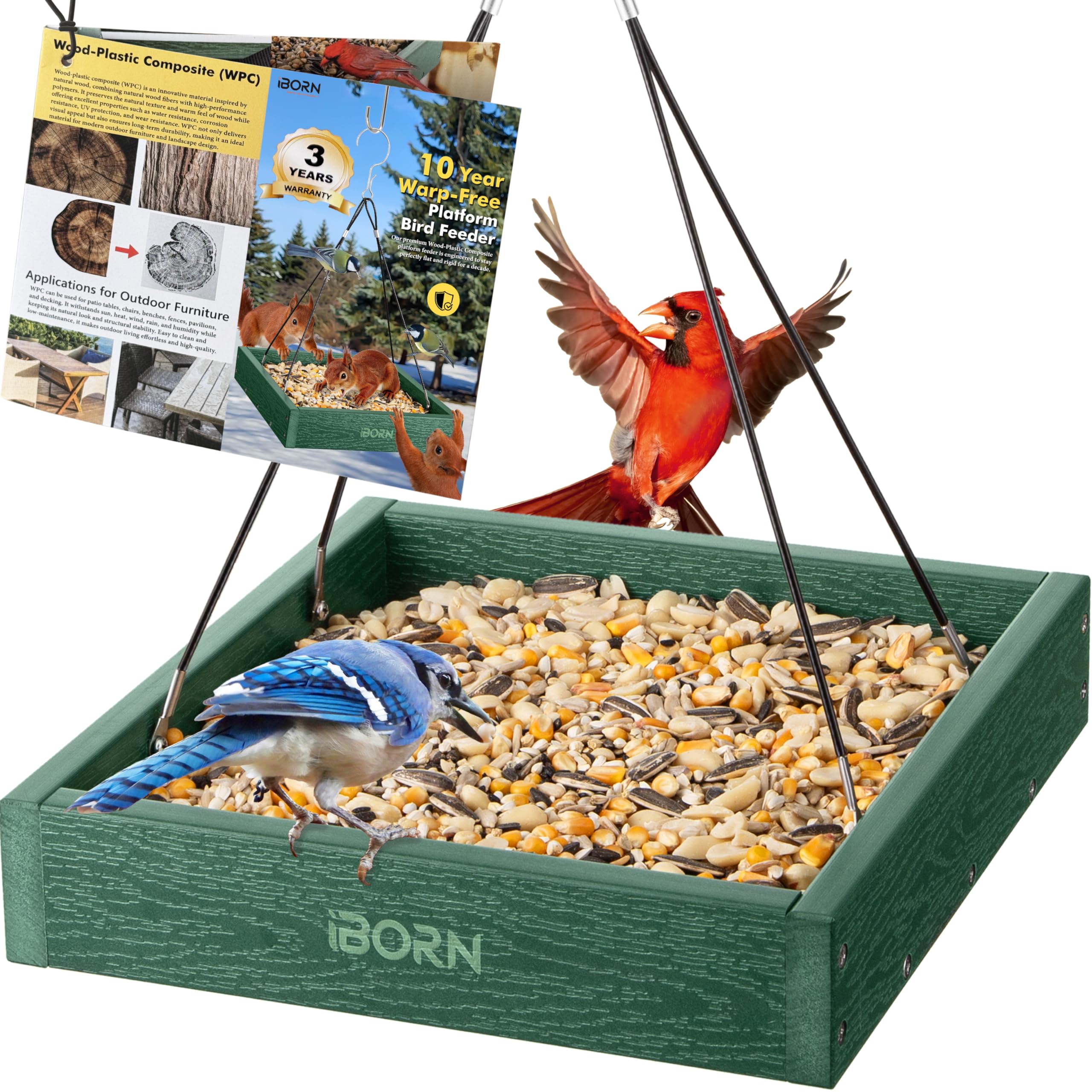
The iBorn feeder uses a wood-plastic composite formulation that blends cedar fiber with recycled plastic, producing a textured grain that looks like real wood without the maintenance. The 10.6-inch square tray holds three pounds of seed — enough for a day of heavy jay traffic — and the manufacturer guarantees the color will not fade for five years and the tray will not warp for a full decade.
A key technical advantage is the ROHS compliance certification, which means the composite materials contain no harmful levels of restricted substances, making the feeder safe for birds and for routine handling during refills. The 2.8-pound weight gives the hanging feeder enough stability that a group of jays landing simultaneously will not tip it over. Several customers note that the deep tray design reduces spillage compared to tube feeders, and the mesh bottom filters out seed dust effectively.
Some users mention that the included hanging hardware, while functional, feels less heavy-duty than the feeder body itself. A replacement with a swiveling metal hook could improve wind resistance, but the overall build quality and three-year warranty offset this minor issue. For anyone wanting a composite feeder that closely mimics the look of a classic cedar tray without the annual sealing ritual, this is a strong contender.
Why we love it
- WPC composite resists warping and UV fading for years
- ROHS certified for bird and handler safety
- Deep tray reduces spillage while holding 3 lbs of seed
Good to know
- Hanging hardware could be upgraded for high-wind areas
- 10.6″ tray is smaller than some alternative platform models
3. Gtongoko WPC Composite Platform Feeder
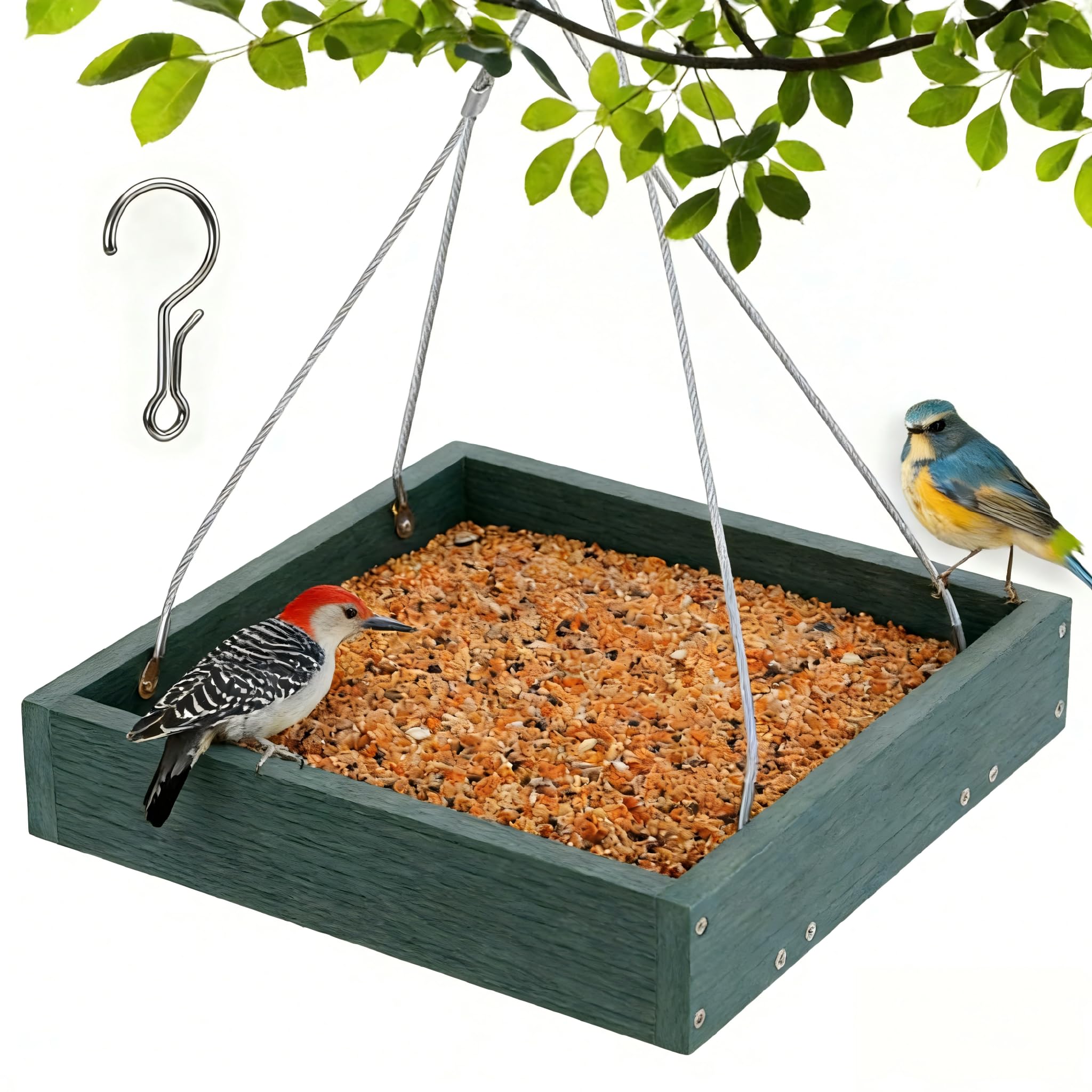
The Gtongoko feeder delivers a 10-inch square WPC tray with a powder-coated metal mesh bottom at an accessible price point. The composite material, reinforced with rust-proof screws, handles rain and sun without cracking or warping, and the 3.5-pound seed capacity exceeds many similarly sized trays. The hanging cables are sturdy enough to keep the tray stable, though a few buyers note the hook itself is the weakest link in the assembly.
Customer feedback consistently praises the tray’s performance with dried mealworms and sunflower seeds, specifically attracting blue jays, cardinals, and finches. One reviewer solved a bullying problem by giving a mockingbird its own dedicated feeder with suet, leaving the Gtongoko tray free for jays. The open design makes refilling and hose cleaning straightforward, and the mesh bottom allows water to drain while preventing seed from sitting in standing moisture.
This feeder lacks the long-term color and warp guarantees of the iBorn model, but for buyers who want a functional composite tray at a very competitive price, it delivers reliable performance. The trade-off comes down to warranty length and the subtle difference in composite quality — the Gtongoko is slightly lighter at just under two pounds, which makes it more susceptible to swinging in exposed hanging locations.
Why we love it
- Competitive price for a WPC tray with metal mesh drainage
- 3.5 lb capacity fits a full day of jay feeding
- Easy to refill and hose clean with open tray design
Good to know
- Hook quality is lower than the tray itself; consider an upgrade
- Lighter build may sway more than heavier composite options
4. Kingsyard Large Platform Bird Feeder with Dome

The Kingsyard dome feeder combines an 11-inch hexagonal recycled plastic tray with a clear, adjustable dome that can be raised or lowered to control access. When lowered to around three inches, the dome blocks larger bully birds like grackles while still allowing blue jays and cardinals to reach the seed. The dome also rotates, making it difficult for squirrels to gain a stable foothold — a feature that several reviewers confirm reduces pilfering.
The tray rim is two inches deep, which helps contain seed during gusty conditions, and the fine metal mesh bottom with small drainage holes prevents moisture buildup. The recycled plastic construction is noticeably thick and dense, weighing in at about 2.4 pounds, which provides enough heft to resist moderate winds when hung from a strong branch or hook. Users report that the assembly is straightforward and that birds discovered the feeder within hours of installation.
One limitation is that very determined grackles can still reach seed even with the dome fully lowered, meaning the design is squirrel-resistant rather than entirely squirrel-proof. Additionally, the dome makes top-filling slightly more awkward because you need to lift it or tilt it to pour seed into the tray. For blue jay enthusiasts who want weather protection and a visual deterrent for larger mammals, this is the most feature-rich hanging option.
Why we love it
- Adjustable dome provides rain cover and deters squirrels simultaneously
- Thick recycled plastic construction resists fading and dents
- Hexagonal shape with 11″ width accommodates multiple jays at once
Good to know
- Dome may not completely block aggressive grackles or starlings
- Refilling requires maneuvering around the dome, takes slightly more effort
5. Cedar Alpha Cedar Wood Platform Tray Feeder
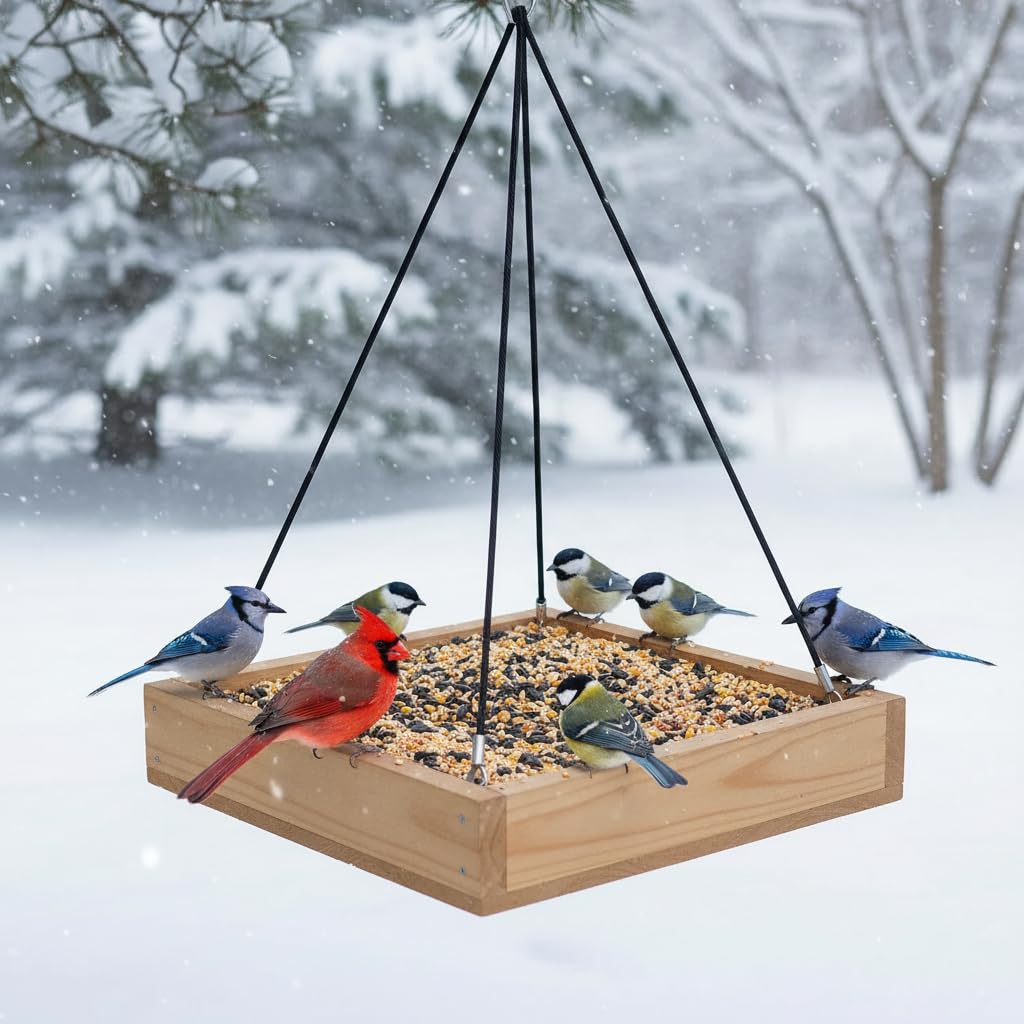
The Cedar Alpha feeder is a straightforward 12-inch square tray made from solid cedar, hand-polished to a smooth finish that leaves no rough edges for birds or handlers. Cedar naturally resists decay and insect damage better than pine or fir, and the open design lets birds easily spot the seed while landing. The mesh bottom allows water to pass through, keeping peanuts and sunflower hearts dry after a rain shower.
Customer feedback consistently describes the feeder as well-made and attractive, with jays and other birds visiting within days of installation. The 12-inch by 12-inch platform gives blue jays generous landing space — wider than most composite models — and the shallow 2-inch rim keeps the tray visible from every angle. Owners who already have multiple feeders note that this cedar tray attracts the widest variety of species, including pigeons and bluebirds, which is ideal for someone wanting broad backyard diversity.
The main consideration is maintenance: solid cedar, while naturally rot-resistant, still benefits from an annual coat of food-safe sealant to prevent the wood grain from raising after repeated wet-dry cycles. Some reviewers also mention that the tray holds relatively little seed before shells accumulate, requiring more frequent rinsing than mesh-bottomed composite feeders. For those who prefer the look and feel of genuine wood and are willing to perform periodic upkeep, this is a visually appealing and durable choice.
Why we love it
- 12-inch solid cedar platform offers the largest landing area in this guide
- Hand-polished to a smooth, splinter-free surface
- Natural cedar provides inherent moisture and insect resistance
Good to know
- Requires periodic sealing to maintain appearance over the years
- Shallow tray may need more frequent cleaning as seed hulls accumulate
FAQ
Why won’t blue jays use my tube feeder?
Should I use a dome with my platform feeder for blue jays?
How often should I change the seed in a platform feeder?
Can a ground feeder work for blue jays in a yard with cats?
Final Thoughts: The Verdict
For most gardeners, the feeder for blue jays winner is the Kingsyard Ground Bird Feeder because its five-pound capacity and ground-level stability attract jays naturally while requiring the least daily maintenance. If you want a hanging composite tray with a wood-like appearance and decade-long warp resistance, grab the iBorn Platform Feeder. And for a budget-friendly composite option with reliable mesh drainage that still draws blue jays consistently, nothing beats the Gtongoko WPC Platform Feeder.