
A chicken coop built with the wrong wire is an open invitation for raccoons, foxes, and snakes to feast on your flock. The difference between a secure coop and a nightly tragedy often comes down to mesh size, gauge thickness, and whether that wire was galvanized to handle months of rain and soil contact without rusting through.
I’m Mo Mahin — the founder and writer behind Furric. Over the last several years, I’ve analyzed hundreds of fencing specifications, studied galvanization processes, and sifted through thousands of owner reports to understand exactly which meshes keep poultry safe and which ones fail at the first sign of a determined predator.
This guide breaks down five distinct options to help you choose the right wire for chicken coop based on predator pressure, climate exposure, and how much DIY effort you are willing to invest.
How To Choose The Best Wire For Chicken Coop
Selecting the right wire for a chicken coop comes down to three variables: mesh opening size, wire thickness measured in gauge, and the type of corrosion protection applied. Each variable directly affects whether the fence keeps predators out or crumbles under weather and claw pressure within a year.
Mesh Size: The Predator Gate
Standard poultry netting with 1-inch hexagonal openings cannot stop raccoons, weasels, or snakes. These animals reach through the gaps, pull chicks apart, or squeeze their entire bodies through 1-inch holes. The safe standard is a 1/2-inch x 1/2-inch square mesh. That opening size blocks most mammalian predators and prevents snakes from entering. For floor protection, 1/2-inch x 1-inch welded wire is acceptable because the narrower dimension prevents claw entanglement, but wall and roof panels should use the smaller square mesh.
Gauge Thickness: Structural Integrity
Wire gauge numbers operate inversely — a smaller number equals thicker, stronger wire. 16-gauge wire (roughly 1.6mm diameter) holds its shape under raccoon prying and heavy snow loads, but is stiffer to cut and install. 19-gauge wire (roughly 1.0mm) is easier to handle with standard snips but bends under sustained pressure. A coop in a high-predator area should use 16-gauge for the lower 24 inches where raccoons and foxes attack. The upper run can use 19-gauge without compromising safety.
Galvanization and Coating: Rust Resistance
Uncoated steel rusts within weeks of outdoor exposure. Hot-dip galvanizing applies a thick zinc layer that withstands years of rain, humidity, and soil contact. PVC-coated wire adds a second barrier that prevents scratches from initiating corrosion, though the coating can peel if the wire is bent sharply during installation. Double-galvanized hardware cloth (welded then hot-dipped again) offers the highest corrosion resistance for ground-contact installations.
Quick Comparison
On smaller screens, swipe sideways to see the full table.
| Model | Category | Best For | Key Spec | Amazon |
|---|---|---|---|---|
| YARDGARD 1/2 x 1 in. 16-Gauge | Premium | High-predator fully enclosed coops | 16-gauge welded 1/2 x 1 inch mesh | Amazon |
| Gartist 1/2 inch 16×50 ft | Mid-Range | Snake-proof runs and garden barriers | 19-gauge hot-dip galvanized 1/2 inch square | Amazon |
| YARDGARD 1/2 inch 24×25 ft | Mid-Range | Small coop windows and vermin exclusion | 19-gauge woven 1/2 inch hexagonal mesh | Amazon |
| Mklsit Green PVC Coated | Budget | Decorative runs and floral craft projects | 0.9mm galvanized core with PVC coating | Amazon |
| Fabulas 16.9×40 ft | Budget | Temporary partitioning and garden exclusion | 0.6mm galvanized iron hexagonal 0.6 inch | Amazon |
In‑Depth Reviews
1. YARDGARD 1/2 in. x 1 in. Mesh Welded Wire 16-Gauge
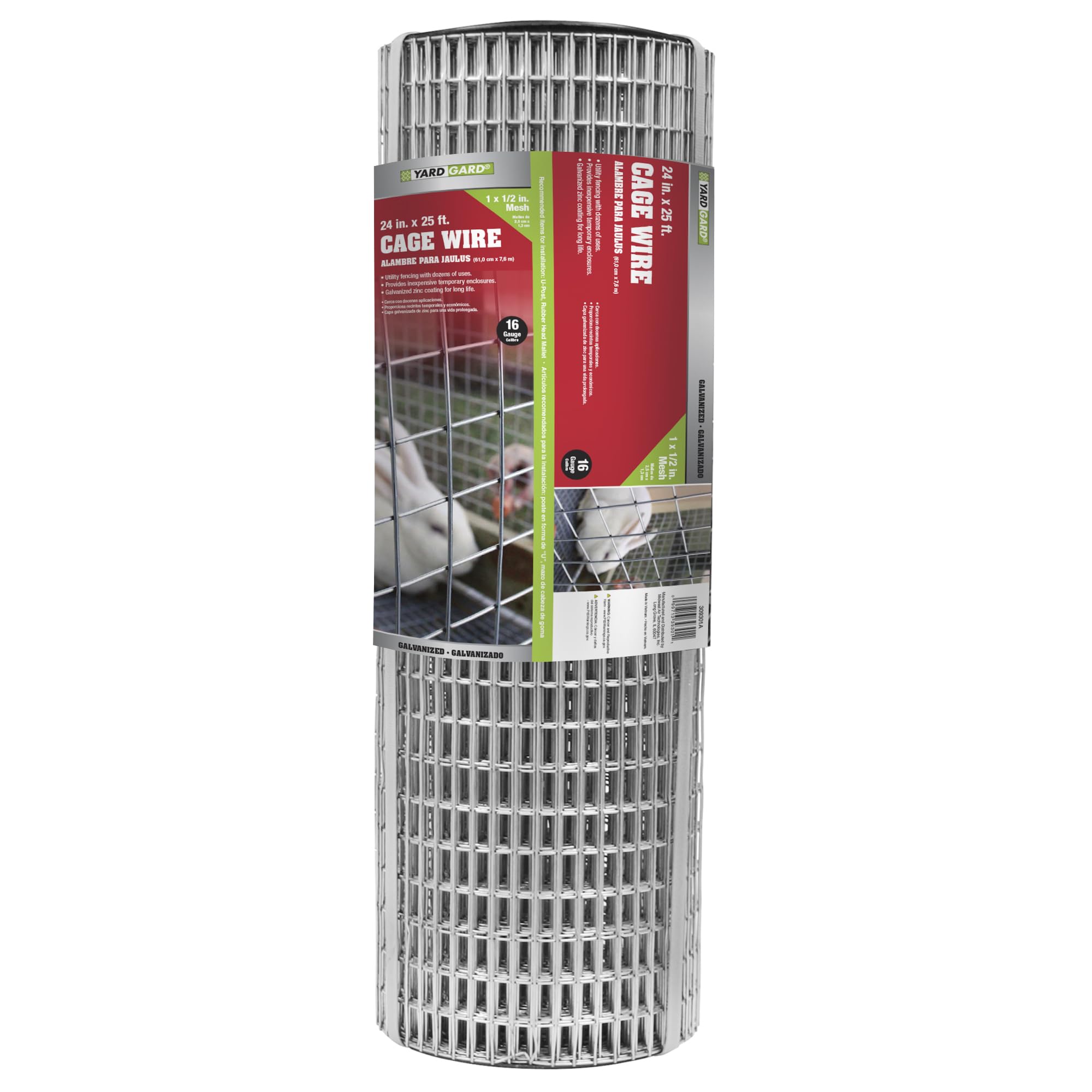
The YARDGARD 16-gauge welded wire fence roll is the strongest mesh in this lineup, with a 1/2-inch by 1-inch opening that blocks raccoon paws while still allowing airflow through the coop. The 16-gauge thickness makes it noticeably stiffer than standard hardware cloth — it resists bending when a predator pushes against it and holds its shape against snow or debris accumulation on top of a run.
Welded construction eliminates the joint slippage common with woven wire. Each weld creates a rigid intersection that maintains exact spacing, so no gaps open up over time. The galvanized coating handles direct ground contact without showing rust, as confirmed by owners using it for rabbit hutch flooring and garden exclusion fences that stayed corrosion-free through wet seasons.
The main trade-off is installation effort. Cutting this wire requires heavy-duty bolt cutters or aviation snips, and bending sharp corners without breaking welds takes patience. At 18.66 pounds for a 25-foot roll, it demands solid staple spacing and sturdy framing. For a permanent coop in a predator-heavy area, this weight is a feature, not a flaw.
Why we love it
- 16-gauge thickness resists raccoon prying and heavy weather loads
- Welded joints hold shape without gap formation over time
- Galvanized coating survives ground contact without corrosion
Good to know
- Requires heavy-duty cutters for installation
- Weld breakage possible if bent sharply at corners
2. Gartist 1/2inch 16×50 ft Hardware Cloth
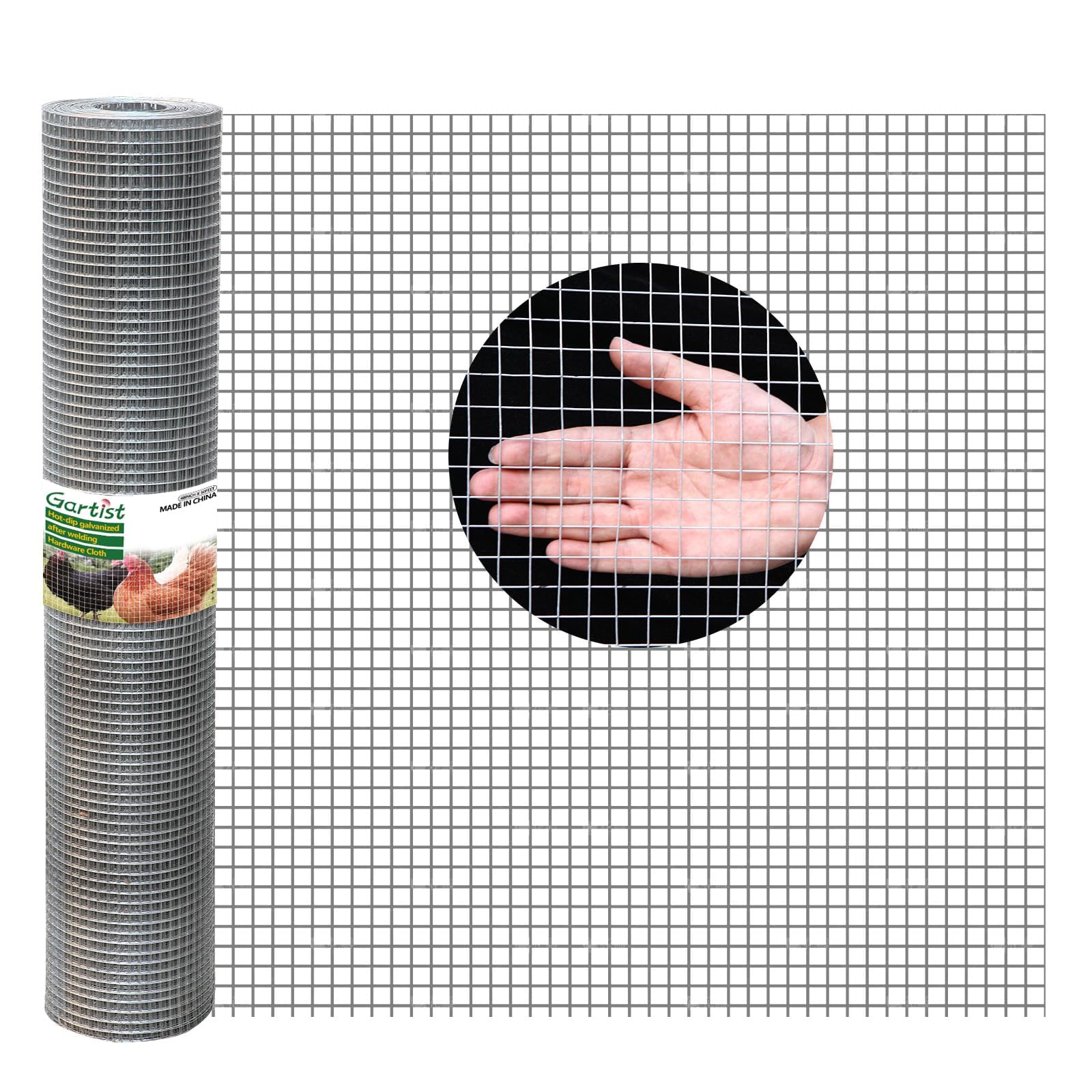
The Gartist hardware cloth uses a double-galvanizing method — the steel wire gets an initial zinc coat before welding, then the finished mesh undergoes hot-dip galvanizing. This dual-layer protection makes it the most corrosion-resistant roll in the mid-range tier, ideal for coops built in humid climates or locations where the mesh touches damp soil.
The 19-gauge wire with 1/2-inch square openings is the standard specification for snake-proofing a coop. Snakes cannot compress their skulls through a 1/2-inch gap, and the rigid square mesh prevents them from widening openings by pushing against the wire. Owners report successful exclusion of raccoons, skunks, and opossums using this material stretched over wooden frames with a heavy-duty stapler.
At 6.07 pounds for a 50-foot roll, it feels substantial but remains manageable for one-person installation. The wire cuts cleanly with tin snips, and the hot-dip coating does not flake off during cutting like some thinner galvanized meshes. Some rolls may arrive with a single broken wire at the edge, but that defect does not compromise the overall panel strength.
Why we love it
- Double hot-dip galvanizing provides maximum rust resistance
- 1/2-inch square mesh blocks snakes and raccoons effectively
- 50-foot length covers large runs without splicing
Good to know
- Occasional edge wire defects reported
- 19-gauge bends under sustained predator pressure
3. YARDGARD 1/2 Inch Mesh Welded Wire 24×25 ft

This YARDGARD hardware cloth uses a 19-gauge hexagonal mesh that is flexible enough to wrap around coop corners and contour to irregular framing. The 24-inch width is specifically useful for adding a protective skirting around the base of a coop, where predators most commonly attempt entry.
The galvanized coating is applied before weaving, which coats the wire evenly but leaves the cut edges exposed. When snipping panels, a quick dab of rust-inhibiting paint on the exposed ends extends the service life significantly. Owners using this mesh to block vermin under sheds and decks report that raccoons and feral cats could not penetrate the 1/2-inch openings, even after repeated attempts.
At 0.56 pounds, this is a lightweight product that ships in a compact roll. The wire can be cut with standard household scissors and attached with a hammer stapler. For a full-sized walk-in coop, you will need multiple rolls, but for window vents, pop-door covers, and ground barriers, a single 25-foot roll covers substantial area.
Why we love it
- Flexible hexagonal pattern wraps around corners effortlessly
- Lightweight enough for one-handed installation
- 24-inch width perfectly matches standard coop base height
Good to know
- Cut edges remain uncoated and can rust
- 19-gauge bends if raccoons push repeatedly
4. Mklsit PVC Coated Chicken Wire 15.7 x 315 Inches

The Mklsit wire features a galvanized iron core wrapped in a green PVC coating that provides a second layer of weather protection and blends into garden surroundings visually. The 0.9mm wire diameter is thicker than standard budget chicken wire, giving it enough rigidity to maintain shape in a run while remaining pliable enough for floral craft framing and decorative applications.
The PVC coating prevents rust even when the wire is cut, because the coating seals the cut edges from direct moisture contact. Owners using this mesh for wedding arches and raised garden bed enclosures appreciate that the green finish does not rust-stain wood frames and stays visually consistent for years. The 1/2-inch by 5/8-inch opening is small enough to block most rodents but large enough for chickens to see through clearly.
The width of 15.7 inches is narrower than standard hardware cloth rolls, so covering a full 6-foot-high run wall requires multiple horizontal strips. The coating can peel if the wire is bent back on itself repeatedly, so plan each cut carefully. For a budget-conscious build where predator pressure is low — a daytime run rather than a night coop — this is a serviceable choice.
Why we love it
- PVC coating prevents rust on cut edges
- Green finish blends with garden aesthetics
- 0.9mm core is thicker than basic chicken wire
Good to know
- Narrow width requires multiple strips for tall walls
- PVC coating can peel when bent sharply
5. Fabulas Chicken Wire Fencing Mesh 16.9 x 40 ft

The Fabulas chicken wire mesh uses 0.6mm galvanized iron wire formed into 0.6-inch hexagonal openings. This is the lightest-gauge product in the lineup, designed for temporary garden exclusion and craft projects rather than permanent predator-proof containment. A raccoon can tear through 0.6mm wire with minimal effort, so this roll should not be used as the primary security layer for a coop that houses birds overnight.
The kit includes nitrile gloves and a small wire-cutting pliers, plus a 10-meter roll of binding wire for splicing panels together. Owners report success using this mesh inside plastic totes to create plant-protection cages, around raised vegetable beds to deter rabbits, and at the bottom of planter boxes to block moles. The wire is soft enough to cut with the included pliers and bend into shape without tools.
For its intended use — keeping squirrels and rabbits out of garden vegetables — this mesh performs well at a very low entry cost. The included accessories add value for a first-time builder who does not already own fencing tools. The 40-foot length provides generous coverage for linear garden borders, but the narrow 16.9-inch width limits vertical coverage.
Why we love it
- Includes cutters, gloves, and binding wire
- Soft wire bends easily for DIY crafts and plant cages
- 40-foot roll covers large garden perimeter strips
Good to know
- 0.6mm wire is too thin for predator-proofing a coop
- Gloves included are child-sized and fit poorly
FAQ
Can I use standard chicken wire with 1-inch hexagonal openings for a chicken coop?
How far below ground should I bury wire to stop digging predators?
Will PVC-coated wire last longer than plain galvanized wire outdoors?
What staple type should I use to attach hardware cloth to wooden framing?
Final Thoughts: The Verdict
For most gardeners, the wire for chicken coop winner is the YARDGARD 1/2 x 1 in. 16-Gauge Welded Wire because its thick gauge and welded construction provide genuine predator resistance that 19-gauge woven meshes cannot match. If you want the best balance of snake-proofing and rust protection without the higher cost, grab the Gartist 1/2-inch double-galvanized hardware cloth. And for lightweight garden exclusion and temporary partitioning, nothing beats the value of the Fabulas chicken wire kit with its included tools.