
When your cat is diagnosed with liver disease, every meal becomes a medical decision. The wrong ingredients can accelerate organ stress, while the right phosphorus levels and high-quality proteins can slow disease progression and improve quality of life.
I’m Mo Mahin — the founder and writer behind Furric. I’ve spent years analyzing veterinary nutritional guidelines, cross-referencing ingredient lists against AAFCO minimums, and studying owner-reported outcome data to identify which formulas truly support feline hepatic function.
This guide breaks down the specific phosphorus thresholds, protein sources, and supplemental ingredients that matter most, so you can confidently choose the best cat food for liver disease for your specific cat.
How To Choose The Best Cat Food For Liver Disease
Selecting a diet for a cat with liver disease requires moving beyond generic “healthy” claims. You need to target three specific nutritional levers: phosphorus load, protein quality, and moisture content. Here is what to check before opening your wallet.
Phosphorus — The Number You Must Know
Chronic liver disease often coincides with compromised kidney function, which reduces the body’s ability to excrete phosphorus. Excess phosphorus accelerates renal damage and worsens hepatic encephalopathy. Look for foods that state “low phosphorus” explicitly, and verify the actual percentage. Many premium renal diets aim for under 0.5% phosphorus on a dry matter basis. Foods with more than 50% less phosphorus than the AAFCO minimum are ideal for advanced cases.
Protein Source — Bioavailability Over Quantity
Liver disease impairs the liver’s ability to process ammonia from protein metabolism. The solution is not to starve protein, but to feed highly bioavailable proteins that produce less metabolic waste. Whole muscle meats, chicken, turkey, and fish from cage-free or wild-caught sources are superior to rendered by-products. Avoid foods that use powdered cellulose, excess grains, or carbohydrate fillers, which artificially dilute phosphorus numbers while offering minimal nutritional value.
Moisture Content — Wet Over Dry
Wet food provides essential hydration, which supports kidney perfusion and helps flush toxins that a compromised liver struggles to clear. Canned foods also tend to have lower carbohydrate levels than dry kibble, which is beneficial for cats with concurrent diabetes or obesity-related hepatic lipidosis. A variety pack of 3-ounce cans lets you test textures without committing to a full case your cat might reject.
Quick Comparison
On smaller screens, swipe sideways to see the full table.
| Model | Category | Best For | Key Spec | Amazon |
|---|---|---|---|---|
| Weruva Wx Phos Focused | Wet Food | Lowest phosphorus levels | 50% less phosphorus than AAFCO min | Amazon |
| Stella & Chewy’s Savory Shreds | Wet Food | Picky eaters & shred texture | Shredded muscle meat in broth | Amazon |
| Rx Vitamins Liquid Hepato | Supplement | Liver support alongside diet | Milk thistle + vitamin B in liquid | Amazon |
| Rx Vitamins Hepato Support Caps | Supplement | Easy capsule administration | Milk thistle + vitamin B2 in capsule | Amazon |
| Hill’s m/d GlucoSupport Dry | Dry Food | Diabetic cats with liver concerns | High protein, low carb, arginine | Amazon |
In‑Depth Reviews
1. Weruva Wx Phos Focused, Chicken Formulas Variety Pack, 3oz Can (Pack of 12)
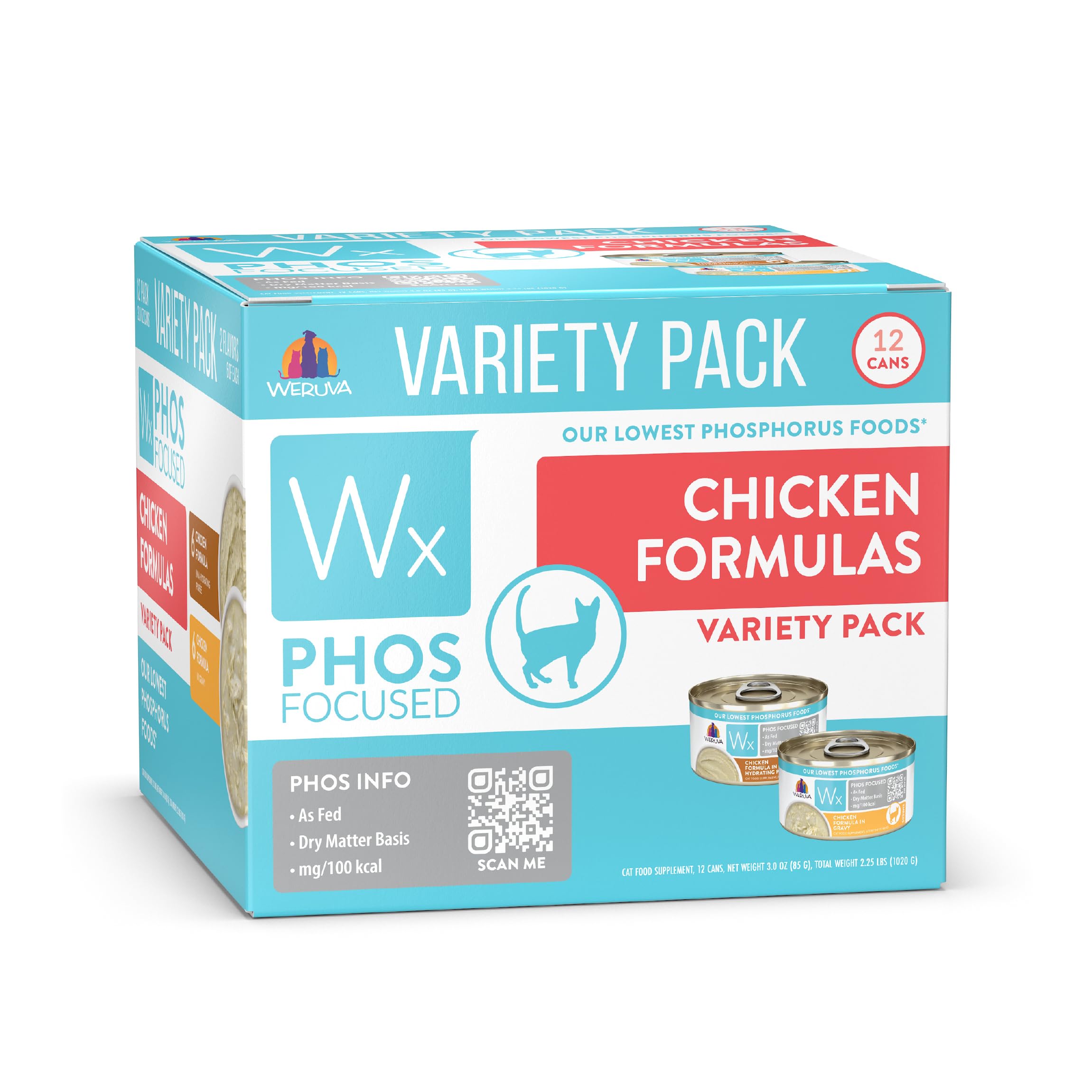
Weruva Wx Phos Focused is built around a single measurable advantage: phosphorus levels up to 50% lower than the AAFCO minimum. That is a concrete, lab-verified number rather than a marketing claim. The formula uses bone-free muscle meats, which naturally keep phosphorus low without relying on carbohydrate fillers or cellulose that merely dilute the nutrient profile without feeding the cat.
Owner reports consistently show kidney and liver values improving over a year of use — one cat’s kidney markers dropped from 2.4 to 1.6. The chicken formulas in gravy and purée textures appeal to most cats, though the “chunks in gravy” style may be rejected by cats that prefer pâté or smoother textures. The 3-ounce cans are small, which is practical for portion control but means 12 cans may disappear fast with a hungry adult cat.
This is a therapeutic-grade diet that avoids the cheap fillers common in prescription lines. It is grain-free, corn-free, and contains no artificial flavors or powdered cellulose. For owners managing liver disease with a phosphorus-first approach, this is the most effective non-prescription starting point.
Why we love it
- Lowers phosphorus by 50% vs AAFCO minimum
- Proven owner results: improved blood markers in 1 year
- Clean ingredient list: no fillers, cellulose, or grains
Good to know
- Texture preferences vary; gravy chunks may be refused
- Small 3 oz cans require frequent reordering
- Some cats need kibble sprinkle coaxing to eat
2. Stella & Chewy’s Carnivore Cravings Savory Shreds Canned Wet Cat Food Variety Pack – (2.8 Ounce Cans, Case of 12)
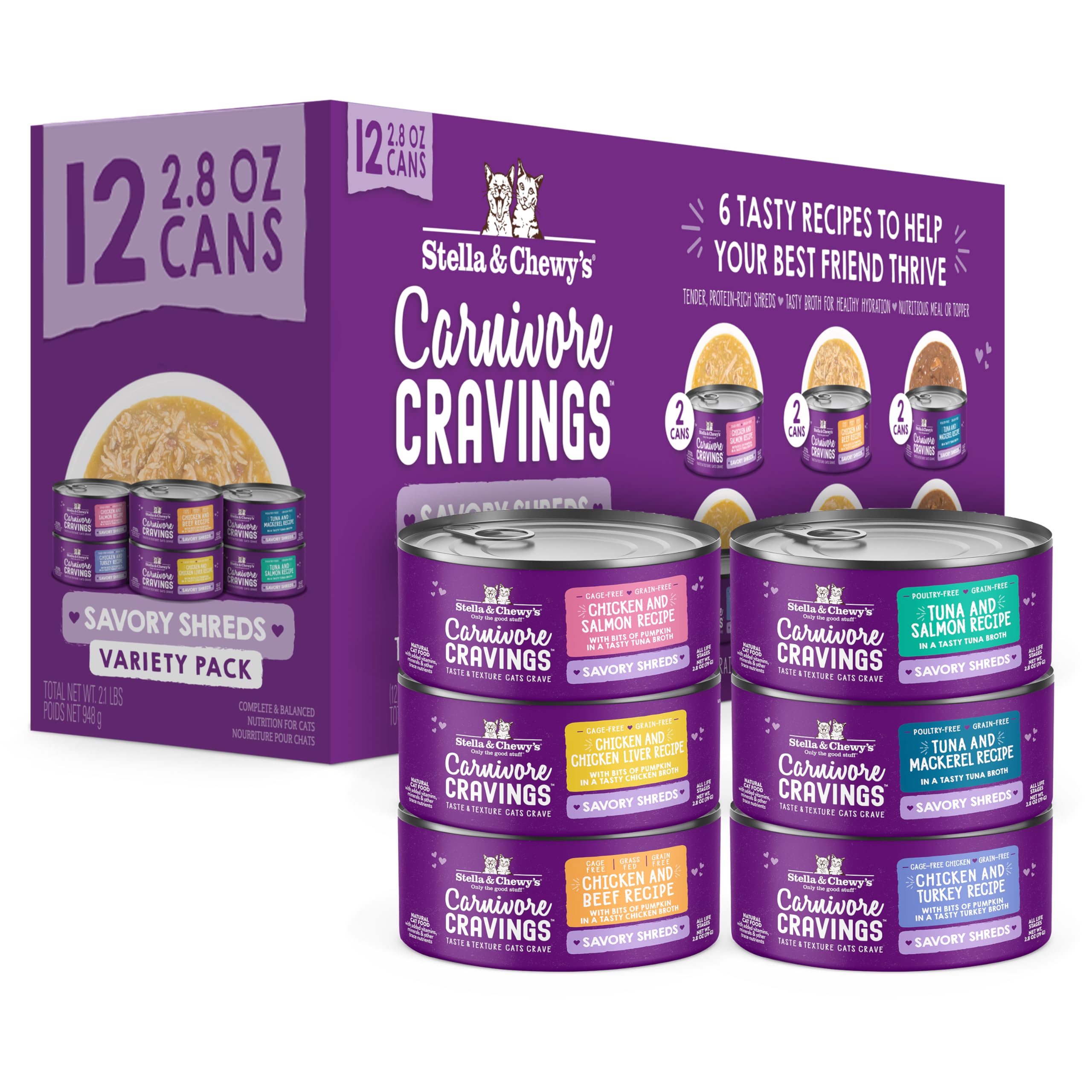
Stella & Chewy’s Savory Shreds focuses on the sensory experience: shredded muscle meat slowly simmered in a savory broth with bits of pumpkin. The texture is distinct from pâté or gravy chunks — shreds that look and smell like human-grade food. Owner reviews note that picky eaters who refuse other renal diets often clean the bowl with this product.
The formula is grain-free and carrageenan-free, making it gentle on sensitive digestive systems. However, the broth has a bright yellow tint from turmeric, which is not inherently concerning but may surprise owners expecting clear gravy. Some finicky cats rejected the shreds entirely, eating only the liquid and leaving the solid meat behind. The variety pack includes cage-free poultry, wild-caught fish, and grass-fed beef, which helps identify which protein source your cat tolerates best.
This is not a dedicated low-phosphorus diet like the Weruva, so it is better suited for cats whose liver values are mildly elevated or who need high moisture intake and appetite stimulation. For advanced liver disease requiring strict phosphorus restriction, pair this with a supplement or use it as a rotation option rather than the sole diet.
Why we love it
- Shredded real meat texture appeals to picky eaters
- High moisture content supports hydration
- Grain-free, carrageenan-free, digestible ingredients
Good to know
- Not a dedicated low-phosphorus formula
- Bright yellow broth from turmeric may be off-putting
- Some cats lick gravy but leave shreds behind
3. Rx Vitamins Liquid Hepato Support for Dogs & Cats – Liver Support Supplement with Milk Thistle (Silymarin & Silybinin) and Vitamin B – Bacon Flavor (4oz)
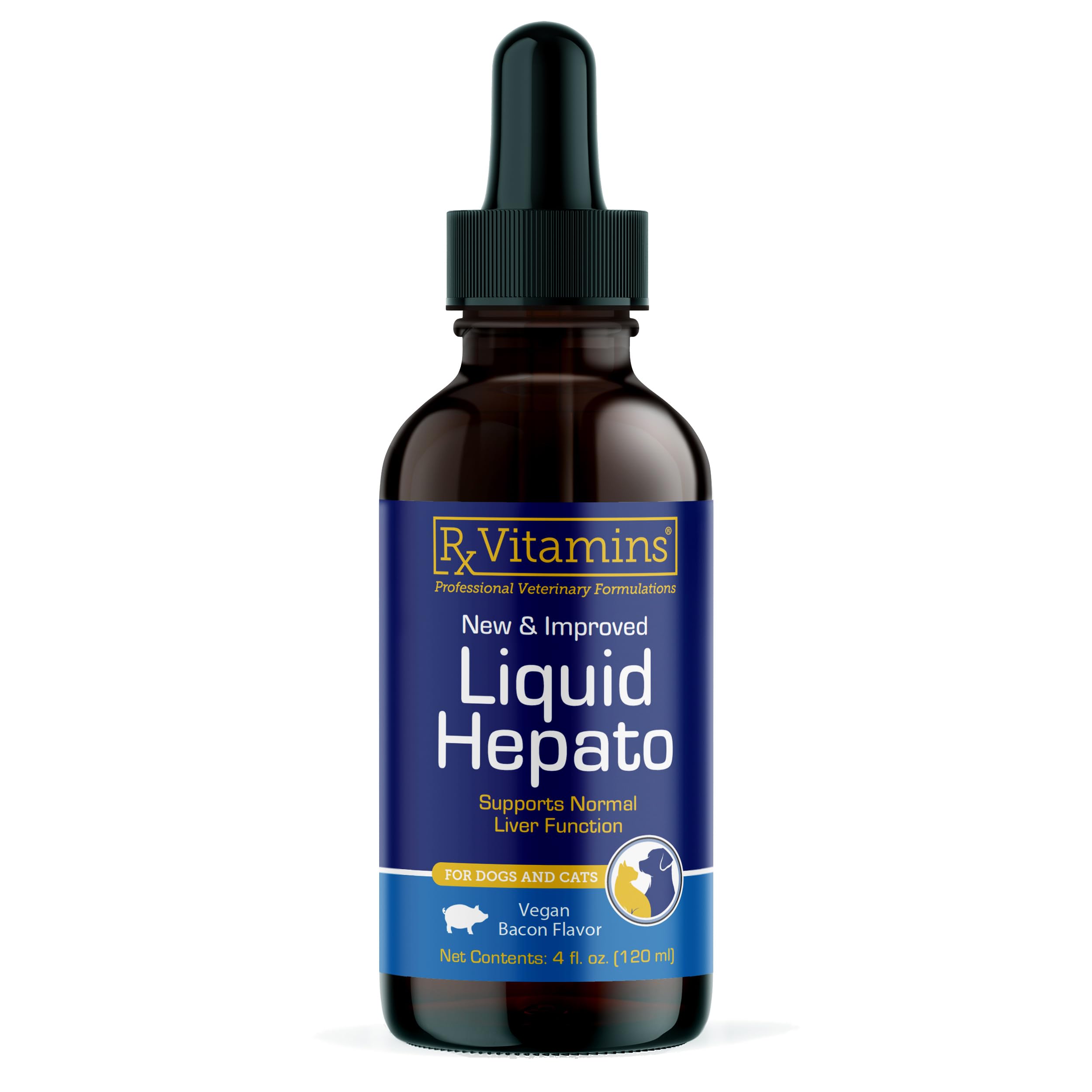
Rx Vitamins Liquid Hepato Support provides a targeted delivery of silymarin and silybinin — the two active compounds in milk thistle that are clinically studied for liver protection. Combined with a B-vitamin complex (B1, B2, B6) that supports energy metabolism, this is a veterinarian-recommended option for elevated liver enzymes. The liquid form makes dosing adjustable: 1 ml per 10-20 pounds of body weight twice daily.
Owner data shows remarkable results. One 16-year-old Yorkie with liver disease and pancreatitis normalized both ALT and PSL values when the supplement was paired with a raw rabbit diet. The bacon flavor masks the strong herbal scent, though cats with sensitive palates may still detect it. Some users report that the suspension settles and clumps, requiring manual stirring before each dose, and the dropper can leak over time.
This is strictly a supplement, not a food replacement. For cats with confirmed liver disease, liquid Hepato Support works best when added to a low-phosphorus wet food like the Weruva. The key is consistency: twice-daily administration without skipping produces the most reliable bloodwork improvements.
Why we love it
- Contains clinical-grade silymarin and silybinin
- Proven to lower ALT and normalize liver enzymes
- Adjustable liquid dosing for precise control
Good to know
- Suspension settles and requires manual mixing
- Strong herbal scent detected by some pets
- Dropper can leak after extended use
4. Rx Vitamins Hepato Support for Dogs & Cats – Liver Support Supplement with Milk Thistle – Boosts Liver Detox for Senior Pets – 90 ct
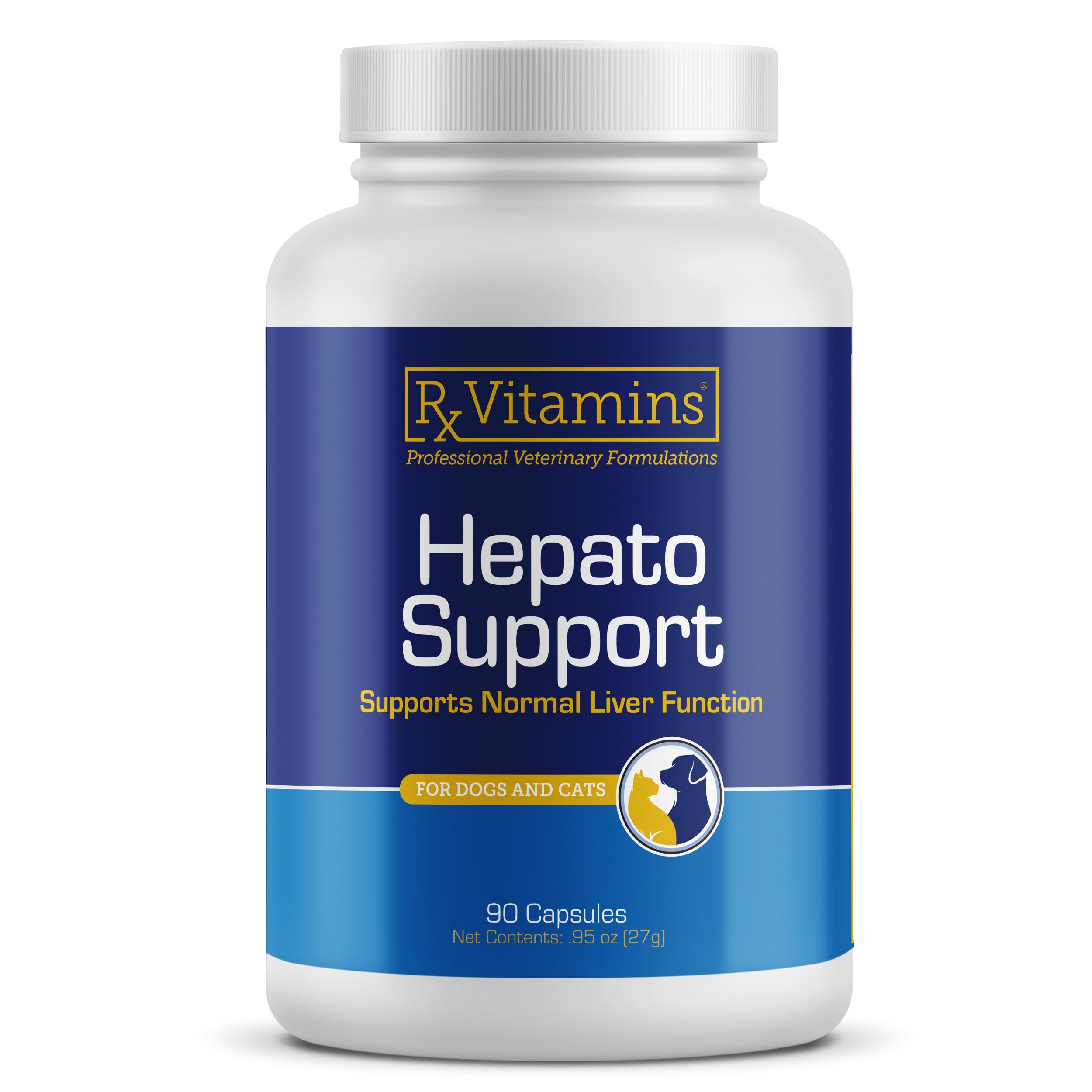
Rx Vitamins Hepato Support in capsule form offers the same milk thistle and vitamin B2 profile as the liquid version, but in an unflavored powder that can be emptied onto food. This is helpful for cats that reject the bacon taste or the liquid texture. The 90-count bottle provides three months of twice-daily servings for a 10-pound cat, making it the most cost-effective long-term supplement choice.
Owner reports highlight normalization of severe liver numbers after four months of consistent use, combined with Denamarin and a diet switch. One Westie mix with low liver readings saw improvement on this formula alone. The powder is yellow and may be visible on wet food, but most cats eat it without issue. The main downside is the same as the liquid: the formula requires the capsule to be opened and mixed fresh at each meal, which adds a step to the feeding routine.
This is best for owners who prefer a dry format for travel or who want to avoid the dropper leakage issue of the liquid. For cats that will eat the capsule whole when hidden in a treat pocket, this becomes even more convenient. The unflavored nature makes it compatible with any food.
Why we love it
- 3-month supply in one bottle — great value
- Unflavored powder mixes easily into any food
- Proven to normalize high liver enzymes in 4 months
Good to know
- Requires opening capsule and mixing at each meal
- Yellow powder may be visible on light-colored food
- Not a standalone diet — must pair with food
5. Hill’s Prescription Diet m/d GlucoSupport Dry Cat Food, Chicken, 4 lb. Bag

Hill’s Prescription Diet m/d GlucoSupport is a veterinary-exclusive formula designed for diabetic cats, which are frequently comorbid with hepatic lipidosis or other liver conditions. The clinical nutrition profile emphasizes high protein and reduced carbohydrates to help stabilize blood glucose, and includes added arginine to support hepatic function. This is the only dry food in this list, which matters for owners whose cats refuse wet food.
Owner feedback is consistently positive: one 15-year-old diabetic cat lost weight and became more energetic after a single bag. The dry format makes it easier to portion and store compared to 12-can cases. However, a prescription from your vet is required to purchase this product. The 4-pound bag is a practical trial size, though the ongoing cost is higher than non-prescription alternatives. Some picky cats that hated other renal diets accepted this food immediately.
This product is not a general liver disease diet — it is specifically optimized for cats with diabetes that also need hepatic-friendly nutrition. For owners managing both conditions simultaneously, this solves two problems with one bag. The low-carb profile helps prevent hepatic lipidosis by ensuring the cat continues eating, which is critical for cats that stop eating due to illness.
Why we love it
- Optimized for diabetic + hepatic support in one formula
- High protein helps maintain muscle mass
- Dry format accepted by cats that refuse wet food
Good to know
- Requires a prescription from your veterinarian
- Higher ongoing cost than non-prescription foods
- Not a general low-phosphorus liver diet
FAQ
What phosphorus percentage should cat food have for liver disease?
Can I mix a milk thistle supplement with any wet food?
Is dry food ever appropriate for a cat with liver disease?
Final Thoughts: The Verdict
For most gardeners, the best cat food for liver disease winner is the Weruva Wx Phos Focused Variety Pack because it delivers the lowest measurable phosphorus on the market without relying on cheap fillers, and real owner data shows improved blood markers within a year. If you need a targeted supplement alongside the diet, grab the Rx Vitamins Liquid Hepato Support for its clinical milk thistle dose and proven enzyme-lowering results. And for a cat that also has diabetes, nothing beats the Hill’s Prescription Diet m/d GlucoSupport.