
Laying a rug on a carpeted floor creates a frustrating problem: the rug drifts, bunches, and curls at the edges, turning a decorative centerpiece into a tripping hazard. The wrong pad leaves you re-straightening the rug every time someone walks across the room, while the right pad locks it down without damaging the carpet fibers underneath.
I’m Mo Mahin — the founder and writer behind Furric. I spend my time analyzing material compositions, adhesive strengths, and grip-surface technologies across hundreds of floor-care products, matching owner feedback to specific use-case scenarios for carpeted and hard-floor environments.
After sorting through dozens of options, I narrowed the list to five pads that actually deliver on their promise. This guide breaks down the real-world performance of every rug pad for carpeted floors I recommend.
How To Choose The Best Rug Pad For Carpeted Floors
Not every pad works the same on carpet. A pad designed for hardwood may slide on plush carpet, and a mesh tape may fail when the carpet pile is too deep. Focus on these factors to pick a pad that stays where you place it.
Material: Felt with rubber vs. mesh tape vs. suction grippers
For carpeted floors, a felt-and-rubber composite offers the best grip without adhesive residue. The felt side sits against the rug, adding weight and cushion, while the rubber side grips the carpet pile. Mesh tapes require an adhesive bond that sometimes fails on low-pile or synthetic carpets. Suction grippers rely on a smooth surface seal and are largely ineffective on carpet.
Thickness and density
Thicker pads (1/4 inch to 1/2 inch) provide more cushion but can cause the rug to buckle against furniture legs or door thresholds on carpet. A low-profile pad (1/8 inch to 1/4 inch) is safer for runners and high-traffic zones because it doesn’t raise the rug enough to create a trip point. On deep-pile carpet, a thinner pad also reduces the chance the rug shifts under weight.
Adhesive type and backing
Pressure-sensitive adhesive tapes offer a temporary grip that holds most rugs on short-pile carpet. Latex rubber backings create a natural friction grip without a chemical bond — these hold better over time and peel off cleanly during removal. Avoid pads with aggressive acrylic adhesives on carpeted floors; they can leave a tacky residue that attracts dust and dirt into the carpet fibers.
Quick Comparison
On smaller screens, swipe sideways to see the full table.
| Model | Category | Best For | Key Spec | Amazon |
|---|---|---|---|---|
| Mohawk Home 3’x5′ | Felt + Latex | All-around carpet grip + cushion | 1/4″ recycled felt + latex | Amazon |
| GATORGRIP 2×6 Runner | Felt + Rubber | Hardwood to carpet versatility | 1/4″ felt + rubber, made in USA | Amazon |
| Slip-Stop Premium 2×6 | Low-Profile Rubber | Door thresholds, thin rugs | Low-profile felt + rubber blend | Amazon |
| Roberts 50-588 Tape | Mesh Adhesive Tape | DIY install, repositioning | 3″ x 60 ft mesh roll | Amazon |
| Home Techpro Grippers | Suction Pad | Corner flattening on hardwood | 3.9″ sq vacuum-suction pores | Amazon |
In‑Depth Reviews
1. Mohawk Home Non Slip Rug Pad 3′ x 5′

The Mohawk Home pad hits the sweet spot for carpeted floors because its felt-and-latex combination creates enough friction to stop shifting without a permanent bond. The 1/4-inch thickness provides cushioning underfoot without raising the rug so high that it becomes a trip hazard on carpet. Owner reports confirm it holds rugs steady through daily foot traffic and pet movement, which is the primary failure point for cheaper foam pads.
Reversibility is the killer feature here: the felt side works against wall-to-wall carpet while the latex side grips area rugs from above, making this a single-pad solution for layered rug setups. The recycled felt absorbs some sound, which is helpful for creaky floors in older homes. A slight chemical smell is common out of the packaging, but it dissipates after a few days of airing out in a ventilated room.
At this thickness, it trims easily with household scissors for a custom fit around furniture legs or irregular rug shapes. One buyer noted the pad ran larger than the stated dimensions, so measure your rug before cutting to avoid overhang. The one-year warranty covers manufacturing defects, though most defects surface within the first week of use.
Why we love it
- Reversible felt/latex design adapts to carpet or hard floors instantly
- 1/4-inch thickness cushions without buckling under furniture
- Made from recycled materials in the USA
- Easy to cut and customize with standard scissors
Good to know
- Some initial odor requires a few days of airing out
- May run slightly oversized — double-check measurements before cutting
2. GATORGRIP Non-Slip Rug Pad 2×6 Runner
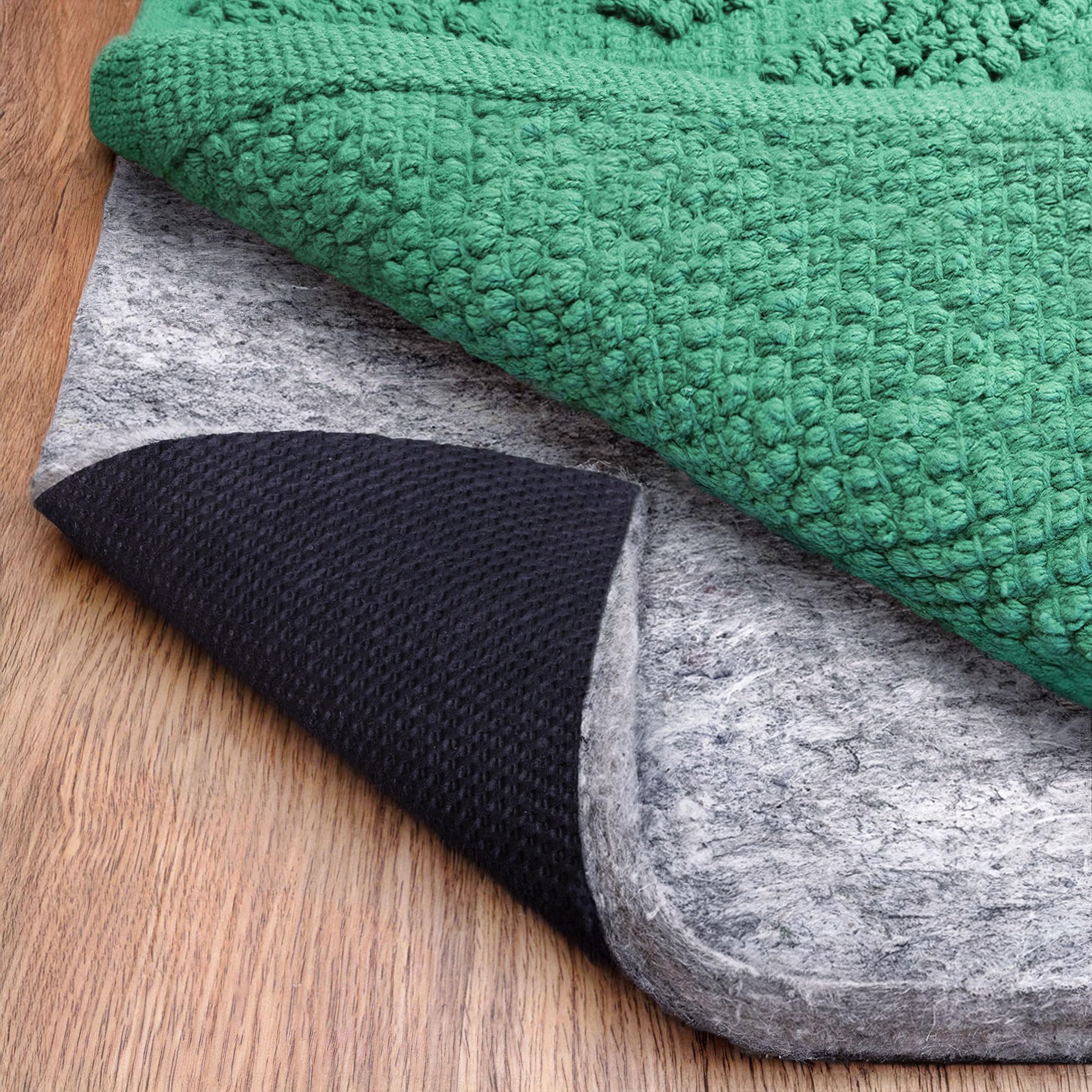
The GATORGRIP runner pad uses a real rubber backing — not latex or synthetic blend — which provides noticeably more initial tack on carpet pile than felt-only alternatives. The rubber side sinks slightly into the carpet fibers, creating a mechanical lock that resists lateral movement even when the rug gets caught by a vacuum cleaner or pet claws. The felt top layer cushions the runner and prevents the rug backing from wearing against the rubber.
This pad is built with low-VOC materials, making it a solid choice for indoor areas where off-gassing is a concern, such as bedrooms or small apartments with limited ventilation. Multiple owner comments confirm the pad arrives with zero chemical odor, which is unusual for a rubber-backed product. The 1/4-inch thickness matches the Mohawk pad, but the GATORGRIP feels denser due to the pure rubber composition.
Trimming is straightforward with sharp scissors, though the rubber layer requires more force to cut cleanly than felt alone. It works across hard floors and carpet, so you can move the runner between rooms without buying a different pad. One caveat: on very high-pile or shag carpet, the rubber grip may not penetrate deep enough for a complete lock, resulting in slight shifting after heavy use.
Why we love it
- Real rubber backing creates strong mechanical grip on carpet fibers
- Zero chemical odor from the packaging — ready for indoor use immediately
- Low-VOC composition safer for bedrooms and confined spaces
- Works reliably on carpet, hardwood, tile, and laminate
Good to know
- Rubber layer is tougher to cut than felt-only pads
- Grip may not hold as well on very high-pile or shag carpet
3. Slip-Stop Premium Low Profile Non-Slip Rug Pad 2×6

The Slip-Stop pad is designed specifically for low-pile rugs and runners where door thresholds or furniture clearance are tight. Its profile is thinner than most felt-and-rubber composites, sitting almost flush with the carpet pile so the rug doesn’t bulge at the edges. The natural/synthetic rubber blend grips the carpet backing without the thickness that causes trip points.
Owner feedback confirms the pad reduces sliding and bunching on carpeted floors, though several buyers noted it doesn’t eliminate movement entirely on plush or medium-pile carpet. The grip is strong enough to keep a runner straight in a mudroom or entryway where door swing and foot traffic create constant lateral force. Sizing runs true to the listed dimensions, making it easy to install without trimming.
The 10-year guarantee on non-slip properties is a standout claim among rug pads — most competitors offer one year at most. Spot cleaning with a damp sponge and air drying maintains the rubber tack. The pad arrived with no detectable odor and laid flat immediately, which is a convenience advantage over thicker pads that need to air out before use.
Why we love it
- Lowest profile on this list — perfect for door thresholds and tight clearances
- 10-year guarantee on non-slip performance, far beyond industry standard
- No odor and lays flat immediately after unrolling
- True-to-size dimensions for easy, no-trim installation
Good to know
- Grip is less aggressive on medium- to high-pile carpet; slight movement may still occur
- Low profile means minimal cushioning — not ideal for bare-knee kneeling or play areas
4. Roberts 50-588 Rug Gripper Indoor Tape 3″ x 60′
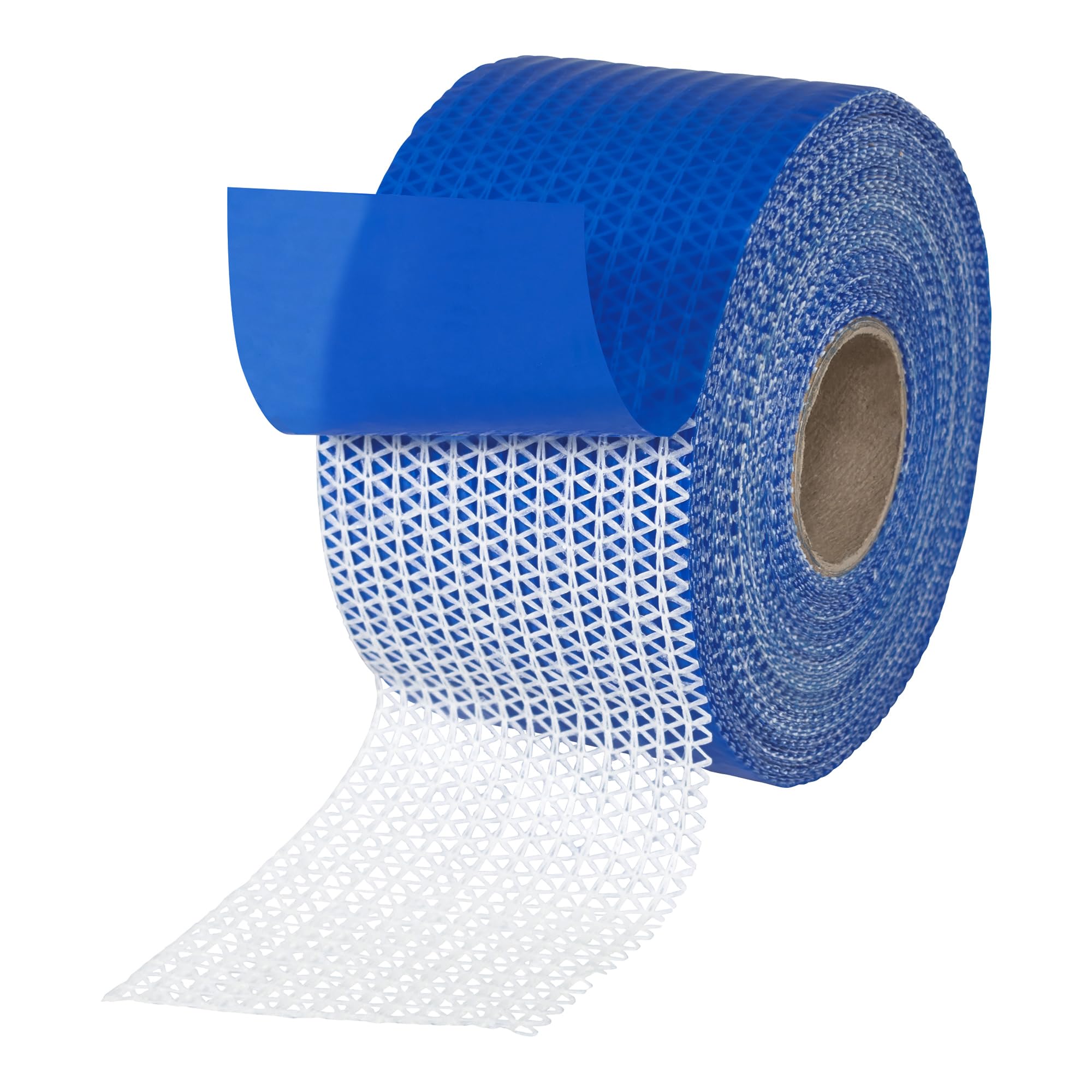
The Roberts tape takes a fundamentally different approach: instead of a pad, it uses a mesh sheet with pressure-sensitive adhesive on both sides. One side sticks to the carpet, and the other grips the rug backing. The tape is designed for accent rugs up to 12 x 12 feet, which covers most standard area rug sizes. Because it’s a thin mesh, it doesn’t add height under the rug at all.
Owner experience splits sharply by carpet type. On low-pile commercial carpet, the tape holds runners securely for weeks under heavy foot traffic without shifting. But on medium-pile residential carpet or on the fuzzy backing of some rugs, the adhesive’s weaker bonding can cause the tape to stay on the carpet but separate from the rug backing. This makes the tape less reliable for carpet-on-carpet applications than for anchoring a rug to a hard floor.
The removable adhesive is the tape’s strongest advantage — it peels off without leaving residue and can be repositioned during installation. One roll covers a significant area and costs less than most pre-cut pads. For DIY installers who want to cut precise strips for irregular rug shapes, this tape offers flexibility that a pre-sized pad cannot match.
Why we love it
- Covers up to 12 x 12 feet with a single roll — great value per square foot
- Removable adhesive peels off cleanly without carpet damage
- Repositionable during installation for precise alignment
- Mesh design adds zero height under the rug
Good to know
- Adhesive may fail to bond on fuzzy rug backing or medium-pile carpet
- Mesh feels thin; some users found the grip insufficient for carpet-on-carpet use
5. Home Techpro Rug Pads Grippers 12-Pack

The Home Techpro grippers use a “Vacuum TECH” design with tiny suction pores that create a low-pressure region when weight presses down from above. This technology works brilliantly on smooth hard floors — linoleum, tile, hardwood — where the suction cups form an airtight seal. The manufacturer explicitly states the gripper does not work on carpeted floors, and owner reports confirm this limitation.
On carpet, the suction pores cannot form an air seal against the fibrous surface, so the pads offer little more grip than placing the rug directly on the carpet. A few owners placed the pads upside down to protect rental floors, which reduced the already minimal carpet grip even further. The adhesive side that sticks to the rug is aggressive and permanent — once affixed, peeling it off may damage the rug backing.
For carpeted applications, these grippers are best used in a carpet-adjacent context: stick them to a rug that sits partially on a rug pad and partially on bare hardwood. As a standalone carpet solution, however, they fundamentally do not fulfill the advertised function. Their primary value remains on smooth, non-porous flooring surfaces only.
Why we love it
- Suction technology works perfectly on tile, laminate, and hardwood floors
- Ultra-thin profile (0.1 inch) is nearly invisible under the rug
- Washable and reusable on smooth surfaces
- 12-pack covers multiple rug corners affordably
Good to know
- Does NOT work on carpet — suction pores require a smooth, non-porous surface
- Adhesive side is permanent; removing it may damage the rug backing
FAQ
Will a rug pad damage my carpet’s fibers or backing?
Can I use the same rug pad on carpet and hardwood floors interchangeably?
What thickness is safest for runners on carpeted stairs?
How do I stop rug corners from curling on carpet?
Do suction-cup rug grippers work on any type of carpet?
Final Thoughts: The Verdict
For most homeowners, the rug pad for carpeted floors winner is the Mohawk Home 3’x5′ Non Slip Pad because its reversible felt-and-latex design provides reliable grip on carpet without the chemical odor or thickness issues of competing pads. If you need the thinnest possible profile for low-clearance doors, grab the Slip-Stop Premium Low Profile pad. And for maximum value across large rugs up to 12 feet wide, nothing beats the coverage and repositionability of the Roberts 50-588 tape.