
Managing a horse with PPID (pituitary pars intermedia dysfunction) means rethinking every scoop of feed and supplement your horse touches. The wrong carbohydrate profile can trigger insulin spikes, laminitic episodes, and worsen the classic symptoms like a heavy, non-shedding coat and muscle wasting. Choosing a formula designed for this specific endocrine condition is the difference between a horse that struggles and one that thrives.
I’m Mo Mahin — the founder and writer behind Furric. I’ve spent years analyzing veterinary studies on equine metabolic disorders, comparing ingredient labels for hidden sugars and starch levels, and cross-referencing thousands of owner-reported outcomes to separate the supplements that deliver real clinical support from those that simply collect shelf dust.
Whether your horse needs a pellet, powder, or liquid to support insulin regulation and adrenal balance, the right feed for horses with cushings targets the root hormonal imbalance while avoiding ingredients that worsen the condition.
How To Choose The Best Feed For Horses With Cushings
Selecting a feed or supplement for a Cushing’s horse requires a sharp focus on metabolic markers, not just broad nutritional claims. You need to look past the marketing and check for three critical parameters that directly affect PPID and insulin resistance.
NSC Levels: The Single Most Important Number
Non-structural carbohydrates (sugar + starch) are the primary trigger for insulin spikes in PPID horses. Any feed or supplement you consider should list a maximum NSC level on the label, ideally under 12% dry matter. If the bag does not state this number, assume it is too high for a horse with Cushing’s. Look for ingredients like beet pulp (without molasses), soy hulls, or alfalfa meal that provide fiber without the glycemic punch.
Active Ingredients That Address the Pituitary
Not all herbs or compounds are equal. Chromium, magnesium, and specific adaptogens like resveratrol and ginseng have documented effects on insulin sensitivity and cortisol modulation. Avoid formulas that rely solely on fillers or generic vitamin premixes. A good Cushing’s feed will list a measurable dose of a research-backed active, such as 500 mg of chromium or a standardized extract of an adaptogenic herb.
Form and Palatability for Picky Eaters
Many Cushing’s horses are older and may have dental issues or finicky appetites. A pellet that disintegrates in water, a fine powder that sticks to wet feed, or a liquid that can be syringed are all valid options. The best feed is the one your horse actually consumes consistently. If the horse refuses to eat it after three days, the cost and clinical promise mean nothing. Always start with a small bag to test acceptance.
Quick Comparison
On smaller screens, swipe sideways to see the full table.
| Model | Category | Best For | Key Spec | Amazon |
|---|---|---|---|---|
| Formula 707 MetaStable | Pellets | University-studied metabolic support | 5 lb bag, Veri-Te resveratrol | Amazon |
| Silver Lining Herbs Pituitary Support | Powder | Pituitary and endocrine balance | 1 lb, 60-day supply | Amazon |
| MetaboBalance Equine Metabolic Support | Powder | Laminitis and insulin resistance | 18 oz, cinnamon flavor | Amazon |
| Hilton Herbs Cushx | Liquid | Clinically trialled liquid formula | 1 liter, herbalist-formulated | Amazon |
| Insulin Resistance Supplement (Guanshiya) | Powder | Budget-friendly blood sugar support | 0.44 lbs, organic herbs | Amazon |
| HA4E Horse Digestive Support | Pellet | Gentle homeopathic preventative care | 300 tablets, unflavored | Amazon |
| Ivermectin Horse Paste (QZQAB) | Paste | Deworming for metabolic horses | 6-pack, apple flavor | Amazon |
In‑Depth Reviews
1. Formula 707 MetaStable Pellets for Horses
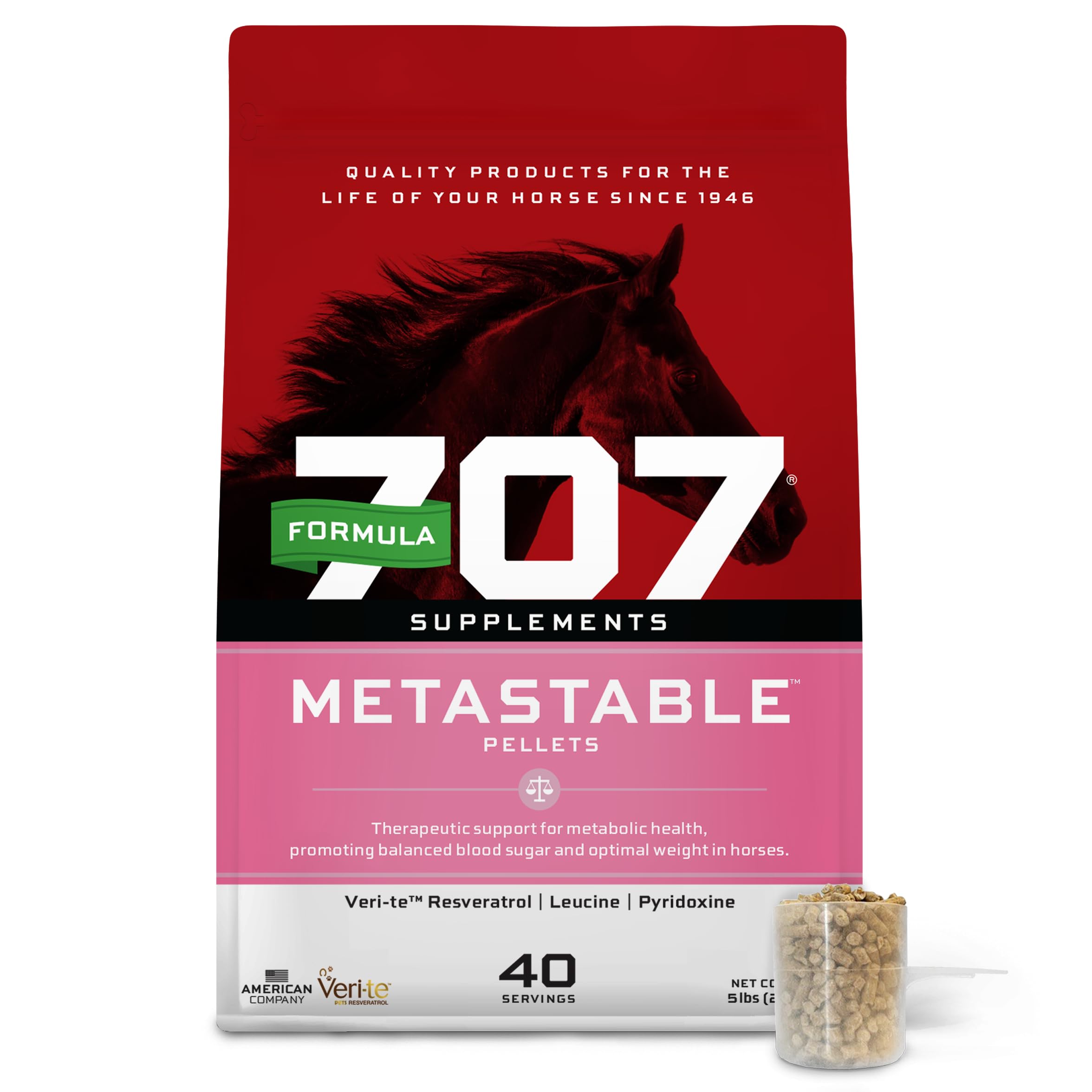
Formula 707 MetaStable sits at the top of this list because it is one of the few equine metabolic supplements backed by actual university research. The study showed stabilization of insulin levels and movement toward a healthy weight in just 60 days. This is not a vague herbal blend — it contains leucine for muscle maintenance, pyridoxine (vitamin B6) to support insulin sensitivity, and Veri-Te resveratrol, a highly bioavailable antioxidant that is gentler on the gut than standard resveratrol sources.
The pellet form is practical and mixes easily into a daily grain ration without turning into a sticky mess. Owners of both horses and miniature donkeys have reported visible improvements in body condition, with one reviewer noting their mini donkey finally lost weight after being stuck on a restricted diet. The 5-pound bag provides roughly 40 servings, making it a mid-term commitment that delivers measurable results for EMS, PPID, and laminitis cases.
Owners should be prepared for the premium price point, but the consensus from feedback is that the cost justifies itself when it prevents expensive vet interventions. One reviewer described it as a key part of their laminitis treatment plan, with their mare returning to a happy, active life. For owners seeking a scientifically grounded supplement that addresses both insulin and weight, this is the strongest option available.
Why we love it
- University study showed insulin stabilization and weight loss in 60 days
- Contains leucine, B6, and Veri-Te resveratrol for targeted metabolic support
- Palatable pellet form that horses readily accept in feed
Good to know
- Premium price point compared to basic mineral supplements
- 5 lb bag may not last long for multiple horses
2. Silver Lining Herbs Pituitary Support for Horses

Silver Lining Herbs takes a botanical-heavy approach to PPID support with a proprietary blend of eleven herbs including Barberry, Goldenseal, Ginkgo, and Kelp. Each tablespoon serving delivers 7,559 mg of active herbal material, making this a concentrated option for owners who want to avoid synthetic fillers and chemical additives. The formula is specifically aimed at supporting normal pituitary gland function, which is the root issue in Cushing’s horses.
The loose powder format allows for flexible dosing, and a single 1-pound bag provides up to 60 days of support for a 1,000 lb horse. Users have reported significant improvements in shedding — a hallmark symptom of PPID — within three to four weeks of consistent use. One reviewer noted that combining this herb powder with Prascend helped their horse shed out completely after struggling with a heavy, unkempt coat. The facility is NASC-compliant, which adds a layer of quality assurance for owners concerned about manufacturing standards.
The fine powder texture can be tricky with some horses — a few owners reported initial rejection before the horse eventually accepted it when mixed with wet feed. The herbal taste can vary slightly by batch, which may require a period of adjustment. For owners who prefer a whole-herb, non-synthetic approach with a long history of use in equine care, this is a top-tier choice that targets the endocrine system directly.
Why we love it
- Eleven-herb blend targeting pituitary and endocrine function
- NASC-compliant manufacturing facility in the USA
- 60-day supply per bag offers good daily value
Good to know
- Fine powder texture may require mixing with wet feed for acceptance
- Herbal taste can vary by batch, affecting palatability
3. MetaboBalance Equine Metabolic Support Supplement
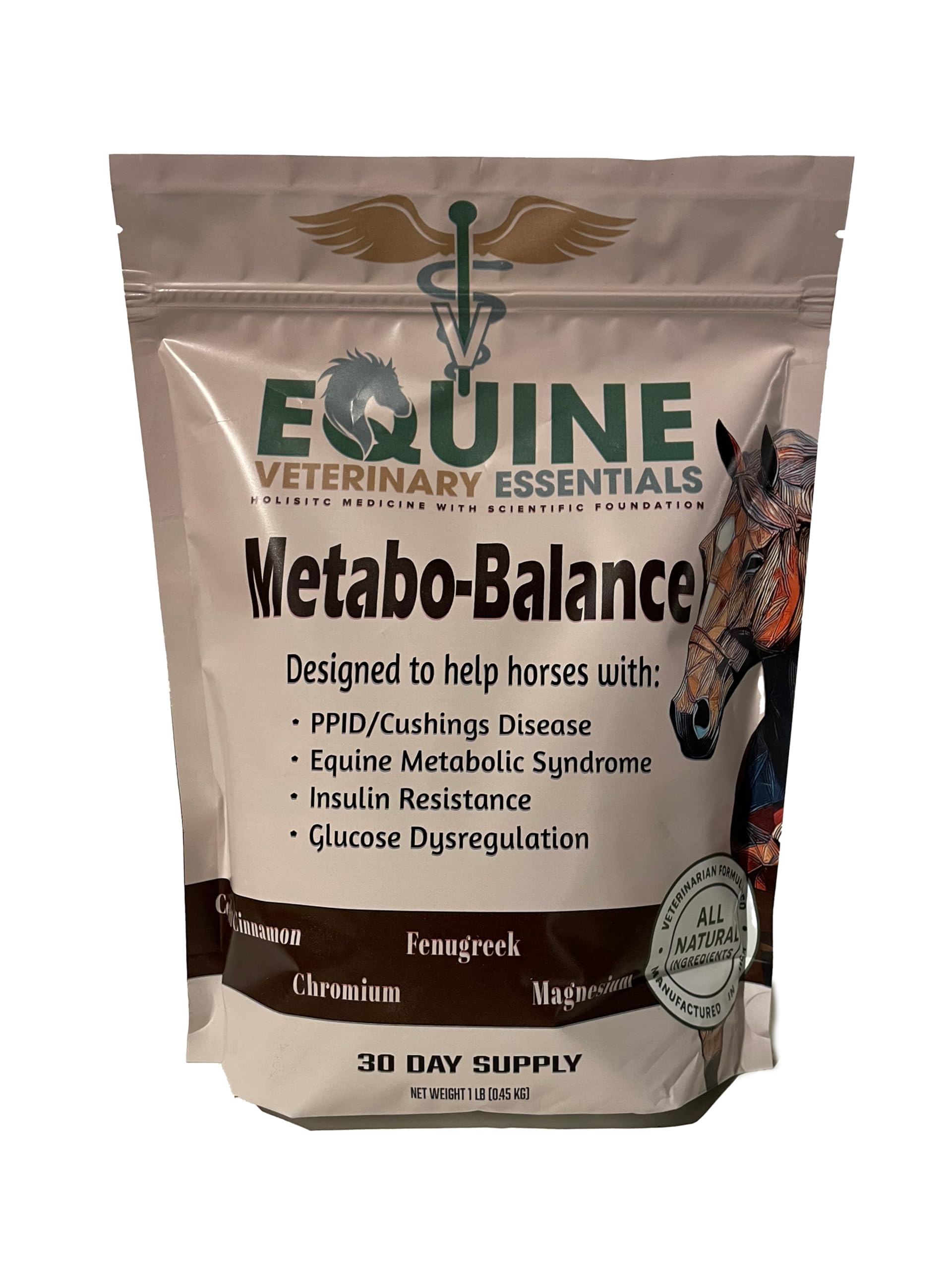
MetaboBalance from Equine Veterinary Essentials is a cinnamon-flavored powder designed to address the triad of insulin resistance, PPID, and laminitis. The cinnamon is not just for taste — it contains bioactive compounds that may support glucose metabolism. The formula targets hormonal and blood sugar imbalance, aiming to reduce the risk of flare-ups that often send metabolic horses into acute laminitic episodes.
Owner feedback highlights the palatability as a standout feature — the mare that previously refused supplements now cleans her grain bowl without hesitation. One user reported a noticeable improvement in steadiness on the feet within weeks, while another noted that their miniature horse’s laminitis symptoms improved significantly. The 18-ounce bag provides a decent supply for daily use, and the powder mixes cleanly without clumping or leaving residue in the feed bucket.
A small number of owners wished the formula came in pellet form, as the powder can settle at the bottom of the bowl if not stirred thoroughly. Despite this, the majority of feedback points to real clinical improvement, especially for horses prone to cresty necks and weight gain. For owners seeking a vet-recommended, herbal-based metabolic support that is easy to administer, this represents a strong mid-range contender with proven owner satisfaction.
Why we love it
- Cinnamon flavor improves palatability for picky eaters
- Targets insulin, cortisol, and laminitis in one formula
- Positive owner reports on hoof stability and weight management
Good to know
- Powder form requires thorough mixing to avoid settling
- Some users prefer pellet format for convenience
4. Hilton Herbs Cushx 1 Litre
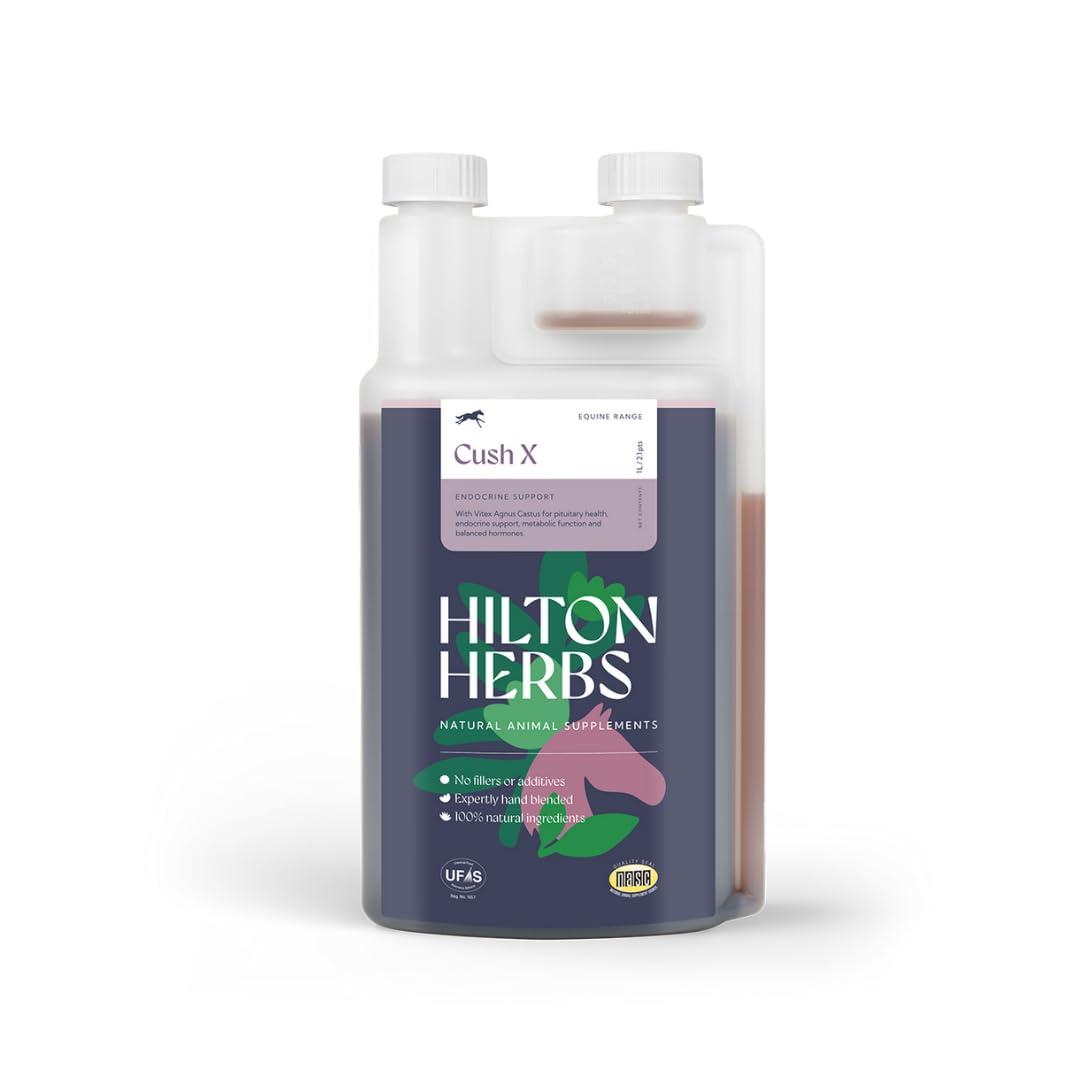
Hilton Herbs Cushx is a liquid formulation developed by a medical herbalist, making it a unique option in a market dominated by powders and pellets. The liquid format is particularly useful for horses with dental issues or those that are suspicious of new textures in their feed. It can be administered via syringe or poured directly onto a small amount of feed, giving owners flexibility in how they deliver the dose.
The formula has undergone clinical trialling, which is a differentiator in the herbal supplement space where many products rely solely on anecdotal evidence. One owner reported a marked improvement in appetite, coat condition, and overall demeanor after eight months of use in combination with Prascend. The 1-liter bottle provides a long-lasting supply, making it a cost-effective option when measured per dose.
The strong herbal odor and taste are the main drawbacks — several horses objected to the flavor, requiring owners to syringe it directly rather than mixing with feed. Additionally, the product is not returnable once purchased, which can be a risk if your horse refuses it. For owners with a horse that tolerates the taste, the liquid format and clinical backing make this a solid choice for daily Cushing’s management.
Why we love it
- Formulated by a medical herbalist with clinical trialling
- Liquid format is ideal for horses with dental sensitivities
- 1-liter bottle offers a long-lasting supply
Good to know
- Strong herbal taste may cause resistance from picky horses
- Not returnable after purchase, creating risk if horse rejects it
5. Insulin Resistance Supplement for Horses (Guanshiya)

This Guanshiya supplement packs a high concentration of organic herbs — including cinnamon and ginger — into a small 0.44-pound package. The formulation is designed to support blood sugar reduction, insulin sensitivity, and laminitis management. For the price point, it offers an impressive list of active ingredients with 100% vet-recommended organic herbs, free from corn, wheat, soy, and artificial additives.
Owner reports are largely positive, with one 24-year-old Cushing’s horse showing a huge improvement in energy and fewer foot issues after six months of use. Another user reported that their metabolic horse was able to return to pasture without laminitic episodes. The powder must be mixed with water before feeding, which is an extra step but allows the horse to ingest it easily when combined with low-carb hay or sugar-free applesauce.
The texture can become sticky when mixed with water, and some horses object to the consistency. A few owners reported no noticeable change after weeks of use, highlighting that individual response varies significantly. For owners on a tighter budget who still want a targeted herbal approach to insulin resistance, this is the most accessible entry point, but it may require patience to find the right delivery method.
Why we love it
- 100% organic herbs with no corn, wheat, or soy fillers
- Positive owner reports on energy and laminitis improvement
- Low price point for a targeted insulin support formula
Good to know
- Can develop a sticky texture when mixed with water
- Individual results vary; some horses showed no change
6. HA4E Horse Digestive Support for Cushing’s Disease

HealthyAnimals4Ever takes a homeopathic approach to Cushing’s support, using micro-doses of natural substances to gently influence hormone balance. This is a fundamentally different mechanism from the herbal and nutritional supplements above — it operates on the principle of stimulating the body’s own regulatory systems rather than supplying active compounds. For owners who prefer a non-pharmacological, low-intervention approach, this fits a specific niche.
The pellet format is administered by adding one capful (10-15 pellets) to the horse’s water daily. Owners report visible improvements in coat shedding — the long, curly Cushing’s coat — within one to three weeks of daily use. One reviewer noted that after a week, half of the overgrown hair had already shed out, and bare spots from abnormal shedding were filling in. The formula is non-GMO, gluten-free, and free from preservatives, with no known drug interactions, making it safe to use alongside prescription medications like Prascend.
The glass bottle packaging is fragile, with several reports of breakage during shipping leaving pellets scattered. Additionally, homeopathy requires consistency over time — results are not immediate and may take several weeks to appear. For owners committed to a gentle, long-term maintenance strategy, this product has a loyal following, but it is not a replacement for veterinary-prescribed medication in advanced PPID cases.
Why we love it
- Gentle homeopathic formula with no known side effects or drug interactions
- Visible improvements in coat shedding reported within 1-3 weeks
- Non-GMO, gluten-free, and preservative-free ingredients
Good to know
- Glass bottle packaging prone to breakage during shipping
- Requires consistent daily use over weeks for noticeable results
7. Ivermectin Horse Paste Dewormer (QZQAB)
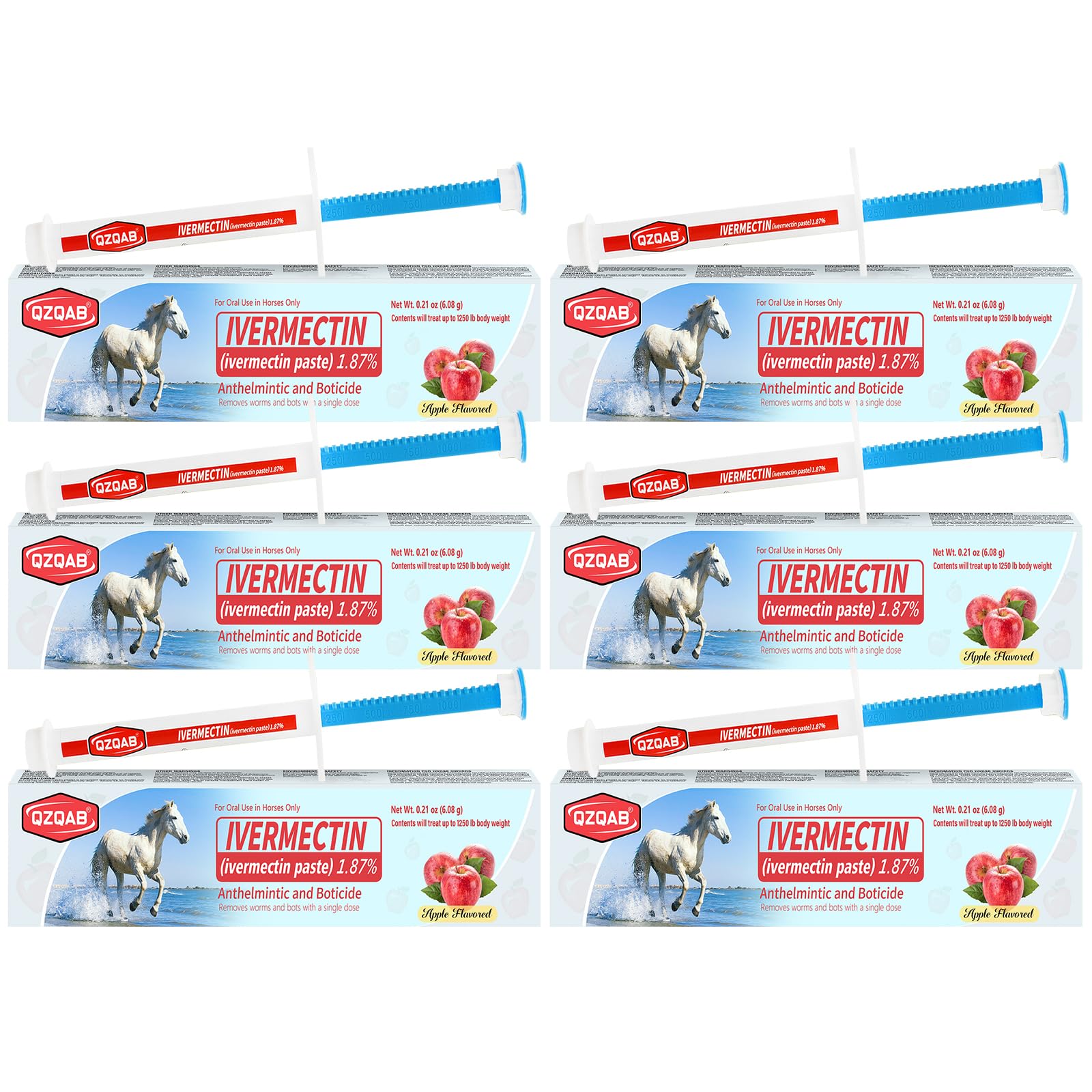
While ivermectin paste is not a feed or nutritional supplement for Cushing’s, it is an essential part of any equine health protocol — especially for metabolically compromised horses. Parasite burdens can exacerbate insulin resistance and laminitis by creating systemic inflammation and nutritional deficits. This QZQAB 6-pack delivers the standard ivermectin paste 1.87% formula, which kills bots and key internal parasites including the arterial stages of S. vulgaris in a single dose.
The apple flavor helps with administration, and the syringe is calibrated by weight markings every 250 lbs, allowing precise dosing up to 1,250 lbs. For owners managing multiple horses, the 6-pack provides a convenient supply without multiple trips to the feed store. The paste consistency is designed to be administered orally, and most horses accept it when placed on the back of the tongue.
A subset of reviewers reported that the product had a gel-like consistency rather than a true paste, which made it easier for the horse to spit out the full dose. This inconsistency in texture can undermine the effectiveness of deworming. For owners who need a reliable, single-dose dewormer that fits into a metabolic management program, this is a budget-friendly option, but verify the texture upon arrival to ensure it is the paste format.
Why we love it
- Single-dose ivermectin kills bots and S. vulgaris arterial stages
- Apple flavor improves acceptance during oral administration
- 6-pack offers convenient supply and good value per dose
Good to know
- Some batches arrive as gel rather than paste, risking incomplete dosing
- Not a Cushing’s-specific feed or supplement
FAQ
Can I use a Cushing’s feed alongside Prascend medication?
Why do my horse’s Cushing’s symptoms worsen in spring and fall?
Final Thoughts: The Verdict
For most gardeners, the feed for horses with cushings winner is the Formula 707 MetaStable Pellets because it combines university research, targeted ingredients like leucine and Veri-Te resveratrol, and consistent owner-reported results for insulin and weight management. If you want a pituitary-specific herbal formula with a 60-day supply, grab the Silver Lining Herbs Pituitary Support. And for a budget-conscious entry into targeted herbal support, nothing beats the Insulin Resistance Supplement (Guanshiya).