
Choosing the right substrate for your ball python isn’t just about aesthetics; it’s a fundamental decision that impacts their humidity, comfort, and overall well-being. With so many options, from coconut husk to aspen shavings, it’s easy to feel overwhelmed by conflicting advice.
I’m Mo Mahin — the founder and writer behind Furric. My process involves deep market research, analyzing veterinary safety standards for reptile impaction and respiratory health, and evaluating thousands of real keeper testimonials to separate hype from husbandry truth.
This guide cuts through the noise, providing clear, evidence-based recommendations to create a thriving habitat. Through careful analysis of veterinary guidelines and keeper experiences, selecting the appropriate substrate is essential for preventing respiratory issues and promoting natural behaviors, making the choice of the best bedding for ball python a critical aspect of responsible snake care.
How To Choose The Best Bedding For Ball Python
Selecting substrate for a ball python goes beyond picking what looks natural. You need a material that supports their specific physiological needs—namely, moderate humidity for respiratory health and safe sheds, plus a texture that allows for security-seeking burrows without posing an ingestion risk.
Prioritize Humidity Retention & Safety
Ball pythons require a humidity range of 50-60%, spiking to 70% during shed cycles. Substrates like coconut husk or cypress mulch excel at holding moisture evenly without becoming soggy or mold-prone. Avoid overly dry, dusty materials like certain sand or clay-based beddings, as they can lead to respiratory distress and do not support a healthy moisture gradient.
Consider Texture and Ingestion Risks
Your snake will explore with its mouth and may accidentally ingest substrate during feeding. Larger, chip-style beddings (like coconut chips or fir bark) are generally safer than fine, particulate substrates like loose coconut fiber or sand, which carry a higher impaction risk. The texture should also be soft enough for comfortable burrowing but firm enough to hold structure for hides.
Factor in Maintenance and Odor Control
Snakes are relatively clean, but waste needs to be managed. Highly absorbent substrates that encapsulate moisture and odor make spot-cleaning easier and extend the time between full changes. Look for materials with natural antimicrobial properties, such as coconut husk, which help maintain a fresher enclosure between cleanings.
Quick Comparison
On smaller screens, swipe sideways to see the full table.
| Model | Type | Best For | Key Feature | Amazon |
|---|---|---|---|---|
| ReptiChip Coconut Chip | Coconut Husk | Optimal Humidity & Safety | Premium, dust-free loose chips | Amazon |
| BabiChip Coconut Chip | Coconut Husk | Comfort & Burrowing | Smaller chip size for security | Amazon |
| Zoo Med Eco Earth (2-Pack) | Coconut Fiber | Bioactive Setups & Value | Loose fiber, great for mixing | Amazon |
| Zoo Med Forest Floor | Cypress Mulch | Naturalistic Displays | Classic cypress mulch, holds shape | Amazon |
| Exo Terra Snake Bedding | Wood Fiber | Dust-Sensitive Snakes | Soft, moldable for burrows | Amazon |
| Zoo Med Reptile Bark | Fir Bark | Reusable Substrate | Washable, holds humidity well | Amazon |
| Zilla Jungle Mix | Bark & Moss Blend | Tropical Ambiance | Organic blend, encourages digging | Amazon |
| Zoo Med Aspen Bedding | Aspen Shavings | Dry Setups & Easy Cleanup | Very low dust, great for burrowing | Amazon |
| Galápagos Sphagnum Moss | Sphagnum Moss | Humidity Boosting | Pure moss for humidity hides | Amazon |
| Zilla Coconut Husk Brick | Coconut Fiber Brick | Budget-Friendly Expansion | Compressed brick expands greatly | Amazon |
| Carefresh Confetti Bedding | Paper Fiber | Short-Term or Quarantine | Ultra-absorbent, odor-controlling | Amazon |
In-Depth Reviews
1. ReptiChip Reptile Bedding Loose Coconut Chip

For keepers seeking a near-perfect balance of safety, humidity retention, and ease of maintenance, ReptiChip’s loose coconut husk bedding sets the industry standard. This substrate directly addresses the core needs of ball python husbandry with its refined, dust-free chips that are gentle on heat pits and respiratory systems while creating an ideal microclimate.
The magic of ReptiChip lies in its processing. Sorted and cleaned in the US, it arrives ready to use, free from the fine debris common in compressed bricks. The chip size is substantial enough to minimize accidental ingestion risks during feeding but soft enough to allow your python to burrow and shape its environment comfortably. It acts like a humidity battery—you can pour water directly into a corner to create a moisture gradient that sustains perfect 60-70% levels for days, preventing the dreaded “dry tank” that leads to bad sheds.
Experienced python parents consistently report that a switch to ReptiChip resolved chronic shedding issues and made enclosure management simpler. Its natural odor-absorbing properties keep the habitat fresher between spot cleanings. While it represents a premium investment, its performance and longevity justify the cost for the health and visible contentment of your snake.
Why we love it
- Exceptionally clean and dust-free, protecting sensitive respiratory systems.
- Holds humidity with pinpoint accuracy, crucial for clean, full sheds.
- Chip size is ideal, reducing impaction risk compared to finer substrates.
- Naturally controls odors and makes waste management straightforward.
Good to know
- Liquid waste is absorbed rapidly, sometimes requiring removal of a larger soiled area.
- A premium option that is more costly than basic beddings.
- Best for keepers committed to a moisture-maintenance routine.
2. BabiChip Coconut Chip Substrate

If your ball python is a dedicated burrower who finds supreme comfort tucked beneath the substrate, BabiChip’s smaller-sized coconut chips are a game-changer. This variant from the ReptiChip family offers all the premium benefits of its sibling but with a finer texture that allows snakes to create more secure, structured tunnels, closely mimicking the feeling of a hidden burrow in the wild.
The reduced chip size creates a denser, more cohesive layer that holds its shape beautifully when your python presses against it. This is particularly beneficial for younger or smaller ball pythons, providing a greater sense of security and enrichment. Veteran keepers note that the smaller chips also facilitate better heat transfer from under-tank heaters, creating a more consistent and comforting warmth below the surface. It maintains the same excellent humidity retention and odor-neutralizing properties, making it a top-tier choice for a bioactive or naturalistic setup.
Feedback from the community highlights that snakes often show immediate preference, exploring and settling into a BabiChip-filled enclosure with noticeable enthusiasm. It’s a thoughtful upgrade for any keeper who prioritizes their snake’s psychological well-being and natural instinct to hide.
Why we love it
- Smaller chip size promotes incredible burrowing and security-seeking behavior.
- Excellent heat conduction from below for a perfect warm hide gradient.
- Maintains all the humidity and cleanliness benefits of premium coconut husk.
- Snakes often display visible preference and comfort in this substrate.
Good to know
- The smaller size may stick to wet prey items slightly more during feeding.
- Similar premium price point to standard ReptiChip.
- You may go through it slightly faster due to its less chunky nature.
3. Zoo Med Eco Earth All-Natural Loose Coconut Fiber (2-Pack)

For keepers managing multiple enclosures or building deep, bioactive substrates, Zoo Med’s Eco Earth in a convenient two-pack delivers exceptional value and versatility. This loose coconut fiber is the workhorse of the reptile substrate world—highly absorbent, completely natural, and perfect for creating custom soil blends that support live plants and beneficial microfauna.
Unlike compressed bricks, this product comes pre-expanded and ready to spread, saving you time and effort. Its fine, soil-like texture is superb for holding moisture and creating a humid microclimate at the enclosure’s bottom layer. Many advanced keepers use it as a base, mixing it with chip-style beddings like Forest Floor or ReptiChip to create a moisture-rich foundation with a drier, more navigable top layer. This mimics the natural forest floor perfectly and provides your python with different textures to explore.
Long-time reptile enthusiasts appreciate its reliability for incubating eggs and fostering clean-up crews in bioactive tanks. While the fine texture means it can stick to prey and snake alike, using it as part of a layered approach or in a dedicated humid hide mitigates this while leveraging its superb humidity-holding capabilities.
Why we love it
- Outstanding value in a convenient, ready-to-use two-pack.
- Exceptionally high moisture retention, ideal for the base of a bioactive setup.
- Soft, natural texture is perfect for mixing with other substrates.
- Trusted, widely available brand with consistent quality.
Good to know
- Fine particles can stick to wet mice/rats and be ingested during feeding.
- Can become dusty if allowed to dry out completely.
- Best used in a mix or in a specific humid hide rather than as a sole substrate.
4. Zoo Med Forest Floor Bedding

To create a visually stunning, naturalistic terrarium that resembles a ball python’s native West African forest floor, Zoo Med’s Forest Floor cypress mulch is the classic choice. Its rich, earthy brown color and varied piece sizes create an instantly authentic landscape that not only looks fantastic but also provides functional benefits for humidity and burrowing.
Cypress mulch is naturally resistant to mold and decay, making it a durable option that holds moisture effectively without breaking down quickly. The pieces are flat and pliable, allowing your snake to slide beneath them easily to create secure hides. This substrate excels at maintaining a stable humidity gradient; you can mist one end heavily while the other remains drier, giving your python the choice it needs. It’s also remarkably good at masking waste odors between cleanings.
Keepers who favor naturalistic, planted vivariums swear by Forest Floor for its aesthetic and functional synergy. It’s important to source from a reputable brand like Zoo Med to ensure it’s free from harmful oils or pesticides. While it’s a mid-range substrate, its longevity and visual impact make it a favorite for display enclosures.
Why we love it
- Creates a breathtakingly natural and authentic forest floor appearance.
- Cypress wood naturally resists mold and holds moisture well.
- Flat pieces provide excellent cover and opportunities for security.
- Effective at odor control and lasts a long time before breaking down.
Good to know
- Occasionally contains larger, sharper pieces that should be removed during setup.
- Can be a little messier to spot-clean than chunkier chips.
- Some keepers prefer to bake it before use to eliminate any potential pests.
5. Exo Terra Snake Bedding

If your ball python has shown signs of respiratory sensitivity or you simply want the softest possible substrate for hatchlings and juveniles, Exo Terra’s specialized snake bedding is a standout. This heat-treated wood fiber is remarkably soft, virtually dust-free, and designed to clump slightly when moist, allowing snakes to shape firm, tunnel-like burrows that hold their form.
The unique texture is its greatest asset. Unlike loose chips or shavings, this bedding can be packed gently to create supportive structures. Ball pythons, being heavy-bodied snakes, appreciate this underlying support as they move. It’s highly absorbent, pulling moisture away from the surface quickly to keep your snake’s belly dry, which is crucial for preventing scale rot. The heat-treatment process ensures it’s clean and safe, with a neutral, natural smell.
Community feedback from owners of sensitive species highlights how this bedding can make a noticeable difference for snakes prone to wheezing or sneezing in dustier environments. It’s a thoughtful, health-focused choice that prioritizes respiratory comfort above all else, while still supporting natural behaviors.
Why we love it
- Exceptionally soft and low-dust, ideal for sensitive respiratory systems.
- Unique, moldable texture allows snakes to create stable burrows.
- High absorbency rate helps keep the surface dry and prevents scale issues.
- Heat-treated for safety and cleanliness.
Good to know
- May not hold ambient humidity as persistently as coconut or cypress products.
- The texture can be a bit messier to handle than chunkier substrates.
- Some users note it can be difficult to find in local stores.
6. Zoo Med Reptile Bark Fir Bedding
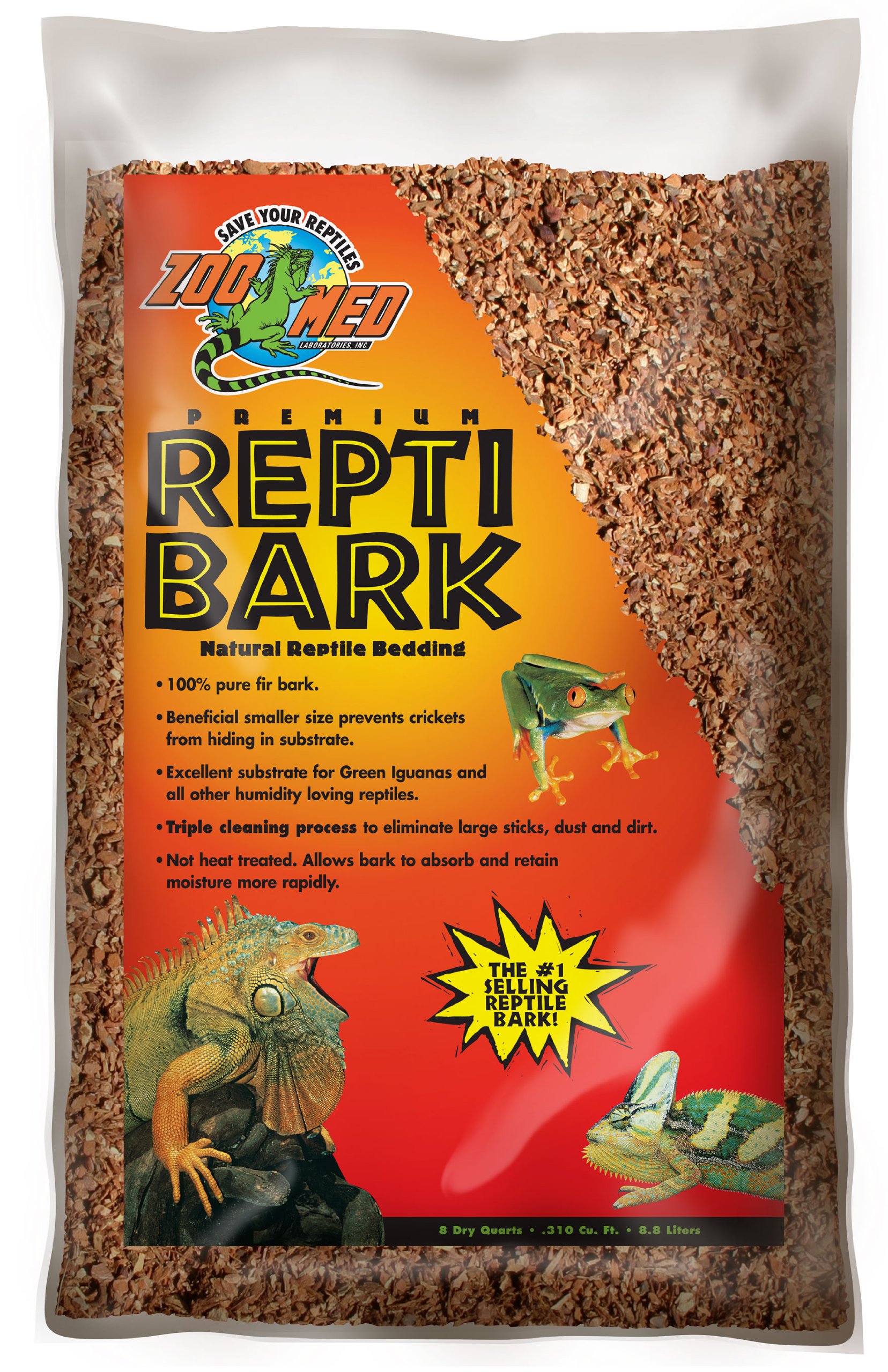
For the keeper focused on sustainability and long-term value, Zoo Med’s Reptile Bark made from fir tree bark offers a unique advantage: reusability. This sturdy, chunk-style bedding can be washed, sterilized, and reused multiple times, making it an economically and environmentally smart choice over the lifespan of your pet.
The bark pieces are thick and durable, providing excellent drainage and air circulation while still retaining sufficient moisture to support healthy humidity levels. Their size is perfect for ball pythons—too large to be accidentally ingested, yet creating plenty of nooks for exploration. This substrate is fantastic for creating a naturalistic “forest floor” look and is often used in bioactive setups where its structure benefits plant roots and microfauna. It breaks down very slowly, maintaining its integrity far longer than finer materials.
Experienced tortoise and lizard keepers have used this bark for years, and ball python owners find it equally effective. It’s particularly good in larger enclosures where maintaining a consistent moisture gradient is key. The ability to bake or boil soiled batches for reuse is a major perk for those looking to minimize waste.
Why we love it
- Can be washed and reused, offering incredible long-term value.
- Sturdy chunks provide great structure and drainage for bioactive tanks.
- Holds humidity well without becoming waterlogged or soggy.
- Natural, earthy aesthetic that looks great in display enclosures.
Good to know
- The bark pieces can be quite hard and may not be as comfortable for burrowing as softer chips.
- Requires more effort to clean and prepare for reuse than disposable substrates.
- Not as dust-free as some other premium options straight out of the bag.
7. Zilla Jungle Mix

To instantly create the lush, moist feel of a tropical rainforest in your ball python’s home, Zilla’s Jungle Mix is a purpose-built blend. This 100% organic substrate combines aged Douglas fir bark with sphagnum peat moss, resulting in a soft, fragrant bedding that excels at humidity control and stimulating natural digging and nesting behaviors.
The inclusion of sphagnum moss is the key differentiator. This moss acts as a super-sponge, absorbing and releasing moisture slowly to maintain a consistently humid environment perfect for a ball python’s respiratory and shedding needs. The blend is incredibly soft underfoot, making it comfortable for long periods of rest. The varied textures—from chunky bark to stringy moss—provide endless enrichment for a curious snake to root through and rearrange.
Keepers who use this blend often report their pythons become more active and engaged, digging and tunneling in a way they don’t with uniform substrates. It’s an excellent choice for a naturalistic setup that doesn’t require live plants but still aims to replicate a specific biome. The earthy, natural scent is also a pleasant change from the sometimes sterile smell of other beddings.
Why we love it
- Blend of bark and moss creates perfect, sustained humidity for tropical species.
- Extremely soft texture is gentle and encourages natural digging instincts.
- 100% organic composition with a pleasant, natural forest scent.
- Great for creating a specific “jungle” aesthetic quickly and easily.
Good to know
- The moss can cling to prey and snake more than plain bark or chips.
- May dry out on the surface faster than some substrates, requiring regular misting.
- The dark color can make finding smaller snake waste during spot-cleaning a challenge.
8. Zoo Med Aspen Snake Bedding

For keepers who utilize a dedicated humid hide system and prefer to maintain a drier primary enclosure, Zoo Med’s Aspen Bedding is the time-tested, gold-standard choice. Its light color, clean scent, and exceptional burrow-holding capability make it a favorite for snakes that love to tunnel, while its lack of moisture retention makes it easy to manage in well-ventilated tanks.
Aspen is renowned for its ability to form stable tunnels and caves that don’t collapse, providing immense security for a ball python. This substrate is processed to be 99.9% dust-free, protecting respiratory health. It’s also highly absorbent for liquid waste, making spot-cleaning a straightforward task of removing soiled clumps. Because it doesn’t hold ambient moisture, it minimizes the risk of scale rot on the belly if your humidity hide is used correctly.
Long-time snake breeders often rely on aspen for its predictability and ease of use in rack systems. It’s a no-fuss, utilitarian substrate that puts the focus on easy maintenance and the snake’s comfort for burrowing. It’s crucial to pair it with a properly sized and maintained humid hide to ensure your python can access the moisture it needs for shedding.
Why we love it
- Forms incredible, stable burrows that satisfy a ball python’s hiding instinct.
- Very low dust and highly absorbent for easy waste management.
- Light color makes the snake and its waste easy to see.
- Ideal for keepers using a dedicated humid hide instead of a moist substrate.
Good to know
- Does not hold humidity for ambient moisture; requires a separate humid hide.
- Can mold quickly if it becomes damp and is not removed.
- The small shavings can stick to prey more easily than larger chips.
9. Galápagos Terrarium Green Sphagnum Moss

Sometimes the best bedding isn’t used alone but as a strategic supplement. Galápagos Sphagnum Moss is the ultimate tool for boosting local humidity exactly where your ball python needs it most: inside its favorite hide. This long-fiber moss is a hydration powerhouse, capable of holding many times its weight in water and releasing it slowly to create a perfect shedding microclimate.
Adding a generous handful of moist (not dripping) sphagnum moss to your python’s hide transforms it into a humid retreat. This is especially critical during the “blue” phase of shed, ensuring the old skin slides off in one clean piece. The moss also provides a soft, cool surface that many snakes find soothing. Beyond the hide, it can be mixed into other substrates like coconut fiber or cypress mulch to increase their overall moisture-holding capacity without making them soggy.
Community wisdom holds that a moss-filled hide is one of the simplest and most effective ways to prevent shedding problems. It’s a low-cost, high-impact addition to any enclosure, regardless of your primary substrate choice. The vibrant green color also adds a beautiful, natural accent to the terrarium’s décor.
Why we love it
- Unmatched ability to create and maintain localized high humidity for shedding.
- Soft, natural texture is safe and comfortable for snakes to rest on.
- Versatile; can be used in hides or mixed into other substrates.
- Washed and cleaned to remove dust and debris.
Good to know
- Not intended to be used as a full enclosure substrate on its own.
- Requires regular re-moistening and can develop mold if kept too wet without ventilation.
- The green color in this product is from dye, which some keepers prefer to avoid.
10. Zilla Coconut Husk Brick

For keepers on a strict budget or those who need to substrate a very large enclosure without breaking the bank, the Zilla Coconut Husk Brick is a marvel of efficiency. This small, compact brick of 100% coconut fiber expands up to five times its size when soaked in water, transforming into a sizable amount of soft, humidity-friendly bedding perfect for tropical setups.
This entry-level coconut product provides all the core benefits of coconut fiber—excellent moisture retention, encouragement of natural burrowing, and organic composition—at a remarkably accessible price point. It’s an ideal choice for new ball python owners who are learning the ropes of humidity management or for temporary/quarantine enclosures. The expansion process is simple and allows you to control the final moisture content; you can wring it out for a damp substrate or leave it wetter for higher humidity.
While it doesn’t have the refined, dust-free quality of premium loose chips, it performs its core function admirably. Many experienced keepers started with bricks like these and appreciate them for their cost-effectiveness and utility. It’s a solid proof-of-concept substrate that demonstrates the benefits of coconut-based bedding.
Why we love it
- Incredible value; one small brick can fill a very large enclosure.
- Offers great humidity control and a soft texture for burrowing.
- Perfect for beginners, temporary setups, or keepers with multiple large tanks.
- 100% organic and sustainable.
Good to know
- Requires preparation time and can be messy to expand.
- Contains more fine particles and dust than processed loose chips.
- The fine fibers can stick to prey and snake more readily than chunkier substrates.
11. Carefresh Confetti Natural Paper Bedding

In specific, short-term scenarios like a quarantine period, recovery from illness, or for snakes with exceptional sensitivity, a paper-based bedding like Carefresh can be the wisest choice. This small mammal bedding is 99% dust-free, exceptionally absorbent, and provides a sterile, neutral environment where monitoring waste and overall health is simplified.
Carefresh worksby encapsulating waste and odor effectively, keeping the enclosure smelling fresh. Its pillowy soft texture is gentle on a snake’s belly, which can be important during recovery. While it doesn’t hold humidity like coconut or cypress, this can be an advantage in quarantine where you want to minimize potential mold or mite issues. It’s also completely digestible if accidentally ingested in small amounts during feeding, reducing impaction concerns during a vulnerable time.
Herp veterinarians sometimes recommend plain paper substrates for medical cases because they’re inert and easy to change completely. This bedding serves that purpose while being more absorbent and comfortable than paper towels. The confetti colors, while fun, also make it easy to spot soiled areas for quick removal. It’s a short-term solution that prioritizes hygiene and observability above all else.
Why we love it
- Creates a sterile, easy-to-monitor environment ideal for quarantine or medical care.
- Exceptionally absorbent and controls odors very well.
- Virtually dust-free and soft, reducing respiratory and skin irritation.
- Safe if accidentally ingested in small quantities.
Good to know
- Does not support humidity needs; requires a separate humid hide.
- Not suitable for long-term use as it doesn’t support natural burrowing behaviors well.
- Can be more expensive per use than traditional reptile substrates for full-tank changes.
Safety & Care Tips
Monitor Humidity Closely
Use a digital hygrometer placed at snake-level on the cool side of the enclosure. Aim for 50-60% humidity, increasing to 70% during shed cycles. Substrates like coconut chip or cypress mulch should be moistened in one corner, not uniformly soaked, to create a gradient and prevent scale rot from a constantly wet belly.
Implement a Spot-Cleaning Routine
Remove feces and urates as soon as you see them. For liquid waste, scoop out the saturated substrate and a generous margin around it. A full substrate change should occur every 2-3 months, or immediately if you notice mold, mites, or a persistent foul odor that spot-cleaning doesn’t resolve.
FAQ
Is aspen bedding safe for ball pythons?
How often should I change my ball python’s bedding?
Can coconut fiber cause impaction?
What is the best way to increase humidity in the tank?
Final Thoughts: The Verdict
For most pet parents, the best bedding for ball python winner is the ReptiChip Coconut Chip because it masterfully balances safety, superior humidity control, and ease of maintenance in one premium package. If you want the absolute best for burrowing comfort and security, grab the BabiChip Coconut Chip. And for a stunning, naturalistic display that also performs well, nothing beats the Zoo Med Forest Floor.