
Illinois backyards host over 300 bird species throughout the year, from year-round cardinals and chickadees to wintering juncos and pine siskins that demand high-fat fuel. Picking a seed blend that satisfies this rotating cast without leaving hull piles under your feeder takes more than grabbing the cheapest bag at the big-box store.
I’m Mo Mahin — the founder and writer behind Furric. I’ve spent years comparing seed composition data, studying nutritional profiles for Midwest-resident birds, and analyzing aggregated owner feedback across dozens of Illinois-specific feeding scenarios to separate the high-value blends from the filler-heavy losers.
Whether you’re stocking a hopper feeder in Chicago’s Zone 5b or filling a tube in Carbondale’s Zone 7a, these five blends represent the strongest options for attracting and sustaining the species that define Illinois birding. This guide covers the best bird seed for illinois based on nutrient density, ingredient transparency, and real-world results across the state’s diverse habitats.
How To Choose The Best Bird Seed For Illinois
Illinois sits at the convergence of the Mississippi Flyway, meaning your feeder can see migratory warblers, resident woodpeckers, and winter finches in the same week. The right blend accommodates all three without leaving you with a bag half-eaten by starlings or spoiled by rain. Focus on three variables that matter more in the Midwest than anywhere else.
Ingredient Hierarchy: Black Oil Sunflower Is Non-Negotiable
Black oil sunflower seeds pack a thin shell, high oil content (roughly 40 percent fat), and a kernel-to-shell ratio that chickadees, nuthatches, and cardinals can crack quickly. Any blend missing this base ingredient will attract fewer birds. Safflower works as a secondary component to deter squirrels, and peanuts add protein for woodpeckers, but black oil sunflower should always be the first listed ingredient.
Filler Awareness: Milo, Wheat, and Red Millet
Cheap blends often lead with milo, wheat, or red millet — seeds that ground-feeding birds like doves will eat but that most Illinois songbirds (finches, chickadees, titmice) ignore. These fillers sit in the feeder, spoil, and get kicked to the ground, creating waste and attracting rodents. A premium Illinois blend either skips fillers entirely or lists them after sunflower, safflower, and peanuts.
Seasonal Caloric Density
Illinois winters drop below freezing for weeks at a time. Birds burn up to 10 percent of their body weight overnight just staying warm. Blends with higher fat content — achieved through sunflower seeds, peanuts, and added oils — provide the metabolic energy cardinals and woodpeckers need to survive polar vortex events. Summer blends can be slightly lighter, but a single all-season high-fat bag works year-round for Illinois conditions.
Resealable Packaging and Freshness
Seed stored in humid Midwest summers can develop mold or attract pantry moths within weeks. A resealable bag or a small enough volume that you refill monthly keeps the seed fresh. Bulk buyers should decant into a metal trash can with a tight lid immediately upon delivery.
Quick Comparison
On smaller screens, swipe sideways to see the full table.
| Model | Category | Best For | Key Spec | Amazon |
|---|---|---|---|---|
| Old Potters Black Oil Sunflower | Single-Ingredient | High-value base seed | 12 lbs USA-grown Non-GMO | Amazon |
| Valley Splendor Songbird Melody | Premium Blend | Winter high-energy feeding | 7 lbs with Vitamin A & D | Amazon |
| Audubon Park No Mess | Shell-Free Blend | Patio and deck feeding | 12 lbs sunflower hearts & peanut | Amazon |
| Pennington Ultra Double Nut | Fruit & Nut Blend | Variety with added vitamins | 10 lbs with Bird Kote technology | Amazon |
| Meadow Ridge Farms Wild Mix | Basic Blend | Entry-level or ground feeding | 10 lbs with cracked corn and millet | Amazon |
In‑Depth Reviews
1. Old Potters Wildlife Black Oil Sunflower Seeds

Old Potters delivers the purest single-ingredient option on this list — 12 pounds of black oil sunflower grown on small U.S. farms without GMOs or chemical processing. The bag arrives with natural field debris (small twigs, dried plant bits) that prove the seeds haven’t been bleached or treated, and multiple owners report that birds consume almost every kernel because the shells contain full, shrunken-free nutmeat. That freshness directly translates to less waste and fewer trips to the feed store during an Illinois winter.
The resealable bag is a practical touch Midwest feeders will appreciate: it keeps humidity out during muggy summers and prevents the seeds from going rancid between refills. Customer reviews consistently mention that a single bag lasts roughly a month across three feeders when cardinals and chickadees are the primary visitors, which makes the per-pound value competitive with bulk options that lack the same transparency about sourcing.
Because this is a straight sunflower product, you won’t get the variety that some nut-and-fruit blends offer. That’s intentional — black oil sunflower is the single most universally accepted seed by Illinois songbirds, and skipping fillers means you’re paying for food birds actually eat. If you want to mix in peanuts or safflower later, you can buy those separately and control the exact composition of your feeder offering.
Why we love it
- Fresh, non-shrunken seeds reduce waste compared to older stock
- USA-sourced from small farms with Non-GMO verification
- Resealable bag preserves freshness through humid seasons
Good to know
- Single seed type won’t attract species that prefer safflower or peanuts
- Natural field debris may require a quick pour-through before filling a tube feeder
2. Valley Splendor Songbird Melody
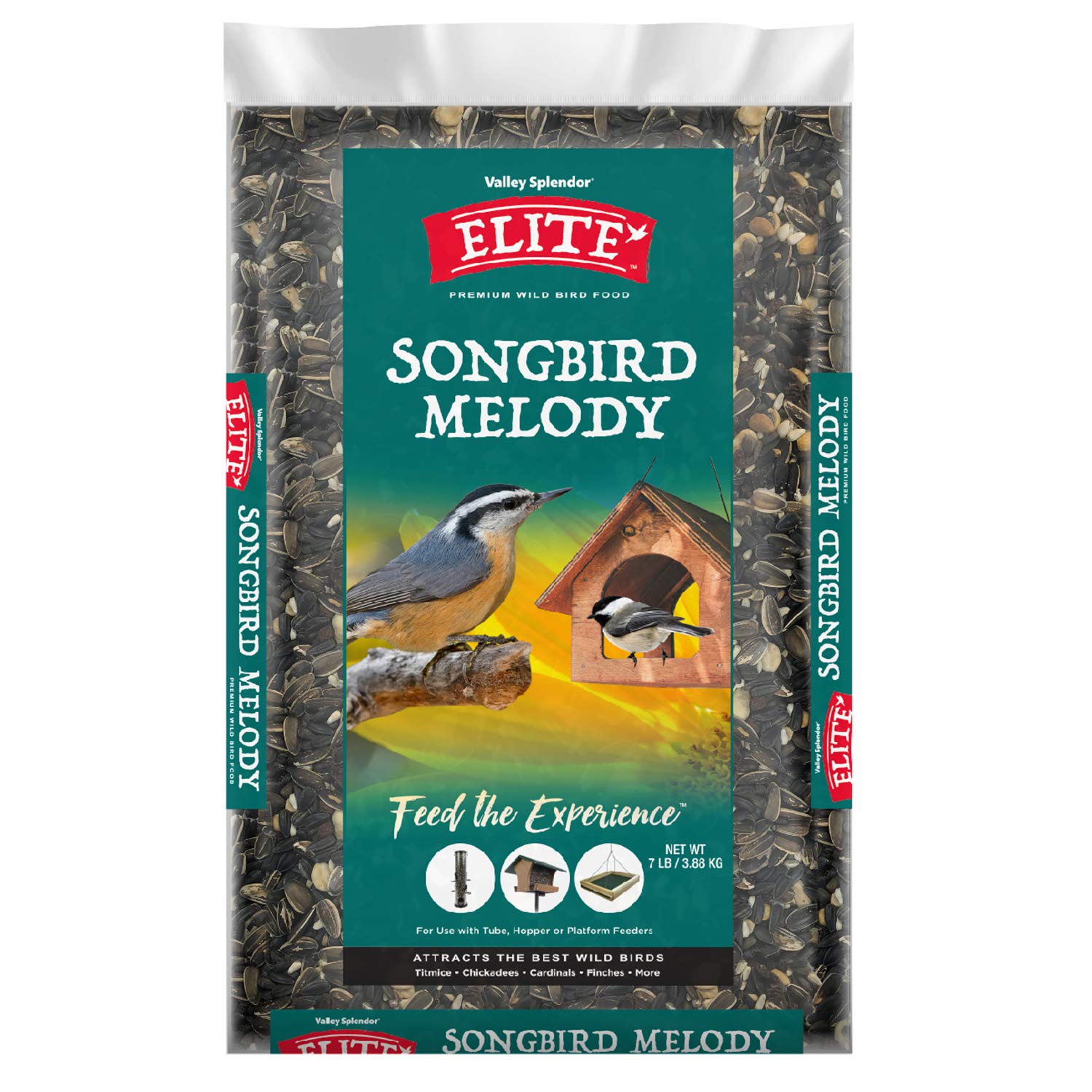
Valley Splendor’s Songbird Melody differentiates itself through ingredient variety and added vitamins A and D, which support feather development and bone health during the molting and nesting seasons that stress Illinois bird populations. The blend combines black oil sunflower, safflower seeds, peanuts, striped sunflower, and raisins — creating a fatty, protein-dense mix that appeals to woodpeckers, nuthatches, and blue jays alongside the standard cardinal and finch crowd.
The berry scent mentioned in the marketing is subtle and doesn’t linger on the seed; it’s primarily a tool to draw birds to a new feeder location. The 7-pound bag size keeps the rotation window tight — you’ll refill roughly every two to three weeks with moderate feeder traffic, which means the seed stays fresher than a bulk purchase that sits open for months. The absence of cheap fillers means every ingredient in the bag gets eaten or at least cracked open by a local species.
The smaller bag is the only potential friction point for those who feed heavy traffic across multiple stations. You’ll need to buy more frequently than with a 20-pound sunflower-only bag, but the trade-off is a more diverse visitor list and added nutritional support during the harshest Illinois winter weeks when birds burn calories just staying alive.
Why we love it
- Raisins and peanuts add variety that attracts woodpeckers and jays
- Vitamin D enrichment supports bone health during winter stress
- Zero filler seeds means no wasted milo or wheat on the ground
Good to know
- 7-pound bag requires more frequent reordering for high-traffic stations
- Raisins can clump in tube feeders if moisture gets inside
3. Audubon Park Waste Free Wild Bird Seed
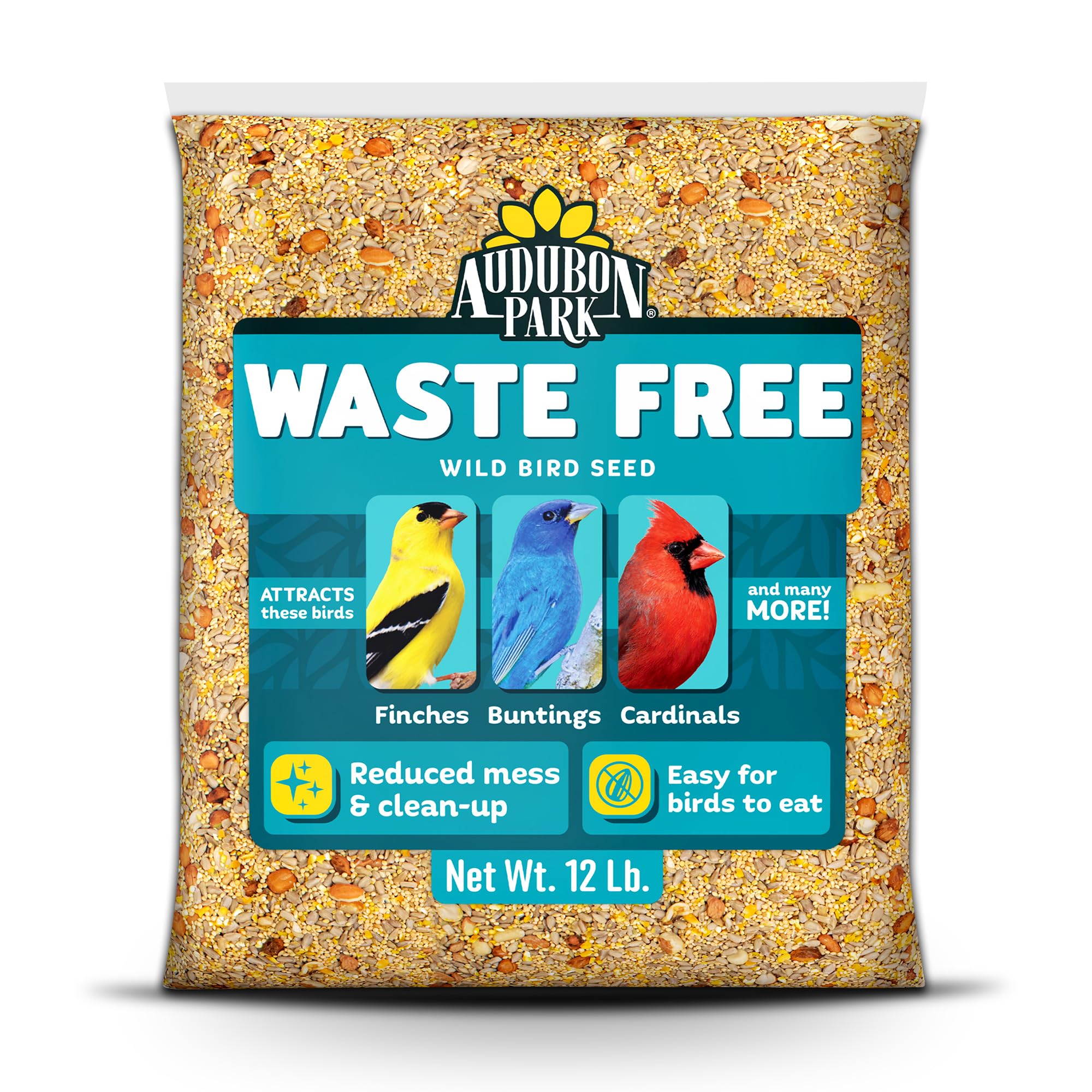
Audubon Park’s No Mess blend is the most practical option for Illinois homeowners who feed on a deck, patio, or directly above a concrete surface where fallen hulls stain and degrade. The entire 12-pound bag consists of shell-free sunflower hearts and peanut pieces — birds consume every gram, and nothing germinates underneath the feeder. That matters in Illinois spring when volunteer sunflower seedlings from standard seed can turn a tidy garden bed into a weedy patch.
The high-energy nutrition profile suits Illinois’ cold months well, but this blend also works during migration periods when exhausted warblers and thrushes need quick calories without spending energy cracking shells. Multiple songbird species — finches, cardinals, thrushes, wrens, and buntings — show up consistently because the soft hearts and peanut bits are easy to eat fast. The lack of hulls also means your feeder stays cleaner and requires less frequent scrubbing to prevent mold.
The primary trade-off is cost per pound: shelled hearts and peanuts cost more than in-shell seed because you’re paying for kernel weight alone without the hull mass. If you fill heavy-traffic feeders year-round, a 12-pound bag may disappear in a week during peak winter feeding, making this a premium convenience rather than a budget stretch option.
Why we love it
- Zero waste means no hull cleanup on patios or decks
- All ingredients are edible, preventing seed germination in flower beds
- Attracts thrushes and buntings that avoid hard-shell blends
Good to know
- Higher price per pound compared to in-shell sunflower
- Fine dust at the bottom of the bag can clog small tube feeder ports
4. Pennington Ultra Double Nut, Nut & Fruit Blend
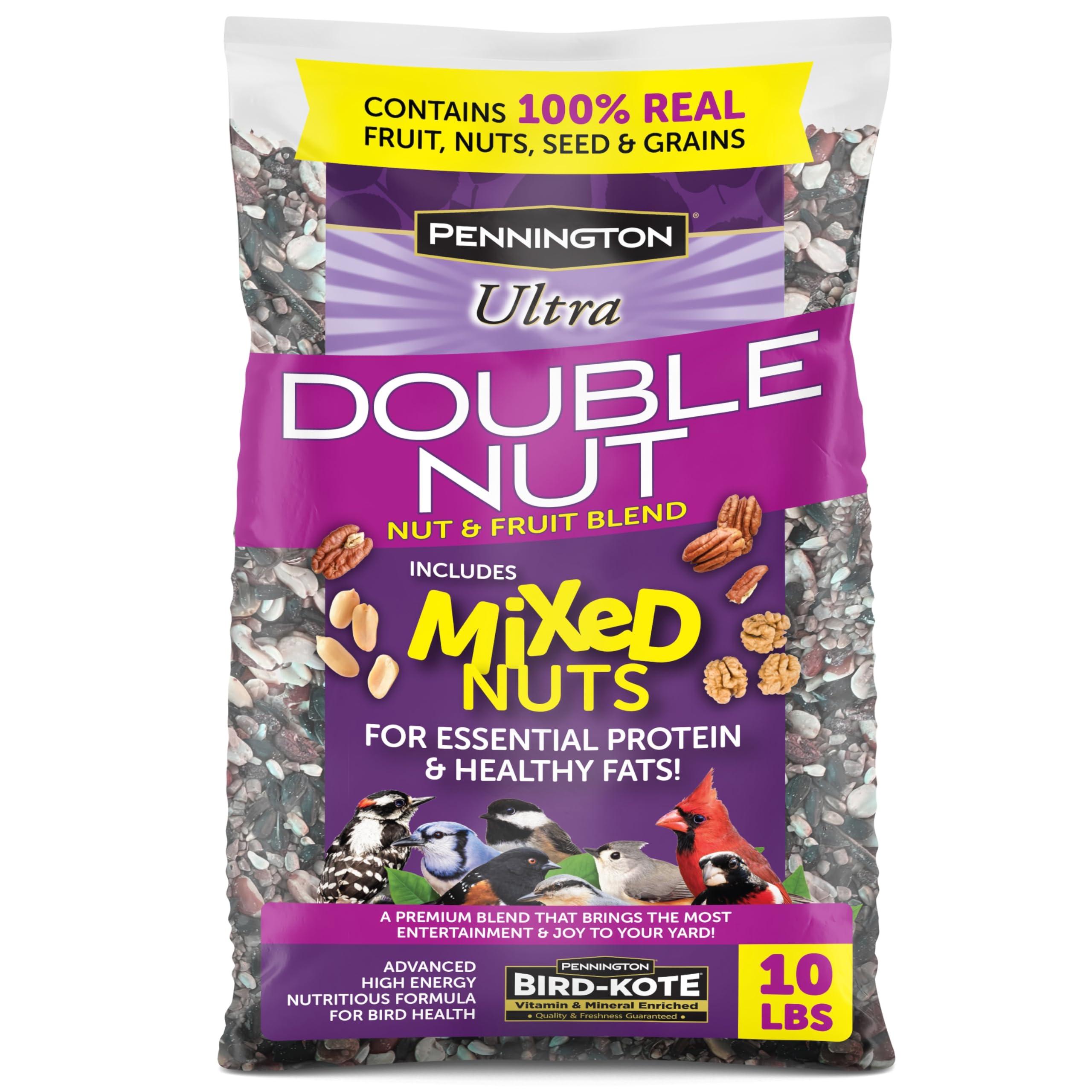
Pennington’s Ultra Double Nut blend edges out standard mixes through its Bird Kote technology — a spray-on vitamin and mineral coating that adds nutritional value to every seed in the 10-pound bag. For Illinois birds that may have limited natural food sources during late winter when wild berries and insects are scarce, this coating provides a micronutrient buffer that helps with egg production and feather regrowth heading into spring.
The ingredient list includes mixed nuts and 100 percent real fruits alongside standard seeds and grains, creating a texture and flavor profile that attracts woodpeckers, towhees, and nuthatches that might pass on a pure sunflower mix. It works across gazebo, hopper, platform, and tube feeders, making it a versatile option for backyard setups with multiple feeder types. The 10-pound size is manageable for a single-tube feeder over a few weeks of moderate traffic.
Some fruit pieces in the blend can be larger than a standard tube feeder port, which might require you to break them up during refills or use a platform feeder to give birds unrestricted access. Additionally, the included grains (oats, wheat) are not the top-tier ingredients for Illinois songbirds, though most birds will eat them if sunflower runs low while you’re away.
Why we love it
- Bird Kote vitamin coating adds year-round nutritional support
- Mixed nuts and fruits attract woodpeckers and towhees
- Compatible with hopper, tube, and tray feeders
Good to know
- Large fruit chunks can jam narrow tube feeder ports
- Grain fillers like oats are less preferred by finches and chickadees
5. Meadow Ridge Farms Wild Bird Seed Mix
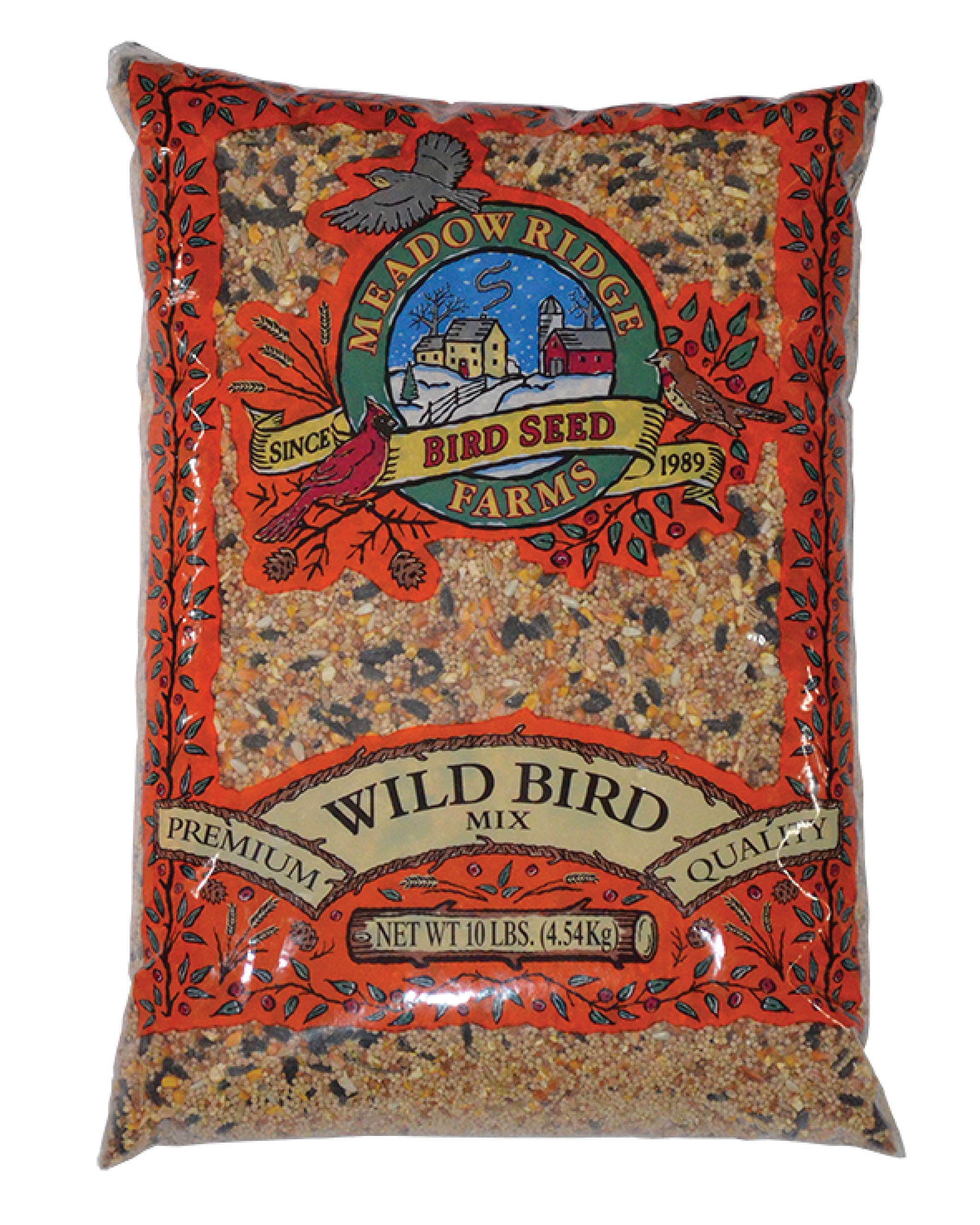
Meadow Ridge Farms offers the most accessible entry point for new Illinois feeders who want a broad-spectrum mix without committing to a premium price point. The blend includes sunflower, cracked corn, safflower, wheat, oats, and millet — ingredients that collectively attract house sparrows, mourning doves, dark-eyed juncos, and the full range of winter finches that visit Illinois yards from November through March.
The bag is blended and bagged daily in Delano, Minnesota, which means Midwest buyers receive relatively fresh stock compared to imports stored in distant warehouses. Cracked corn and millet make up a meaningful portion of the weight, which is fine if you have ground-feeding birds like doves and sparrows, but less ideal if you want to prioritize cardinals and chickadees that prefer sunflower and safflower first. This mix works best on a platform or ground tray where all ingredients are accessible.
The presence of wheat and oats means you’ll see some waste as birds sort through the bag for preferred seeds. This is a budget-conscious choice rather than a precision tool for targeting specific species. If your Illinois yard is already popular with ground foragers, this mix disappears quickly; if you exclusively tube-feed, you’ll want to sieve out the larger grains to prevent clogging.
Why we love it
- Locally blended in the Midwest for regional freshness
- Cracked corn and millet appeal to ground-feeding juncos and doves
- Wide species list — attracts sparrows, finches, and grosbeaks
Good to know
- Wheat and oats are low-preference seeds that increase waste
- Not ideal for tube feeders — best on platform or ground trays
FAQ
Should I switch seed blends between Illinois winter and summer?
Why do some Illinois birds ignore my feeder even with good seed?
How do I keep squirrels from dominating my Illinois feeder?
Final Thoughts: The Verdict
For most gardeners, the best bird seed for illinois winner is the Old Potters Black Oil Sunflower because its USA-grown Non-GMO seeds deliver exceptional freshness that Illinois songbirds devour with almost zero waste — and the resealable bag makes Midwest humidity management straightforward. If you want a vitamin-enriched blend with raisins and peanuts for winter survival, grab the Valley Splendor Songbird Melody. And for a cleanup-free patio experience that works on any deck, nothing beats the Audubon Park No Mess Blend.