
German Shepherd puppies grow at a staggering rate, and their developing bones and joints need precise nutrient ratios — not just any generic puppy chow. Choosing the wrong formula can set the stage for hip dysplasia and elbow problems later in life, making every kibble decision a critical one for the first 18 months.
I’m Mo Mahin — the founder and writer behind Furric. I’ve spent hundreds of hours cross-referencing AAFCO nutrient profiles, veterinary feeding guidelines for large and giant breeds, and analyzing concentrated owner feedback on how specific ingredients affect stool quality, coat shine, and growth plate development in fast-growing breeds like the German Shepherd.
After reviewing five of the most popular formulas on the market, the clear winner for balanced large-breed growth is the puppy food for german shepherd puppy from Purina Pro Plan’s Sport Development line, a recipe built around the 30/18 protein-to-fat split that active, athletic puppies need.
How To Choose The Best Puppy Food For German Shepherd Puppy
This breed is predisposed to developmental orthopedic diseases, so your food selection is essentially a preventative health decision. Here are the three non-negotiable factors every owner must verify on the guaranteed analysis panel.
Calcium and Phosphorus Ratios
German Shepherd puppies need controlled calcium levels — roughly 1.0% to 1.5% on a dry matter basis. Too much calcium accelerates bone growth faster than the joints can stabilize, increasing the risk of osteochondrosis. The phosphorus level should sit near 0.8% to 1.0% to maintain a balanced Ca:P ratio close to 1.2:1. Avoid any food that markets “high calcium” or “super growth” nutrients — that marketing is dangerous for this breed.
Protein-to-Fat Split
A German Shepherd puppy needs sufficient protein (around 28% to 32%) for muscle development, but the fat content must be moderate — usually 14% to 18%. Too much fat encourages rapid weight gain, which stresses the still-forming cartilage on the hip joints. Look for a formula that lists a named meat as the first ingredient and keeps crude fat under 18%.
DHA and Glucosamine Presence
DHA from fish oil supports proper neural development and vision — critical for a breed known for its working intelligence. Glucosamine and chondroitin provide the raw building blocks for joint cartilage. These are not just “nice to haves” for this breed; they are essential to support a puppy that will eventually carry 70–90 pounds of active bodyweight.
Quick Comparison
On smaller screens, swipe sideways to see the full table.
| Model | Category | Best For | Key Spec | Amazon |
|---|---|---|---|---|
| Purina Pro Plan Sport 30/18 | Mid-Range | Athletic GSD puppies needing high energy and trainability | 30% Protein / 18% Fat / Glucosamine included | Amazon |
| Purina Pro Plan Sensitive Stomach | Mid-Range | Puppies with soft stool or itchy skin | Salmon #1 ingredient / Oatmeal & probiotics | Amazon |
| Nutro Max Large Breed Puppy | Mid-Range | Joint-focused growth with non-GMO ingredients | 25 lb bag / Glucosamine & Chondroitin / DHA | Amazon |
| Bully Max 25/11 Lamb | Premium | Weight management & chicken-allergy puppies | 25% Protein / 11% Fat / Low-calorie density | Amazon |
| Hill’s Science Diet Large Breed | Premium | Veterinarian-backed balanced mineral support | 27.5 lb bag / DHA & fish oil / antioxidant blend | Amazon |
In‑Depth Reviews
1. Purina Pro Plan Sport Development Large Breed 30/18
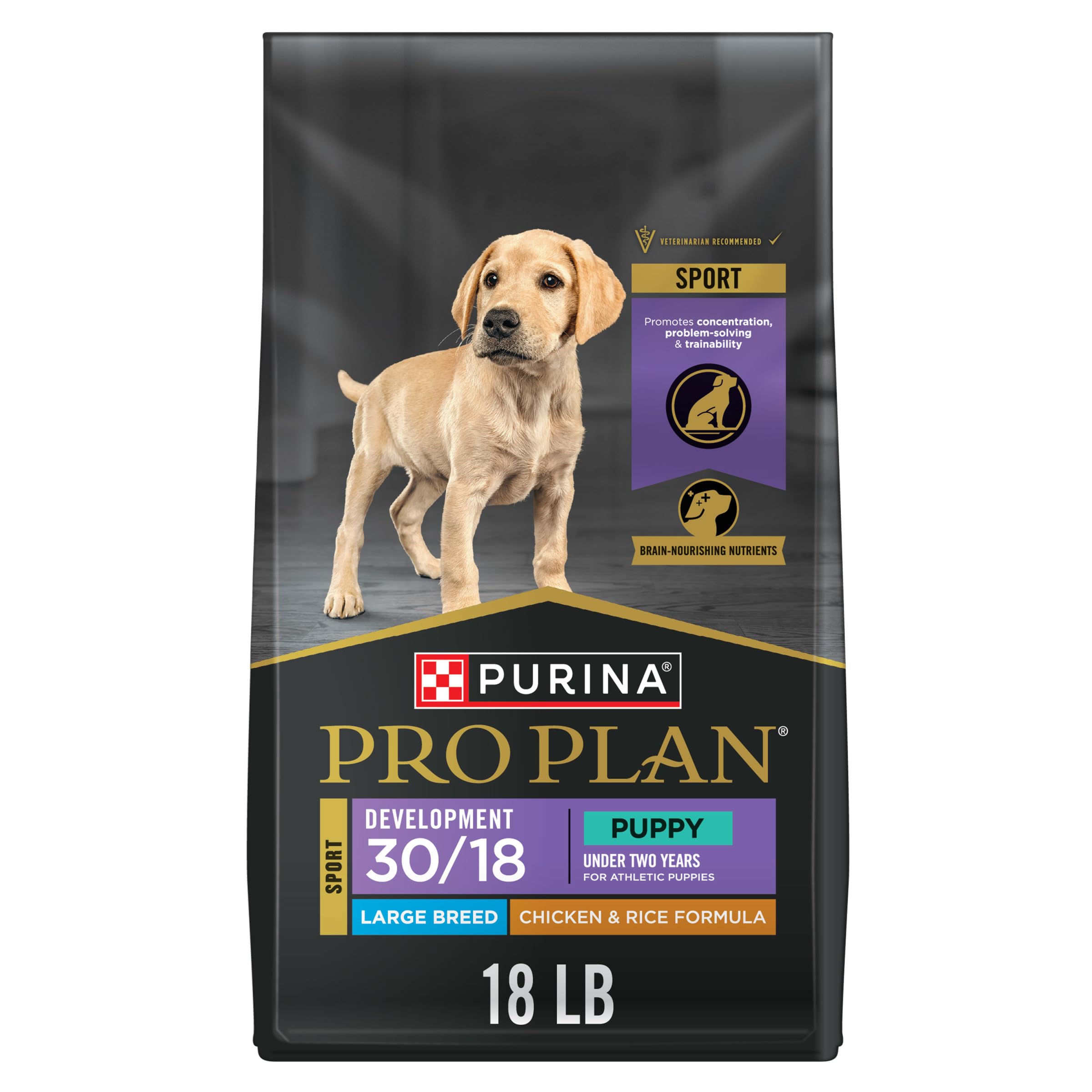
Real chicken is the first ingredient, delivering the 30% crude protein that active German Shepherd puppies need to maintain lean muscle mass during their rapid growth phase. The 18% fat content provides sustained energy without tipping into excessive calorie density, which is the exact fat ceiling recommended by veterinary orthopedic specialists for large-breed puppies. The manufacturer adds glucosamine to directly support the developing cartilage in the hips and elbows — the two most common problem areas in the breed.
This formula also contains bone-supporting nutrients like calcium and phosphorus at controlled levels, along with DHA for cognitive development. Owners of high-energy working lines report their puppies maintain stable energy throughout the day rather than experiencing the “puppy zoomie crashes” common with cheaper, lower-protein foods. The 18-pound bag size is manageable for owners who want to verify tolerance before committing to a larger bag.
The primary drawback is the bag size — at roughly 18 pounds, it runs out quickly for a growing German Shepherd puppy who might eat 4 to 5 cups per day during peak growth. Some owners also note that the price has crept higher over the last few years, though the ingredient quality justifies the investment for many. Several verified reviews from owners of lab mixes and husky/GSD crosses report firm, consistent stool and good energy levels throughout the first year.
Why we love it
- 30% protein supports lean muscle without excessive fat
- Glucosamine is included for joint protection
- Owners consistently report good trainability and focus in their puppies
Good to know
- Bag size is relatively small at 18 lb for a large breed
- Price has increased recently compared to previous formulations
2. Hill’s Science Diet Puppy Large Breed Chicken & Brown Rice
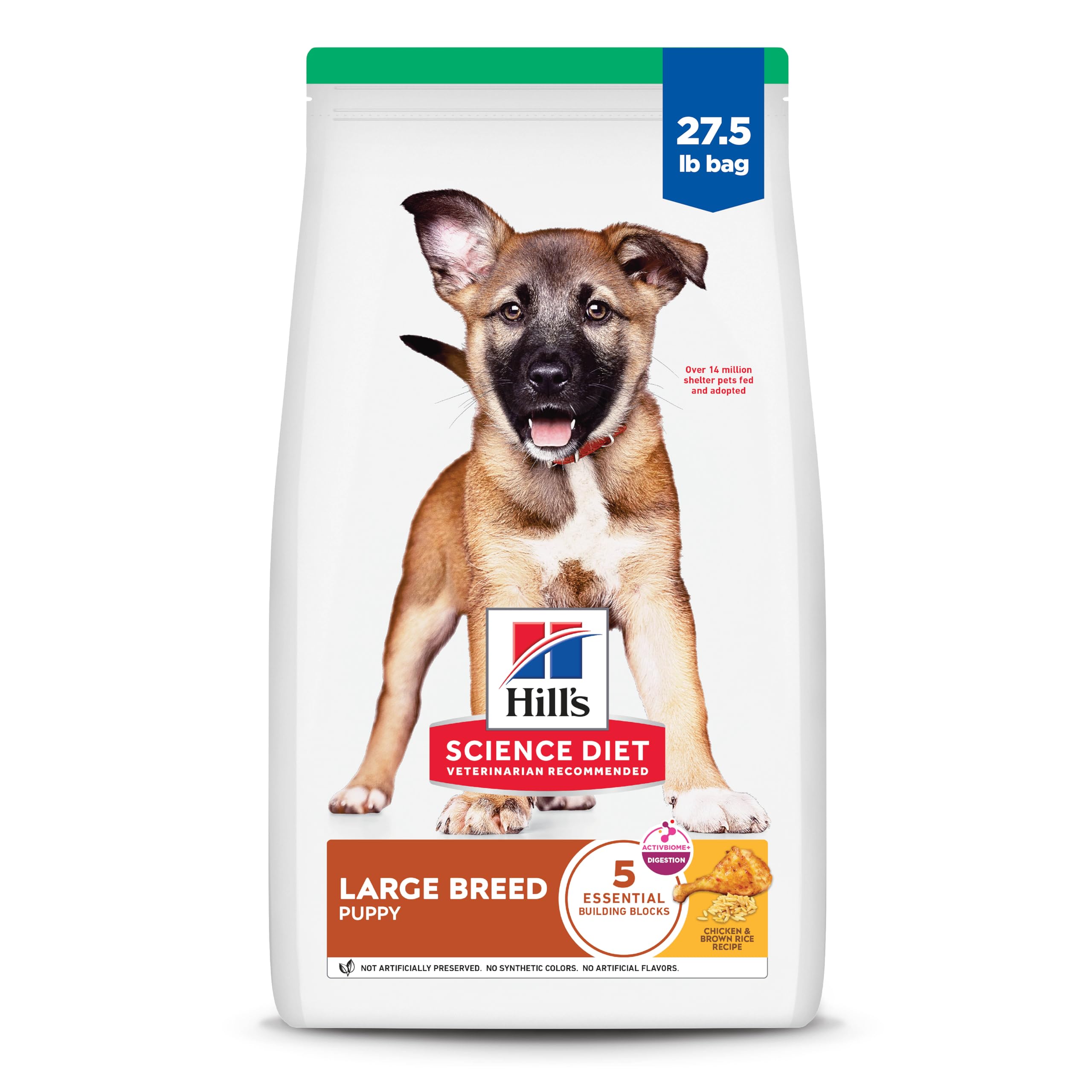
Hill’s Science Diet is the most recommended brand by US veterinarians, and this specific large-breed puppy formula is built around balanced minerals that precisely control bone growth rate — a critical factor when feeding a German Shepherd puppy. The DHA and fish oil content is formulated to support eye and brain development, while the antioxidant blend from vitamin E and beta-carotene bolsters the puppy’s developing immune system during the vaccination period.
The protein comes from high-quality chicken meal and brown rice, providing a digestible carbohydrate source that steadies blood sugar and maintains consistent energy levels. This formula is also made with natural ingredients and manufactured in the USA, giving owners confidence in quality control. At 27.5 pounds, the bag offers strong value for the feeding volume a large-breed puppy requires, and the kibble shape is sized appropriately for German Shepherd mouths, encouraging proper chewing rather than gulping.
Some German Shepherd owners note that the protein percentage is slightly lower than athletic-line formulas, which means puppies from high-drive working lines might display slightly less sustained energy between meals. Additionally, picky puppies may turn away from the chicken and brown rice flavor if they were weaned on a fish-based maternal diet. Verified feedback confirms that the stool remains firm and that the food is well-tolerated by sensitive stomachs, though the bag does not include added glucosamine as a direct supplement.
Why we love it
- Veterinarian-recommended brand with strong quality pedigree
- Balanced minerals protect developing bones and teeth
- Large 27.5 lb bag provides better per-feeding value
Good to know
- No direct glucosamine supplementation in the formula
- Lower protein than some working-line formulas
3. Nutro Max Large Breed Puppy Farm-Raised Chicken
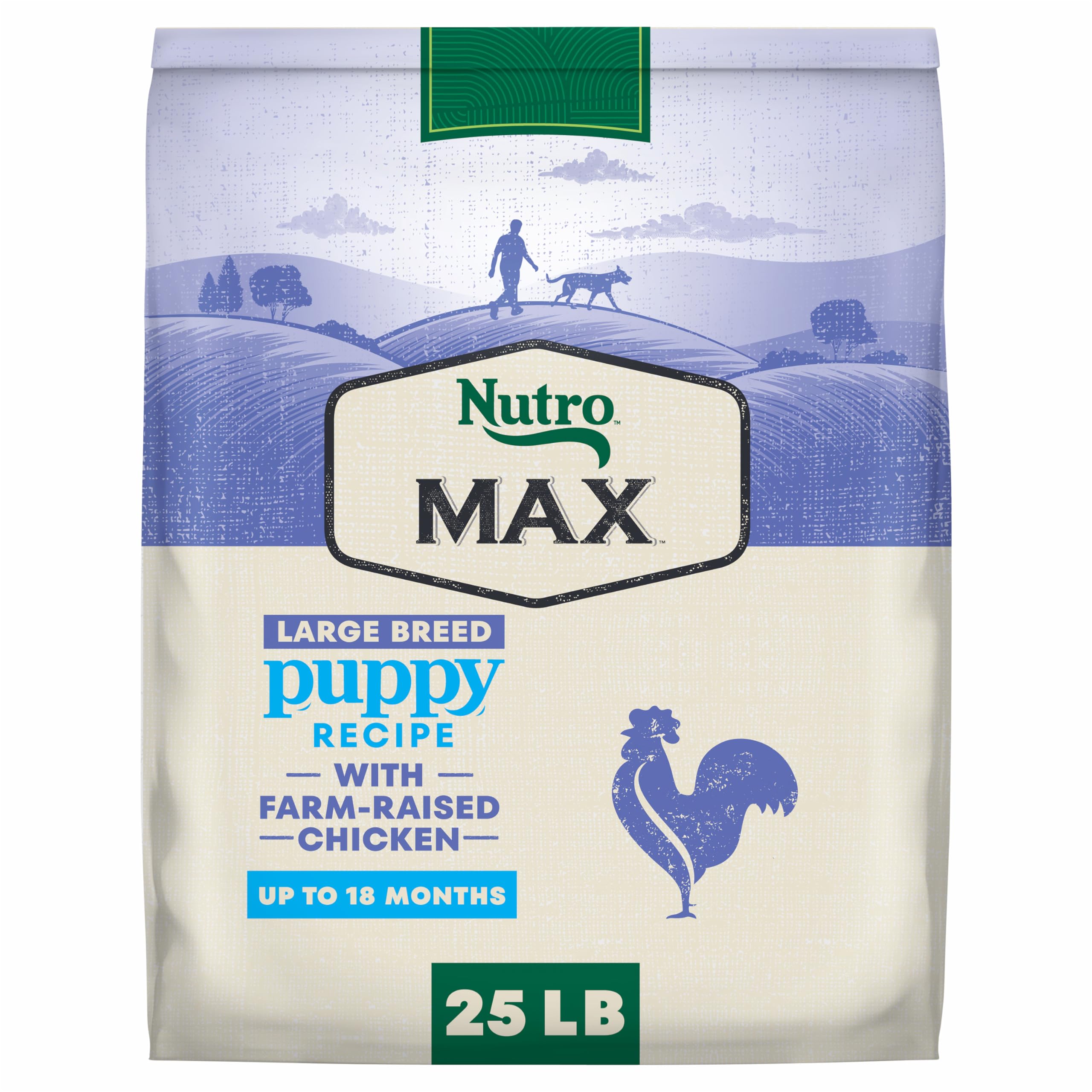
Nutro Max places farm-raised chicken as the number one ingredient and pairs it with natural sources of both glucosamine and chondroitin, making this a strong joint-support choice for German Shepherd puppies with known family histories of hip dysplasia. The recipe is non-GMO certified and avoids chicken by-product meal, corn, wheat, and soy — a clean ingredient panel that many owners prefer for a breed known to develop environmental or ingredient sensitivities.
The 25-pound bag size hits a sweet spot between cost efficiency and freshness for owners storing kibble in a climate-controlled container. The DHA content from omega-3 fatty acids supports cognitive sharpness, which aligns with the breed’s natural working drive. The crude protein level is appropriate for the moderate-growth philosophy that most veterinarians recommend for large breeds — fast growth is risky, and this formula supports a steadier, more structurally sound development pace.
The main limitation is the absence of a “large breed” specific calcium-phosphorus guarantee label on the bag. While the nutrient profile is formulated for large puppies, some owners prefer to see explicit mineral percentages to compare against the breed’s ideal 1.2:1 Ca:P ratio. Also, some GSD owners in the verified feedback mention that the kibble size is slightly smaller than other large-breed formulas, which can encourage gulping in puppies that are highly food-motivated.
Why we love it
- Non-GMO ingredients with no corn, wheat, or soy
- Glucosamine and chondroitin included for joint support
- Large 25-lb bag offers solid value
Good to know
- Explicit Ca:P ratio not printed on the bag
- Kibble is smaller than some competing large-breed options
4. Purina Pro Plan Sensitive Skin and Stomach Large Breed Salmon & Rice

Salmon is the first ingredient, and this formula is explicitly designed for large-breed puppies with sensitive digestive systems — a common issue in German Shepherds that are prone to exocrine pancreatic insufficiency and general food intolerance. It contains oat meal, which is easily digestible and less likely to cause the loose stool that plagues many GSD puppies during transitions between formulas. The sunflower oil provides omega-6 fatty acids for skin and coat, and the guaranteed live probiotics directly support the gut microbiome.
The DHA from fish oil is included for cognitive and vision development, and the formula is fortified with BPA-free standards. Many GSD owners in the verified reviews report a visible improvement in coat shine within two weeks of switching, and owners of GSD/husky mixes note that the food eliminated the chronic itching that persisted on chicken-based formulas. The 16-pound bag size is manageable for testing tolerance before scaling up to a larger purchase.
The biggest trade-off is the bag size — at 16 pounds, it is the smallest in this comparison, and a growing German Shepherd puppy consuming around 4 cups daily will go through it quickly. Some owners also note that the omega-6 to omega-3 ratio leans heavily toward omega-6, which may not be ideal for active working-line puppies who benefit from higher levels of anti-inflammatory omega-3s. However, for any GSD puppy showing signs of soft stool or dry flaky skin, this formula is a targeted solution.
Why we love it
- Salmon is the #1 ingredient for sensitive stomachs
- Live probiotics support digestive and immune health
- Owners report significant improvement in coat quality and itching
Good to know
- 16-lb bag runs out quickly for large breed puppies
- Omega-6 to omega-3 ratio is higher in omega-6
5. Bully Max 25/11 High Protein Low Fat Lamb
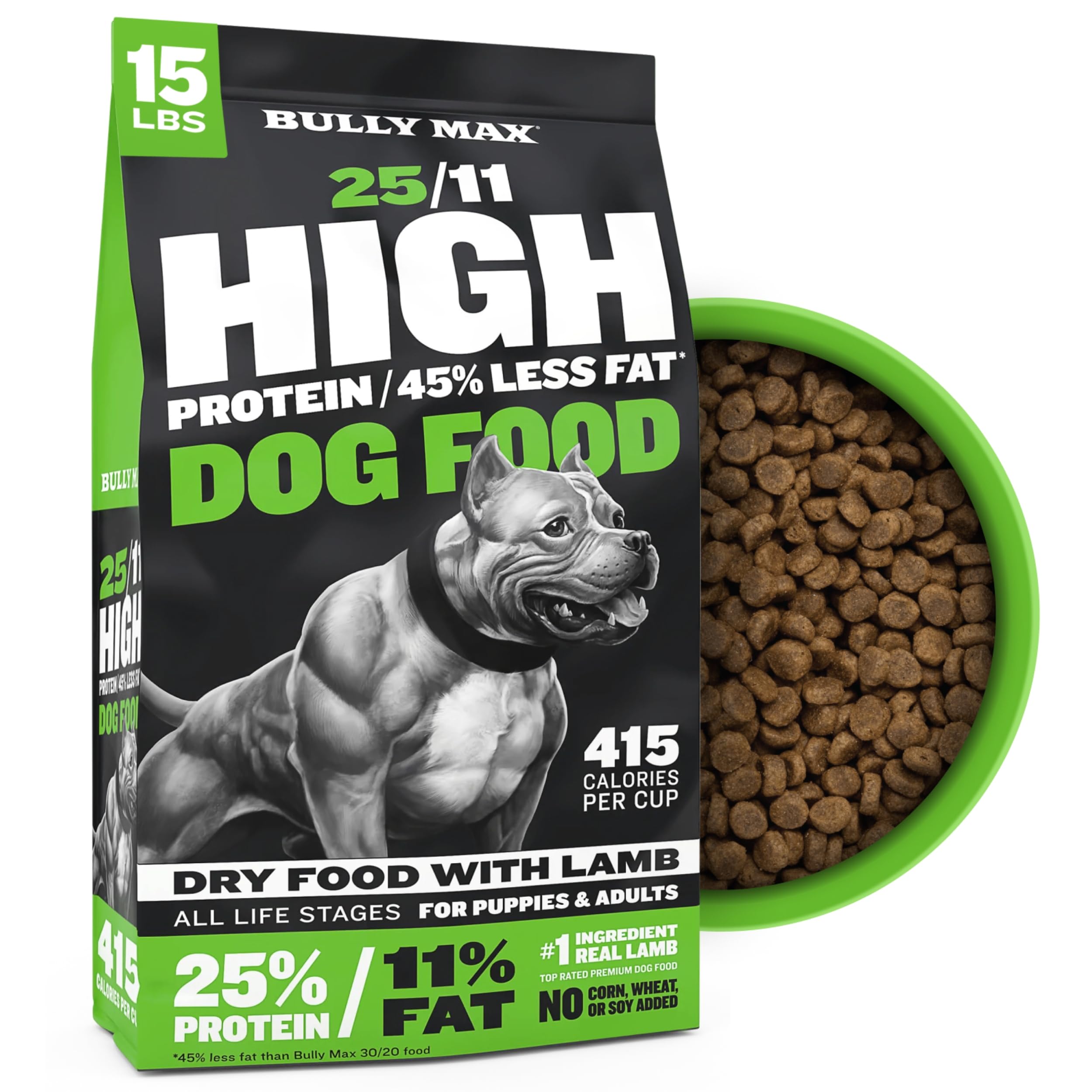
Bully Max takes a different approach with a 25% protein and only 11% fat formula, making this the leanest option on the list — 45% leaner than their own 30/20 recipe. This is a deliberate choice for owners who want to support muscle preservation without encouraging rapid weight gain, which is particularly relevant for German Shepherd puppies who are naturally prone to putting on weight during their slower growth phases between 8 and 14 months. The lamb protein source avoids chicken entirely, making it a strong alternative for GSD puppies with poultry allergies or inflammatory reactions to chicken meal.
The recipe includes postbiotics and probiotics for digestive health, along with omega-rich salmon oil for joint support and coat condition. The manufacturer states that the food meets AFFCO requirements for complete and balanced nutrition and is used by AKC and UKC champion show dogs. The barley and oat base provides a lower glycemic carbohydrate source compared to white rice or corn-based fillers, which helps maintain stable blood sugar in active puppies.
The main limitations are the small 15-pound bag size and inconsistent stock availability on Amazon — multiple verified reviews mention backorder issues that forced owners to switch brands mid-bag. Additionally, because the fat content is just 11%, some German Shepherd puppies from working lines with extremely high metabolisms may not get enough calorie density to maintain body condition without increasing feeding volume significantly. For owners of less active, family-home GSD lines or those managing a puppy with weight concerns, this formula works well.
Why we love it
- Low fat (11%) supports slow, steady growth for joint safety
- Chicken-free formula suitable for poultry allergies
- Includes probiotics and postbiotics for digestive health
Good to know
- 15-lb bag is small and stock availability is inconsistent
- 11% fat may not be calorie-dense enough for high-metabolism working puppies
FAQ
At what age should I switch my German Shepherd puppy to adult food?
How many cups of food should a German Shepherd puppy eat per day?
Can I mix two different large-breed puppy foods together?
Final Thoughts: The Verdict
For most German Shepherd puppy owners, the puppy food for german shepherd puppy winner is the Purina Pro Plan Sport Development 30/18 because it hits the ideal protein-to-fat ratio for athletic growth while including glucosamine for joint protection. If your puppy shows signs of food sensitivity or has loose stool, grab the Purina Pro Plan Sensitive Skin and Stomach Salmon. And for owners who want the highest veterinarian recommendation rate and the largest bag size for the price, nothing beats the Hill’s Science Diet Large Breed Puppy.