
The Pacific Northwest’s coastal rains, dense forests, and cool climate create a unique feeding challenge. Mold-prone fillers and low-quality seeds turn your feeder into a health hazard for the year-round songbirds you’re trying to support. You need a blend that stays dry in the hopper, resists fungal growth, and delivers genuine caloric density to help chickadees, finches, and juncos survive our wet winters.
I’m Mo Mahin — the founder and writer behind Furric. I’ve spent years analyzing wild-bird nutrition protocols and evaluating how USDA-certified processing standards and the Wild Bird Feeding Institute’s guidelines translate to real-world feeder success in the Pacific Northwest’s specific ecosystem conditions.
Whether you’re filling a tube feeder on a drizzly Seattle deck or stocking a platform for a flock of evening grosbeaks in Portland, finding the right bird seed for pacific northwest means prioritizing no-grow, no-waste formulas that won’t sprout or rot in our damp climate.
How To Choose The Best Bird Seed For Pacific Northwest
Selection in the PNW boils down to three factors: moisture tolerance, nutritional density, and waste management. Low-quality filler seeds like red milo and cracked corn absorb coastal humidity and quickly grow mold, while shell-based seeds leave hulls that rot on soggy ground. You need clean-burning calories from high-oil seeds and a “no grow” guarantee to prevent sprouting in our consistently damp soil.
No-Grow vs. No-Mess Explained
“No grow” seeds are heat-sterilized or de-hulled so they cannot germinate. This is critical in the PNW where dropped seeds will root in our mild, wet climate, turning your feeder area into a weed patch. “No mess” refers to shell-free seeds like sunflower hearts and chips. These eliminate the husk waste that accumulates under feeders and attracts rodents or slugs in damp yards. The best PNW blends combine both properties.
Quick Comparison
On smaller screens, swipe sideways to see the full table.
| Model | Category | Best For | Key Spec | Amazon |
|---|---|---|---|---|
| Audubon Park Waste Free Blend | Shell-Free | Deck & Patio Feeding | 12 lb bag, shell-free hearts & chips | Amazon |
| Old Potters Black Oil Sunflower | In-Shell | High-Energy Winter Fuel | 12 lb, Non-GMO, USA-grown, in-shell | Amazon |
| Happy Wings Sunflower Hearts & Chips | No-Waste | Multi-Species Tube Feeders | 5 lb, sunflower hearts & chips, no waste | Amazon |
| Happy Wings Finch Blend | No-Grow | Specialty Finch Feeders | 5 lb, Nyjer & sunflower hearts, no grow | Amazon |
| Meadow Ridge Farms Mix | Value Mix | Ground Feeding & Tray Use | 10 lb, blend of 6 seeds & grains | Amazon |
In‑Depth Reviews
1. Audubon Park Waste Free Wild Bird Seed
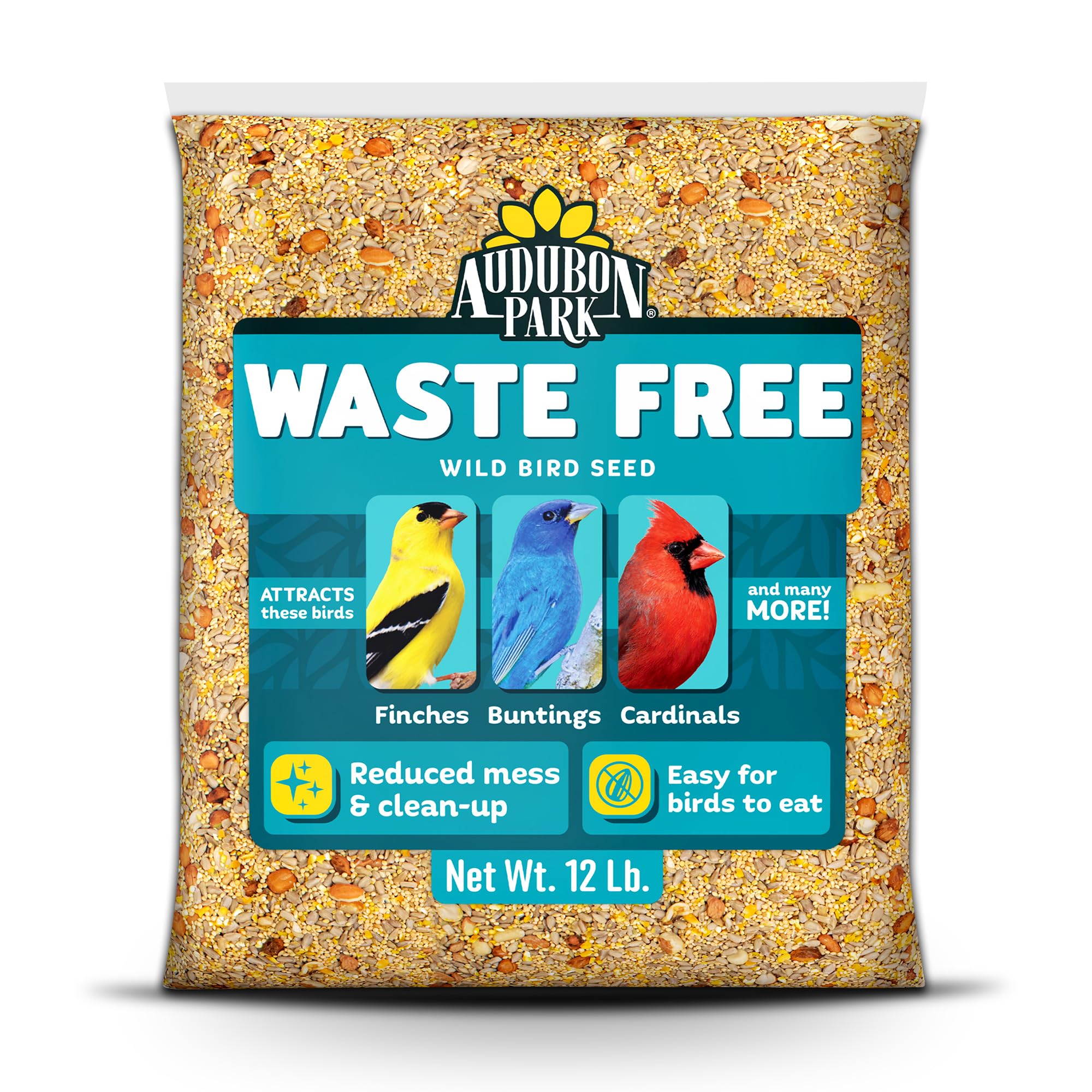
This 12-pound no-mess blend is built around shell-free sunflower hearts, chips, and peanut pieces, making it the single most practical option for PNW patios, decks, and elevated feeders where hull waste is unacceptable. The complete absence of shells and filler grains means nothing left behind to rot in a rain-soaked tray, and the high oil content from the peanut pieces provides the dense calories our songbirds need when temperatures drop into the mid-30s.
The Audubon Park blend draws a broad species range including finches, cardinals, wrens, thrushes, and buntings, but its real strength is the clean feeder floor below. After a week of steady coastal drizzle, you will not find soggy hull mats or sprouting seeds — every gram is consumed. The bag is resealable, which helps preserve freshness in humid environments where bulk storage can lead to clumping.
One consideration: the inclusion of peanut pieces means juncos and sparrows that prefer smaller, fine-textured seeds at ground level may hesitate at first. This bag is optimized for tube and hopper feeders, not scatter feeding on wet ground. If you exclusively ground-feed, you might supplement with a fine millet mix, but for the vast majority of PNW feeder setups, this is the top performer for cleanliness and energy density.
Why we love it
- Completely shell-free — zero mess under feeders
- High fat and protein from sunflower hearts and peanuts
- 12-pound bag provides long-lasting supply for multiple feeders
Good to know
- Not ideal for exclusive ground-feeding or junco-heavy yards
- Some finches may prefer finer Nyjer in separate feeder ports
2. Old Potters Black Oil Sunflower Seeds

When the November storms settle in and birds need the highest calorie-per-gram option available, Old Potters delivers with straight black oil sunflower seeds in the shell. These are Non-GMO, grown on small U.S. farms, and come with visible trace field debris that confirms minimal processing. The thin shell of black oil sunflower is easy for chickadees, nuthatches, and grosbeaks to crack, and the kernel inside has a fat content that far exceeds striped sunflower or white millet.
The 12-pound bag is substantial and will fuel a busy feeder for weeks. The seeds are chemical-free and retain their natural oil coating, which acts as a mild moisture barrier compared to heavily polished seeds. In the PNW, this matters because unprocessed shells resist mold better than the bleached, dust-coated seeds found in bargain blends. Cardinal pairs and northern flickers that visit tube feeders will stay longer to crack and consume every piece.
Be aware that in-shell sunflower seeds produce hull waste that accumulates beneath feeders. In a covered hopper or a tray with a screen bottom, this is manageable. If your feeder sits directly on wet grass, the hulls will mat. For a premium, high-energy option during our coldest months, this seed is the gold standard — just pair it with a tray that has drainage or a secondary cleanup plan.
Why we love it
- Highest fat content for winter survival feeding in cold rain
- Non-GMO and sourced from small U.S. farms
- Minimal processing preserves natural moisture resistance
Good to know
- Produces hulls that need management on wet ground
- Not a shell-free blend — some mess is unavoidable
3. Happy Wings Sunflower Hearts & Chips
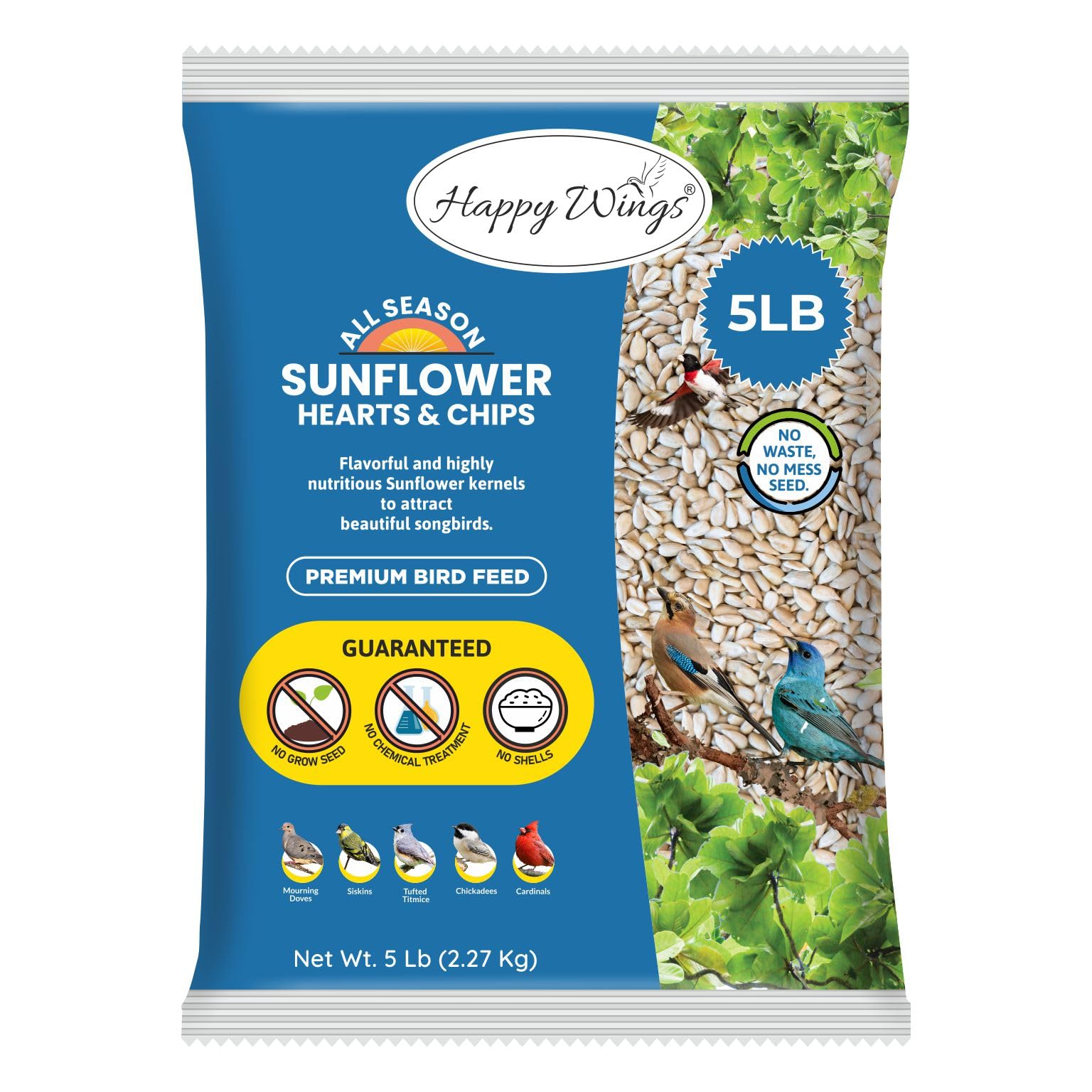
Happy Wings has stripped away every shell, delivering pure sunflower hearts and chips in a 5-pound bag that leaves behind exactly zero waste. For PNW renters with balcony feeders or small patio setups, this is the perfect solution. No hulls to blow into your neighbor’s space, no sprouting seeds in the planter below, and every gram of the bag is edible — there is simply no inedible portion.
The blend attracts a very wide range of species including chickadees, goldfinches, siskins, and even downy woodpeckers. Because the product contains no Nyjer or millet, it’s a single-ingredient high-energy food that matches exactly what cavity-nesting birds seek in our rainy yards. The manufacturer processes the seed in a USDA and BRC-GS certified facility, adding a layer of quality control that matters when buying consumable products for wildlife.
The 5-pound size is the main limitation. In a high-traffic feeder that hosts a flock of evening grosbeaks, the bag can empty in under a week. For a single tube feeder supplementing a few resident chickadees, it lasts a solid month. If you have a large yard or multiple feeders, you will need to repurchase frequently. Still, for tight spaces where mess is the primary concern, this is an unbeatable option.
Why we love it
- Zero waste — every kernel is edible with no hulls
- Processed in USDA-certified facility for quality assurance
- Ideal for balconies and small patios with no ground below
Good to know
- 5-pound bag is small for multiple feeders or large flocks
- Higher per-pound cost compared to in-shell sunflower
4. Happy Wings Finch Blend
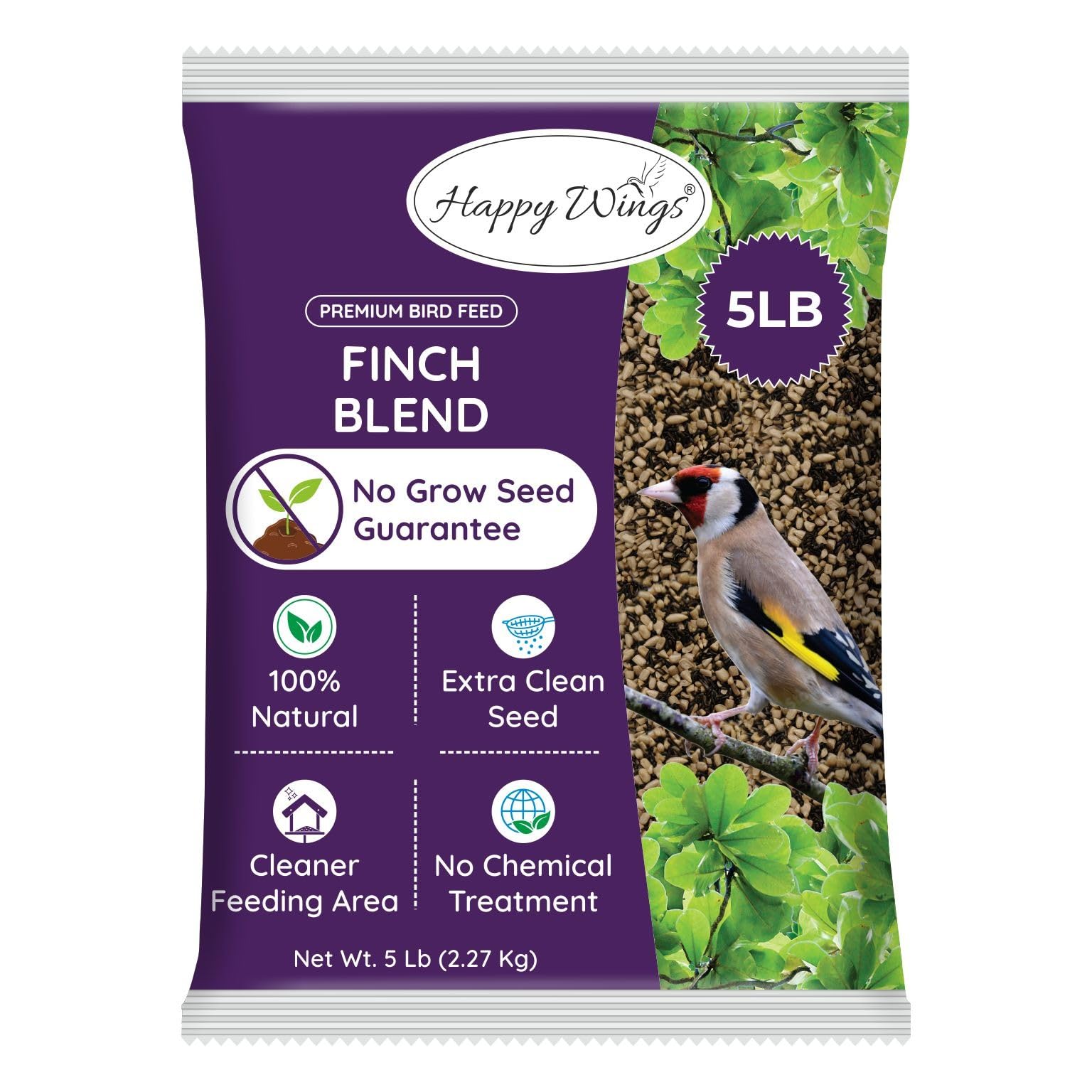
This 5-pound finch-specific blend marries Nyjer thistle seed with sunflower heart kernels, creating a high-protein, high-energy formula targeted at goldfinches, house finches, and pine siskins. The no-grow claim is critical for PNW use — Nyjer is a notoriously invasive seed that can establish in damp soil, but the heat-sterilization in this product ensures zero germination. In a region where weeds thrive from February through October, that feature alone justifies its spot on this list.
The Nyjer component also acts as a natural moisture repellent due to its fine, hard exterior. Rainwater beads off the seed surface rather than soaking in, which helps maintain freshness in uncovered tube feeders during our frequent drizzles. The sunflower hearts add a softer, fat-rich component that attracts larger finches and the occasional siskin flock. The bag is lightweight and manageable, fitting easily into small feeder storage bins.
The 5-pound size again is the main drawback. Finches can deplete a tube feeder of Nyjer quickly, and the smaller bag means more frequent refills and trips to the store. Additionally, the blend does not include millet or cracked corn, so it will not attract ground-feeding species like juncos or sparrows. If your goal is a dedicated finch feeder for a specific station, this is the right tool. If you want a general yard mix, supplement with a broader blend.
Why we love it
- Heat-sterilized no-grow Nyjer prevents invasive weeds in wet soil
- Nyjer’s hard shell resists moisture in rainy feeders
- High protein content supports finch molting and migration
Good to know
- 5-pound bag empties quickly in high-traffic finch feeders
- Does not attract ground-feeding species or larger songbirds
5. Meadow Ridge Farms Wild Bird Seed Mix
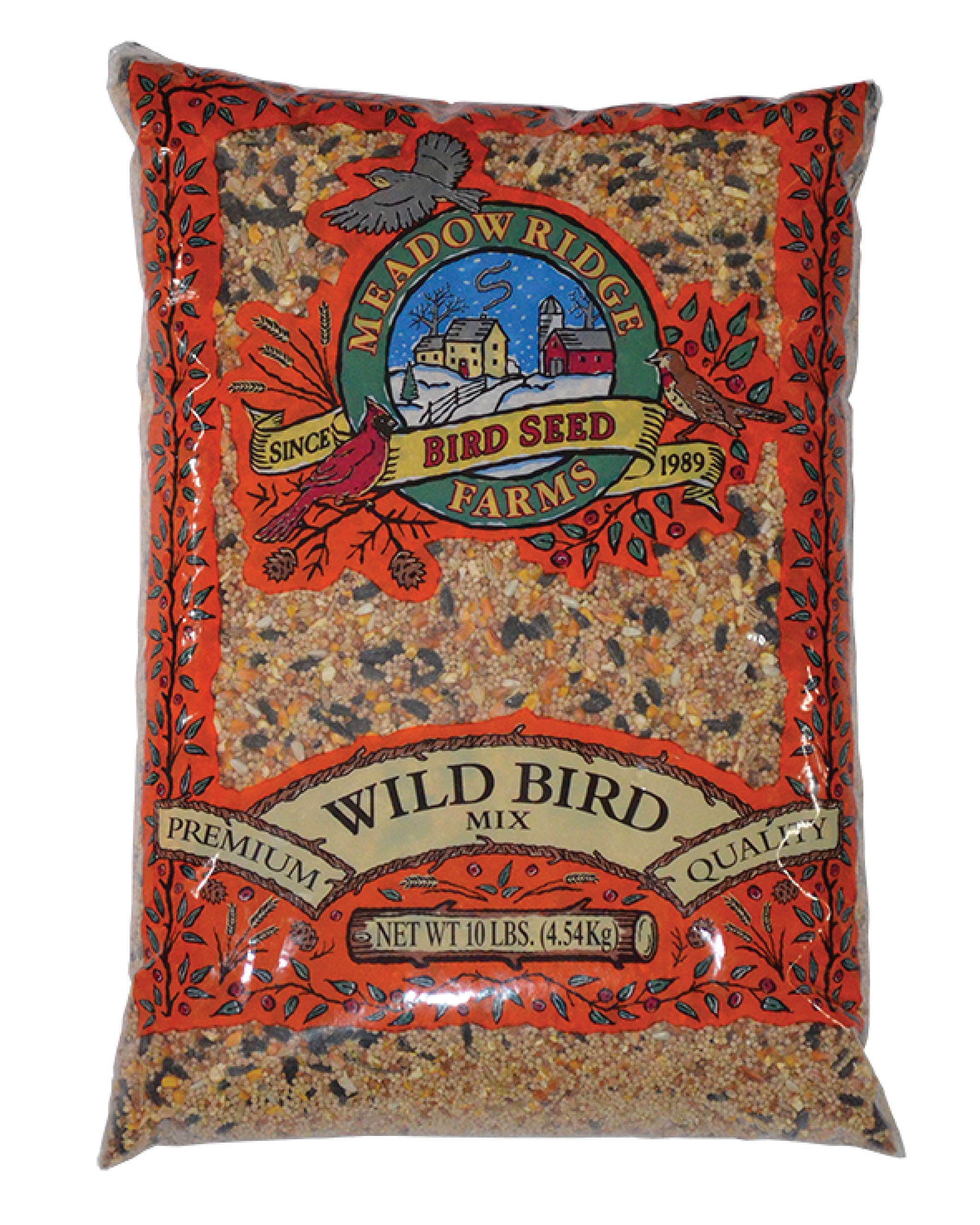
The Meadow Ridge Farms Mix provides a traditional 6-seed blend — sunflower, cracked corn, safflower, wheat, oats, and millet — packed fresh daily in Delano, Minnesota. At 10 pounds, it offers the highest volume-to-cost ratio in this guide and draws the widest species range, including dark-eyed juncos, white-throated sparrows, pine grosbeaks, and even gray jays that are common in the Pacific Northwest’s mountainous and suburban edge habitats.
This mix is best suited for ground-level tray feeding or platform feeders where multiple birds can forage together. The cracked corn and oats attract larger ground feeders like mourning doves and the occasional flicker, while the sunflower and safflower satisfy perching birds.
The biggest risk in the PNW is the cracked corn and wheat content. These grains absorb moisture quickly and can spoil in a matter of days under steady rain. This is not a blend for covered tube feeders or for owners who want a clean deck. It is, however, the best budget option for a well-drained, open ground-feeding station that supports the most diverse assembly of winter visitors.
Why we love it
- Largest volume per bag for budget-conscious feeding
- Attracts the widest range of species including grosbeaks and jays
- Freshly blended and bagged daily for consistent quality
Good to know
- Cracked corn and wheat grains are moisture-prone and can mold
- Not a no-waste blend — hull and shell management is required
FAQ
Should I choose in-shell or shell-free seed for the Pacific Northwest?
What does no-grow seed mean and why does it matter for my yard?
Final Thoughts: The Verdict
For most pet parents, the bird seed for pacific northwest winner is the Audubon Park Waste Free Wild Bird Seed because its 12-pound shell-free formula eliminates mess, resists moisture, and delivers high-energy nutrition to the widest range of songbirds in our coastal climate. If you want the highest calorie density for winter survival, grab the Old Potters Black Oil Sunflower Seeds. And for compact balcony feeders where every kernel must be edible, nothing beats the Happy Wings Sunflower Hearts & Chips.