
Feeding backyard ducks or wild waterfowl sounds simple until a bag of cheap grain leaves your birds with thin shells, low energy, or dirty water that attracts pests. The difference between a thriving flock and a struggling one almost always starts at the feeder.
I’m Mo Mahin — the founder and writer behind Furric. I’ve spent years analyzing feed formulations, veterinary safety standards for waterfowl, and aggregated feedback from hundreds of duck keepers to separate the truly complete diets from the marketing puffery.
This guide cuts through the confusion with a focused selection of the very best duck food options available right now, covering premium floating pellets, all-in-one layer blends, and high-protein supplements that actually move the needle on health and egg quality.
How To Choose The Best Duck Food
Picking the right feed is about matching the form, protein level, and calcium content to your specific flock — laying hens versus pets versus wild visitors need different formulations. Here are the three specs that matter most.
Pellet Form: Floating vs. Sinking vs. Mash
Ducks forage differently than chickens. A floating pellet stays on the water surface for over an hour, letting waterfowl eat without diving into murky sediment where bacteria grow. Sinking pellets or crumbles work better for dry fed birds, but in ponds they pollute the water and go uneaten. Mash or granule feeds are ideal for ground feeding or mixing into wet mash but should never be tossed into open water.
Protein and Calcium Balance
Laying ducks need a feed with 16–18% protein and added calcium (around 3.5–4.5%) to support strong shells and steady egg production. A maintenance or scratch feed rarely exceeds 12% protein and lacks the oyster shell or limestone needed for shell quality. For ducks not laying, a 14% protein feed is sufficient, but you still want a complete ration with vitamins A, D, and E to prevent feather issues and reproductive problems down the line.
Supplement Ingredients: When to Add Protein
Whole grains and layer pellets cover the nutritional base, but a high-protein supplement like dried mealworms (around 45–50% protein) makes a huge difference during molting, cold weather, or when encouraging natural foraging behavior. Just remember: treats should never exceed 10% of the daily diet. Overfeeding protein to non-laying ducks can strain the kidneys, so match the supplement to the scenario.
Quick Comparison
On smaller screens, swipe sideways to see the full table.
| Model | Category | Best For | Key Spec | Amazon |
|---|---|---|---|---|
| Natural Waterscapes Waterfowl Feed | Premium | Pond feeding, wild ducks & swans | Floating pellets (1hr+) | Amazon |
| Purina Layena Layer Pellets | Mid-Range | Laying ducks, stable flocks | 16% protein, marigold extract | Amazon |
| Wholesome Harvest Layer Blend | Mid-Range | Non-GMO, egg production | 16% protein, omega-3 flax | Amazon |
| Classic Flock Dried Mealworms | Premium | Protein supplement, molting | 45%+ protein, all-natural | Amazon |
| Ernst Grain & Livestock Wildlife Mix | Budget | Ground feeding, wild visitors | 5-grain blend, non-GMO | Amazon |
In‑Depth Reviews
1. Natural Waterscapes Waterfowl Feed

This is the single best option for anyone who feeds ducks near a pond, lake, or creek — and it’s the only feed on this list that floats reliably for over 60 minutes. The pellets are formulated with fishmeal to match the natural protein profile waterfowl get from aquatic insects, and the balanced fiber content means less waste sinks to the bottom and clouds the water. It works for mallards, pet ducks, geese, and swans equally well.
The resealable bag is a smart touch for keeping the pellets dry and fresh between feedings, especially if you pace your trips to the pond. At 5 pounds, it’s a smaller bag than the grain mixes, but the concentrated nutrition means you use less per bird to maintain good condition. The floating design virtually eliminates the risk of moldy, uneaten feed accumulating in shallow water.
One trade-off: the protein level sits around 17%, which is ideal for adult maintenance but slightly lower than what a heavy-laying hen might need. If you’ve got a flock producing eggs daily, you’ll want to pair this with a high-calcium layer supplement or rotate with a dedicated layer pellet. But as an all-in-one waterfowl feed, this is the premium standard.
Why we love it
- Pellets float for over an hour, reducing water pollution
- Fishmeal provides a complete amino acid profile for waterfowl
- Resealable packaging keeps contents fresh and dry
Good to know
- Higher sticker price per pound than grain-based feeds
- Protein may be insufficient for heavy layers without supplementation
2. Purina Layena Layer Hen Feed Pellets

Purina’s Layena is a veteran in the poultry feed world, and for good reason — the 16% protein content, calcium-manganese-trace mineral blend, and marigold extract (for deep yellow yolks) make it a complete meal for laying ducks in a stable, dry pen. The “Oyster Strong System” delivers calcium at a rate that supports prolonged absorption, which means eggshells stay thick even during peak lay cycles.
The 10-pound bag is generously sized for a small-to-medium flock, and the pellet form reduces waste compared to mash or crumbles because ducks can’t flick it around as easily. Prebiotics, probiotics, and yeast in the formula help maintain gut health, which is especially important for ducks that forage in wet, muddy runs where bacterial loads are higher than in chicken coops.
The biggest catch is that these pellets sink immediately in water. If you’re feeding ducks on a pond or natural water source, this feed will drop straight to the bottom and create sludge. Use it only for dry-lot feeding or in a trough set away from open water. Also, the feed is formulated for adult birds — ducklings under 8 weeks need a starter ration with lower calcium.
Why we love it
- 16% protein with added probiotics for digestive health
- Marigold extract produces rich yolk color in duck eggs
- Oyster Strong System supports prolonged calcium absorption
Good to know
- Pellets sink — unsuitable for pond or water feeding
- Not formulated for ducklings under 8 weeks old
3. Wholesome Harvest Non-GMO Layer Blend
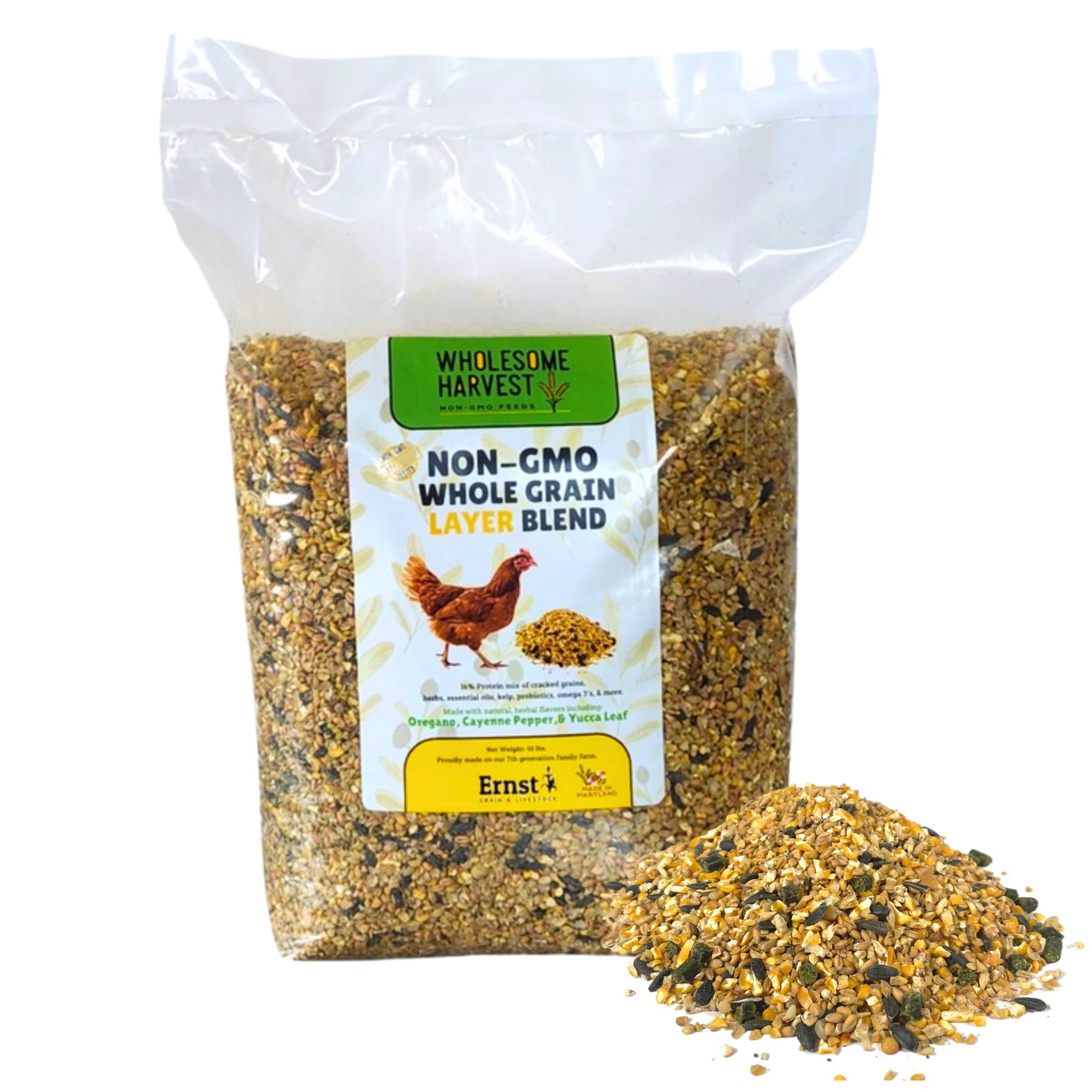
If avoiding GMOs in your flock’s diet is a priority, this whole-grain layer blend from Wholesome Harvest is the cleanest option here. The base is a mix of cracked corn, soybeans, wheat, and barley — all non-GMO — fortified with essential oils, herbs, oyster shell for calcium, and linseed oil for higher omega-3 levels. The 16% protein target is right where you want it for steady egg production.
The granule form is less processed than a standard pellet, which some keepers prefer for simulating a more natural foraging experience. Ducks spend longer picking through the blend, which can reduce boredom in confined runs. The inclusion of probiotics supports digestive health, and the herbs (like oregano and rosemary) offer mild antimicrobial benefits that help the flock stay robust without additives.
Because this is a mash/granule rather than a hard pellet, it creates more dust and fines at the bottom of the bag. It also sinks instantly in water, so keep it off the pond. The 10-pound bag is mid-range in size, and the slightly higher price reflects the non-GMO certification and specialty ingredients like oyster shell and flax.
Why we love it
- 100% non-GMO grains with certified ingredients
- Omega-3 from flax supports healthier eggs and feathers
- Herbal blend (oregano, rosemary) offers natural gut support
Good to know
- Granule form creates dust and fines in the bag
- Sinks in water — inappropriate for aquatic feeding
4. Classic Flock Dried Mealworms
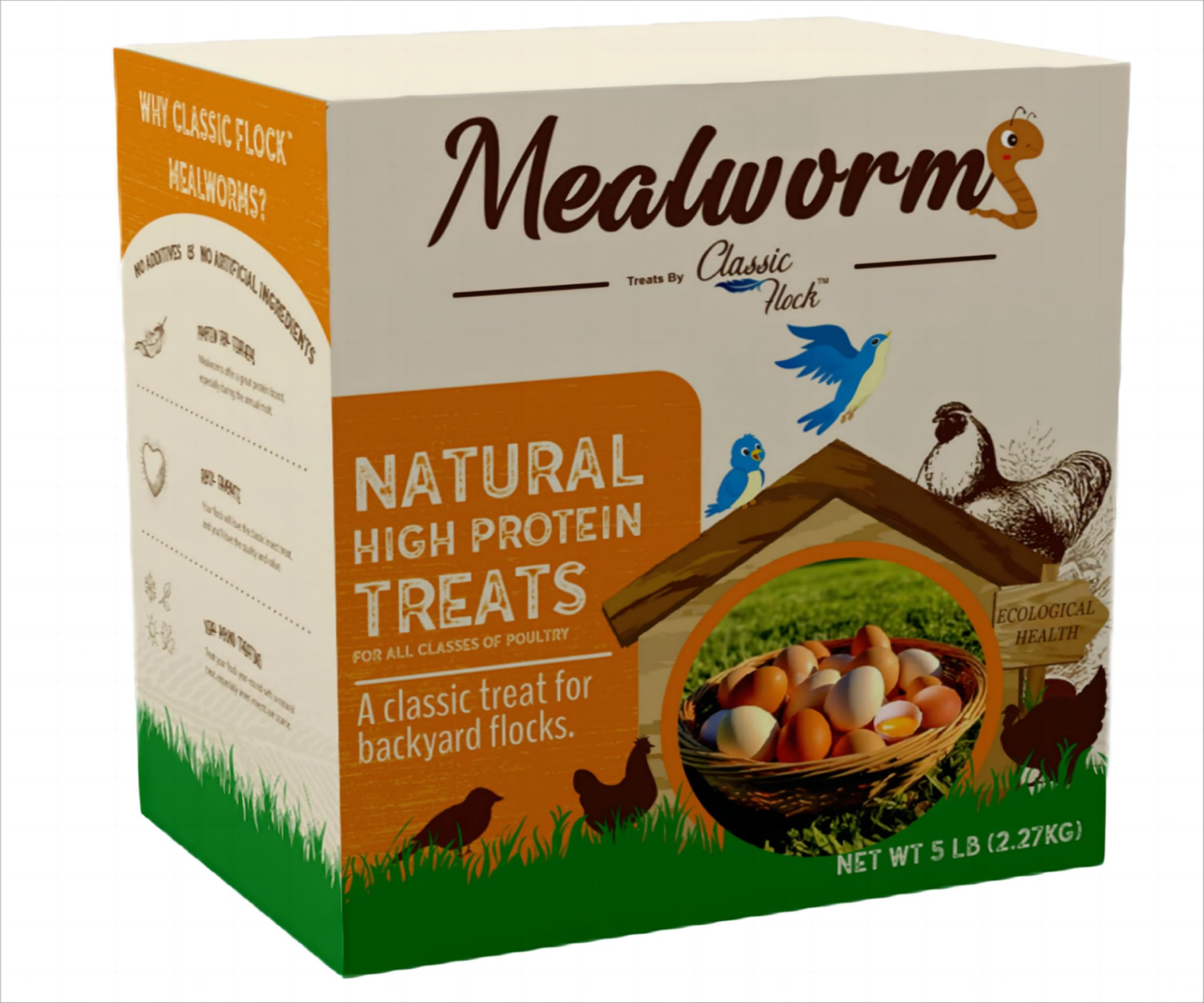
Dried mealworms are the gold-standard training treat and nutritional supplement for ducks, and Classic Flock delivers a 5-pound bag of microwave-dried worms that are free from any artificial additives or preservatives. The protein content sits around 45–50%, which is transformative during molting, cold snaps, or when you’re trying to encourage reluctant foragers to stay active.
The resealable clear bag lets you see the quality at a glance — no broken bits, consistent sizing, and a dry, natural smell. These are not coated in any oils or flavorings, so they won’t leave a residue in your feeder or attract ants as quickly as some moist treats. Ducks go absolutely wild for them, which makes them invaluable for hand-taming or leading birds back to the coop at dusk.
The key rule: mealworms are a supplement, not a complete diet. Keep them below 10% of total daily intake, and always offer a complete layer feed or waterfowl pellet as the base ration.
Why we love it
- Massive 5-pound bag of high-protein, additive-free worms
- Excellent for training, molting support, and winter energy
- Dry, non-oily texture won’t spoil quickly in warm weather
Good to know
- Must be fed as a supplement, not a complete diet
- Overfeeding can disrupt calcium-to-phosphorus balance
5. Ernst Grain & Livestock Wildlife Mix
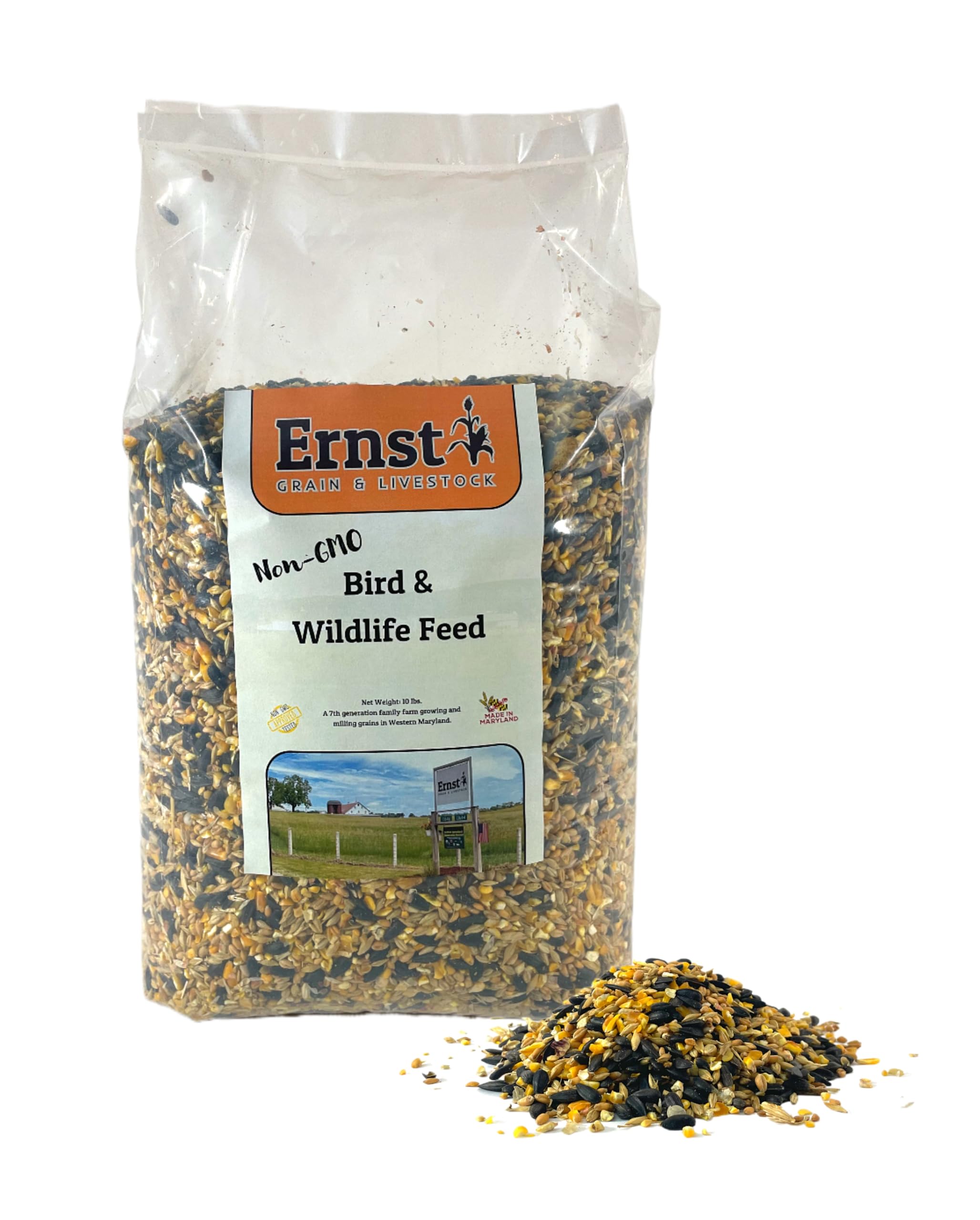
If your goal is to feed wild ducks, geese, turkeys, squirrels, and deer with a single bag of grain, the Ernst Wildlife Mix is the most economical way to do it. The blend combines corn, barley, wheat, black oil sunflower seeds, and roasted soybeans — all non-GMO — in a 10-pound bag that goes a long way when scattered on the ground or used in a trough feeder.
The roasted soybeans add a protein boost that plain cracked corn lacks, making this a step up from basic scratch grains. The variety of seeds attracts a broader range of wildlife, which can be a plus if you enjoy backyard birding. It’s also perfectly safe for ducks and geese that forage naturally on land during the day, as long as they also have access to a water source for proper digestion.
This is not a balanced diet — it lacks the calcium, vitamin premix, and amino acid profile that ducks need for egg production or long-term health. Use it as a supplemental scatter feed for wild visitors or as a cost-effective base to mix with a layer pellet. It’s not suitable as the sole diet for a laying flock or for ducks that don’t have access to natural forage.
Why we love it
- Large 10-pound bag at a very accessible entry price
- Non-GMO grains with roasted soybeans for added protein
- Attracts a wide variety of backyard wildlife
Good to know
- Not a complete diet — no calcium or vitamin premix
- Unsuitable as sole feed for laying ducks or confined flocks
FAQ
Can I feed chicken layer feed to my ducks?
How much duck food should I give per bird per day?
Is it safe to feed wild ducks at the pond?
Final Thoughts: The Verdict
For most waterfowl keepers, the duck food winner is the Natural Waterscapes Waterfowl Feed because it floats, reduces pond waste, and provides complete nutrition for wild and pet ducks alike. If you manage a laying flock on dry ground, grab the Purina Layena Layer Pellets for their calcium-rich formula and consistent egg results. And for a high-protein supplement to get your birds through molting or winter, nothing beats the Classic Flock Dried Mealworms — just keep the portion under 10% of the daily diet.