
Feeding a Maine Coon isn’t like feeding an average housecat. These gentle giants have a massive frame, a thick, waterproof coat, and a notoriously sensitive digestive system that demands specific nutritional ratios most standard formulas simply don’t provide. Getting the diet wrong leads to loose stools, a dull coat, and strained joints that can’t support their impressive 20-pound frame.
I’m Mo Mahin — the founder and writer behind Furric. I’ve spent over a decade studying breed-specific feline nutrition, analyzing ingredient panels, and cross-referencing thousands of verified owner reviews to separate genuinely tailored formulations from marketing fluff.
After comparing the protein profiles, calcium-to-phosphorus ratios, and kibble geometry of the top contenders, these entries represent the absolute best you can buy today for the best cat food for maine coon.
How To Choose The Best Cat Food For Maine Coon
Selecting a diet for a Maine Coon goes beyond reading the protein percentage on the bag. Their slower growth rate, deep chest, and need for consistent digestion mean you must evaluate kibble form, fat content, and calcium levels carefully.
Kibble Size and Shape
Standard kibble is often too small for a Maine Coon’s wide jaw. Small pellets encourage gulping without chewing, which causes regurgitation. Look for an oversized, textured kibble that forces chewing. A large, square, or star-shaped piece promotes oral health by scraping tartar as the cat bites down. The Royal Canin Maine Coon kibble is a prime example of this geometry.
Protein and Fat Content for a Large Frame
A Maine Coon needs a minimum of 40% protein on a dry matter basis to maintain lean muscle mass, but fat content should stay moderate — around 16–20% — to prevent rapid weight gain that stresses developing joints. Avoid formulas with excessive starch binders like peas or potatoes, which inflate carbohydrate levels and contribute to obesity. Look for named meat meals as the first ingredient rather than whole meats with high moisture content.
Joint and Heart Support Additives
This breed is prone to hip dysplasia and hypertrophic cardiomyopathy. Look for guaranteed levels of glucosamine and chondroitin for joint cushioning, plus taurine, EPA, and DHA for cardiac function. Omega-3 fatty acids from fish oil also support the long, shaggy coat and reduce skin inflammation. A calcium-to-phosphorus ratio close to 1.2:1 is ideal for maintaining strong bones without overloading the kidneys.
Quick Comparison
On smaller screens, swipe sideways to see the full table.
| Model | Category | Best For | Key Spec | Amazon |
|---|---|---|---|---|
| Royal Canin Maine Coon Adult | Breed-Specific Dry Kibble | Purebred Maine Coons 15 months+ | Oversized, curved kibble; 36% protein | Amazon |
| Tiki Cat Born Carnivore Indoor | Grain-Free Dry Kibble | Indoor adults needing weight mgmt | Chicken as #1; 40% protein | Amazon |
| Feline Natural Chicken & Lamb | Freeze-Dried Raw | Owners wanting whole prey diet | 98% meat & organs; 44% protein | Amazon |
| Weruva Kitty Gone Wild Salmon | Premium Wet Food | Hydration & coat health | Wild salmon, sardine, mackerel | Amazon |
| Open Farm Whitefish | Grain-Free Dry Kibble | IBD or sensitive stomach | Ocean-caught whitefish; 34% protein | Amazon |
In‑Depth Reviews
1. Royal Canin Feline Breed Nutrition Maine Coon Adult Dry Cat Food
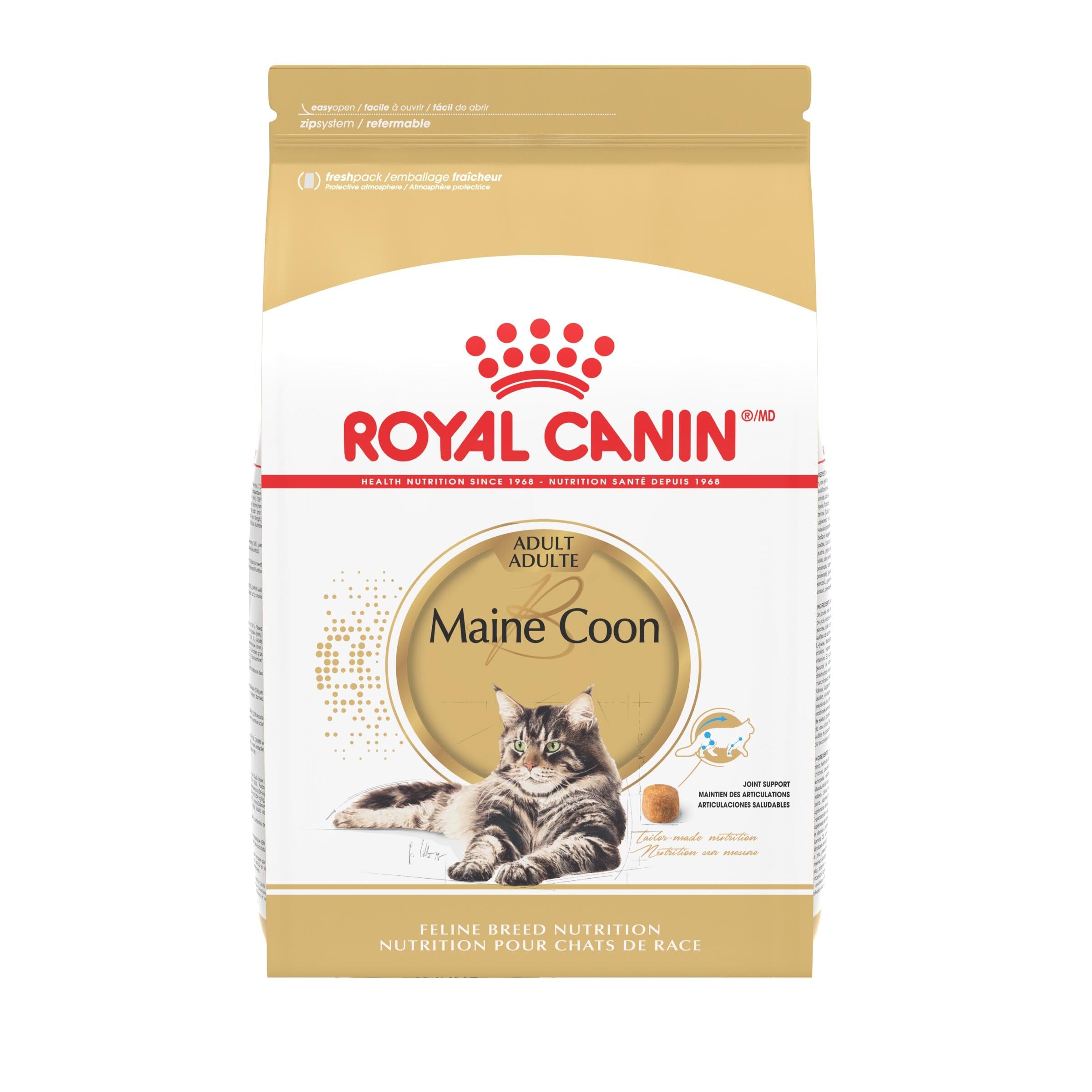
This is the only entry formulated specifically for the Maine Coon breed, and it shows in every detail. The kibble is oversized with a unique curved shape designed to fit a Maine Coon’s broad jaw, forcing the cat to chew rather than gulp — a critical feature for preventing regurgitation in this barrel-chested breed. The protein level sits at a breed-appropriate 36%, which supports massive muscle without overloading the kidneys over time.
What sets this formula apart is the targeted nutrient blend for the two biggest health threats to Maine Coons: joint degeneration and heart disease. Royal Canin adds glucosamine and chondroitin for cartilage support, plus an elevated level of taurine, EPA, and DHA specifically for cardiac function. The omega-3 and omega-6 fatty acid profile also maintains the long, water-resistant coat that defines the breed’s appearance.
Owners of picky Maine Coons report high acceptance rates because the kibble texture is satisfying to crunch. The 14-pound bag lasts a single-cat household roughly four to six weeks. If you want a no-compromise formula built entirely around the physiology of this cat, this is the benchmark every other diet is measured against.
Why we love it
- Oversized, breed-specific kibble geometry prevents gulping
- Guaranteed glucosamine and chondroitin for joint support
- Heart-healthy taurine, EPA, and DHA blend
Good to know
- Contains grains (not suitable for grain-free seekers)
- Premium price per pound compared to general adult formulas
2. Tiki Cat Born Carnivore Indoor Health Dry Cat Food

Maine Coons kept indoors face a unique metabolic challenge: they need enough protein to sustain a large frame, but they burn fewer calories than their outdoor counterparts. Tiki Cat’s Born Carnivore Indoor formula hits a sweet spot with a 40% protein level from real chicken as the first ingredient, paired with moderate fat to prevent the weight creep that strains their joints. The crunchy kibble texture satisfies the innate need to chew while scraping plaque from their teeth.
The inclusion of pumpkin as a fiber source is a welcome detail for Maine Coon owners who struggle with loose stools. Fiber binds the stool without adding inflammatory grains, making this a great fit for cats with moderate digestive sensitivity. Tiki Cat also fortifies the kibble with taurine and omega-6 fatty acids to support heart function and the dense coat that indoor Maine Coons sometimes lose due to low humidity.
Owner reviews consistently mention that even the pickiest Maine Coons accept this food immediately, and many report shinier coats and firmer stools within two weeks. The 12-pound bag offers better per-pound value than premium raw diets without sacrificing ingredient quality. For indoor Maine Coons that need balanced energy without the bulk, this is a top-tier choice.
Why we love it
- Real chicken as the first ingredient with 40% protein
- Pumpkin fiber helps firm stools in sensitive cats
- Grain-free and non-GMO for clean ingredient sourcing
Good to know
- Kibble is standard size, not oversized for large jaws
- Best for adults; kittens need a higher calorie density
3. Feline Natural High Protein Dry Cat Food, Chicken & Lamb
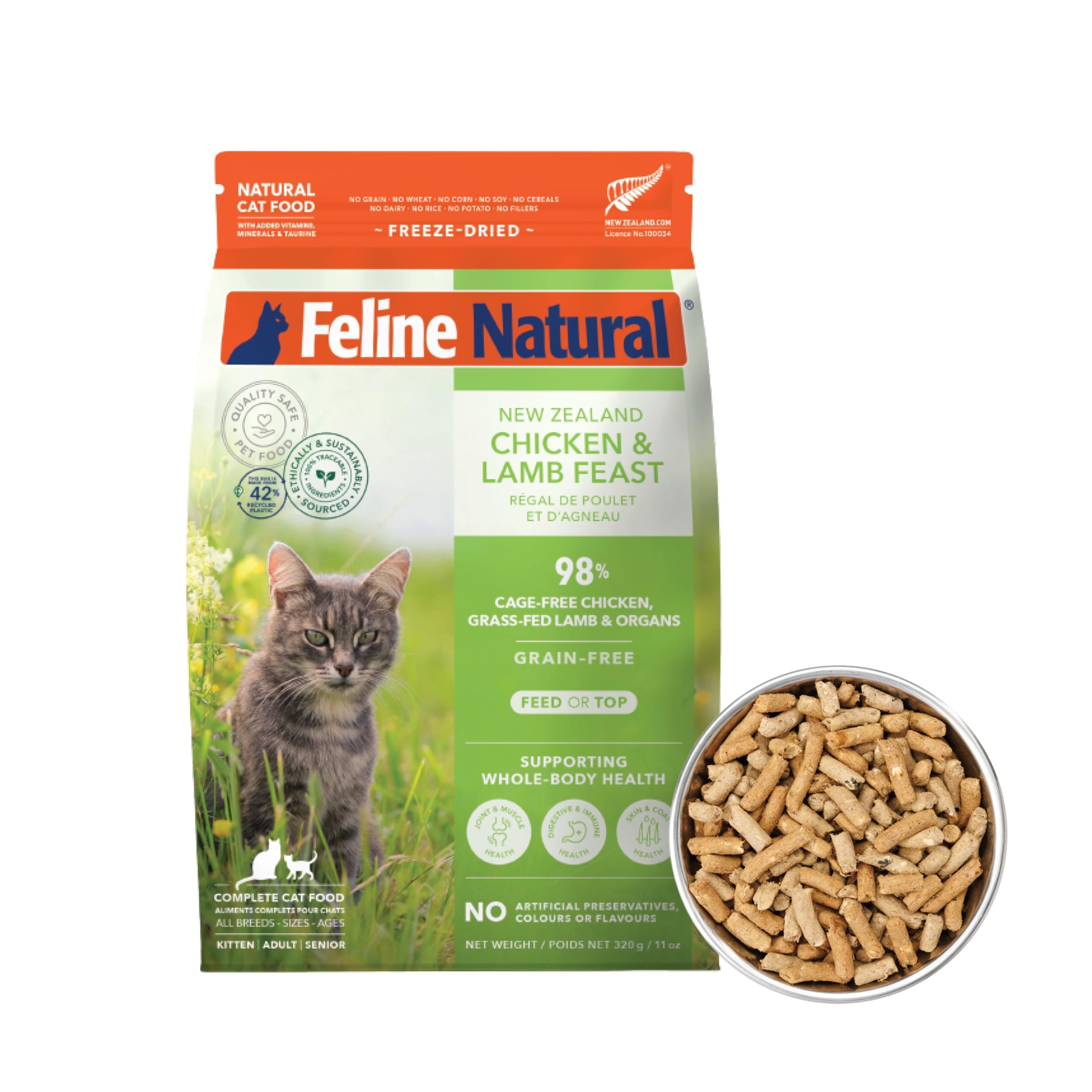
For owners who want to feed a raw-style diet without the hassle of thawing and portioning, Feline Natural delivers a freeze-dried formula that is 98% meat, organs, and seafood — essentially a whole-prey profile in a shelf-stable pellet. The primary protein sources are grass-fed lamb and green-lipped mussels, which provide a rare source of natural glucosamine that directly benefits Maine Coon joints. The protein content hovers around an impressive 44% on a dry matter basis.
There are zero starches, grains, or synthetic binders in this formula. That means the carbohydrate load is virtually nonexistent, which prevents the blood sugar spikes that can contribute to obesity in sedentary Maine Coons. The pellet size is moderate, but the dense, airy texture rehydrates quickly if you choose to add water — a useful trick for coaxing hydration from cats that won’t drink enough.
Because this is a low-moisture, high-fat product, it is calorie-dense. Portion control is critical to prevent an indoor Maine Coon from gaining too much weight. New Zealand-sourced ingredients also command a premium price, making this a better fit for single-cat households where the bag won’t disappear in a week. For owners committed to a species-appropriate diet, this is the gold standard in the dry-adjacent category.
Why we love it
- 98% meat, organs, and seafood — virtually no carbs
- Green-lipped mussels provide natural joint support
- No grains, starches, or artificial additives
Good to know
- Very calorie-dense — strict portion control needed
- Higher price per serving than extruded kibble
4. Weruva Cats in The Kitchen, Kitty Gone Wild Wild Salmon Au Jus
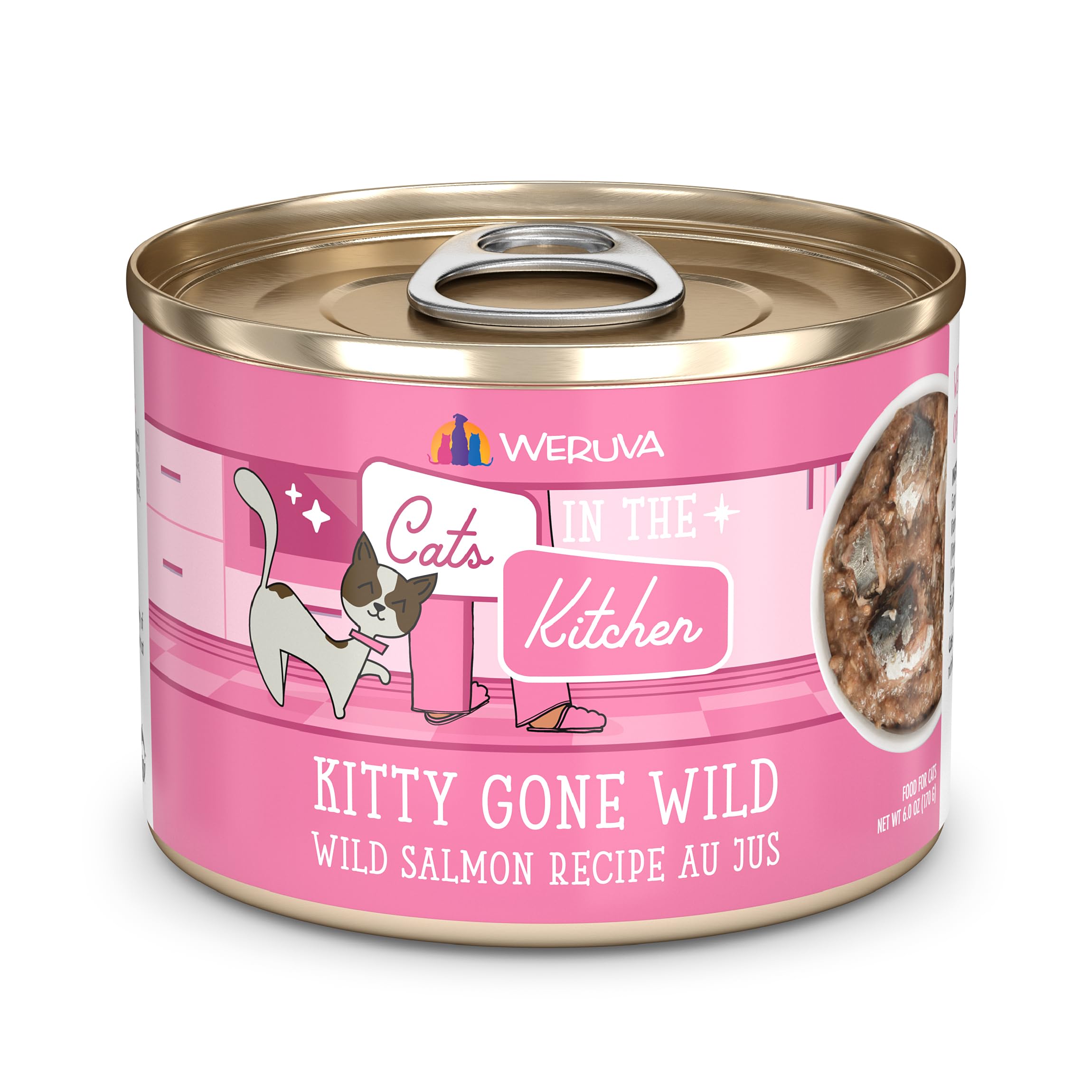
Maine Coons are notoriously poor water drinkers, and their size means dehydration can stress the kidneys faster than in smaller cats. Weruva’s Kitty Gone Wild formula provides critical moisture in a low-carb, high-protein wet food format. The recipe features wild salmon as the headliner, with supporting whole-fish ingredients like sardine and mackerel that deliver a concentrated dose of omega-3 fatty acids for the long, dense coat Maine Coons are famous for.
The texture is chunk-style in a light Au Jus broth, which most Maine Coons find highly palatable. The absence of carrageenan, starches, and artificial gums means the stool stays firm and digestion runs smooth — a relief for owners dealing with the loose stools common on cheaper wet foods. With only 95 calories per 6-ounce can, you can feed two cans per day without overshooting the daily calorie budget for a 15-pound neutered male.
The 24-pack is the most practical purchase for a multi-cat household or for owners who want to integrate wet food into a rotating diet. Many owners serve this as a topper over the Royal Canin Maine Coon kibble to boost moisture and palatability. If your Maine Coon has a dull coat or dry skin, this formula will visibly improve texture within a month of daily feeding.
Why we love it
- High moisture content supports kidney health
- Wild-caught salmon, sardine, and mackerel for omega-3
- No carrageenan, grains, or artificial gums
Good to know
- Chunk texture may be rejected by cats that only eat pâté
- Low calorie density means more cans needed per feeding
5. Open Farm Grain Free Dry Cat Food, Catch-of-The-Season Whitefish

Maine Coons with inflammatory bowel disease or poultry sensitivities need a diet that eliminates common triggers without sacrificing protein quality. Open Farm’s Catch-of-The-Season Whitefish formula delivers a single, novel protein source — ocean-caught whitefish — with zero chicken, rendered meals, or soy. The kibble is supplemented with pumpkin and dandelion greens, both prebiotic fibers that soothe the inflamed gut lining of a cat with IBD.
The traceability program is a standout feature for owners who want to verify every ingredient’s origin. You can enter a lot number on Open Farm’s website and see the exact farm or fishery that supplied each component. This level of transparency is rare in the mass-market pet food space and provides peace of mind for owners managing chronic health conditions. The protein content lands at a moderate 34%, which is lower than some high-performance formulas but appropriate for a cat that needs gentle, consistent nutrition rather than muscle-building density.
Multiple owner reviews on a low-IBD diet report complete resolution of vomiting and loose stool after switching to this formula. The 4-pound bag is smaller than the others on this list, making it ideal for trial runs or for owners who want to test the diet before committing to a larger investment. For Maine Coons with confirmed poultry or grain intolerances, this is the safest bet on the market.
Why we love it
- Single novel protein (whitefish) eliminates poultry triggers
- Pumpkin and dandelion greens support digestion
- Full ingredient traceability from source to bag
Good to know
- Lower protein content (34%) than competition
- 4-pound bag is small for a large-breed daily feeder
FAQ
Is kibble size really a big deal for a Maine Coon?
Should I feed wet food, dry food, or both to my Maine Coon?
Why won’t my Maine Coon eat chicken-based formulas?
How much should I feed a Maine Coon kitten versus an adult?
Final Thoughts: The Verdict
For most owners, the best cat food for maine coon winner is the Royal Canin Maine Coon Adult because it is the only formula built from the ground up around the breed’s specific kibble geometry, joint needs, and cardiac support requirements. If you want a grain-free, high-protein diet for an indoor cat, grab the Tiki Cat Born Carnivore Indoor. And for a sensitive-stomach Maine Coon that needs a single novel protein source, nothing beats the Open Farm Whitefish.