
Watching your dog head straight for their own stool or another animal’s pile is frustrating, concerning, and often a sign that something is off internally. Coprophagia isn’t just a behavioral quirk—it frequently stems from incomplete digestion, missing nutrients, or an unbalanced gut microbiome that leaves stool smelling and tasting like undigested food to your pup.
I’m Mo Mahin — the founder and writer behind Furric. I’ve spent years analyzing market trends, comparing digestive enzyme counts, studying probiotic strain efficacy, and aggregating owner-reported success rates specifically within the coprophagia deterrent supplement space.
Whether your dog is raiding the litter box or snacking in the yard, addressing the root cause is the only lasting solution, which is why finding the right dog food for poop eaters starts with a targeted supplement that supports complete nutrient breakdown and gut health.
How To Choose The Best Dog Food For Poop Eaters
Supplements designed to stop coprophagia work through two main pathways: improving digestion so stool carries less undigested food value, and making the stool taste or smell unappealing. You don’t need a complicated formula—you just need the right blend of active ingredients matched to your dog’s specific digestive issues.
Enzyme and Probiotic Potency
The most effective deterrents contain a multi-strain probiotic blend (ideally 1 billion CFU or more per serving) paired with digestive enzymes like amylase, lipase, and cellulase. These break down food more completely so the stool doesn’t trigger your dog’s scavenging instinct. Look for clinically studied strains such as Bacillus subtilis (DE111) or Enterococcus faecium (SF68).
Natural Deterrent Compounds
Capsicum extract (chili pepper derivative) and glutamic acid are the two most common ingredients that safely alter stool palatability. Capsimax, a controlled-release form of capsicum, provides a more consistent deterrent effect throughout the day without stomach upset. These compounds don’t punish your dog—they simply make the stool taste unpleasant.
Chew Form and Palatability
Soft chews are generally easier to administer than powders or tablets, especially for picky eaters. Bacon, chicken, roast beef, and bison flavors are common. If your dog resists a particular flavor, switching to a different protein base often solves the problem. Daily compliance is the single biggest predictor of success with these supplements.
Veterinary Recommendation and Brand History
Brands with a track record in veterinary medicine (like Purina Pro Plan Veterinary Diets or PRN Pharmacal) have published research backing their formulas. Newer brands like PawBliss and Zesty Paws rely on transparent ingredient lists and customer feedback. For severe or chronic coprophagia, a vet-formulated product with decades of field testing provides the highest confidence.
Quick Comparison
On smaller screens, swipe sideways to see the full table.
| Model | Category | Best For | Key Spec | Amazon |
|---|---|---|---|---|
| Zesty Paws Chew No Poo Bites | Premium Soft Chew | Comprehensive gut & oral support | DE111 Bacillus subtilis + Capsimax | Amazon |
| PetLab Co. Probiotics for Dogs | Premium Powder | Seasonal allergy & digestive health | 8 probiotic strains + Inulin | Amazon |
| PRN Pharmacal CoproBan | Premium Soft Chew | Proven vet-recommended deterrence | MSG + Cellulose for fiber breakdown | Amazon |
| Purina Pro Plan FortiFlora | Mid-Range Powder | Vet-trusted probiotic for diarrhea & gut | Enterococcus faecium SF68 1×10^8 CFU | Amazon |
| Vet Classics Stop Stool Eating | Mid-Range Soft Chew | Stool taste deterrent + breath freshener | Glutamic acid + probiotic/enzyme blend | Amazon |
| PawBliss No Poo Chews | Mid-Range Soft Chew | Powerful digestive reset with 1B CFU | 1 billion CFU + 6 enzymes + capsicum | Amazon |
| TTIXRL No Poo Chews | Budget Soft Chew | Long-term value with 300 chews | Bromelain + pumpkin + glutamic acid | Amazon |
In‑Depth Reviews
1. Zesty Paws Chew No Poo Bites
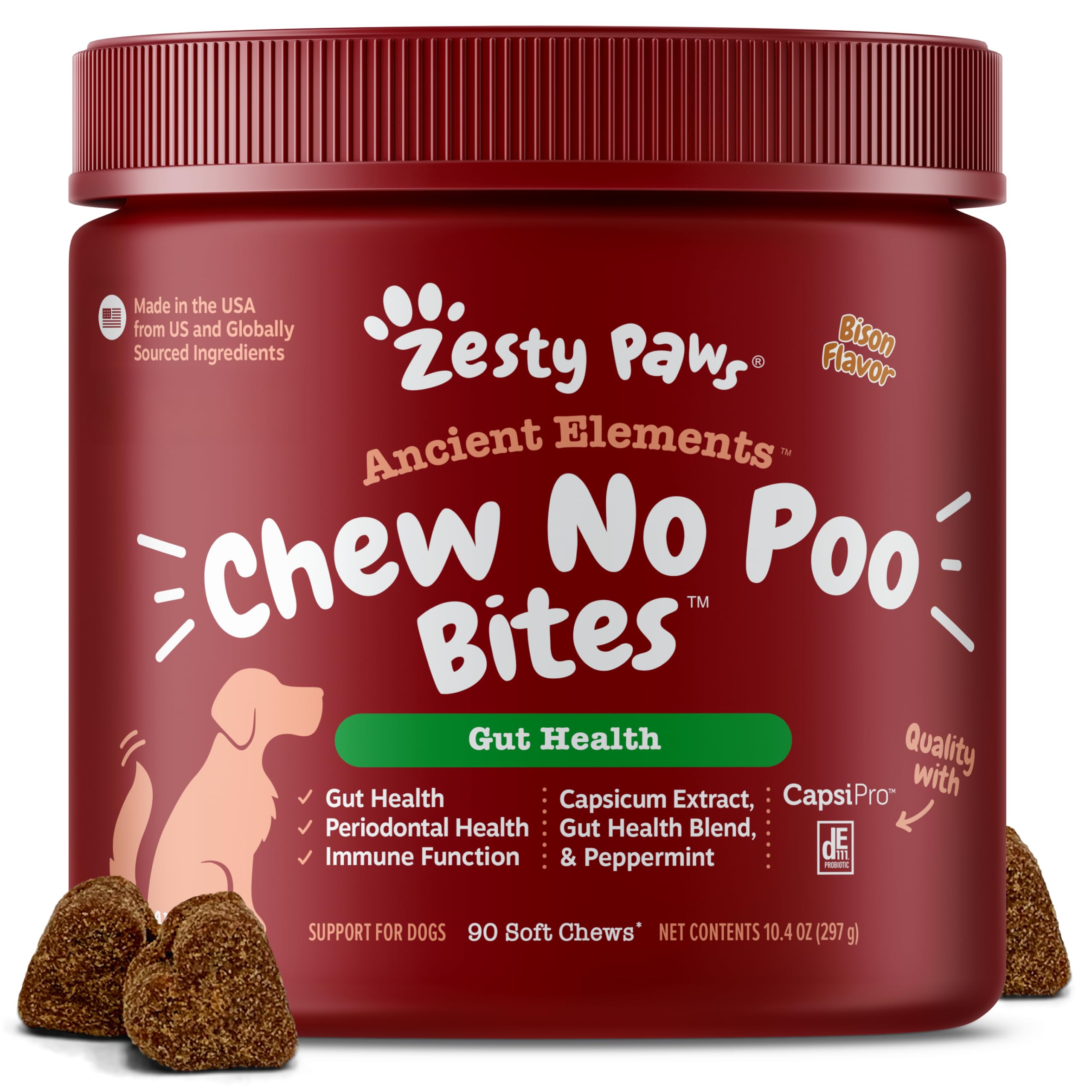
Zesty Paws has positioned this as a three-pronged solution: gut support through the clinically studied DE111 Bacillus subtilis strain, stool deterrence via Capsimax controlled-release capsicum extract, and periodontal health with a proprietary teeth and gum blend. The bison flavor base is unique in this category and tends to be well-accepted even by dogs that refuse chicken or pork-flavored chews. The 90-count supply delivers roughly three months of daily coverage for a medium-sized dog, making it one of the more premium inventory options.
The Capsimax ingredient is a standout here because it releases capsicum gradually rather than in a single spike, which means the stool remains unappealing throughout the entire digestion cycle rather than just the first few hours. Combined with the DE111 probiotic that actively supports gut flora diversity, this chew targets both the cause and the symptom simultaneously. Owners report noticeable behavioral shifts within the first two to three weeks of consistent daily feeding.
Corn-free formulation and the 100% satisfaction guarantee reduce the risk of trying it on a sensitive stomach. The soft chew texture is pliable enough to split for smaller breeds, though the bison scent is strong out of the bag. For dogs that need periodontal support alongside coprophagia control, this is the most complete single supplement on the market.
Why we love it
- Clinically studied DE111 Bacillus subtilis strain for proven gut health support
- Capsimax provides extended-release capsicum deterrence, not a one-hour window
- Corn-free formula with built-in periodontal health blend
Good to know
- Bison flavor may not appeal to every dog’s palate
- Premium price point compared to basic enzyme-only chews
2. PetLab Co. Probiotics for Dogs

PetLab Co. has built a strong reputation as America’s top-selling probiotic soft chew on Amazon, and the 30-count pork-flavored formulation packs eight distinct probiotic strains plus inulin prebiotic fiber and pumpkin. While this product isn’t marketed exclusively as a coprophagia deterrent, the dense probiotic profile directly addresses the incomplete digestion and imbalanced gut flora that drive most stool-eating behavior. The NASC certification adds a layer of manufacturing quality assurance that budget alternatives lack.
The inclusion of pumpkin serves a dual purpose: it provides soluble fiber to bulk up stool consistency and offers a natural source of digestive enzymes. Owners who have used this alongside a dedicated deterrent (like capsicum-based chews) report faster resolution of coprophagia compared to either supplement alone. The pork flavor is generally well-tolerated, and the soft chew consistency breaks apart cleanly for dosing across breed sizes.
Long-term survey data from PetLab Co. indicates 89% of subscribers observed benefits within 90 days, which aligns with the time needed to fully repopulate gut bacteria after chronic digestive issues. The main limitation for pure coprophagia use is the absence of a direct stool-palatability deterrent like capsicum or glutamic acid, so pairing with a dedicated deterrent chew may be necessary for stubborn cases.
Why we love it
- Eight diverse probiotic strains for comprehensive gut flora restoration
- NASC certified with US manufacturing standards
- Pumpkin and inulin prebiotic support stool quality and digestion
Good to know
- No direct stool taste deterrent ingredient included
- 30-count supply requires monthly reordering for consistent results
3. PRN Pharmacal CoproBan Soft Chews

PRN Pharmacal has been in the animal health space since 1978, and the CoproBan formula is one of the longest-standing veterinary-recommended solutions specifically designed for coprophagia. The active mechanism relies on MSG and cellulose to alter stool texture and taste, making it unappealing without introducing spicy irritants. The roast beef flavor is palatable for most dogs, and the chew can also be fed to cats—useful for households where the dog raids the litter box.
The dosing protocol is straightforward: one chew per meal for dogs under 40 pounds, an additional chew for every 40 pounds thereafter. This makes it easy to scale for large breeds without guessing. Owners consistently report that the behavioral change is noticeable within the first week, likely because the texture modification works immediately on the stool itself rather than relying on gradual gut flora shifts. The 40-count container covers roughly two to three weeks for a single-dog household, so subscription purchasing is practical.
While the ingredient list is less complex than modern probiotic-focused alternatives, the track record of this product across decades of use provides confidence that budget-conscious buyers may miss. The main drawback is the relatively short supply per container and the absence of added digestive enzymes or multi-strain probiotics for dogs that need deeper gut health intervention.
Why we love it
- Veterinary-recommended formula with decades of field history since 1978
- Works for both dogs and cats, ideal for litter box raiders
- Immediate stool texture modification for fast behavioral results
Good to know
- No probiotic or enzyme blend for deeper digestive correction
- 40-count container requires frequent repurchase for daily dosing
4. Purina Pro Plan Veterinary Supplements FortiFlora

FortiFlora is the number one probiotic supplement recommended by veterinarians according to the Kantar Veterinary Tracker, and its reputation is built on the well-researched Enterococcus faecium SF68 strain delivered at a guaranteed 1×10^8 CFU per sachet. The powder format is uniquely flexible: you sprinkle one sachet over the dog’s meal daily, and the unflavored liver-flavored yeast base is highly palatable even for dogs that reject chews. This is a pure probiotic intervention, not a deterrent, so it works by addressing the root digestive cause of coprophagia rather than masking the stool taste.
Clinical studies backing SF68 demonstrate measurable improvements in fecal consistency, immune response, and gut barrier function. For dogs whose coprophagia stems from chronic loose stool or incomplete digestion, FortiFlora often resolves the behavior within two to three weeks without any need for capsicum or glutamic acid. The 30-count box provides a full month of daily dosing, and the powder mixes invisibly into wet or dry food without altering texture.
The lack of a direct deterrent ingredient means this is best suited for dogs whose stool-eating is clearly linked to digestive issues rather than learned behavior or boredom. Owners looking for a combined approach may need to layer this with a capsicum-based chew. The powder format is also less convenient for travel or portioning outside meal times compared to pre-counted soft chews.
Why we love it
- Clinically proven Enterococcus faecium SF68 strain at guaranteed potency
- Number one probiotic recommended by veterinarians nationwide
- Powder format is easy to mix into any meal without refusal
Good to know
- No stool taste deterrent for learned coprophagia behaviors
- Powder format less portable than pre-portioned soft chews
5. Vet Classics Stop Stool Eating Soft Chews

Vet Classics builds on a track record since 1994 with a formula developed by veterinarians and scientists specifically targeting stool eating. The active ingredient glutamic acid works by altering the taste of stool to make it naturally unappealing, while the included probiotic and enzyme blend supports digestive efficiency. The dual action as a breath freshener is a practical bonus for dogs that have already eaten stool before the supplement takes effect.
The 90-count supply at this price point delivers three months of daily dosing for a medium-sized dog, making it one of the more budget-conscious options that still includes both a deterrent and digestive support. Owners report that the soft chew consistency is easy to administer, and the tablet form listed in specifications actually functions as a soft chew in practice. The reduction in stool and urine odor reported by many users is an unexpected but valuable secondary benefit, as less pungent waste is less attractive to dogs with coprophagia tendencies.
While the probiotic diversity is not as extensive as PetLab Co. or Zesty Paws, the combination of glutamic acid with basic enzymes covers the two main intervention pathways in one chew. The main limitation is the smaller brand recognition compared to Purina or PRN, though the formulation quality is competitive with mid-range peers.
Why we love it
- Glutamic acid provides direct stool taste modification
- Dual function as breath freshener and digestive support
- 90-count value size reduces per-dose cost
Good to know
- Enzyme variety is narrower than multi-strain competitors
- Brand has lower household recognition than Purina or PRN
6. PawBliss No Poo Chews for Dogs
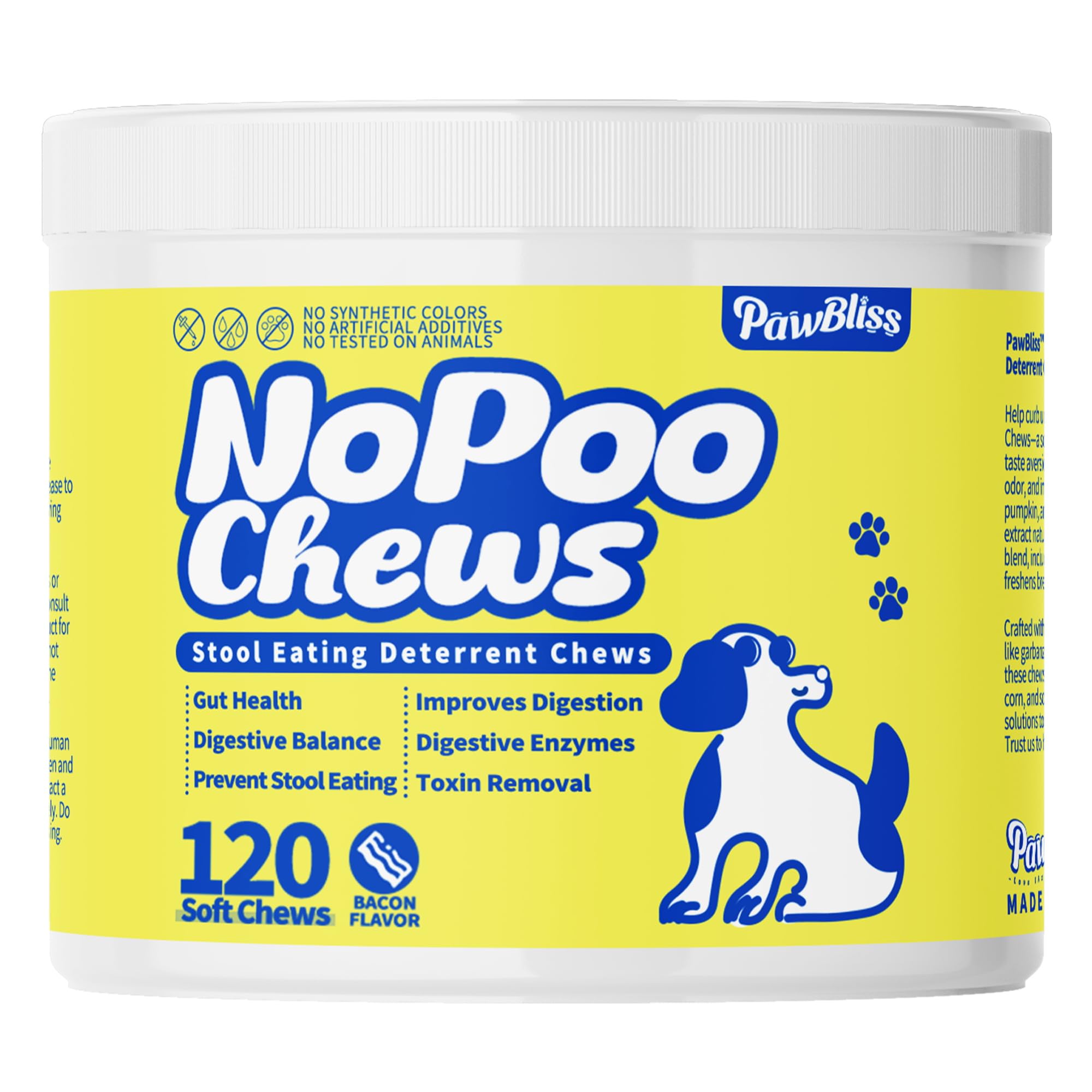
PawBliss packs a significant digestive punch with 1 billion CFU of probiotics across five targeted strains (Lactobacillus Casei, Bacillus Subtilis, Bifidobacterium Animalis, Lactobacillus Reuteri, and more) alongside a six-enzyme blend including amylase, lipase, and cellulase. This is one of the most enzyme-dense formulas in the category, designed to address the incomplete breakdown of carbohydrates, fats, and plant fibers that leaves stool smelling like food to your dog. The addition of capsicum extract provides the direct taste deterrent that the probiotic-heavy approach alone cannot guarantee.
The chicken flavor base is familiar and widely accepted, and the soft chew texture holds together well without crumbling. The inclusion of parsley, peppermint, and apple cider vinegar for breath freshening is a thoughtful addition for the immediate aftermath of any lapse in training. Owners with large breeds will appreciate that the 120-count bag provides approximately four months of daily dosing, reducing the frequency of repurchase.
Where this product truly differentiates itself is the transparency of the active ingredient CFU count—many competitors list probiotics without specifying the colony-forming units, while PawBliss commits to the 1 billion CFU guarantee. The main trade-off is that the brand is newer to the market compared to Vet Classics or PRN, so long-term efficacy data is limited to customer feedback rather than published veterinary studies.
Why we love it
- Guaranteed 1 billion CFU with five diverse probiotic strains
- Six-enzyme blend for complete macronutrient breakdown
- 120-count bag offers excellent supply longevity
Good to know
- Newer brand without long-term published veterinary research
- Capsicum may cause mild stomach sensitivity in some dogs initially
7. TTIXRL No Poo Chews
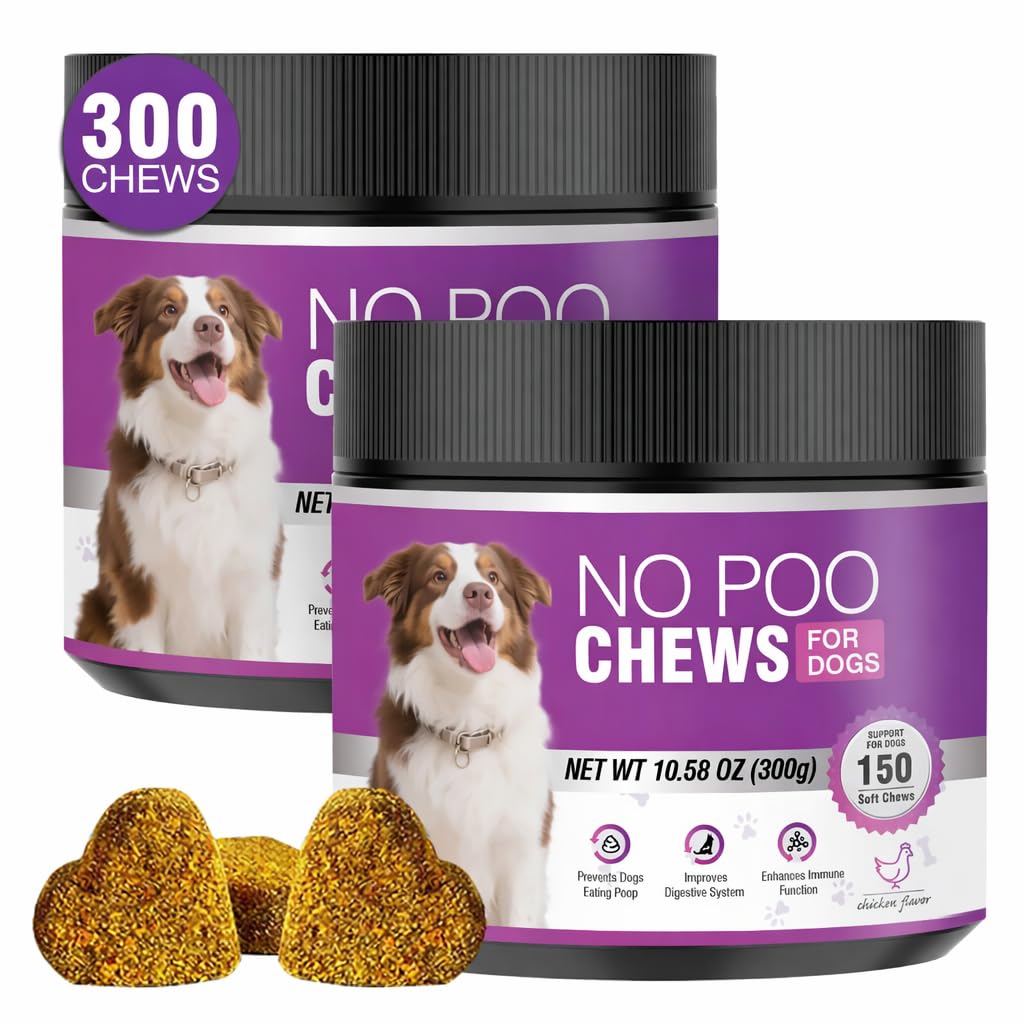
TTIXRL’s entry into the coprophagia deterrent space focuses on volume and ingredient simplicity. The 300-count container at this price point delivers the lowest per-dose cost in the entire comparison, making it accessible for owners who need to manage the behavior across multiple dogs or over a long period. The formula relies on bromelain (a pineapple-derived enzyme), pumpkin fiber, and glutamic acid to support digestion and alter stool taste, with no GMOs or artificial preservatives listed.
The natural ingredient profile is appealing for owners who prefer avoiding synthetic additives, and the chicken flavor is standard enough that most dogs accept it readily. Bromelain offers mild anti-inflammatory support alongside its enzymatic role, which can benefit dogs with sensitive digestive tracts. The dosing chart based on body weight is clearly printed, and the soft chew texture is consistent across the large batch size.
The trade-off for the low per-dose cost is the absence of a robust multi-strain probiotic profile or a controlled-release deterrent like Capsimax. Dogs with severe coprophagia driven by deep gut imbalances may find this formula insufficient as a standalone solution. However, for maintenance after initial correction with a more potent product, or for mild cases, the 300-count value proposition is compelling.
Why we love it
- 300-count container offers the best per-dose value in the category
- Bromelain enzyme provides digestive support with anti-inflammatory benefit
- No artificial preservatives or synthetic colors in the ingredient list
Good to know
- Lacks multi-strain probiotic depth for complex gut issues
- Basic enzyme profile may not resolve stubborn coprophagia alone
FAQ
How long does it take for a coprophagia deterrent to start working?
Can I give my dog a coprophagia deterrent alongside their regular food?
Are there any side effects from stool eating deterrent supplements?
What is the difference between capsicum extract and glutamic acid as deterrents?
Final Thoughts: The Verdict
For most gardeners, the dog food for poop eaters winner is the Zesty Paws Chew No Poo Bites because it combines clinically studied DE111 probiotic support with Capsimax controlled-release capsicum deterrent and periodontal health support in a single daily chew — it addresses the root cause and the symptom simultaneously. If you want the purest probiotic intervention with the strongest veterinary backing, grab the Purina Pro Plan FortiFlora. And for budget-conscious owners managing multiple dogs, nothing beats the TTIXRL No Poo Chews for sheer supply longevity and low per-dose cost.