
A damp, ammonia-heavy coop is the single fastest way to trigger respiratory distress in your flock, yet most bedding choices prioritize low cost over moisture management and dust control.
I’m Mo Mahin — the founder and writer behind Furric. I’ve spent years cross-referencing agricultural extension research, analyzing manufacturer technical specs, and studying thousands of verified owner reports to understand exactly how each bedding type performs under real coop conditions.
After evaluating wheat straw, hemp flakes, chopped straw, a zeolite-infused poultry blend, and aspen nest liners, I’m confident that the right choice comes down to your preferred cleaning method and flock size. This guide covers everything you need to confidently select the best chicken bedding for coop that fits your routine and budget.
How To Choose The Best Chicken Bedding For Coop
Selecting bedding is not a one-size-fits-all decision. Your climate, cleaning frequency, and flock size all influence which material will stay fresher longer. Focus on these specific factors to avoid the most common buyer mistakes.
Dust Content and Respiratory Health
Chickens have extremely sensitive respiratory systems. Bedding that appears fine when poured can release fine particulate matter that accumulates in a hen’s air sacs over weeks. Pine shavings are notorious for this, while kiln-dried aspen or properly processed hemp typically produce far less airborne dust. If you already notice sneezing or wheezing in your flock, dust level should be your primary filter.
Absorbency and Ammonia Management
Wet bedding degrades into ammonia gas within days, especially in warm, enclosed coops. Materials like hemp absorb roughly two to three times their weight in moisture compared to straw, which tends to shed water rather than trap it. For coops that only get cleaned once a week or less, a high-absorbency medium is critical to keeping ammonia levels near zero.
Compostability and End-of-Life Use
Used bedding mixed with droppings is gold for a compost pile—provided the material breaks down reasonably fast. Straw breaks down within a few months, whereas aspen shavings take longer. Hemp decomposes at a similar speed to straw but releases nitrogen more readily. Factor in how much waste your flock generates and whether you plan to hot-compost the spent bedding.
Quick Comparison
On smaller screens, swipe sideways to see the full table.
| Model | Category | Best For | Key Spec | Amazon |
|---|---|---|---|---|
| Standlee Flock Fresh Premium Poultry Bedding | Zeolite-Infused Straw | Deep litter method & odor control | Zeolite granules for ammonia lock | Amazon |
| Eaton Pet and Pasture Hemp Bedding | Hemp Flakes | Ultra-low dust & maximum absorbency | Absorbs 2x more than traditional bedding | Amazon |
| Standlee Chopped Wheat/Barley Straw | Chopped Straw | Budget-friendly bulk coverage | 4-inch chop length | Amazon |
| Rural365 Aspen Nest Liners | Compressed Aspen Pads | Nest box fast change-out | 13×13 inch pre-formed pads | Amazon |
| Out-Grow All Natural Wheat Straw | Whole Wheat Straw | Entry-level multipurpose bedding | 1 cubic foot / 4 lbs bale | Amazon |
In‑Depth Reviews
1. Standlee Hay Company Flock Fresh Premium Poultry Bedding
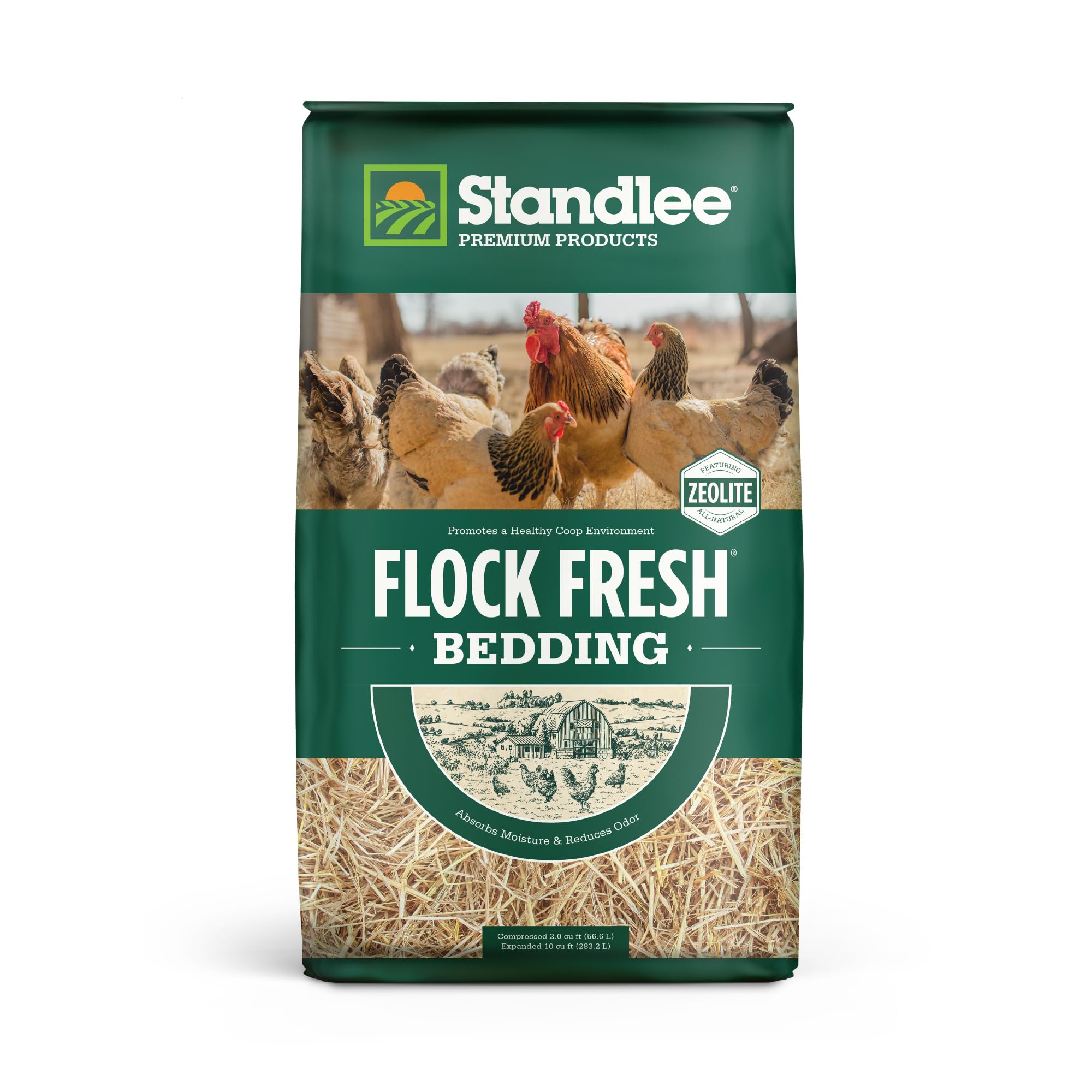
Standlee’s Flock Fresh is the only product in this roundup that incorporates zeolite granules—a crystalline mineral that actively traps ammonia molecules through ion exchange. This makes it the single best option for keepers who practice the deep litter method, where bedding sits undisturbed for months and odor buildup is the primary risk. The base material is premium chopped straw, screened for sharp awns, which keeps the texture soft for hens and safe for eggs.
Customers consistently report that coops smell noticeably fresher for six to eight weeks compared to standard straw alone. The 2-cubic-foot bag compresses to a dense bale that fluffs up nicely when shaken out, providing good loft without excessive compaction. The zeolite component also means the spent bedding retains higher nutrient value for composting, as the mineral holds onto nitrogen rather than letting it volatilize into the air.
One trade-off is the higher upfront cost relative to plain straw, though the extended interval between full cleanouts partially offsets that. A few owners noted the bag can split during shipping if the outer box is punctured, so inspect delivery promptly. For odor-sensitive coops with deep-litter ambitions, this is the set-and-forget solution.
Why we love it
- Zeolite granules actively neutralize ammonia rather than just absorbing moisture
- Very low dust compared to pine shavings
- Composts into nutrient-rich material with retained nitrogen
Good to know
- Premium price point; not the cheapest option per cubic foot
- Bag can arrive with a tear if shipping box is damaged
2. Eaton Pet and Pasture Naturally Grown Hemp Pet Bedding

Eaton’s hemp bedding is the strongest contender in the low-dust category, and for keepers with sensitive flocks or small coops where dust accumulates fast, it is the clear frontrunner. The hemp stalks are processed into soft, fluffy flakes that feel almost like densely tangled fibers—completely different from the coarse texture of straw. Because hemp is naturally resistant to mold and fungal growth, it stays fresher longer in humid environments than any plant-based alternative.
Owner feedback is emphatic about ammonia control: deep-litter practitioners say they have gone six months without needing a full cleanout, with no detectable ammonia smell on routine check days. The flakes are also highly compressible, meaning a single 28-liter bag covers more square footage than an equivalent volume of straw. The product is grown without herbicides or pesticides and carries a farmer-owned, US-sourced certification that appeals to sustainability-focused buyers.
The main downside is that hemp is a premium material and consistently priced above straw. Also, some keepers find that hemp flakes stick to chicken feet more readily than straw, tracking a small amount of material into the run. If your top priority is near-zero dust and maximum moisture retention, this is the best you can buy.
Why we love it
- Absorbs roughly twice as much moisture as straw or pine shavings
- Essentially zero dust—ideal for respiratory health
- Hemp is naturally mold-resistant and compostable
Good to know
- Higher cost per bag compared to straw-based options
- Can track into the run more than chopped straw
3. Standlee Hay Company Wheat or Barley Chopped Straw

Standlee’s chopped straw stands as the volume champion in this lineup—a 23.8-pound bag that compresses far more material than a loose bale of the same weight. The straw is cut to roughly 4-inch lengths, which is short enough to minimize the tangling that full-length straw causes during mucking, yet long enough to retain a fluffy, insulating structure in nest boxes. The certification as noxious weed free is an important detail for keepers who compost their bedding and do not want volunteer plants germinating in the garden.
Customers praise the density of the bale, noting that one bag stretches noticeably further than similarly priced alternatives. The straw is naturally sun-cured, giving it a neutral, earthy smell that does not compete with coop odors. For large flocks or multi-coop setups where bedding consumption is measured in cubic feet per week, this delivers the best cost per square foot of coverage.
The limitations are inherent to straw itself: it is less absorbent than hemp and does not actively neutralize ammonia. It works best when used with a regular (every 7–14 day) cleaning schedule rather than deep litter. Keepers in very wet climates may notice faster breakdown into damp clumps that require spot removal.
Why we love it
- Exceptional bag density—more material per purchase than any other option
- Certified noxious weed free, safe for composting
- Uniform 4-inch chop reduces waste compared to loose long straw
Good to know
- Lower absorbency than hemp or zeolite-infused bedding
- Ammonia control requires more frequent cleanouts
4. Rural365 Chicken Nest Box Liners 12 Pack

Rural365 takes a fundamentally different approach: rather than loose material, these are pre-compressed 13×13-inch pads made from aspen wood shavings bonded to a thin paper backing. The design is strictly for nest boxes—not for full-coop floor coverage—and it excels at making the daily egg collection and weekly nest refresh almost effortless. You simply lift the soiled pad, shake off loose droppings, and replace it in seconds without sifting through loose bedding.
The aspen material is naturally low in aromatic oils, avoiding the respiratory irritation that pine shavings can cause. Owner reports consistently highlight that eggs stay noticeably cleaner because the pad separates moisture and droppings from the egg surface. The paper backing helps the pad hold its shape even when hens aggressively scratch and rearrange, though some vigorous nesters can pull the shavings loose from the backing over time.
The main limitation is cost per square foot—these pads are more expensive than buying a bag of loose bedding for nest boxes. They also do not contribute to the deep litter method since they are discarded completely. For keepers who prize convenience and egg cleanliness over absolute economy, this is a smart addition to any coop.
Why we love it
- Instant change-out—no sifting or scooping loose material
- Aspen is clean, low-odor, and non-irritating to hens
- Keeps eggs significantly cleaner than loose straw
Good to know
- Designed for nest boxes only; not suitable as full-floor bedding
- Higher per-use cost than loose bedding alternatives
5. Out-Grow 1 Cubic Foot All Natural Wheat Straw

Out-Grow’s wheat straw is the simplest entry point for new chicken keepers who want a small-volume, low-commitment bedding to test the waters. The 1-cubic-foot bale weighs only 4 pounds, making it easy to handle and store in tight spaces. It is 100 percent natural wheat straw with no added chemicals, and it works adequately for small coops housing three to four hens that get cleaned on a weekly schedule.
The loose, fluffy texture provides decent nesting comfort, and the straw’s hollow structure offers reasonable insulation in cooler months. It is also an excellent compost additive because the carbon-to-nitrogen ratio balances nicely with fresh chicken manure. Customers who use it for brooder boxes or short-term brooding mention that chicks forage through it enthusiastically.
The downsides are measurable: low dust control, minimal absorbency, and near-zero ammonia management. Wet spots develop quickly if droppings accumulate, and the uncompressed bale runs out fast—many owners report needing two or three bales for a single standard coop refresh. This is a starter option, not a long-term value play.
Why we love it
- Very low upfront cost to try natural straw bedding
- Lightweight and easy to store
- Composts quickly with chicken manure
Good to know
- Limited coverage per bale—needs frequent replacement
- Poor moisture retention and ammonia control compared to alternatives
FAQ
Can I mix different bedding types in the same coop?
How often should I fully strip and replace coop bedding?
Does zeolite-impregnated bedding really control ammonia better?
Final Thoughts: The Verdict
For most keepers, the chicken bedding for coop that balances performance and convenience best is the Standlee Flock Fresh Premium Poultry Bedding because its zeolite granules actively trap ammonia while the chopped straw base stays comfortable and compostable. If your priority is absolute minimum dust and maximum moisture retention—especially for deep litter—grab the Eaton Pet and Pasture Hemp Bedding. And for keepers who want nest-box specific pads that allow egg pickup in seconds, nothing beats the Rural365 Aspen Nest Liners.