
Switching from heavy clay dust clouds to natural wood pellets solves two headaches at once: the gritty mess that coats your floors and the ammonia smell that creeps back hours after scooping. But not all wood-based litters perform the same under a cat’s daily routine — some crumble too fast, others fail to lock in moisture, and a few introduce scents your feline may reject outright. The right choice depends on how the pellet structure holds up against liquid and how well the material traps odor at its source.
I’m Mo Mahin — the founder and writer behind Furric. I’ve spent weeks comparing wood pellet particle sizes, moisture absorption rates, clumping versus non-clumping mechanisms, and thousands of owner reports to isolate which bags actually deliver on their promises.
Below is my data-backed analysis of the best wood pellet cat litter options available right now, ranked by real-world performance in odor control, dust suppression, and daily scoopability.
How To Choose The Best Wood Pellet Cat Litter
Wood pellet litters are not a one-size-fits-all category. The three variables that separate an effective product from a messy one are the raw material source, the pellet hardness, and the clumping capability. Understanding these lets you match the litter to your cat’s habits and your cleaning style.
Material Source: Pine, Recycled Paper, or Mixed Wood Fibers
Pine pellets, typically made from kiln-dried shavings reclaimed from lumber production, offer natural enzymatic odor control because the wood’s own compounds neutralize ammonia. Recycled paper pellets are softer and nearly dust-free but absorb liquid without breaking down into sawdust, which means they work best in non-sifting trays. Mixed wood fiber litters (like those labeled FSC-certified) often use finer granules that clump tightly, but they produce slightly more fine dust at the bottom of the bag.
Pellet Structure: Hardness, Expansion, and Sawdust Formation
A quality wood pellet holds its cylindrical shape until it contacts liquid — then it expands and disintegrates into a sawdust-like texture. This is the defining mechanism of non-clumping wood litters. If pellets crumble during shipping or when a cat walks on them, the box turns into a powder bin that tracks everywhere. Look for bags where the pellets feel dense and resist finger pressure; soft pellets lead to premature breakdown and wasted product.
Clumping vs Non-Clumping: Which Works for Your Routine
Non-clumping wood pellets are the traditional choice and require a sifter box: the sawdust falls through the slotted tray while intact pellets stay on top. This system is very economical but demands full box changes less frequently. Clumping wood litters use finer fibers that bond into a solid mass when wet, allowing standard scooping. The trade-off is price and slightly higher dust during the pour. For multi-cat homes, clumping versions usually last longer between full refreshes.
Quick Comparison
On smaller screens, swipe sideways to see the full table.
| Model | Category | Best For | Key Spec | Amazon |
|---|---|---|---|---|
| ökocat Original Wood Clumping | Clumping | Odor-sensitive homes | 99% dust-free, fine wood fiber | Amazon |
| So Phresh Pine Pellet Non-Clumping | Non-Clumping | Sifter-box setups | 40-lb bag, natural pine scent | Amazon |
| Catit Go Natural Wood Clumping | Clumping | Sensitive noses | FSC-certified wood, lavender scent | Amazon |
| Feline Pine Platinum Non-Clumping | Non-Clumping | Budget-friendly odor lock | Baking soda infusion, reclaimed pine | Amazon |
| Fresh News Recycled Paper Pellet | Non-Clumping (Paper) | Allergy-conscious owners | 99% dust-free, 25-lb bag | Amazon |
In‑Depth Reviews
1. ökocat Original Wood Clumping Cat Litter, Unscented, 18.8 lb
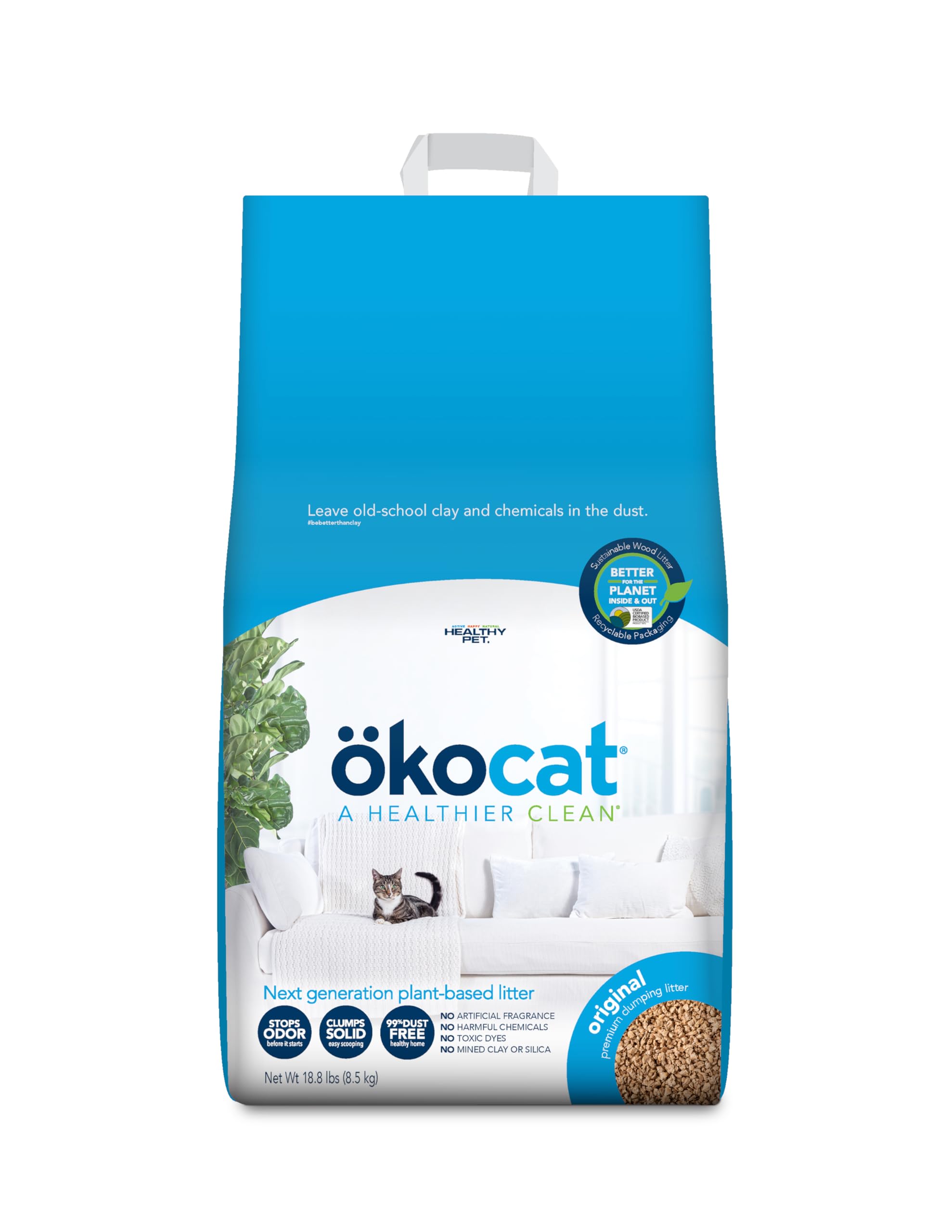
ökocat stands out because its precision-cut wood fiber forms tight, solid clumps on contact with liquid instead of turning into a pasty sludge. The clumps hold together during scooping, which means you remove the waste cleanly without leaving crumbles behind. Owners report that the ammonia odor stays suppressed for the full three to four weeks between box changes, a leap ahead of most clay-based competitors.
The unscented formula relies on the wood’s natural enzyme-blocking properties — the fiber prevents odor-causing enzymes from bonding with urine and feces. This is a mechanical odor stop rather than a perfumed cover-up, so the room smells neutral even when the box is full. The 18.8-pound bag lasts a single-cat household roughly five weeks, lowering the per-use cost compared to premium clumping clay litters.
On the downside, the fine fiber granules track slightly more than large pine pellets. A quality litter mat helps contain the scatter. A few users also note a faint woody aroma when first poured, though it dissipates within hours. For homes that prioritize dust-free air and genuine odor elimination, this is the top-performing wood-based clumping option on the market.
Why we love it
- Clumps hold firm without crumbling during scooping
- 99% dust-free pour with no clay particles in the air
- Long-lasting odor suppression without added fragrance
Good to know
- Fine wood fibers track more than large pellets
- Bag size is smaller than bulk pine options
2. So Phresh Pine Pellet Non-Clumping Cat Litter, 40 lb
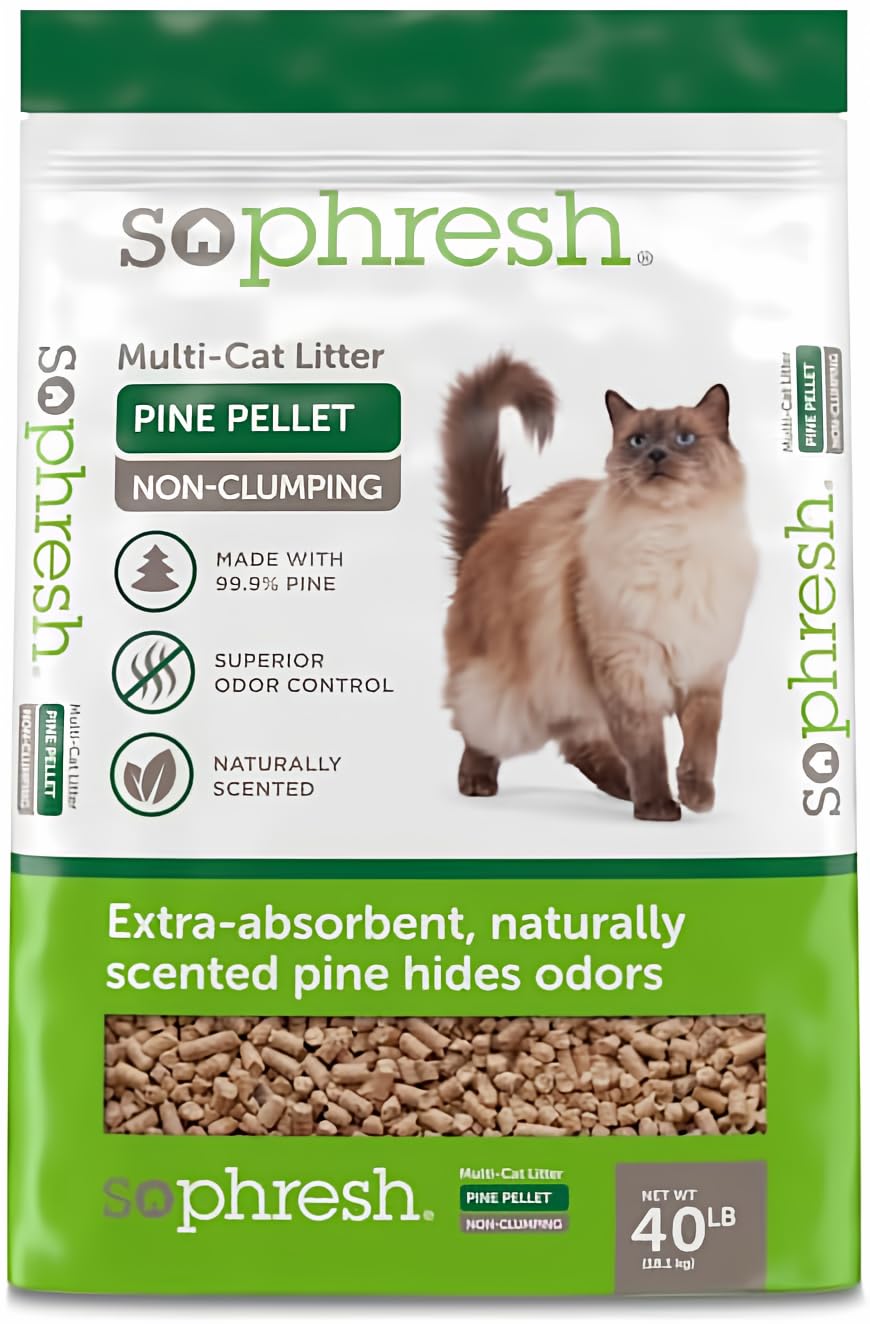
So Phresh delivers the classic pine-pellet experience — hard cylindrical pellets that expand into sawdust when wet, designed specifically for a sifter litter box. The 40-pound bag offers the lowest per-pound cost in this lineup, making it a strong choice for multi-cat households that go through litter quickly. The natural pine scent provides a fresh forest aroma without synthetic perfumes, and the pellets themselves are dense enough to resist crushing under a cat’s weight.
The non-clumping mechanism is straightforward: liquid causes the pellets to break down into sawdust that falls through the sifter tray, leaving the dry pellets above. This system eliminates scraping and reduces the amount of material you throw away with each scoop. Owners report that odor control is solid for the first week, then gradually wanes as the sawdust accumulates in the lower tray — regular sifting prevents smells from building up.
One limitation is that this litter does not clump, so you cannot scoop urine clumps from a standard box. You need a sifting tray or a two-box system (one with holes, one without) to separate the sawdust. Also, the pine scent, while natural, may be too strong for cats that prefer an odorless environment. For budget-conscious owners willing to adapt their box setup, this is the most economical wood pellet option available.
Why we love it
- Massive 40-lb bag delivers the lowest per-pound cost
- Dense pellets resist crumbling during shipping and use
- Natural pine scent neutralizes ammonia without chemicals
Good to know
- Requires a sifter box for efficient urine removal
- Pine aroma may be off-putting to some cats initially
3. Catit Go Natural Wood Clumping Cat Litter, 6.4 lb

Catit Go Natural uses FSC-certified wood sourced from sustainably managed forests and processes it into a fine clumping litter. The lavender scent is light — barely noticeable to most humans — but it provides a subtle freshness that masks the base wood odor. Reviewers consistently mention that their cats, including those with sensitive noses, accepted this litter without hesitation. The clumps form quickly and are firm enough to scoop cleanly without leaving residue.
The 6.4-pound bag is smaller than typical bulk options, but the clumping efficiency means you use less per scoop. The litter produces almost no dust when poured, and the wood granules are soft on paw pads. The biodegradable composition allows for composting (check local guidelines), which aligns with an eco-friendly disposal routine.
The bag size is the main drawback — at 6.4 pounds, it runs out faster than larger bags for multi-cat homes. The lavender scent, while subtle, is still an added fragrance, which may not suit cats or owners who prefer completely unscented litter. For single-cat households that value sustainability and a gentle aroma, Catit offers a well-rounded clumping solution.
Why we love it
- FSC-certified wood supports responsible forestry practices
- Light lavender scent is subtle and cat-friendly
- Clumps hold together without crumbling
Good to know
- Small bag size means more frequent repurchasing
- Lavender fragrance may not suit unscented purists
4. Feline Pine Platinum Non-Clumping Cat Litter, 17 lb
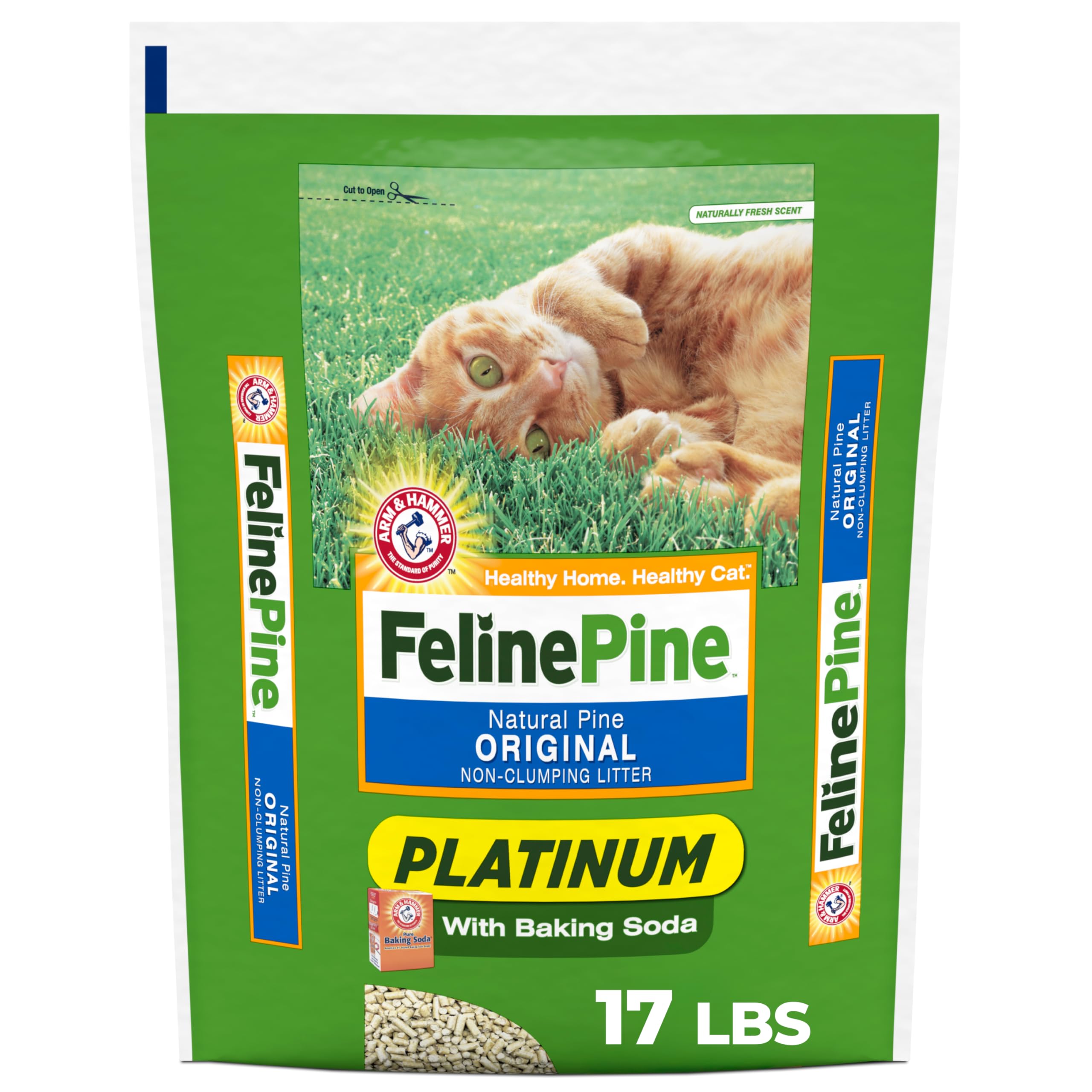
Feline Pine Platinum combines reclaimed pine shavings with ARM & HAMMER baking soda to create a non-clumping pellet that absorbs liquid and neutralizes ammonia odors on contact. The baking soda additive provides an extra chemical layer of odor defense on top of the pine’s natural absorption. The pellets are lightweight — less than half the weight of clay litter — making the bag easier to carry and pour. The absence of added fragrance means the box smells like clean wood and nothing else.
The non-clumping format works best with a sifting box. When wet, the pellets break down into fine sawdust that separates from the intact pellets. Owners report that the odor control lasts about five to seven days before a full change is needed for a single cat. The 17-pound bag is a moderate size — enough for about three to four weeks for one cat, though multi-cat homes may need to restock sooner.
One drawback is that the lighter pellet weight can cause more tracking than denser pine pellets. Some users also note that the baking soda dust, while not large in volume, can create a faint white film on the box’s surface during the first pour. For owners seeking a chemically boosted odor blocker in a lightweight wood format, this is a solid mid-range choice.
Why we love it
- Baking soda infusion enhances ammonia neutralization
- Lightweight pellets make handling and pouring effortless
- No added fragrance — just natural pine odor
Good to know
- Light pellets track more than heavier wood alternatives
- Baking soda can leave a fine white residue on first pour
5. Fresh News Recycled Paper Original Pellet Cat Litter, 25 lb

Fresh News takes a different approach from wood pellets — it uses 100% post-consumer recycled paper formed into soft, dust-free pellets. The material is non-clumping and designed for full-box changes; the pellets absorb moisture without breaking down into sawdust, so they keep their shape until you dispose of the entire batch. This makes it an excellent choice for owners who want zero dust in the air and a hypoallergenic surface for sensitive cats.
The 25-pound bag is competitively priced per pound, and the paper pellets are remarkably light. Odor control relies on the paper’s absorbency plus added baking soda, which works well for urine but struggles more with solid waste odor if not scooped immediately. Owners of small animals (rabbits, hamsters) also use this product, confirming its non-toxic and soft composition. The lack of tracking is a standout feature — the large pellets stay in the box rather than scattering across the floor.
Because the pellets do not clump, you cannot isolate urine-soaked areas — the entire box needs changing every five to seven days for a single cat. This leads to faster bag consumption compared to clumping litters. The paper also lacks the natural enzymatic odor control of pine, so odor buildup toward the end of the week is more noticeable. For allergy-prone homes and owners willing to do full box refreshes frequently, this is the safest dust-free option.
Why we love it
- 100% recycled paper is completely dust-free and hypoallergenic
- Large pellets minimize tracking across the floor
- Soft texture is gentle on declawed or sensitive paws
Good to know
- Non-clumping format requires full box changes each week
- Odor control weakens by day five or six for urine
FAQ
Can I flush wood pellet cat litter down the toilet?
Why does my cat refuse to use pine pellet litter at first?
How often should I fully change non-clumping wood pellet litter?
Final Thoughts: The Verdict
For most cat owners, the best wood pellet cat litter winner is the ökocat Original Wood Clumping because it delivers dust-free clumping performance with genuine enzyme-blocking odor control that lasts weeks. If you prefer the economy of a bulk non-clumping system and already own a sifting box, grab the So Phresh Pine Pellet for the best per-pound value. And for allergy-prone households that demand zero dust and zero tracking, nothing beats the Fresh News Recycled Paper Pellet.