
A Great Pyrenees puppy grows from a fluffy snowball into a 100-pound guardian in barely a year. That rapid frame expansion puts extreme stress on developing joints, bones, and digestion — feeding a standard puppy formula instead of a large-breed-specific one can lead to hip dysplasia, osteochondritis, and lifelong mobility issues. Every bag you buy during the first 18 months shapes their skeletal blueprint.
I’m Mo Mahin — the founder and writer behind Furric. I’ve spent years dissecting ingredient panels, calcium-to-phosphorus ratios, and digestibility trials specifically for giant and large-breed puppy formulas, cross-referencing veterinary nutrition guidelines against real owner feedback to find what actually works for the slow-growing Pyr.
This guide narrows the field down to five rigorously selected formulas — from budget-conscious mid-range to premium veterinary-backed options — so you can confidently choose the best food for great pyrenees puppy without second-guessing the label.
How To Choose The Best Food For Great Pyrenees Puppy
Great Pyrenees pups are genetically wired for a slow, steady growth curve — pushing them to grow faster with high-energy food or imbalanced minerals risks permanent joint damage. Selecting their diet means understanding a few non-negotiable thresholds.
Calcium and Phosphorus Ratio Is Everything
The single most critical specification for a Pyr puppy is the calcium content. The target range is 0.8% to 1.2% on a dry-matter basis, paired with a calcium-to-phosphorus ratio between 1.1:1 and 1.4:1. Above that range, you risk skeletal deformities and OCD lesions. Below it, bone mineralization suffers. Most standard puppy foods push calcium too high for a Pyr’s long growth window.
DHA and Omega Fatty Acids for Brain and Coat
DHA (docosahexaenoic acid) supports the development of the central nervous system and vision — particularly important during the first eight months. Paired with Omega-3 and Omega-6 fatty acids, these nutrients also keep the thick double coat healthy and reduce inflammatory stress on developing joints. Look for a formula that sources DHA from fish oil or algal oil rather than synthetic additives.
Calorie Density and Feeding Volume
Giant-breed puppies need fewer calories per pound of body weight than small breeds. A food with 350–380 kcal per cup is standard for large breed growth; anything above 400 kcal may cause rapid weight gain, putting torque on immature hip and elbow joints. Choose a kibble that recommends feeding amounts by expected adult weight, not just by age.
Kibble Size and Texture
A 15-pound Pyr puppy has different jaw mechanics than a 6-pound Chihuahua. Large breed formulas typically feature larger, chunkier kibble that encourages chewing, slows gulping, and reduces the risk of bloat — a life-threatening condition deep-chested breeds like the Pyr are predisposed to.
Quick Comparison
On smaller screens, swipe sideways to see the full table.
| Model | Category | Best For | Key Spec | Amazon |
|---|---|---|---|---|
| Hill’s Science Diet Large Breed Puppy | Premium | Guaranteed vet trust & balanced minerals | 1.0% calcium (dry matter) | Amazon |
| Royal Canin Giant Puppy | Premium | Extra-large breeds 100+ lbs | Tailored for 2-8 month giants | Amazon |
| Eukanuba Puppy Large Breed | Mid-Range | DHA & optimal calcium-to-phosphorus | Clinically proven DHA levels | Amazon |
| VICTOR Hi-Pro Plus Large Breed Puppy | Mid-Range | High protein with gut health support | Prebiotics & probiotics included | Amazon |
| Purina Pro Plan Sport 30/18 Large Breed | Value | High-protein performance for active pups | 30% protein, 18% fat | Amazon |
In‑Depth Reviews
1. Hill’s Science Diet Puppy Large Breed Dry Dog Food, Chicken & Brown Rice
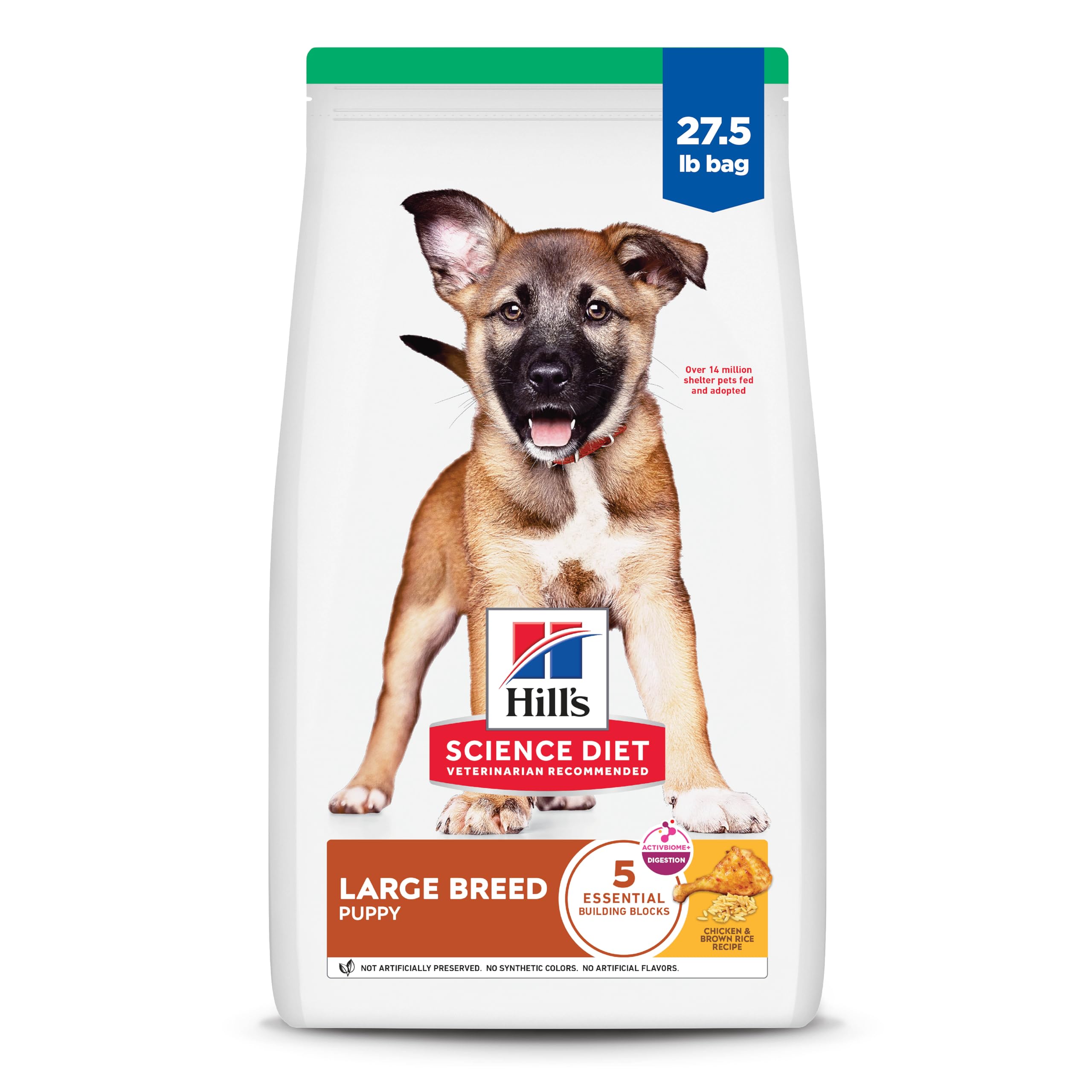
Hill’s Science Diet is the most widely recommended formula by U.S. veterinarians for large breed puppies, and the 27.5-pound bag delivers a precisely calibrated 1.0% calcium level on a dry-matter basis — right in the sweet spot for a Pyr’s slow ossification phase. The blend of balanced minerals supports bone and tooth density without accelerating growth rate, while DHA from fish oil fuels retinal and neural development during the critical first six months.
Real owner feedback consistently highlights stool regularity and clean ears — a sign that the natural fiber and prebiotic blend doesn’t irritate sensitive giant-breed digestive tracts. The kibble is moderately sized with a firm texture that encourages chewing, which helps reduce gulping-related bloat risk in deep-chested breeds. Many owners report that even picky Pyr pups devour this formula without hesitation.
A few users noted the feeding guidelines on the bag may overestimate portion sizes — your vet may recommend slightly lower volumes to prevent the rapid weight gain that stresses developing joints. That said, this is the safest bet for owners who want a formula backed by decades of clinical research and transparent sourcing. It pairs well with Hill’s Science Diet canned Large Breed Puppy for added moisture.
Why we love it
- Veterinarian #1 recommended large breed puppy brand
- Optimized 1.0% calcium supports controlled skeletal growth
- DHA from fish oil enhances brain and eye development
- Made in the USA with globally sourced, natural ingredients
Good to know
- Feeding chart may overestimate portions for a less active Pyr pup
- Premium price point compared to mid-range options
- Some users wish the bag included a resealable zip closure
2. Royal Canin Size Health Nutrition Giant Puppy Dry Dog Food

Royal Canin designed this formula specifically for puppies with an expected adult weight exceeding 100 pounds — a perfect genetic match for the male Great Pyrenees. The crunchy kibble texture is oversized to encourage slower eating and more chewing time, reducing the amount of swallowed air that contributes to gastric dilatation-volvulus (GDV) in deep-chested breeds.
The nutritional profile leans on a moderate energy density (around 360 kcal per cup) and a precise calcium-to-phosphorus ratio that supports slow, steady ossification without pushing rapid weight gain. Antioxidants (vitamin E and beta-carotene) fortify the developing immune system, while prebiotic fiber and highly digestible proteins promote healthy intestinal flora during the sensitive weaning transition.
The biggest trade-off is the intended age window — this formula is designed for puppies 2 to 8 months old, at which point Royal Canin recommends switching to their Giant Junior formula up to 24 months. That means two formula transitions within the first two years, which some owners find more complex than a single all-stage large breed puppy food. But for owners committed to breed-specific feeding, the precision here is unmatched.
Why we love it
- Designed specifically for giant breeds with 100+ lb adult weight
- Oversized kibble promotes slow eating and reduces bloat risk
- Moderate calorie density prevents rapid joint-stressing growth
- Prebiotics and antioxidants target gut health and immunity
Good to know
- Designed for 2-8 month window; requires a switch to Junior formula
- Among the highest price per pound in this lineup
- Some owners report the strong poultry odor takes getting used to
3. Eukanuba Puppy Large Breed Dry Dog Food
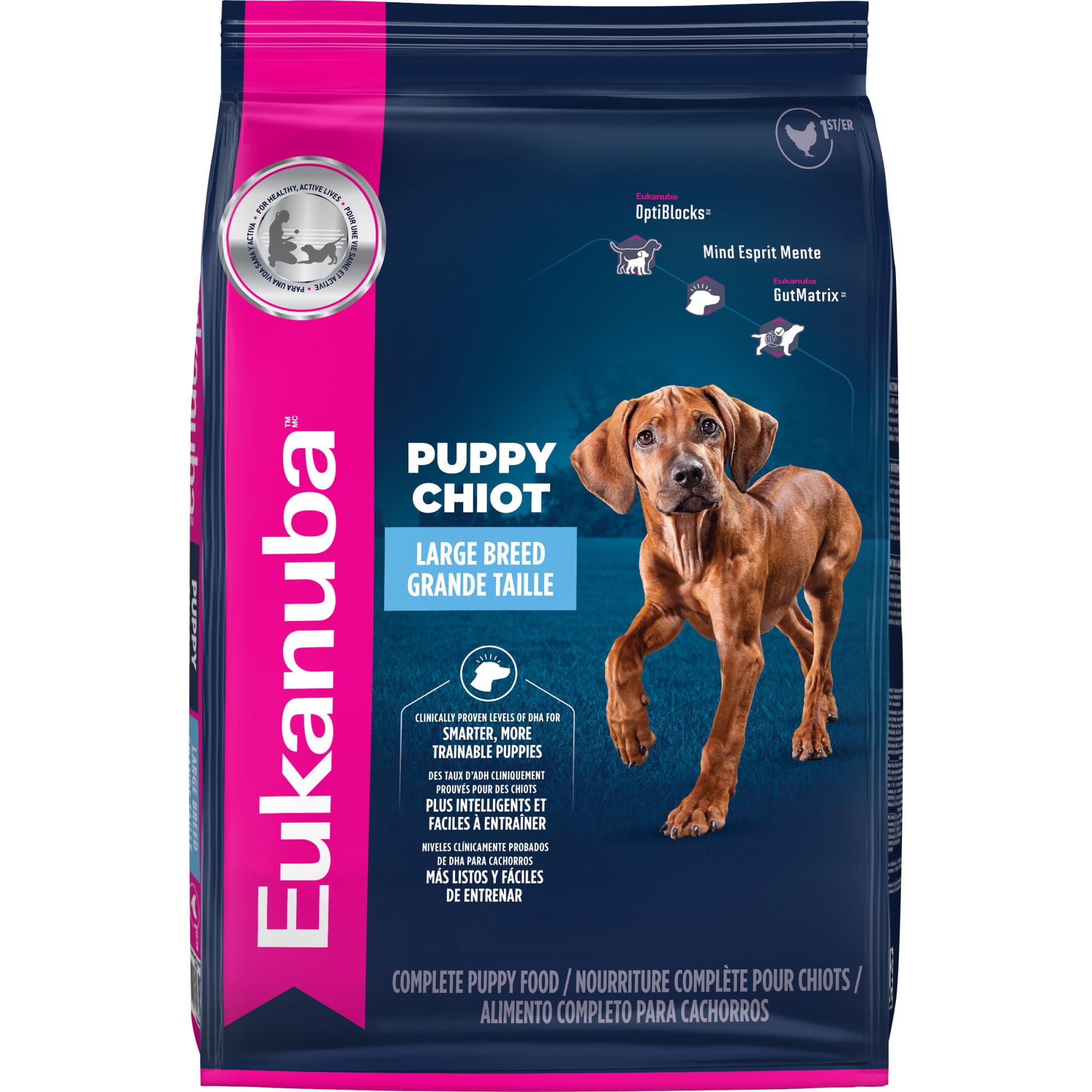
Eukanuba has long been a staple in the working-dog community, and its Large Breed Puppy formula brings that same focus on skeletal integrity to the Pyr puppy. Chicken is the first ingredient, providing a high-quality animal protein profile that supports lean muscle development without loading excess calories. The formula shines in its clinically proven levels of DHA — a key differentiator for owners who prioritize trainability and neurological development from an early age.
The calcium-to-phosphorus ratio is carefully optimized for large breed puppies expected to weigh over 55 pounds as adults. That puts it squarely in the Goldilocks zone for a female Great Pyrenees (typically 80–90 pounds) while still serving male pups well. Guaranteed vitamin E supports immune defenses, and the natural fiber blend combined with a prebiotic mix keeps digestion regular — a common point of failure in cheaper formulas that use corn or wheat fillers.
The 14-pound bag is more than some, but the per-pound cost is reasonable. The pellet size is medium-large, encouraging meaningful chewing. Some owners note that the formula includes gluten as a potential allergen; if your Pyr shows signs of grain sensitivity, you may want a grain-free alternative, though grain-free giant-breed diets carry their own cardiac concerns (taurine research) so consult your vet before switching.
Why we love it
- Clinically proven DHA levels for smarter, more trainable puppies
- Optimal calcium-to-phosphorus ratio for controlled skeletal growth
- High-quality chicken as the first protein source
- Prebiotic fiber blend supports stable digestion for sensitive stomachs
Good to know
- May contain gluten — not ideal for grain-sensitive pups
- Smaller bag size means more frequent purchasing
- Some dogs find the pellet density too hard for early teething
4. VICTOR Hi-Pro Plus Large Breed Puppy
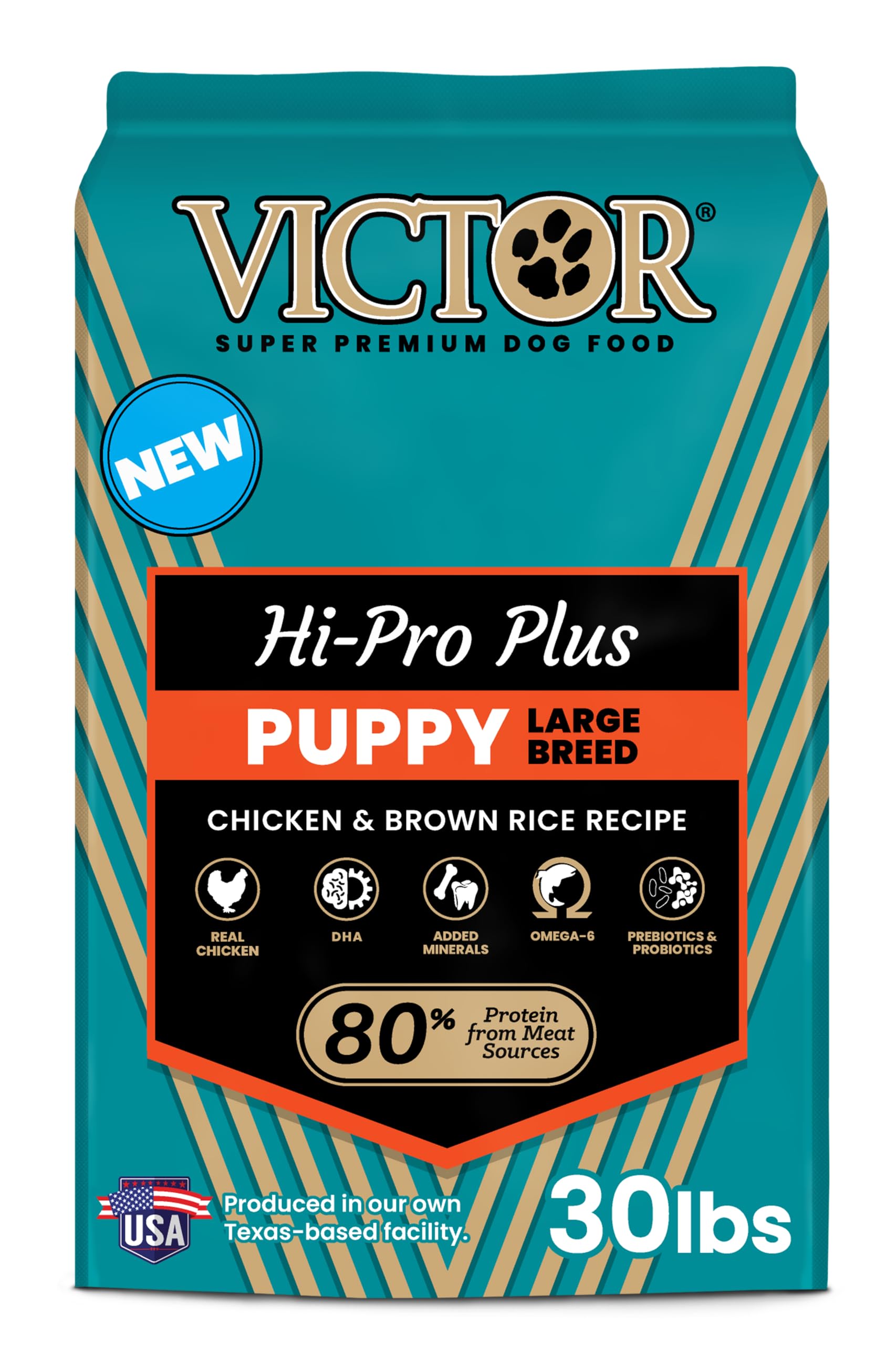
VICTOR has built a reputation in the sporting and working-dog world for producing high-performance formulas at accessible price points. The Hi-Pro Plus Large Breed Puppy formula leads with real chicken as the first ingredient, delivering 30% protein to fuel lean muscle development in fast-growing giant breeds. The real differentiator here is the double-barrel gut health approach: prebiotics and probiotics are both included, which is relatively rare in this price tier.
DHA is present to support brain and vision development during the puppy window, and the calcium and phosphorus levels are carefully controlled to align with large breed requirements — you won’t find the dangerous overshooting seen in all-life-stage bagged foods. The formula uses ancient grains (gluten-free) rather than corn, wheat, or soy, making it a solid choice for owners who want grain-inclusive nutrition without inflammatory cheap fillers. The Omega-3 and Omega-6 fatty acid profile also supports the thick Pyr double coat through seasonal shedding cycles.
The 30-pound bag offers strong value. One trade-off is the higher protein level (30%) compared to more conservative large breed formulas — while this is fine for an active Pyr puppy, a more sedentary indoor puppy may need portion control to avoid excess weight during the critical growth window. Also, the kibble shape is slightly smaller than the giant-breed-specific products from Royal Canin and Hill’s.
Why we love it
- Real chicken is the first ingredient with 30% protein for lean muscle
- Includes both prebiotics and probiotics for digestive stability
- No corn, wheat, or soy and no artificial additives
- Excellent value per pound on the 30-lb bag
Good to know
- 30% protein may be high for less active or indoor-only puppies
- Kibble size is smaller than some giant-breed specific formulas
- Some owners note a stronger smell compared to Hill’s or Royal Canin
5. Purina Pro Plan Sport Development Large Breed 30/18 Chicken and Rice
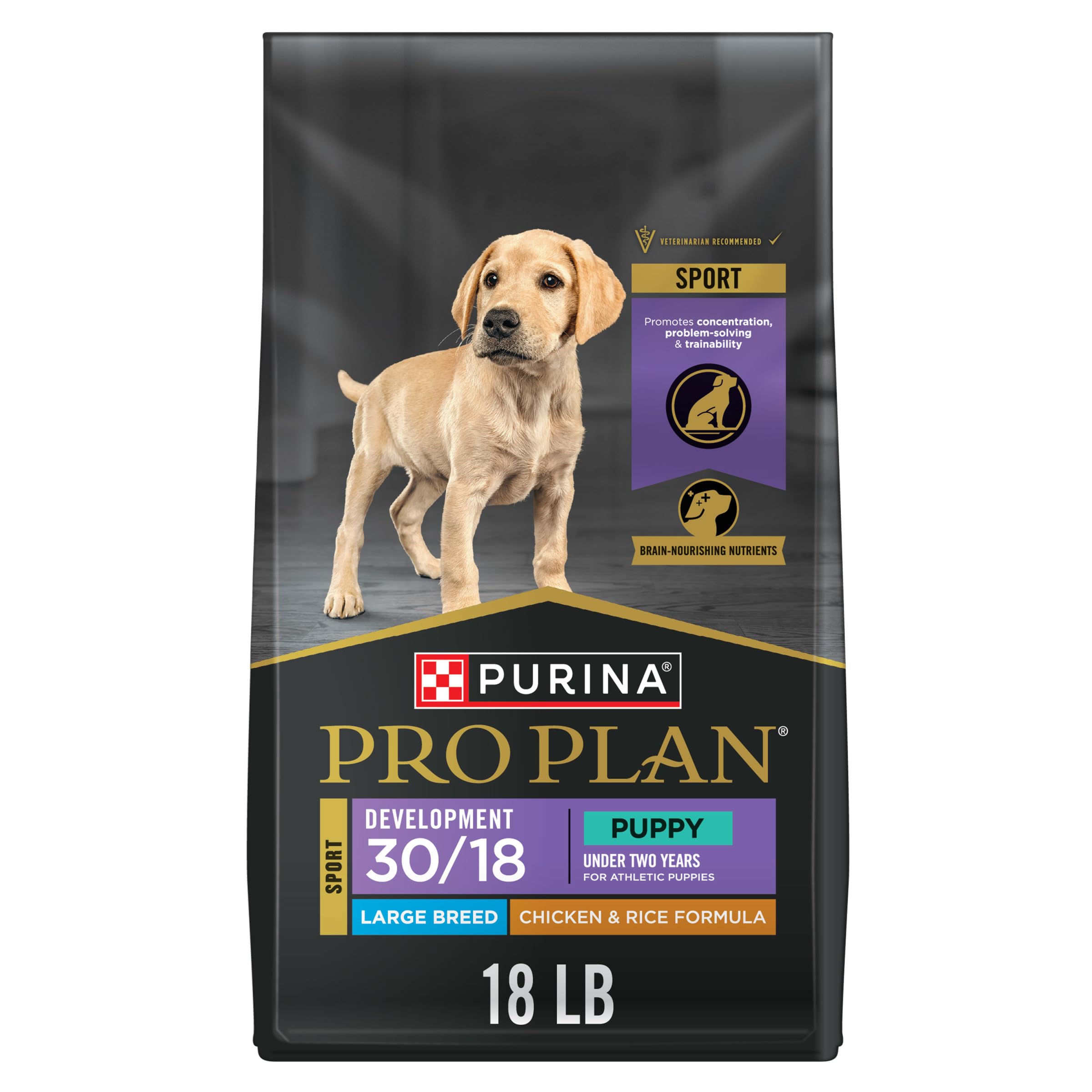
Purina Pro Plan’s Sport line targets performance-oriented puppies, and the 30/18 ratio (30% protein, 18% fat) delivers the highest energy density in this roundup. For an exceptionally active Great Pyrenees puppy — one that patrols a large property, hikes regularly, or trains for working roles — this formula provides the fuel to sustain long activity windows without exhausting muscle reserves. The first ingredient is real chicken, and the digestible rice base is gentle on sensitive stomachs.
The formula is fortified with DHA from fish oil to aid neurological development, and the calcium levels are dialed in for large breed puppies to support healthy bone mineralization without overshooting. The 18% fat content provides concentrated energy, but it also means you’ll need to measure portions carefully for Pyr puppies that are more inclined to nap than work. The 18-pound bag offers a reasonable entry point for testing the formula before committing to larger bulk purchases.
This is the best option for owners who observe extremely active, high-drive behavior in their puppy. However, if your Pyr is sedentary or spends most of the day in a yard with minimal exercise, the 30/18 ratio could lead to rapid weight gain and stress on developing joints. It’s also worth noting that the kibble is smaller than giant-breed-specific options — while not a dealbreaker, it may not encourage the same chewing behavior as larger pellets.
Why we love it
- Highest protein (30%) and fat (18%) for high-energy Pyr pups
- Real chicken first ingredient with digestible rice base
- DHA from fish oil supports cognitive development
- Backed by Purina’s decades of nutritional research
Good to know
- High energy density requires strict portion control for less active pups
- Kibble size is smaller than giant-breed targeted formulas
- Some owners prefer a formula with added probiotics for gut health
FAQ
How much food should I feed my Great Pyrenees puppy at 3 months?
When should I switch my Great Pyrenees from puppy food to adult food?
Can I feed grain-free food to my Great Pyrenees puppy?
Is raw food safe for a Great Pyrenees puppy?
Final Thoughts: The Verdict
For most Great Pyrenees owners, the best food for great pyrenees puppy is the Hill’s Science Diet Large Breed Puppy because it delivers a precisely controlled 1.0% calcium level, DHA from fish oil, and is backed by the most veterinary recommendations of any formula available — giving you the safest path through the rapid growth window. If you want to follow a breed-specific growth plan with a giant-breed-formulated kibble that changes as your Pyr matures, grab the Royal Canin Giant Puppy. And for the budget-conscious owner who still wants real chicken first, prebiotics, and probiotics, nothing beats the VICTOR Hi-Pro Plus Large Breed Puppy.