
A kitten with loose stools is a stressful sight for any new owner — the urgency to find a solution while keeping your tiny feline properly nourished is a race against dehydration. The wrong food can aggravate the problem, while the right formulation with prebiotic fibers, highly digestible proteins, and limited ingredients can settle the stomach within days. This guide cuts through the marketing noise to deliver only the options that prioritize digestive recovery without sacrificing growth-stage nutrition.
I’m Mo Mahin — the founder and writer behind Furric. I’ve spent years analyzing pet food formulations, cross-referencing veterinary recommendations with ingredient quality scores, and studying owner-reported outcomes for digestive-specific kitten diets to identify what truly works when the gut is in distress.
Whether you need a temporary bland support or a long-term sensitive formula, this focused roundup of the best food for kitten diarrhea options gives you the concrete specs and real-world results to make a confident choice today.
How To Choose The Best Food For Kitten Diarrhea
Selecting a diet for a kitten with loose stools requires evaluating ingredient digestibility, fiber type, and protein source carefully. General kitten foods may contain complex ingredients that irritate an inflamed gut, so the following criteria help narrow the list.
Prebiotic Fiber Content
Look for named sources like beet pulp, chicory root, or inulin. These fibers feed beneficial gut bacteria without adding bulk that further loosens stools. Avoid generic “cellulose” or “powdered cellulose” which offer no prebiotic benefit and can worsen diarrhea in some kittens.
Single or Limited Protein Source
Novel or single animal proteins — such as salmon, turkey, or duck — reduce the likelihood of an immune reaction in the gut. Multi-protein blends can be a guessing game when trying to identify a trigger. A food where the first ingredient is one named meat source is ideal for a sensitive stomach.
Fat Content and Omega Fatty Acids
Kittens need fat for energy, but excessively high fat levels (above 20% crude fat) can loosen stools further. Moderate fat alongside Omega-3 fatty acids from fish oil or flaxseed helps reduce intestinal inflammation and supports healing of the gut lining.
Probiotics and Live Cultures
Some dry foods include added probiotics (enterococcus faecium, lactobacillus) that survive the kibble manufacturing process. These can help restore the gut microbiome after a bout of diarrhea. Check the guaranteed analysis or ingredient list for named probiotic strains.
Quick Comparison
On smaller screens, swipe sideways to see the full table.
| Model | Category | Best For | Key Spec | Amazon |
|---|---|---|---|---|
| Hill’s Science Diet Kitten Sensitive Stomach & Skin | Dry Kibble | Digestive & Skin Support | Prebiotic fiber, 3.5 lb bag | Amazon |
| Wellness CORE Kitten Dry Cat Food | Grain-Free Kibble | High Protein & Probiotics | 55% animal protein, 5 lb bag | Amazon |
| Blue Buffalo Freedom Grain-Free Indoor Dry Kitten Food | Grain-Free Kibble | Brain & Immune Development | DHA + ARA, 5 lb bag | Amazon |
| ORIJEN Wild Reserve Dry Cat Food Kitten Recipe | High-Protein Kibble | Whole Prey Nutrition | Freeze-dried morsels, 3.5 lb bag | Amazon |
| ORIJEN Grain Free High Protein Premium Dry Cat Food Kitten Recipe | Grain-Free Kibble | Muscle & Bone Growth | High protein, 4 lb bag | Amazon |
In‑Depth Reviews
1. Hill’s Science Diet Kitten Sensitive Stomach & Skin Dry Cat Food
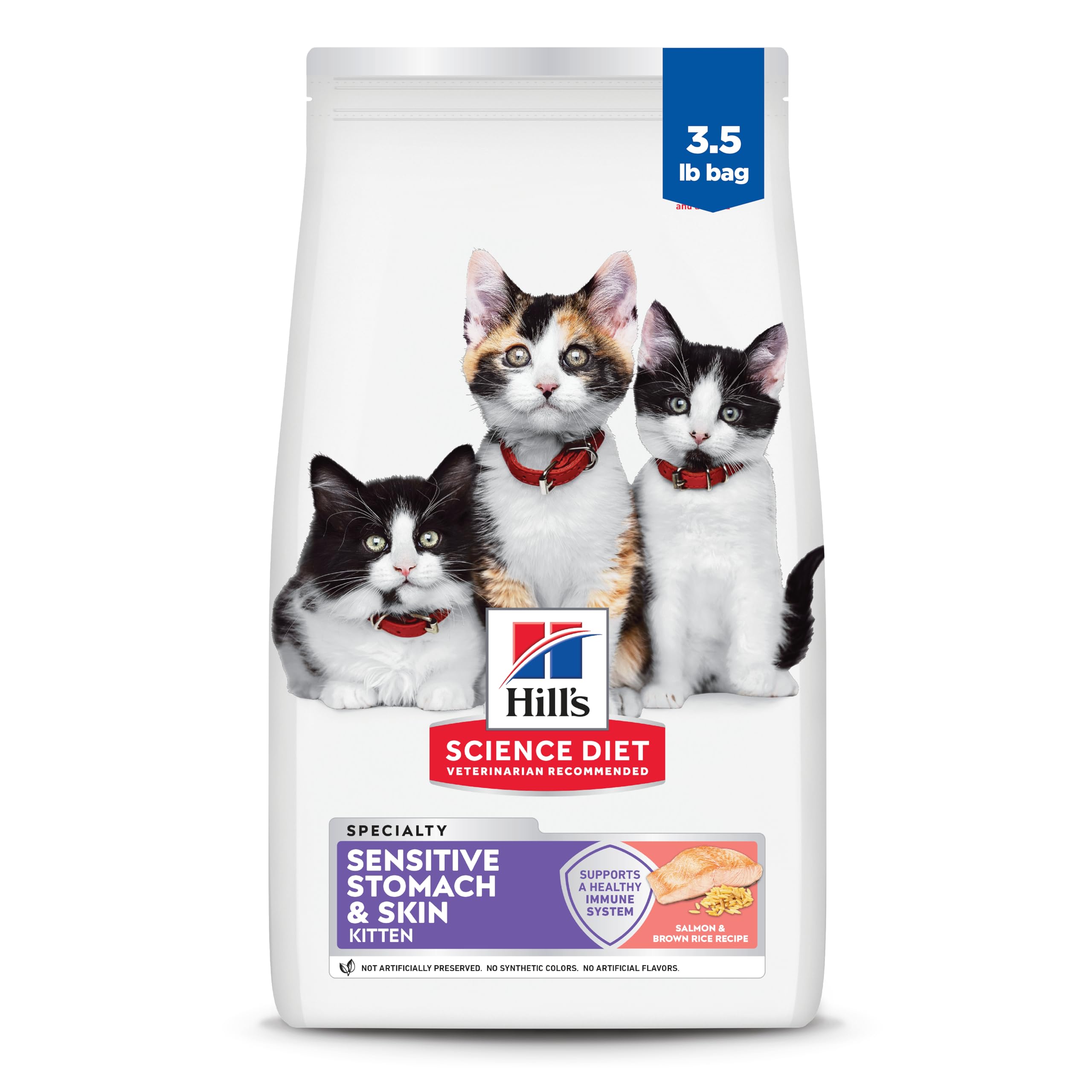
This formula is the top choice for diarrhea-prone kittens because its highly digestible protein and prebiotic fiber work together to firm stools without causing constipation. The salmon and brown rice base provides a single, novel protein source that minimizes allergic gut reactions while delivering DHA for growing brains. At 3.5 pounds, the bag is compact enough for a trial without committing to a large volume.
Veterinarians frequently recommend this line for sensitive stomach cases, and the addition of Omega-3 and 6 fatty acids supports skin healing if the diarrhea caused dehydration and coat dullness. The kibble size is small and easy for young kittens to chew, and the gentle fiber profile means you’ll see improvement in stool consistency typically within three to five days of transition.
Some kittens may need a slower transition than the standard 7-day window, especially those with chronic loose stools. The 3.5-pound bag size runs out faster if you have multiple kittens or a larger breed, so factor in a higher refill frequency compared to bigger-value bags.
Why we love it
- Prebiotic fiber firms stools without causing constipation
- Single salmon protein source reduces gut inflammation triggers
- Trusted veterinarian-recommended brand with clinical backing
Good to know
- Smaller bag size requires more frequent repurchasing
- Some kittens need a slower transition beyond the standard 7 days
2. Wellness CORE Kitten Dry Cat Food

Wellness CORE delivers a grain-free, high-protein approach that many kittens with diarrhea tolerate well when the issue stems from grain sensitivity rather than protein intolerance. With 55 percent animal protein from turkey, chicken, and salmon oil, this recipe supplies dense nutrition without fillers that can ferment and cause gas or loose stools. The added probiotics support repopulating beneficial gut bacteria after a diarrheal episode.
Multiple verified reviews report kittens transitioning to this food with “no diarrhea” and shinier coats within two weeks, indicating good digestibility and fatty acid absorption. The 5-pound bag offers a better cost-per-pound ratio than smaller sensitive-stomach formulas, making it a smart budget option for longer-term feeding. DHA from salmon oil supports brain development during the sensitive first year.
Some kittens, as noted in a review, experience “tummy rumblings and tootie toots” and eat this food without enthusiasm, suggesting the flavor or fat profile may not suit every palate. The dual-protein blend of turkey and chicken means it’s not a single-source diet, so kittens with multiple food allergies may still react.
Why we love it
- High protein content supports muscle growth without grain fillers
- Added probiotics aid gut microbiome recovery
- Great cost-per-pound value in a 5 lb bag
Good to know
- Dual protein sources may trigger allergies in sensitive kittens
- Some kittens find the flavor less appealing
3. Blue Buffalo Freedom Grain-Free Indoor Dry Kitten Food

This grain-free formula from Blue Buffalo uses real chicken as the first ingredient and excludes corn, wheat, and soy — three common dietary triggers for feline digestive upset. The inclusion of DHA and ARA promotes proper brain and eye development, which is doubly important when a kitten’s body is fighting off a gastrointestinal issue that can slow growth. The proprietary LifeSource Bits contain a blend of antioxidants that support the immune system during recovery.
Owners of kittens with intermittent diarrhea often find this food works well for indoor cats who need a lower-calorie, fiber-appropriate diet without grains. The 5-pound bag size aligns with standard kibble budgets, and the chicken flavor tends to be highly palatable even for picky eaters. Since it’s grain-free, it reduces one variable if you’re trying to isolate the cause of loose stools.
Chicken is one of the more common feline allergens, so if your kitten’s diarrhea is chronic and linked to itching or ear issues, a chicken-based formula may not be the best fit. The LifeSource Bits are a heat-processed supplement, meaning some antioxidant potency may be reduced compared to fresh additions.
Why we love it
- Grain-free formula eliminates common fiber-trigger ingredients
- DHA + ARA supports brain development during recovery
- Chicken flavor is well-accepted by most kittens
Good to know
- Chicken is a common allergen for some kittens
- Antioxidant content may degrade during heat extrusion
4. ORIJEN Wild Reserve Dry Cat Food Kitten Recipe
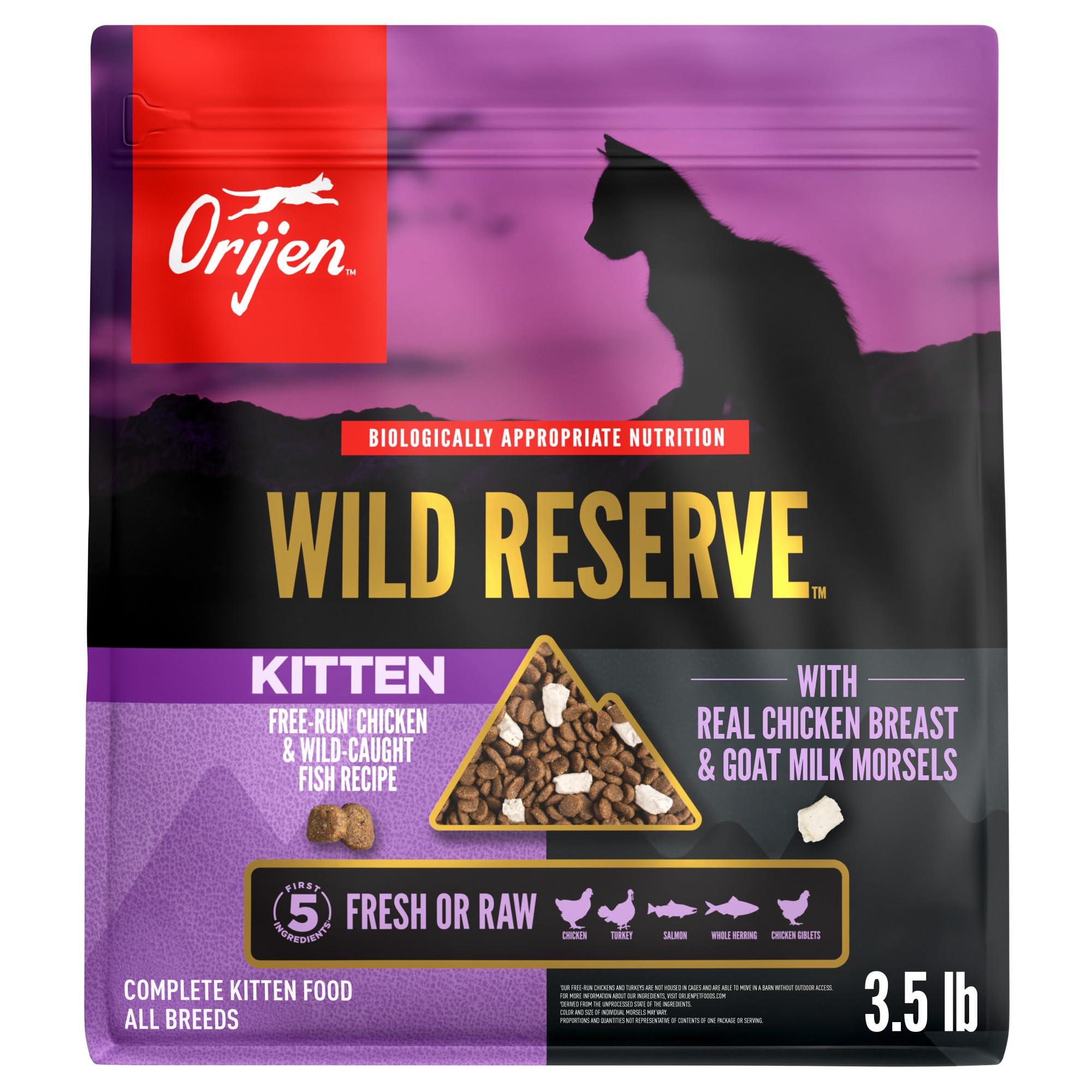
ORIJEN’s Wild Reserve recipe takes a WholePrey approach, incorporating chicken breast, goat milk morsels, and freeze-dried organ meats to mimic a natural feline diet. The first five ingredients are fresh or raw animal sources — chicken, turkey, salmon, whole herring, and chicken giblets — which provide concentrated protein and moisture-retention capacity that can help hydrate a kitten during a diarrheal phase. This formula is specifically formulated to meet AAFCO growth standards.
The freeze-dried morsels add an appealing texture that encourages eating even when a kitten feels under the weather, which is crucial for maintaining energy levels. The inclusion of goat milk offers natural probiotics that may aid gut restoration, and the absence of corn, gluten, soy, and potato reduces the chance of inflammatory reactions. Owners report that kittens transition to this food eagerly due to the real meat pieces.
At 3.5 pounds, this is a premium-priced bag that may not be the most economical for long-term use, especially if your kitten needs several weeks of sensitive diet support. The high protein content (around 40%) can be too rich for some kittens with extremely inflamed guts, potentially worsening diarrhea initially before improvement occurs.
Why we love it
- WholePrey ingredients mirror natural diet for optimal digestibility
- Freeze-dried morsels boost palatability when appetite is low
- Goat milk provides natural probiotics for gut health
Good to know
- High protein can initially overwhelm very sensitive stomachs
- Small bag size at a premium price point
5. ORIJEN Grain Free High Protein Premium Dry Cat Food Kitten Recipe

This grain-free ORIJEN kitten recipe delivers a dense protein load from free-run poultry and wild-caught fish, designed to fuel rapid growth while maintaining a low-carbohydrate profile that can help stabilize blood sugar and reduce fermentation in the gut. The 4-pound bag offers a slightly larger volume than the Wild Reserve variety, making it a better value if you want to stick with the brand for extended sensitive-stomach management. The kibble shape and texture are consistent with ORIJEN’s high-meat inclusion rate.
Because this formula excludes grains, it’s a strong candidate for kittens whose diarrhea stems from a grain sensitivity or intolerance. The high protein content supports lean muscle development, and the absence of added sugars or artificial flavors keeps the ingredient profile clean. For owners who already feed a species-appropriate raw or high-protein diet, this kibble provides a convenient dry option that doesn’t compromise on quality.
The high protein density can be too rich for kittens transitioning from a lower-protein branded food — a slow, 10- to 14-day transition is recommended to avoid loose stools that could be mistaken for the original problem. Some kittens may experience increased thirst and urination as they process the higher protein load, so ensure fresh water is always available.
Why we love it
- High-protein, low-carb profile reduces gut fermentation
- Grain-free formula targets grain-sensitive kittens
- 4-pound bag provides better value than smaller premium options
Good to know
- Rich formula requires a very slow transition to avoid loose stools
- High protein may increase thirst and urination frequency
FAQ
How quickly should I see firmer stools after switching food?
Should I choose a grain-free formula for a kitten with diarrhea?
Can I mix wet and dry food for a kitten with loose stools?
Final Thoughts: The Verdict
For most kittens with diarrhea, the food for kitten diarrhea winner is the Hill’s Science Diet Kitten Sensitive Stomach & Skin because it combines a single, novel salmon protein with prebiotic fiber that firms stools directly and is backed by veterinary clinical research. If you want a grain-free, probiotic-rich formula at a better cost-per-pound, grab the Wellness CORE Kitten for its high digestibility and immunity support. And for premium WholePrey nutrition with freeze-dried morsels that tempt even a sick-eater, nothing beats the ORIJEN Wild Reserve Kitten Recipe.