
Quaker parrots are seed-cracking machines with a metabolism that punishes fatty diets fast. The wrong food leads to obesity, liver strain, and a dull plumage that no amount of misting can fix. Finding a mix that delivers high protein without the usual sunflower-seed fat bomb is the central challenge of feeding this species.
I’m Mo Mahin — the founder and writer behind Furric. I spend my time comparing nutritional specs, studying avian veterinarian guidelines, and cross-referencing owner feedback to isolate which bag formulas actually match a Quaker’s physiological needs.
Whether you are raising a fledgling or maintaining an adult bird’s condition, selecting the right food for quaker parrots means prioritizing protein content over filler grains and avoiding common allergens like corn and soy that offer zero nutritional value.
How To Choose The Best Food For Quaker Parrots
Quakers are small parrots with fast metabolisms and a tendency to pick out high-fat seeds first if given the chance. The ideal diet balances crude protein around 14–18 percent with fat content under 10 percent. Here are the critical factors to evaluate before buying.
Protein-to-Fat Ratio
Look for a guaranteed analysis showing at least 14 percent protein. Fat should sit at 8 percent or below in a maintenance blend. Premium mixes often hit 16 percent protein with only 7 percent fat — that is the sweet spot for feather regrowth and muscle tone without liver stress.
Ingredient Sourcing and Fillers
Corn, soy, and peanuts appear in cheap blends as volume fillers. They provide minimal usable amino acids and can trigger allergies in sensitive birds. A clean bag lists whole grains, flaxseed, hemp seed, and millet as primary ingredients rather than cornmeal or soybean hulls.
Foraging Enrichment
Husked seeds require the bird to crack each piece open, which exercises the beak and occupies natural foraging instincts. Unshelled mixes reduce boredom and feather-plucking tendencies. Avoid blends where every seed is pre-hulled — that removes the mental stimulation your Quaker needs.
Supplemental Fortification
Encapsulated probiotics, DHA omega-3, and whole bee pollen provide immune and digestive support that plain seed lacks. A food fortified with these additives reduces the need for separate vitamin powders and simplifies daily feeding routines.
Quick Comparison
On smaller screens, swipe sideways to see the full table.
| Model | Category | Best For | Key Spec | Amazon |
|---|---|---|---|---|
| KikiBirds Premium Parrot Food | Seed Mix | High-protein daily maintenance | 16% Protein / 7% Fat | Amazon |
| Higgins Sunburst Gourmet Blend Parakeet Food (2-Pack) | Seed Mix | Value multi-bird households | 4 lb total / Egg protein bits | Amazon |
| Vitakraft VitaSmart Conure & Small Parrot Food | Seed Mix | Budget-friendly variety diet | 4 lb bag / Safflower seed base | Amazon |
| Higgins Mayan Harvest Yucatan Food Mix | Probiotic Mix | Digestive and immune support | Probiotics / DHA omega-3 / Bee pollen | Amazon |
| Kaytee Fiesta Big Bites Small Parrot & Conure Food | Variety Blend | Boredom-busting texture variety | 4 lb bag / Assorted fruits & veggies | Amazon |
In‑Depth Reviews
1. KikiBirds Premium Parrot Food
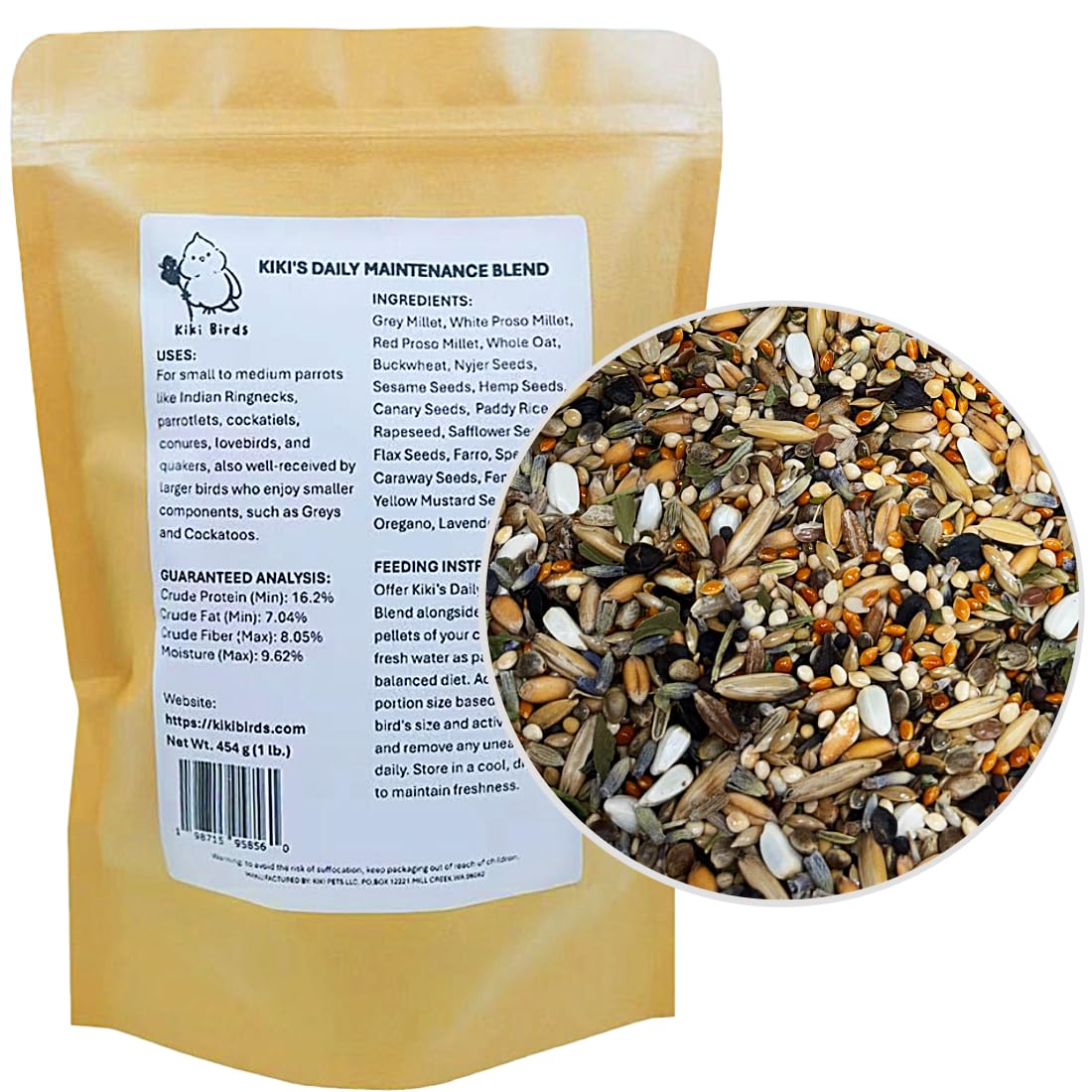
This 1-pound bag packs a 16 percent protein punch with only 7 percent fat — exactly the ratio a Quaker needs to maintain muscle without packing on visceral fat. The ingredient list is short: flaxseed, hemp seed, whole grains, and husked seeds that require cracking. No corn, soy, peanuts, or artificial preservatives appear anywhere on the label.
Owners report that the mix smells noticeably fresh compared to mass-market blends, and birds transition to it quickly even if they are accustomed to fatty supermarket seed. The unshelled seeds promote natural foraging behavior, and the small component size suits a Quaker’s beak perfectly without being too tiny for a larger Grey or Cockatoo to enjoy as a treat.
The one-pound bag size means you will reorder more frequently than with a 4-pound bulk bag, but for households with one or two birds the freshness advantage offsets the smaller quantity. Pair this with a quality pellet and fresh vegetables for a complete diet.
Why we love it
- Optimal 16/7 protein-to-fat ratio for Quaker maintenance
- Zero corn, soy, or peanut fillers
- Husked seeds encourage beak exercise and foraging
Good to know
- 1-pound bag requires frequent reordering for multiple birds
- Some birds may reject the tiny black seeds initially
2. Higgins Sunburst Gourmet Blend Parakeet Food (2-Pack)

This two-pack delivers 4 pounds total of a parakeet-oriented mix that works well for Quakers when used alongside a higher-protein staple. The standout inclusion is protein egg food — small baked bits that boost the overall amino acid profile beyond what plain seeds provide. The base ingredients include natural seeds without artificial colors or preservatives.
Owner reports highlight that the mix stays fresh through both bags, and households with multiple budgies or small parrots find the 2-pound bag size convenient. Several reviewers mention that their birds pick out the egg bits first, suggesting the added protein is palatable even for picky eaters.
The parakeet seed sizes are appropriate for Quaker beaks, though the fat content from millet runs slightly higher than a dedicated low-fat formula. Use this as a rotation blend or mix it 50/50 with a pellet diet to balance the nutritional profile.
Why we love it
- 4 pounds total at a competitive per-pound cost
- Protein egg food bits add variety and nutrition
- No artificial colors or preservatives
Good to know
- Millet-heavy blend may be too fatty as a sole diet
- Labeled for parakeets — small seed size but Quakers handle it fine
3. Higgins Mayan Harvest Yucatan Food Mix

This 3-pound mix stands apart because of its fortification stack: encapsulated probiotics for digestive regularity, DHA omega-3 for brain and feather health, and whole bee pollen to support the immune system. The flavor profile includes star anise, juniper berries, and spearmint, giving the bag a distinctive black licorice aroma that owners notice immediately.
Multiple Quaker owners specifically recommend this as a supplemental seed mix because it contains no sunflower seeds — a major win for a species prone to selective overeating of high-fat seeds. The variety of grains and seeds encourages the bird to work for each piece, and the probiotic coating helps maintain healthy gut flora during dietary transitions or stress periods.
The stick-like form of some ingredients differs from standard loose seed, but birds adapt quickly. Store the bag in the refrigerator after opening to preserve the probiotic viability and prevent any grain moth issues.
Why we love it
- Encapsulated probiotics and DHA omega-3 for digestive and brain health
- Zero sunflower seeds — ideal for fat-conscious Quaker diets
- Unique aromatic profile that birds seem to find stimulating
Good to know
- Higher price per pound compared to basic seed blends
- Star anise smell may be off-putting to some owners
4. Kaytee Fiesta Big Bites Small Parrot & Conure Food

Kaytee’s Fiesta line uses larger chunk-style ingredients — pieces of pineapple, carrot, coconut, and extruded grains — to break up the monotony of a standard seed bowl. The 4-pound bag includes natural antioxidants and added probiotics and prebiotics for digestive support. The variety of shapes and textures encourages birds to forage rather than inhale their meal in seconds.
Owner feedback consistently notes that conures and Quakers find this blend highly engaging. The larger size of the pieces means a Quaker has to hold each chunk with a foot and nibble, which adds a few extra minutes of enrichment per feeding. Some owners mix it with Higgins Sunburst or Vita Seed to balance out the ingredient diversity.
The fat content is moderate, and the inclusion of dried fruit adds natural sugars. Monitor your bird’s weight carefully if it tends to pick out the sweeter pieces first. This is best used as part of a rotation alongside a lower-fat seed mix or pellet.
Why we love it
- Large varied pieces promote foot-held eating and enrichment
- Added probiotics and prebiotics for digestive health
- Rich in natural antioxidants from fruit and vegetable ingredients
Good to know
- Dried fruit content increases sugar intake — monitor portions
- Some birds pick out favorite pieces and waste the rest
5. Vitakraft VitaSmart Conure Small Parrot Food

Vitakraft’s 4-pound bag offers a safflower-seed-forward mix fortified with vitamins and minerals. Safflower is lower in fat than sunflower seeds, making this a reasonable base for a Quaker that does not have access to a pellet diet. The blend includes real vegetables, fruits, and grains to provide textural variety without relying on artificial colorings.
Customers report that Senegal parrots and conures eat this readily, and the safflower base helps prevent the rapid weight gain that sunflower-heavy mixes cause. Some owners note that picky birds may toss aside the whole grains and only eat the safflower and millet, leading to bowl waste. Mixing this with a pellet or another seed type can reduce selective eating.
The long shelf life and large bag size make this a budget-conscious choice for multi-bird households. Check the bag upon arrival for freshness, as the resealable seal on some shipments does not always hold airtight.
Why we love it
- Large 4-pound bag at an accessible price point
- Safflower base is lower in fat than sunflower seed blends
- Fortified with vitamins and minerals for daily nutrition
Good to know
- Picky birds may waste the whole grain components
- Bag resealable closure sometimes fails to maintain freshness
FAQ
Can Quaker parrots eat sunflower seeds?
How much protein does a Quaker parrot need daily?
Is a seed-only diet healthy for a Quaker parrot?
Why does my Quaker ignore certain seeds in the mix?
Final Thoughts: The Verdict
For most gardeners, the food for quaker parrots winner is the KikiBirds Premium Parrot Food because its 16 percent protein and 7 percent fat ratio matches Quaker physiology better than any other bag on this list, with zero corn or soy fillers. If you want probiotic and omega-3 fortification for digestive health, grab the Higgins Mayan Harvest Yucatan Food Mix. And for a budget-friendly daily staple that avoids sunflower seeds, the Vitakraft VitaSmart Conure & Small Parrot Food delivers solid value in a 4-pound bag.