
Waking up with a stuffy nose, itchy eyes, or scratchy throat is often a direct signal that your mattress has become a habitat for dust mites, pet dander, and microscopic mold spores. A standard top sheet offers zero defense against these common bedroom irritants, which thrive deep inside the mattress fibers you sleep on every night. The right barrier changes that completely.
I’m Mo Mahin — the founder and writer behind Furric. I’ve spent years analyzing owner-reported feedback on allergen-blocking textiles, comparing membrane breathability data, and studying the construction specs that determine whether a protector actually stops particles or just claims to.
For anyone managing allergies or asthma, selecting the best hypoallergenic mattress protector requires understanding which materials, certifications, and seal types deliver real separation from irritants without sacrificing comfort or airflow.
How To Choose The Best Hypoallergenic Mattress Protector
Not all mattress protectors labeled “hypoallergenic” actually block the particles that trigger reactions. The difference comes down to three core factors that define whether a cover functions as a true barrier or simply repels surface stains. Focus on these elements before considering brand names or thread counts.
Fabric Construction and Pore Size
The primary mechanism for blocking dust mites and their waste is the physical weave of the fabric. A tightly woven microfiber or cotton terry fabric with pore sizes below 10 microns prevents mite allergens from passing through. Look for terms like “allergen-proof,” “mite-proof,” or a certified pore-size specification in the product description. Looser weaves, even if soft to the touch, allow particles to migrate out of the mattress and into your breathing zone.
Encasement Style: Fitted vs. Zippered
A fitted sheet-style protector covers only the top and sides of the mattress, leaving the bottom exposed. A zippered encasement wraps the entire mattress, including the bottom surface, creating a sealed environment. For anyone with moderate to severe dust mite allergies, a zippered six-sided encasement is the only design that fully isolates the mattress core from the sleep environment. Fitted protectors are adequate for basic liquid protection but fall short as complete allergen barriers.
Membrane Breathability and Material Composition
True waterproofing requires a polyurethane (PU) or thermoplastic polyurethane (TPU) membrane, but these membranes vary widely in breathability. Low-quality membranes trap body heat and moisture vapor, creating a hot, clammy sleep surface. Premium options sandwich an ultra-thin membrane between absorbent fabric layers (cotton terry, Tencel, or organic cotton jersey) to wick moisture while blocking liquids and particles. Certifications like Greenguard Gold or Oeko-Tex Standard 100 indicate the membrane and adhesives are free of volatile organic compounds (VOCs) that can cause respiratory irritation themselves.
Certifications That Matter
GOTS (Global Organic Textile Standard) certifies that the cotton is grown and processed without synthetic pesticides or toxic chemicals. Greenguard Gold tests for over 10,000 chemical emissions and is especially relevant for children’s bedrooms and people with chemical sensitivities. Oeko-Tex Standard 100 screens for harmful substances in the finished textile. These certifications are not marketing fluff — they represent third-party lab verification that the protector won’t introduce new irritants into your bed.
Quick Comparison
On smaller screens, swipe sideways to see the full table.
| Model | Category | Best For | Key Spec | Amazon |
|---|---|---|---|---|
| Naturepedic Organic Waterproof Mattress Protector | Premium Organic | Zero-chemical sleep environment | GOTS organic cotton jersey, 9″-16″ deep pocket | Amazon |
| Mission: Allergy Premium Microfiber Encasing | Medical Grade | Severe dust mite & pet dander allergies | 100% allergen-blocking microfiber, <10 micron pore | Amazon |
| SureGuard Mattress Encasement | Mid-Range Zippered | Six-sided bed bug & mite protection | Cotton terry top, Invisi-Zip seal, 17″-20″ deep | Amazon |
| Maestrino Luxury Tencel Protector | Premium Tencel | Cooling comfort + allergy defense | Tencel fiber, Oeko-Tex certified, fits 6″-20″ | Amazon |
| NORTHERNFARE Tencel Mattress Protector | Mid-Range Tencel | Noiseless cooling for hot sleepers | Triple-layer Tencel/Polyester, 18″ pocket | Amazon |
| Whisper Organics Organic Cotton Protector | Budget Organic | Entry-level organic cotton barrier | GOTS organic cotton, 180GSM pique top | Amazon |
| Protect-A-Bed Premium Cotton Terry | Value Fitted | Basic waterproof + dust mite block | Cotton terry surface, 10-year warranty | Amazon |
In‑Depth Reviews
1. Naturepedic Organic Waterproof Mattress Protector

The Naturepedic unit stands apart because its GOTS-certified organic cotton jersey construction eliminates the chemical off-gassing risk that plagues many waterproof protectors. The Drysleep technology uses an ultra-thin polyurethane membrane that blocks liquids and allergens while remaining breathable enough to prevent heat buildup. This matters for allergy sufferers because conventional PU membranes can trap VOCs against the skin, triggering the exact respiratory symptoms the protector is meant to solve.
The fitted sheet design covers mattress depths from 9 to 16 inches with a full elastic perimeter that prevents shifting during sleep. Naturepedic skips the vinyl, PVC, phthalates, and latex commonly found in lower-tier protectors, which is critical for users with multiple chemical sensitivities. The two-layer organic cotton construction absorbs moisture on the top side while keeping the waterproof layer away from direct skin contact.
Owner feedback consistently highlights the absence of any “plastic” smell out of the package — a common complaint with budget waterproof protectors that use low-grade membranes. The trade-off is a slightly higher cost per unit and the limited depth range (9-16 inches) which may not accommodate extra-thick pillow-top mattresses beyond 16 inches. Machine washing on warm and tumble drying on low maintains the barrier integrity over repeated cycles.
Why we love it
- GOTS certified organic cotton jersey — no pesticide residues or synthetic dyes
- Drysleep membrane breathes well enough for all-night comfort
- Completely free of vinyl, phthalates, and latex
Good to know
- Fitted sheet style leaves mattress bottom exposed; not a full encasement
- Fits only up to 16-inch deep mattresses
- Premium price point reflects the organic certification cost
2. Mission: Allergy Premium Microfiber Encasing
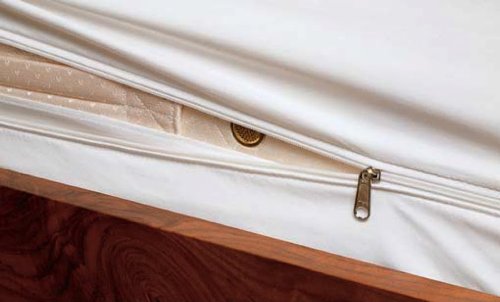
Designed by a board-certified allergist and specifically recommended by university allergy departments, the Mission: Allergy encasing treats allergen blocking as a clinical challenge rather than a comfort accessory. The tightly woven 100% microfiber polyester fabric has been third-party tested by Indoor Biotechnologies to block 100% of dust mite and animal dander allergens from passing through the fabric. This is the most rigorously verified pore-level barrier on this list.
The zippered encasement design covers all six sides of the mattress, which is the only configuration that truly isolates the mattress core. Bound seams, an interior zipper flap, and an extra-long zipper make installation practical despite the tight weave. The fabric is water-repellent but air- and vapor-permeable, meaning it breathes well enough for nightly use while still rejecting liquid spills. The lifetime warranty reflects the manufacturer’s confidence in the construction.
The primary consideration is that the microfiber fabric, while effective, lacks the natural-fiber feel of cotton or Tencel options. Some users report a slight rustle during movement, though this diminishes after the first few washes. The price point is the highest on this list, but for anyone with diagnosed dust mite or pet dander allergies seeking clinical-grade separation, this encasing delivers measurable results that cheaper protectors cannot match.
Why we love it
- 100% allergen-blocking verified by independent lab testing
- Six-sided zippered encasement seals the mattress completely
- Lifetime warranty and made in the USA
Good to know
- Microfiber fabric feels less natural than cotton or Tencel
- Higher price point than most protectors on the market
- Water-repellent but not fully waterproof for heavy spills
3. SureGuard Mattress Encasement

The SureGuard encasement occupies the sweet spot for buyers who want the full protection of a six-sided zippered cover without the steep cost of medical-grade options. The 100% cotton terry top provides natural moisture wicking and a soft hand feel that closely mirrors a standard mattress surface. The Invisi-Zip with SureSeal technology secures the zipper track to prevent bed bugs and dust mites from exploiting gaps at the closure point.
Greenguard Gold certification adds a layer of confidence for chemically sensitive sleepers — the entire construction is free from vinyl, PVC, phthalates, and fire retardants. The encasement fits mattress depths from 17 to 20 inches, accommodating the thickest pillow-top and Euro-top mattresses that often exceed standard protector depth limits. The 10-year warranty covers laminate, fabric, and zipper damage from normal household use, which is generous for this price tier.
The main compromise compared to the Mission: Allergy encasing is the cotton terry weave, which, while comfortable, has not been independently tested for specific particle-blocking pore size. SureGuard markets it as an allergen barrier, but the absence of third-party allergen penetration data means it should be viewed as a strong general-purpose barrier rather than a clinical-grade solution. The zipper design does make installation slightly more time-consuming than a fitted protector.
Why we love it
- Six-sided encasement fully isolates the mattress from all sides
- Cotton terry top is soft, noiseless, and breathable
- Greenguard Gold certified with a 10-year warranty
Good to know
- No third-party allergen pore-size verification is publicly available
- Zippered installation requires removing all bedding and lifting the mattress
- Limited to mattresses 17-20 inches deep; won’t fit thinner models
4. Maestrino Luxury Tencel Waterproof Mattress Protector
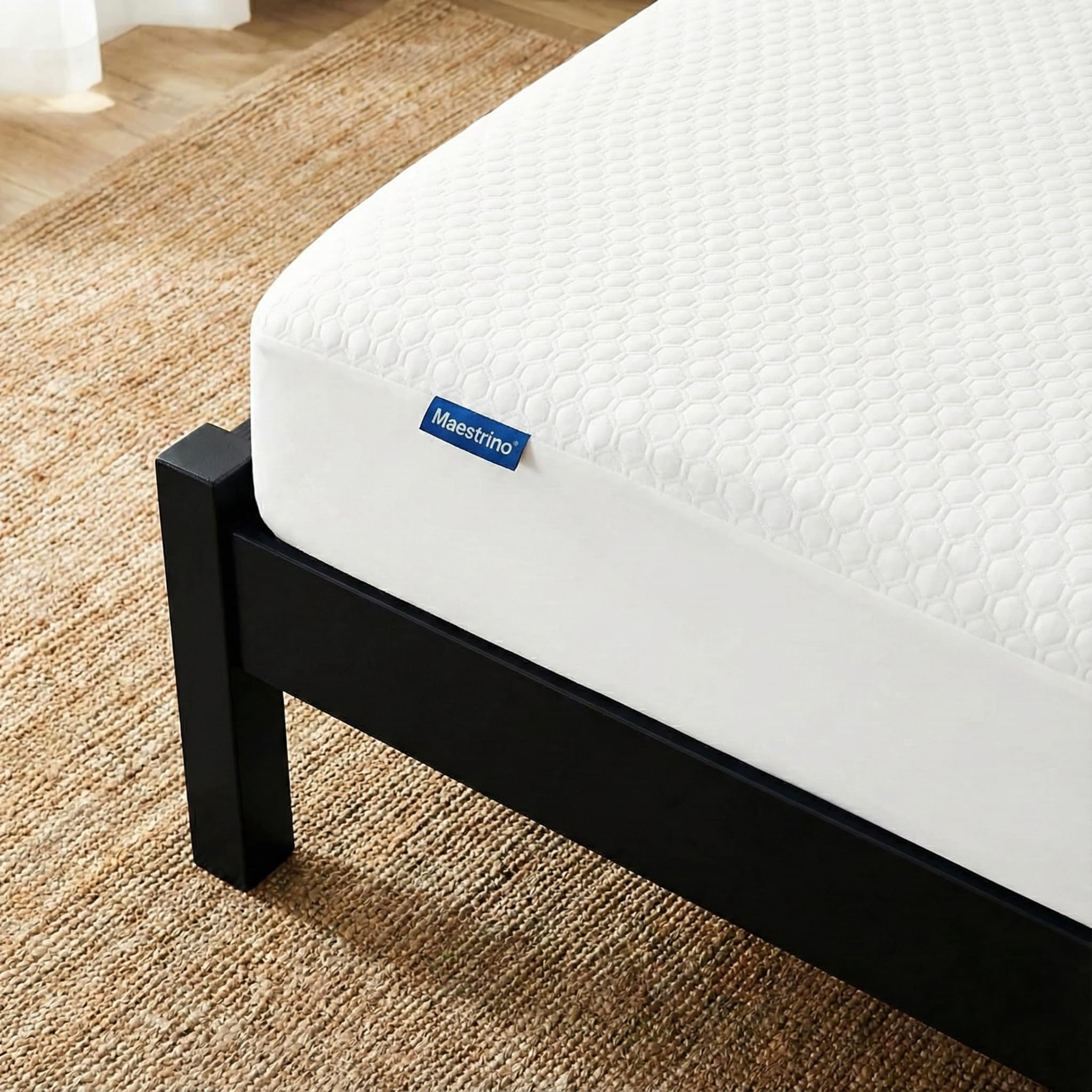
Maestrino prioritizes thermal regulation by using premium Tencel fibers, which are derived from sustainable wood pulp and possess natural moisture-wicking properties that outperform cotton in sweat evaporation. This is a meaningful advantage for hot sleepers who find standard waterproof protectors exacerbate night sweats. The Tencel construction is naturally hypoallergenic, meaning it resists dust mite colonization without needing chemical treatments.
The universal fit accommodates mattress depths from 6 to 20 inches, making it the most versatile option on this list for adjustable beds, thick pillow tops, or thin guest mattresses. The deep stretchy pockets and full elastic band ensure the protector stays taught without bunching or shifting. Oeko-Tex Standard 100 certification guarantees the Tencel fabric and waterproof membrane contain no banned chemicals or irritants.
The fitted sheet design does leave the mattress bottom exposed, so users with severe dust mite allergies should pair this with a zippered encasement on the underside or accept that some particle migration can occur through the bottom. The price sits in the upper-mid range, but the Tencel material commands a premium over cotton alternatives. Machine washing on cold and tumble drying on low preserves both the waterproof layer and the fabric’s smooth texture.
Why we love it
- Tencel fibers wick moisture and regulate temperature better than cotton
- Fits mattress depths from 6 to 20 inches — extremely versatile
- Oeko-Tex certified for zero harmful chemicals
Good to know
- Fitted design leaves the mattress bottom uncovered
- Tencel is more expensive than polyester or standard cotton
- Not recommended for ironing — heat damages the membrane
5. NORTHERNFARE Tencel Mattress Protector
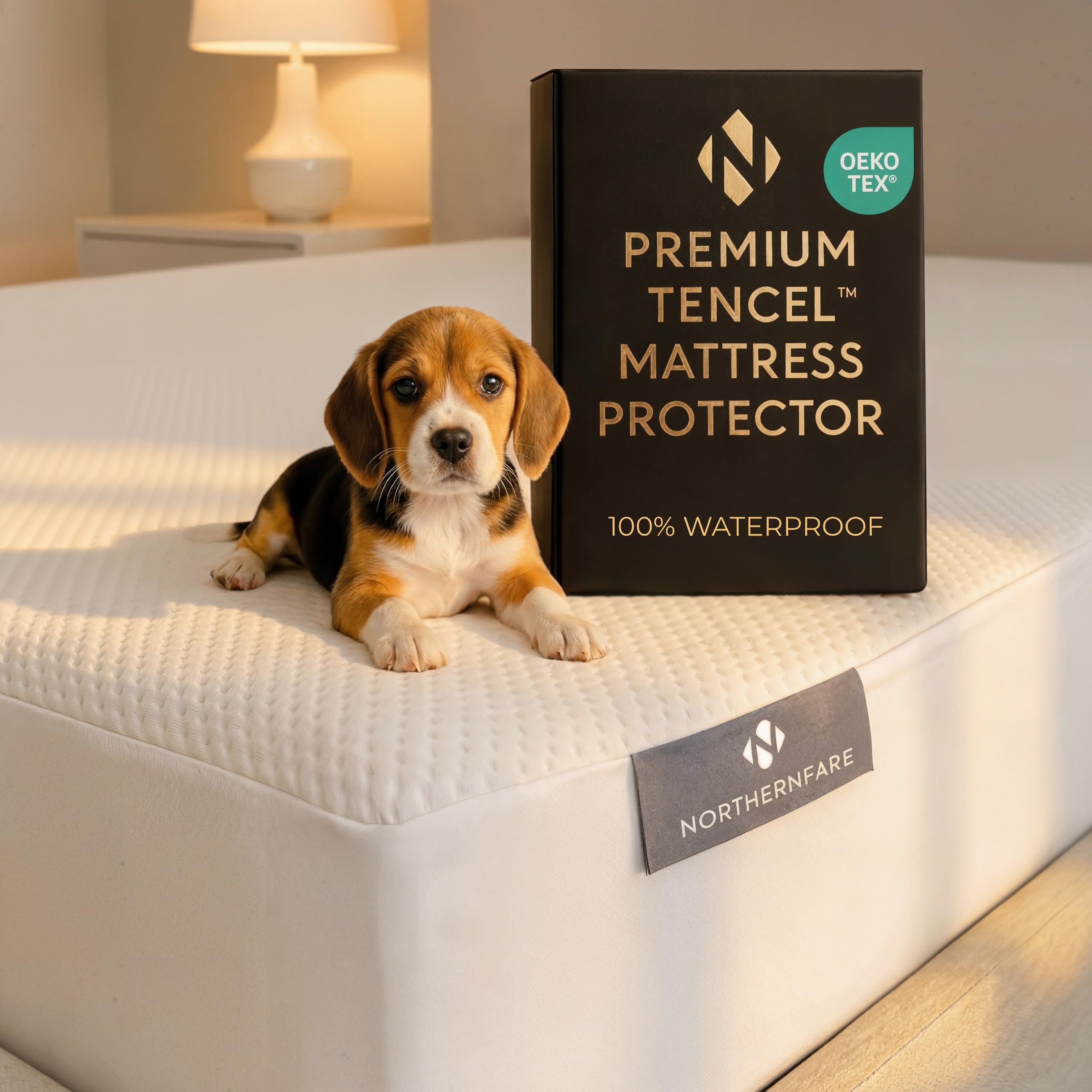
The NORTHERNFARE protector uses a triple-layer architecture with a cooling Tencel Jacquard top, a waterproof PU membrane core, and a polyester backing that keeps the layers stable during washing. The 31% Tencel content in the 69% polyester blend provides a smooth, noiseless surface that avoids the crinkle sound associated with lower-tier waterproof protectors. This is a practical consideration for light sleepers who are disturbed by fabric noise when turning over.
The 18-inch deep pocket design fits most modern mattresses, including memory foam and pillow-top models, with a snug perimeter that resists shifting. NORTHERNFARE emphasizes the OEKO-TEX 100 certification, confirming the finished product is free from over 100 regulated harmful chemicals. The hypoallergenic claim is supported by the Tencel fiber’s natural resistance to microbial growth and the PU barrier’s physical separation from mattress particles.
The blend fabric does not carry the same environmental or breathability credentials as 100% Tencel or organic cotton. The polyester content can reduce vapor permeability compared to all-natural fiber protectors, potentially trapping more heat for aggressive hot sleepers. The pull-on closure style means this is a fitted protector, not an encasement, so it offers less comprehensive allergen protection than a zippered six-sided model.
Why we love it
- Noiseless fabric — no crinkle or rustle during sleep
- Triple-layer construction adds durability through repeated washing
- OEKO-TEX 100 certified for chemical safety
Good to know
- Polyester blend reduces breathability compared to pure natural fibers
- Fitted design does not cover the mattress bottom
- Limited to 18-inch depth; thicker mattresses may not fit
6. Whisper Organics Organic Waterproof Mattress Protector

Whisper Organics brings GOTS certification to a more accessible price point, making organic cotton mattress protection attainable for buyers who want to avoid synthetic pesticides but cannot justify the cost of premium-tier organic options. The 180GSM pique top layer provides a textured, absorbent surface that feels substantial without being bulky, while the 140GSM jersey bottom layer adds a soft cradle against the mattress.
The waterproof PU barrier is sandwiched between the two cotton layers, which keeps the membrane away from direct skin contact and reduces the trapped-heat sensation common with single-layer waterproof covers. The fitted design with a pull-on closure makes installation straightforward — no wrestling with a zippered encasement. The 1-year return policy provides a safety net for first-time organic textile buyers who are unsure about fit or feel.
The Twin size configuration and 140 thread count indicate this is a lighter-weight construction than premium organic options. The 140GSM jersey bottom is less dense than the 200+ GSM fabrics used by Naturepedic, which may result in faster wear through repeated wash cycles. The fitted protector style still leaves the mattress bottom exposed, and the organic certification applies to the cotton but not necessarily to the PU membrane itself.
Why we love it
- GOTS certified organic cotton at a competitive price point
- Sandwiched PU barrier keeps membrane away from direct skin contact
- Simple pull-on design for quick installation
Good to know
- 140 thread count jersey is less durable than higher-density weaves
- Fitted protector does not encase the full mattress
- Only the cotton is certified organic — the PU membrane is not
7. Protect-A-Bed Premium Waterproof Mattress Protector

Protect-A-Bed anchors the value end of the spectrum with a straightforward cotton terry surface backed by a 100% waterproof barrier that serves as both an allergen block and a liquid shield. The cotton terry material absorbs surface moisture quickly, which is useful for households with young children or pets where spill accidents are common. The zipper closure provides a more secure fit than elastic pull-on styles, reducing the likelihood of the protector bunching or shifting during the night.
The dust mite and allergy barrier claim is based on the physical separation created by the waterproof laminate, which prevents particles from migrating upward from the mattress. The 10-year warranty against fabric and manufacturing defects adds long-term value that exceeds most protectors in this price tier. The fabric composition of cotton and polyester balances softness with dimensional stability through machine washing.
The cotton terry texture is thicker than microfiber or Tencel alternatives, which can slightly change the feel of the mattress surface. Some users report that the terry loops flatten after multiple wash cycles, reducing the plushness over time. The protector’s effectiveness as an allergen barrier depends entirely on the fitted zipper seal — it is not a six-sided encasement, so it provides less complete protection than the SureGuard or Mission: Allergy options.
Why we love it
- Cotton terry surface absorbs liquids quickly before they spread
- Zipper closure keeps the protector in place better than elastic alone
- 10-year warranty provides strong long-term coverage
Good to know
- Terry texture can feel bulky under fitted sheets
- Terry loops may flatten and lose plushness after repeated washing
- Fitted design, not a full encasement — mattress bottom is exposed
FAQ
Does a hypoallergenic mattress protector also block bed bugs?
How often should I wash a hypoallergenic mattress protector?
What fabric is best for hot sleepers with allergies?
Can I use a hypoallergenic protector with an electric blanket?
Do I still need a mattress protector if my mattress is already “hypoallergenic”?
Final Thoughts: The Verdict
For most sleepers, the best hypoallergenic mattress protector is the SureGuard Mattress Encasement because it combines a six-sided zippered seal, Greenguard Gold certification, and a comfortable cotton terry top at a mid-range price that balances value with comprehensive allergen blocking. If you prioritize zero-chemical organic materials for a sensitive respiratory system, the Naturepedic Organic Waterproof Mattress Protector is the cleanest option available. And for severe, clinically diagnosed dust mite or pet dander allergies that require verified pore-level separation, nothing beats the Mission: Allergy Premium Microfiber Encasing with its independent lab testing and lifetime warranty.