
That lingering ammonia smell near the litter box isn’t just unpleasant—it means your current disposal method is letting waste gases escape between scoops and change-outs. A real disposal system seals waste inside a multi-layer barrier the moment you scoop, preventing odor migration and keeping your home fresh for days longer than a standard pail and grocery bag setup ever could.
I’m Mo Mahin — the founder and writer behind Furric. I’ve spent months cross-referencing proprietary refill film thicknesses, sensor logic for self-cleaning rakes, waste bin capacities measured in liters, decibel ratings for motor noise, and thousands of aggregated owner reports to separate the systems that genuinely trap odors from those that just look like they do.
Whether you prefer a manual seal-and-toss pail or a fully automated self-cleaning unit with app tracking, knowing which materials, sensor arrays, and bin geometries actually perform determines whether your litter disposal system becomes a daily relief or a disappointing gadget that still smells.
How To Choose The Best Litter Disposal System
Picking the right system starts with understanding the two main approaches: manual pails that use proprietary refill liners to seal waste, and automated self-cleaning boxes that rake or sift waste into a sealed compartment. Your cat’s size, your daily schedule, and your tolerance for maintenance define which path delivers the best results.
Liner Technology and Odor Prevention
For manual pails, the liner’s layer count and thickness (measured in millimeters) determine how well it traps smells. A 7-layer barrier with a film thickness around 0.03mm provides superior leak protection and gas sealing compared to standard trash bags. The refill’s lifespan per cat—typically one to two months—dictates how often you must buy refills, affecting long-term cost.
Sensor Safety in Self-Cleaning Units
Automated systems rely on infrared, weight, and hall-effect sensors to detect a cat’s presence and halt the cleaning cycle. The best units use multiple sensor pairs for full-coverage monitoring, combined with mechanical limiters or touch-sensitive pedals. A system with at least 4 pairs of IR sensors plus weight sensors offers the most reliable protection against pinching or trapping a curious cat.
Waste Bin Capacity and Frequency of Emptying
The waste bin’s volume, measured in liters, directly determines how many days you can go between emptying. A 10L to 12L bin typically accommodates one cat for 10 to 15 days. Multi-cat households need larger bins or more frequent changes. The design of the bin—whether it uses disposable liners, a half-auto bag system, or direct dumping—affects how messy the emptying process feels.
Quick Comparison
On smaller screens, swipe sideways to see the full table.
| Model | Category | Best For | Key Spec | Amazon |
|---|---|---|---|---|
| CATLINK Open-X | Self-Cleaning | Health Tracking | 12L waste bin, 15 days | Amazon |
| PetPivot Open Top | Self-Cleaning | Safety Focus | 7-pair IR sensors, 20.6 lb | Amazon |
| Mimfam AS11 | Self-Cleaning | Quiet Operation | 32 dB, 10L waste bin | Amazon |
| Mintakawa | Self-Cleaning | App Control | Below 35 dB, 3.5-15 lb range | Amazon |
| FRCFRC | Self-Cleaning | Kitten Households | Below 35 dB, 3.3-20 lb range | Amazon |
| LUODIER | Self-Cleaning | Large Cats | 20 lb, 15-day capacity | Amazon |
| Litter Zero Base Set | Manual Pail | Budget Starter | 0.03mm liner, 7-layer | Amazon |
In‑Depth Reviews
1. CATLINK Self Cleaning Open-X
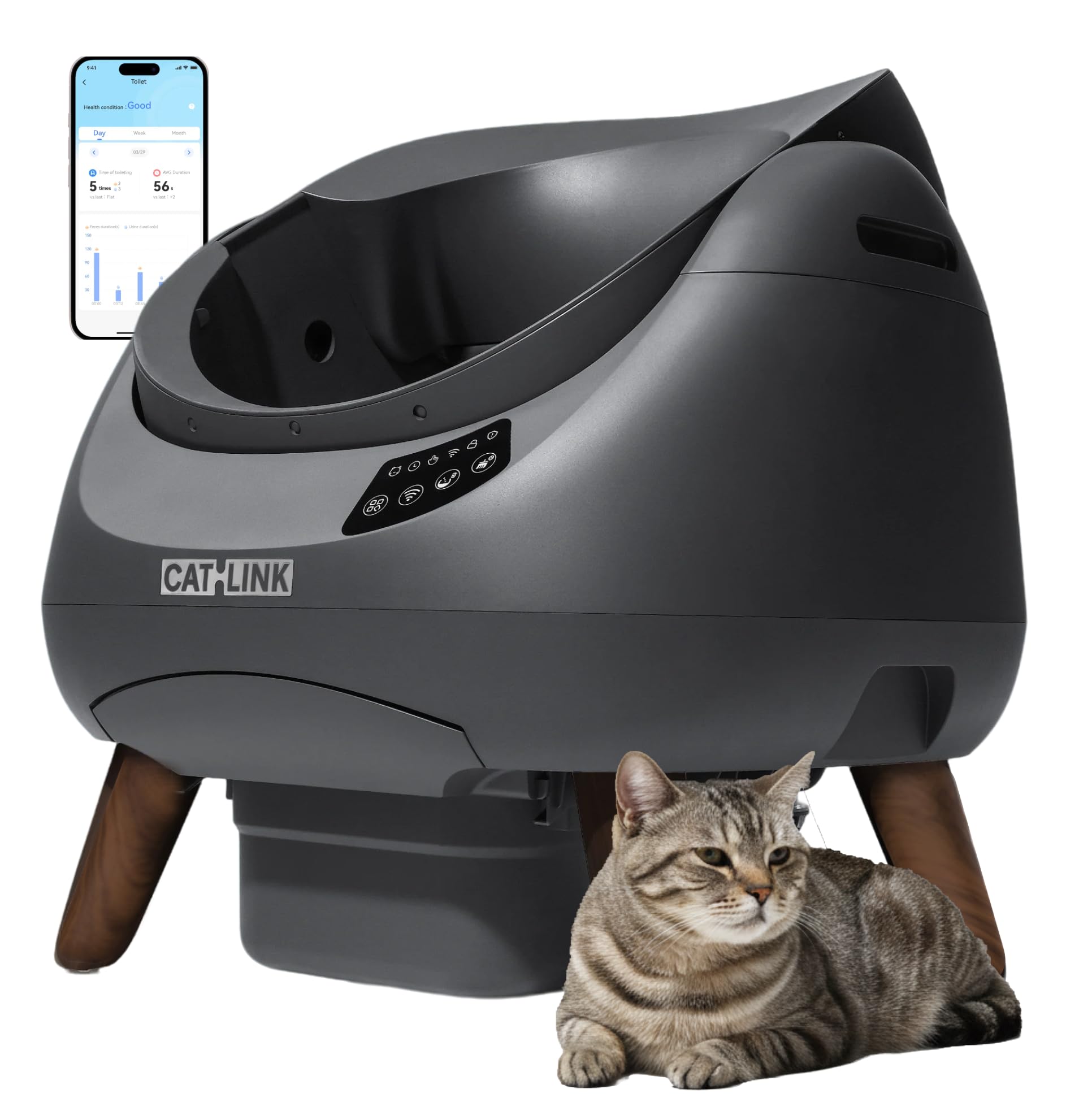
CATLINK’s Open-X stands apart with its AI-driven health monitoring that distinguishes urine from feces, then generates daily and weekly reports. For a single-cat household where you worry about urinary issues, tracking bathroom habits in the app provides early warnings that no other pail or basic self-cleaning unit offers. The 12L waste bin holds up to 15 days of waste, which aligns with the most generous capacity in this lineup.
The open-top design uses an incomplete gear mechanism that keeps the entrance always accessible, eliminating the pinch risk found in some rotating-drum boxes. Dual-band Wi-Fi (5GHz and 2.4GHz) prevents the connectivity complaints common with smart litter devices, and the half-auto trash bag system reduces contact with waste during disposal. Owners report that cats larger than 12 pounds turn around easily inside the 23-inch cubic footprint.
Multi-cat recognition requires a one-time paid upgrade in the app, so if you have more than one cat, budget for that extra. The health tracking feature is currently limited to single-cat identification out of the box. For a household with one cat and a willingness to use smart features, this is the most insightful self-cleaning system available.
Why we love it
- AI distinguishes pee from poop for health tracking
- Always-open entrance eliminates pinching risk
- 12L bin provides 15 days of capacity
Good to know
- Multi-cat ID requires paid app feature
- Single-cat health data only out of the box
2. PetPivot Open Top Self Cleaning Litter Box
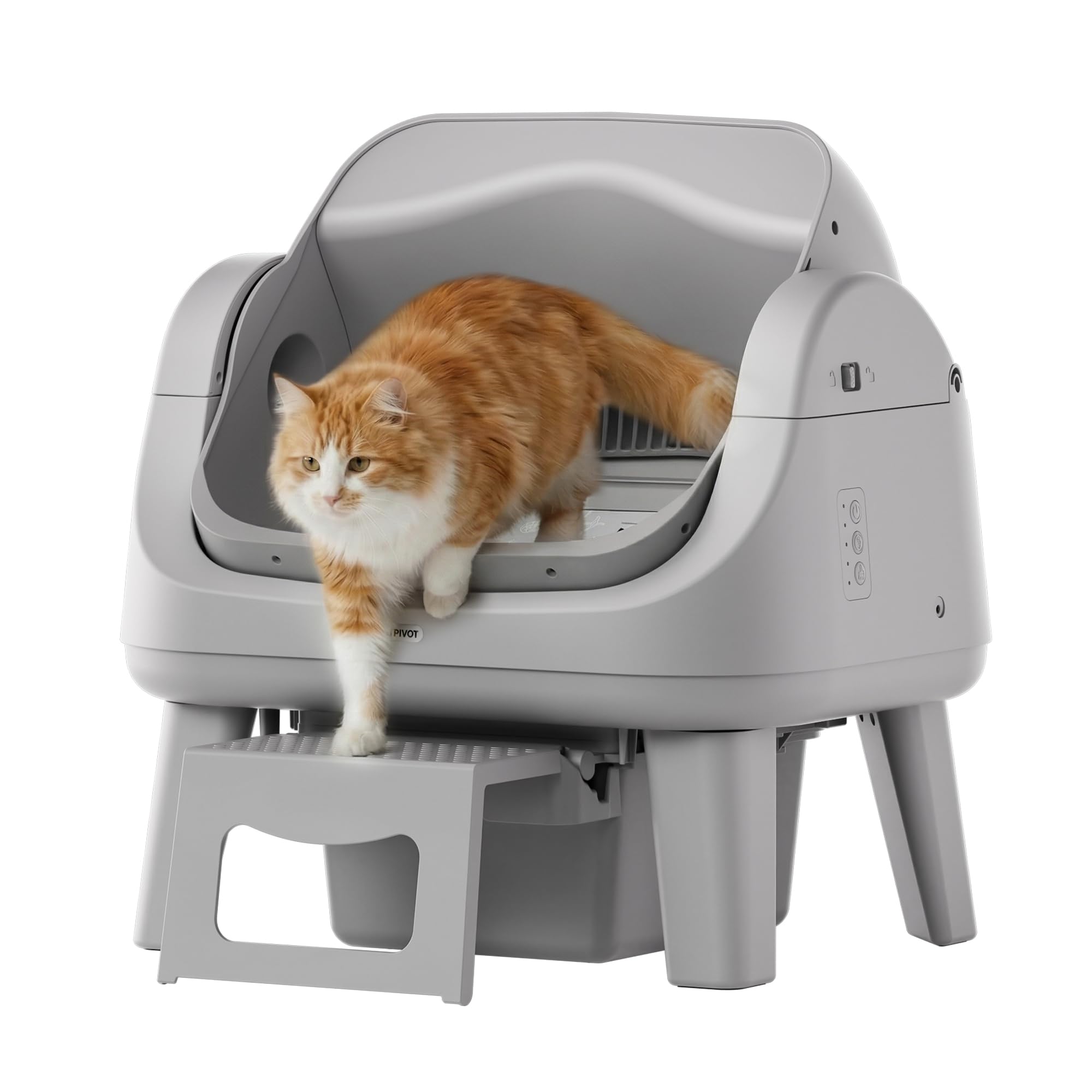
The PetPivot unit deploys a triple-layer safety system: 7 pairs of precision infrared sensors for full-coverage monitoring, a touch-sensitive safety pedal that halts rotation upon contact, and a mechanical limiter that restricts drum movement. This redundancy is the most comprehensive safety architecture in the mid-range self-cleaning category, making it ideal for nervous cat owners or homes with curious kittens.
Operated entirely without an app—no downloads, no subscriptions, no Wi-Fi pairing—this system appeals to anyone who wants set-it-and-forget-it reliability. A built-in clumping delay allows waste to fully solidify before the cleaning cycle begins, reducing pancaking and smearing on the drum walls. The open-top design includes a dedicated access step for senior cats, and the modular quick-release body disassembles without tools for deep cleaning.
The 21.06 x 15.75 x 21.85-inch footprint is moderate, and the 20.6-pound weight makes it stable but not difficult to reposition. Owners note that the lack of app control means no health tracking or remote scheduling, but the trade-off is absolute simplicity and a lower failure rate from connectivity issues.
Why we love it
- 7-pair IR sensors plus touch pedal plus limiter
- No app, no subscriptions required
- Clumping delay prevents smearing
Good to know
- No health tracking or remote control
- Access step is fixed, not adjustable
3. Mimfam Automatic Self Cleaning Litter Box AS11
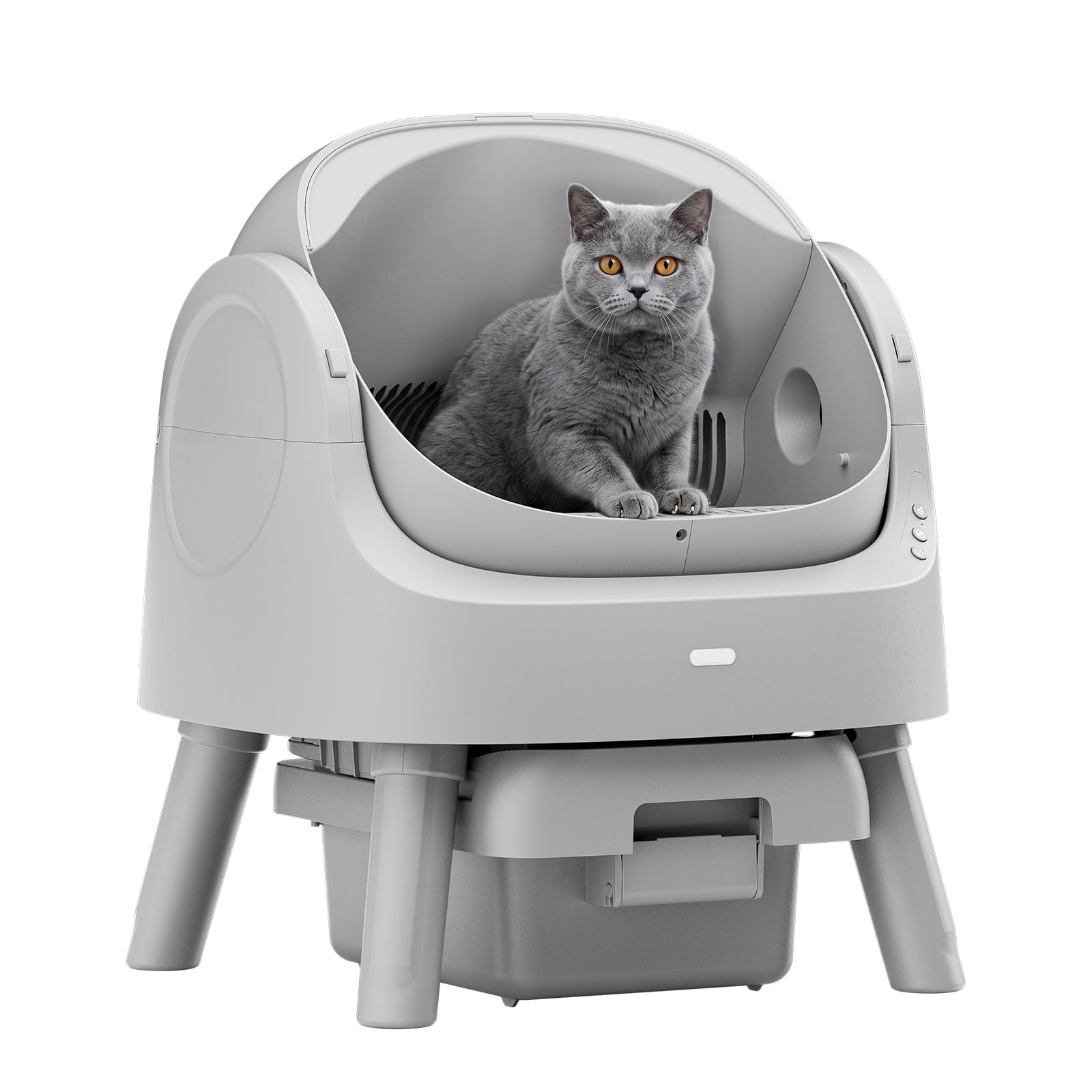
Operating at just 32 decibels, the Mimfam AS11 is the quietest self-cleaning unit in this comparison. That noise level is comparable to a whisper, which means the cleaning cycle won’t startle your cat or disturb your sleep if the box is placed in a bedroom or hallway. The 10L waste bin provides up to 10 days of capacity for a single cat, and the open-top entrance measures 16.33 by 15.35 inches for comfortable access.
Safety is handled by 4 pairs of infrared sensors plus 3 hall-effect sensors that halt the cleaning process the moment a cat re-enters. The top-entry design helps contain litter scatter, and the removable waste bin with disposable liners simplifies disposal. Owners report that large cats up to 22 pounds fit through the opening without issue, and the grey polypropylene construction resists odor absorption better than some painted plastics.
The AS11 lacks Wi-Fi or app connectivity, so all controls are physical buttons on the unit. The 24-inch height is taller than some competitors, so confirm the clearance in your intended placement location. For a household that prioritizes near-silent operation, this is the strongest choice.
Why we love it
- 32 dB whisper-quiet cleaning cycle
- 10L bin reduces emptying frequency
- 4 IR plus 3 hall-effect sensors
Good to know
- No app or remote control
- Tall design needs headroom clearance
4. Mintakawa Automatic Cat Litter Box
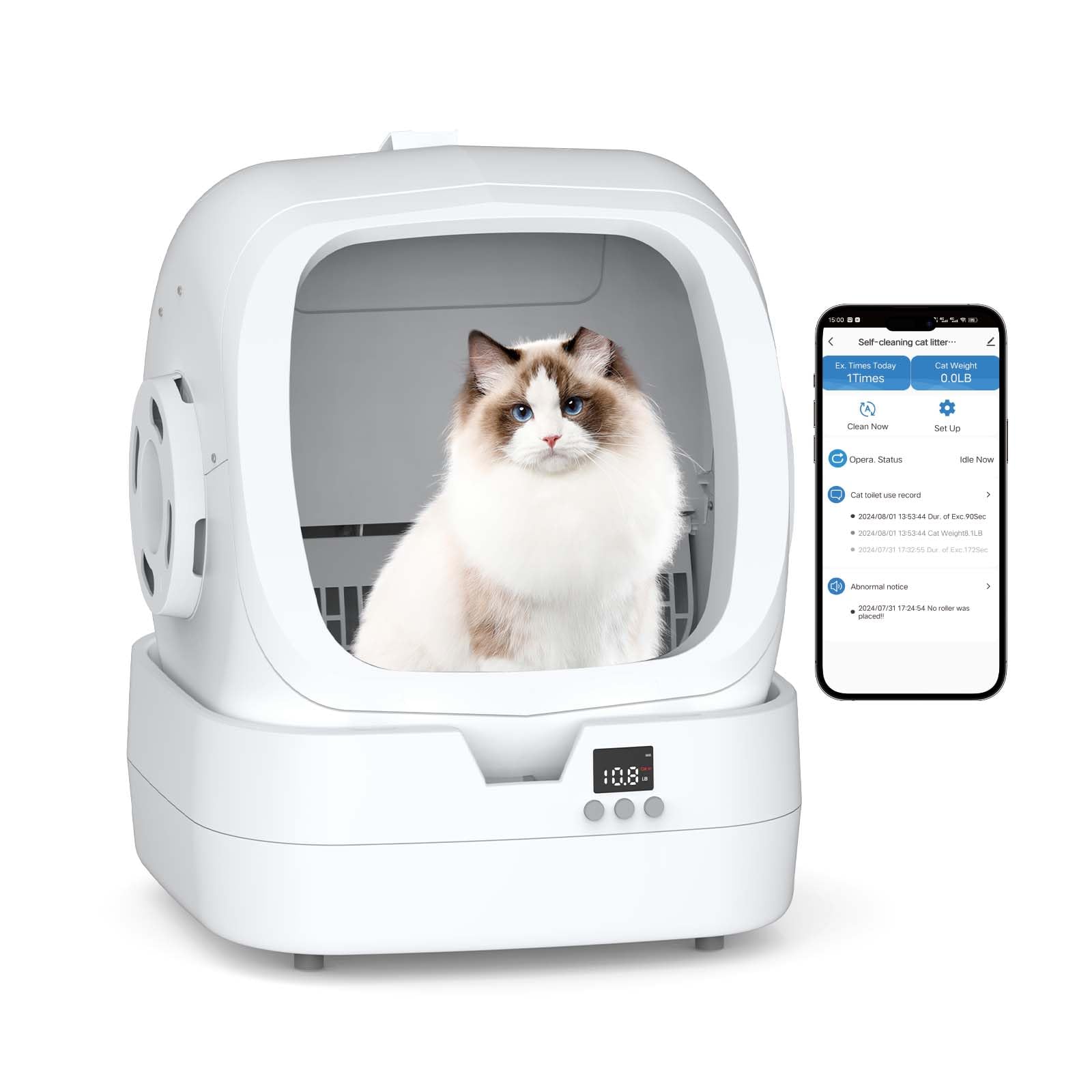
The Mintakawa unit brings app-based control including real-time weight monitoring, visit duration tracking, and frequency logs. The companion app connects via 2.4GHz Wi-Fi or Bluetooth, and the data helps you notice changes in your cat’s bathroom habits that might signal health issues. Operating noise stays below 35 decibels, making it nearly as quiet as the Mimfam while adding smart features.
Designed for cats weighing between 3.5 and 15 pounds, this system suits households with kittens and medium-sized adults. The washable drum removes for easy cleaning, and the adjustable cleaning delay lets you set how long the unit waits after your cat exits before starting the cycle. Assembly takes roughly 30 minutes, and owners report that the large opening encourages quick adaptation even from skeptical cats.
The 19.84 x 22.44 x 18.23-inch dimensions produce a relatively compact footprint for a self-cleaning box. Some owners note that the power cord is short, so the unit needs to be placed near an outlet. For cat owners who want app insight without paying flagship prices, this delivers strong value.
Why we love it
- App tracks weight, duration, and frequency
- Below 35 dB noise level
- Adjustable cleaning delay
Good to know
- Short power cord limits placement
- Assembly takes about 30 minutes
5. FRCFRC Automatic Self Cleaning Cat Litter Box
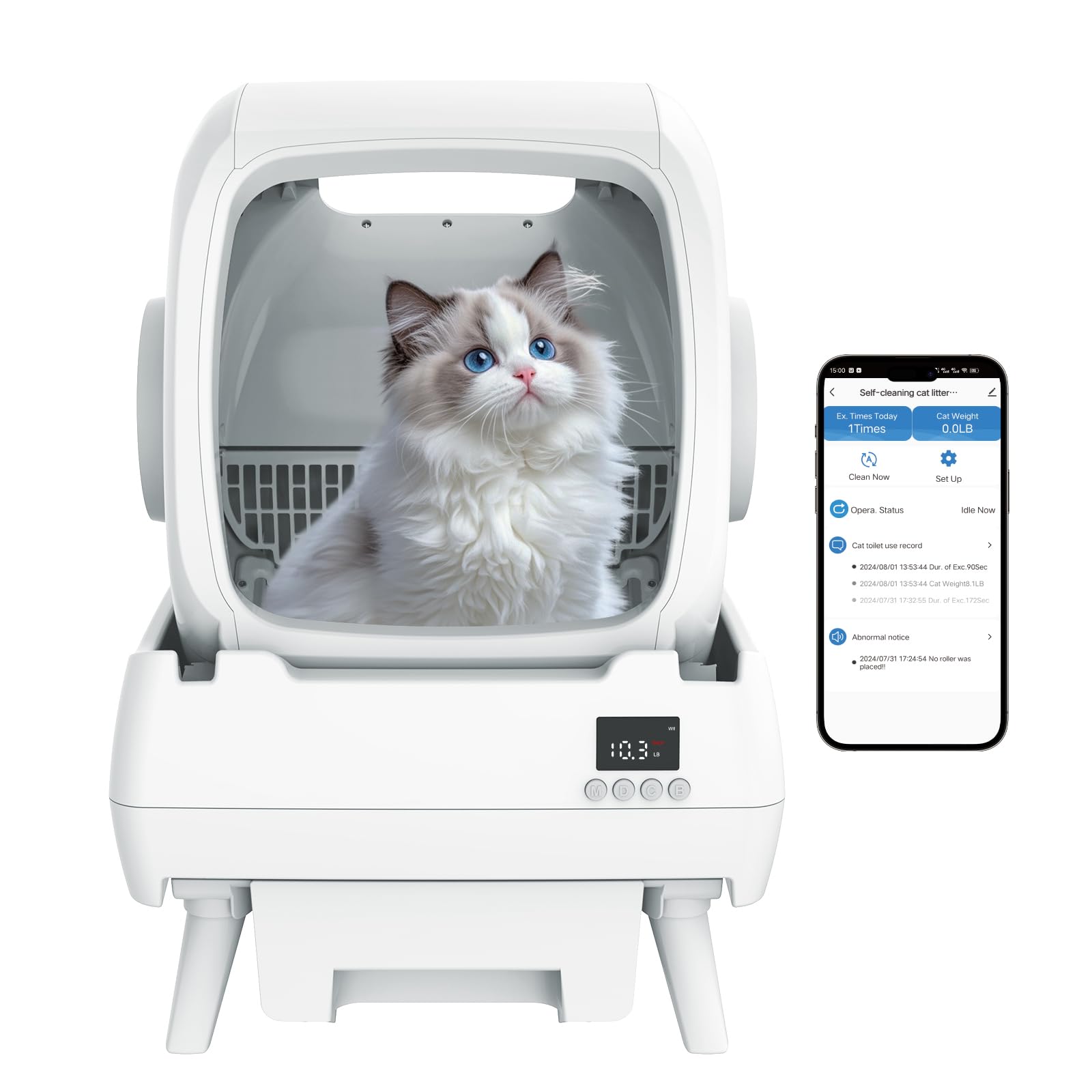
The FRCFRC unit supports cats from 3.3 pounds up to 20 pounds, giving it the widest weight range among the self-cleaning options here. That makes it suitable for households with both a growing kitten and a full-grown adult cat. The companion app delivers real-time tracking of your cat’s weight, toilet duration, and visit frequency, all via 2.4GHz Wi-Fi or Bluetooth connection.
Noise output stays below 35 decibels, which is consistent with the quietest units in this class. The washable drum design allows you to lift out the entire rotating compartment for thorough cleaning, preventing odor buildup in crevices. Owners report that the open-top and front-exit configuration helps cats who dislike enclosed spaces adapt within a day or two.
The assembly process takes about 90 minutes according to the manufacturer—longer than most competitors—so plan for that upfront time investment. The 14.96 x 20.47 x 20.47-inch footprint is relatively compact, but the drum size may feel tight for very large cats above 18 pounds. For kitten-to-adult transitions, this system covers the full growth arc.
Why we love it
- 3.3 to 20 lb weight range fits kittens through adults
- Below 35 dB quiet operation
- Washable drum for deep cleaning
Good to know
- Assembly takes about 90 minutes
- Drum may feel tight for cats over 18 lb
6. LUODIER Automatic Litter Box
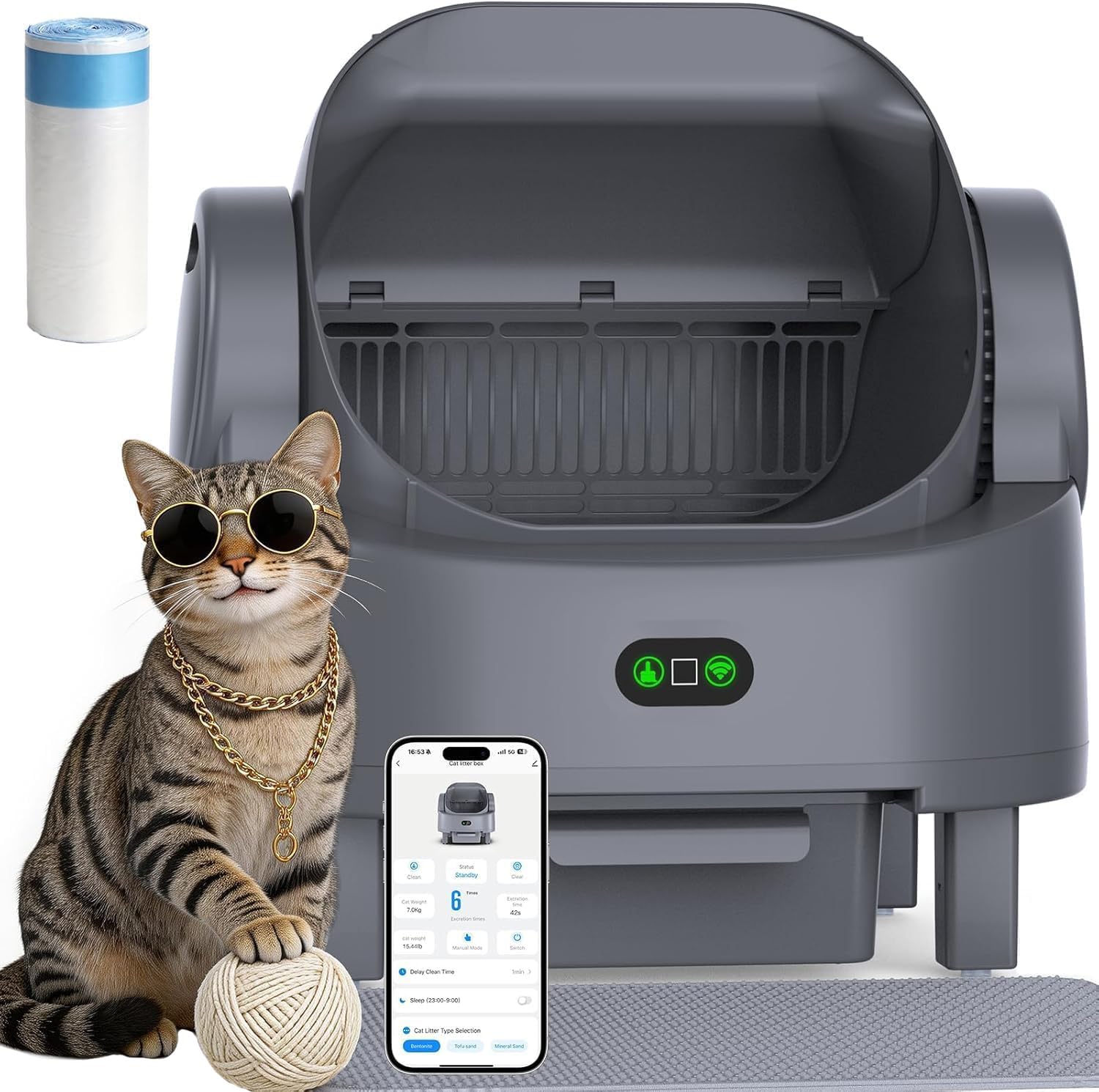
The LUODIER unit delivers an 18.8 x 15.6 x 18.8-inch open-top design that accommodates larger cats comfortably. Its waste bin holds up to 15 days of waste for a single cat, reducing the frequency of disposal trips. Infrared plus weight sensors detect cat presence and pause cleaning automatically, providing reliable safety without an app interface.
Emptying follows a simple pull-tie-toss workflow: pull the trash bag liner, tie it closed, and toss it in 30 seconds. The included litter mat helps capture tracked granules, and the scented gel control adds a layer of odor management. Owners report that the open front and wide entry encourage immediate use, even for cats accustomed to traditional boxes.
The 20-pound weight gives the unit stability during the cleaning cycle. The lack of app connectivity means no health tracking or remote scheduling, but the straightforward mechanical operation reduces potential failure points. For a household that values large capacity and simple emptying above smart features, this is a solid mid-range pick.
Why we love it
- 15-day waste capacity reduces emptying
- Open front suits large cats
- 30-second pull-tie-toss disposal
Good to know
- No app or remote control
- Litter mat is smaller than ideal
7. Litter Zero Base Set
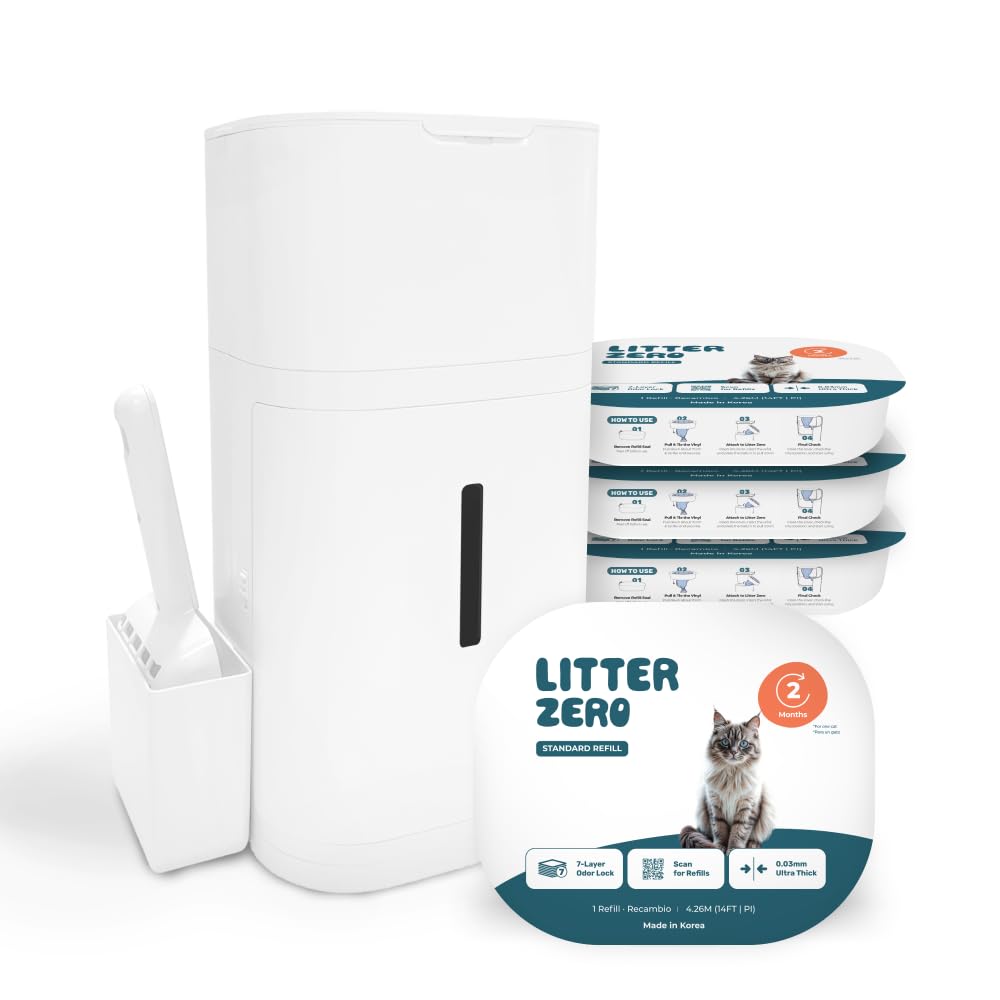
The Litter Zero Base Set is a manual pail system that uses a 7-layer odor-locking refill liner with a thickness of 0.03mm. Each refill lasts up to two months per cat, making the ongoing cost predictable and relatively low compared to self-cleaning units. The complete starter bundle includes the main unit plus one additional refill, giving you two liners to begin with immediately.
The modern minimalist design in white fits discreetly beside most litter boxes, and the 10.24 x 9.25 x 18.11-inch footprint is compact enough for tight corners. The included scoop features high-quality construction, and the lever-operated dispensing mechanism seals waste without direct hand contact. Owners transitioning from standard litter genies praise the Litter Zero for its sturdier build and easier refill system.
With two cats, the 2-month refill estimate shrinks significantly—some owners report filling the pail in two days. The scoop tray does not snap into place; it rests in a slot, which can feel less secure. For a single-cat household on a tight budget, this manual system delivers reliable odor control without the complexity or cost of an automated box.
Why we love it
- 7-layer 0.03mm liner seals odors effectively
- Compact footprint fits small spaces
- Low upfront and refill cost
Good to know
- Two cats fill pail every 2 days
- Scoop tray rests in slot, does not snap
FAQ
Do self-cleaning litter boxes work with all types of cat litter?
How often should I fully deep clean a self-cleaning litter box?
Why does my manual pail still smell even with the liner sealed?
Final Thoughts: The Verdict
For most cat owners, the litter disposal system winner is the CATLINK Open-X because it combines the largest waste capacity with AI health monitoring that no other self-cleaning box in this range offers. If your priority is absolute safety and simplicity without an app, grab the PetPivot Open Top. And for whisper-quiet operation that won’t disturb your household, the Mimfam AS11 is the strongest performer.