
A box turtle’s shell health and activity level hinge on one overlooked foundation: the material under its feet. The wrong substrate leads to respiratory issues, incomplete sheds, and constant stress that shortens lifespan. Getting the moisture balance and texture right transforms an enclosure from a holding tank into a functional habitat.
I’m Mo Mahin — the founder and writer behind Furric. I spend my time cross-referencing horticultural science with terrarium husbandry data, dissecting particle size distributions and moisture retention curves to separate marketing claims from genuinely functional substrates.
Whether you keep Easterns or Ornates, selecting the right substrate for box turtle determines whether your setup retains enough humidity for proper shell growth without inviting fungal problems that plague stagnant bedding.
How To Choose The Best Substrate For Box Turtle
Box turtles dig, burrow, and absorb moisture through their skin and shell. The substrate must hold humidity between 60–80%, allow tunneling without collapsing, and resist mold formation. Generic potting soil or bark chips fail on one or more of these fronts. Here are the specific factors that separate safe bedding from dangerous fill.
Particle Size and Burrow Stability
Fine particles like sand or dust cause eye irritation and respiratory blockage when kicked up during digging. Oversized bark chunks prevent turtles from covering themselves fully. The ideal substrate uses particles between 1–4 mm — large enough to stay put, small enough to shape burrows. Coconut chips (2–6 mm) and coir fiber (0.5–3 mm) strike this balance. Avoid walnut shell or perlite-laced mixes that pose impaction risks if ingested.
Moisture Retention Without Waterlogging
Box turtles require damp substrate, not wet substrate. The material should hold moisture at 50–70% saturation when squeezed, releasing visible droplets but not dripping. Coco coir absorbs up to 8–10 times its dry weight in water, making it the standard for humidity control. Topsoil alone compacts and forms anaerobic pockets when wet, which can breed harmful bacteria. Look for substrates with air porosity above 25% — coir typically delivers 30–35% porosity when properly hydrated.
Organic Purity and Salt Content
Low-quality coconut products often contain residual sea salts that desiccate amphibians and reptiles. High electrical conductivity (EC above 0.8) indicates insufficient washing. Premium coir is triple-washed to bring EC below 0.5, safe for direct contact with turtle skin and soft tissue. Avoid any product listing added fertilizers, wetting agents, or synthetic dyes. The safest substrates are 100% organic with no chemical processing documented on the label.
Quick Comparison
On smaller screens, swipe sideways to see the full table.
| Model | Category | Best For | Key Spec | Amazon |
|---|---|---|---|---|
| Riare 10LB Coconut Chip | Expanded Chip | Large enclosures needing deep burrow zones | 10 lb block expands to 72 quarts | Amazon |
| Vivlly Coco Coir Brick | Fine Fiber | Humidity-sensitive box turtles | EC <0.5 (low salt), 75 qt expansion | Amazon |
| ReptiChip Coconut Chip | Medium Chip | Arid-to-tropical hybrid setups | 12 qt loose chips, ready-to-use | Amazon |
| Legigo Compressed Coir | Compressed Brick | Budget multi-use terrarium bedding | 4 bricks, 1.4 lb each, odor-absorbing | Amazon |
| Scotts Premium Topsoil | Soil Blend | Bioactive mixes with drainage layer | 0.75 cu ft, sphagnum peat moss | Amazon |
In‑Depth Reviews
1. Riare 10LB Coconut Chip Substrate

This 10-pound compressed block delivers the highest raw volume in the comparison — a single brick expands to 72 quarts, enough to fill a 40-gallon breeder tank to a depth of 4–5 inches. The coconut chips measure roughly 2–6 mm after hydration, providing enough structure for box turtles to dig stable burrows without the substrate collapsing onto them. The material absorbs water quickly, swelling to a damp-but-not-wet consistency that holds 65–75% humidity for 3–4 days between mistings.
The odor-control performance stands out among the coconut-based options. The chips trap ammonia from waste decomposition effectively, reducing the need for full substrate changes to every 4–6 weeks in a well-maintained enclosure. The loose, textured surface mimics forest floor conditions, allowing natural digging and foraging behaviors. No chemical additives or synthetic binders are present in the formulation.
Hydration requires some planning — the brick needs 3–4 quarts of warm water and a 20-minute soak time before it crumbles apart. The final moisture level depends on how much water you squeeze out, giving you control over the exact saturation point. For keepers running multiple enclosures or a large bioactive setup, the cost-per-quart ratio beats smaller bags by a wide margin.
Why we love it
- Expands to 72 quarts for deep substrate layers.
- Chip size holds burrow shape without collapsing.
- Low residual dust after expansion.
Good to know
- Requires warm water and 20 min to fully hydrate.
- Not suitable as the sole top-dressing for humid hides.
2. Vivlly Coco Coir Brick 10 LB

This 10-pound coir brick expands to 75 quarts — slightly more volume than the Riare block — and the fine fiber texture is notably softer against turtle skin. The triple-wash processing brings electrical conductivity below 0.5, which means virtually no residual sea salt that could draw moisture away from your turtle’s eyes or cloaca. For keepers who prioritize avoiding any risk of osmotic dehydration, this is the cleanest option on the list.
The fiber size ranges from 0.5 mm to 3 mm, creating a fluffy, peat-like consistency that holds moisture at 70% saturation for extended periods. This fine texture makes it particularly effective in humid hides where water droplets should cling to the surface rather than pooling at the bottom. The neutral pH range of 5.5–6.5 matches the slightly acidic conditions box turtles encounter in wild leaf litter, reducing the chance of skin irritation.
Air porosity sits around 30%, which prevents anaerobic compaction even when the substrate stays damp for a week. The main trade-off: the fine fibers track out of the enclosure more easily than chip-style substrates, especially if your turtle climbs decor near the rim. Spot-cleaning is straightforward because waste sits on top of the fiber rather than absorbing deep into the layer.
Why we love it
- Triple-washed to ultra-low salt levels safe for sensitive reptiles.
- 75-quart expansion covers deep setups economically.
- Fine fiber texture ideal for humid hide environments.
Good to know
- Fine particles may stick to turtle feet and track out.
- Must be fully hydrated before introducing animals.
3. RediChip Reptile Bedding Coconut Chip 12 Quart

This 12-quart bag of loose coconut chips eliminates the soak-and-expand step entirely — open the bag and pour directly into the enclosure. The medium chip size (3–6 mm) provides the best balance between burrow stability and surface softness, making it suitable for both arid and tropical box turtle species. Add water for humidity-dependent setups or use it dry for species that prefer lower moisture levels.
The chips are sorted and refined in the United States, which translates to noticeably less dust and debris compared to imported coir products that often contain pebbles or fiber clumps. The loose texture allows turtles to dig without resistance, and the chips retain enough structure to maintain tunnel openings for 5–7 days before settling. Odor control is adequate for a single turtle in a 20-gallon tank over a two-week period.
The ready-to-use format comes at a convenience premium — the cost-per-quart is higher than compressed bricks. At 12 quarts, this bag covers a 20-gallon enclosure to a depth of about 2 inches, which is slightly shallow for species that require 4+ inches of burrow depth. You will need two bags for a deep bioactive layer. For keepers who dislike measuring water volumes, the immediate usability justifies the price difference.
Why we love it
- No hydration prep required — pour straight into the tank.
- Medium chips balance burrow support with softness.
- Low dust content after US-based refining process.
Good to know
- Only 12 quarts per bag — shallow depth for large enclosures.
- Higher cost per quart compared to compressed bricks.
4. Legigo 4 Pack Compressed Coconut Fiber Substrate
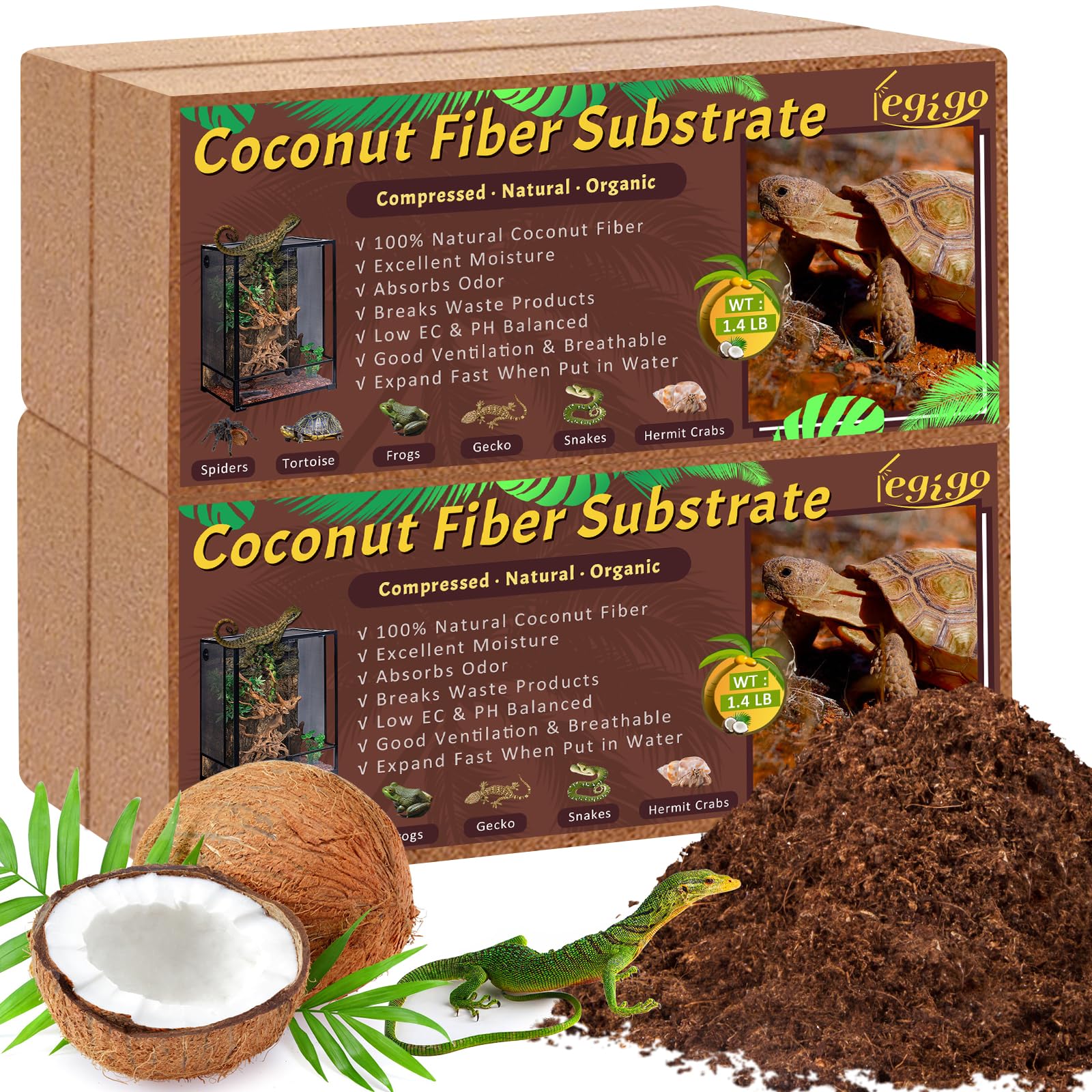
This four-pack of compressed coconut fiber bricks offers the lowest entry point for keepers who want to test coir-based substrate without committing to a large single block. Each 1.4-pound brick expands to roughly 5–6 quarts, giving a combined volume of 20–24 quarts across the pack — sufficient for a 15-gallon enclosure at 3 inches depth. The fiber texture is fine and fluffy after hydration, similar to the Vivlly coir but with slightly more visible dust during the initial expansion.
The odor-absorbing performance works well for smaller setups housing single turtles. The fine fiber traps waste particles near the surface, making spot-cleaning efficient for the first two weeks. After that, the substrate starts to compress in high-traffic areas, requiring fluffing or partial replacement. The natural coconut material contains no chemical additives or dyes, and the bricks break apart easily by hand after a 10-minute soak.
The trade-off for the low price is batch consistency. Some bricks expand to slightly different volumes depending on how tightly they were compressed at the factory. For keepers who mix this with topsoil or sphagnum moss to create a custom blend, the variability is negligible. For pure-coir setups, you may need to rehydrate the bricks individually to hit the same moisture level across the enclosure.
Why we love it
- Low-cost entry to test coir before buying bulk.
- Individual bricks allow gradual hydration control.
- Odor absorption works well in small setups under 20 gallons.
Good to know
- Slight dust during hydration compared to premium bricks.
- Brick expansion volume can vary between packs.
5. Scotts Premium Topsoil .75-Cu. Ft.

This 0.75-cubic-foot bag of Scotts topsoil brings real dirt into the mix — literally. The blend includes sphagnum peat moss and organic matter, creating a dense, dark substrate that mimics the texture of forest floor soil. For keepers building a bioactive enclosure with isopods and springtails, this topsoil provides the mineral content that coconut coir lacks. The weight is substantial — 26 pounds per bag — so it stays put when turtles dig and burrow.
The moisture retention profile differs from coir-based options. This topsoil holds water in the spongy peat moss fraction but drains through the mineral soil faster, preventing waterlogging at the bottom of the substrate layer. A 3-inch layer in a 40-gallon tank maintains 50–60% humidity for 2–3 days, requiring more frequent misting than pure coir setups. The trade-off is reduced anaerobic compaction risk over long-term use.
The primary limitation for box turtle use is the particle size distribution — this is garden topsoil, not terrarium substrate. It contains small wood chips and perlite-like particles that can pose ingestion risks for juvenile turtles. The bag is also unsterilized, meaning it may introduce fungal spores or soil mites into the enclosure. Sifting the soil through a ¼-inch mesh before use removes the larger debris and reduces contamination risk.
Why we love it
- Excellent mineral base for bioactive cleanup crews.
- Dense texture resists collapse from deep digging.
- Large 0.75 cu ft bag covers big enclosures affordably.
Good to know
- Contains wood chunks that require sifting for juveniles.
- Unsterilized — may introduce spores or mites.
FAQ
Can I use garden soil straight from the bag for box turtles?
How deep should the substrate layer be for an adult box turtle?
What is the difference between coconut fiber and coconut chips for humidity?
Why does my coconut substrate develop a white fuzzy layer?
Final Thoughts: The Verdict
For most keepers, the substrate for box turtle winner is the Riare 10LB Coconut Chip Substrate because it delivers the highest volume-to-cost ratio with chip sizes that hold burrow structure without dust issues. If you want the lowest salt content for sensitive reptiles, grab the Vivlly Coco Coir Brick. And for instant setup without any hydration work, nothing beats the RediChip Loose Coconut Chip Bag.