
Finding a reliable milk replacement for a newborn puppy feels urgent because it is. A weak, fading pup or a large litter draining the mother demands a formula that mimics real canine milk in protein, fat, and digestibility — not a generic supplement that triggers diarrhea or fails to support weight gain. The wrong choice sets back development during the critical first weeks of life.
I’m Mo Mahin — the founder and writer behind Furric. I’ve spent years digging into the nutritional chemistry of commercial puppy formulas, cross-referencing labeled NFEs, crude fat percentages, and probiotic CFU counts against verified owner feeding experiences to separate genuinely balanced replacers from thin imitations.
This guide breaks down five rigorously vetted options to help you choose a high-quality puppy milk replacement that supports steady growth and gentle digestion right from the first bottle.
How To Choose The Best Puppy Milk Replacement
Newborn puppies depend entirely on milk for the first three to four weeks. A formula that diverges from bitch’s milk in macronutrient balance, calorie density, or digestive support can lead to poor weight gain, dehydration, or fatal hypoglycemia. Focus on these four factors to narrow the field.
Protein and Fat Ratio
Bitch’s milk typically contains roughly 33% protein and 33% fat on a dry-matter basis. A replacer that skews too high in carbohydrates or too low in fat forces the puppy to burn protein for energy instead of building tissue. Look for guaranteed analysis values that list crude fat at 30-40% and crude protein at 30-35% on a dry-matter basis.
Probiotic and Enzyme Content
A newborn’s digestive tract is sterile at birth and colonizes rapidly. Formulas with added probiotics (such as Enterococcus faecium or Bacillus subtilis) and digestive enzymes help populate the gut with beneficial bacteria, reducing the risk of diarrhea that can spiral into a life-threatening condition within hours. Products listing colony-forming units (CFUs) per gram give you a measurable benchmark.
Protein Source — Goat Milk vs. Cow Milk
Whole goat milk protein contains smaller fat globules and a different casein structure than cow milk, making it naturally easier for puppies to break down. If you are dealing with a litter known for sensitive stomachs or a history of loose stools, a goat-milk-based formula is often the safer starting point. Standard cow-milk isolates can work well but require a more precise mixing ratio.
Calorie Density and Feeding Convenience
Puppies need roughly 15-20 kcal of energy per ounce of body weight per day during the first week. A formula that delivers 1.0-1.2 kcal per mL when mixed at the recommended ratio reduces the number of feedings needed to meet that requirement. Powders that clump, resist dissolving, or clog bottle nipples create a real safety hazard by reducing intake and frustrating the puppy.
Quick Comparison
On smaller screens, swipe sideways to see the full table.
| Model | Category | Best For | Key Spec | Amazon |
|---|---|---|---|---|
| Dogzymes Puppy-Bac (2 lb) | Premium | Breeders raising multiple litters | 441 million CFU/g of live enzymes | Amazon |
| Dogzymes Puppy-Bac (8 oz) | Premium | Single-litter supplement or starter | Low-clump mix, 1:4 ratio | Amazon |
| Pet-Ag Goat’s Milk Esbilac | Mid-Range | Puppies with sensitive digestion | Whole goat milk protein base | Amazon |
| Zesty Paws Puppy Milk Replacer | Mid-Range | Older puppies and daily nutrition boost | Colostrum + DHA + Omega 3 & 6 | Amazon |
| Nutri-Vet Milk Replacer | Budget | Emergency backup for small litters | Opti-Gut probiotic blend | Amazon |
In‑Depth Reviews
1. Dogzymes Puppy-Bac Milk Replacer (2 Pound)
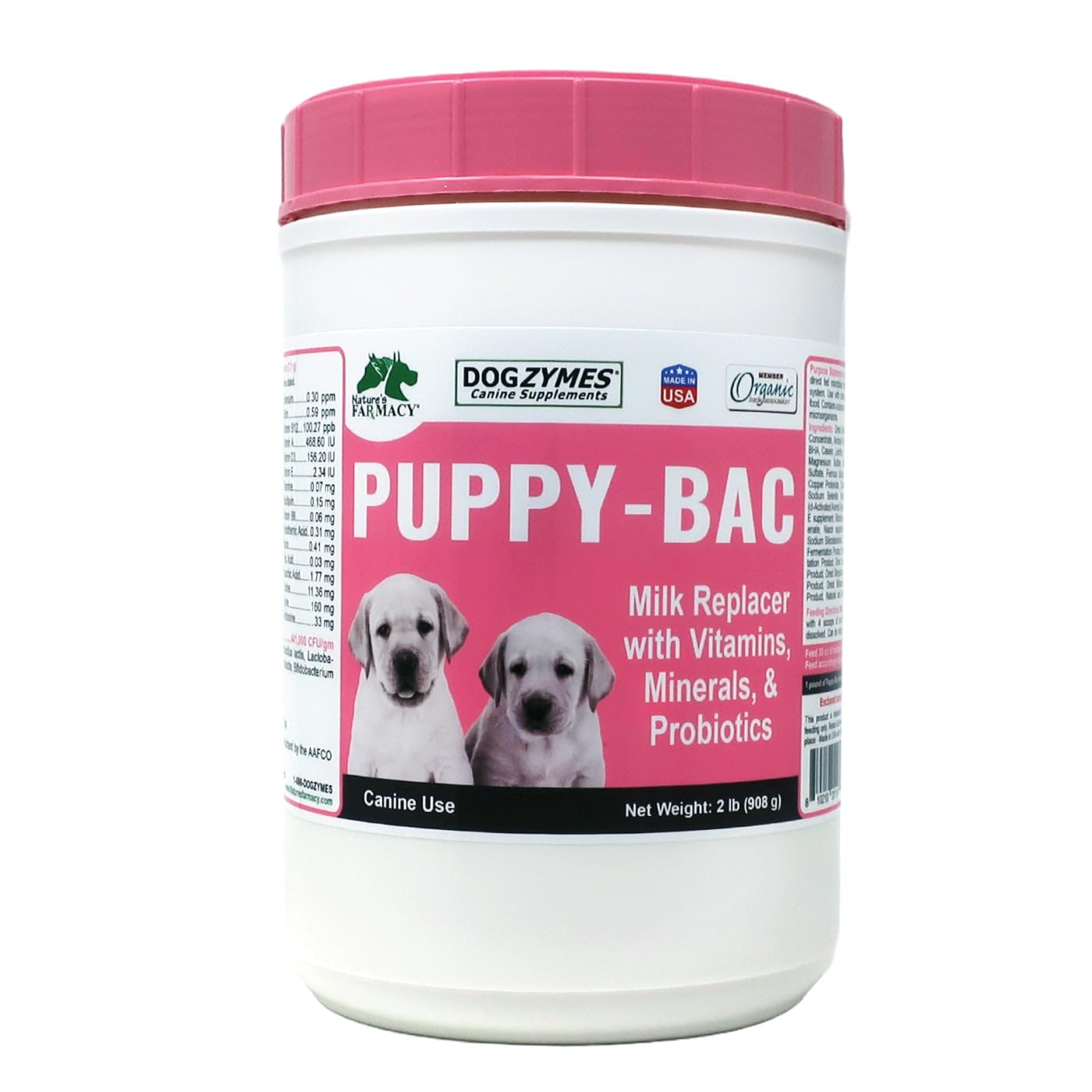
Dogzymes Puppy-Bac in the two-pound jar is the highest-CFU formula in this lineup, delivering 441 million CFU per gram of live microorganisms and enzymes — a figure that directly supports rapid gut colonization in newborns. The 1:4 powder-to-water ratio produces a thinner consistency than most competitors, which prevents frustrating nipple clogs during bottle feeding and mimics the flow rate of natural bitch’s milk. Breeders regularly report that puppies maintained steady weight gain even when switched from other brands specifically because of this formula’s digestibility.
The protein and fat ratios are calibrated to match canine milk rather than bovine milk, which reduces the osmotic load on a puppy’s immature kidneys. Multiple verified buyers note that the mother dog also consumed this formula while recovering from eclampsia, and her system tolerated it well. The two-pound size covers a full litter through the weaning transition, making it the most economical high-end choice for anyone raising more than one puppy.
The sweet, vanilla-like aroma is a genuine advantage — picky feeders that rejected other formulas often accept Puppy-Bac within the first two attempts. The jar packaging keeps the powder dry between feedings, though you will want to store it in a cool cabinet to preserve enzyme potency. For volume, enzyme density, and smooth mixing, this is the top-tier option that justifies its position at the top of the list.
Why we love it
- Highest live microorganism count per gram on this list
- Thin, non-clogging consistency ideal for bottle nipples
- Economical jar covers multiple litters
Good to know
- Requires precise 1:4 ratio — a kitchen scale helps
- Some users wish the label listed exact crude fat percentage
2. Dogzymes Puppy-Bac Milk Replacer (8 Ounce)
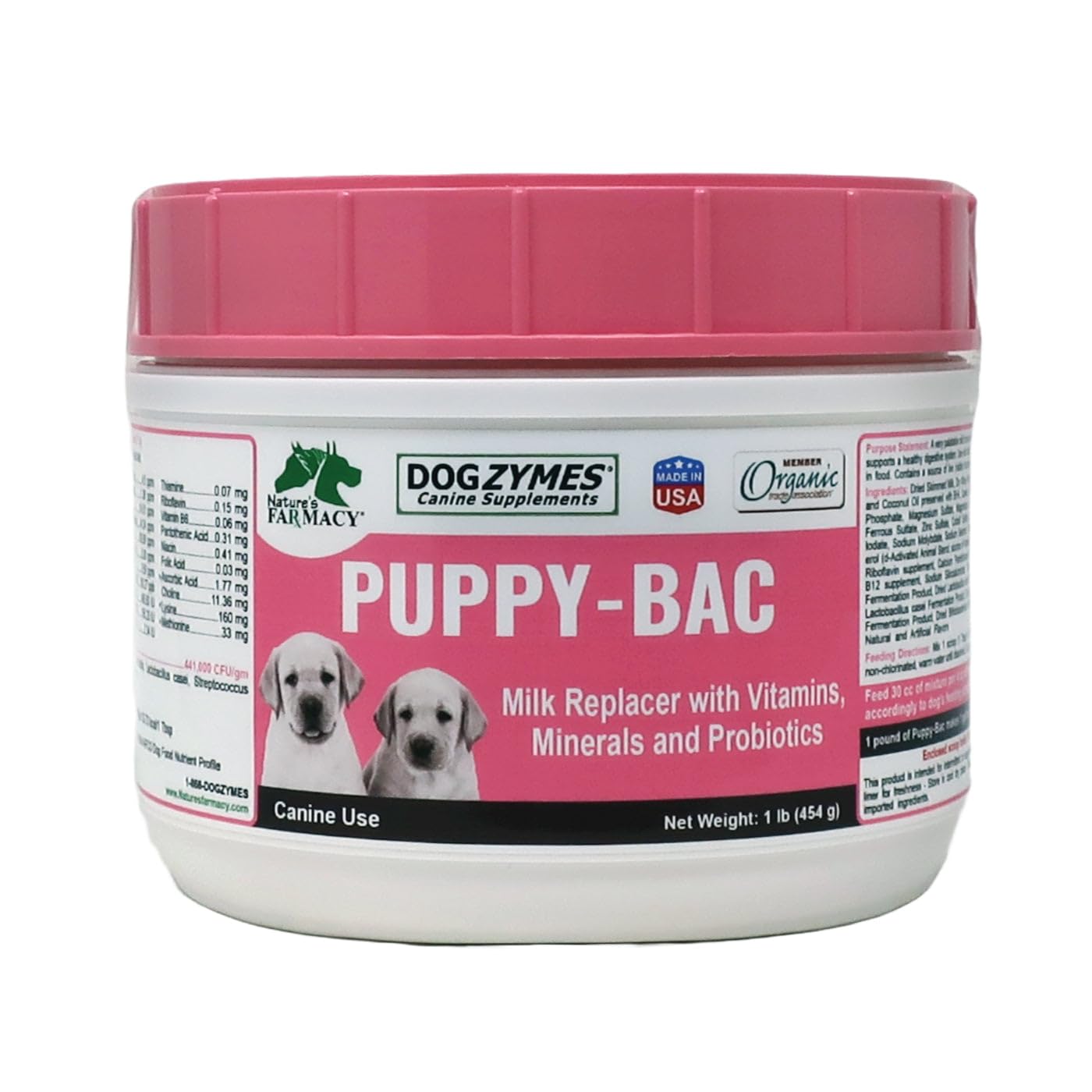
This eight-ounce jar of Dogzymes Puppy-Bac offers the same enzyme-rich, mother-milk-matched formulation as the two-pound size, but in a smaller footprint ideal for a single puppy or an emergency starter kit. Owners of toy and brachycephalic breeds — where only one or two pups are common — report that this jar lasts through the critical first three weeks without waste. The live microorganisms and digestive enzymes remain stable as long as the lid is sealed between uses, and the powder mixes into warm water with noticeably fewer clumps than standard Esbilac.
The 1:4 mixing ratio produces a formula that flows easily through preemie and regular bottle nipples alike, a detail that matters when a fading puppy needs every drop. Verified reviews from Boston Terrier owners confirm that puppies weaned onto solid food still accepted this formula as a familiar mid-day meal, easing the transition away from bottle feeding. The sweet vanilla scent is a consistent highlight across reviews — it lacks the acrid odor that some cow-milk replacers develop after mixing.
Because this is the same formulation as the larger jar, you are paying a slight premium per ounce for the smaller container. But for a one-puppy household or a breeder who wants to test a formula before committing to bulk, this eight-ounce jar is the logical entry point into the Dogzymes lineup.
Why we love it
- Same enzyme profile as the 2 lb jar in a smaller package
- Mixes smooth with minimal clumping
- Pleasant vanilla scent — no offensive chemical smell
Good to know
- Higher cost per ounce than the bulk jar
- May need to reorder quickly for a large litter
3. Pet-Ag Goat’s Milk Esbilac Powder

Pet-Ag’s Goat’s Milk Esbilac shifts the protein base from standard cow milk isolates to whole goat milk protein, which contains smaller fat globules and a naturally different casein structure that many puppies process with fewer digestive upsets. This formulation includes a special fiber blend alongside added prebiotics and probiotics, targeting gut health for litters that have historically reacted poorly to other replacers. Breeders of dachshunds and other breeds prone to sensitive stomachs frequently cite this as the formula that stopped diarrhea within 24 hours.
The mixing instructions specify one part powder to two parts warm water, and the resulting consistency is slightly thicker than the Dogzymes options. Owners of disabled or weak puppies report that this formula stayed down even when the puppy had trouble latching, which speaks to its gentle osmotic load. The can packaging protects the powder from moisture better than a bag, but you must avoid using a blender — Pet-Ag warns that high-speed blending can denature the added probiotics and enzymes.
The main trade-off is the can size: at 5.25 ounces, this jar goes quickly when feeding a litter of four or more puppies. You will likely need multiple cans to cover a full six-week nursing window. For single-puppy households or breeders who prioritize stomach sensitivity above all other factors, the goat milk base makes this the most forgiving formula in the roundup.
Why we love it
- Whole goat milk protein is naturally easier to digest
- Prebiotic fiber blend supports gut health
- Highly palatable even for weak or disabled puppies
Good to know
- Small can requires frequent reordering for larger litters
- Do not use a blender — whisk or shake only
4. Zesty Paws Puppy Milk Replacer + Colostrum
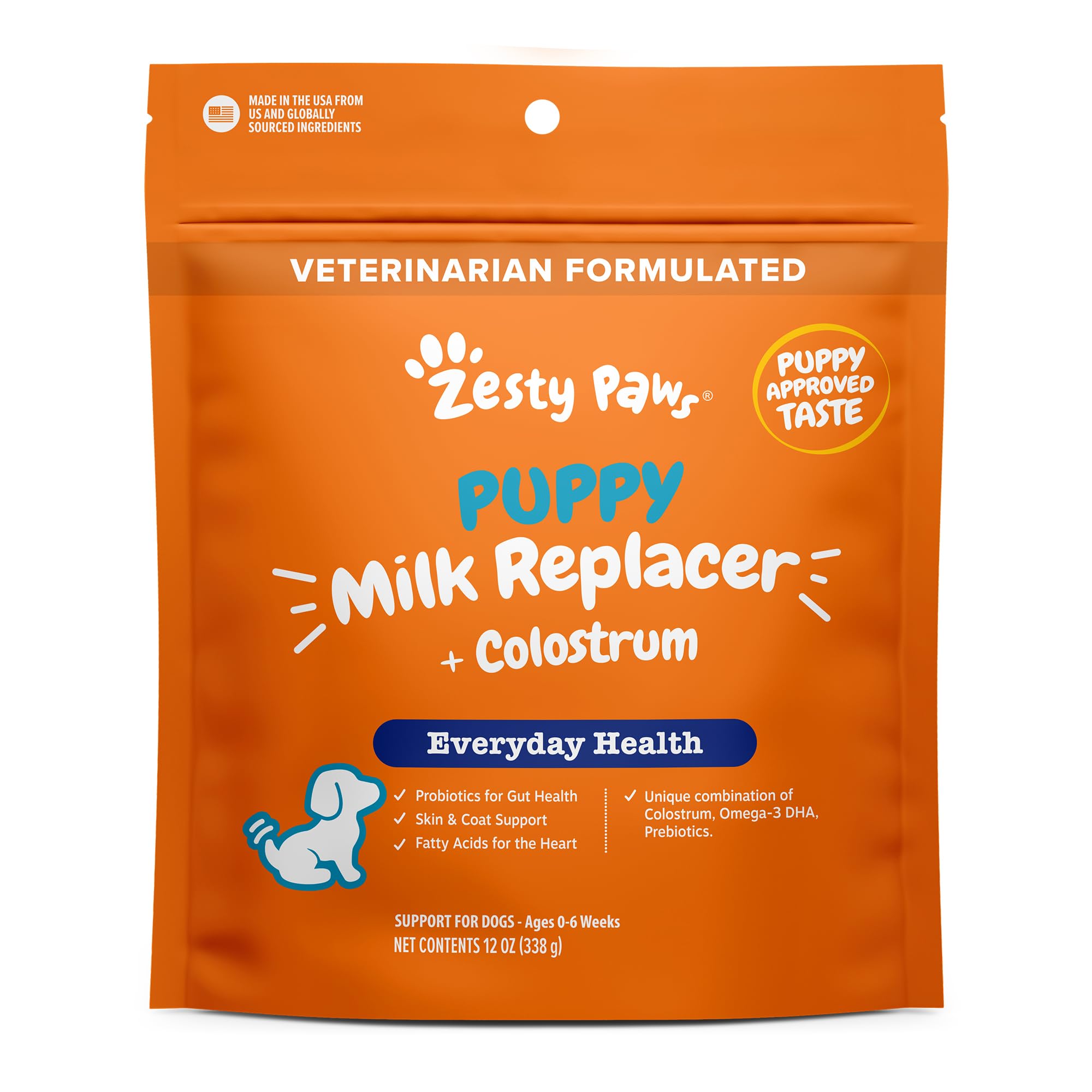
Zesty Paws takes a different approach by including colostrum — the antibody-rich first milk — plus DHA for cognitive development and omega-3 and omega-6 fatty acids for skin and coat health. This makes the formula especially useful for puppies transitioning off an exclusively milk diet, because the added nutrients support immune function during a period when maternal antibodies are waning. The prebiotic and probiotic inclusion mirrors the other mid-range options, but the colostrum component is unique to this pick.
Verified buyers note that the formula mixes easily and produces no strong odor, which is a practical benefit when you are feeding multiple times through the night. The 12-ounce bag lasts roughly one week for a single average-sized puppy such as an Australian Shepherd, so you will need to plan your reorder timing if feeding a full litter. Several reviewers used this formula to mix into dry food mush during the weaning stage, and the puppies accepted it without hesitation.
The DHA focus makes this a strong choice for owners who are thinking beyond immediate weight gain and want to support neurological development — particularly relevant for working-dog breeds or owners who plan to train their puppy later. The price per ounce lands in the mid-range zone, and the included voucher for a free bag effectively cuts the cost in half, making it a smart value play for the first month.
Why we love it
- Colostrum provides immune support after maternal antibodies drop
- DHA targets brain and cognitive development
- Included voucher makes the second bag effectively free
Good to know
- Bag lasts only about a week for one puppy
- Not as enzyme-dense as the Dogzymes options
5. Nutri-Vet Milk Replacer For Puppies

Nutri-Vet’s Milk Replacer serves as the budget-conscious entry in this roundup, but it includes a meaningful differentiator: the Opti-Gut probiotic blend designed to support digestion and nutrient absorption. The formula is veterinarian-formulated and made in the USA under NASC quality assurance, which provides some confidence even at a lower price point. Owners of toy breeds such as Chihuahuas report that it mixes without clumps and produces no bloating or diarrhea in their puppies.
The protein source is standard milk isolate rather than goat milk or a specialized enzyme blend, so puppies with very sensitive stomachs may still experience loose stools during the first 48 hours. However, the probiotic content helps stabilize the gut flora quickly in most cases. The 12-ounce bag offers enough powder to feed a single small-breed puppy for about a week and a half, making it a reasonable emergency stock for homes that do not breed regularly.
This formula also works as a supplement for nursing mothers who need extra calories, and several cat owners have used it successfully for orphaned kittens in a pinch. The lower price point means you can afford to keep a bag on the shelf without feeling the financial sting if it expires before you need it. For a first-time buyer who wants a safe, vet-formulated option without jumping to the premium tier, this is the most accessible starting point.
Why we love it
- Opti-Gut probiotics aid digestion in most puppies
- Made in the USA with NASC quality assurance
- Budget-friendly enough to keep as emergency backup
Good to know
- Standard milk protein may not suit extremely sensitive stomachs
- Bag packaging is less moisture-resistant than a jar
FAQ
How do I know if my puppy is tolerating the milk replacement well?
Can I mix puppy milk replacement with water instead of using the full ratio?
What is the shelf life of powdered puppy milk replacement after opening?
Final Thoughts: The Verdict
For most breeders and owners, the puppy milk replacement winner is the Dogzymes Puppy-Bac (2 lb) because its 441 million CFU/g enzyme profile, thin mixing consistency, and balanced macronutrient ratios give newborn puppies the closest analogue to mother’s milk available in a commercial powder. If you need the same high-end formulation in a smaller, test-friendly jar, grab the Dogzymes Puppy-Bac (8 oz). And for puppies with sensitive digestion that require a goat milk protein base, nothing beats the Pet-Ag Goat’s Milk Esbilac.